
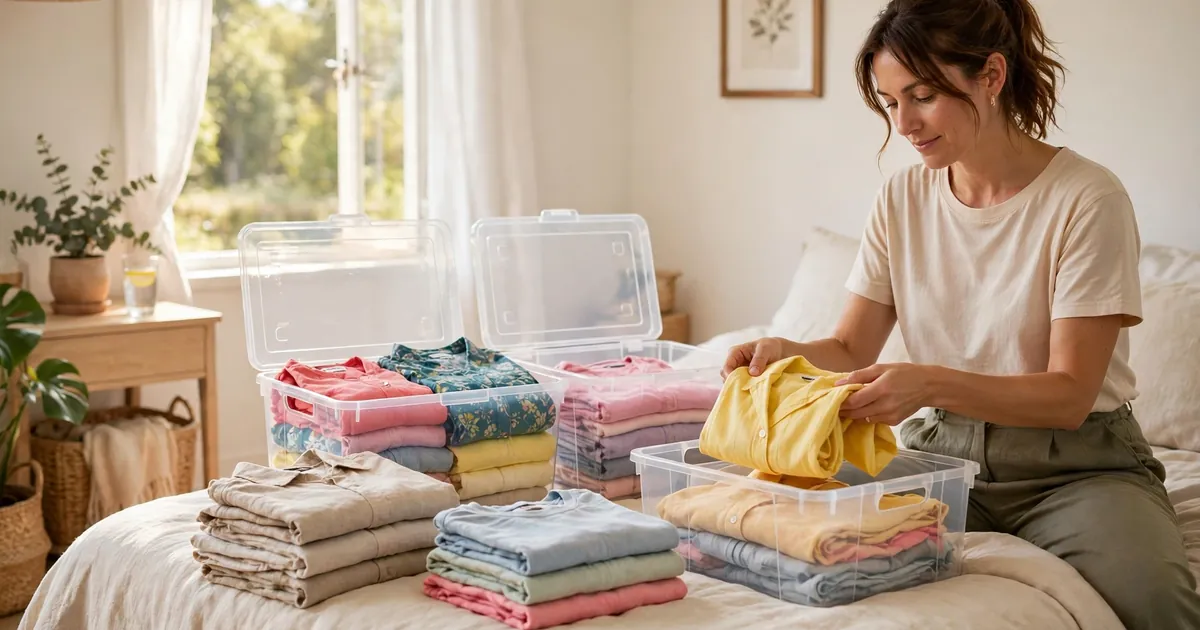

If you’re figuring out how to store summer clothes for winter, the method is simple: wash everything, dry it until it’s bone-dry, treat any sunscreen or deodorant stains, then pack each fabric the way it wants to be stored. Sturdy cottons and denim can go in vacuum bags. Silk, linen, and delicates belong in breathable cotton bags or bins with tissue. Everything lives in a cool, dry, dark spot, and you check it once in January. Do that, and your favorites come out in spring smelling like nothing, which is exactly the point.
The Smithsonian\’s Museum Conservation Institute stores textiles at 45% relative humidity and 70 degrees Fahrenheit. You don’t need museum conditions in your spare room, but their target tells you the direction: cool beats warm, dry beats damp, dark beats sunny. Most ruined summer wardrobes fail on three things, and none of them is the container. They fail on stains left in, moisture left in, or bugs left a way in.
TL;DR:
Wash every summer garment before it goes away. Sweat, sunscreen, and deodorant oxidize into yellow stains over winter, and the residue is what attracts clothes moths. Dry everything bone-dry, fold knits, hang structured pieces. Vacuum bags cut storage volume by up to 75% (per Habitatista) but only for sturdy fabrics, never silk or wool. Store bins somewhere cool, dry, and dark at 60 to 70 degrees under 50% humidity. Add cedar blocks and lavender sachets as backup, label every bin, and open each one for two minutes in January.
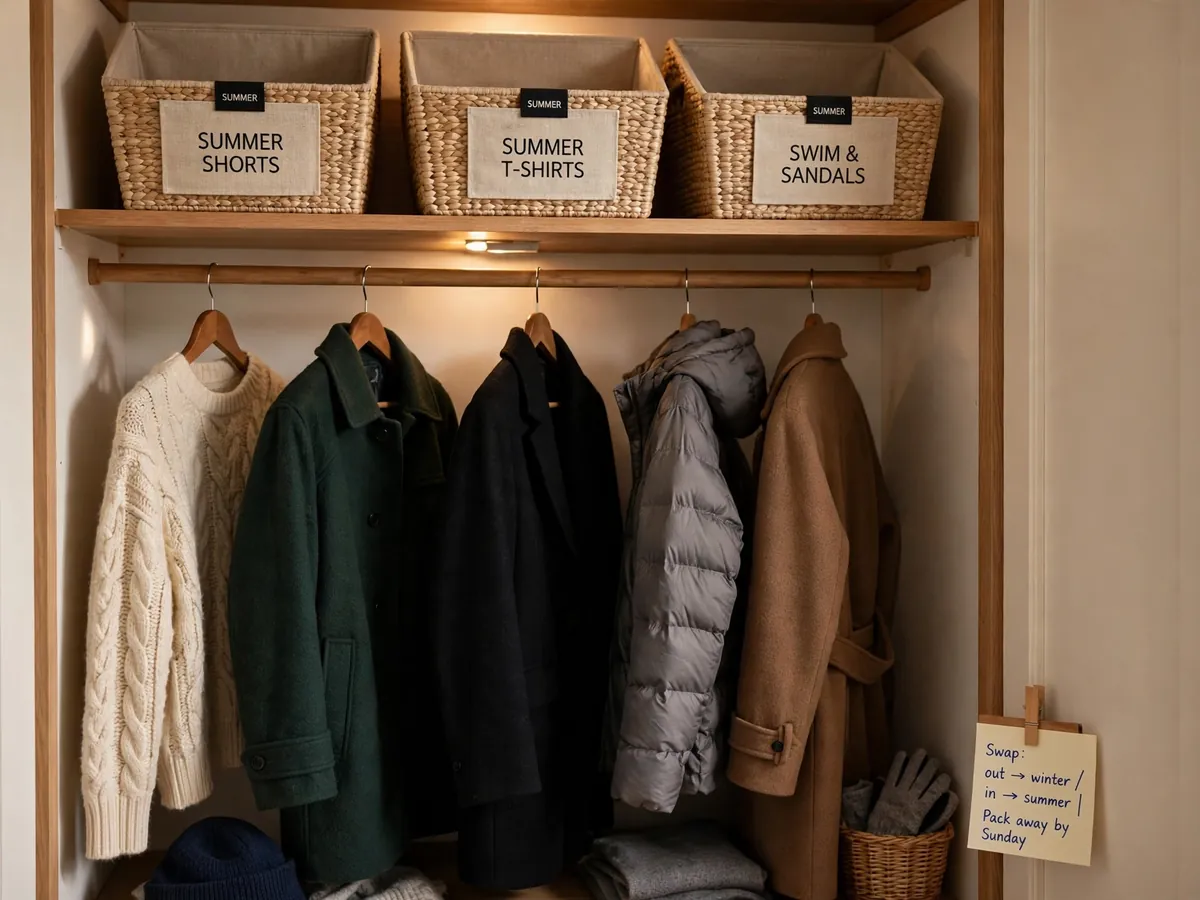
How to store summer clothes for winter in 7 steps?
The best way to store summer clothes for winter is a seven-step routine: declutter, wash, treat stains, dry completely, match the container to the fabric, add moth and moisture protection, and store somewhere cool, dry, and dark. Skip one step and you’re gambling on the rest.
- 1. Pull every summer garment out and sort it into keep, donate, and store piles.
- 2. Wash everything you plan to store, even the dress you wore for two hours. Body oils and invisible sweat are moth food and future yellow stains.
- 3. Treat sunscreen, deodorant, and sweat stains before they set for months.
- 4. Dry every piece until it’s bone-dry. Slightly damp is the most expensive mistake on this list.
- 5. Match the container to the fabric: vacuum bags for sturdy cottons, denim, and synthetics; lidded bins or breathable bags for everything else.
- 6. Add moth protection (cedar or lavender) and moisture protection (silica gel) as you pack.
- 7. Store bins somewhere cool, dry, and dark, label them, and check once in January.
That’s the whole system. Seven steps, one afternoon, and your summer wardrobe survives the winter intact.
What should you do before packing any summer clothes away?
Before packing, pull everything out and declutter the wardrobe into three piles: keep for next summer, donate, and store. This feels like a delay, but it’s the highest-value hour of the project: every garment you eliminate is one you don’t wash, fold, bin, and store.
Be honest with the donate pile. The shorts that never fit right, the tank with the stretched neckline, the dress you kept “for the beach” three summers running: that’s not a wardrobe, that’s guilt in fabric form. A ClosetMaid survey found the average American woman has 103 items in her closet, and the EPA reports 11.3 million tons of textiles were landfilled in 2018 alone, with only 14.7% recycled. Donating wearable pieces keeps them out of that pile and gives your bins breathing room.
Sort by category as you go: all tees together, all shorts together. It takes ten extra minutes and saves you from opening four bins in May hunting one white tee. If your closet needs a real reset first, our fall decluttering checklist walks through the keep-or-let-go decisions room by room.

Should you wash clothes before storing them for the season?
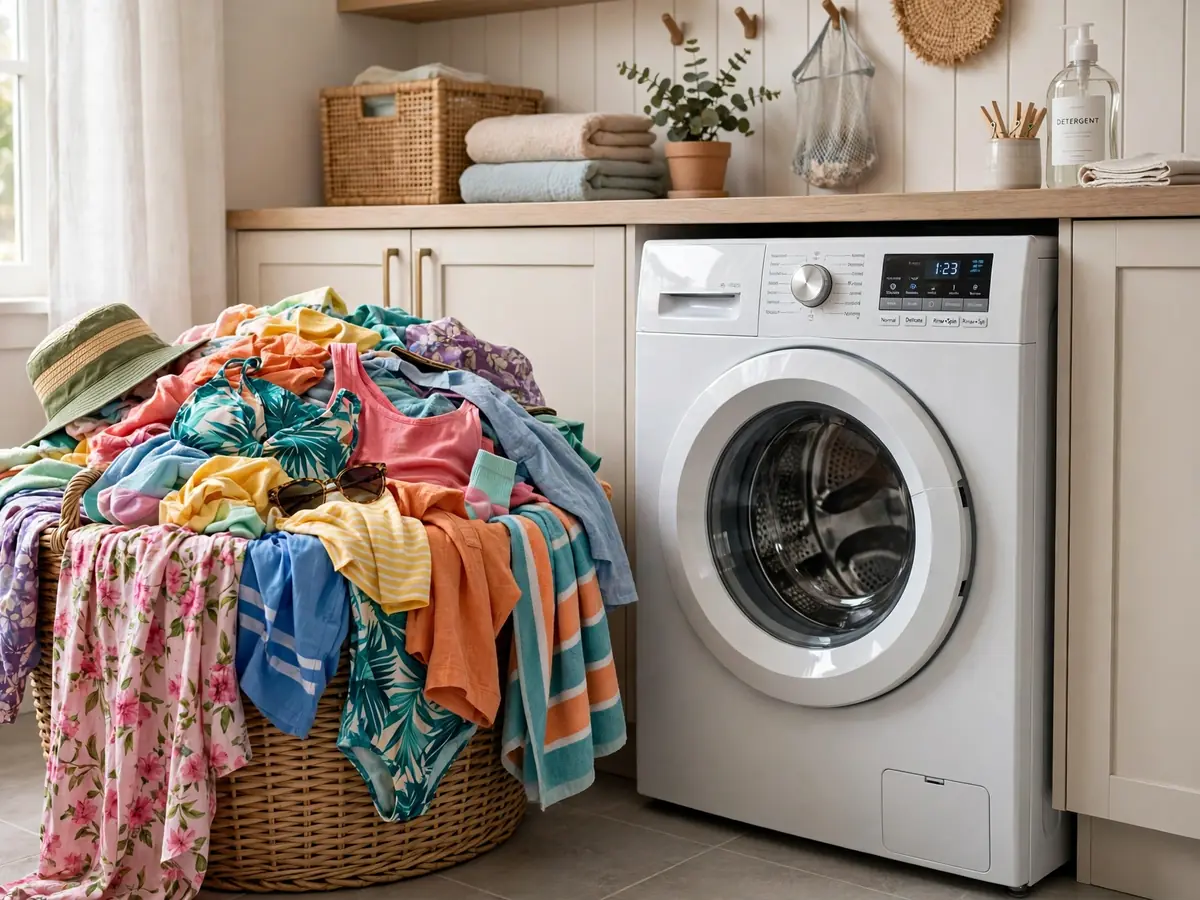
Yes. Wash every single thing before it goes into storage, no exceptions. This is the step people skip, and it’s the step that causes most of the damage, because the stains that ruin clothes in storage are the ones you can’t see yet.
Sweat, body oil, sunscreen, and deodorant don’t always show in October. Over three to five months, body oils oxidize and turn yellow around collars, armpits, and waistbands. Sunscreen ingredients like avobenzone can leave rust-colored marks that only appear after months of sitting. And here’s the part nobody tells you: clothes moths don’t eat clean wool. They eat the protein-rich residue on it. A freshly laundered garment is genuinely less attractive to them than one that “looks clean.”
Wash on the warmest setting the care label allows, and skip fabric softener for storage loads; softener leaves a waxy coating that can go rancid over months. If your laundry setup makes this harder than it should be, our laundry room organization ideas can help.
One honest admission: this step is tedious. A full summer wardrobe is easily four to six loads. Run them back to back over a weekend and fold straight from the dryer.
How do you treat sunscreen and deodorant stains before storage?
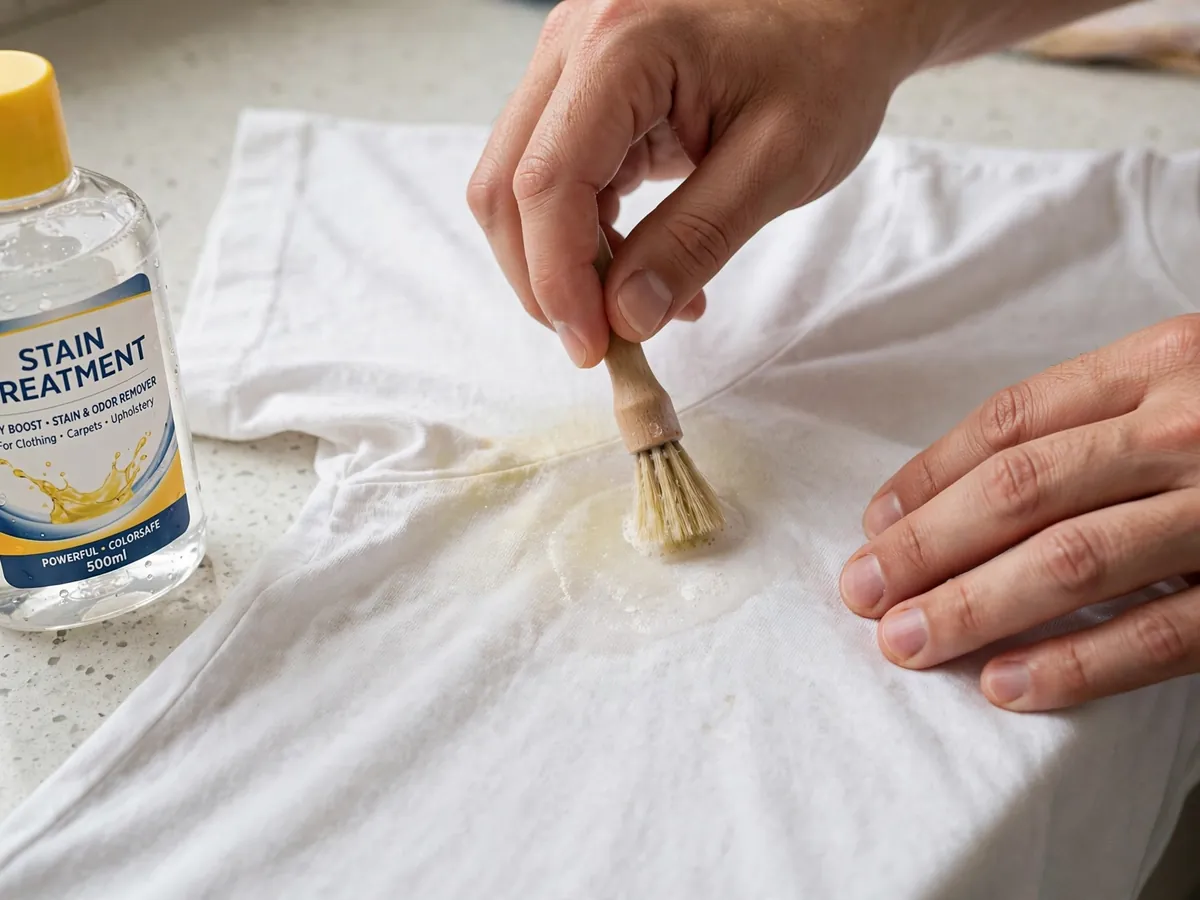
Treat sunscreen and deodorant stains before storage because months in a bin turn faint marks into permanent ones. Check every garment in good light: armpits, necklines, anywhere straps sat. Then treat what you find before it goes near a bin.
For deodorant marks (white waxy buildup or yellow tinge under the arms): rub the stain with white vinegar or a paste of baking soda and water, let it sit 30 minutes, then wash warm. For sunscreen stains, especially the orange-rust marks from chemical sunscreens: apply dish soap directly, work it in gently, wait 20 minutes, then wash as hot as the fabric allows. Don’t use chlorine bleach on the stain first; bleach can set protein stains permanently.
For yellowing stains already visible: soak in cool water with oxygen-based bleach (sodium percarbonate, sold as OxiClean and store brands) for one to six hours before washing. It works on whites and most colorfast fabrics, but test an inside seam first on bright colors.
My honest opinion: if a white tee has deep yellow armpits that survived two treatments, let it go.
How dry do clothes need to be before you pack them?
Bone-dry. Not “dryer-dry,” not “feels dry,” but completely, boringly, unquestionably dry, down to the seams and waistbands. Trapped moisture is the fastest way to ruin a bin of stored clothes: mildew can start in 24 to 48 hours in a sealed container, and you won’t discover it until May.
The danger zones are the thick parts: jean waistbands, hoodie cuffs, swimsuit elastic, folded linen hems. They hold moisture long after flat panels feel dry. After the dryer, hang everything on a rack for a few hours with airflow, then do the press test: press the thickest seam hard between your palms for five seconds. If your skin feels even slightly cool or damp, it’s not ready.
If you live somewhere humid, a small dehumidifier in the packing room earns its keep here. The Smithsonian stores textiles at 45% relative humidity for a reason: dry air is the cheapest insurance in this whole guide.

Can I store summer clothes in vacuum bags?
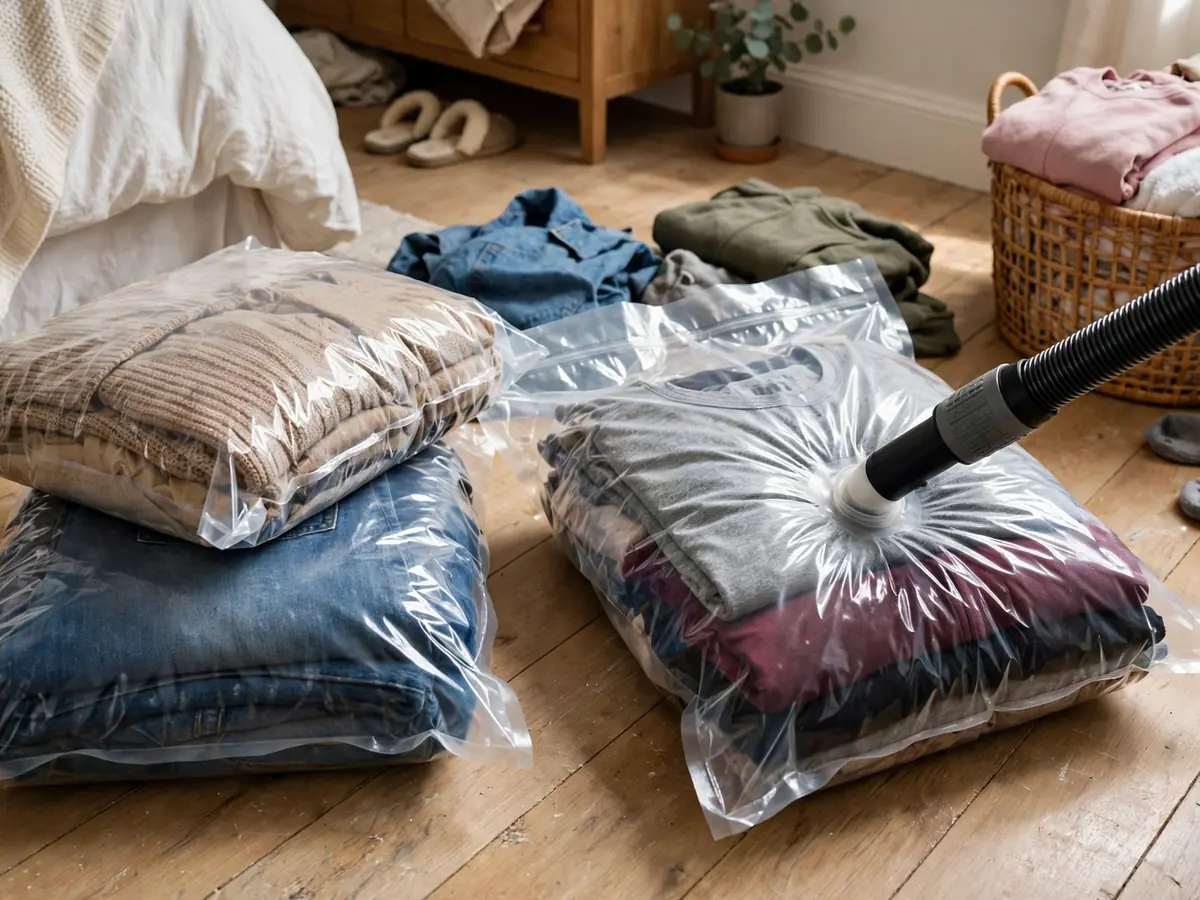
You can, but only the sturdy ones. Vacuum bags are the best space saver here: they can cut storage volume by up to 75%, per Habitatista, which matters with one reach-in closet. They’re also the most misused product here, because compression is rough on delicate fibers.
Honest per-fabric verdict: vacuum bags are great for cotton tees, denim, polyester activewear, and cotton blends. These bounce back with a wash or steam. Vacuum bags are risky for linen (creases set for months), silk (fibers weaken, drape suffers), wool knits (compression flattens the loft), and anything beaded, sequined, structured, or leather.
Two more rules from real-world use. Don’t overfill the bag; clothes packed too tight wrinkle worse and strain the seal. Fill to about three-quarters. And don’t treat bags as moth-proof. They slow pests down, but larvae can chew through thin plastic and bags develop slow leaks. A parent on Mamapedia’s clothing-storage thread put it well: vacuum bags save serious space, but clothes come out wrinkled and the occasional bag pops open mid-season.
Which storage containers actually work for summer clothes?
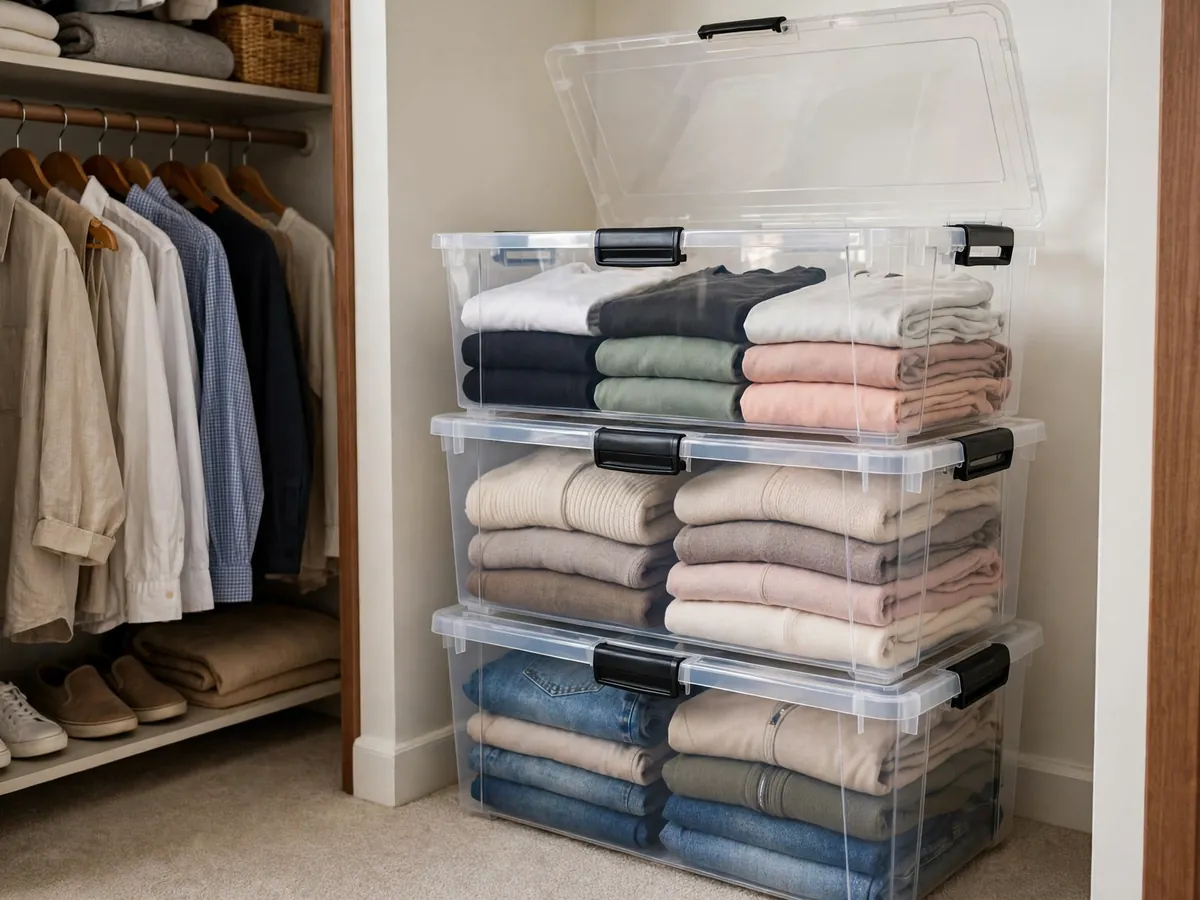
Summer clothes storage works best when the container matches the fabric. The container matters less than the prep, but skip anything that traps moisture against delicate fibers, and give delicates breathable cotton storage bags for off-season storage.
| Container | Best for | Avoid for | Moth protection | Wrinkle risk |
|---|---|---|---|---|
| Lidded plastic bin | Most summer clothes; stackable; keeps dust and pests out | Damp basements without silica gel | Good when sealed | Low |
| Vacuum storage bag | Cotton tees, denim, synthetics; tiny spaces | Silk, linen, wool, beaded or structured pieces | Fair (not chew-proof) | Medium to high |
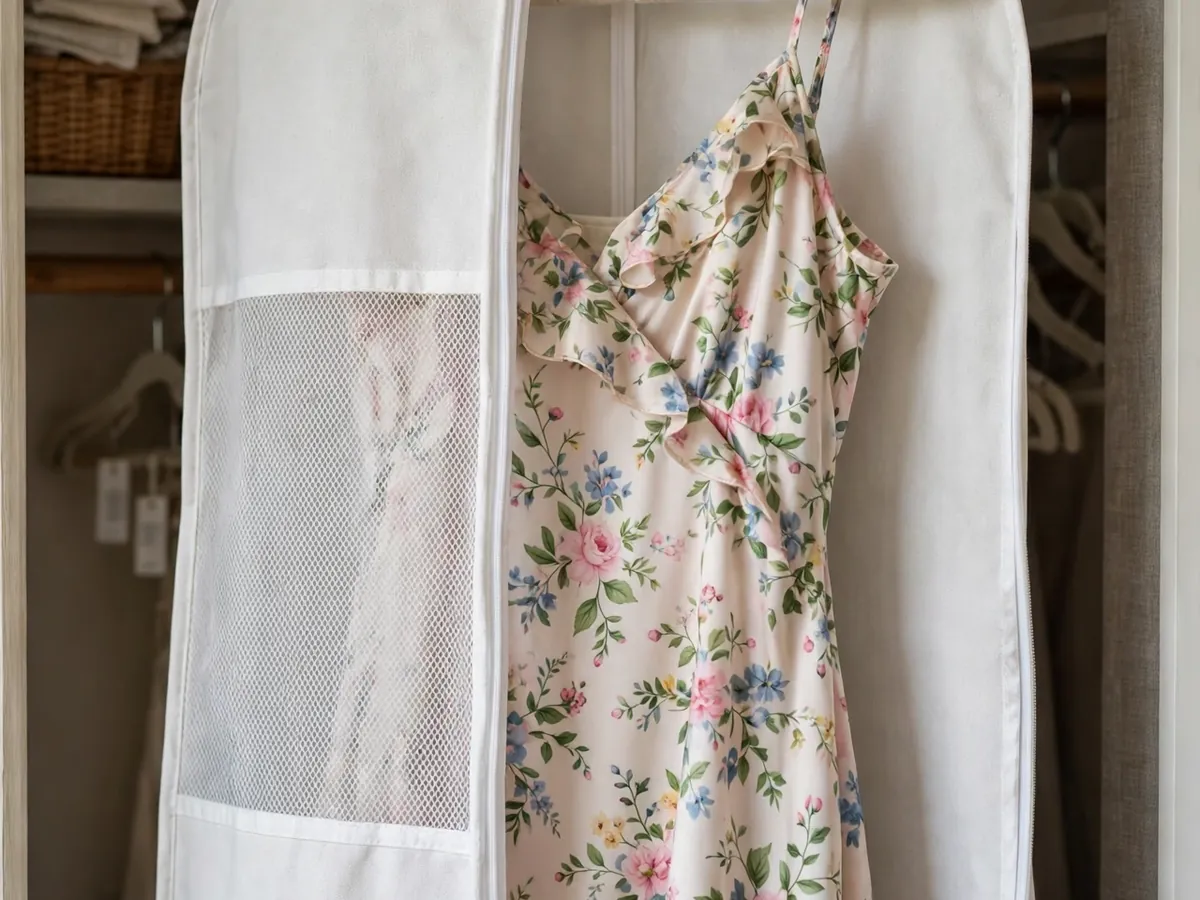
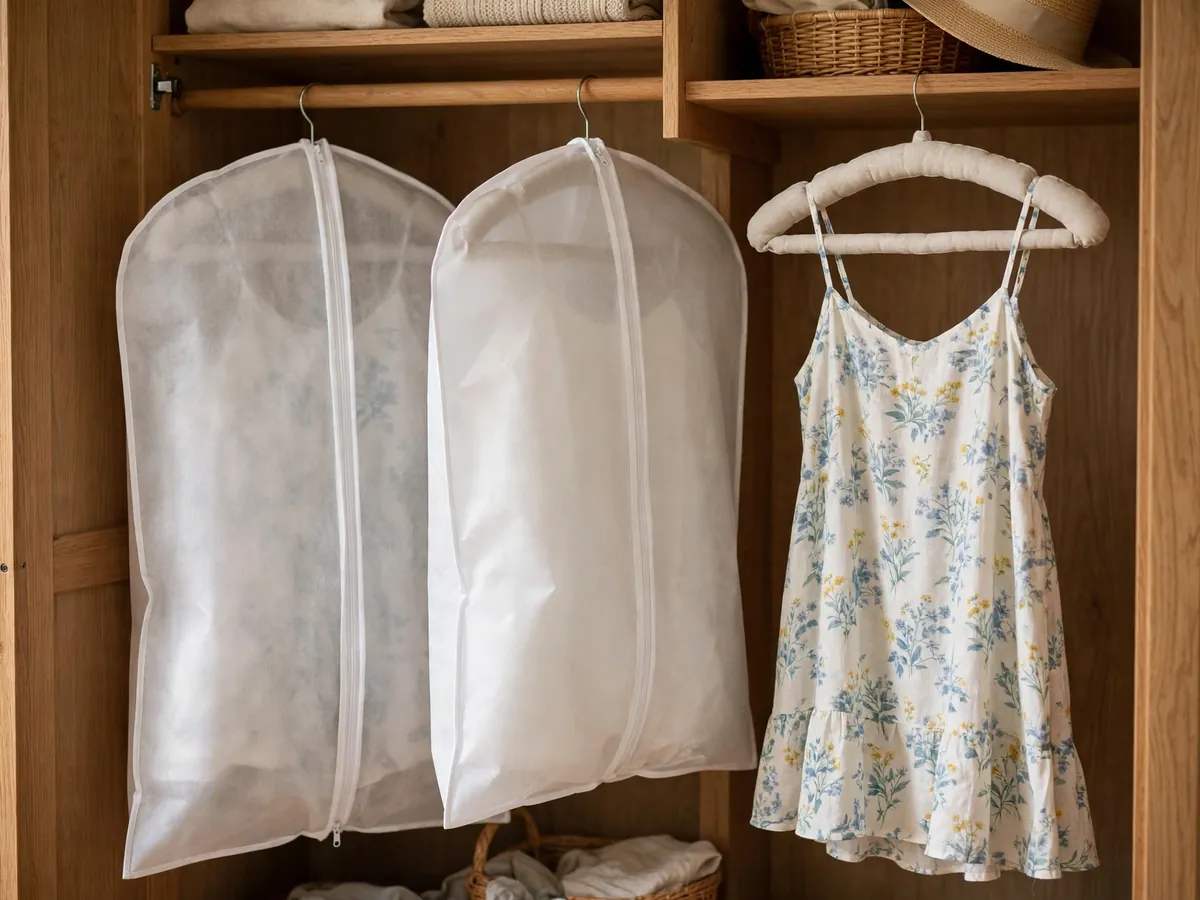
| Breathable cotton garment bag | Dresses, silk, linen | Long-term floor storage in dusty spots | Low (use with cedar) | Very low |
| Canvas storage bin | Sweaters, casual knits, kids clothes | Humid rooms; it breathes, which cuts both ways | Low | Low |
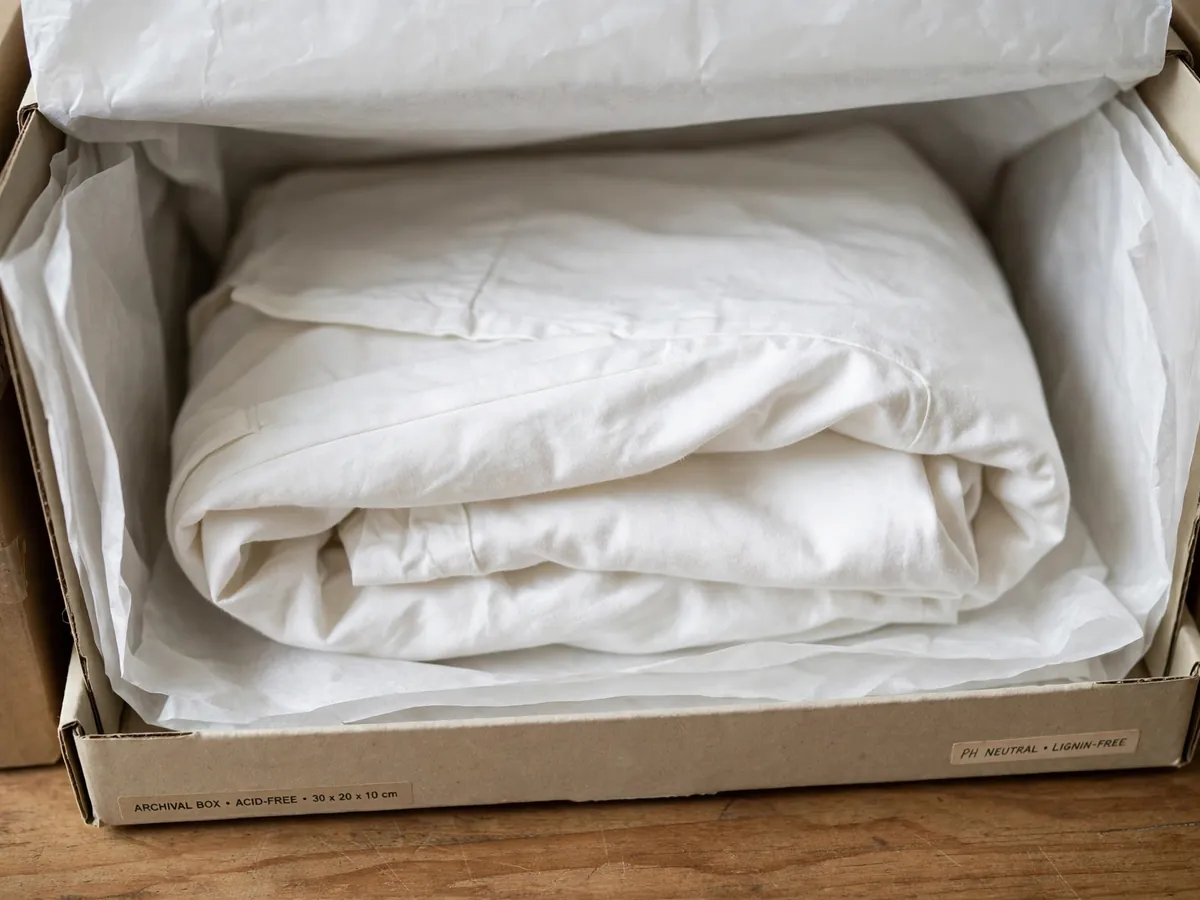
| Acid-free archival box | Heirlooms, expensive silk, wedding-guest dresses | Everyday storage; pricey overkill for tees | Fair with tissue | Very low |
The 66-quart bin (about 24 by 16 by 13 inches) is the sweet spot: big enough for a real category, small enough to lift onto a shelf. Clear bins beat opaque ones; you can see inside without opening them.
Never store clothes in dry-cleaner plastic bags. They trap moisture and off-gas chemicals that yellow fabric. Skip cardboard for anything you care about: it attracts silverfish, holds damp, and its acids yellow whites.
One upgrade covers every container on this list: silica gel packets in each bin. They’re cheap, reusable, and they handle the humidity swings that cause musty smells.

Ready to pick containers? Our roundup of the best storage baskets for home organization compares real picks with dimensions and prices: https://storagesolutionsdaily.com/best-storage-baskets/ And if your closet shelves need a rethink to fit those bins, these closet shelf organization ideas show how to measure for a real fit.
How should you store each summer fabric?
Different fabrics want different treatment, and this is the section no other guide on page one has in full. One method for everything is how silk dresses die: silk storage, linen care, and swimsuit storage each have their own rules. The fold vs hang call is simple, knits and tees fold, structured dresses and blouses hang. Here’s the cheat sheet, fabric by fabric.
| Fabric | Wash | Fold or hang | Container | Special note |
|---|---|---|---|---|
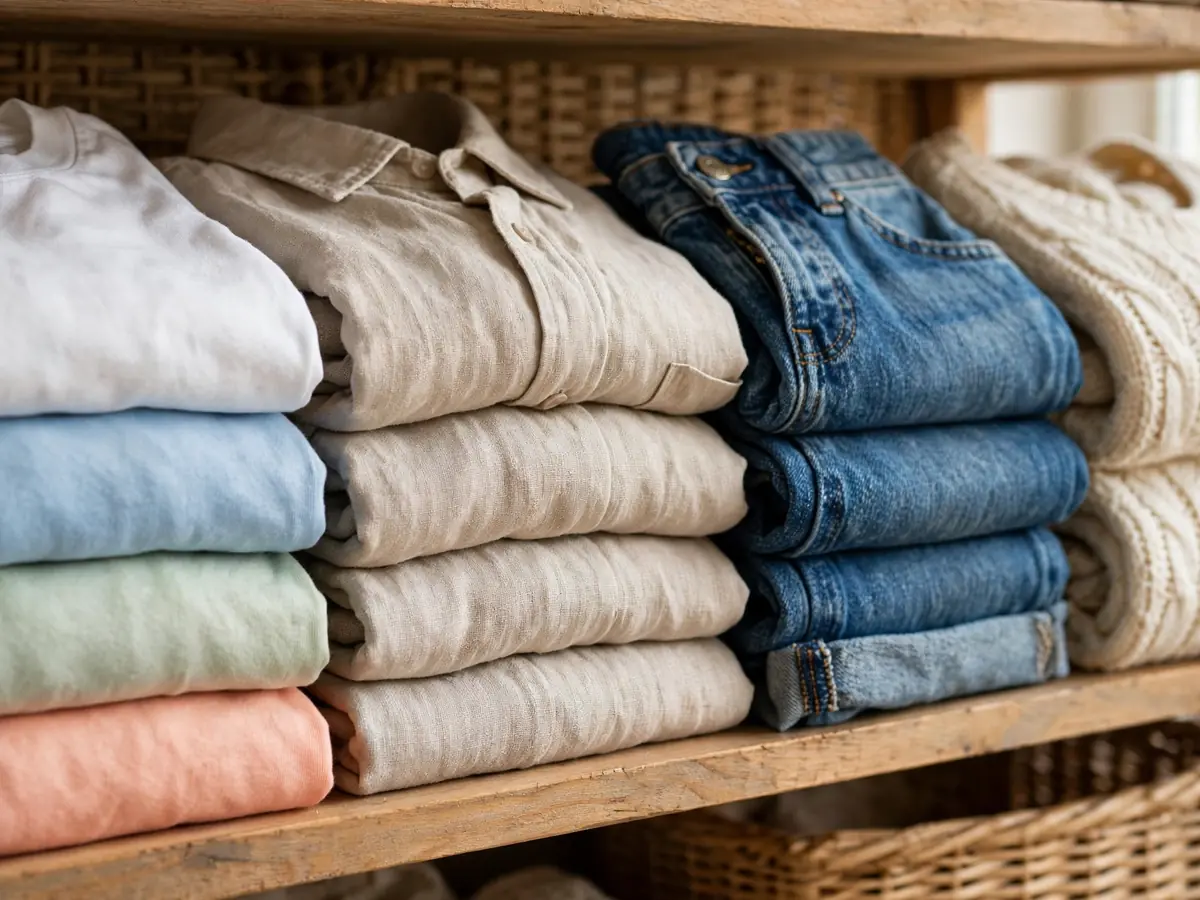
| Cotton tees and tanks | Machine wash warm | Fold | Bin or vacuum bag | The easy one; stack by color |
| Linen shirts and pants | Wash gentle, per label | Fold loosely or roll | Bin with tissue between layers | Skip vacuum bags; wrinkles set |
| Silk dresses and blouses | Hand wash or dry clean | Hang on padded hangers | Breathable cotton garment bag | Never vacuum seal; stuff sleeves with tissue |
| Denim shorts and jeans | Wash inside out | Fold | Bin or vacuum bag | Bulkiest item; vacuum bags earn their keep |
| Swimwear | Hand wash, no wringing | Fold flat | Small bin, away from heat | Rinse chlorine and salt the same day you swim |
| Light knits and crochet | Hand wash, dry flat | Fold, never hang | Canvas or lidded bin | Hanging stretches knits over months |
Silk is the diva of this list and worth the fuss. Hang silk dresses on padded hangers (wire hangers leave shoulder dents that months of hanging make permanent), slip a breathable cotton garment bag over each one, and stuff sleeves and bodice loosely with acid-free tissue. Keep silk out of vacuum bags entirely.
Linen wants a loose fold or roll, with tissue between layers to soften creases. Accept some wrinkles and plan a steam in spring rather than fighting it now.
Swimwear’s enemy is heat plus chlorine residue. Rinse suits the day you swim, hand wash with mild soap, roll in a towel to press out water (never wring), and dry flat away from sun. For winter storage, fold suits flat in a small bin away from radiators and hot attics; heat breaks down elastane and your suit comes back baggy.
How do you store summer shoes and sandals for winter?
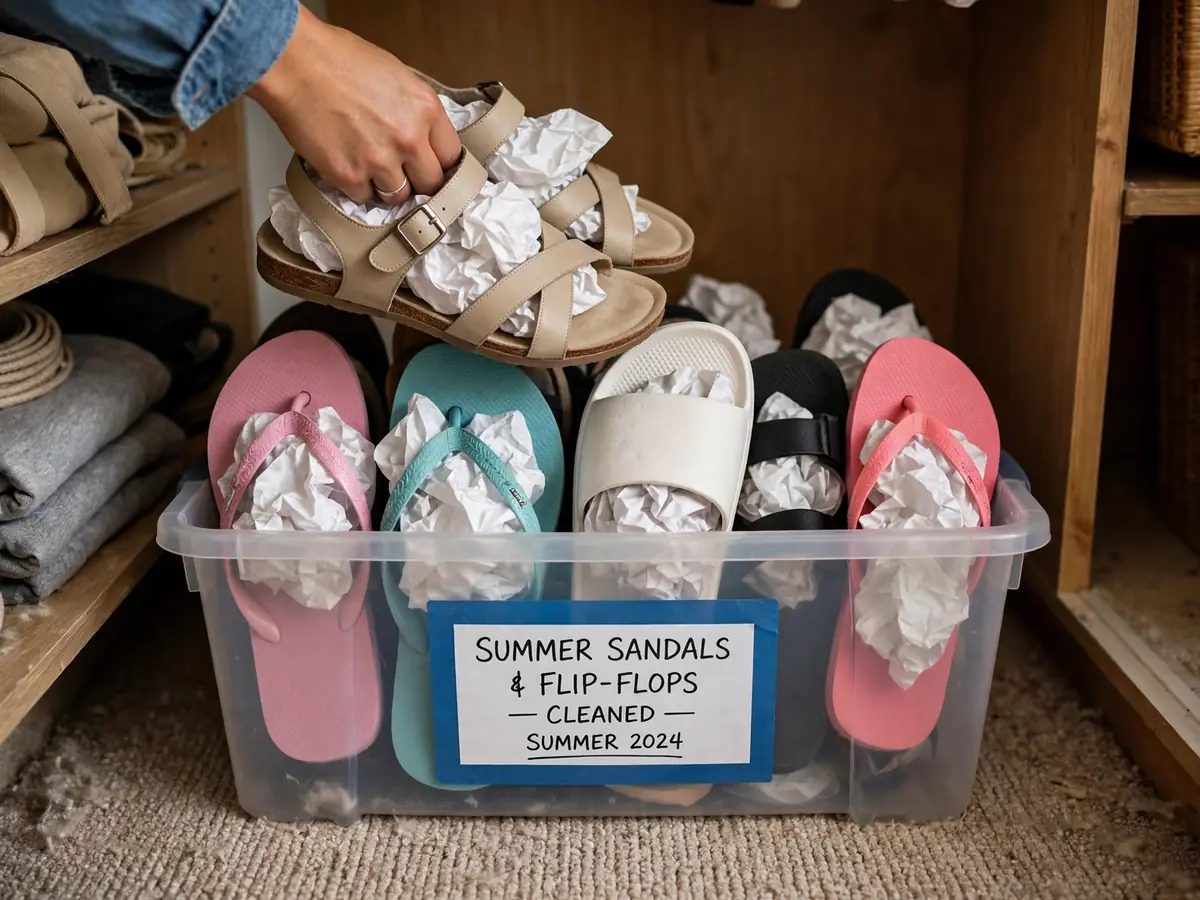
Clean every pair before it goes away. Summer shoes collect the season: sand, sunscreen, sweat, boardwalk salt. Wipe sandals and flip-flops with a damp cloth and mild soap, scrub the footbeds, and dry them completely. For canvas sneakers, pull the laces and insoles, wash the laces, and air-dry the insoles separately.
Stuff each shoe loosely with acid-free tissue or plain white paper to hold its shape. Don’t use newspaper; the ink can transfer over months. Then the big question: keep the original boxes? For everyday sandals, no. Boxes are bulky and eat shelf space; one clear bin holds the whole collection and you can see everything. For expensive leather sandals or wedges, yes: stuff them, keep the box, add a silica gel packet.
Store the bin somewhere cool. Heat softens adhesives, and an overheated spot can separate soles over a winter. Keep shoe bins off garage floors where damp creeps in.
If your shoe collection has outgrown its corner, our shoe storage ideas for small closets show twelve ways to get pairs off the floor.
Where is the best place to store summer clothes in a small home?
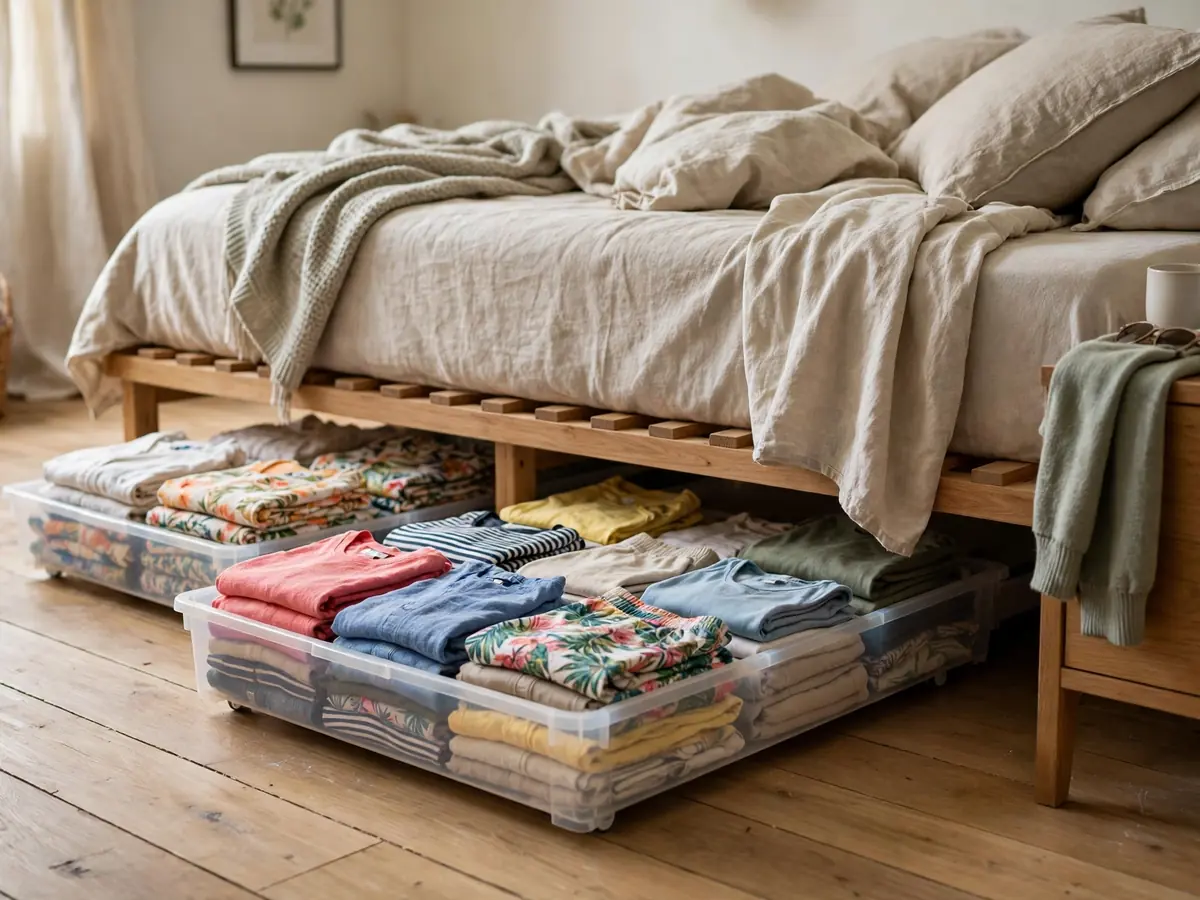
The best place to store summer clothes in a small home is a cool, dry, dark spot: a closet shelf, under the bed, or a wardrobe top. The Smithsonian keeps textiles at about 70 degrees and 45% humidity; aim for the closest your home gets.
Closet shelves are ideal: stable temperature, dark, easy to check. Under the bed is excellent for flat bins; risers adding 5 to 7 inches of clearance open up real room (see our under bed storage ideas). A spare dresser drawer can hold off-season tees (see our dresser organization ideas).
Avoid attics (they swing from freezing to 140 degrees) and garages (damp floors, exhaust, mice). If the garage is your only option, get bins onto a shelf and don’t skip the January check. A standard reach-in closet runs about 6 feet wide and 24 inches deep (Angi, 2026), and that top shelf above the rod holds three 66-quart bins side by side (more small closet organization ideas here).
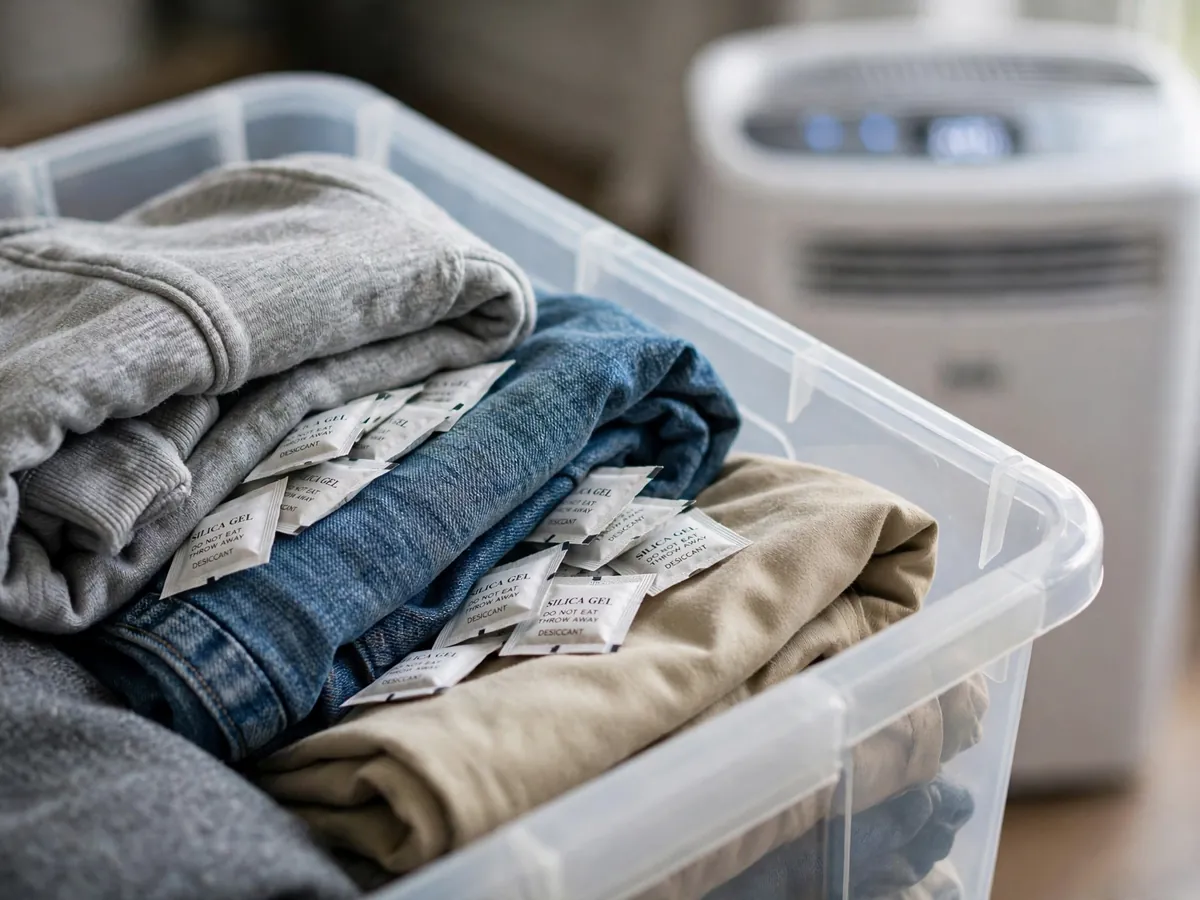
Toss two or three silica gel packets into every bin. They absorb the humidity swings that cause musty smells.
How do you keep moths out of stored clothes without mothballs?
Remove what attracts them and block how they get in. Traditional mothballs use naphthalene or paradichlorobenzene: pesticide fumes in your closet. Skip them.
Clothes moths don’t eat clean fabric; larvae eat keratin plus the residue on it: sweat, body oil, food spots. That’s why washing before storage is moth protection. A female lays 40 to 50 eggs, hatching in 4 to 10 days at room temperature (Ohio State University Extension). In 2024 the National Pest Management Association reported 1.8 million U.S. homes suffer moth damage yearly, with total U.S. fabric-pest damage near $1 billion (via Professional Pest Manager).
Second, seal the bins. Larvae can chew through thin plastic bags and cardboard, but a hard lidded bin with a snap lid stops them.
Third, add deterrents, knowing their limits. Cedar blocks and lavender sachets repel adult moths; they don’t kill larvae or eggs. Sand cedar lightly each season to refresh the scent. The lock is clean clothes plus a sealed bin.
If you find active moths, webbing, or small holes during the January check, isolate that bin, wash everything on hot, and freeze what can’t take hot water for 72 hours.

What should you check mid-winter, and what do you do on the first warm day?
Open every bin once in January and check three things: dampness, pests, smells. This two-minute check is the section no other guide on page one includes. Musty? Pull everything out, rewash, dry bone-dry, repack with fresh silica gel. Webbing or tiny holes? Isolate the bin and run the freeze-or-hot-wash routine from the moth section. Bag gone soft? Reseal it; slow leaks are normal.
Check the storage spot too. A closet that was dry in October can turn damp in February. Feel bin lids for condensation and look at the wall behind the bins.
Then the first warm day: open one bin at a time, shake each piece out, hang what needs to breathe for an hour. Linen and vacuum-packed pieces get a wash or steam to release wrinkles. Recheck every piece for the stains you treated in fall; treat any survivor once more before it sees sun, because sunlight sets some stains permanently.
Here’s what people forget: every seasonal wardrobe swap runs both directions. As summer clothes come out, winter clothes go through this same routine in reverse. Wash, dry, treat, pack.
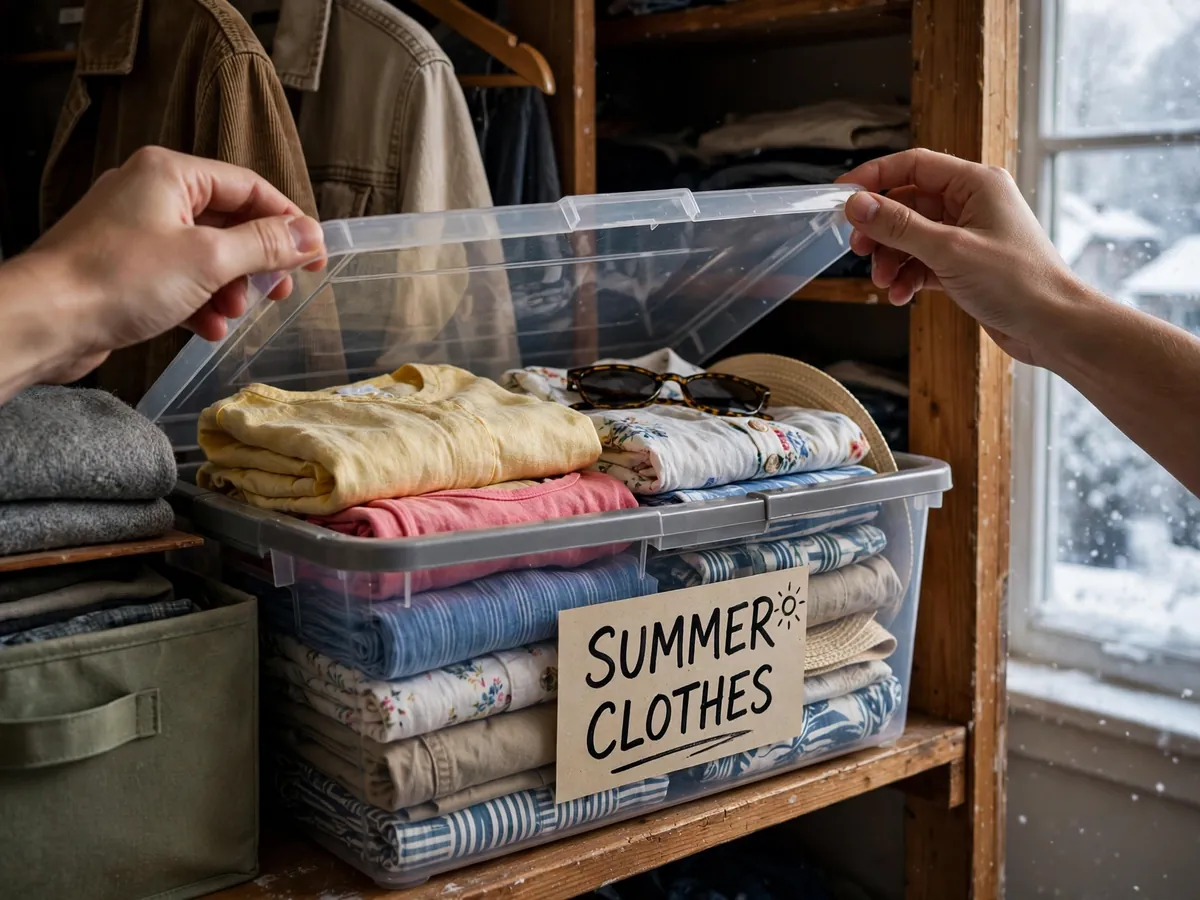
Your wardrobe switch, done right
Storing summer clothes for winter rewards doing it properly exactly once. Wash everything, dry it bone-dry, treat the stains, match the container to the fabric, seal against moths and moisture, and check in January. That’s the whole game, and it takes one focused weekend.
If you’re standing in front of a bursting closet, start with the declutter, not the bins. The best storage system can’t fix owning 103 things you don’t wear. And if the under-bed space is calling your name, our under bed storage ideas will help you measure for bins that actually slide in. Your May self will thank your October self. Probably while wearing the white tee that came out perfect.
Should I wash summer clothes before storing them for winter?
Yes, always. Sweat, sunscreen, and deodorant oxidize into yellow stains over months, and the residue is what attracts clothes moths. Wash on the warmest safe setting, skip fabric softener for storage loads, and dry everything bone-dry before packing.
Can I store summer clothes in vacuum bags?
Only sturdy fabrics: cotton tees, denim, and synthetics. Vacuum bags can cut volume by up to 75%, but compression wrinkles linen, weakens silk, and flattens wool. Never vacuum-seal beaded, sequined, or structured pieces, and don’t treat bags as moth-proof.
How do I keep stored clothes from smelling musty?
Dry everything bone-dry before packing, add two to three silica gel packets per bin, and store bins in a cool, dry spot under 50% humidity. Musty smell means moisture got in; rewash, dry fully, and repack with fresh silica gel.
Where is the best place to store summer clothes?
A bedroom closet shelf or under the bed: cool, dry, dark, and easy to check. Avoid attics (extreme heat swings) and garages (damp, pests) unless you have no choice, and keep bins off floors in either case.
Do moths eat clean clothes?
Rarely. Clothes moth larvae eat keratin plus residue: sweat, body oil, and food spots. Freshly washed clothes are far less attractive to them, which is why washing before storage doubles as moth protection. Sealed hard bins stop larvae that bags and cardboard can’t.
Can I store clothes in the garage for winter?
Only as a last resort. Garages bring damp floors, temperature swings, and mice. If you must, use sealed hard bins on shelves (never the floor), add silica gel packets, and do the January check without fail.
How long can summer clothes stay in storage safely?
Indefinitely, if they were washed, dried fully, and stored sealed in a cool, dry, dark place. People routinely store seasonal clothes for years without issues. Failures come from moisture, pests, or unwashed stains, not from time itself.
Should I store summer shoes in their original boxes?
For everyday sandals and flip-flops, no: a single clear bin holds the whole collection and saves shelf space. For expensive leather sandals or wedges, yes: stuff them with tissue, keep the box, and add a silica gel packet.
Do cedar blocks really keep moths away?
They repel adult moths but don’t kill larvae or eggs, so they’re a deterrent, not a cure. Sand the blocks each season to refresh the scent. Real protection is clean clothes in sealed bins; cedar is the backup.
