


The short answer to what you should let go of before the holidays: summer clothes you never wore, expired pantry goods, duplicate kitchen gadgets, worn linens, outgrown toys, broken holiday decor, and anything camped in the guest room that is not for guests. October is the moment to do it, because donation centers are still calm before the holiday rush and guests are only weeks away.
The short version
A fall decluttering checklist works when you clear one room at a time in October so donations leave the house before Thanksgiving.
- Follow a 4-week October timeline: clothes and entryway first, pantry and kitchen second, living areas and linens third, guest spaces last, with donations out the door in week 4.
- Use a keep, toss, or donate rule for every item, and ban the “maybe” pile.
- Schedule the donation pickup in the same week you fill the bags, not later.
- Finish with the guest room, because that room decides how your holidays feel.
| Room | Why it matters before the holidays | Let go of | Keep accessible |
|---|---|---|---|
| Closet | The wardrobe swap sets the donation habit early | Unworn summer clothes, painful shoes, single gloves, stretched sweaters, wire hangers | Fall and winter clothes, one labeled bin of keep-worthy summer pieces, stored for winter |
| Entryway | Coats, boots, and guests all arrive through here | Summer sandals, dead sunscreen, broken umbrellas, outgrown kids’ boots | Two coats per person, boots on a tray, one basket per person |
| Pantry | Holiday cooking needs shelf space, not expired cans | Expired spices, stale baking supplies, mystery cans, duplicates | Fresh staples grouped by use: baking, canned goods, snacks |
| Kitchen | You will cook more in the next two months than all year | Duplicate spatulas, chipped mugs, lidless containers, the second slow cooker | Roasting pan, baking sheets, mixing bowls, daily tools |
| Living room | Guests see this room first and longest | Tired throw pillows, dead remotes, spare cables, books you will never reread | A few fall touches, clear surfaces, one cozy throw |
| Guest room | It is not a storage unit, no matter what October says | Wrapping paper stash, drying rack, “temporary” boxes | Fresh sheets, empty drawers, a phone charger |
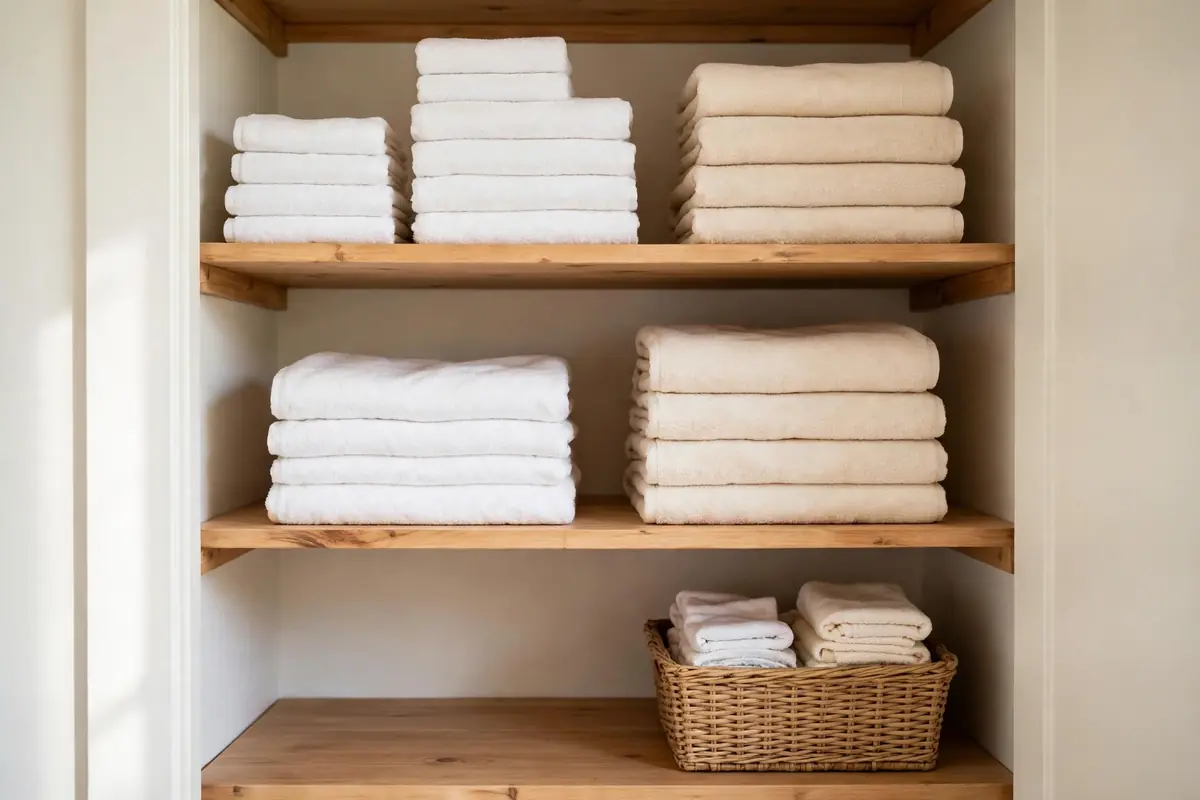
| Linens | Holiday guests need real towels, not thin ones | Stained or thinning sheet sets, stretched towels | Two full sets per bed, guest towels folded and ready |
| Kids’ rooms | Gift season is coming and toys need shelf room | Outgrown toys, broken pieces, duplicate sets | Favorites, one donate box they help fill |
| Holiday decor storage | Broken decor wastes the only weekend you have to decorate | Tangled lights that never worked, cracked ornaments, dried-out wreaths | The decorations you actually hang, sorted and labeled |
What is the smartest order to declutter in October?
Start with clothes and the entryway in week 1, the pantry and kitchen in week 2, living areas and linens in week 3, and guest spaces in week 4, with donations out the door.
What to do in week 1 and 2
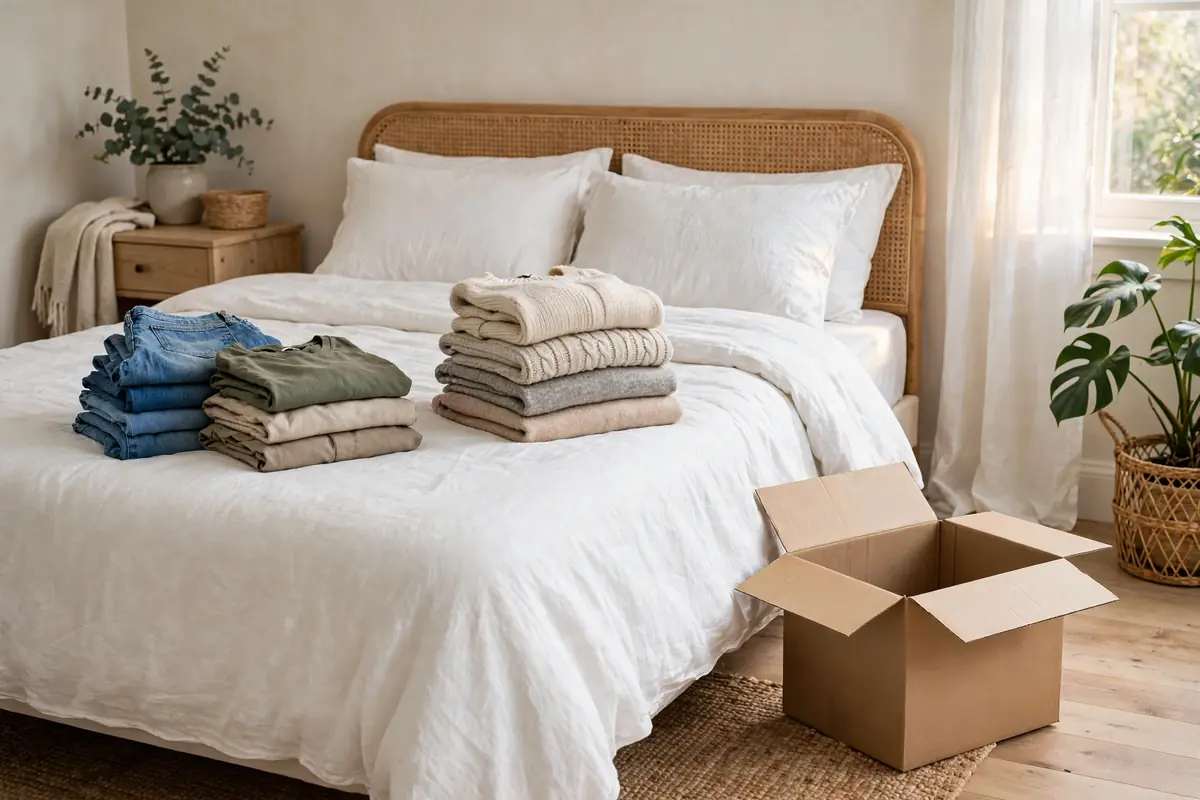
Week 1 is the wardrobe swap. Pull every summer piece out, try on the fall clothes, and bag donations as you go. Getting rid of clutter eliminates 40% of housework in the average home, according to the National Soap and Detergent Association, and the closet is where that math hits hardest. Week 2 is the pantry and kitchen: cooking season is short, and a cleared pantry changes how you shop. My judgment: start with clothes. The wardrobe swap forces the donation habit early.
What to do in week 3 and 4
Week 3 covers the living room and linens, the rooms guests touch. Week 4 is the guest room plus the exit plan: every donation bag and box leaves the house that week. If the kitchen drives you crazy every morning, swap weeks 1 and 2. The finish line: by Halloween, the guest spaces are done and the donations are gone.
How do you decide what stays and what goes?
Ask three questions in this order. Have you worn or used it in the last year? If not, donate it. Is it broken, stained, or missing parts? If yes, toss or recycle it. Are you keeping it for someone who might want it someday? Photograph it, then let it go.
| If the item is… | Then… | Why it works |
|---|---|---|
| Unworn or unused in 12 months | Donate | A full year covers every season, so there is no “just in case” left |
| Broken, stained, or missing parts | Toss or recycle | Thrift stores pay to dump trash, so do not make your problem theirs |
| Kept for someone else “someday” | Photograph it, then let it go | The photo keeps the memory, the shelf keeps its space |
| Broken holiday decor | Toss | No one wants a string of lights that half works |
My one hard rule for this whole checklist: ban the “maybe” pile. A survey by Decluttr and the National Association for Professional Organizers found that 54% of Americans feel overwhelmed by clutter and 78% have no idea what to do with it. The “maybe” pile is exactly where that 78% lives. Keep, toss, donate, or photograph it.
What should you declutter in your closet this fall?
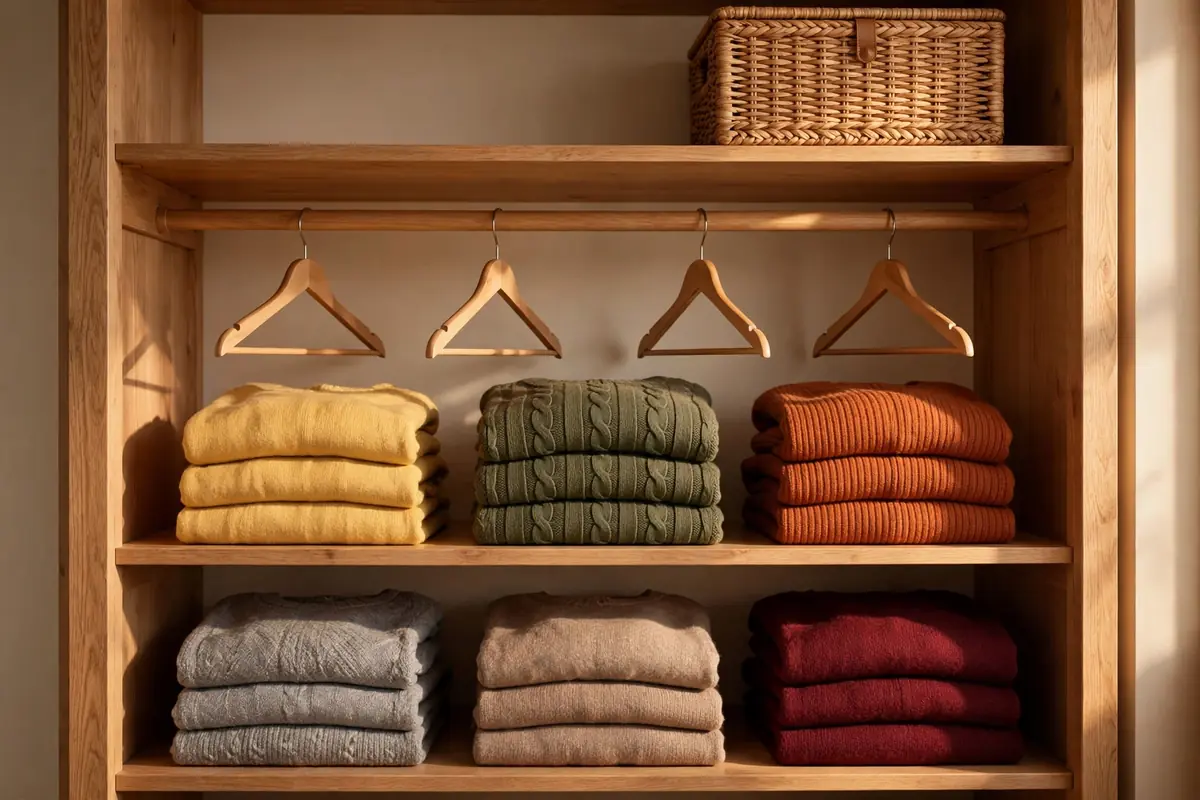
Pull everything summer out first: the shorts you never reached for, the sandals, the tops that only fit one specific week in June. Then judge the fall and winter clothes with fresh eyes: shoes that hurt, single gloves with no partner, stretched-out sweaters, and every wire hanger that is tangling the good ones. That is the fall closet cleanout, five categories, one afternoon.
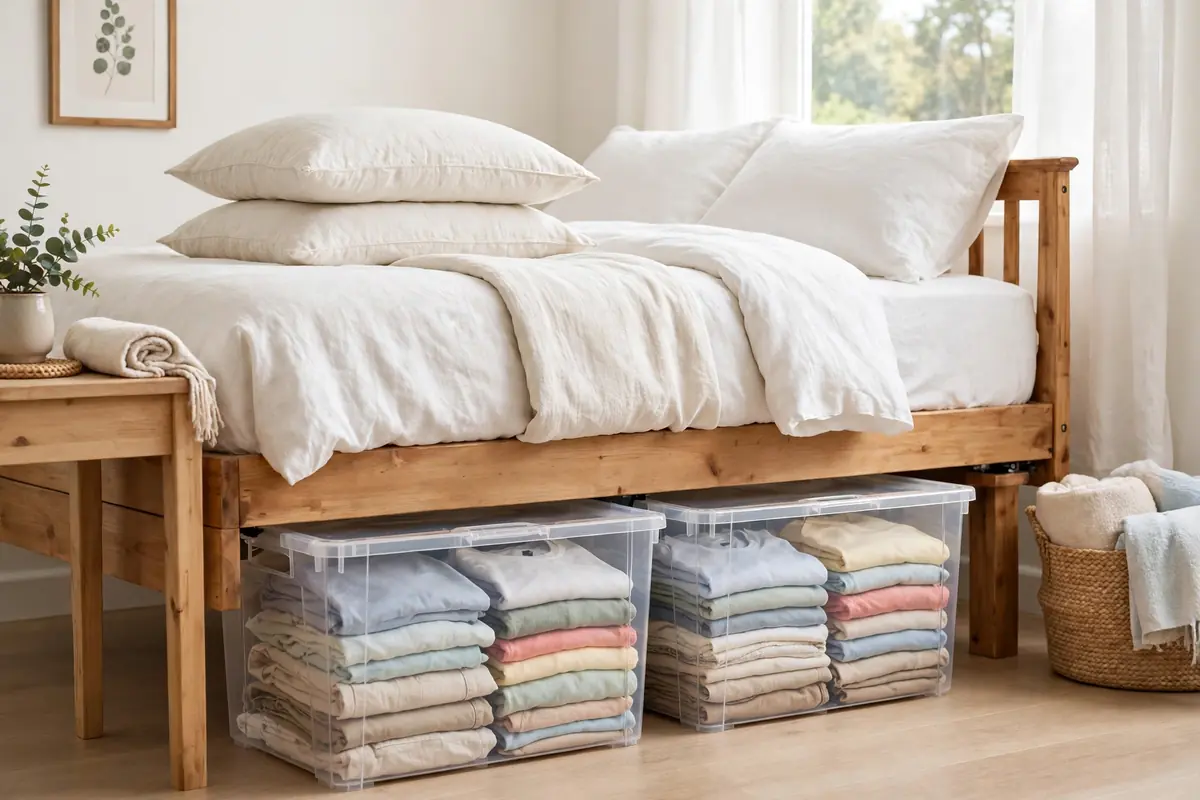
Store the keepers clean, because moths love a dirty sweater in storage. Wash or dry-clean everything before it goes into a labeled bin or under bed storage boxes. Aim for 6 to 12 inches of clearance under the bed frame when you measure for bins, and write the contents on the label, not “misc winter stuff”.
My opinion: the wire hangers go first. They are free, they ruin shoulders, and replacing them with a $12 to $20 pack of slim velvet hangers buys you roughly a third more rod space. If you are on a tight budget, keep the plastic tube hangers and just kill the wire ones, that is the trade that costs nothing and still helps. Once the swap is done, a tidy closet shelf system earns its keep; our closet shelf organization ideas show how to stack what the rod cannot hold.
How do you reset the entryway before coat season?
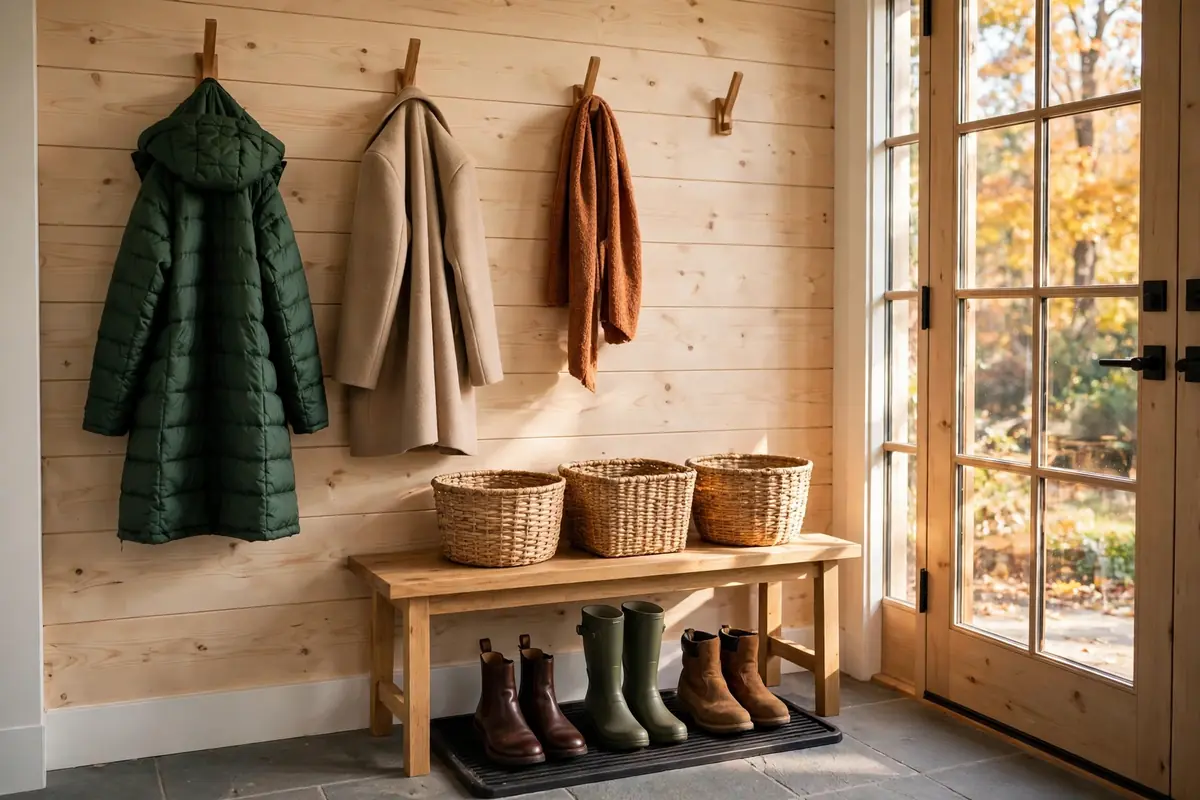
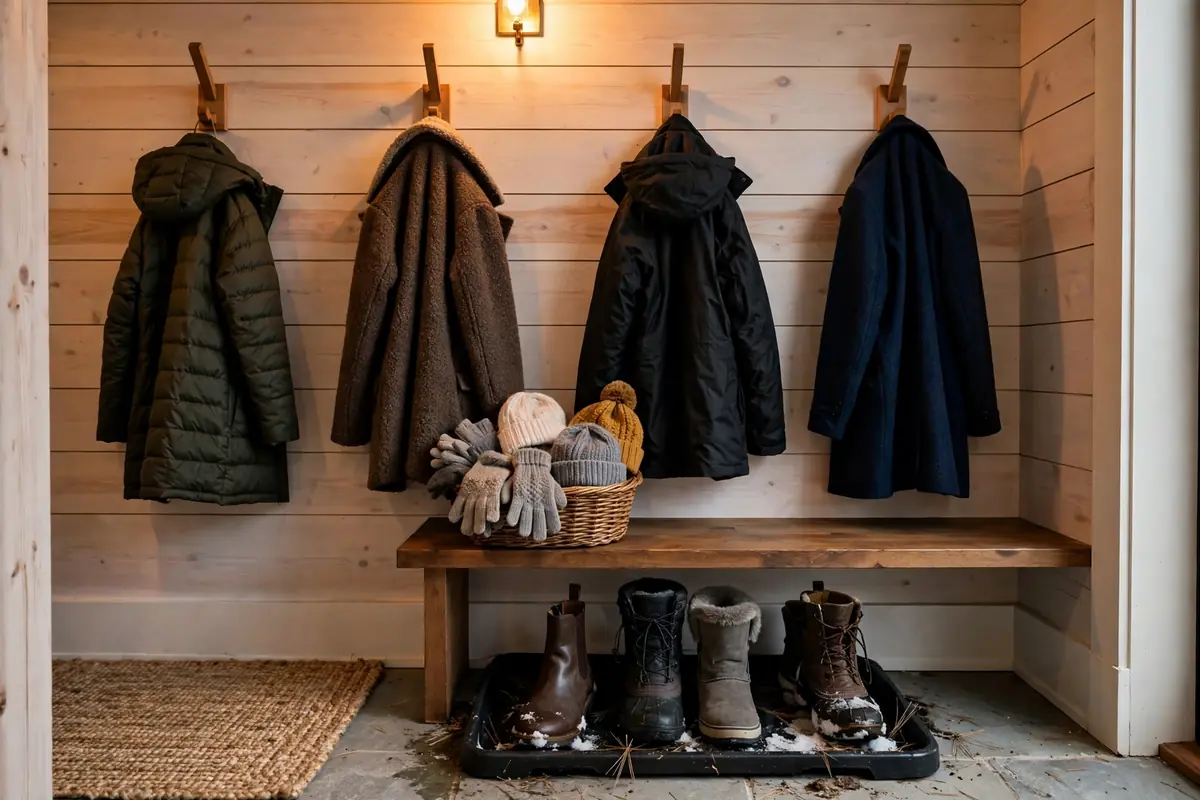
Clear out the summer first: sandals, dead sunscreen, the broken umbrella nobody fixed, and the kids’ boots they outgrew two sizes ago. Then set up the drop zone for what is coming: wall hooks, a boot tray by the door, and one basket per person for gloves, hats, and scarves. When every person has exactly one basket, the floor stays clear without nagging.
The two-coat rule
Each person gets two coats on the hooks: the daily coat and the dress coat. The third coat, fine but never chosen, goes to the donation bag or the coat closet. Americans spend 2.5 days a year looking for misplaced items, according to the 2017 Lost and Found Survey by Pixie, and much of it is coat, key, and shoe hunting by the front door. A two-coat limit is not minimalism.
Here is my judgment on entryway storage: do not buy a fancy hall tree until the pile is gone. A $15 to $30 over-door hook rack and a boot tray solve 90% of entryway chaos. The expensive furniture is for a problem you have already solved, not the one you have now. Move the off-season shoes out now; if you need a place for them, our under bed storage ideas cover the bins that actually fit.
What belongs in a fall pantry purge?
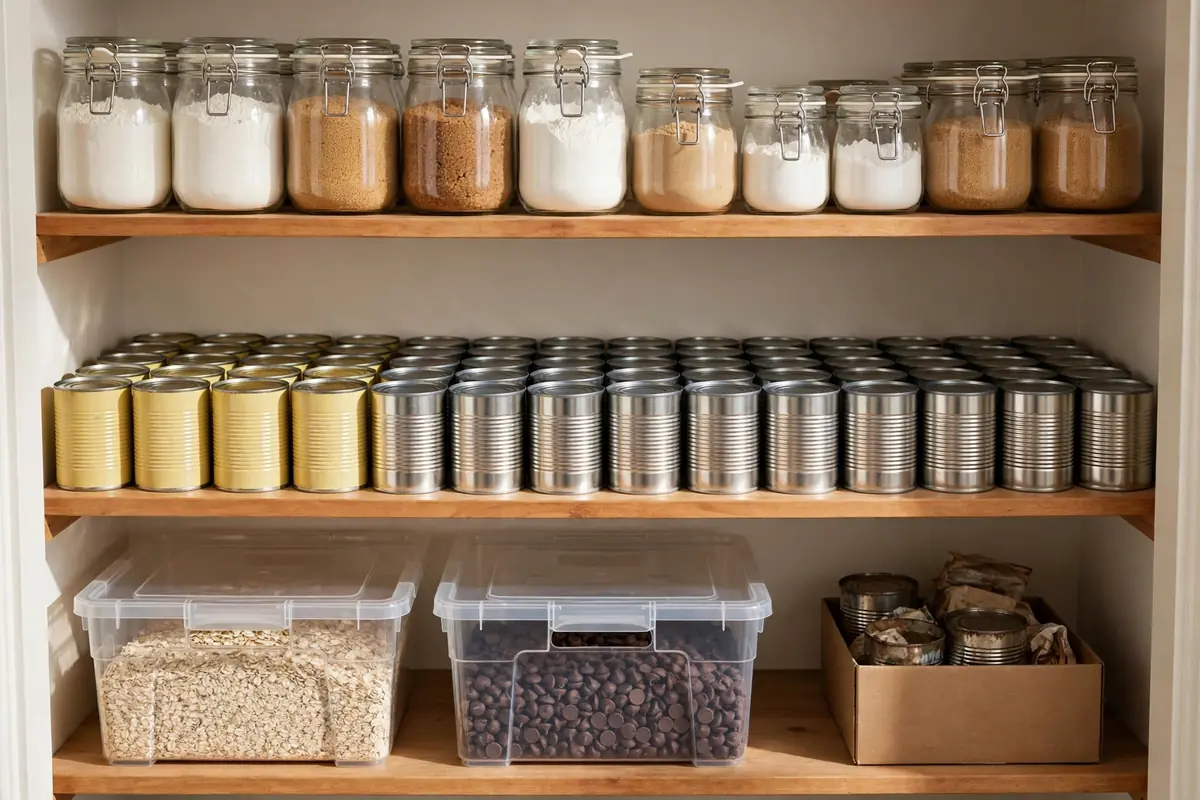
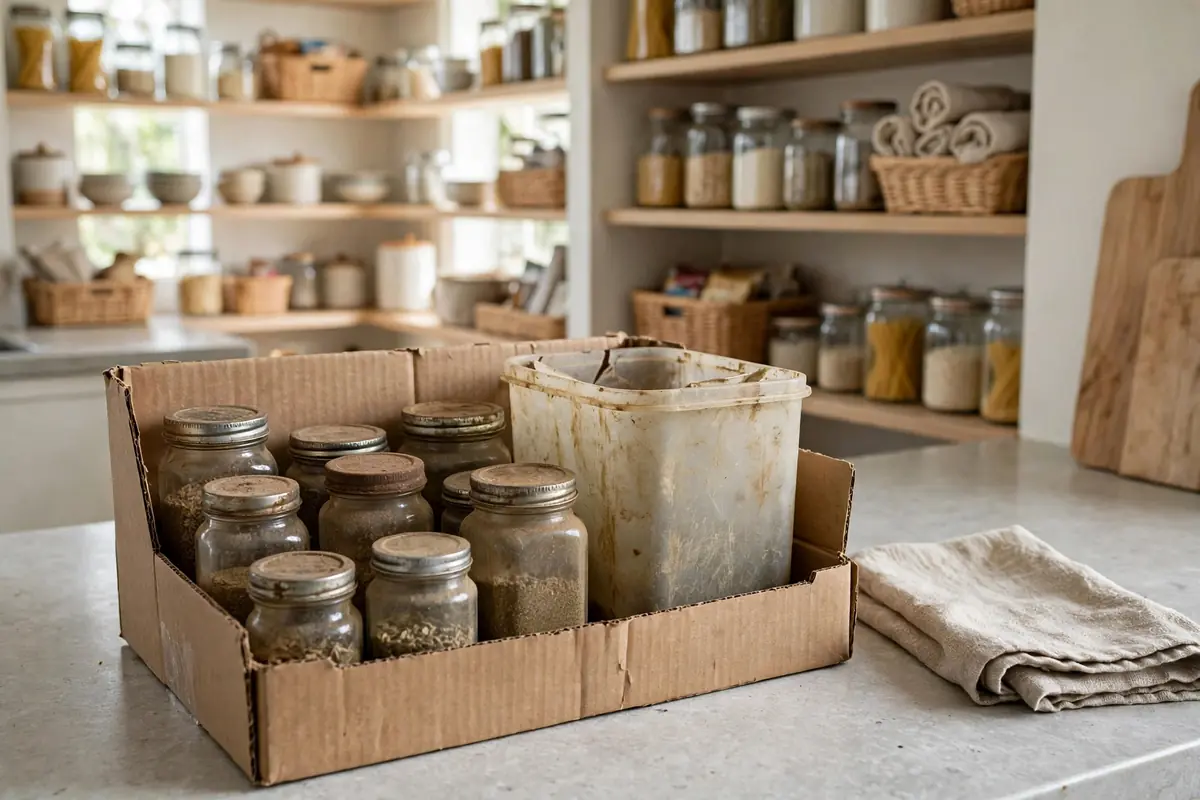
Expired spices, stale baking supplies, mystery cans with no label you trust, and the duplicates, three open mustards is two too many. Pull every shelf, check every date, and wipe the shelf before anything goes back.
Now the date labels. Per USDA guidance cited by StopWaste, “sell by” tells the store when to pull the item, “best by” is about peak quality, and “use by” is the one date that actually means safety, and only on infant formula. A can of beans past best-by is usually fine to eat, but food banks cannot always take it. Feeding America reports that 38% of all food in the US goes unsold or uneaten each year, while its network rescues 4 billion pounds of food annually. Call your local food bank before you drop off and ask what they accept past best-by dates. When in doubt, toss it.
This purge is not for the person who just organized their pantry in September. If your shelves are already labeled and current, skip this section and do the closet instead. If your drawers need the same treatment after the pantry, our kitchen drawer organization ideas pick up where this leaves off.
Which kitchen gadgets should you let go of before holiday cooking?
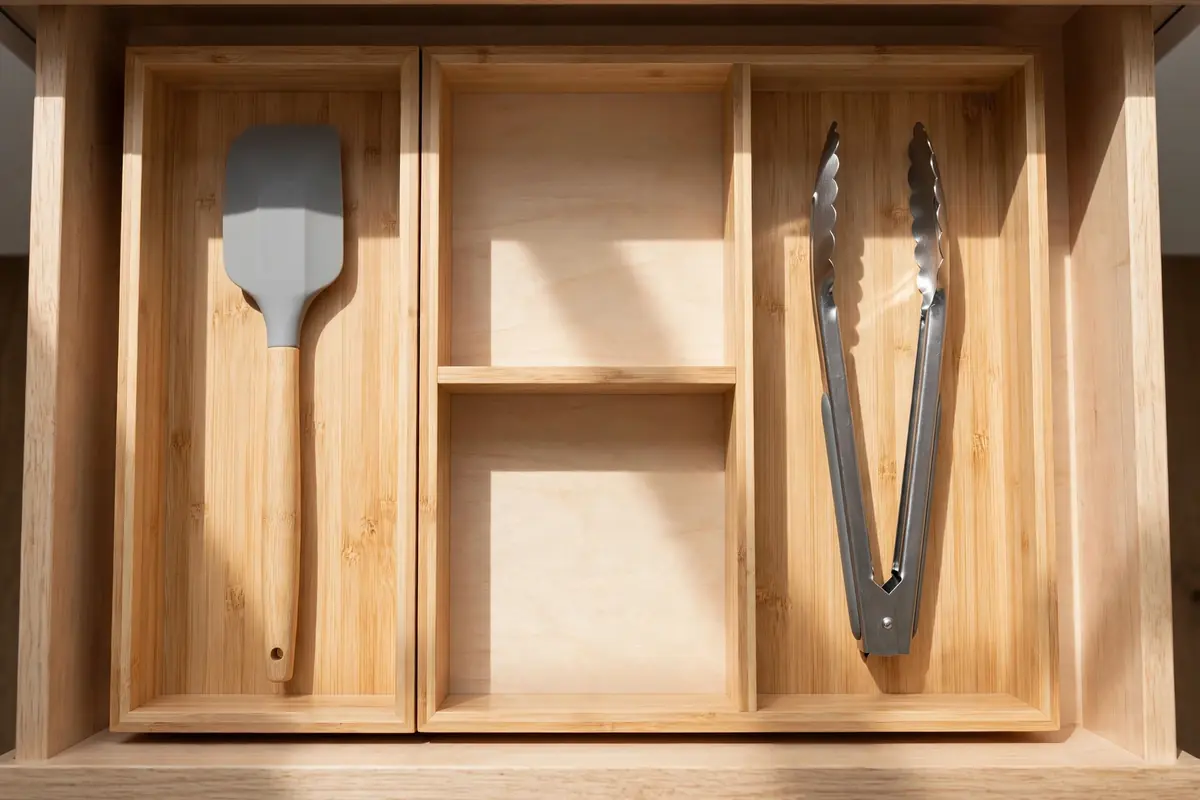
Let go of the duplicates first: the second spatula, the third wooden spoon, the chipped mugs, the plastic containers with no lids. Then the big one, the second slow cooker, the bread maker you used twice, the juicer from the health kick of 2024. If it has not earned counter or cabinet space by October, it will not earn it by Christmas.
Keep the holiday workhorses front and center: the roasting pan, two baking sheets, the big mixing bowls, the knives you actually sharpen. Everything you use weekly gets the easy shelf. Everything seasonal goes up high or into a labeled bin. One honest opinion: most kitchens do not have a storage problem, they have a duplicate problem.
The lidless containers deserve their own callout, because they breed. Match every container to a lid right now, and recycle the orphans. If the keepers need a better home after the purge, our guide to food container lid storage shows the setups that stop the avalanche. And a trade-off worth saying out loud: the cheaper plastic sets are fine if you replace them yearly, but if yours are stained and warped, this is the moment to admit they are done.

How do you declutter the living room for holiday guests?
Guests will sit in this room for hours, so clear the surfaces first. Tired throw pillows go, dead remotes go, the drawer of tangled spare cables goes, and the books you will never reread go to the donate box. Then stop. A living room does not need to be styled for the holidays, it needs to be clear enough that people can set down a coffee cup.
There is a real social cost to skipping this one. In an OfferUp survey of 2,000 Americans, 61% said they clean to de-stress, 46% said they “suffer quietly” when visiting a messy home, and 28% said they would avoid going back. Your guests will not tell you the clutter bothered them. They will just come over less.
My judgment: guests notice clutter, not decor. Clear beats styled every time, and it is free. One honest admission: this section is not for the person whose living room is already calm. If your surfaces are clear and the room works, spend this hour on the guest room instead, that is where the payoff is bigger.

What should you clear out of the guest room before visitors arrive?
The guest room is not a storage unit, no matter what October says. Move the wrapping paper stash, the drying rack, and the “temporary” boxes that have lived there since spring. Then reset it like a room someone is actually going to sleep in: fresh sheets, empty drawers, clear closet space with a few hangers, and a phone charger on the nightstand.
This is also where the outgrown toys go, because kids’ rooms overflow into guest rooms every single year. Box up the toys they have outgrown before the holiday gifts arrive, and let the kids help fill one donate box themselves. They will surprise you with how much they are ready to release when it is their choice.
My opinion: the guest room is the highest-payoff room in this whole checklist. Ten hours of work anywhere else cannot buy what one cleared guest room gives you, which is a holiday season where visitors feel welcome instead of in the way. If the guest bathroom needs the same treatment, our bathroom shelf ideas cover small-space setups that hold guest towels without crowding the sink.

Which linens are worth keeping, and which should you donate?
Keep two full sets per bed: one on the bed, one in the closet. That is the whole rule, and it is enough. Anything stained, thinning, or pilled past comfort goes, and anything beyond the two sets is just laundry you have not done yet.
The worn sets still have a second life. Animal shelters take old towels and blankets for bedding, but call first, because every shelter has its own rules about what they accept. This is not a drop-and-run donation; a two-minute phone call saves you a wasted trip.
Holiday tablecloths get one honest question: did you use it last year? If yes, it stays. If it has sat folded for two holiday seasons, donate it and free the shelf. And here is the trade-off: the cheaper sheet sets are genuinely fine for guest beds that see two weeks of use a year. Save the good cotton for your own bed.
Donation drop-off rules that save you a second trip
Check your local store’s list before you load the car. Goodwill of Central and Northern Arizona, in its donation FAQs, accepts clothing, shoes, housewares, linens, and small appliances, and does not take mattresses, hazardous materials, or large appliances. Rules vary by location, so verify yours first.
Take the receipt every time; if you itemize, it is your documentation, though Goodwill advises talking to a tax advisor about values. Schedule the pickup the same week you fill the bags. Many Goodwill locations offer scheduled home pickups, and a pickup on the calendar turns a hallway pile into an actual donation.
Goodwill of Central and Northern Arizona says its donations divert more than 200 million pounds of material from local landfills each year. Your three bags are a rounding error in that number, and they still matter.
| Item | Accepted? | What to do instead |
|---|---|---|
| Clothing, shoes, housewares, linens | Yes, at most Goodwill locations | Bag them, get the receipt |
| Small appliances (working) | Yes | Test it first |
| Mattresses and box springs | No | Local mattress recycling programs |
| Hazardous materials (paint, chemicals) | No | County hazardous waste drop-off |
| Large appliances | No | Retailer haul-away or scrap pickup |
How do you get every donation out of the house before Thanksgiving?
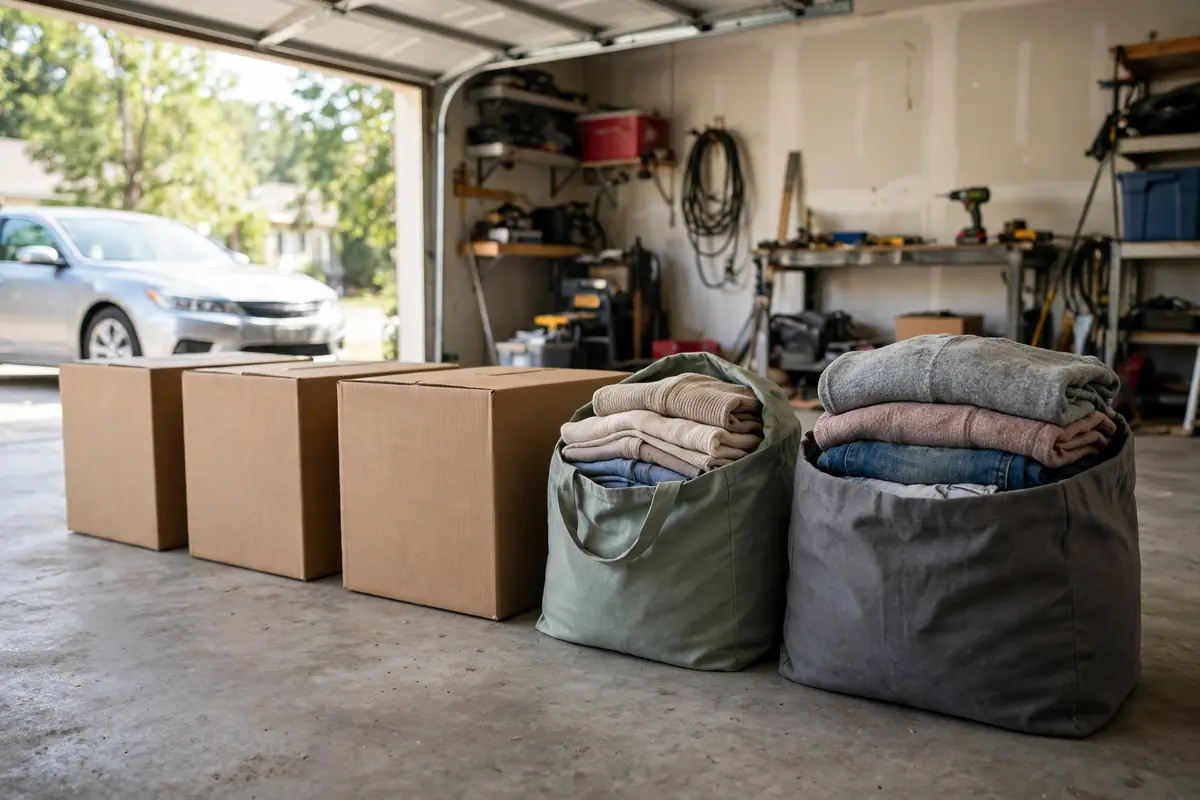
You need an exit plan, because a donation bag by the door is just clutter with good intentions. Bag, box, and label as you go, one label per box, “kitchen”, “clothes”, “linens”, so the drop-off takes five minutes instead of twenty. Set up a donation station right by the door: one corner, one growing stack, nowhere else in the house.
Then the rule that makes it all work: no hallway pile survives the weekend. Every bag that enters the station leaves the house within seven days, either by drop-off or by scheduled pickup. Put the pickup on the calendar the same day you fill the first bag, not “when the pile is big enough”. The pile is never big enough, that is the trap.
This matters more than it sounds. The EPA estimated that 17 million tons of textile waste were generated in the US in 2018, about 5.8% of all municipal solid waste, and only 14.7% of it was recycled, while 11.3 million tons went to landfills, per the EPA’s textiles data. Donating wearable clothes keeps them out of that 11.3 million tons. Textile recycling bins take the unwearable ones. Either way, the goal is the same: out of your house and out of the landfill.
Start with the pantry: here is the first box to fill today
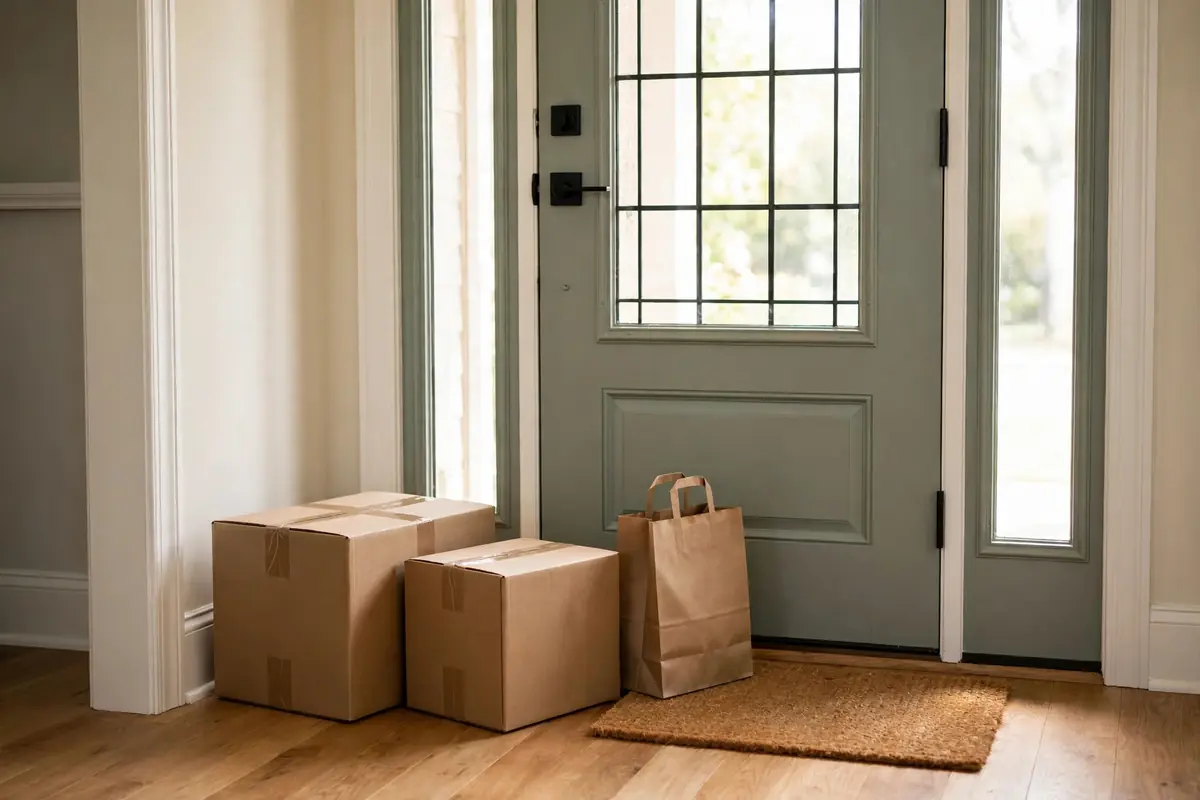
If you do nothing else from this checklist, do the pantry purge. It takes 20 minutes, it needs one box, and it changes how holiday cooking feels the very first time you open the cabinet. Then do the closet, because the donation bag you fill there is the one that starts the habit.
That is the whole strategy: pantry today, closet this weekend, donations out before Thanksgiving. Everything else on this list is just the same three steps in different rooms.
One last judgment, and I will keep it short. The perfect fall declutter does not exist, but a done one does. Pick the room that bugs you most, fill one box, and schedule the pickup. If you want a plan for what comes after the holidays, our post-holiday declutter checklist will be here in January, when the gift boxes need homes of their own.
Frequently asked questions
When should I start decluttering before the holidays?
Start in early October and work room by room through the month. That gives you four full weeks before Thanksgiving, which is enough time to donate, schedule pickups, and reset the guest room without a last-minute scramble.
What is the fastest room to declutter in fall?
The pantry. You can pull every shelf, check dates, and wipe it down in about 20 minutes. The closet is second fastest once you commit to the keep, toss, and donate boxes.
Can I donate clothes with small stains or missing buttons?
Most thrift stores, including Goodwill, do not accept stained or damaged clothing, so check your local store’s donation FAQs first. Stained pieces can go to textile recycling bins if your area has them, and a missing button is a two-minute fix that makes a shirt donatable again.
Will food banks take pantry items past their best-by date?
It depends on the food bank, so call and ask before you drop off. “Best by” is about peak quality, not safety, per USDA guidance, but many food banks have their own acceptance rules. When in doubt, toss it rather than donating food you would not serve your own family.
What should I do with old holiday decorations I no longer love?
Toss anything broken, like light strings that half work or cracked ornaments, because no one wants those. Donate the decorations that still work but no longer fit your style, and keep only the ones you actually hang each year, sorted and labeled.
How do I declutter the guest room without giving up a whole weekend?
Give it two focused hours: first move out everything that does not belong to a guest, like wrapping paper and drying racks, then reset the bed, clear one drawer, and add a phone charger. The room does not need to be perfect, it needs to feel like someone is welcome to sleep there.
Should I sell my decluttered items or just donate them?
Donate, unless an item is worth real money and you will list it within 7 days. Most decluttered household goods earn a few dollars at best after fees and hassle, and the r/declutter community norm is blunt on this point: donate it rather than sell it if you know you will not follow through.
How do I stop donation bags from sitting by the door for a month?
Schedule the pickup or drop-off the same day you fill the first bag, and follow the no-hallway-pile rule: nothing sits longer than seven days. A donation station by the door works only when it has a deadline attached.
How do I keep the house from re-cluttering before guests arrive?
Use the one-in-one-out rule for the rest of the season: every new item that enters means one leaves. It is the simplest system there is, and it holds through the holidays if you start it now.
