
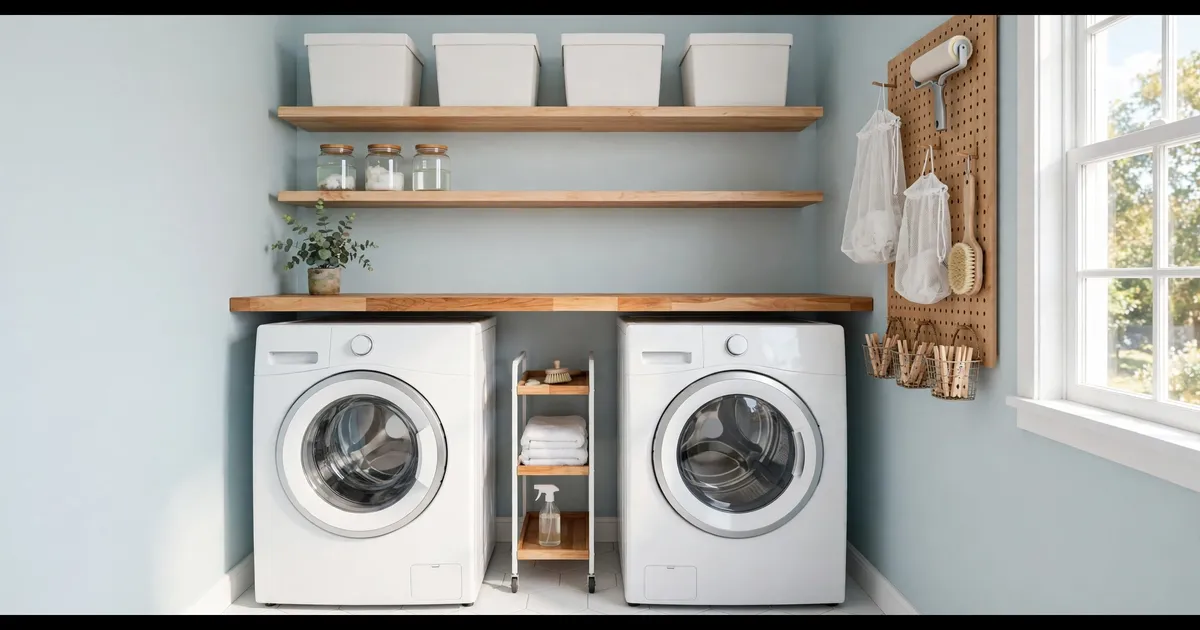

Most laundry room organization ideas assume you have room to spare. If yours is a closet, a corner, or a pass-through barely wider than the machines, the real fix is a three-move reset: pull out everything that is not part of the wash, dry, fold loop, put daily supplies within arm’s reach on vertical storage above or beside the machines, and give every load a landing spot from dirty to clean. Do those three, and a room under 60 square feet can run wash day without the floor pile. This guide gives you 21 small-space ideas mapped to the five laundry zones, with real measurements, budget tiers, renter-safe options, and the safety checks most guides skip.
TL;DR: Go vertical first (over-washer shelving, pegboard, the door), sort clothes at the hamper instead of on wash day, and pick one drying upgrade plus one folding surface. Standard machines are 27 inches wide, so the gap beside them fits a slim rolling cart. Most of the payoff lands under $75, and renters can do nearly all of it without drilling. Clean the lint trap after every load and check the dryer vent once a year; the U.S. Fire Administration attributes about 2,900 home dryer fires a year to units like yours, with failure to clean lint as the leading cause. These laundry room organization ideas work because they fit the space you have.
| Solution | Best for | Install effort | Cost tier | Renter friendly |
|---|---|---|---|---|
| Floating shelves over machines | Everyday detergent and bins | Drill + level | $25 to $75 | No |
| Over-machine freestanding shelf unit | Renters and tight walls | Assembles in minutes | $75 to $200 | Yes |
| Slim rolling cart (6 to 8 in wide) | The gap beside the washer | None | $25 to $75 | Yes |
| Pegboard with hooks and baskets | Small tools, mesh bags, clips | Drill | $25 to $75 | No |
| Fold-down drying rack | Delicates, no floor space | Drill | $25 to $75 | Sometimes |
| Over-door organizer | Sprays, lint rollers, clothespins | None | $25 to $75 | Yes |
| Stackable washer and dryer set | Reclaiming half the floor | Professional delivery | $75 to $200 (frame only) | Rarely |
| Pedestal drawers under front-loaders | Detergent, dryer balls, mesh bags | Slide in | $75 to $200 | Yes (if machines stay) |
What is the fastest way to organize a small laundry room?
Take out everything that does not support the wash, dry, fold loop, then sort what remains into keep, toss, and relocate piles before buying a single bin. Most small laundry rooms fail from volume, not layout: dead detergent bottles, one-sock graveyards, paint cans, and holiday decor eat the space organizers would use. Carry back only what earns its place.
Your keep pile is deliberately small: detergent, stain treatment, dryer balls or sheets, hampers, a drying rack, the iron, cleaning rags, and a backup supply. That is how to organize a small laundry room when you cannot add square footage: shrink the inventory to fit the room.
Then think in an assembly line, not shelves: dirty clothes land on one side, clean clothes leave on the other, and the path never crosses. That one change beats any organizer.
Laundry room organization ideas that survive real life: the 10-minute weekly reset
Run this weekly and the room stays honest: clear the lint trap and surfaces, refill detergent and stain spray, put away clean laundry, and return one migrated item to its real home. Ten minutes beats a monthly two-hour rescue. My opinion: skip the cute labeling projects until this habit sticks.
How should you arrange a tiny laundry room around your workflow?
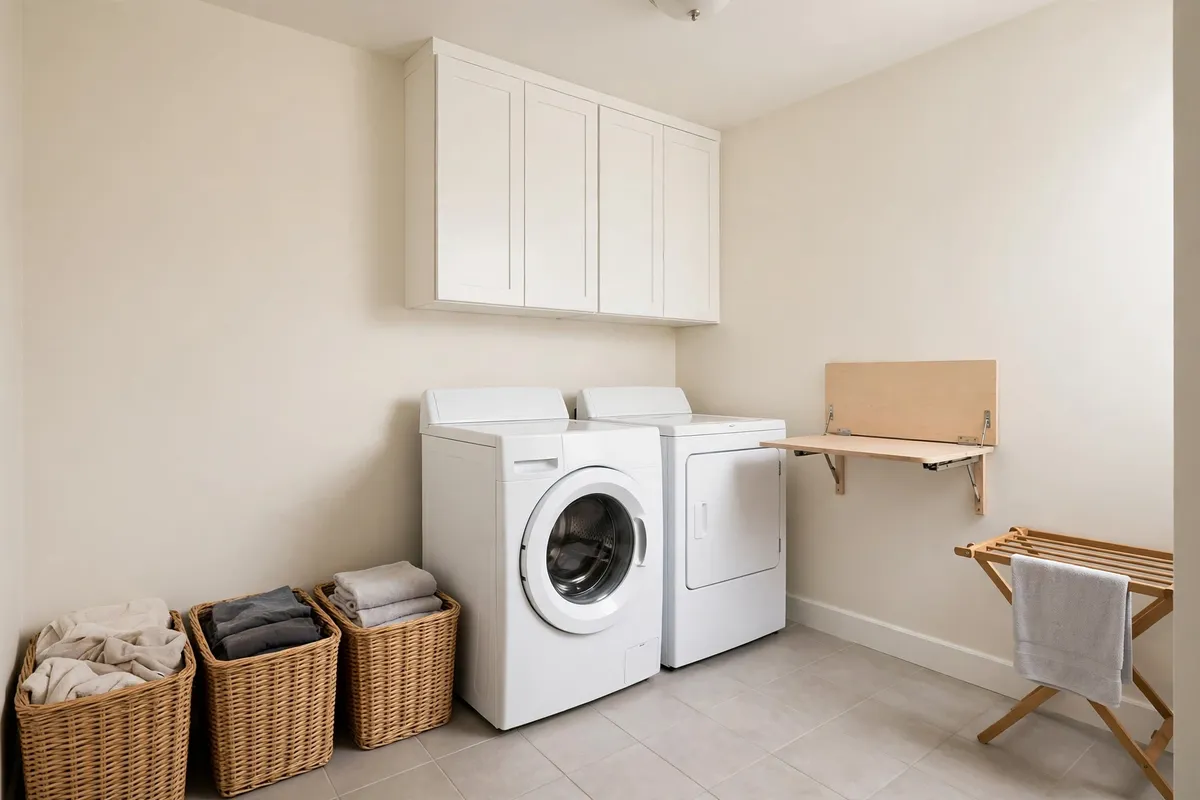
Dirty in on the left, clean out on the right, machines in the middle. The five zones are sort, wash, dry, fold, and treat. A small room cannot hold five stations, but it can hold five spots: a fold-down rack above the sort zone covers drying, and the machine tops cover folding. Map the path before you shop.
Walk your actual wash day and count the steps. If wet clothes cross the room to reach a rack, the dry zone is in the wrong place. If clean laundry waits on the bed for a folding spot, the fold zone lost. Rearranging is free, and it shows which zone is starving. Buy storage only for the starving zone.
| Zone | What lives there | Storage picks |
|---|---|---|
| Sort | Labeled hampers, mesh laundry bags, a small trash for lint and tags | Stackable hampers with removable bags, slim hampers |
| Wash | Detergent, stain treatment, measuring scoop, wool dryer balls | Under-shelf baskets, labeled bins on over-washer shelving |
| Dry | Drying rack, clothespins, hangers, retractable clothesline | Fold-down wall rack, tension rod under a shelf |
| Fold | Flat surface, folded stacks, out baskets | Counter over front-loaders, drop-leaf folding table |
| Treat | Iron, portable board or mat, spray starch, mending kit, utility sink if you have one | Wall-mounted ironing board cabinet, hook for the iron cord |
My judgment call: the sort zone deserves the most attention and usually gets the least. A $20 hamper setup that keeps lights and darks separated saves more weekly time than any shelf. Plan the workflow first, products second. That workflow-first mindset is what makes laundry room organization ideas actually stick.
Where does everything go when the walls are your only storage?
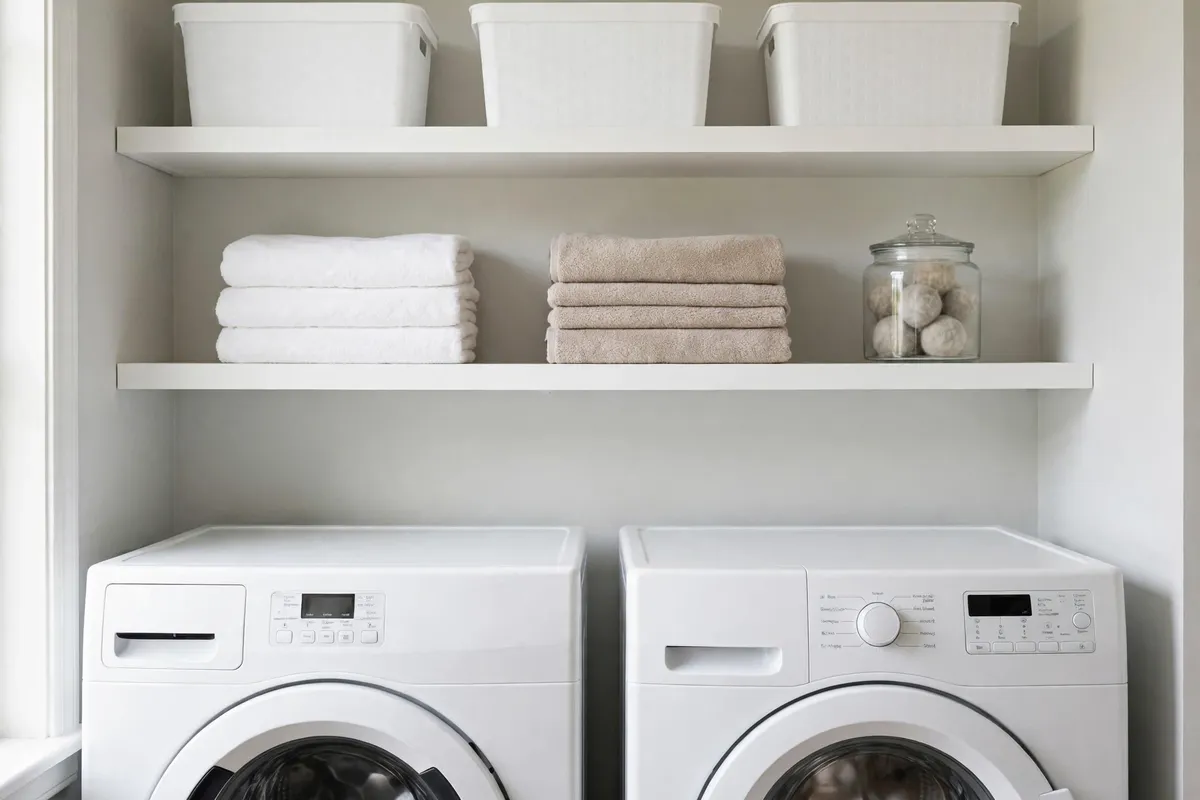
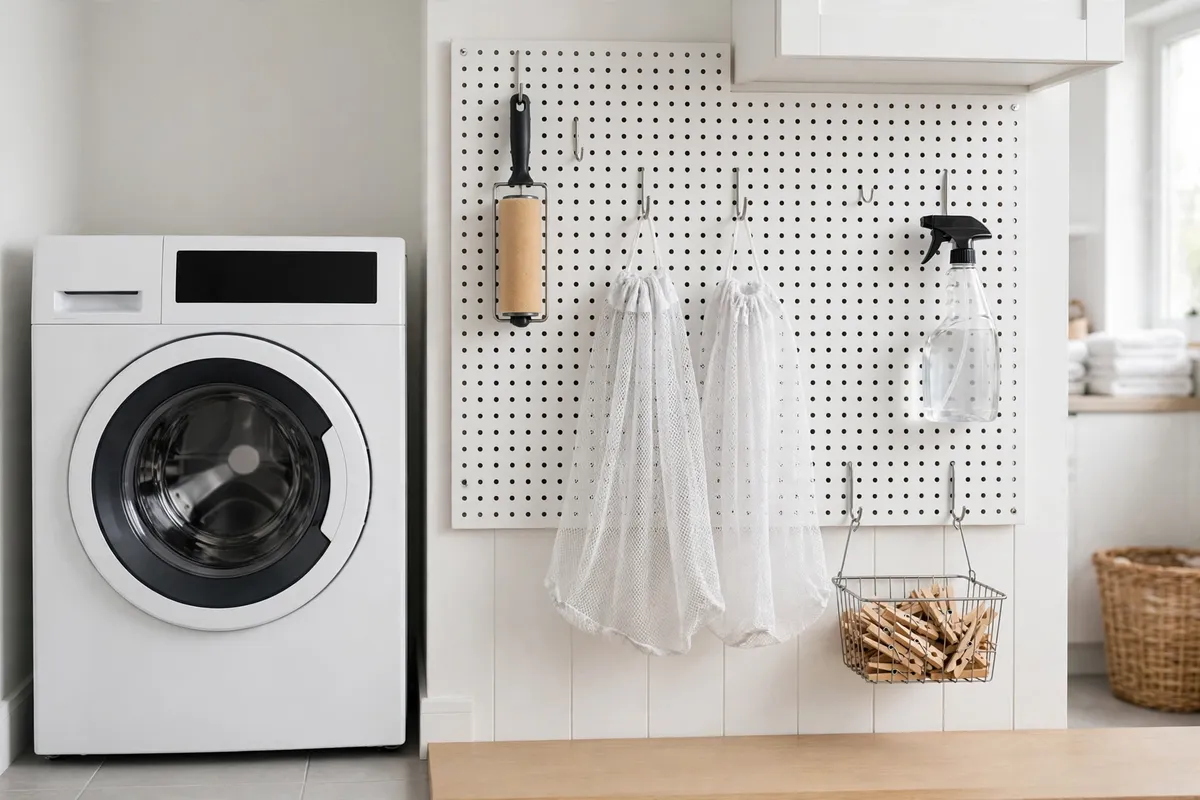

Claim the wall above the machines first, then a pegboard on the side wall, then the back of the door. Over washer and dryer storage ideas work because that wall is dead space: the machines block the lower half and nobody needs headroom past about 12 inches above them. Going vertical is the first of these laundry room organization ideas to try.
Floating shelves are the cheapest play, slim cabinets hide clutter, and a freestanding over-machine unit straddles the pair with no holes. Pegboard earns its spot for the small, losable stuff: lint rollers, mesh laundry bags, clothespins, a brush, stain spray. Hooks move in seconds when your routine changes. A tension rod under the lowest shelf holds spray bottles by their triggers and gives hang-dry shirts a spot for a few dollars.
Keep heavy stuff low and light stuff high. Detergent jugs go on the lowest reachable shelf; folded towels and backups go up top near a step stool. Clear jars for pods and dryer sheets show you when supplies run low. Honest admission: pegboard is not for you if you hate looking at supplies. Cabinets with doors give the same storage with the visual noise gone, and that is a fair trade. If your folded towels need a permanent home beyond the laundry room, our linen closet organization guide maps exactly where sheets, towels, and backstock should live.
What is the best way to dry clothes when there is no floor space?
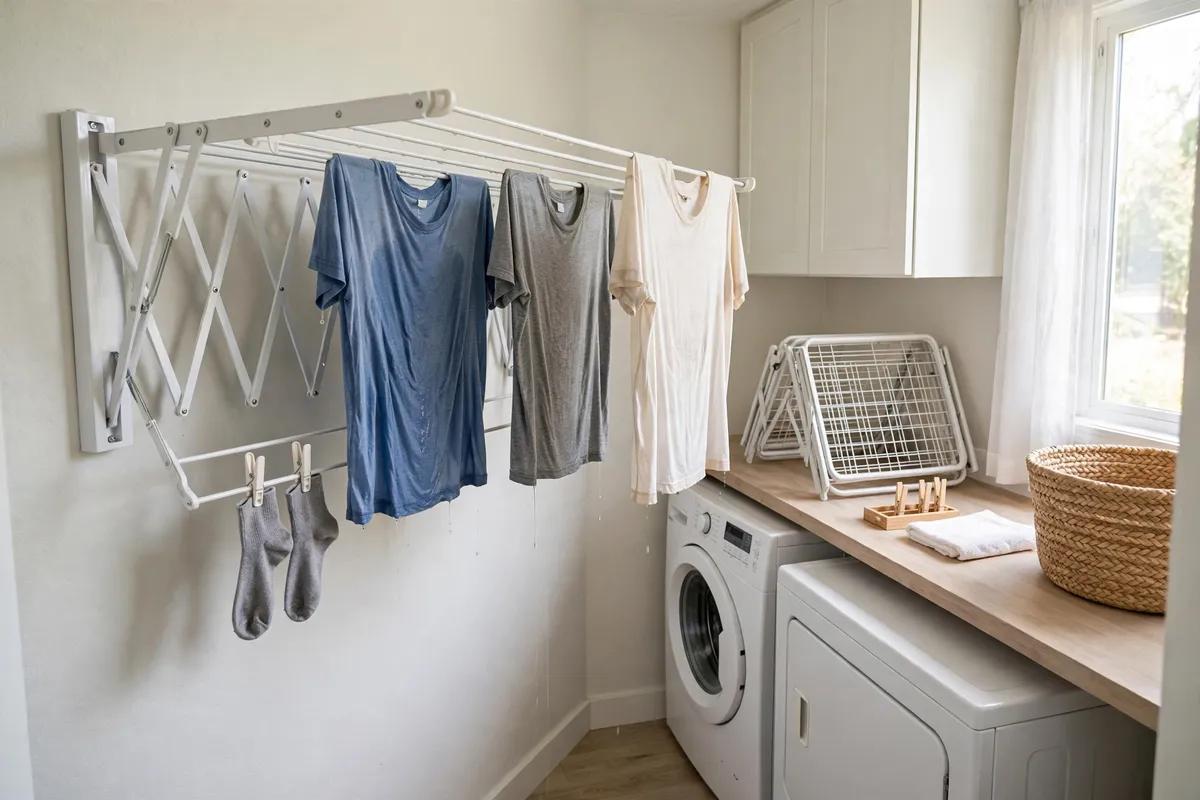
A fold-down wall rack or a retractable clothesline beats any freestanding rack, because both vanish when the clothes come down. Freestanding racks eat floor even folded, and a room under 60 square feet cannot spare it. Mount the rack where air moves: near the door, not in the dead corner behind it.
For daily small loads, a retractable clothesline is hard to beat: it stretches across the room, holds a full delicate load, and reels back into a small case. Tension rods between two shelves work the same way for hangers. Magnetic hooks stick to steel machine sides and hold one or two hangers each.
A ceiling-mounted pulley rack is not for narrow pass-through rooms: you need clearance to raise and lower it without clothes brushing your head or the walls. Skip the ventless dryer idea too unless your building allows one; they help apartments without exterior vents, but they dry slower and add humidity a small room cannot spare.
How do you fold laundry without a folding table?
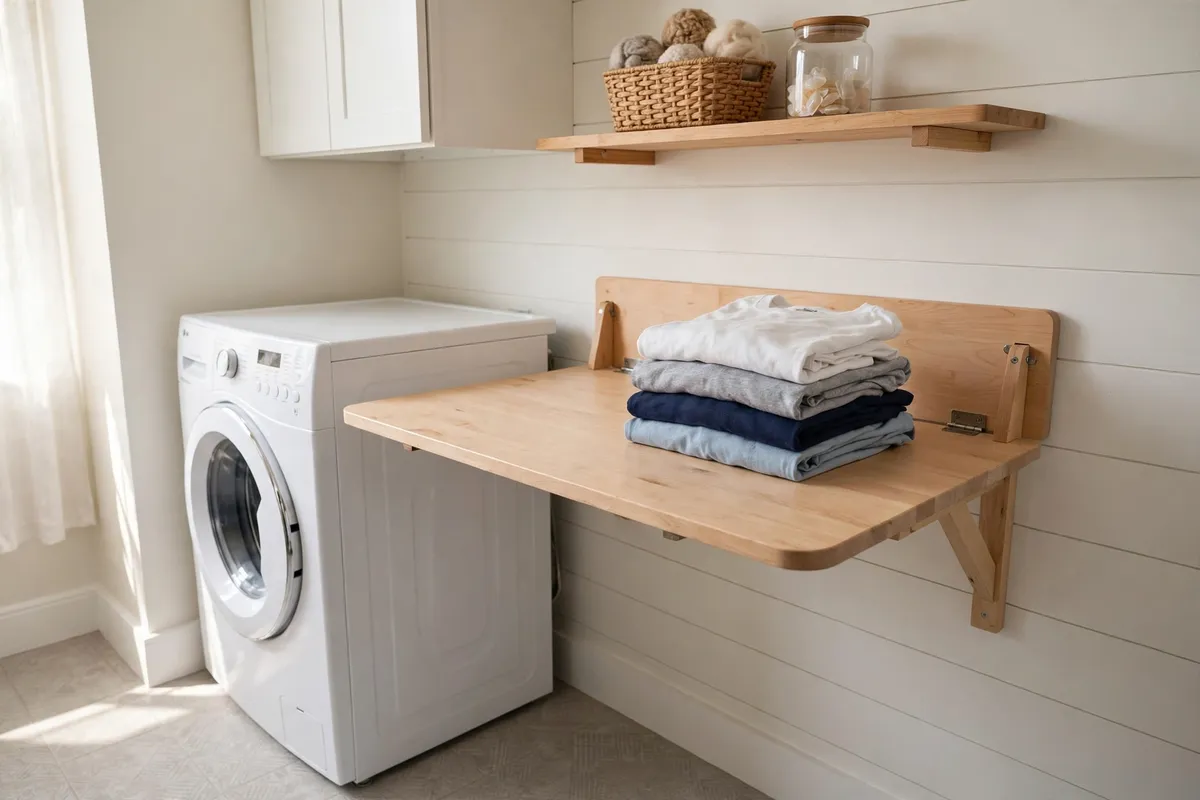
If your machines are front-loaders, a countertop across both is the best folding station you can get: a permanent surface at comfortable height with zero extra footprint. Keep it shallow enough to reach the controls and the detergent drawer without leaning across. Skip that depth check and you get a folding station you curse.
Top-loaders cannot take a permanent top. A wall-mounted drop-leaf table is the next best answer: fold it down for wash day, flip it up after, and the wall clears. Two studs hold a full basket of warm laundry easily. The third option is a rolling cart with a flat top, which doubles as supply storage. Park it between the machines or against the wall when it is not folding time.
The surface should sit around counter height, 34 to 36 inches, so you are not hunching. Tiny laundry room ideas often skip this zone, and it shows up as the clean-laundry pile on the bed. My take: build the folding surface before you buy another bin. An organized room with nowhere to fold is still a room that does not work. The best laundry room organization ideas always include a dedicated folding spot.
Which hamper system keeps sorting effortless?
Sort at the drop, not on wash day. The moment a dirty shirt goes into a lights bin instead of a general pile, you have saved a future sorting session. Two labeled hampers, lights and darks, beat a four-slot sorter nobody maintains. Add a third for towels only if your household fills it.
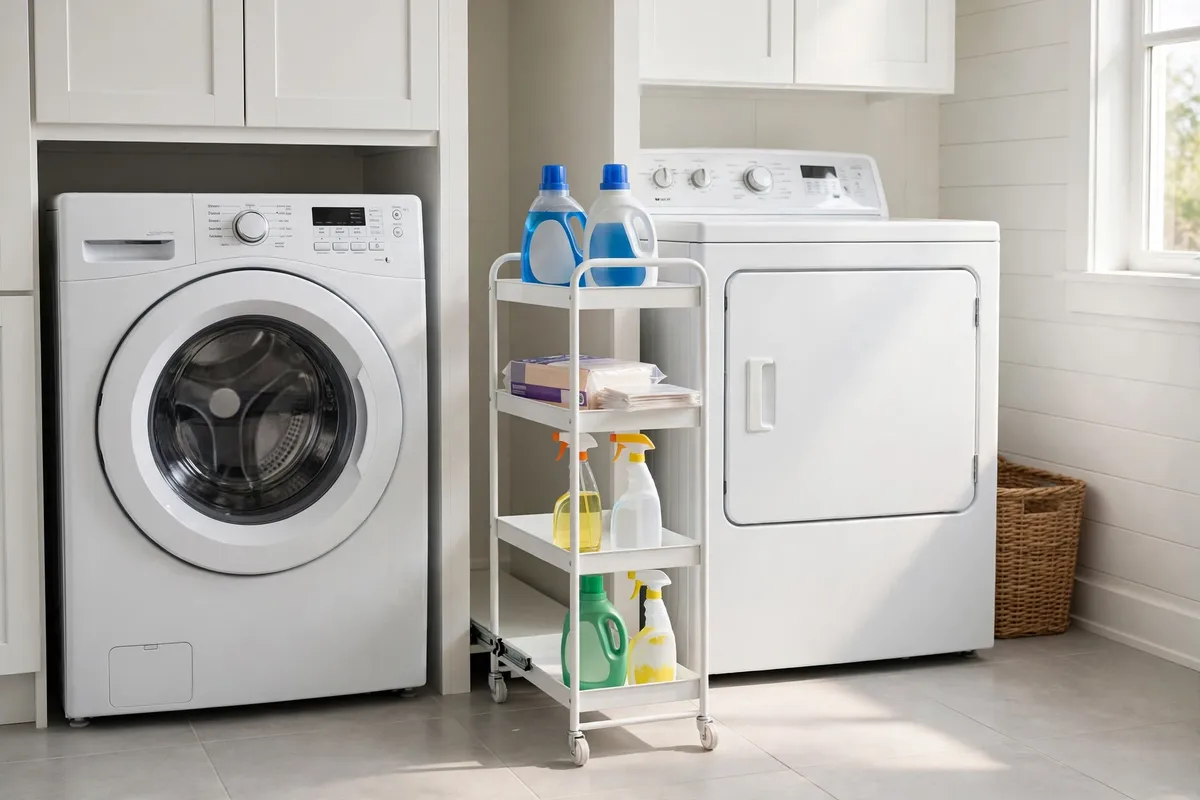
Match the hardware to your space. Stackable sorting hampers with removable bags fit tight footprints: pull the bag, carry it to the machine, drop it back in. Rolling hampers move a heavy towel load without a shoulder workout. A slim hamper slides into the gap beside the machines, the slot most rooms waste. For kids, give each person a basket or color-marked mesh laundry bags. When everything belongs to somebody by name, the “whose is this” pile disappears.
Put hampers where dirty clothes are born, often the hallway or bedroom, not the laundry room. The same vertical-storage thinking that saves small closets works for hamper stations too: stack your sort bank vertically rather than spreading it sideways.
How do you store an iron and ironing board in a closet-sized room?
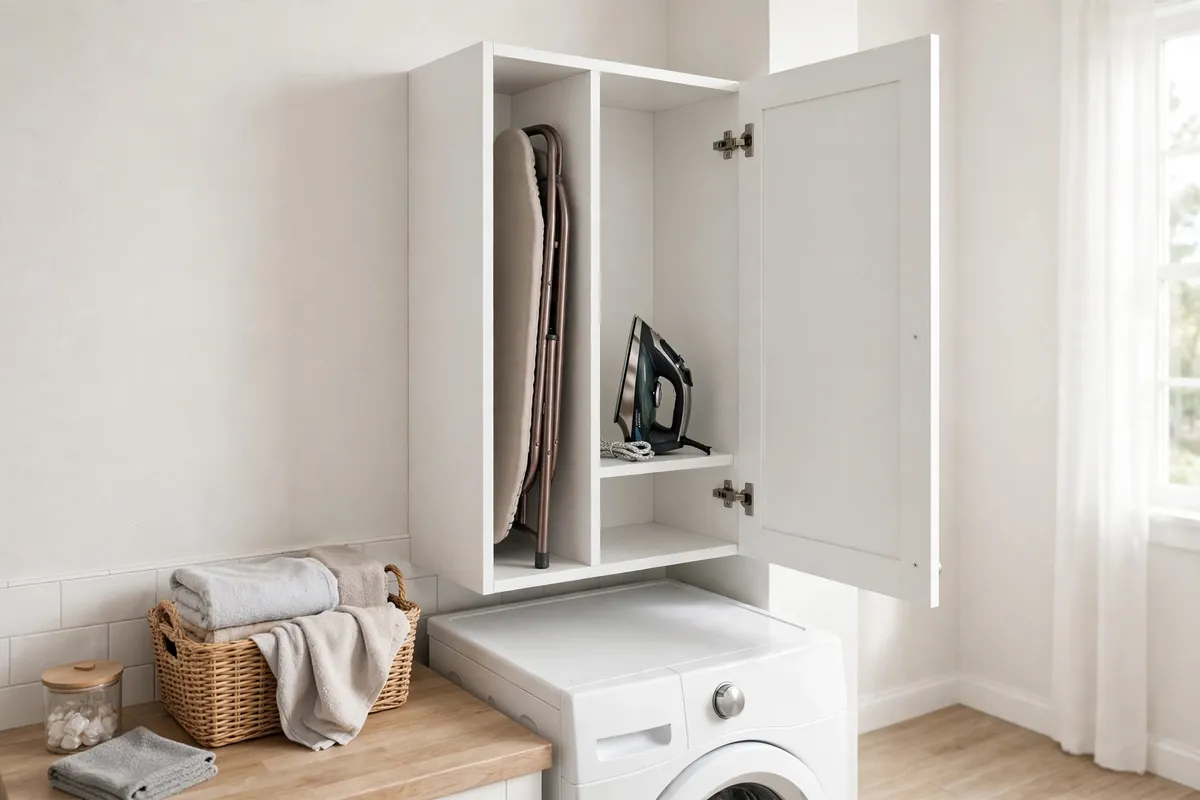
The wall or the door. Never the floor. A full-size board leaning in a corner is the biggest floor-space thief in a small laundry room, and it moves first. A slim wall-mounted cabinet folds out as a board and away to a four-inch-deep box: the cleanest answer if you iron weekly.
If you iron rarely, stop storing a full board at all. A portable ironing mat or blanket turns the machine top (with a towel under for padding) into a serviceable pressing surface and rolls into a drawer when done. The pull-out ironing board is not for everyone: it runs narrower and shorter than a full board, so skip it if you press shirts regularly.
Store the iron on a shelf or wall holder with the cord wrapped loosely, never on a machine that vibrates through the spin cycle. Keep spray starch and cleaning chemicals on the opposite wall from the heat. My recommendation: behind-door holder for the board, shelf holder for the iron, done. Cheap, out of the way, and you will actually put the iron away because it takes five seconds.
How do renters organize a laundry room without drilling?
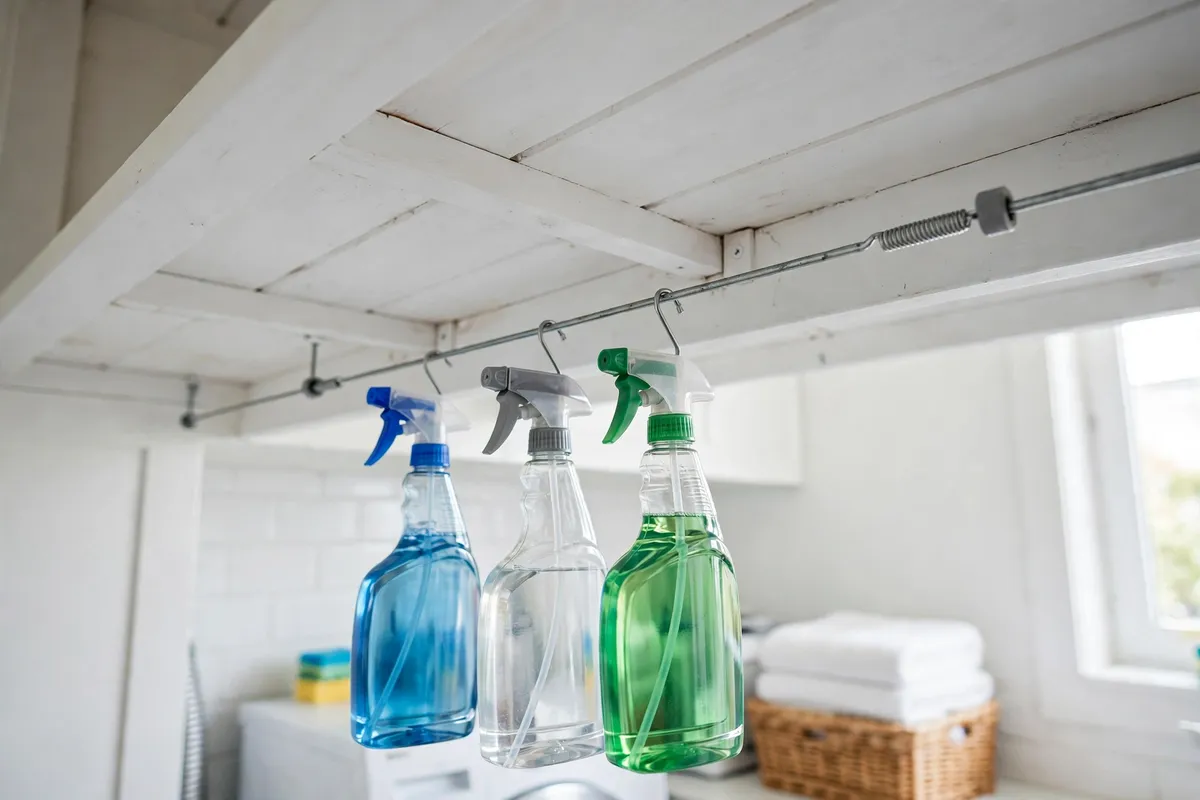
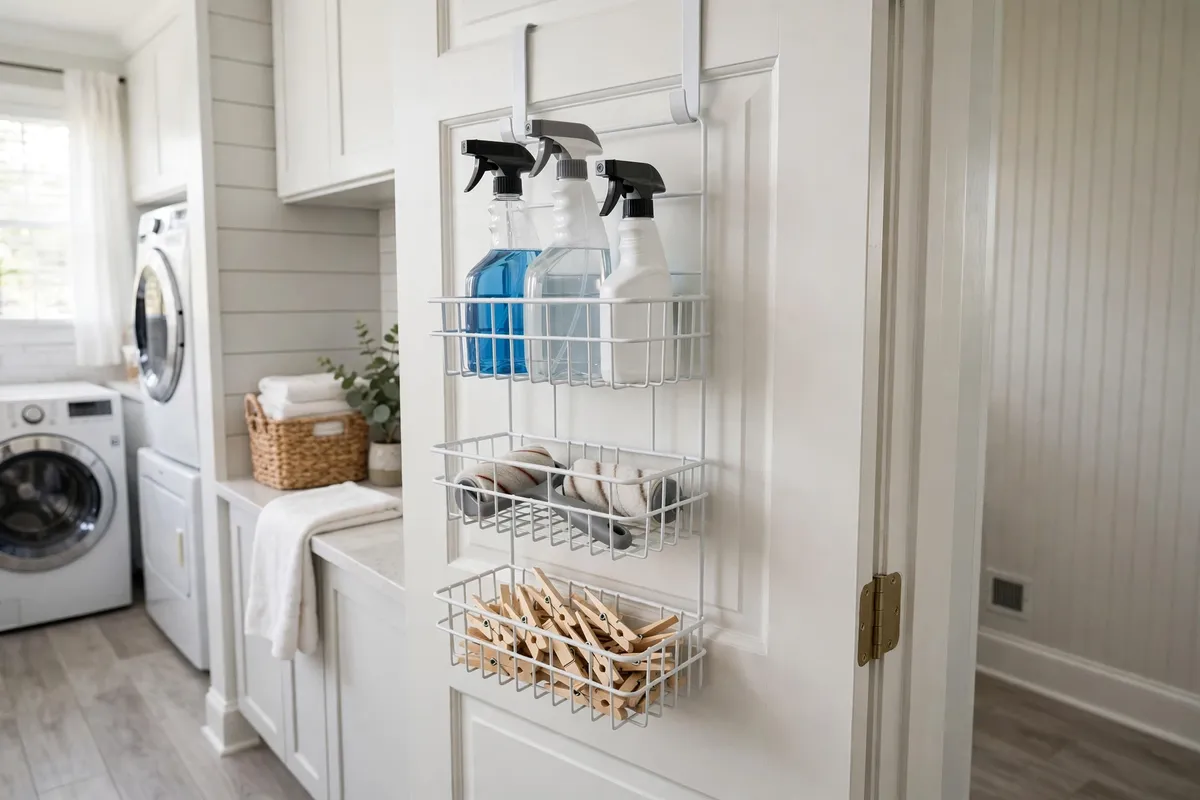
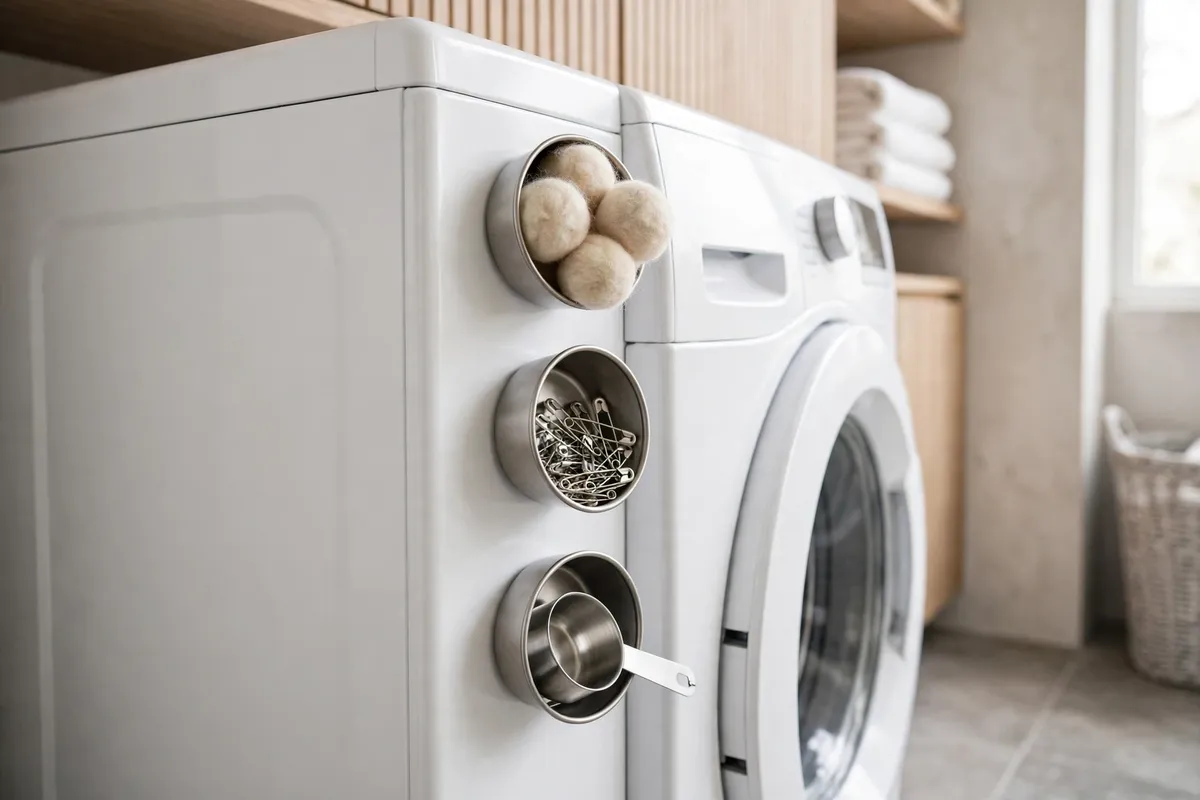
Tension, magnets, freestanding units, and the door. Every wall-mounted idea in this guide has a no-drill twin: an over-machine freestanding shelf unit, tension rods between walls or under shelves, magnetic containers and hooks on steel machine sides, and over-door organizers. None of these touch your security deposit. Renters can use nearly all of these laundry room organization ideas without risking the deposit.
A freestanding garment rack rolls in for hanging space and out when you need the floor. A slim rolling cart wedges between machines with no fasteners. Adhesive hooks fill the gaps, with one honest limit: light items only. These laundry closet organization ideas suit hallways, apartment nooks, and shared corners too.
The tension-rod trick pulls double duty in the kitchen: under-sink cabinet doors and tension rods work the same way there. If the room is windowless, add a stick-on LED task lighting bar under the shelf. Check the lease before adding a freestanding rack to a shared space.
What adhesive hooks can and cannot hold
Can: lint rollers, small spray bottles, mesh laundry bags, a measuring scoop, lightweight baskets. Cannot: detergent gallons, full ironing boards, anything over the hook’s stated rating. Clean the wall with rubbing alcohol, press for 30 seconds, and wait the full cure time on the package. Half the “adhesive hooks fail” stories are hooks loaded too soon.
What belongs in a laundry room, and what needs to leave?
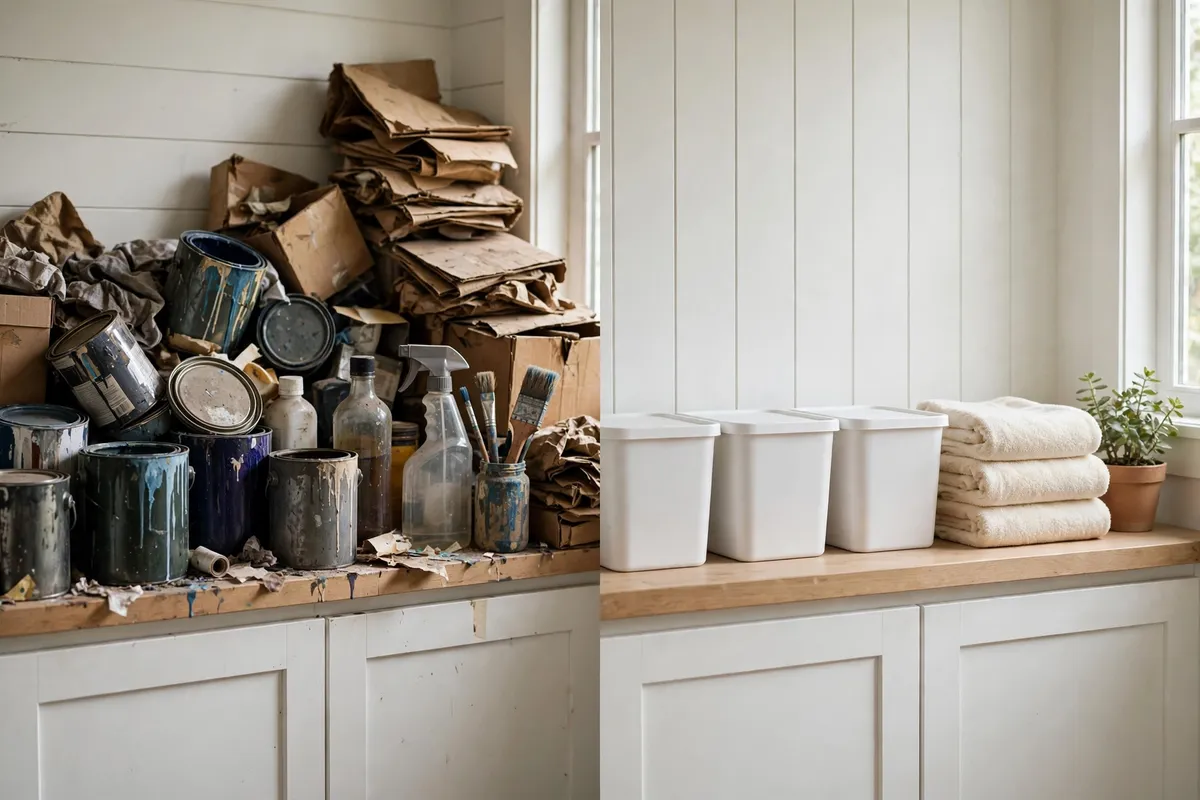
If it does not support the wash, dry, fold loop, it lives somewhere else. The keep list is short on purpose: detergent and a backup, stain treatment, wool dryer balls or sheets, hampers, a drying rack, the iron, cleaning rags, a small mending kit, and the safety gear. That is the whole inventory.
The leave list is where rooms recover real space: paint cans and solvents (a fire risk near a dryer anyway), holiday decor, sports gear, old appliances, the mystery box of cords, bulk paper towels, out-of-season clothes. Off-season overflow belongs in real storage, like under-bed space you already own, not stacked on the dryer.
The test is one sentence: will I reach for this during a normal wash day? People resist because the laundry room feels like free storage. It is not. Every square foot of non-laundry stuff is a square foot where a folding surface or drying rack cannot go. Do the purge once, run the weekly reset, and the room stays honest. This costs nothing and beats any product.
How much does it cost to organize a small laundry room?
Most of the gain lands under $75. The room is small, so the storage you need is small, and the cheapest ideas are the best ones. Under $25 buys tension rods, hooks, labels, bins, and mesh bags: enough for sorting and hanging. The $25 to $75 tier adds the slim rolling cart, pegboard kit, over-door organizer, or fold-down rack.
The $75 to $200 tier buys furniture-grade answers: an over-machine freestanding shelf unit, a wall cabinet, a drop-leaf folding table, a stackable hamper station, or pedestal drawers. Step up only when a specific zone still fails after two weeks of real use.
| Tier | What it buys | When the cheaper option is fine |
|---|---|---|
| Under $25 | Tension rods, adhesive hooks, labels, a few bins, mesh laundry bags, clothespins | Almost always: these handle sorting, hanging, and small-item storage |
| $25 to $75 | Slim rolling cart, pegboard kit, over-door organizer, fold-down rack, floating shelves | This tier fixes most rooms completely; skip the top tier unless you need furniture-grade storage |
| $75 to $200 | Over-machine shelf unit, wall cabinet, drop-leaf table, stackable hamper station, pedestal drawers | When you want closed storage or a real folding surface; measure twice, these are harder to return |
Skip the $200-plus range unless you are remodeling. Small laundry room storage ideas stop improving past a point: a $40 cart holds detergent exactly as well as a $180 cabinet. Spend the difference on the safety upgrades in the next two sections, which protect the whole house. My judgment: budget $75, buy the cart and the fold-down rack first, and go up a tier only if a zone still fails. And buy after the reset, not before: a $150 shelf unit just holds clutter more expensively if you skipped the purge. These laundry room organization ideas prove a small budget is enough.
How do you stop a small laundry room from smelling musty?
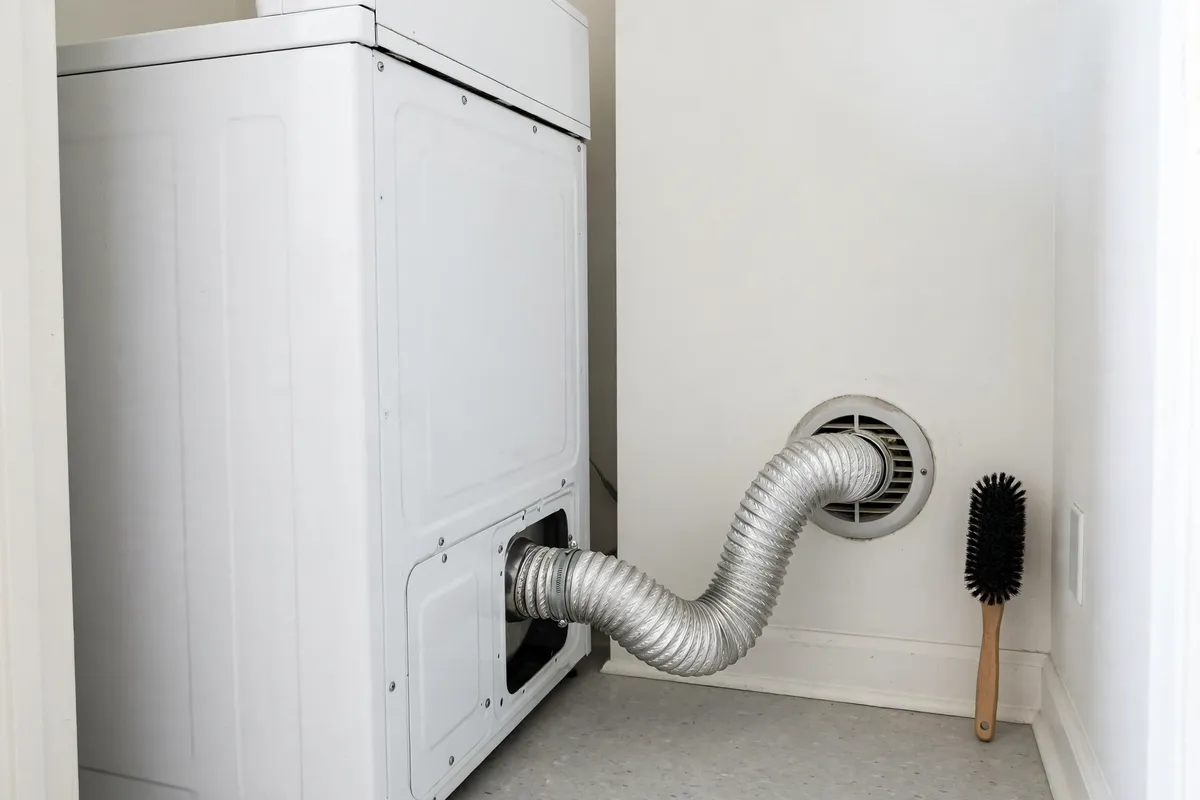
Ventilation plus lint control. Musty smell is trapped moisture, and small rooms trap it fast. Clean the lint trap after every load: a clogged trap slows drying and leaves damp heat sitting in the room. Leave the washer door open after loads so the gasket dries, since front-loader gaskets are the number-one mildew spot.
Check the vent path, not just the trap. Clear the vent hose once a year: lint packs into the hose and the exterior cap, and packed lint is a genuine fire risk. The U.S. Fire Administration reports an estimated 2,900 home clothes dryer fires each year in the United States, with failure to clean lint, dust, and fiber as the leading factor. Building codes cap dryer duct runs at 35 feet for this reason: long, bendy runs collect lint and choke airflow.
No window in the room? Add a small exhaust fan or a compact dehumidifier, and wipe the washer gasket monthly with a rag and mild soap. Keep hamper lids off damp clothes only when you can wash within a day. The smell tells you something real. Listen to it.
What small upgrades prevent the biggest laundry room headaches?
A leak detector, better hoses, and anti-vibration pads cost little and prevent disasters. Set a battery leak detector on the floor behind or beside the washer: it screams when water shows up. Swap rubber supply hoses for stainless steel braided ones. Braided hoses cost more and are worth it.
Replace the hoses about every five years, per appliance makers and home insurers; a burst hose can flood a floor in minutes. On an upper floor, slide a washer drip tray underneath to catch slow drips. Anti-vibration pads under each foot cut the walking-washer problem and protect the drain connection. Keep flammables away from the dryer and water heater.
Then check clearances with a tape measure. Standard full-size machines run 27 inches wide each, per manufacturer specs, so a side-by-side pair eats 54 inches plus clearance.
| Placement | Measurement | Why |
|---|---|---|
| Shelf height above machines | 12 to 18 inches | Clears lids and their swing; still reachable without a stretch |
| Side clearance | 2 to 3 inches | Airflow and vibration room; fits a slim cart beside the pair |
| Rear clearance | 4 to 6 inches | Room for hoses and the vent duct without kinking |
| Slim cart width | 6 to 8 inches | Fits the standard gap; wider carts do not fit between 27-inch machines |
| Shallow cabinet depth | 12 to 16 inches | Stays out of headroom in stacked or closet setups |
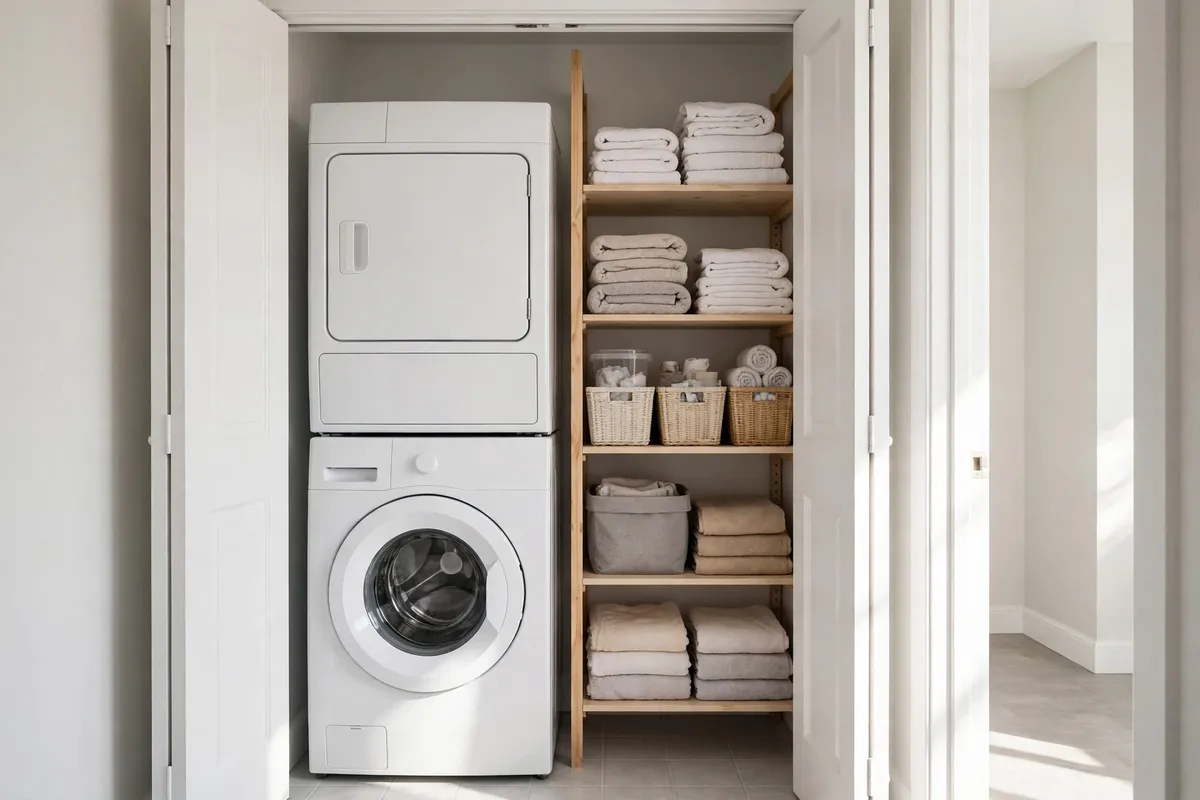
A stackable washer dryer set is the nuclear option for tight closets: it frees half the floor for a hamper bank or folding cart, but you lose the machine-top folding surface. ENERGY STAR certified washers use about 25 percent less energy and 33 percent less water than standard models, and certified dryers use about 20 percent less energy, so an efficient replacement pair pays you back on the utility bill.
Your first three moves this weekend
Move one: purge. Empty the room and keep only what serves the wash, dry, fold loop. Move two: go vertical with the wall over the machines, the door, and a slim cart in the gap. Move three: zone the workflow, hampers at the drop, drying where wet clothes travel, folding where clean clothes wait. These three moves distill the best laundry room organization ideas into a single weekend.
The short version: laundry room organization ideas win on workflow, not products. Vertical storage multiplies the room. Renters can do nearly all of it with no-drill gear. The $25 to $75 tier fixes most rooms. And the unglamorous safety checks, lint trap every load, vent hose yearly, braided hoses, a leak detector, matter more than any organizer.
Ready for the next small space? The same vertical-storage and zone tricks apply one room over: see how to organize a small closet in a tight footprint. And if these laundry room organization ideas helped, follow along on Pinterest at pinterest.com/storagesolutionsdaily for the visual versions of every guide.
How can I maximize space in a small laundry room?
Go vertical: claim the wall above the machines with shelves or a freestanding unit, use the back of the door, and slide a slim rolling cart into the gap beside the washer. Then shrink the inventory: keep only what serves the wash, dry, fold loop and move everything else out. These laundry room organization ideas start with subtraction, not storage.
What is the cheapest way to organize a small laundry room?
Purge first, which costs nothing, then add tension rods, adhesive hooks, labels, and a few bins, all under $25. A slim rolling cart and an over-door organizer land in the $25 to $75 tier and fix most rooms completely.
How high should I place shelves above the washer?
Mount shelves 12 to 18 inches above the machines. That clears the lids and their swing on top-loaders while keeping the lowest shelf reachable without a stretch.
Can I put a countertop over front-load washers?
Yes, and it makes the best folding station in a small room. Keep it shallow enough that you can reach the controls and detergent drawer without leaning across, and leave the machines’ rear clearance of 4 to 6 inches untouched.
How do I keep detergents safe and spill-free in a tight space?
Store heavy detergent jugs on the lowest reachable shelf, use sealed bins or clear jars with lids for pods and powders, and keep everything away from heat sources. For spill-prone liquids, a small tray or under-shelf basket catches drips.
Are stackable washer-dryer units worth it for organization?
They free half the floor, which is huge in a closet-sized room, but you lose the top-of-machine folding surface and the pair usually costs more. They are worth it when floor space is the binding constraint and you can add a drop-leaf table as the folding surface.
How often should I clean the dryer vent?
Clean the lint trap after every load and inspect the vent hose and exterior cap once a year. The U.S. Fire Administration reports about 2,900 home dryer fires a year, with failure to clean lint as the leading cause.
How do I organize a laundry room without cabinets?
Use open shelves, a pegboard with hooks and baskets, an over-door organizer, and labeled bins. Open storage costs less than cabinets and makes it easier to see when supplies run low. These laundry room organization ideas prove open storage beats cabinets in a tiny room.
Can I put a washer and dryer in a closet?
Yes, with conditions: you need the electrical and plumbing hookups, exterior venting for the dryer (or a ventless dryer rated for the space), enough depth for the 4 to 6 inch rear clearance, and doors that allow airflow. Stackable units fit best. Check local building codes and the lease before installing.
How do I prevent mildew in a small laundry room?
Leave the washer door open after loads so the gasket dries, clean the lint trap every load, wipe the gasket monthly, and add an exhaust fan or dehumidifier to windowless rooms. Do not let damp clothes sit in sealed hampers for days. These laundry room organization ideas for upkeep matter as much as any organizer.
