
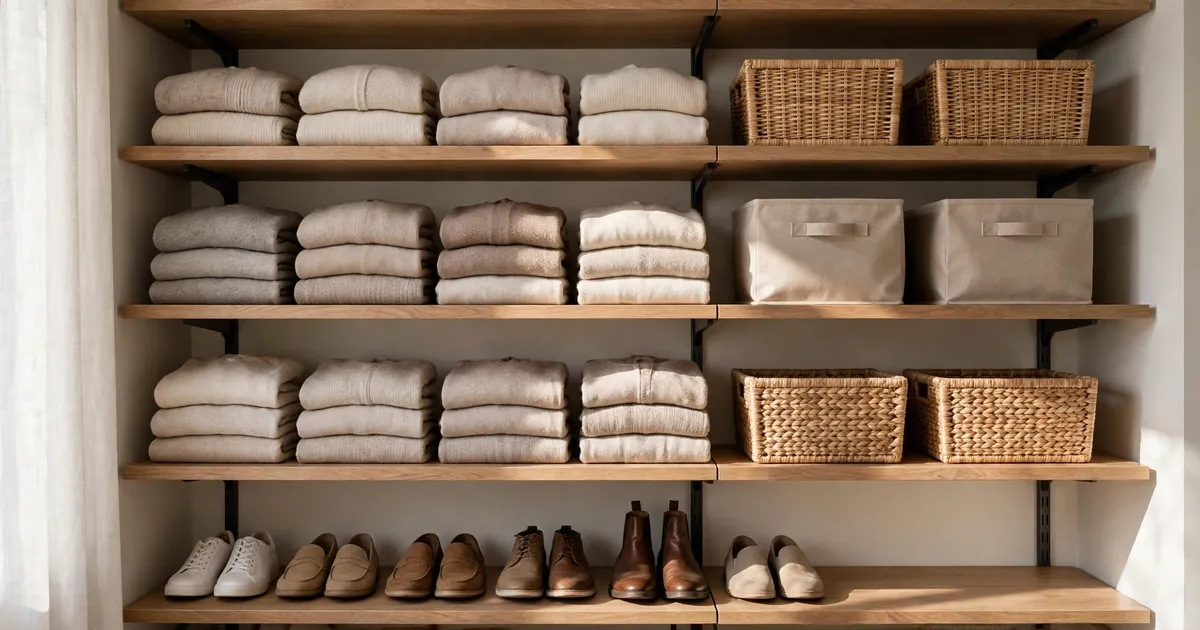

Closet shelves stop being chaos when you treat them like math: stacks no taller than 12 inches, 14 to 16 inches between shelves, and exactly one job per shelf. These 12 closet shelf organization ideas start with the inch measurements your shelves actually need, then cover the organizers worth your money: dividers that hold stacks upright, wire-shelf covers from about $25, and no-drill fixes renters can use tonight. No remodel, no contractor, no $2,000 system required.
Starting from zero shelves? Read how to organize a closet with no shelves first, then come back for the shelf-specific upgrades.
Here’s why the inches matter more than the products. A “Lost and Found” survey by Pixie, a smart location company, found the average American spends 2.5 days a year searching for misplaced items, and that survey was about keys and remotes, not closets. Closets create their own quiet version of that loss: the sweater you can’t see behind the sweater stack, the shelf where everything slides into one leaning pile. You don’t need a remodel. You need shelves spaced right, zoned right, and stocked with the three or four organizers that actually earn their keep. This guide starts with a tape measure and ends with a maintenance habit, because shelves stay organized only when the setup matches real life.
The short version
- Measure first: shelf depth, the gap between shelves, and total vertical space. Inches decide which organizers actually fit, so this step comes before any shopping.
- One shelf, one job: seasonal bins up top, daily clothes at eye level, heavy stuff down low. A shelf with two jobs becomes the junk shelf.
- Match the fix to the problem: dividers for toppling stacks, bins for small-item mess, risers for dead vertical space. Buy in that order.
- Start cheap: a pack of dividers or a wire-shelf cover is the biggest win under $50, and most closets don’t need more than that.
| Organizer type | Best for | Typical cost | Watch out for |
|---|---|---|---|
| Acrylic shelf dividers | Folded stacks that topple | $10 to $40 for a multi-pack | Most won’t fit over the front lip of wire shelving |
| Stacking bins | Socks, tees, kids’ clothes | $15 to $35 for a set | Deep bins become black holes without labels or file folding |
| Shelf risers | Deep top shelves, double-stacking | $20 to $45 a pair | Wobble on wire shelves; best on flat wood |
| Cube organizer (KALLAX-style) | Shoes, bags, linens | $50 to $120 for the unit | Big footprint; measure your closet before you buy |
| Hanging shelf organizer | Renters, single-shelf closets | $20 to $40 | Cheap fabric ones sag; buy reinforced inserts only |
| Storage baskets | Bulky items, quick labels | $10 to $30 each | Hard to see inside; label every one |
| Wire-shelf wood covers | Wire-to-flat upgrade | $25 to $60 per shelf | Fine for clothes, not for heavy storage |
How many inches of shelf space do you actually have?
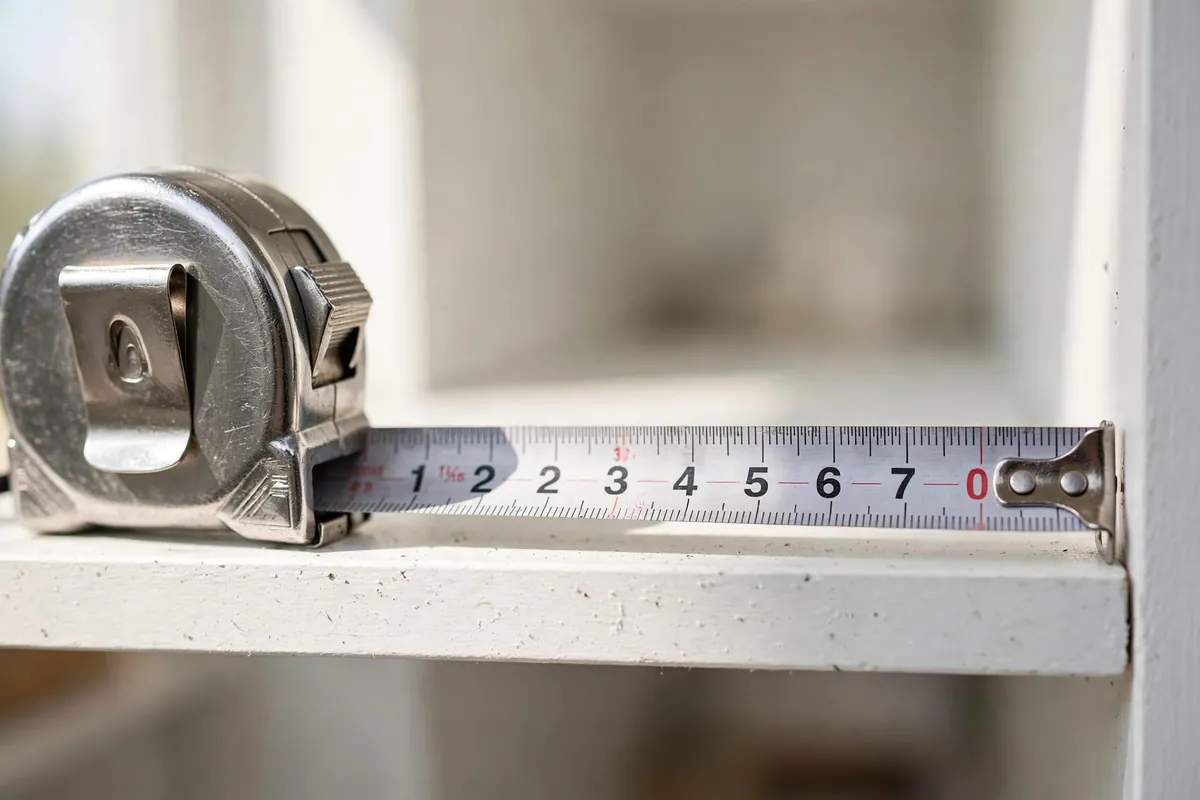
Write down three numbers before you buy anything: shelf depth from front edge to back wall, the gap between each pair of shelves, and the total height of the shelving column. Most builder closets give you 12 to 16 inches of depth and a single shelf hung higher than you’d like. Those three numbers decide every choice in this guide, because fit stops being a guess once you know them.
Measure depth in two or three spots, since walls are rarely square and builders rarely center things. In built-in closets the depth is fixed, so write it down and plan around it instead of fighting it. Then measure the gap between shelves, because that gap decides how tall your stacks can be. Finally, measure the full column height. If you’ve got 80 inches of vertical space and one shelf, you’ve found your missing storage: there’s room for two more shelves in that column.
If those numbers come back small, don’t despair. Read our small closet organization ideas guide next: it’s built for tight reach-in closets and shows how to squeeze real storage out of the inches you have.
My honest take: the depth number matters most. You can change spacing with brackets, but depth is what the builder gave you, and it decides whether dividers, bins, or pull-outs will work.
What should go on each shelf?
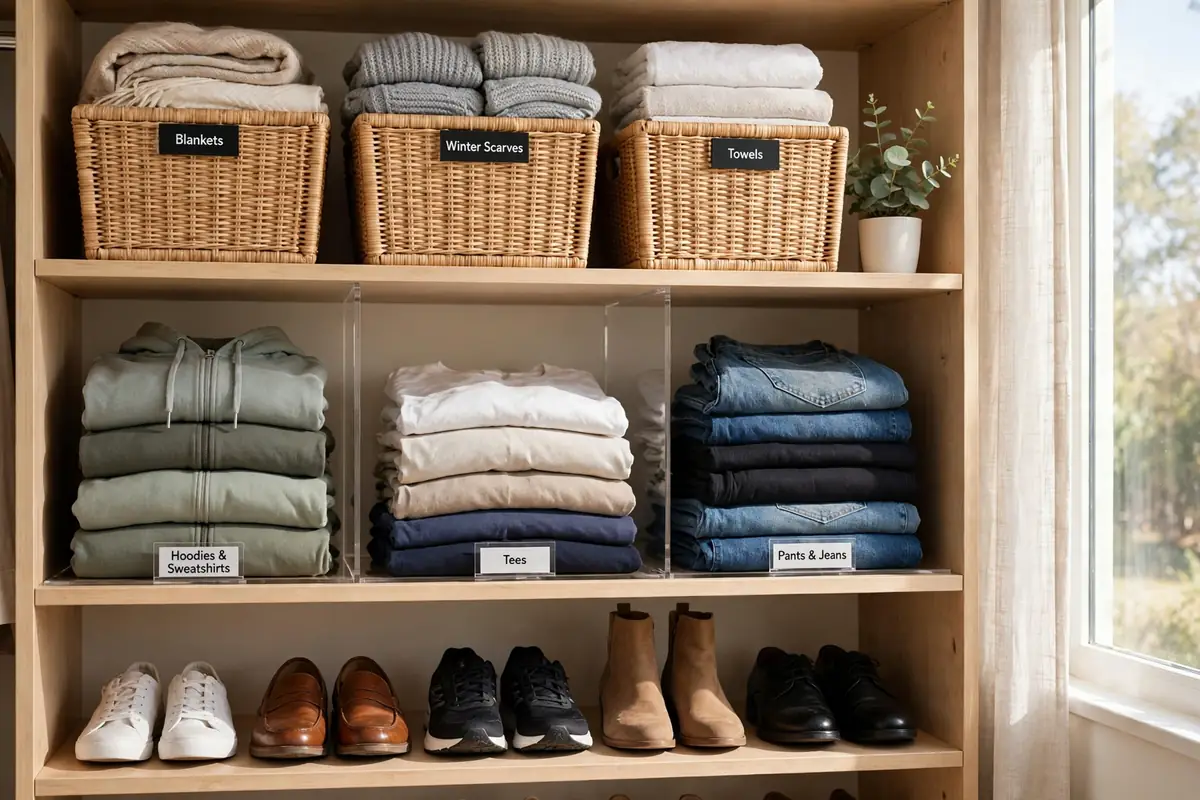
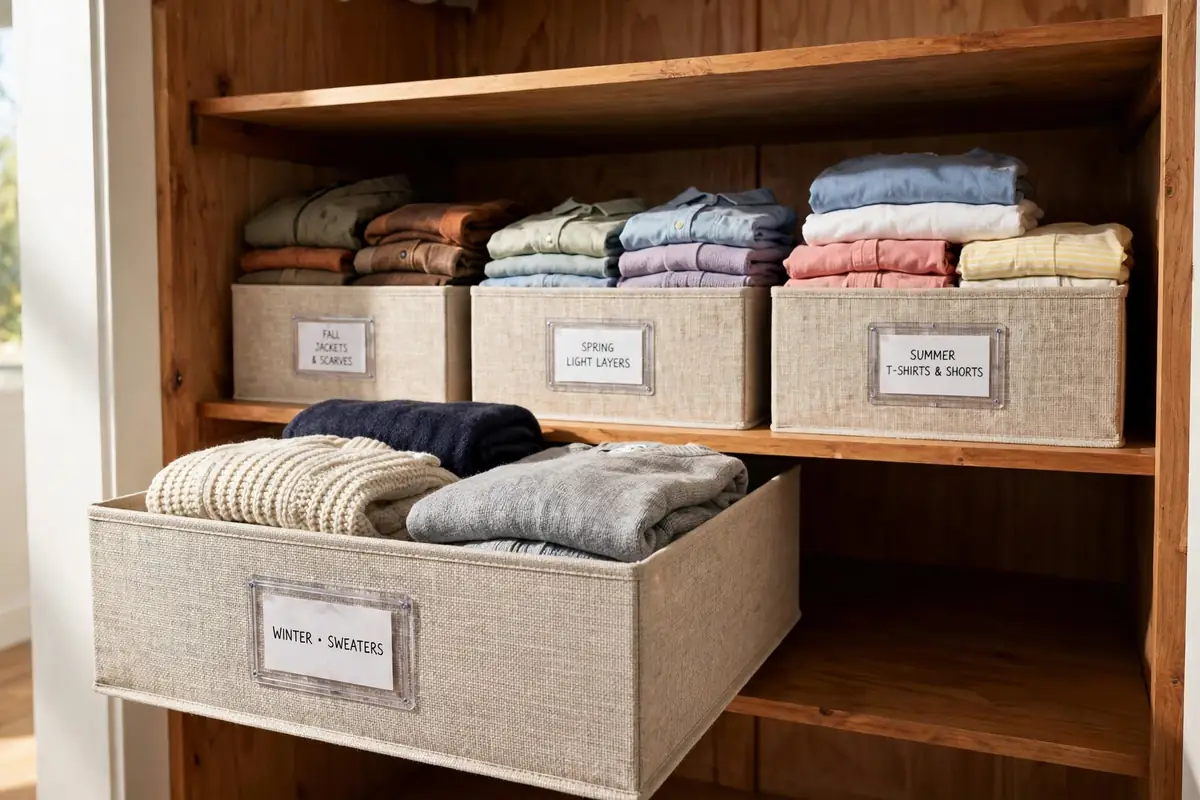
Top shelf: seasonal and rarely used things in labeled bins. Eye-level shelves: the folded clothes you grab every day. Bottom shelves: heavy items and shoes. One shelf, one job. The moment a shelf gets two jobs, it starts its slow slide into becoming the junk shelf.
The top shelf is for the stuff you touch a few times a year: out-of-season clothes, luggage, guest bedding. Put it in bins with labels you can read from the floor, because an unlabeled bin on the top shelf is just a box of mystery. Eye-level shelves are prime real estate, so they get daily folded clothes: tees, jeans, sweaters, workout gear. Bottom shelves take the heavy and the awkward: shoe racks, storage baskets full of bulky items, the things you’d rather not lift.
Deep top shelves are not for daily-use piles. Anything you touch weekly should never live above your eyeline, because you’ll stop putting it back and start draping it over a chair instead. And the seasonal overflow that never quite fits anywhere? That belongs with your under bed storage ideas setup, not crammed above the closet door.
Here’s my rule: I’d rather have one empty shelf than a shelf with two jobs. Empty space is a buffer; a double-booked shelf is a mess waiting for a busy week.
Which closet shelf organizer types are worth buying?
Start with acrylic shelf dividers. A multi-pack costs less than a takeout dinner and fixes the number-one shelf problem: stacks that lean and topple. Next come stacking bins for small items and shelf risers for dead vertical space. Everything else in the table above is situational, and I’d skip two of them unless your closet matches their use case.
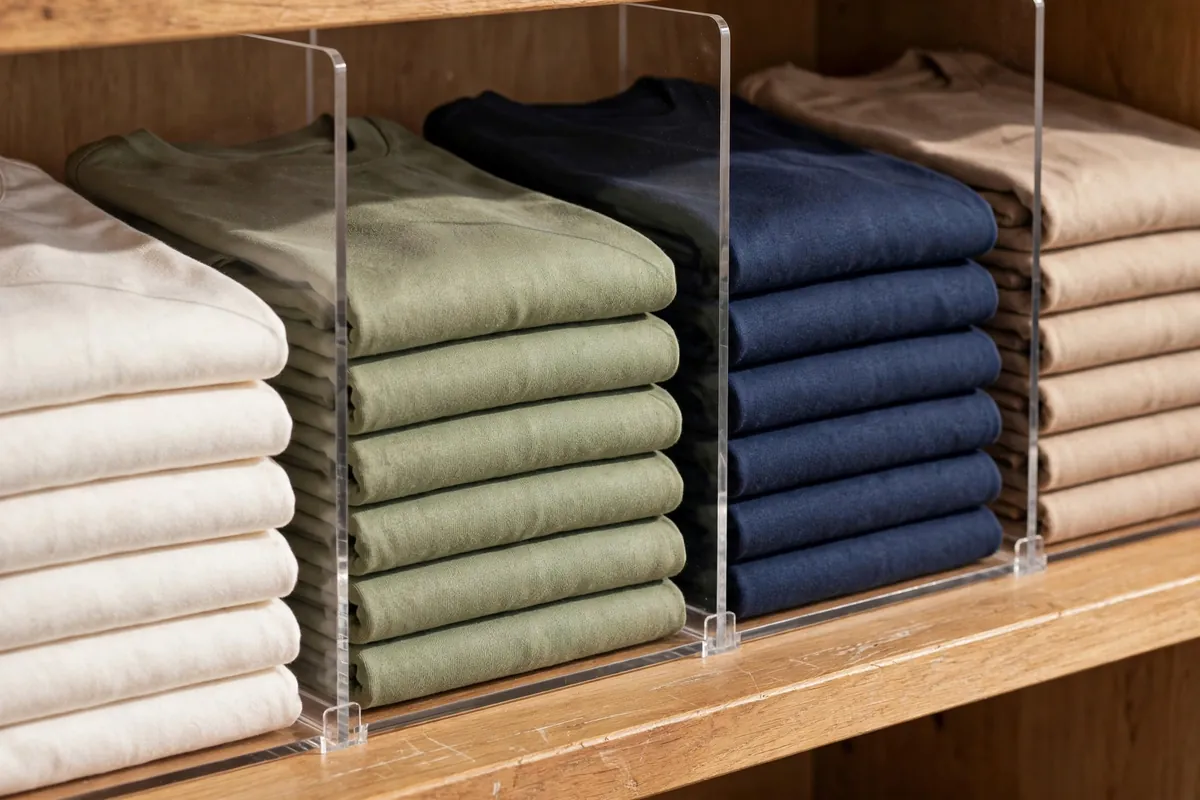
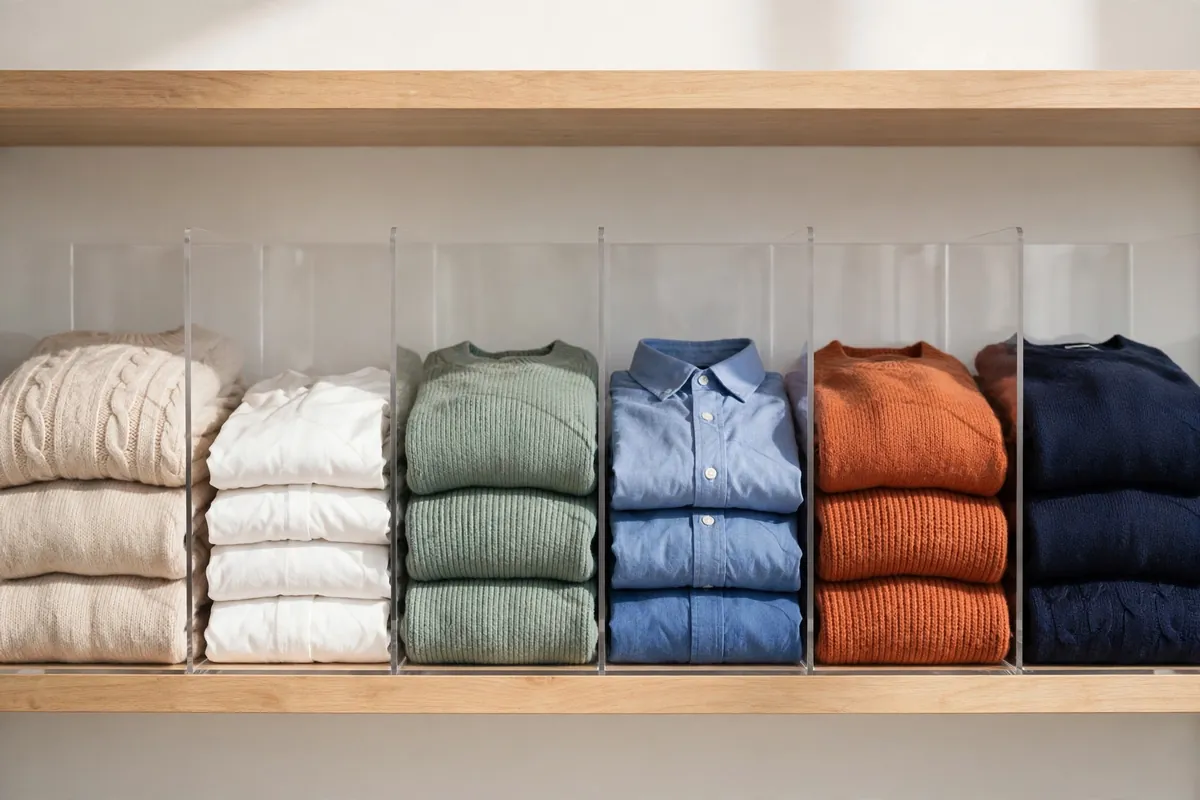
Dividers are the single best upgrade for folded clothes. They clamp onto the shelf and give each stack walls, so you can pull a shirt from the middle without the whole row collapsing. Stacking bins beat loose piles for socks, tees, and kids’ clothes, but only if you file-fold inside them; a bin of flat stacks is just a pile with walls. Shelf risers turn 16 inches of dead air above a short stack into two usable levels, which makes them the fix for tall shelves you can’t move.
Cube organizers are the workhorses for shoes, bags, and linens. Check the KALLAX dimensions on IKEA’s US site before you buy, because the footprint surprises people in narrow closets. Hanging shelf organizers work for renters and single-shelf closets, but only the reinforced kind with stiff inserts. The cheap fabric ones sag before long, and they’re not for heavy sweaters; the weight pulls the whole thing crooked.
Storage baskets handle bulky items fast, but they’re not for things you need to see. Label every basket or stick to open bins. Wire-shelf wood covers are the renter-safe fix for wire shelving, covered in full two sections down. When people search closet shelving ideas, they usually land on roundups that rank everything five stars. This is the opposite. My buying order: dividers first, then bins or risers matched to your specific problem, then stop. Most closets are fixed by step two.
How do you keep folded stacks from toppling over?
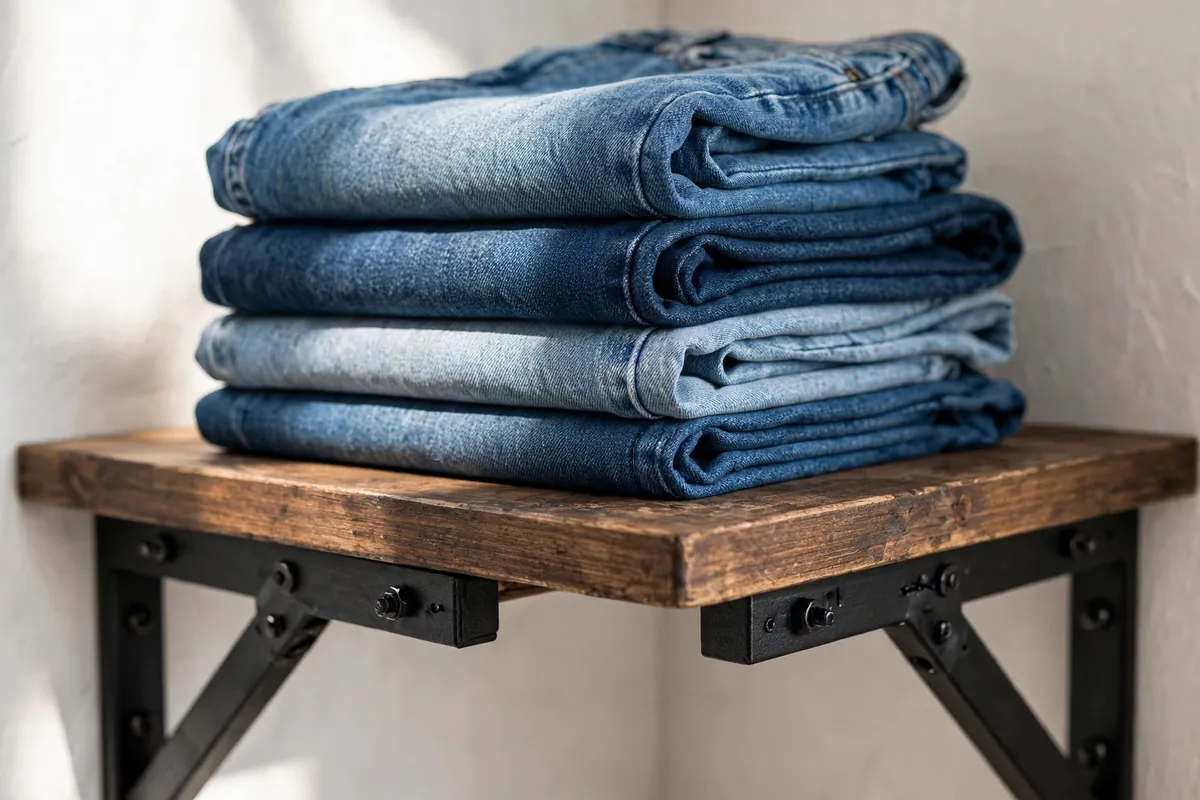
Cap every stack at 12 inches tall and slide a divider in every 8 to 12 inches, so each stack has a wall on both sides. For bins, file-fold clothes upright like files in a drawer instead of laying them flat; rolling suits deep bins, where flat stacks would bury the bottom half out of sight.
The 12-inch cap is the whole game. Taller stacks lean, and leaning stacks fall; shorter stacks stay put even without help. Dividers do the rest: space them to match your stack widths, and don’t leave a wide empty gap at the end of a shelf, because the last stack will migrate into it and tip.
For the folding itself, our dresser organization ideas guide walks through file folding step by step; the technique is the same whether the “drawer” is a dresser or a stacking bin on a shelf. Rolled clothes suit deep bins and travel-style packing, while flat folding suits open shelves where you want clean edges facing out.
One warning before you buy dividers: most acrylic dividers will not fit over the front lip of wire shelving. The clip needs a flat shelf edge, and wire shelves don’t have one. That’s a wire-shelf problem with wire-shelf fixes, and they’re all in the next section.
The way I see it: four dividers beat one more bin. Dividers fix toppling; bins just relocate the pile into a container.
Are wire closet shelves really that bad?
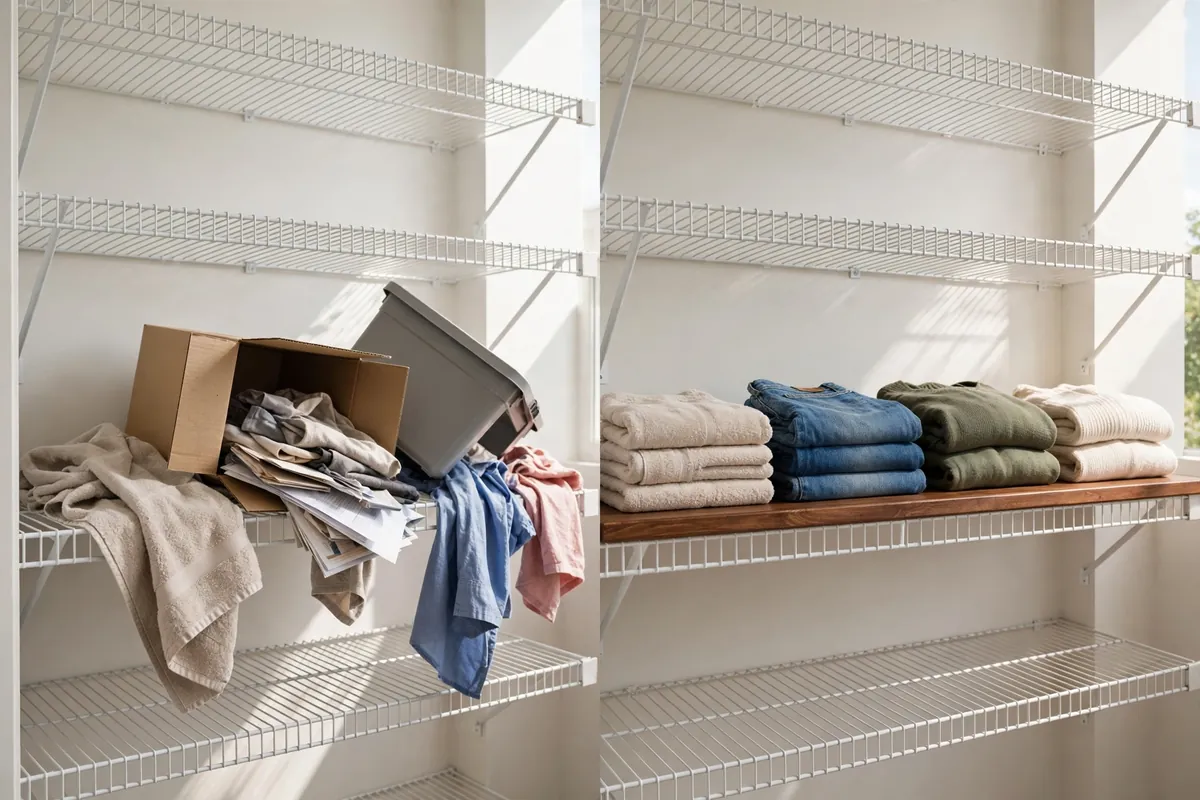
Honestly, yes, for folded clothes. Items tip through the gaps, nothing stands straight, and most acrylic dividers won’t fit the front lip. But you don’t need a remodel to fix it. Three upgrade paths cover every budget, from a cover you can install in minutes to a full modular replacement.
Wood covers that lay over the wire
These are flat boards, usually wood or wood-look, cut to sit on top of the wire shelving. They’re the cheapest fix at roughly $25 to $60 per shelf, completely reversible, and renter-safe since nothing gets drilled. The trade-off: they add weight to shelving that wasn’t designed for much of it, so they’re fine for folded clothes and not for heavy storage like books or full linen stacks.
Wood closet shelves cut at the hardware store
If you own the place, this is the real fix. Measure the widest run, have the boards cut at the store, stain or seal them, and mount them on studs with solid brackets. It’s a weekend project, and it ends the wire-shelf era for good. This Old House has a solid walkthrough of swapping wire shelving for wood if you want the step-by-step before you start. This path is not for renters who can’t put holes in walls; stick with covers until you own.
A full modular replacement
Systems like Elfa hang everything off a single top rail, so you drill once and the shelves, drawers, and closet racks all clip in and move freely. That adjustability is the selling point: shelf spacing stops being permanent. It’s also the priciest path, with starter kits around $350 at The Container Store and components adding up fast.
If I’m being direct: renters should buy covers and move on. Owners should skip the covers and go straight to wood. Covers are a patch; wood is the fix.
What is the best shelf spacing for folded clothes?
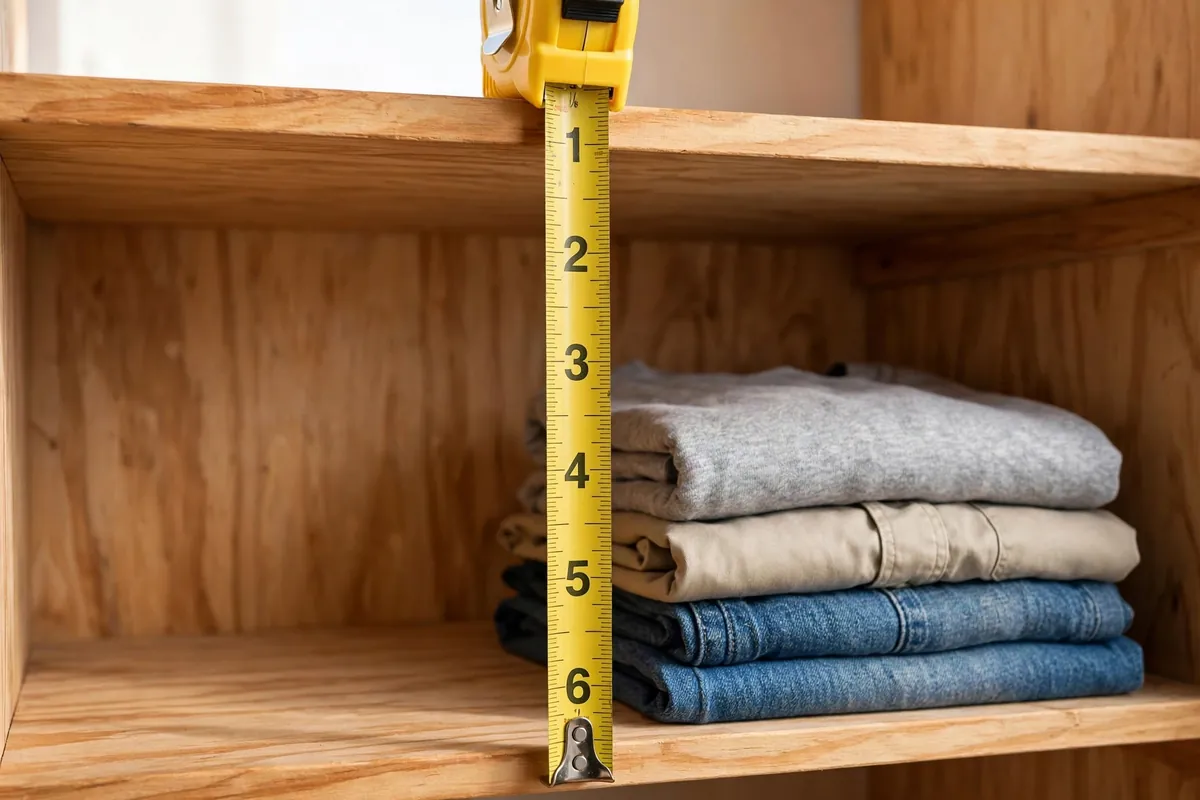
Fourteen to 16 inches for bulky sweaters: a 12-inch stack with 2 inches of grabbing space on top, the spacing a closet-design guide on bloomsburykitchens.com recommends. Tees and shirts need 10 to 12 inches. Shoes lined up on a shelf do fine with 8 to 10. Linen stacks sit best at 12 to 14 inches.
The 2-inch rule is what makes a shelf usable instead of just full. You need room to slide your fingers over the top of a stack and lift one item without dragging its neighbors along. Pack a shelf to the exact height of the stack and you’ll stop using it, because every grab becomes a small excavation.
If your shelves are fixed at the wrong spacing, add a middle shelf. A pair of brackets and a board cut to fit at the hardware store is one of the cheapest shelf projects there is, and it gives you adjustable closet shelving in practice: move the board when your needs change. Measure your tallest stack first, add the 2 inches, and set the new shelf there.
Measure before you shop, too. Keep your three numbers in your phone and check every organizer against them: will this bin fit under that shelf, will that riser clear the shelf above it? Most organizer returns happen because someone guessed at the store instead of measuring at home.
If I could only change one thing about a bad closet, it’d be the spacing. Organizers come and go, but inches are permanent, and a well-spaced shelf needs fewer products to stay neat.
| Shelf content | Ideal spacing | Why |
|---|---|---|
| Bulky sweaters | 14 to 16 inches | 12-inch stack plus 2 inches of grabbing room (bloomsburykitchens.com) |
| Tees and shirts | 10 to 12 inches | Shorter stacks stay neat with less air above them |
| Shoes on shelves | 8 to 10 inches | Even boots fit; heels need the full 10 |
| Linen and towel stacks | 12 to 14 inches | Bulky but flat; leave lift room on top |
| Bins and baskets | Measure the bin, add 2 inches | Bins vary; the bin is the boss here |
How deep should closet shelves be?
Twelve to 14 inches is the sweet spot for folded clothes, the depth a closet guide on coohom.com recommends. Shallower than 10 inches and stacks hang over the edge; deeper than 16 inches and the back half becomes a place where things quietly disappear.
For shelves deeper than 16 inches, use front-back zoning: daily items live in the front 12 inches, seasonal and rarely used things go behind them. It works because you only ever reach the front. For the truly deep shelves, the kind you can’t reach the back of at all, slidewardrobesdirect.co.uk suggests pull-out bins for shelves deeper than about 20 inches (50 cm), and that tracks with real life: if you can’t reach it, it should slide to you.
Shelf risers are the other deep-shelf fix. A riser near the front of a deep shelf creates a second level for small items while the back holds bins, so the depth works twice. Deep shelves also earn their keep in a linen closet organization setup, where big towel stacks actually fill the full depth instead of getting lost in it.
My verdict: I’d rather have a 12-inch shelf than a 20-inch one. Depth you can’t reach is just a hiding place with good lighting.
How do you organize a reach-in closet with only one shelf?
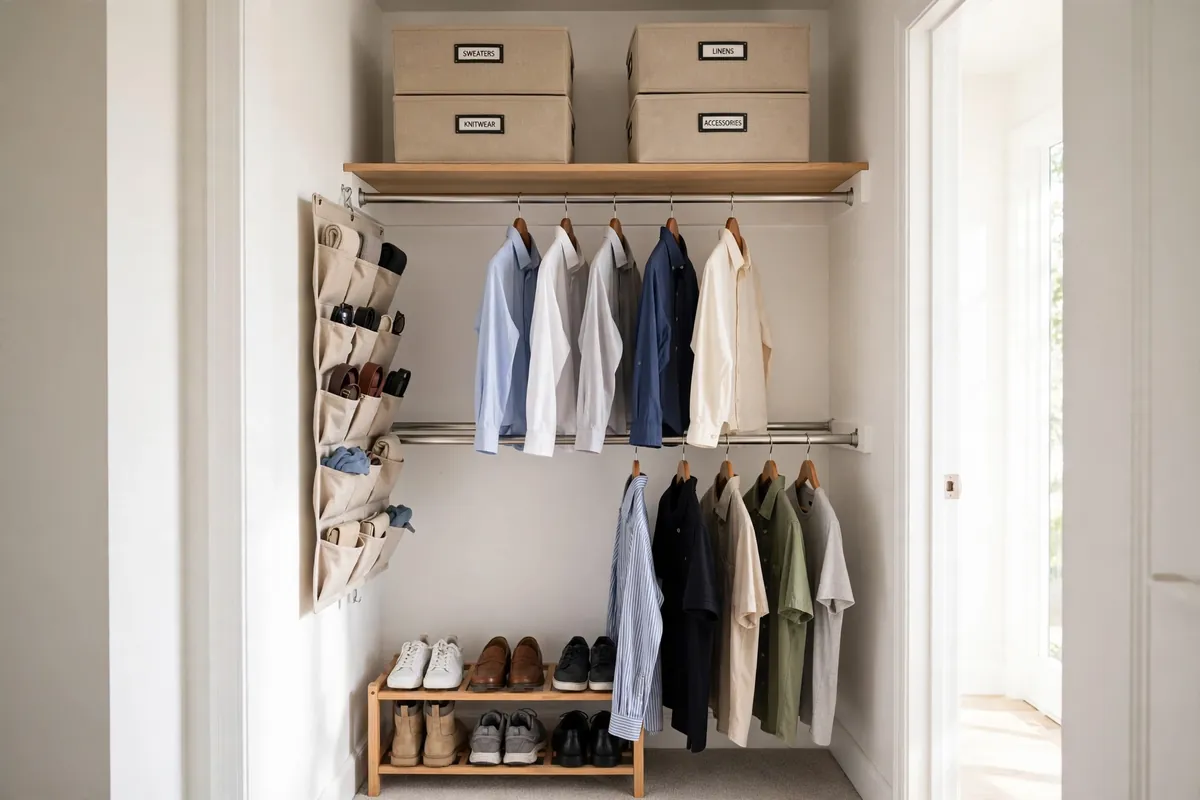
Treat the single shelf as the penthouse and build down. Add a double-hang rod below it, hang reinforced hanging closet shelves with stiff inserts on one side, put stacking bins on the shelf itself for small items, and park a shoe rack on the floor. Four moves, and a one-shelf closet works much harder than it did.
The double-hang rod is the engine here. It splits the hanging space into two short-hang sections, shirts above and pants below, which doubles rod capacity in the same width. Swap to slim velvet hangers at the same time: a coohom.com roundup of organizer tips cites users reporting 20 to 30 percent more rod space from the switch. Reinforced hanging closet shelves fill the side gap the rod leaves; the stiff inserts are non-negotiable, because unreinforced fabric cubbies sag into one sad pile before long.
Stacking bins on the top shelf hold the small stuff: underwear, socks, accessories. A tiered shoe rack on the floor keeps shoes off the pile and visible. This is also the standard setup in a kids room storage ideas project, since kids’ closets almost always have that single high shelf and a lot of small clothes.
Don’t skip this one: the double-hang rod is the highest-impact move in this whole guide. Everything else is garnish on a rod that already doubled your closet.
How can renters add shelf space without drilling?
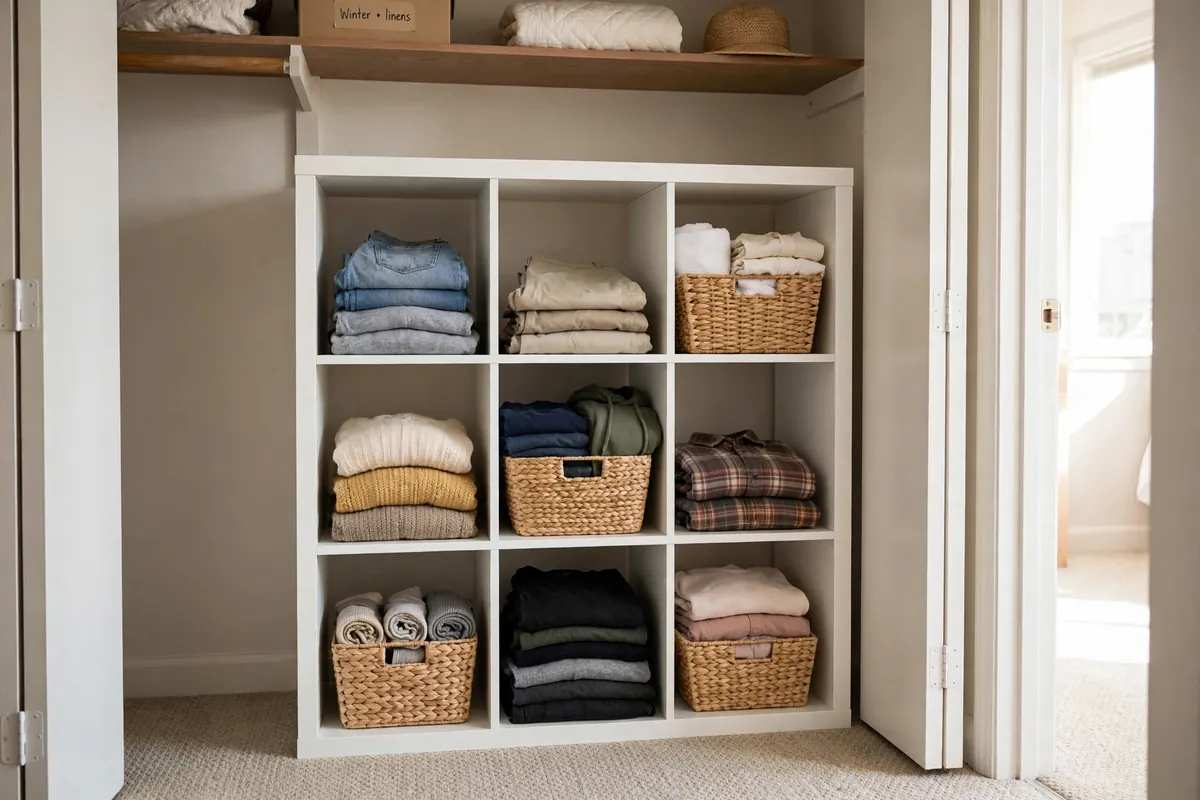
Freestanding cube organizers do the heavy lifting: no holes, no landlord conversations, and they move with you. Add an over-the-door organizer for the door you forgot about, wire-shelf covers that simply lay over the existing shelving, a no-drill drop-down second rod that hangs from the current rod, and slim hooks on the wall or door for the floor pile.
A rolling closet rack can add hanging space without touching the walls, which helps in studios where the “closet” is more of a suggestion. Over-the-door organizers suit shoes, accessories, and the small items that otherwise colonize shelves. The drop-down rod is the renter’s double-hang trick: it hooks over the existing rod and gives you a second tier for shorter items, no screws involved.
Here’s the honest limit: none of this replaces a stud-mounted shelf for heavy items. Books, weights, and full linen stacks need real support. Don’t hang 40 pounds off a tension rod and hope; that’s how shelves and security deposits both get damaged.
Tension rods have one more trick: a short one mounted inside a deep shelf creates a hanging spot for accessories or holds a row of S-hooks for bags. Just keep the load light. Tension is friction, not structure.
My renter rule: spend money only on things that move with you. Cubes, covers, bins. Anything bolted to the wall is the landlord’s shelf, not yours.
What is the cheapest way to upgrade your closet shelf organization?
Under $50 fixes most closets: a pack of dividers, a label maker or tape-and-marker labels, and a wire-shelf cover if your shelves are wire. The $50 to $150 tier adds shelf risers, stacking bins, a hanging organizer, and a cube unit. Full replacement shelving starts around $150 for a DIY wood run and climbs past $400 for modular system components.
Real prices, so you can sanity-check the tiers: Kohl’s lists a six-pack of Sorbus acrylic dividers at $39.99, and generic multi-packs on Amazon run cheaper, which puts dividers as a category in the $10 to $40 range. At the top end, a 4-foot Elfa starter kit runs about $350 at The Container Store, with individual mesh drawers listed around $84 to $185 on Wayfair and The Container Store.
The DIY wood run deserves a note for owners on a budget. Boards, brackets, and a can of stain for one closet wall land well under the modular-system tier, and the result is sturdier than anything flat-packed. Price it per shelf at the hardware store before you commit; that’s the honest way to compare it against a $350 kit.
Most “closet makeovers” are a $40 problem wearing a $400 costume. Start at the bottom tier, fix the actual annoyance, and only climb tiers if the problem survives. If your budget is $50, spend it on dividers and stop there. I’d take $50 of dividers over $150 of bins every single time.
| Budget tier | What it buys | The move |
|---|---|---|
| $50 to $150 | Shelf risers, stacking bins, hanging organizer, cube unit | Add levels and homes for small items |
| $150 to $400 | DIY wood shelving run or modular system components | Rebuild the shelves themselves |
How do you keep closet shelves organized for good?
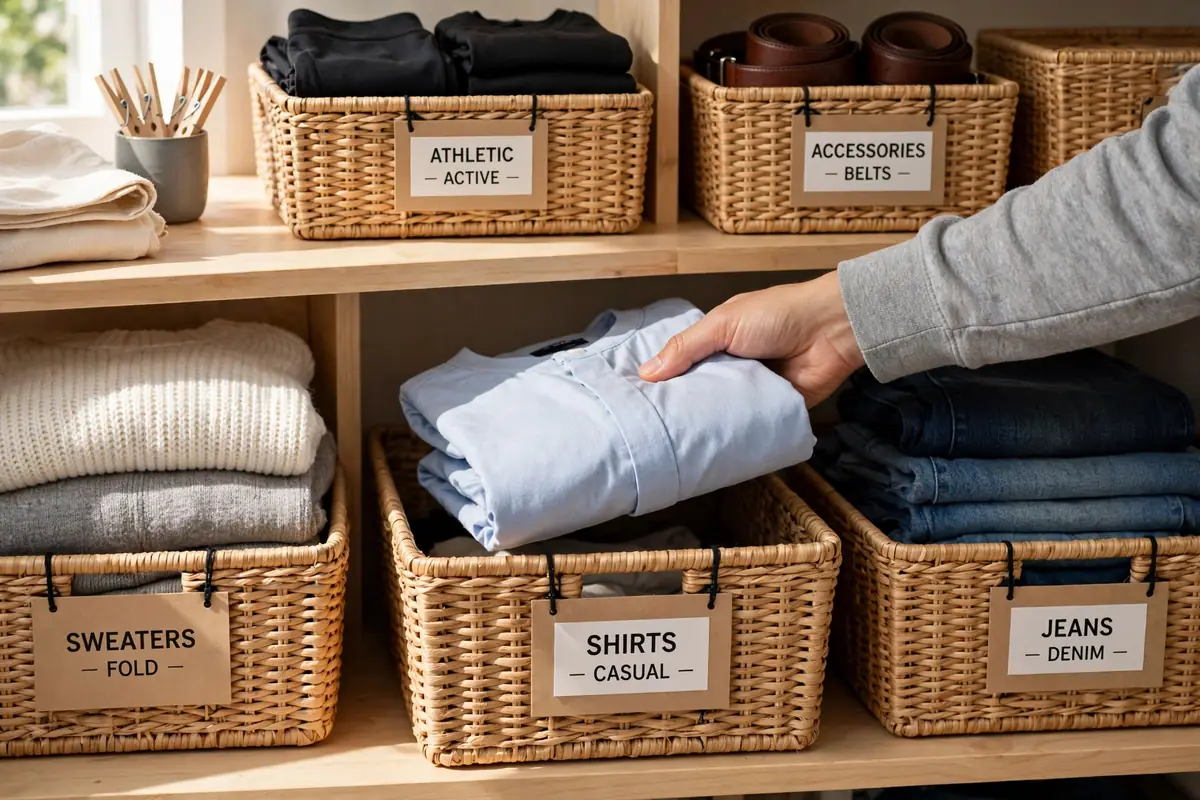
Three habits do it: one in, one out for every new item; a 10-minute weekly reset where everything goes back to its zone; and a seasonal top-shelf rotation twice a year. Matching hangers help more than you’d expect, because a tidy rod keeps clothes off the shelves and the shelves keep their zones.
One in, one out is the maintenance habit that shows up in every organizer community for a reason: it caps the total volume, so the system can’t outgrow its shelves. The weekly reset is simpler than it sounds. Set a timer, walk the shelves, refold the two stacks that migrated, toss the empty hangers back on the rod. Ten minutes, once a week, and the closet never reaches the point where you’d need a whole Saturday.
The seasonal rotation is where the top shelf earns its keep. The National Association of Professional Organizers estimates we wear about 20 percent of our clothes 80 percent of the time, which is your permission slip to move the other 80 percent up top or out of the closet twice a year. Out-of-season goes up in labeled bins; in-season comes down to eye level.
The one I’d bet on: the 10-minute weekly reset is the only maintenance habit I’ve seen survive real life. The rest is decoration without it.
Put the reset on a day you’ll actually do it. Sunday evening works for most people: the laundry’s going anyway, and the closet gets ten minutes while the dryer runs.
Which shelf should you fix first tonight?
Start with the eye-level shelf. It’s the one you touch every morning, so it’s the one that pays you back fastest: pull everything off, keep only what you actually wear, put back neat 12-inch stacks with dividers between them. Thirty minutes, one pack of dividers, and the most-used shelf in your closet stops fighting you.
Don’t try to do the whole closet in one night. Decision fatigue is real, and a tired brain keeps everything “just in case.” One shelf done well beats three shelves half-done, and you’ll come back tomorrow with better judgment. Take the donate bag to your car the same night. Bags that sit by the door migrate back into the closet.
Next, hit the top shelf, because that’s where the mystery boxes live. Bin them, label them, and move anything seasonal up there while you’re at it. Real closet shelf organization isn’t a weekend project; it’s one shelf tonight, one shelf next week, and shelves that stay put because the inches were right from the start.
Once the shelves are sorted, the rest of the closet gets easier. Our linen closet organization guide handles the towel stacks, and kids room storage ideas covers the small-closet chaos.
What does finished closet shelf organization look like?
The goal of closet shelf organization is simple: every shelf has one job, every stack has walls, and you can see everything you own. Real closet shelf organization comes from inches, not luck, so measure before you buy anything.
Three numbers run the whole system. Fourteen to 16 inches between shelves for sweaters, stacks capped at 12 inches, dividers every 8 to 12 inches. Get those right and your closet shelf organization holds without weekly rescues; get them wrong and no product will save it. That is why closet shelf organization starts with a tape measure.
Match the product to the problem. Wood closet shelves give folded clothes a flat, stable home. Hanging closet shelves add tiers without drilling. Adjustable closet shelving moves when your needs change. In every case, the best closet shelf organization buys the fewest products that fix the actual annoyance, which is why dividers beat bins as a first purchase and closet shelf organization stays cheap.
Wire shelving is fixable without a remodel. A wood cover at roughly $25 to $60 a shelf lays flat over the wire and takes divider clips, which solves the two big wire-shelf complaints in one move. For renters, that cover plus a cube organizer is the whole closet shelf organization upgrade; owners can go further with real wood cut at the hardware store, but the cover proves that good closet shelf organization rarely needs a contractor.
Budgets stay small when the diagnosis is right. Under $50 covers dividers, covers, and labels, which fix most closets outright. The $50 to $150 tier adds risers and bins for specific problems. Expensive systems have their place, but honest closet shelf organization spends the least that solves the problem, and a $40 fix that works beats a $400 system that doesn’t. That discipline is what keeps closet shelf organization cheap.
Then defend it. One in, one out for new clothes, a ten-minute reset every Sunday, a seasonal rotation of the top shelf. When the seasonal rotation fills a donation bag, our fall decluttering checklist walks you room by room through what to let go of before the holidays. Maintenance is the unglamorous half of closet shelf organization, and it is the reason some closets stay neat for years. Skip it and even perfect closet shelf organization slides back within a month.
How do I organize a closet with shelves?
Closet shelf organization starts with measuring: shelf depth, the gap between shelves, and total vertical height. Then declutter, because no organizer fixes too much stuff. Give every shelf one job: seasonal bins up top, daily folded clothes at eye level, heavy items and shoes down low. Add shelf dividers to hold stacks upright, bins for small items, and labels on everything you can’t see into. Finish with a 10-minute weekly reset so the system holds.
What is the best way to organize a closet shelf?
Good closet shelf organization treats each shelf as its own zone with a single job. Cap folded stacks at 12 inches tall and slide a divider in every 8 to 12 inches so each stack has walls on both sides. Keep daily items at the front and push rarely used things to the back. If it’s a deep shelf (over 16 inches), use pull-out bins or front-back zoning so nothing gets lost behind the front row.
What is the ideal spacing between closet shelves for folded clothing?
Fourteen to 16 inches for bulky sweaters, which fits a 12-inch stack with 2 inches of grabbing space on top, per a closet-design guide on bloomsburykitchens.com. Tees and shirts need 10 to 12 inches, shoes lined up on a shelf do fine with 8 to 10 inches, and linen stacks sit best at 12 to 14 inches. If your shelves are fixed at the wrong spacing, add a middle shelf with brackets and a cut board.
How do I keep folded clothes from falling over on shelves?
Keep stacks 12 inches tall or shorter, since taller stacks lean and fall. Place acrylic shelf dividers every 8 to 12 inches to wall each stack in. In bins, file-fold clothes upright like files in a drawer rather than stacking them flat. One heads-up: most acrylic dividers won’t clip over the front lip of wire shelving, so wire-shelf owners should fix the shelf surface first with wood covers or replacement shelves.
Are wire shelves or wood shelves better for closets?
Wood closet shelves are better for folded clothes: flat, stable, and compatible with dividers. Wire shelving lets items tip through the gaps and rejects most divider clips. That said, you don’t have to rip wire shelving out. Wood covers that lay over the wire cost roughly $25 to $60 per shelf and are renter-safe, while owners can have wood shelves cut at the hardware store and mounted on studs for a permanent fix.
How deep should closet shelves be?
Twelve to 14 inches is the sweet spot for folded clothes, per a closet guide on coohom.com. Under 10 inches, stacks hang over the edge; over 16 inches, the back half becomes dead space where things disappear. For deep shelves, zone them front to back (daily items in front, seasonal behind) or use pull-out bins, which slidewardrobesdirect.co.uk recommends for shelves deeper than about 20 inches (50 cm).
How can I add shelves to a closet without drilling?
Use freestanding cube organizers, which add shelf space with zero holes and move with you. Lay wood covers over existing wire shelving, add an over-the-door organizer for shoes and accessories, or hang a no-drill drop-down rod from the current rod for a second tier of hanging space. Just know the limit: nothing here replaces a stud-mounted shelf for heavy items like books or full linen stacks.
Should I fold or roll clothes on closet shelves?
Fold for open shelves and flat stacks, where clean edges facing out look neat and stay put between dividers. Roll for deep bins, where rolled items pack tight and you can see every piece from above. In shallow stacking bins, file-folding beats both: fold clothes into rectangles and stand them upright like files, so you can pull one without disturbing the rest.
How often should I reorganize my closet?
Do a 10-minute reset weekly: refold migrated stacks, return strays to their zones, toss empty hangers back on the rod. Rotate the top shelf seasonally, twice a year, moving out-of-season clothes up and in-season clothes down to eye level. Do one full declutter a year, and follow the one-in-one-out rule on new purchases so your closet shelf organization never outgrows its shelves.
