

Title: How to organize a closet with no shelves: the renter-friendly system that actually holds Slug: closet-with-no-shelves
If your closet has no shelves at all, start with a rack that fits the floor or the door: see our best shoe rack for small closet roundup.
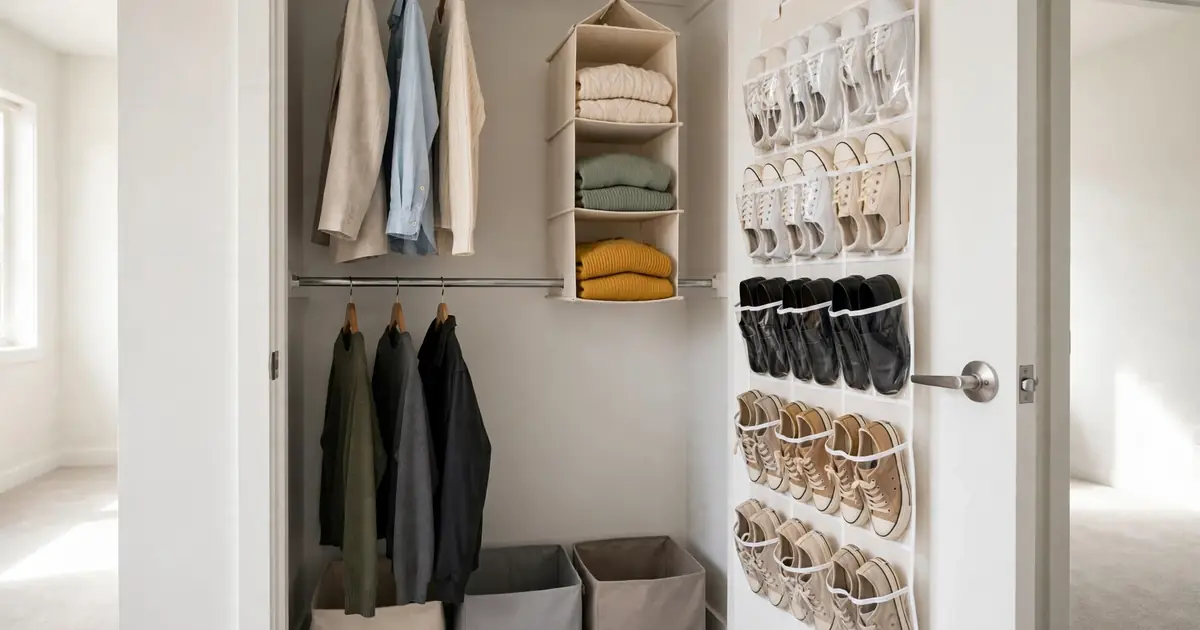
A closet with no shelves isn’t a storage problem. It’s a hanging problem with a rod and nothing else. The fix for how to organize a closet with no shelves is a small system, not a shopping spree: hang a fabric shelf organizer off the rod, add a second rod with a tension rod or rod doubler, stand a freestanding cube unit on the floor, and give the door and the floor bins their own jobs. Do those four moves and a bare rental closet holds as much as one with built-ins.
Once the shelves are sorted, give your shoes the same no-drill treatment: our shoe storage for small closets guide ranks renter-safe options like tension rods and over-door organizers by damage risk.
TL;DR: The fastest way to organize a closet with no shelves is to measure first, then layer no-drill pieces in this order.
- Measure width, depth, and rod height before buying anything.
- Double your hanging with a tension rod or hanging rod doubler.
- Hang one fabric shelf organizer for folded clothes; it costs about 12 inches of rod.
- Stand bins or cubes on the floor and use the door for shoes and accessories.
- Keep only this season in the closet; store the rest under the bed.
How do you organize a closet that has no shelves at all?
You build the shelves the closet never gave you, without touching a drill. The whole system for how to organize a closet with no shelves rests on four pieces that renters have used for years: a hanging fabric organizer that turns 12 inches of rod into folded storage, a second rod made from a tension rod or a hanging rod doubler, a freestanding cube or bin tower on the floor, and the closet door for shoes and small things. Nothing screws into the wall, so your deposit stays safe. You’re in good company: 34.7% of U.S. households rented in 2024 (U.S. Census Bureau American Community Survey, via rentdatanow.com).
Start with an honest emptying. When you learn how to organize a closet with no shelves, the first step is always the purge: Pull everything out and sort into keep, donate, and relocate piles. ClosetMaid’s own storage tips remind us that most of us wear only 20 percent of our clothes 80 percent of the time, so be ruthless here. A bare closet fills fast; every piece you keep has to earn its rod space. The rest goes to a donation bag or a different closet the same day, not back onto the floor.
Then install in order: second rod, hanging organizer, floor pieces, door pieces. Each piece claims its zone before the next arrives.
What three measurements decide your whole plan?
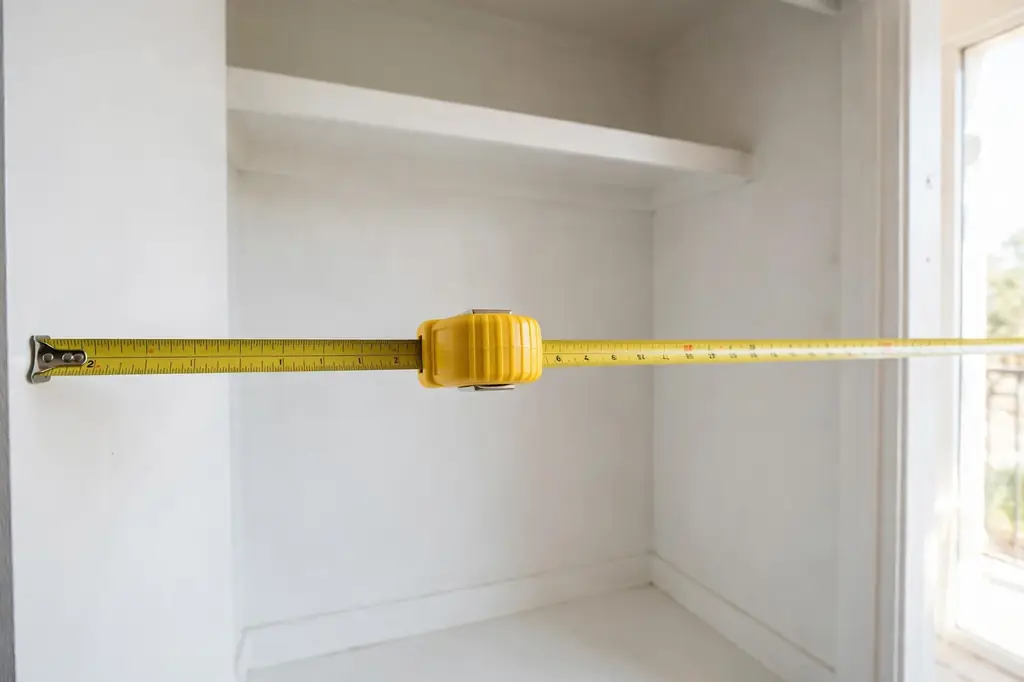
Width, depth, and height. Write them on your phone before you spend a dollar. This is the step most people skip when learning how to organize a closet with no shelves, and it’s the reason their organizers don’t fit.
Measure the rod width wall to wall. Anyone learning how to organize a closet with no shelves starts with three numbers: the depth from the back wall to the door, and the floor-to-rod and rod-to-ceiling heights. These three numbers decide what fits and what doesn’t.
The numbers that matter for how to organize a closet with no shelves: a standard reach-in closet is 24 inches deep, the minimum depth that lets a hanger clear the door, and the rod sits 12 to 15 inches from the back wall. Current U.S. planning guides land on about 66 inches for single hang and 40/80 inches for double hang. Under 24 inches of depth, standard hangers catch the door, and you need the shallow-closet fix below instead of forcing it.
| Measurement | Standard | What it means for you |
|---|---|---|
| Rod width | 3 to 8 ft, most often 6 ft | A 3-ft rod holds about 9 coats at 4 inches each |
| Depth | 24 in minimum | Under 24 in, hangers hit the door; use front-to-back rods |
| Single rod height | 66 to 70 in | Wastes the top 2 to 3 ft; add a second rod below |
| Double-hang heights | Upper 80 to 84 in, lower 40 to 42 in | Doubles short-hang capacity with zero drilling |
How much can one rod actually hold?
Less than you think, which is why the math matters. Count on about 4 feet of rod per person and about 4 inches of rod per coat. A 3-foot closet gives one person 36 inches: three-quarters of what one person needs, less than half of what two need. Honestly, this is the math every guide on how to organize a closet with no shelves should open with. ClosetMaid's storage tips make the same point: one rod in an 8-foot closet gives 8 feet of hanging, while adding rods and a tower creates about 17 feet of storage.
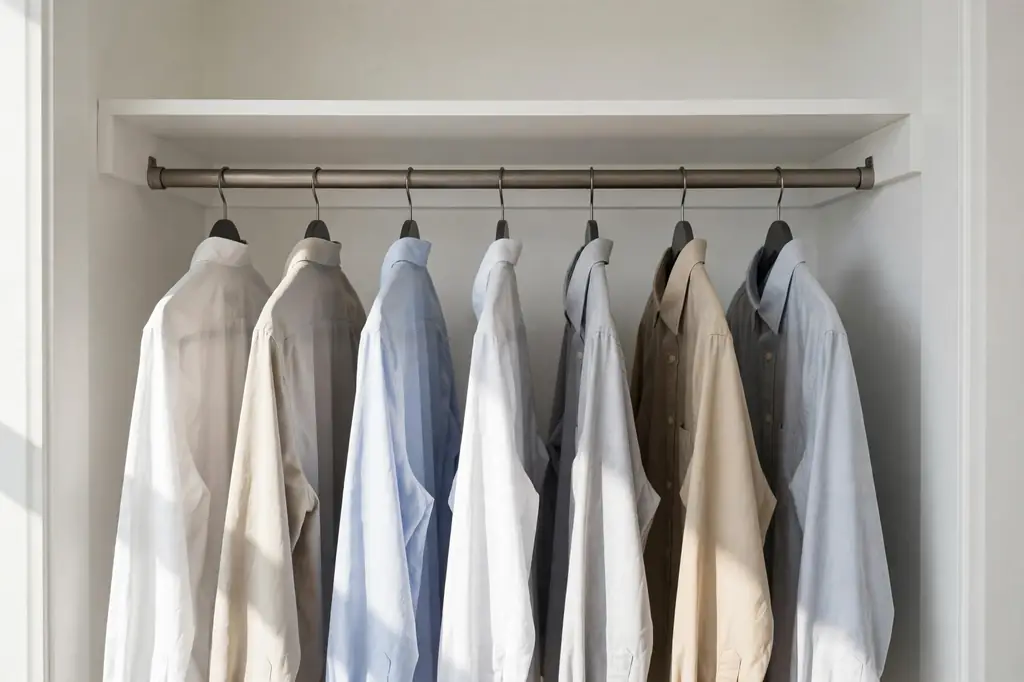
A 3-foot rod holds roughly 9 winter coats and then it is done. Rod math is the unglamorous core of how to organize a closet with no shelves: and then it’s done. Shirts and blouses need less, about 1 to 2 inches each on slim hangers, so a 3-foot rod can carry 20 to 25 shirts. The coat category is what eats closets alive. If coats are taking two feet of a three-foot rod, move them out for their off season.
This math also tells you when to stop buying. That is the capacity lesson in how to organize a closet with no shelves: if the rod is full at the current season’s clothes, the closet isn’t disorganized, it’s over-assigned. Move the off-season half out and the same rod feels twice as big.
Can a hanging fabric organizer replace real shelves?
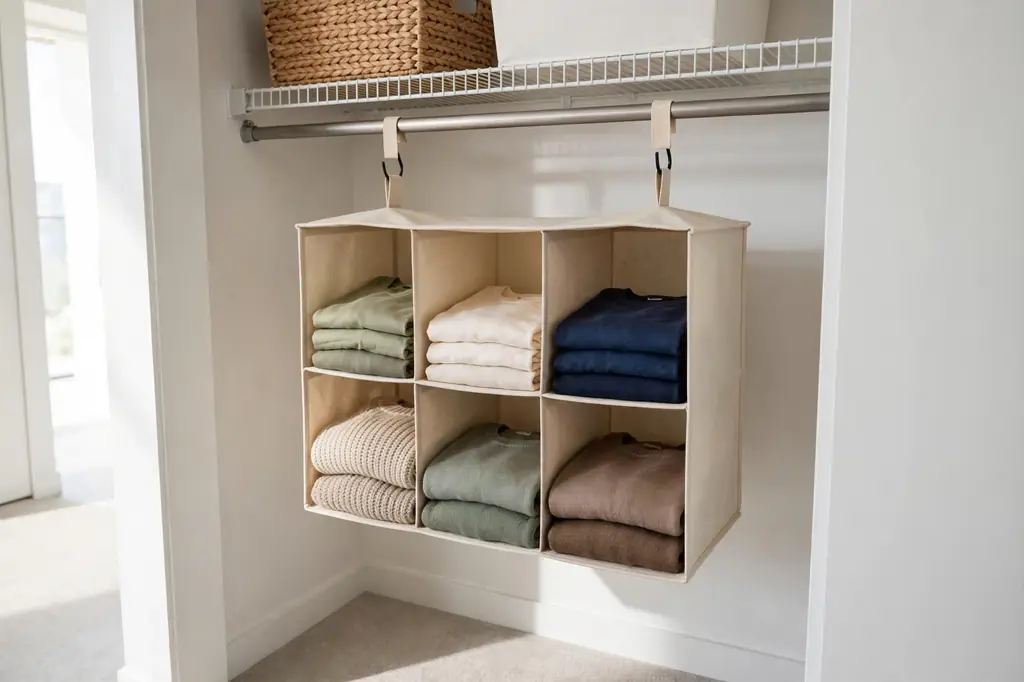
Yes, and it’s the single best purchase for a closet with no shelves. When people ask me how to organize a closet with no shelves on a budget, this organizer is my first answer. A hanging fabric organizer hooks over the rod and gives you 5 or 6 cubbies of folded storage for sweaters, jeans, t-shirts, and bags. It costs about 12 inches of rod space and zero tools. When the lease ends, it folds flat into a moving box.
Pick the size by your measurements. The best guides on how to organize a closet with no shelves start here: A standard organizer is about 12 inches wide, 12 inches deep, and 48 to 60 inches tall, and it hangs best where your longest clothes don’t need the drop. Put it at one end of the rod, not the middle. In a 3-foot closet, one organizer plus the remaining rod space is the sweet spot.
Use it for the clothes that should never hang. Folded storage is half of how to organize a closet with no shelves: Sweaters stretch at the shoulders on any hanger, so they belong folded in these cubbies. Jeans, t-shirts, and workout clothes file neatly into the squares. Skip shoes here: footwear is heavier and dirtier than fabric cubbies like, and shoes belong in the door or floor systems below. About 12 to 25 dollars at US stores: the cheapest real shelf you can buy.
How does a second rod work when you can't drill?
Two ways, and both are renter-safe. If you buy one thing while figuring out how to organize a closet with no shelves, make it the second rod. A hanging rod doubler hooks over your existing rod and drops a second bar to about 40 to 42 inches from the floor, which is exactly where a double-hang closet puts its lower rod. A tension rod braces between the two side walls at whatever height you choose and holds with spring pressure and rubber-padded ends. Neither needs a hole in the wall.
The rod doubler is the simpler pick for most closets. Doubling the rod is the fastest win in how to organize a closet with no shelves: It installs in seconds and turns 36 inches of single hanging into about 60 inches. Shirts, blouses, and skirts need only 39 to 45 inches of drop, so they live happily on both bars. Keep one-third single for dresses and coats, which need about 63 to 66 inches of drop.
The tension rod wins when you want the second bar at a custom height. Tension rods are the renter’s answer to how to organize a closet with no shelves: Respect its limits: a standard tension rod holds light to medium loads, so load it with shirts, not winter coats. Twist it tight and check it monthly. Heavy-duty versions rated around 20 pounds cost about 10 to 20 dollars and handle a full row of shirts without sagging.

Where do folded clothes go when the floor is your only shelf?
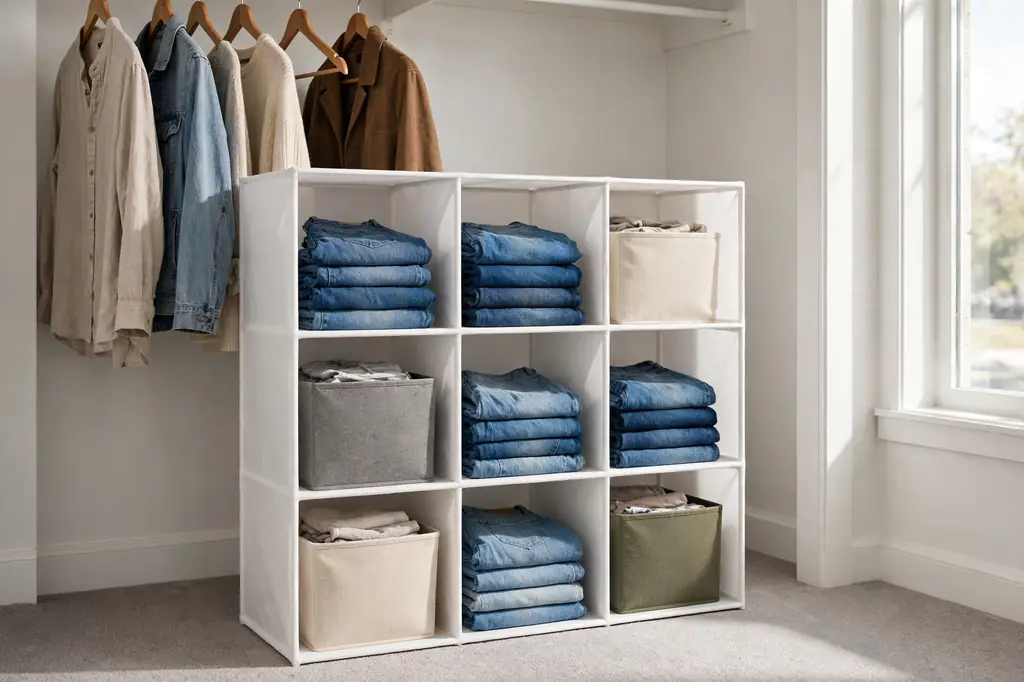
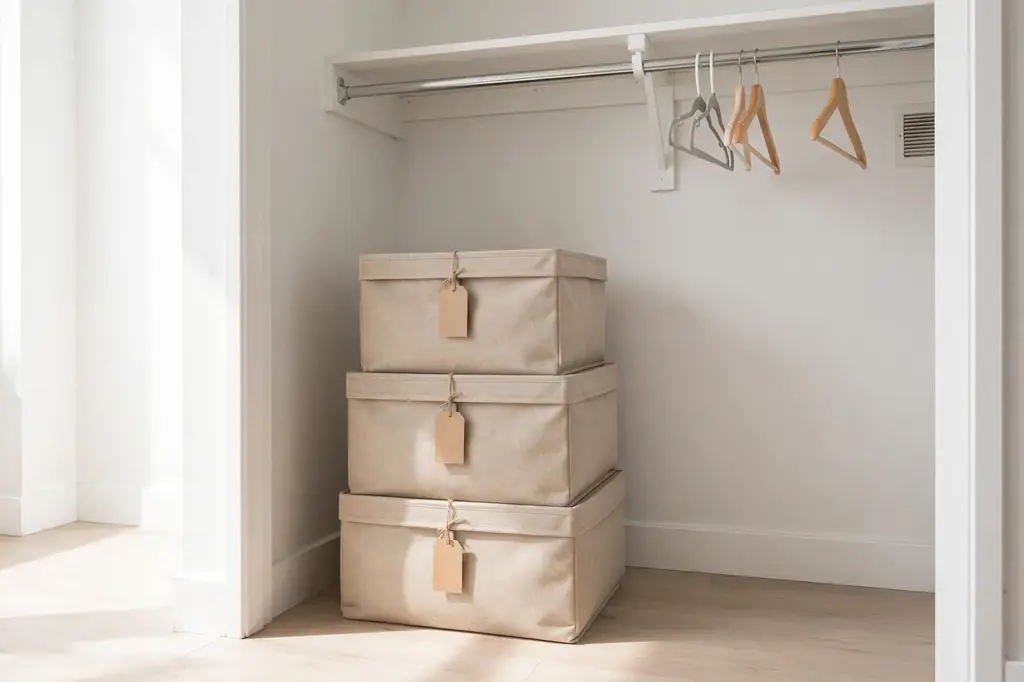
Onto a freestanding cube unit or a stack of bins that stands on the floor under the hanging clothes. The floor zone is the part of how to organize a closet with no shelves that most people skip, and it’s the difference between a closet that looks organized for a week and one that stays organized. A 2-by-2 fabric cube unit costs about 25 to 45 dollars, needs no tools, and moves with you when the lease ends.
Measure the clearance first. Floor space is precious when you figure out how to organize a closet with no shelves: You need the floor-to-hem distance of your longest hanging clothes, and the cube unit must be shorter than that. With a single rod at 66 to 70 inches, long dresses may nearly touch the floor, so put the cube unit under the short-hang section instead, where shirts end around 40 inches.
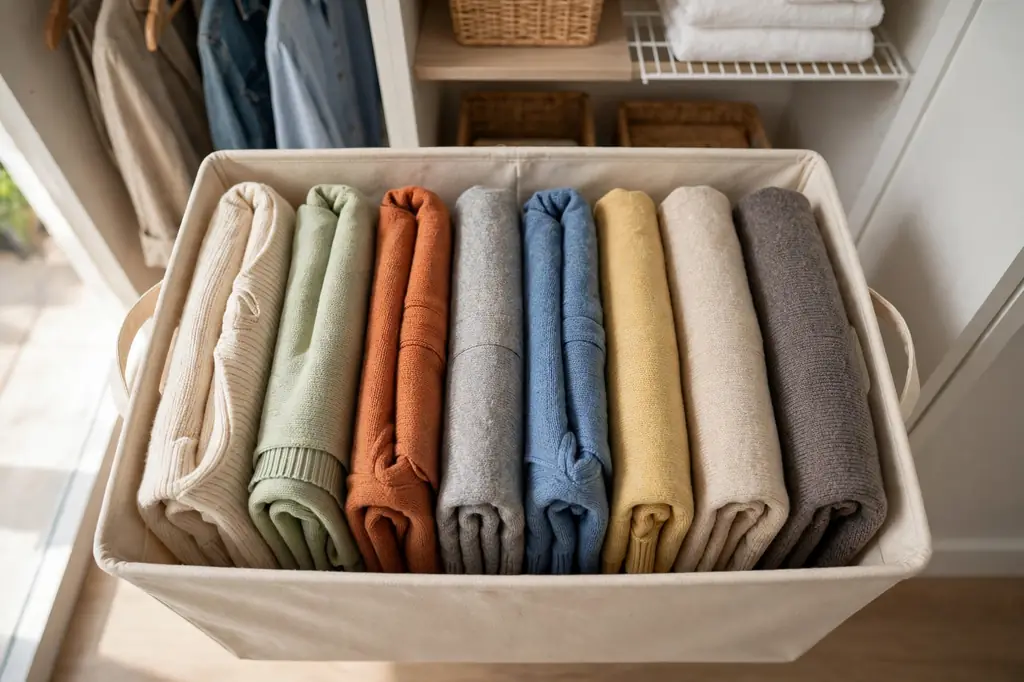
Folded clothes go in the cubes filed upright, like records in a crate, not stacked. Filing, not stacking, is the mantra of how to organize a closet with no shelves: like records in a crate, not stacked. Stacks hide the bottom half of the pile, and that’s where forgotten clothes go to die. Filed upright, every sweater is visible from above and nothing gets crushed. Give each cube one category: jeans, sweaters, workout clothes. Two cubes per category is the limit. A third cube of overflow means the category needs the donate bag, not more storage.
How do you turn the closet door into storage?
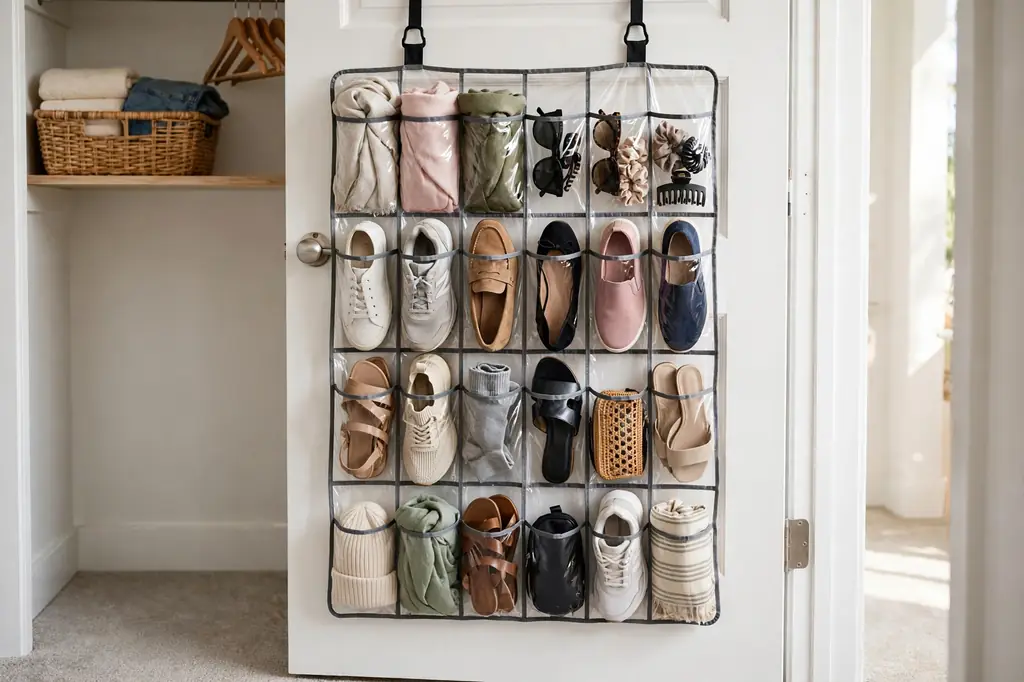
The back of the closet door is free real estate, and it’s the most underused surface in any plan for how to organize a closet with no shelves. An over-the-door organizer with clear pockets hangs over the top of the door, needs no tools, and holds 24 pairs of shoes or a full collection of scarves, belts, sunglasses, and small bags. This one purchase can clear the entire closet floor, which is the first square foot a small closet loses.
Match the organizer to the door. The door is free real estate in how to organize a closet with no shelves: Most closet doors are hollow-core and light, which is fine for pocket organizers. If the door is a sliding door with no back surface, use the bedroom door instead, or a narrow over-the-door hook rack on the closet’s side wall. Check the door width first; a 24-pocket organizer needs about 18 to 20 inches of clear door.
Assign the pockets by frequency. Zoning by use is what makes how to organize a closet with no shelves actually work: Daily shoes and the bag you grab every morning go at eye level. Occasion shoes and spare accessories go up high. Small things like lint rollers, spare buttons, and a mini sewing kit get the bottom row. When every pocket has a job, the door stops being clutter and becomes the most-used shelf in the closet.
What is the fix for shoes with no shelf and no floor?
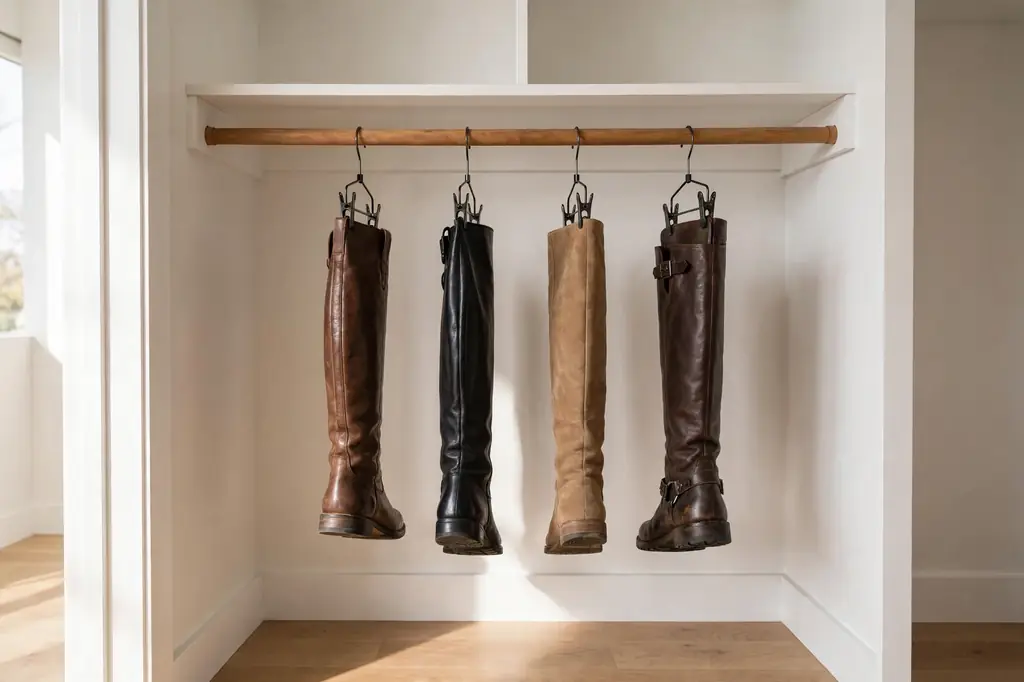
Shoes get one home, and it’s never loose on the closet floor. Footwear is the category that breaks most attempts at how to organize a closet with no shelves. Loose shoes are how a closet loses its first square foot and then its second. Pick one system based on your count: an over-the-door pocket organizer for up to 24 pairs, a two-tier floor rack for 8 to 12 pairs if you have floor space, or vertical boot hangers that clip tall boots and hang them from the rod like clothes.
Boots deserve their own callout. Boots are the edge case in how to organize a closet with no shelves: because they’re the shoe category that breaks systems. Tall boots flop over, eat floor space, and get crushed under other pairs. Clip-style boot hangers hold each pair upright on the rod, which keeps their shape and frees the floor completely. Two or three pairs of tall boots on hangers cost less rod space than one pair flopped on the floor.
Then enforce the overflow rule. Overflow discipline keeps how to organize a closet with no shelves working long term: the pairs you wear weekly live in the closet, and everything else lives with the off-season clothes under the bed or in a labeled bin. If a pair hasn’t left the closet in a season, it’s decoration, and decoration doesn’t get floor space.
Where do bags, scarves, and belts live now?
On hooks and rod ends, never in a pile. Accessories are the quiet win in how to organize a closet with no shelves, because they take minutes and change how the closet feels. Piles are where accessories go to be forgotten, and a forgotten accessory is money sitting in the dark. The closet gives you two free surfaces for this: the side walls and the ends of the rod.
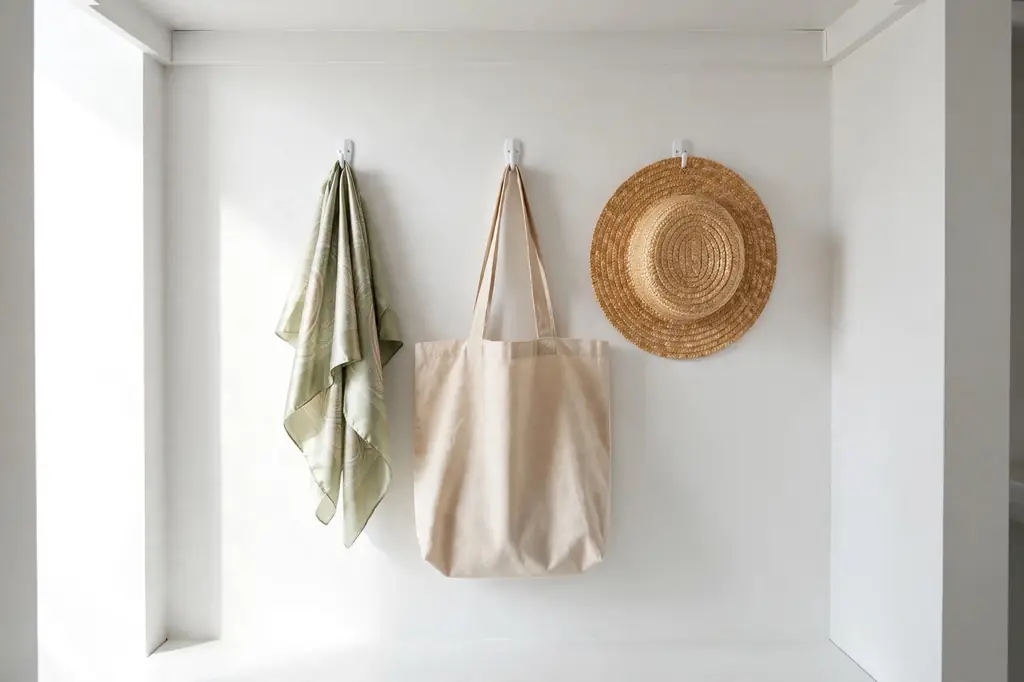
Adhesive hooks are the renter’s best friend here. No-drill hooks are essential to how to organize a closet with no shelves: A pack costs a few dollars, holds a few pounds per hook, and peels off cleanly when you move. Put two or three on each side wall at staggered heights: scarves and belts on the low hooks, the next day’s outfit or a tote on the higher ones. Keep them inside the closet so getting dressed stays a one-room trip.
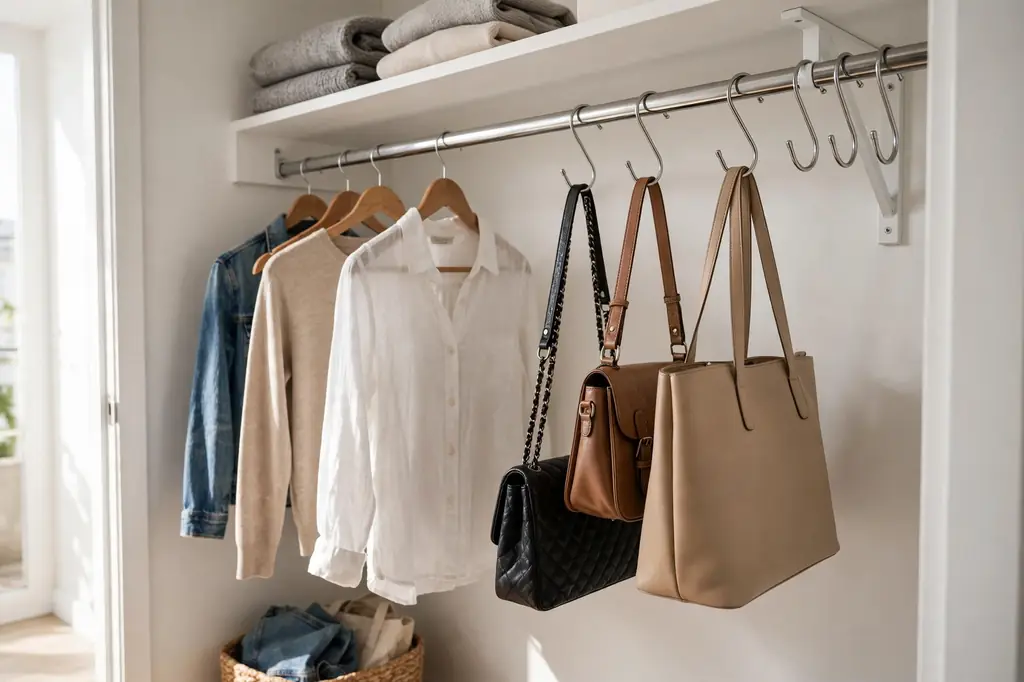
The rod ends take S-hooks for handbags. S-hooks add bag storage to how to organize a closet with no shelves: Hang bags by their straps so they keep their shape, one bag per hook, at the end of the rod where they never block the clothes. Stuff structured bags with tissue so they don’t slump. Hats go on a single high hook or on top of the hanging organizer. Give every accessory a fixed hook, because the rule is simple: if a thing has two possible homes, it will end up in neither.
What if your closet is too shallow for standard hangers?
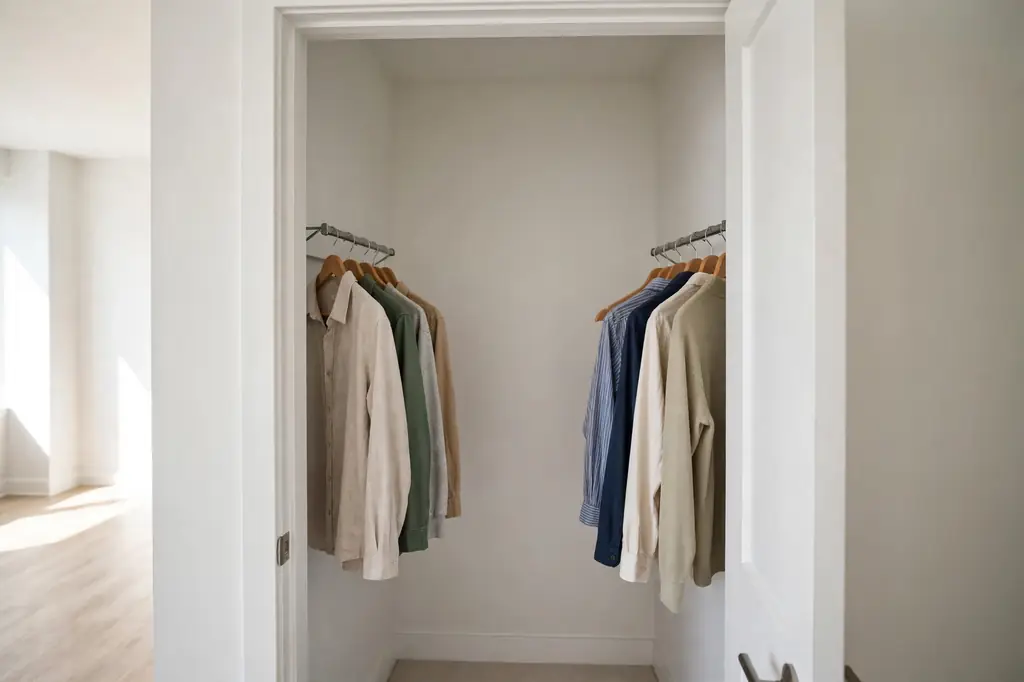
Then stop hanging across the closet. Shallow closets need their own version of how to organize a closet with no shelves, built around side rods instead of the cross rod. A closet under 24 inches deep will fight you every morning because standard hangers catch the door. The fix is to hang front to back: mount two or three short rods on the side walls, one above the other, with clothes facing the door. Closet designers have recommended this for shallow closets for decades, and it still beats a single cross rod in a 20-inch-deep space.
Short rods are easy to fake without drilling. Faking a second rod is a classic trick in how to organize a closet with no shelves: A tension rod braced front to back between the back wall and the door frame works in many reach-in closets, and a hanging rod doubler turned sideways can serve the same job. Hang shirts and blouses on these side rods and keep the main cross rod, if you keep it at all, for the few long pieces.
A shallow closet gets the small-closet rules. Shallow closets need a stricter version of how to organize a closet with no shelves: one season only, slim hangers throughout, and the off-season wardrobe stored elsewhere. Forcing a full wardrobe into a 20-inch-deep closet is how doors stop closing.
How much does a no-drill closet system cost?
Less than one month of a storage unit, which is the comparison that matters. Budgeting for how to organize a closet with no shelves is simpler than it looks, because every piece is cheap and none of it’s permanent. A no-drill system for a standard reach-in closet runs about 40 dollars at the essentials tier and tops out around 250 dollars for the full premium setup. Everything below is priced in the bands US stores actually sell these items for.
| Tier | What you buy | Typical cost | Best for |
|---|---|---|---|
| Essentials | Tension rod or rod doubler, 1 hanging organizer, slim hanger pack | 40 to 70 dollars | One person, small wardrobe |
| Full system | Above + cube unit or bin stack, over-door organizer, adhesive hooks | 100 to 160 dollars | Couples sharing, full wardrobes |
| Premium | Above + second organizer, boot hangers, label maker, under-bed bins | 180 to 250 dollars | Big wardrobes, long-term rentals |
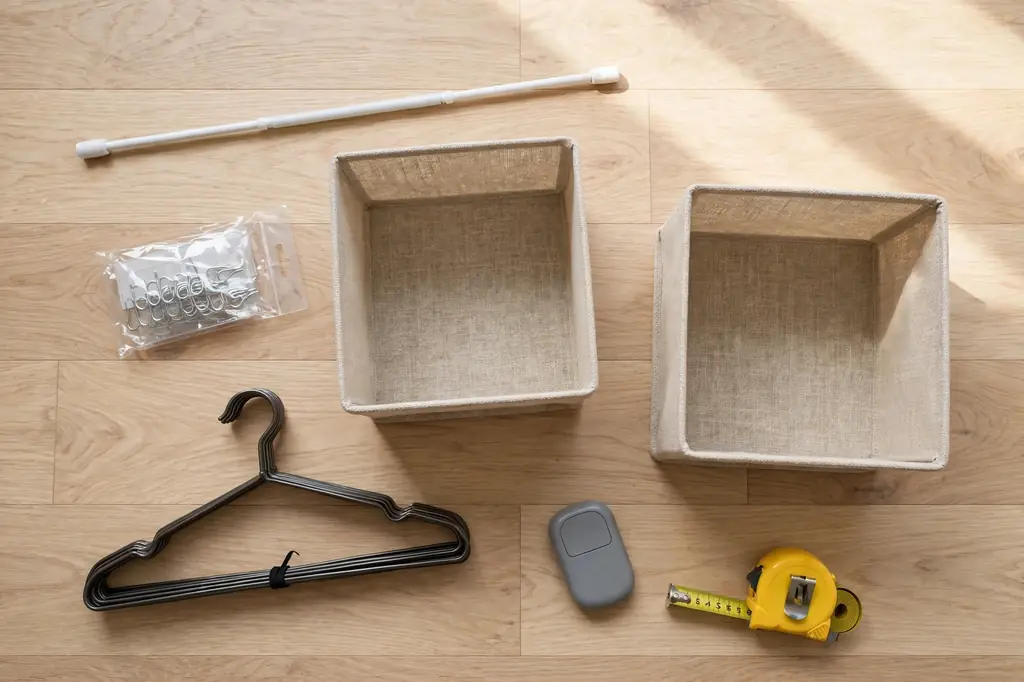
Start at essentials and add only what the closet proves it needs. Restraint beats shopping in how to organize a closet with no shelves: The most common mistake is buying the full system before measuring, then discovering the cube unit doesn’t clear the hanging clothes. Buy the rod doubler and the hanging organizer first, live with them for a week, and let the closet tell you what is still missing. If you want specific product picks with real dimensions, our roundup of the best closet organizers for small closets compares eight options that fit these exact measurements.
What do you do with the half of the wardrobe that won't fit?
You stop asking the closet to hold two seasons. The seasonal swap is the hidden half of how to organize a closet with no shelves, and it’s the step most guides skip entirely. Roughly half of what most people own is wrong for the next five months, and a small closet works when it holds one season while the other season lives somewhere else. This is the step most guides skip and the one that makes everything above actually work.
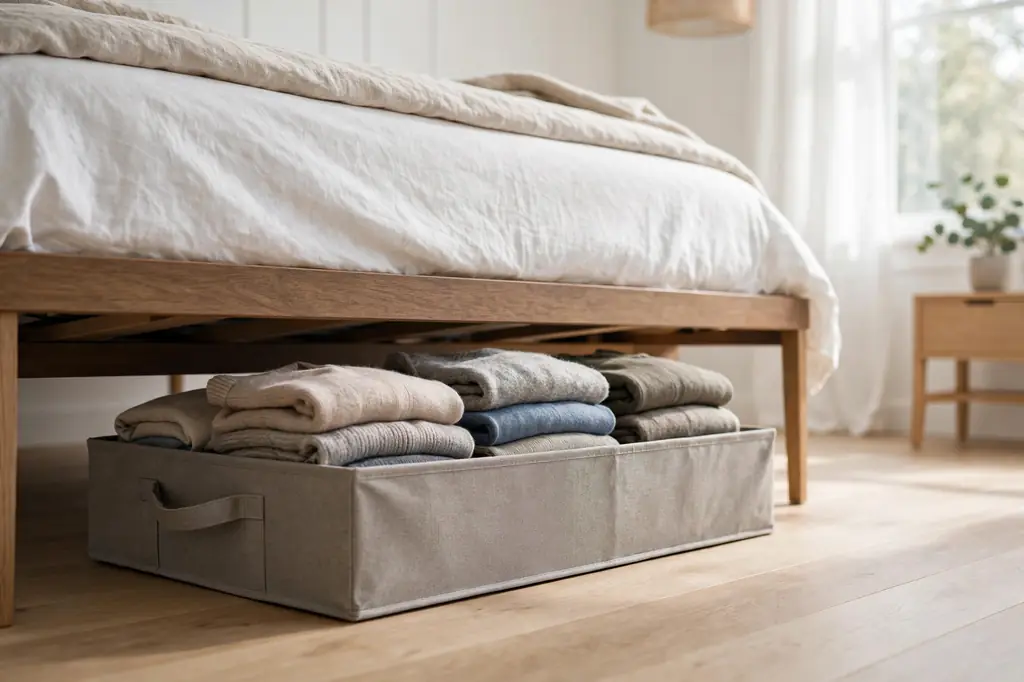
The somewhere else is under the bed. Off-season storage is part of how to organize a closet with no shelves: A flat fabric bin, about 35 by 18 inches and 6 inches tall, slides under most bed frames and holds one season of folded clothes. Vacuum bags shrink bulky sweaters and coats to a fraction of their size for the same trip. Label every bin by season and category.
Swap on fixed dates, not when you feel like it. Seasonal swaps keep how to organize a closet with no shelves sustainable: The first week of April and the first week of November work for most of the US: spring swap when the heavy coats leave, fall swap when they come back. Put the dates in your phone now. A seasonal swap on a schedule is a habit; one that waits for motivation never happens.
How do you keep it tidy when nothing has a visible home?
With a system that assumes you’re busy, not a system that assumes you’re disciplined. Maintenance is where most plans for how to organize a closet with no shelves die, so these habits are built for tired evenings. A no-shelf closet stays tidy on three habits: one in, one out; a monthly ten-minute reset; and a floor rule with no exceptions.
One in, one out is the load-bearing habit. Every new piece that enters the closet means one piece leaves it, to the donate bag or the off-season bin. Without this rule, even the best system fills up within a season, because closets don’t get bigger and wardrobes do. With it, the closet stays at the size you designed it for.
The monthly reset takes ten minutes. Return anything that migrated to the wrong zone, re-file the bins, and pull anything you haven’t worn in the last 30 days of its season. The floor rule is absolute: nothing lives on the closet floor except the bins and the shoe rack you chose. The day shoes start living loose on the floor is the day the system starts dying, and it takes another ten minutes to save it if you catch it early.
What is the two-hour weekend plan that puts it all together?
Saturday morning, two hours, one closet. Empty it completely and sort into keep, donate, and relocate. Measure width, depth, and rod height and write the numbers on your phone. Install the second rod, hang the fabric organizer at one end, set the cube unit or bins on the floor under the short-hang side, and hang the over-door organizer. Put back only the current season, filed and hooked by category, and move everything else to under-bed bins or the donate bag today, not eventually.
My honest take: most people should stop at the essentials tier and the seasonal swap. That is the whole playbook for how to organize a closet with no shelves, and those three moves deliver nearly all of the capacity gain. The full premium setup is nice, but the 80/20 of this whole project is the second rod plus the hanging organizer plus the off-season rule. Those three moves deliver nearly all of the capacity gain, and they cost less than a nice dinner out. Buy the rest only if the closet proves it needs it after a month.
Start tonight by measuring. A bare rental closet isn’t a compromise once it has a system. It’s just a closet that finally works as hard as you do.
If your room has no closet to begin with, start with our full system for organizing a bedroom without a closet.
Can I add shelves to a rental closet without drilling?
Yes. A hanging fabric organizer gives you 5 to 6 cubbies off the existing rod, and a freestanding cube unit adds floor-level shelving, both with zero holes. Tension rods and adhesive hooks cover the rest. Nothing here risks your deposit. If your closet does have a shelf or two, our closet shelf organization guide keeps the stacks from toppling.
What is the best organizer for a closet with no shelves?
A hanging fabric shelf organizer. It costs about 12 inches of rod, needs no tools, holds folded clothes that should never hang, and folds flat when you move. Pair it with a second rod and you have covered most of the gap.
How do you store folded clothes in a closet without shelves?
In a hanging fabric organizer or a freestanding cube unit on the floor, filed upright like records so every item is visible. Never stack folded clothes in deep piles, because the bottom half disappears. The same file-folding method keeps a linen closet neat.
How much weight can a tension rod hold?
A standard tension rod handles light to medium loads like shirts and blouses. Heavy-duty versions rated around 20 pounds cost about 10 to 20 dollars and hold a full row of shirts. Keep winter coats on the main rod, not a tension rod.
How do you organize shoes in a closet with no shelves?
Give shoes one fixed home: an over-the-door pocket organizer for up to 24 pairs, a two-tier floor rack for 8 to 12, or clip boot hangers on the rod for tall boots. Never leave shoes loose on the floor.
How do you organize a very small closet with no shelves?
Keep only one season in it, double the rod, use slim hangers, and move everything else under the bed. A very small closet is a capacity problem, not an organization problem, so subtraction beats storage.
What shouldn’t go in a closet with no shelves?
Anything that needs a flat stable surface long-term: heavy shoe collections, stacks of storage boxes, and anything you only touch twice a year. Those belong under the bed or in another room, not balanced on a fabric cubby. A dresser takes the overflow categories.
How do I keep a no-shelf closet organized long term?
One in, one out for every new piece, a ten-minute monthly reset, and an absolute floor rule. Swap seasons on fixed dates in April and November so the closet never has to hold both wardrobes.
Is a hanging organizer better than stackable bins?
For folded clothes, yes, because it uses rod space instead of floor space. For shoes, heavy items, and categories you grab daily, bins and cubes win. Most good closets use one hanging organizer plus one floor cube unit.
