
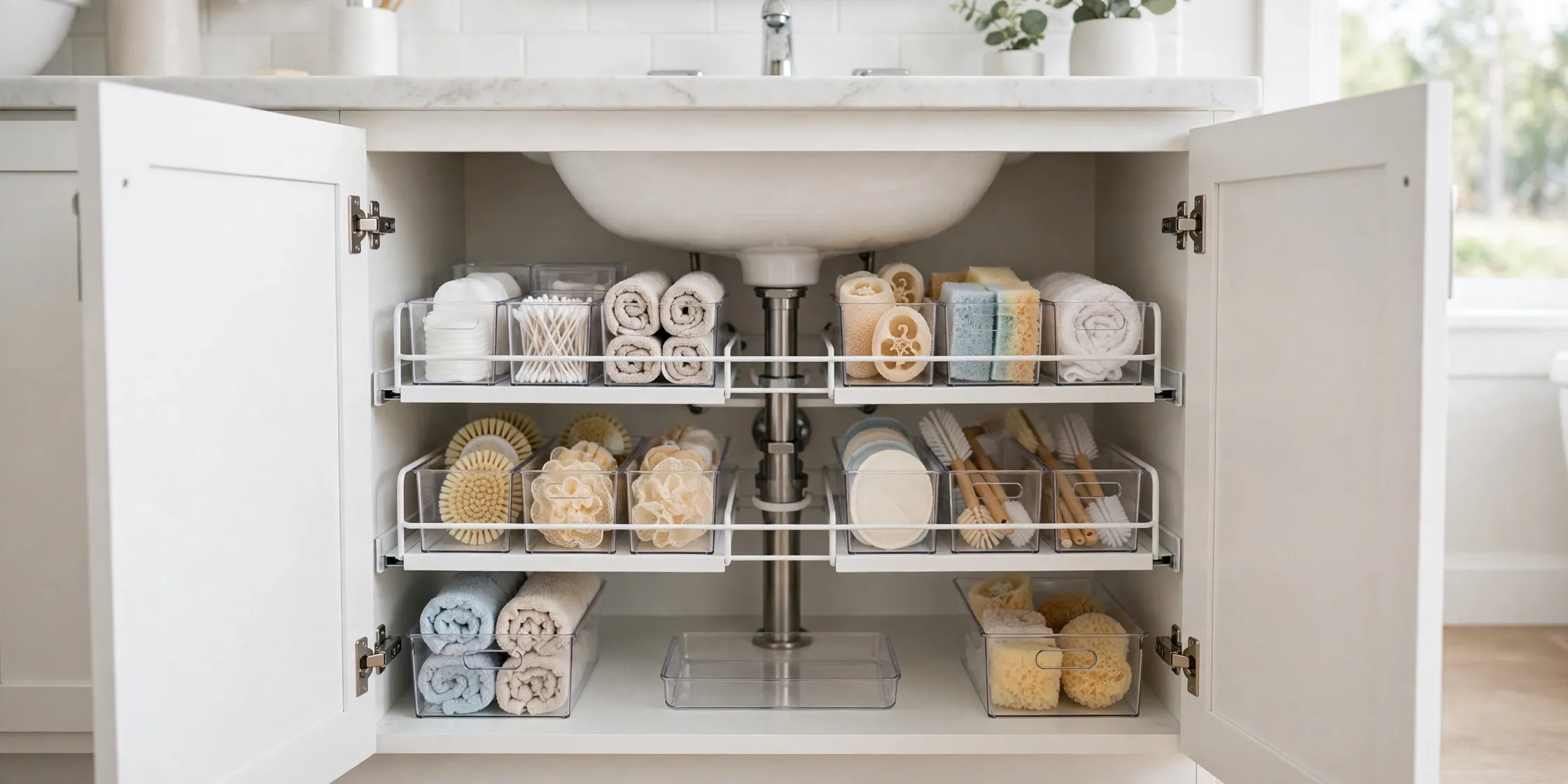

The space under your bathroom sink gets messy for three boring reasons: the drain pipe eats the middle, there are no shelves, and you cannot see the back without kneeling. The under bathroom sink organization ideas that follow start with these boring basics, because the pipe layout decides everything else. The fix is not another organizer. Empty the cabinet, measure the clear space around the pipes, split it into zones, and give daily items a front-row bin. Most cabinets take under an hour, and a cheap drip tray on the floor catches the slow leak you would never see otherwise.
TL;DR: Pull everything out and toss what is expired or duplicated. Measure the width, depth, and the space on each side of the drain pipe. Put tall items on the sides, daily products in a shallow bin up front, and cleaners in their own handled bin. Line the floor with a drip tray. Do not store medicine or makeup in there; the humidity ruins both. That is the whole system, and it works in rentals too.
Here is why this small cabinet deserves the attention. The US EPA says you should dry wet building materials within 24 to 48 hours to stop mold growth, and a hidden drip under a sink is exactly the kind of moisture nobody checks. Water damage is not a freak event either: the Insurance Information Institute reports the average water damage and freezing claim at $15,400, and one in 60 insured homes files one each year. A tidy cabinet is really a leak you catch in week one instead of month six.
### The organizer cheat sheet
| Organizer type | Best for | Typical cost | Watch out for |
|---|---|---|---|
| Two-tier sliding drawers | Cabinets with clear space on one or both sides of the pipes | $15 to $40 per unit | Must clear the drain trap height |
| U-shaped shelf | Single sinks with a centered drain | $20 to $45 | Needs accurate width measurements |
| Expandable shelf with removable panels | Odd pipe layouts | $20 to $35 | Can wobble if overloaded |
| Clear stackable bins | Grouping small items by category | $2 to $8 each | Stacking too high hides things again |
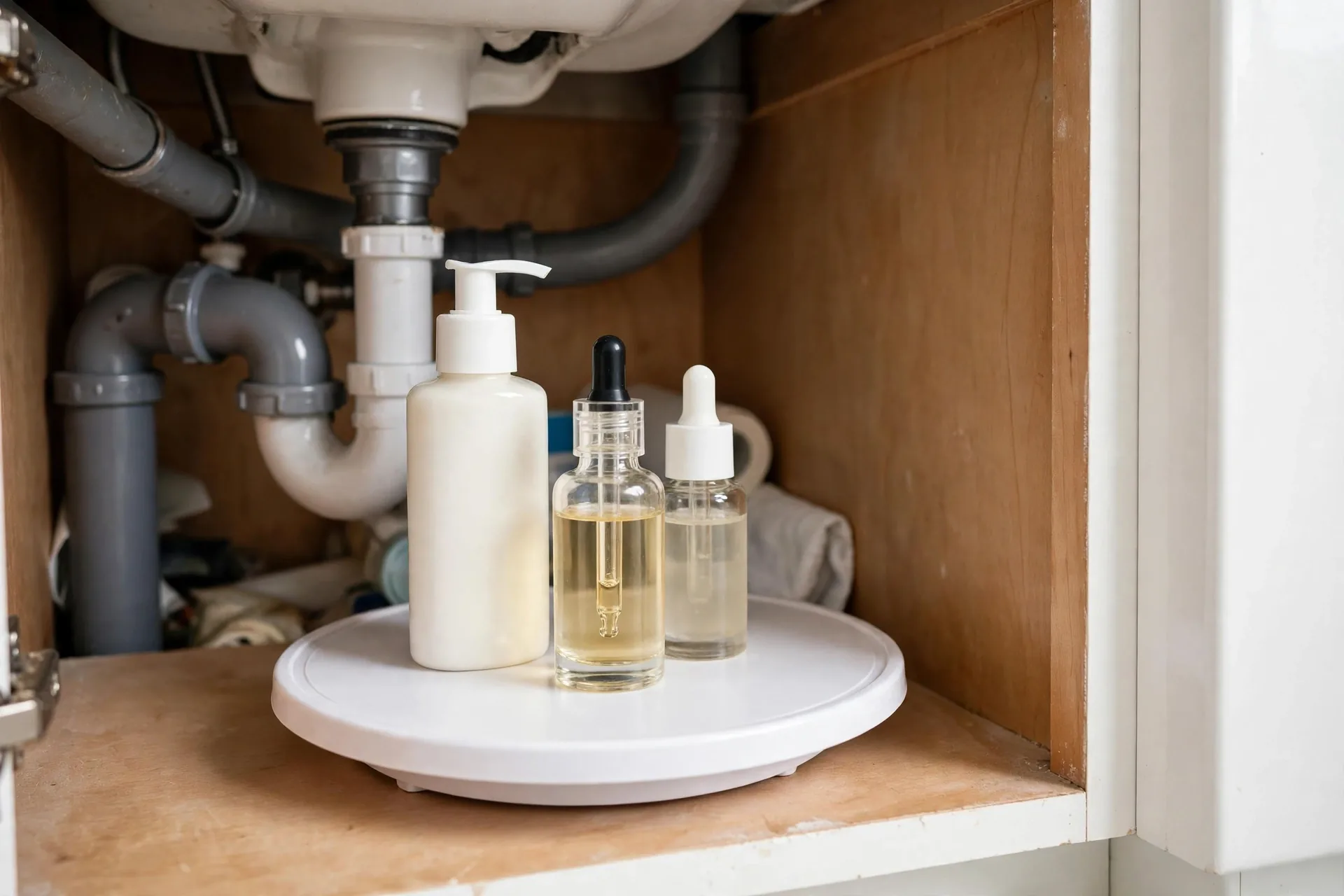
| Turntable (lazy Susan) | Bottles in a deep corner | $6 to $15 | Wastes space in narrow cabinets |
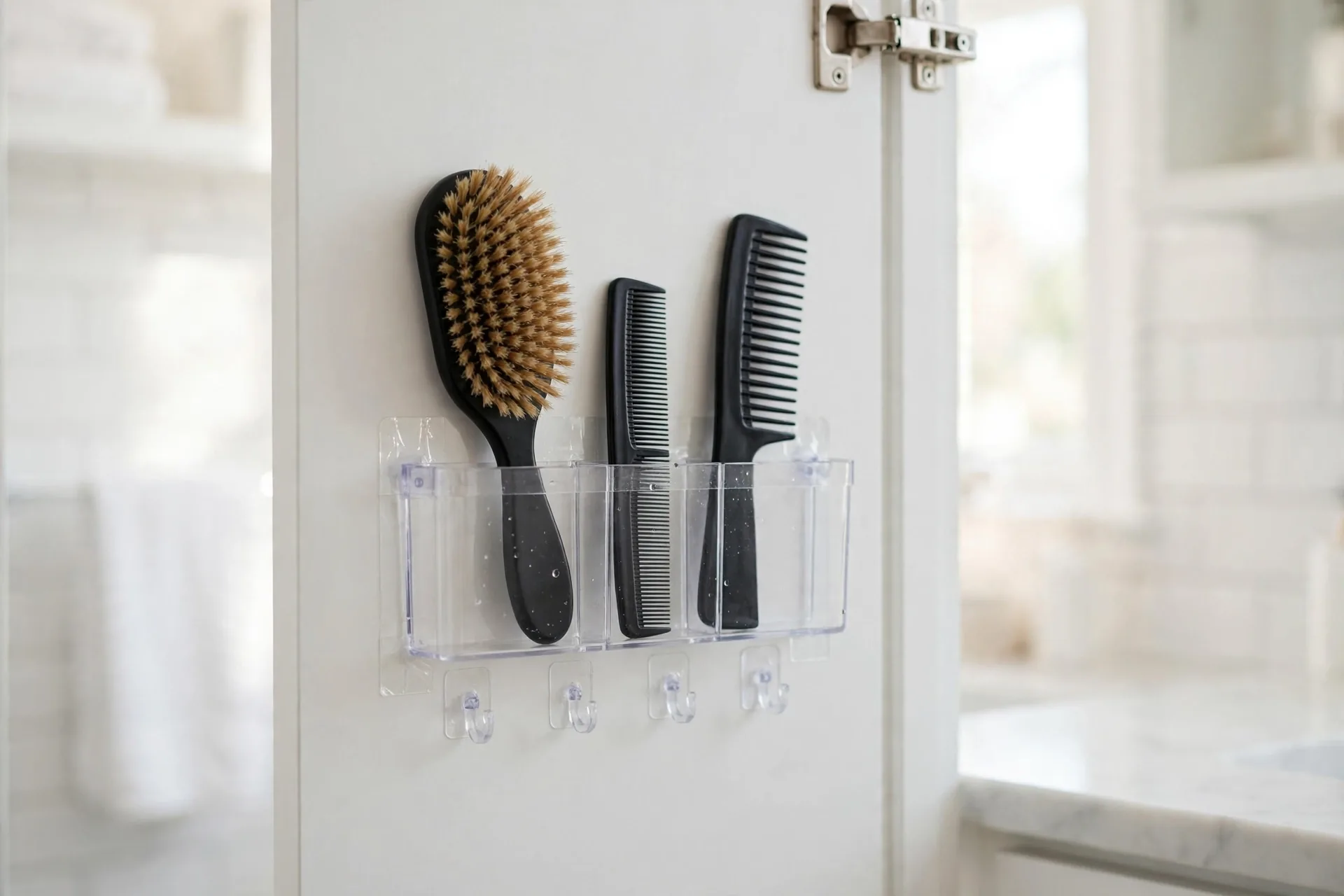
| Over-the-door or adhesive door rack | Hair tools, brushes, small bottles | $8 to $20 | Check that the door still closes |
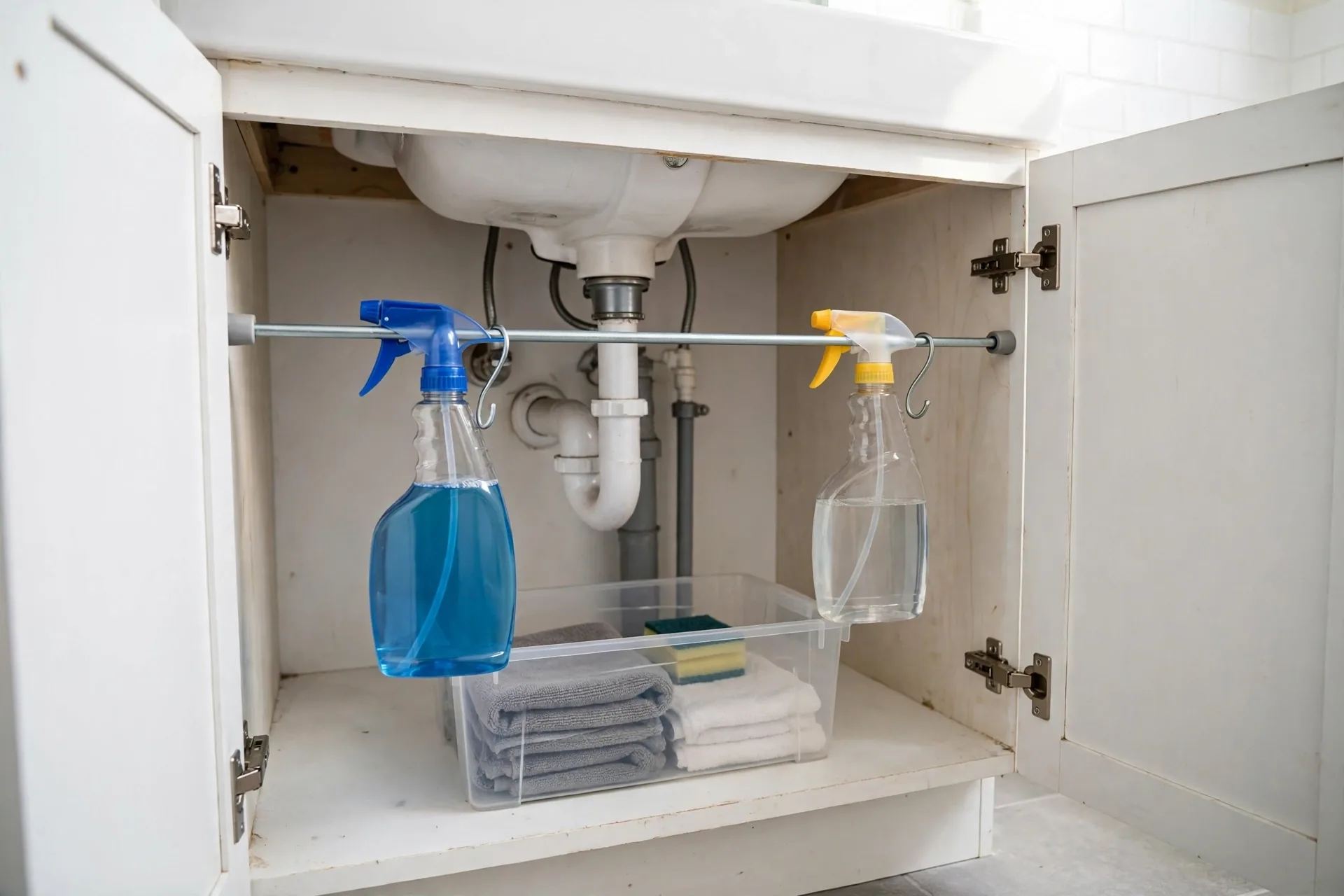
| Tension rod | Hanging spray bottles by the trigger | $4 to $10 | Only works for trigger sprayers |
(Cost ranges are typical at big-box and discount stores, per organizer guide author Amelia Jay’s 2026 pricing roundup; your store will differ a few dollars either way.) This is one of the cheapest under bathroom sink organization ideas in the whole guide.
Why does the space under the bathroom sink get so messy?
Three things work against you, and none of them is your fault. The drain pipe and water lines cut through the middle of the cabinet, so there is no clean rectangle to work with. Almost no vanity ships with a shelf down there, so everything sits on one flat floor. And the door is low enough that you cannot see the back without kneeling, which means the back quietly becomes a graveyard for half-used bottles.
So you shove things in, stack bottles on bottles, and forget what you own. Then you buy a third tube of the same face wash because you could not find the other two. My opinion: this cabinet has the best effort-to-payoff ratio in the whole bathroom. An hour here saves you real money on duplicates and catches plumbing problems early. Start here before you touch any other bathroom project. Weak under bathroom sink organization ideas ignore the pipes; the strong ones design around them.
One more thing worth knowing before you begin: whatever you put under there lives in warm, humid air. Keep that in mind when you get to the section on what does not belong in this cabinet. Humidity is the reason under bathroom sink organization ideas always include ventilation and a drip tray.
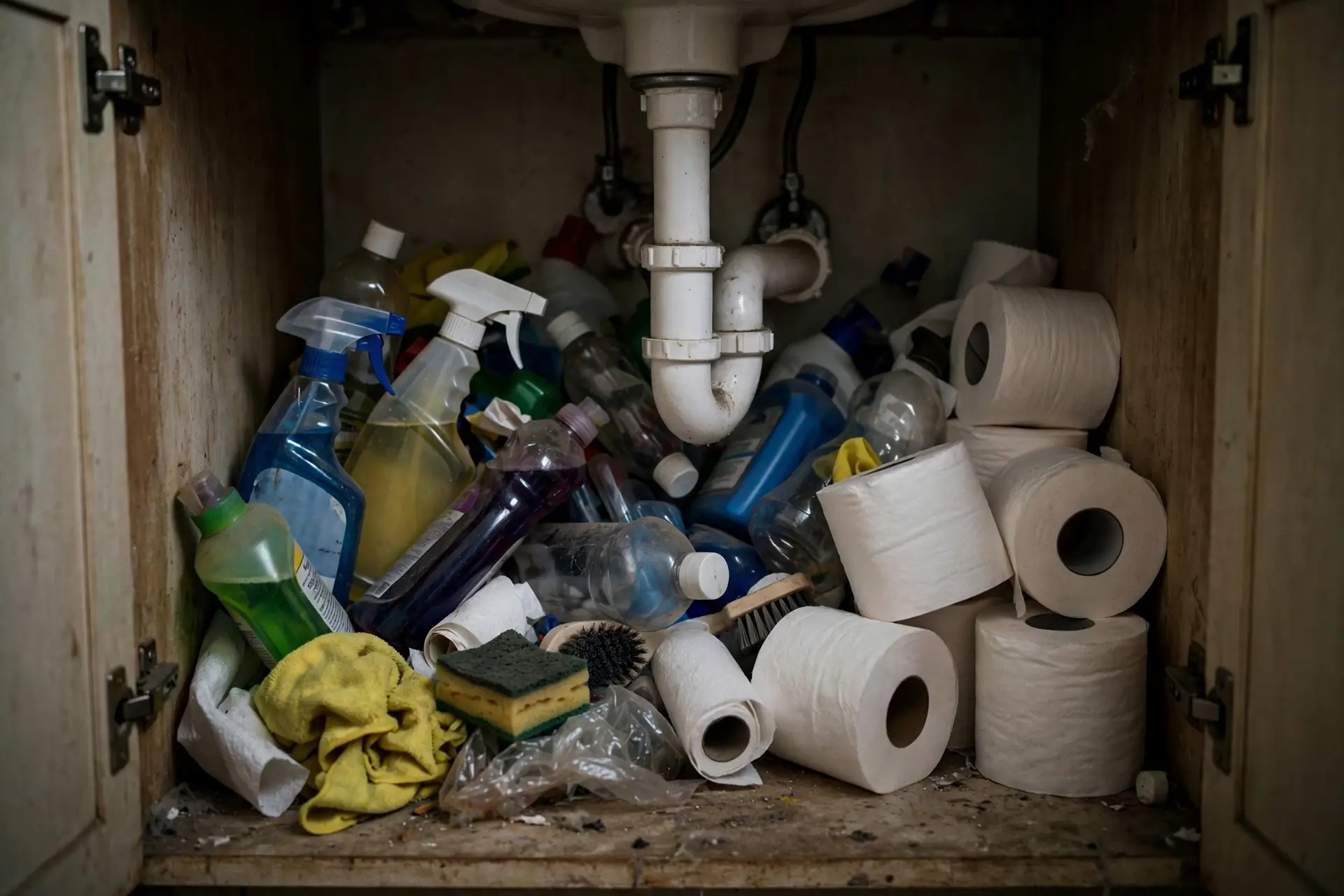
What should you measure before you buy anything?
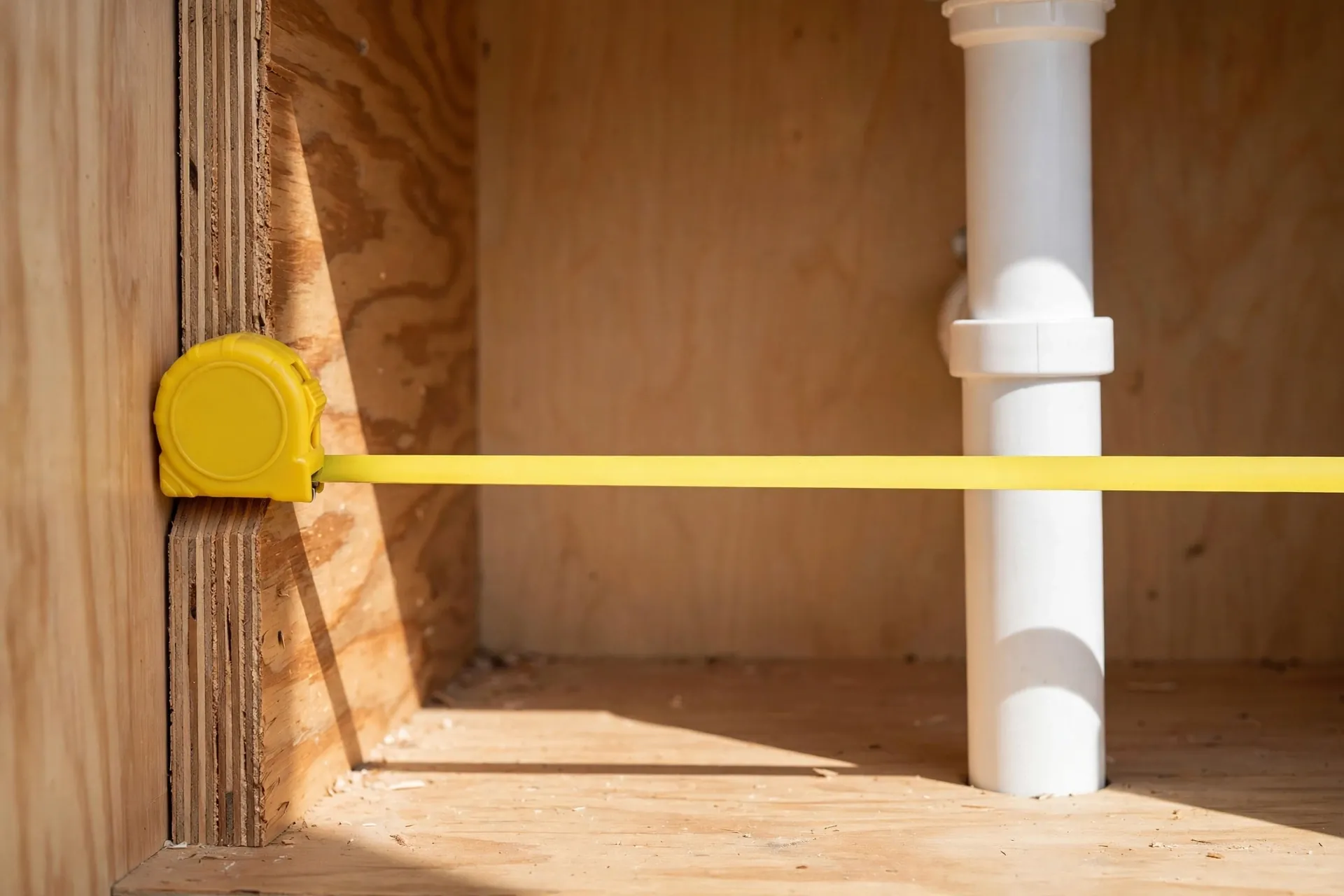
This is the step everyone skips, and it is the reason so many organizers end up returned or crammed in sideways. Four numbers, two minutes with a tape measure.
The four-measurement cheat sheet
| Measurement | Why it matters |
|---|---|
| Interior width, wall to wall | Most under-sink organizers fit 15 to 24 inch slots |
| Interior depth, back wall to door | Tells you whether pull-out drawers can fully extend |
| Clear space each side of the pipes | Your real storage footprint, not the full width |
| Drain trap height, floor to P-trap bottom | Nothing taller fits in the middle |
Also note where the shutoff valves are and keep a clear path to them. Standard single-sink vanities run 24, 30, 36, or 48 inches wide with a depth of 20 to 23 inches, per Angi’s vanity size guide. If yours is a 24-inch powder-room vanity, skip the two-tier units; simple bins and a door rack will fit where hardware will not. Weak under bathroom sink organization ideas ignore the pipes; the strong ones design around them.
My rule: test the layout with shoeboxes you already own before spending a dollar. You will know exactly what shape you need, and half the time you need less than you thought. Buying first and measuring second is how a $30 organizer becomes garage clutter.
What is the fastest way to clear it out today?
Set aside 45 to 60 minutes. Grab a trash bag, a damp cloth, a tape measure, and a towel to kneel on. Then work through these seven steps in order. Most under bathroom sink organization ideas fail for one reason: people buy bins before they measure.
- Pull everything out. Group as you go: hair care, skin care, first aid, cleaning, paper goods, spares.
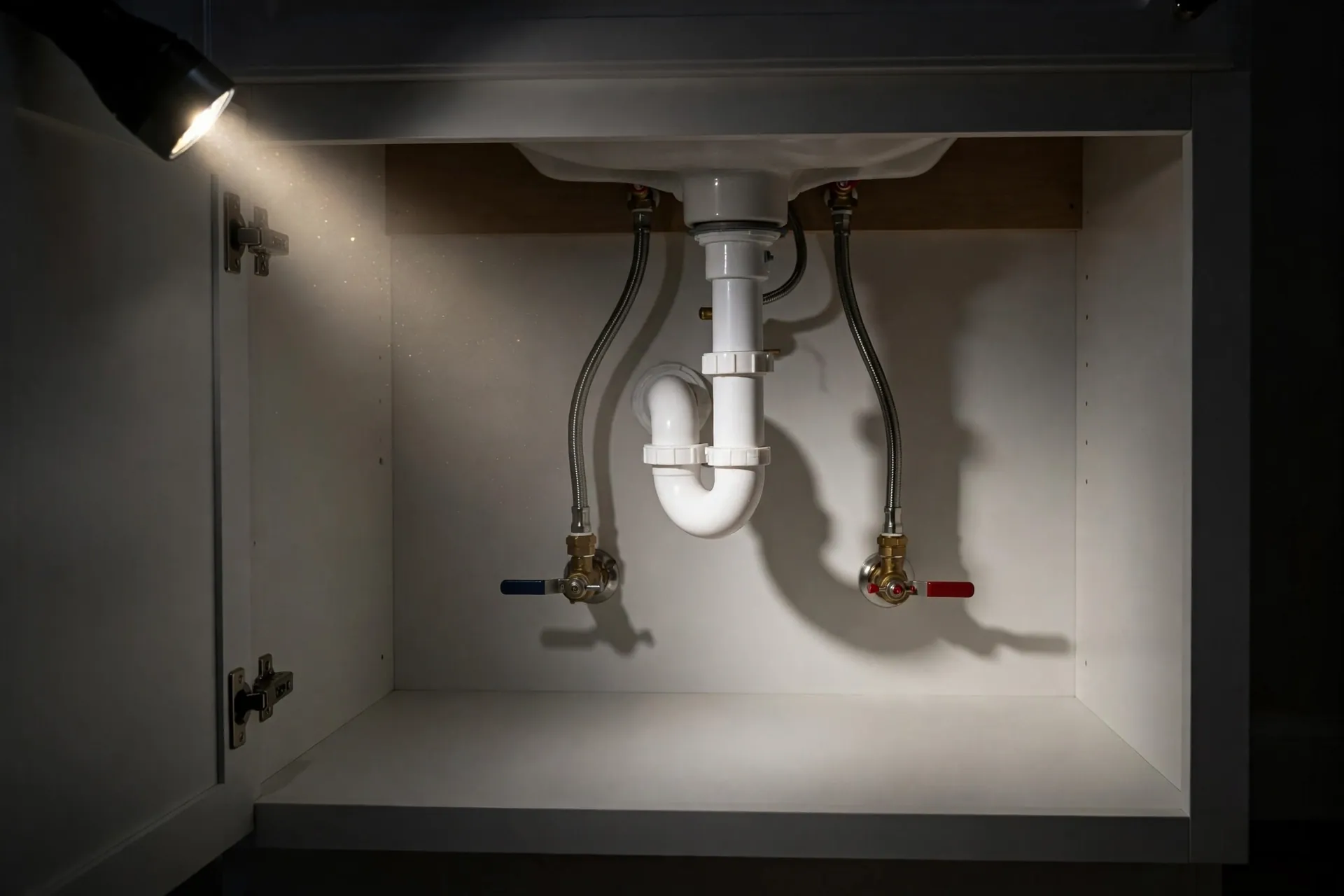
- Shine a flashlight inside. Look for water stains, soft spots, and drips around the pipes.
- Wipe the base, walls, and door with warm water and dish soap. Air dry with the door open for 30 minutes.
- Edit hard. Toss expired medicine and skin care (check the date or the open-jar symbol), products you tried once and disliked, nearly empty bottles, duplicates beyond one backup, and hotel samples.
- Take the four measurements from the section above and save them in your phone.
- Put things back by frequency: daily items at the front, weekly behind them, backups in the back corners, cleaners in their own bin.
- Label every bin with masking tape and a marker: hair, first aid, backups.
The purge creates more space than any product you can buy. Skip step 4 and you are buying prettier containers for the same clutter. The FDA says a pharmacy take-back program is the best disposal option for most expired medicines, and many pharmacies run them.
How do you organize around the pipes without wasting space?
Stop treating the cabinet as one box. Treat it as three zones and the pipes stop being the enemy. Weak under bathroom sink organization ideas ignore the pipes; the strong ones design around them.
The side zones hold tall items. The areas left and right of the drain usually have full height. This is where tall shampoo bottles, the hair dryer, and a bin of backups live. A 24-inch vanity might give you a usable slot of 6 to 8 inches on each side, which is plenty for bottles. Tiny cabinets reward the simplest under bathroom sink organization ideas: fewer, bigger bins.
The front zone holds daily items. The shallow strip in front of the drain trap is the easiest spot to reach, so it earns your daily products. A narrow tray or a short bin works here. If you only do one thing in this post, do this: one short bin up front for what you touch every morning.
The pipe zone stays clear. Keep a hand-width gap around the shutoff valves so you can reach them in seconds. Never wedge a heavy bin against them. Tiny cabinets reward the simplest under bathroom sink organization ideas: fewer, bigger bins.
Opinion: zones beat containers. Most under-sink guides hand you a shopping list; I think the list is secondary. A cabinet with a plan and cheap bins beats a cabinet with expensive hardware and no plan, every time. The hardware just makes a good layout smoother. Tiny cabinets reward the simplest under bathroom sink organization ideas: fewer, bigger bins.
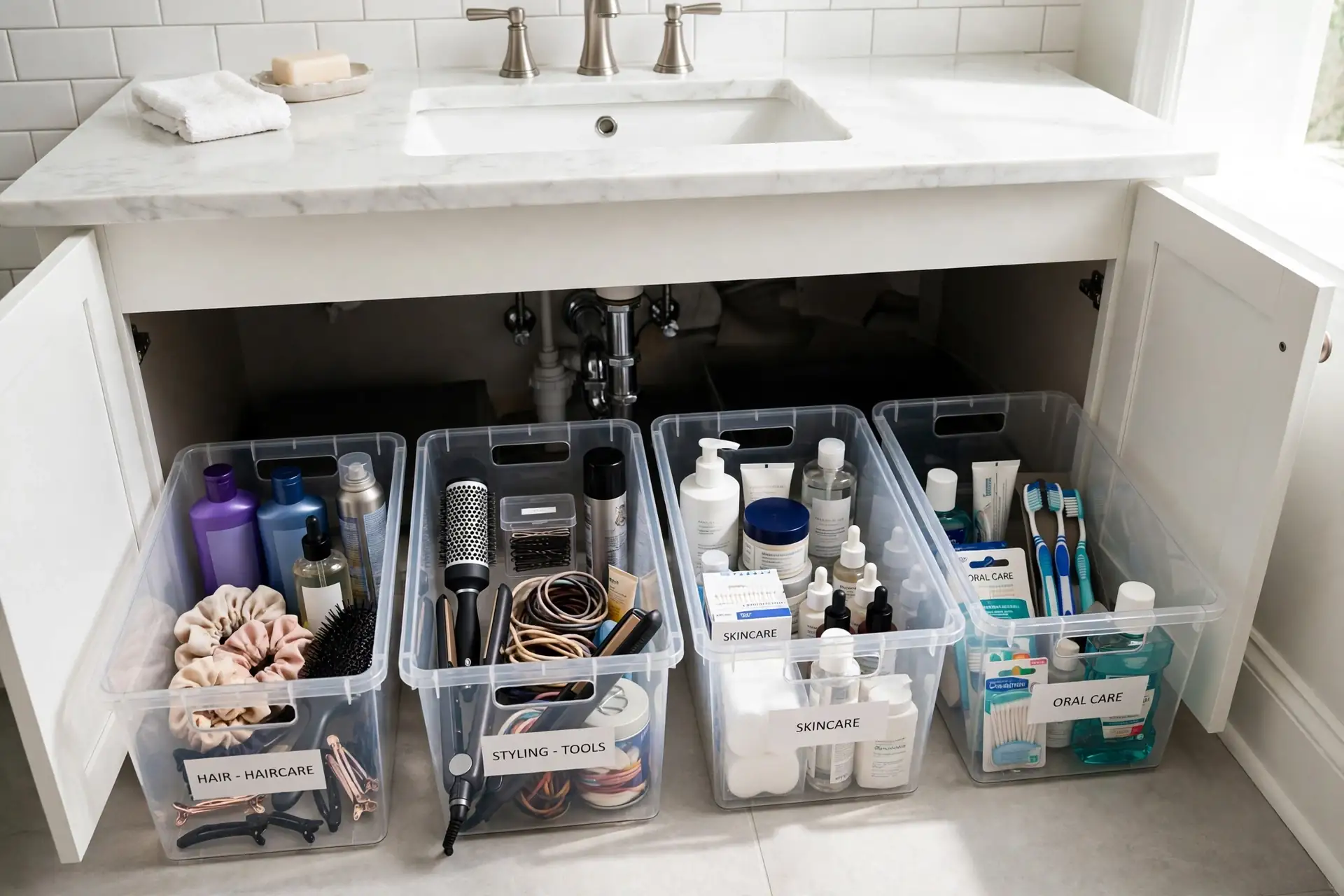
Which under bathroom sink organization ideas actually fit a small cabinet?
Start with this: pick one main organizer, not five. Extra containers usually mean more lids to lift and more corners to forget.
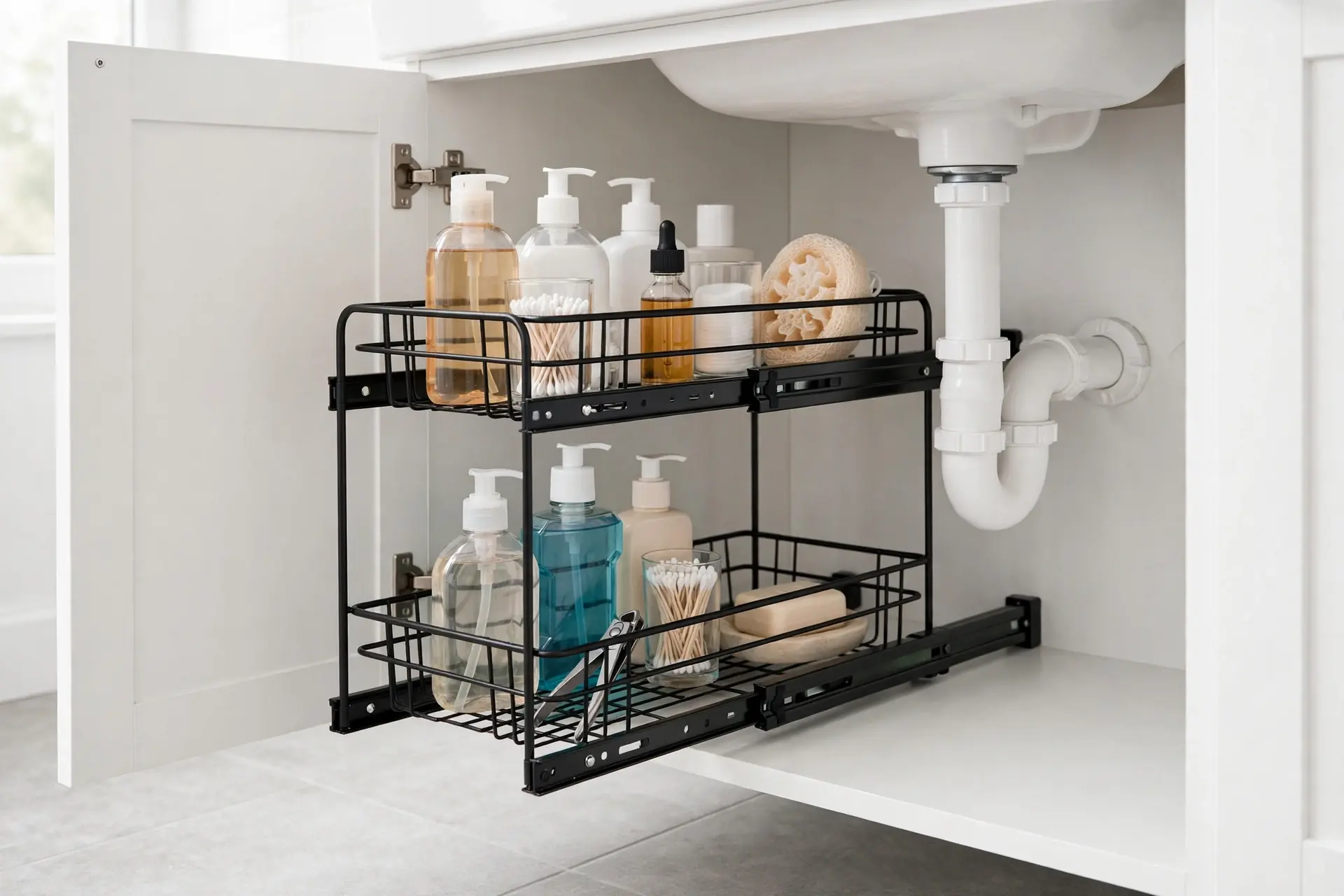
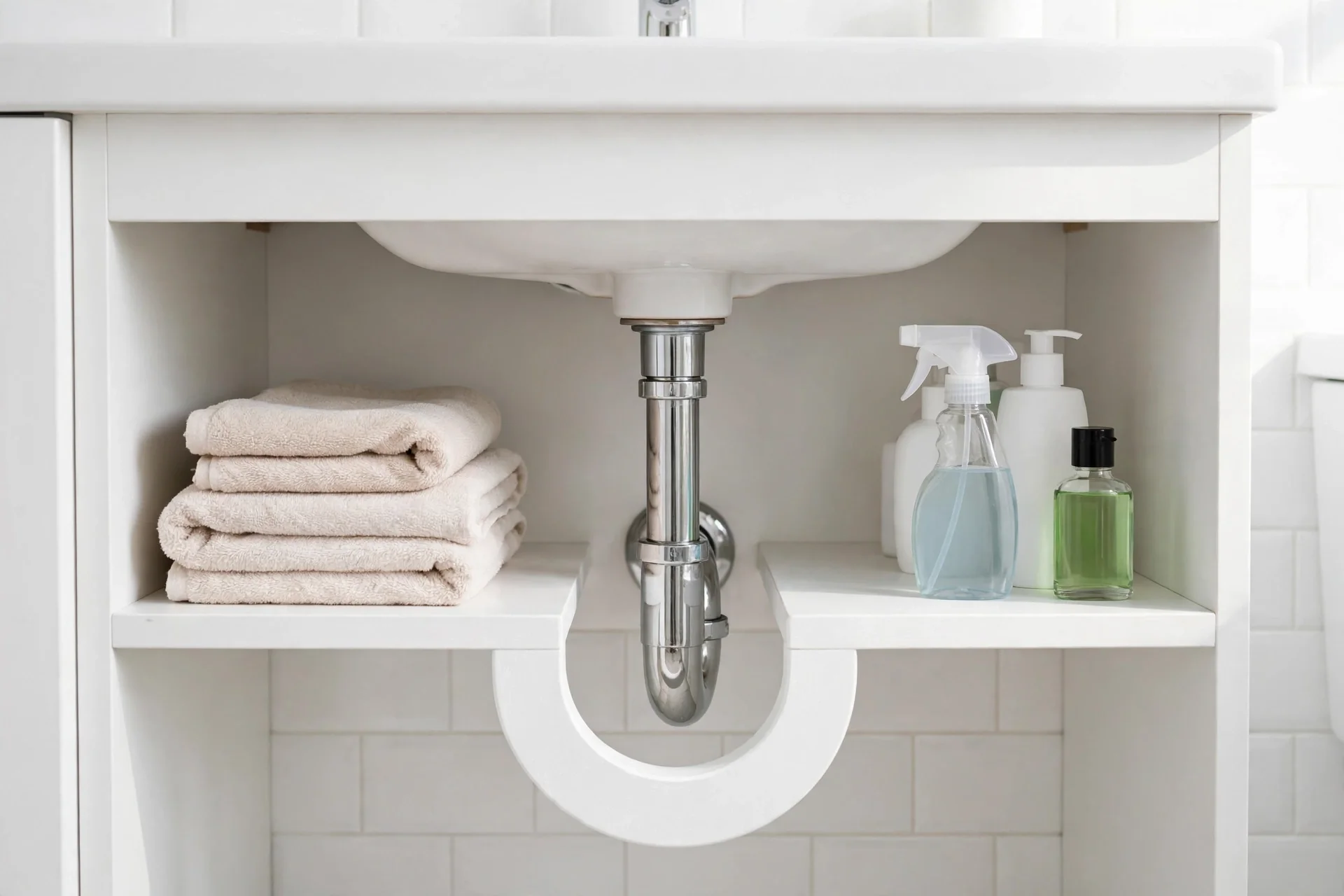
Two-tier sliding drawers are my default pick for standard 30 to 36 inch vanities: the bottom basket slides out so you reach the back. A U-shaped shelf wins when the drain sits dead center. Expandable shelves with removable panels handle older homes where pipes jog to one side. Of all the under bathroom sink organization ideas here, zoning around the pipes pays off the most.
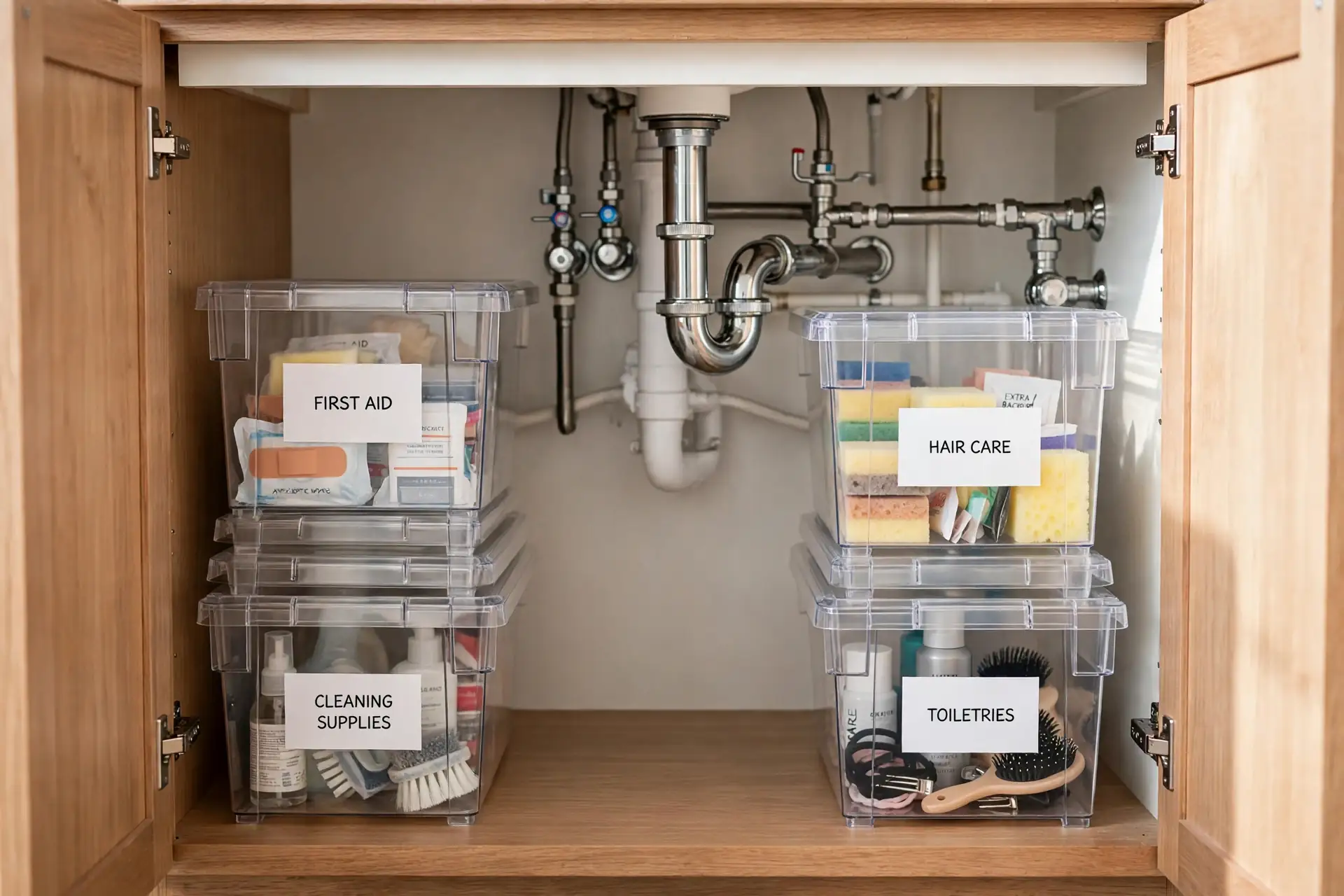
Clear stackable bins are the workhorse: two sizes, labeled, never stacked more than two high. A small turntable earns its spot in a deep corner for round bottles, but skip it in narrow cabinets.
Three honest price points for the whole project:
| Budget | What you buy | Typical total |
|---|---|---|
| $0 | Shoeboxes and containers you already own, masking-tape labels | Nothing |
| Under $15 | 3 to 4 clear bins plus a tension rod or a small turntable | $10 to $15 |
| $15 to $50 | One two-tier pull-out or U-shaped unit, bins, a drip tray | $30 to $50 |
Our roundup of the best under-sink organizers for kitchens and bathrooms has specific picks. Skip the fancy hardware with a 24-inch powder-room vanity: clearance around the trap is too tight for sliding drawers, and bins plus a door rack will serve you better for a third of the price. The best under bathroom sink organization ideas keep daily items at the front and backstock behind.
How do you use the inside of the cabinet door?
The back of the door is the most underused storage in the whole bathroom. It is shallow, it is hidden, and it is already there. A slim adhesive door caddy holds hair brushes and combs. Two adhesive hooks manage the hair dryer cord or a small bag of hair ties. A clear adhesive pocket swallows cotton rounds, floss, and travel-size bottles that otherwise roll around loose.
For hot tools, use a small heat-resistant holder and let the flat iron or curling iron cool fully before it goes back. Tossing a hot tool into a plastic bin is how bins melt and how bad smells start. What separates good under bathroom sink organization ideas from clutter is the one-in-one-out rule.
One caution before you stick anything: close the door slowly and watch that nothing hits the pipes or the organizer inside. Door racks that look slim in the package sometimes need an extra inch of clearance you do not have. I like removable adhesive for all of this, because renters can take it down without a trace and owners can reposition it once, guilt free.
What should never go under the bathroom sink?
Warm, humid air is the tax you pay for this storage spot, so some things do not belong here. Humidity is the reason under bathroom sink organization ideas always include ventilation and a drip tray.
Medicines. The FDA advises storing most medications at 59 to 86 degrees in a dry place away from heat, humidity, and light. A bathroom cabinet fails all three. Keep daily pills on a bedroom shelf or in a hall closet. A small sealed first-aid kit is fine. Humidity is the reason under bathroom sink organization ideas always include ventilation and a drip tray.
Makeup you use daily. Humidity shortens the life of many products and makes powders clump. Keep it at eye level near the mirror.
Fragrances and anything in cardboard. Heat and humidity alter scents, and cardboard warps and gets musty. If you only try three under bathroom sink organization ideas, make them zones, a drip tray, and door storage.
Big stacks of toilet paper. Paper absorbs moisture fast. One or two rolls in a closed bin are fine; the bulk pack lives in a closet. Of all the under bathroom sink organization ideas here, zoning around the pipes pays off the most.
| Keep under the sink | Store somewhere else |
|---|---|
| Hair care and styling tools | Medications (humidity breaks them down) |
| Extra soap, shampoo, toothpaste | Spare towels and linens, if you have a closet |
| Bathroom cleaners and a scrub brush | Daily makeup (keep it at eye level) |
| Toilet paper backups, in a closed bin | Anything in cardboard |
| Basic first-aid supplies, sealed | Valuables or paper documents |
Where should cleaning products go in a bathroom cabinet?
Keep every cleaner in one handled caddy, separate from anything that goes on your skin. Store bottles upright with caps fully closed, and keep them in their original containers with the labels on. The label is your safety sheet; a mystery bottle is how accidents happen.
Two rules are non-negotiable. Never store bleach next to ammonia-based cleaners or vinegar, because those combinations release dangerous gases; public-health guidance from the CDC warns against mixing bleach with ammonia or other cleaners. And if you have young children or pets, put a child safety latch on the cabinet door or move the cleaners to a higher shelf entirely. If you only try three under bathroom sink organization ideas, make them zones, a drip tray, and door storage.
Opinion: a small cabinet should not hold cleaners at all. If your vanity is a 24-inch powder-room unit, keep the toilet brush and one all-purpose spray in a caddy under the kitchen sink instead, and let the bathroom cabinet hold toiletries only. Crowding chemicals next to toothpaste in a tiny box is a false economy.
Also, keep only what you actually use in this bathroom. A cabinet holding cleaners for three rooms is a cabinet that never stays organized. The rest can live where they are used. These under bathroom sink organization ideas assume a standard 24 to 36 inch vanity.
How do you keep it dry and spot leaks early?
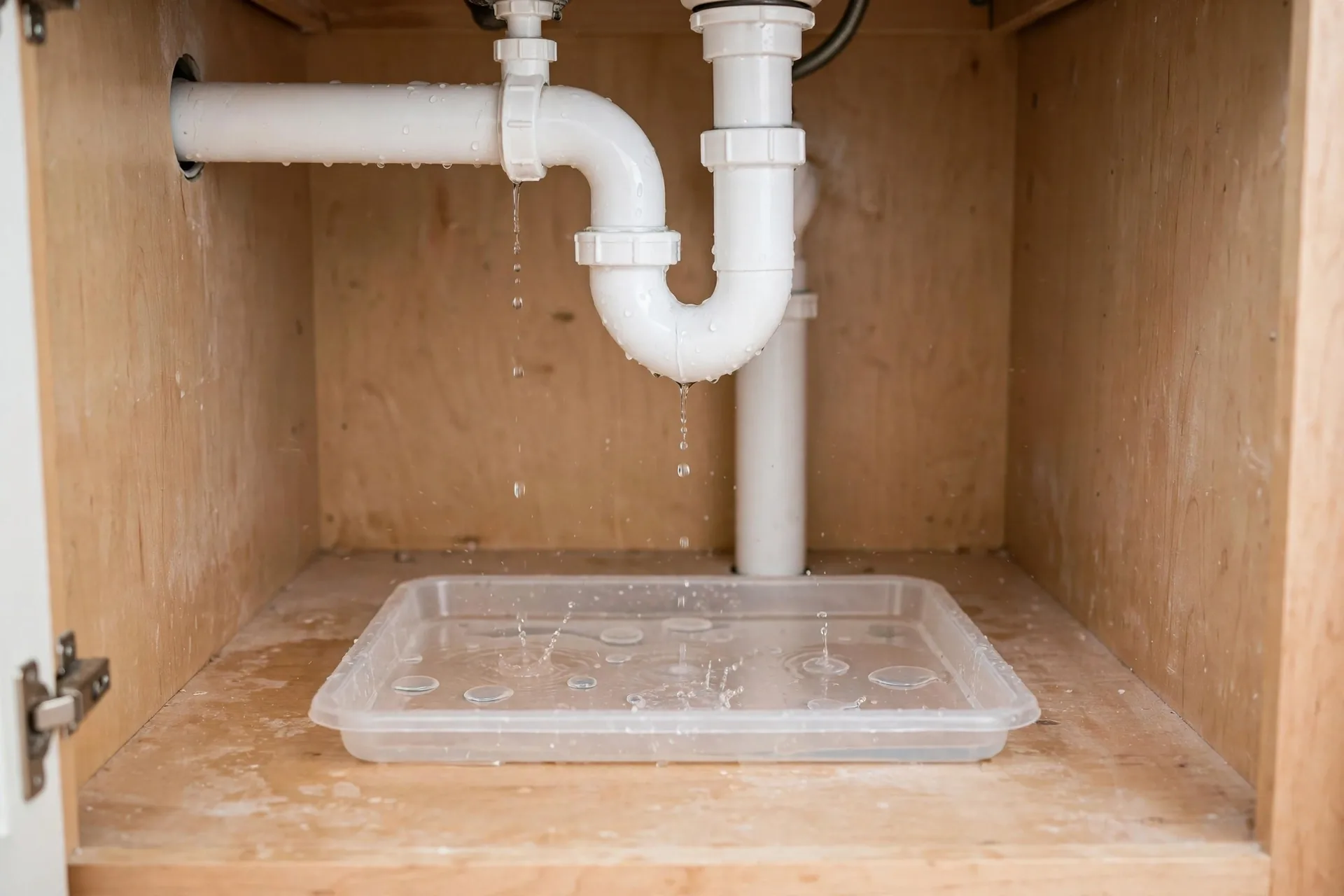
This is the section that turns an organized cabinet into a protected one. A washable liner or a plastic drip tray on the cabinet floor costs a few dollars and does two jobs: it contains the small drip from a loose connection, and it makes new leaks visible immediately instead of soaking into the wood. This is one of the cheapest under bathroom sink organization ideas in the whole guide.
Check around the pipes once a month. It takes thirty seconds. Look for damp spots and mildew, listen for drips, and touch the floor of the cabinet. If it feels soft or spongy, or if water keeps reappearing after you dry it, that is plumber territory, not a DIY project. Same rule for a musty smell that survives cleaning, or discoloration spreading on the cabinet walls.
Remember the EPA’s 24 to 48 hour rule: mold can start on damp surfaces within two days, so a monthly check is cheap insurance. And that $15,400 average water damage claim from the Insurance Information Institute usually starts as a drip exactly like the one hiding under a bathroom sink. Catching it in week one is the whole game. This is one of the cheapest under bathroom sink organization ideas in the whole guide.
How do you make it work in a rental?
Good news: the under-sink cabinet is one of the most renter-friendly projects in the home, because almost nothing needs to be attached to anything. Free-standing bins lift out in seconds, a turntable just sits there, and a tension rod wedges between the walls with no holes at all, the classic no-drill trick for hanging spray bottles. Use removable adhesive hooks and caddies on the door instead of screws. Renters especially like these under bathroom sink organization ideas because nothing needs drilling.
There is one rental-specific rule. Whatever you build, keep it fully liftable. If the landlord needs a plumber in, your whole system should come out in under a minute. That is actually an argument for bins over built-in shelving: fixed shelves have to be disassembled around the pipes, while bins just slide out.
Before you buy, check your lease language on adhesives. Most removable products come off clean, but cheap ones do not, and a cabinet door is exactly the surface a landlord will inspect. Test in a hidden corner first. For more ideas in this vein, our guide to bathroom drawer organization covers small-space tricks that travel well between rentals. Renters especially like these under bathroom sink organization ideas because nothing needs drilling.
What if your bathroom sink has no cabinet at all?
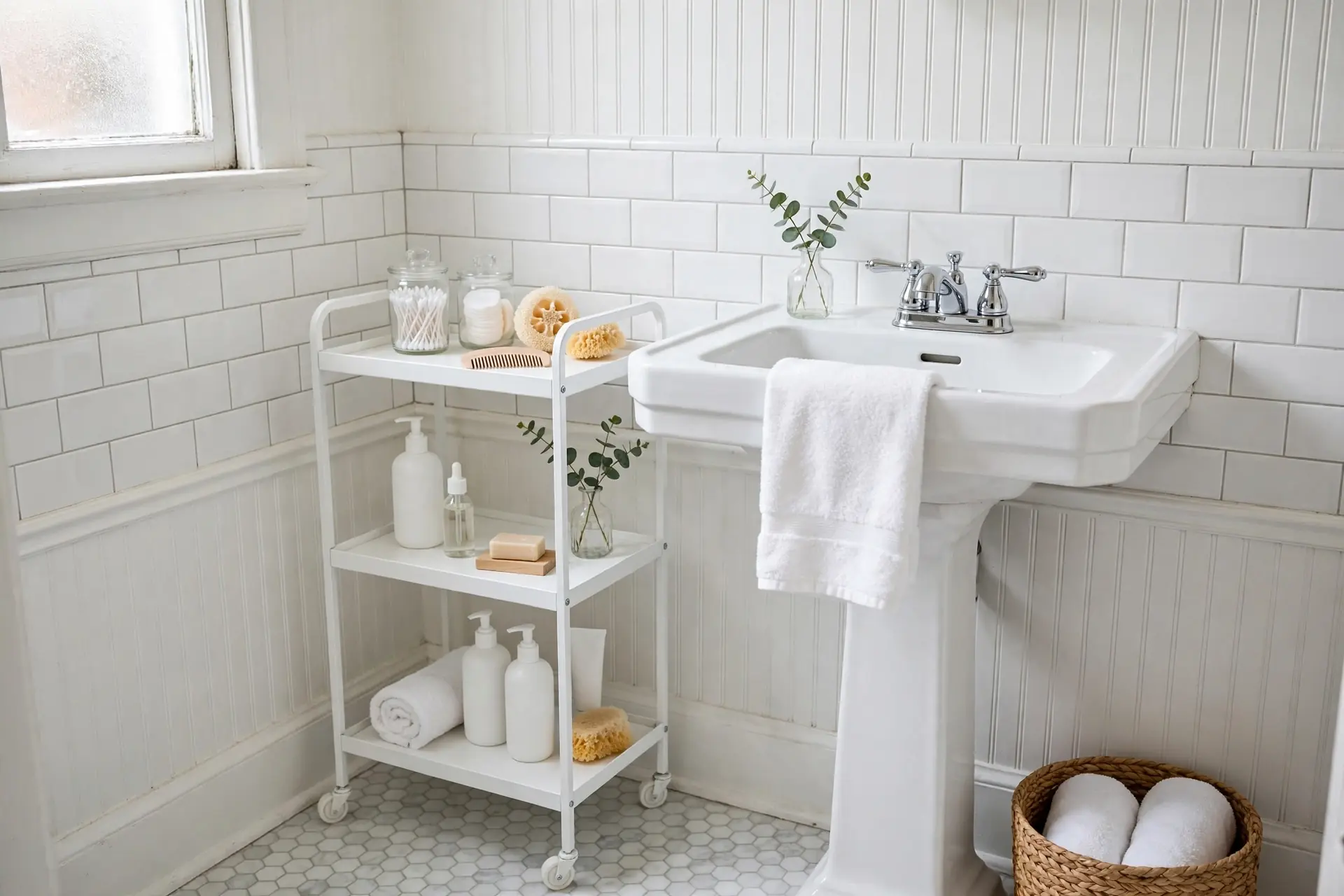
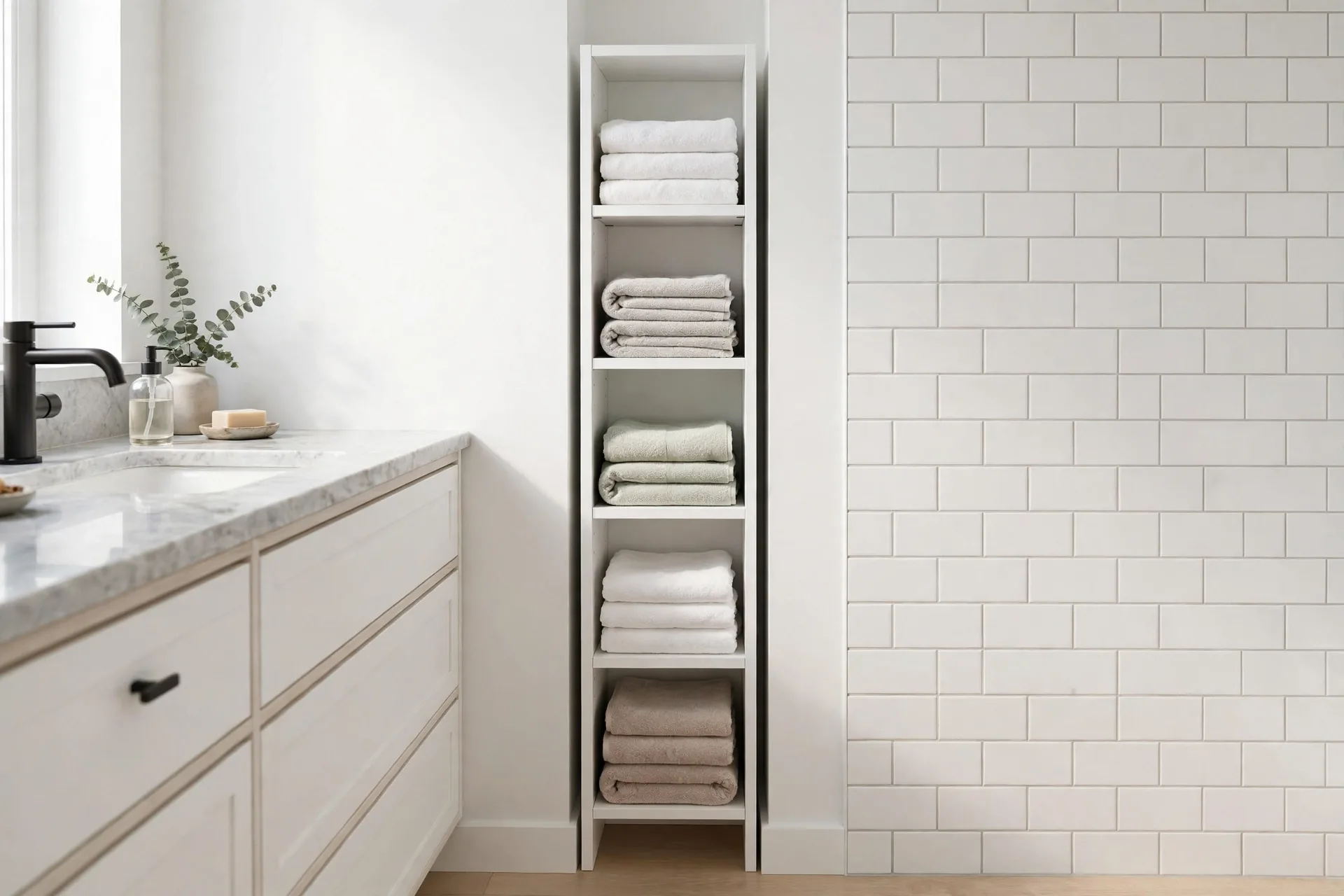
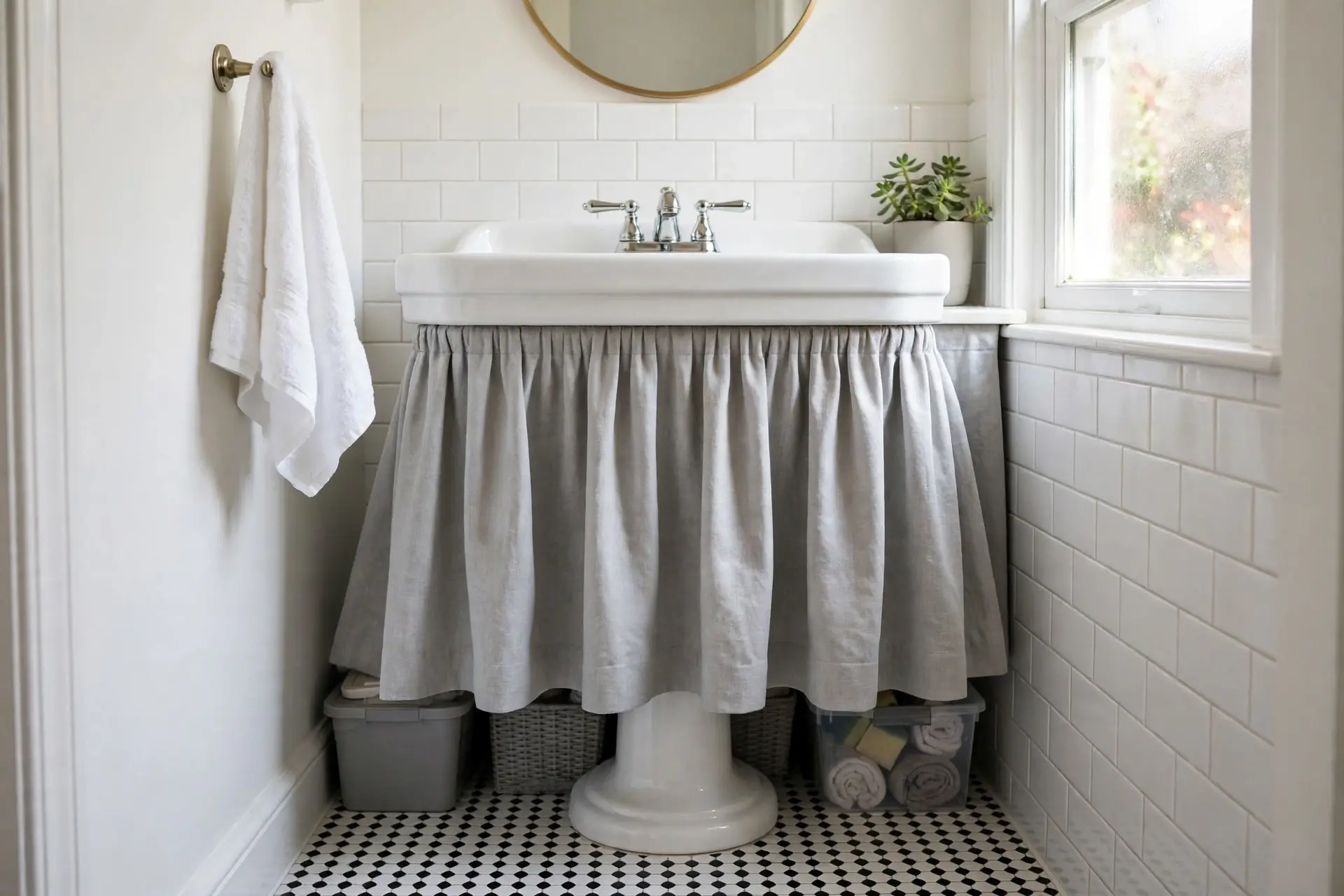
Pedestal sinks and wall-mount sinks give you the pipes with none of the storage, which sounds like a loss but is really just a different problem. A slim rolling cart beside the sink holds daily items and rolls away for cleaning. A sink skirt on a tension rod hides a couple of bins on the floor and keeps the look soft. A narrow storage tower, six to twelve inches wide, slides into the gap between the vanity and the wall and holds several shelves of supplies.
No vanity at all? Our pedestal sink storage ideas cover sink skirts, wrap-around caddies, and renter-friendly fixes for bathrooms with zero under-sink cabinet.
One safety note from an angle most guides skip: keep anything electrical, like hair tools and razors, dry and unplugged near exposed plumbing, and keep heat-sensitive products away from warm pipes. Exposed pipes also sweat in humid weather, so anything you store under an open sink should sit in lidded plastic bins, not cardboard. If your sink floats on the wall, a small lidded bin on a nearby shelf beats a stack of open baskets. Of all the under bathroom sink organization ideas here, zoning around the pipes pays off the most.
How do two people share one small under-sink cabinet?
Two people, one cabinet, zero assigned space: that is how couples end up with two half-used bottles of everything. The fix is to split the zones instead of sharing them. What separates good under bathroom sink organization ideas from clutter is the one-in-one-out rule.
Give each person one side zone and label a personal bin for each. His products, her products, or simply person A and person B. The center and the front tray become shared territory: hand soap, cleaning supplies, the backup bin. Tall shared items like the hair dryer live in the middle where both can reach.
The shared-bathroom rule I would not break: one backup per product, shared. Two people buying separate backups of the same conditioner is the fastest route back to a black hole. Keep a single backup bin, and when one of you opens the last spare, it goes on the shopping list that day. These under bathroom sink organization ideas also work for a pedestal sink with a skirt.
This also settles the eternal argument about whose stuff takes over. Labeled bins are neutral territory. Nobody’s products migrate into the other person’s zone if the zones have names.
What are the 5 mistakes that waste money here?
1. Buying before measuring. The number one reason under-sink organizers get returned is that they do not fit around the pipes. Four measurements, two minutes, zero returns. Most under bathroom sink organization ideas fail for one reason: people buy bins before they measure.
2. Buying kitchen-sized hardware for a bathroom. Bathroom vanities are shallower and lower than kitchen sink cabinets. An organizer that slides beautifully in a kitchen will jam against a bathroom P-trap. Shop the bathroom aisle, or at least check the depth. It sounds boring, but labeling is one of those under bathroom sink organization ideas that actually sticks.
3. Stacking bins three high. Two-high is the limit. The third bin is where things go to be forgotten, and forgotten things get bought again.
4. Blocking the shutoff valves. Wedging a heavy bin against the valves feels like using space. It is actually storing up a bad day: when a pipe leaks, you want to reach those valves in seconds, not after unloading a cabinet. Renters especially like these under bathroom sink organization ideas because nothing needs drilling.
5. Storing humidity-sensitive stuff for convenience. Medicines, daily makeup, and fragrances live better lives anywhere drier. The cabinet is free real estate only for things that tolerate the climate. Most under bathroom sink organization ideas fail for one reason: people buy bins before they measure.
If you recognize your cabinet in two or more of these, the fix is still the same 60-minute reset. Mistakes are only expensive if you keep repeating them.
How do you keep it from sliding back into a mess?
Organization is a verb, but it does not need to be a hobby. Four small habits keep the cabinet working. The best under bathroom sink organization ideas keep daily items at the front and backstock behind.
One in, one out. Follow the one-in-one-out rule: when you open a new bottle, finish or toss the old one. This single rule prevents ninety percent of cabinet creep.
A two-minute reset each week. While you clean the bathroom, straighten the bins and wipe any drips. Two minutes is honest; twenty is a project you will skip. If you only try three under bathroom sink organization ideas, make them zones, a drip tray, and door storage.
Quarterly expiration checks. Every three months, pull the bins and check dates on medicine, sunscreen, and skin care. Tie it to the seasons so you remember. What separates good under bathroom sink organization ideas from clutter is the one-in-one-out rule.
A running backup list on your phone. When you open the last spare of anything, it goes on the list. You stop overbuying because you stop guessing. Extra bulk backstock lives in a closet bin, not in this cabinet.
Not for everyone: if you share the bathroom with kids, skip the perfect system and go for durability. Labeled bins at kid height, cleaners latched or moved high, and a forgiving attitude about the rest. A cabinet that survives a family beats a pretty one that lasts a week. For small bathrooms generally, our bathroom shelf ideas post has more vertical-storage tricks that pair well with this system. It sounds boring, but labeling is one of those under bathroom sink organization ideas that actually sticks.
Your 60-minute plan that beats the black hole
Saturday morning, one hour, and you never kneel in front of a jumbled cabinet again. Empty it. Toss the expired and the duplicated. Measure the four numbers. Zone the space around the pipes. Put daily items in a front bin, tall bottles on the sides, and cleaners in their own handled bin. Line the floor with a drip tray and use the door for small stuff. Label everything with tape and a marker. It sounds boring, but labeling is one of those under bathroom sink organization ideas that actually sticks.
That is the entire project. No renovation, no special skills, and for most people under $30 in supplies. The black hole was never a storage problem. It was a visibility problem, and now you can see everything you own.
If this cabinet is part of a bigger bathroom overhaul, keep going: our small bathroom storage ideas guide covers the rest of the room, and the under-sink kitchen organization ideas post applies the same zone thinking to the kitchen. These under bathroom sink organization ideas assume a standard 24 to 36 inch vanity.
Frequently asked questions
What is the best way to organize under a bathroom sink?
Empty the cabinet completely, toss expired or unused products, and measure the clear space around the pipes. Then choose an organizer that fits that shape, such as two-tier sliding drawers or a U-shaped shelf, group what is left in labeled bins, and put daily items in front with backups in the back. Line the floor with a drip tray to catch leaks early.
How do you organize under a sink with pipes in the way?
Divide the cabinet into zones: tall items on either side of the drain, short daily items in the shallow strip in front of the trap, and nothing heavy blocking the shutoff valves. Use organizers designed to fit around plumbing, like U-shaped shelves or expandable units with removable panels.
Should I keep medicine under the bathroom sink?
Usually not. The FDA advises storing most medications at room temperature, 59 to 86 degrees, in a dry place away from heat, humidity, and light, and a bathroom cabinet fails all three tests. A bedroom shelf or hall closet is a better spot. A small sealed first-aid kit with bandages and gauze is fine.
Is it safe to store cleaning products under the bathroom sink?
Yes, with care. Keep cleaners in one bin with a handle, separate from anything that goes on your skin. Store bottles upright with caps closed and original labels on. Never store bleach next to ammonia-based cleaners or vinegar, and add a child safety latch if kids or pets are around.
How do I stop water damage under my bathroom sink?
Put a waterproof liner or drip tray on the cabinet floor so small leaks are contained and visible. Check around the pipes once a month for drips or damp spots, and dry any wet surfaces within 24 to 48 hours, per EPA guidance. If the cabinet floor feels soft or water keeps reappearing, call a plumber.
What should you put on the bottom of a sink cabinet?
A washable liner or a plastic drip tray. It protects the cabinet floor from small drips and makes new leaks easy to spot before they soak into the wood.
Can I organize under the bathroom sink in a rental without drilling?
Yes. Free-standing bins, a turntable, and a short tension rod need no holes at all, and removable adhesive hooks or caddies handle the door. Keep the whole system liftable so it comes out in under a minute if a plumber needs access.
Why does everything disappear under the bathroom sink?
Because the door is low, there are no shelves, and the pipe splits the space, so items get pushed to an invisible back corner and stacked out of sight. Zones, a front bin for daily items, and a two-bin stacking limit fix the visibility problem that causes the disappearing act.
How wide is the cabinet under a bathroom sink?
Standard single-sink vanities in the US run 24, 30, 36, or 48 inches wide with a depth of 20 to 23 inches, according to Angi’s vanity size guide. Measure your own interior width wall to wall, plus the clear space on each side of the pipes, before buying any organizer.
With the cabinet under control, turn to the surface above it. Our Bathroom Storage Ideas for Toiletries That End Counter Clutter shows where daily toiletries should actually live so a clean cabinet does not sit under a cluttered counter.
Related: if the shower itself is the tight spot, see our no-drill shower storage ideas for renters for suction, tension pole, and adhesive systems that come down clean at move-out.
Related reading: how to design bathroom storage that fits how you actually live maps the whole bathroom into zones by routine before you buy anything.
