
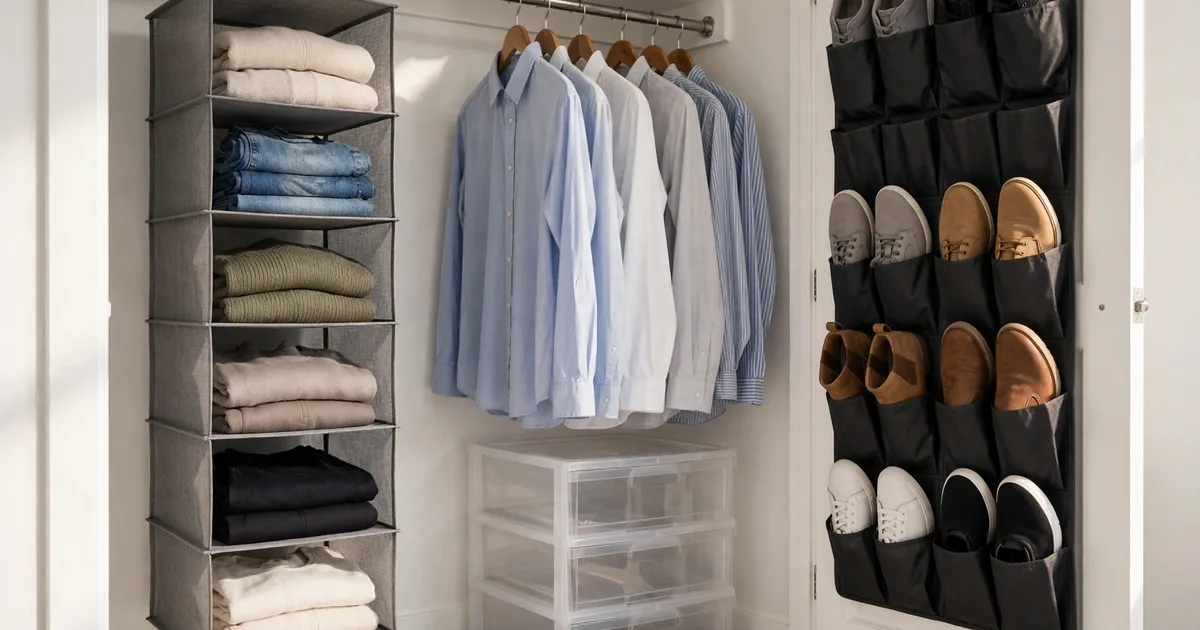

The best closet organizer for a small closet is the SONGMICS 6-tier hanging organizer: it turns the dead air under your rod into six usable shelves, needs no tools, and publishes real dimensions (11.8 by 15.7 by 47.2 inches) so you can check the fit before you buy.
Small closets fail for one boring reason: the rod holds clothes, the shelf holds nothing useful, and the floor becomes a pile. The eight picks below fix that with real products, real measurements, and honest trade-offs, including what each one is bad at. Prices below are approximate tiers checked in October 2026 and they change often; none of these links are affiliate links.
TL;DR
- Best overall: SONGMICS 6-tier hanging organizer (~$20). No-drill, reinforced shelves, splits into two 3-tier units.
- Best budget: Simple Houseware 6-shelf hanging organizer (~$15). Narrower, lighter, perfect for a first apartment.
- Best over the door closet organizer: Whitmor 24-pocket shoe organizer (~$12). Holds 12 pairs without touching your floor space.
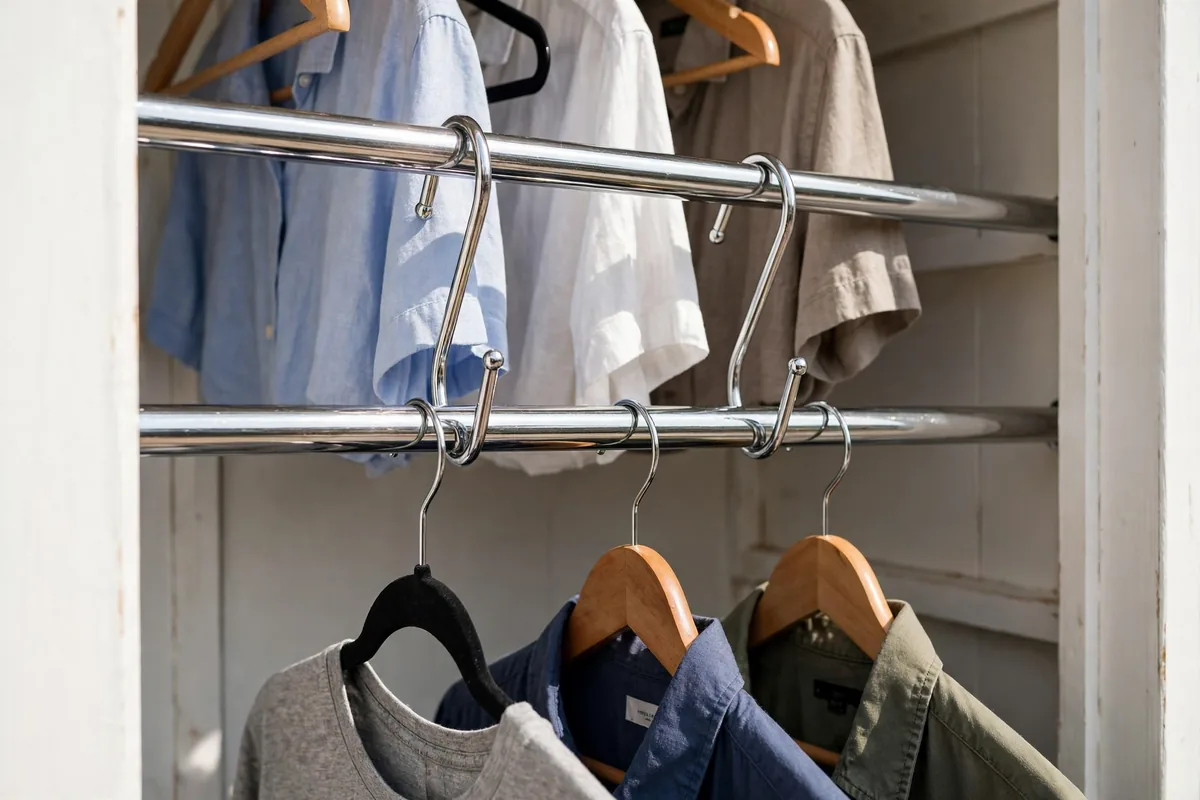
- Best second hanging row: Simple Houseware adjustable hanging rod (~$16). Doubles hanging space with zero screws.
- Rule that beats every pick: measure width at the rod, depth to the door, and rod-to-floor drop before you buy anything. The three-measurement checklist is in the buying guide below.
- If you skim: the best closet organizer for most readers is the SONGMICS pick at the top of this list.
| Pick | Type | Dimensions | Weight limit | Price tier | Best for |
|---|---|---|---|---|---|
| SONGMICS 6-tier hanging organizer | Hanging column | 11.8″D x 15.7″W x 47.2″H | Bamboo-reinforced shelves; keep heavy items low | ~$20 | Best overall |
| Simple Houseware 6-shelf | Hanging column | 12″W x 12″D x 54″H | Light loads (tees, accessories) | ~$15 | Budget |
| Whitmor 24-pocket over-door | Over-the-door | 19″W x 64″H | 15 lbs max (Amazon listing) | ~$12 | Shoes off the floor |
| Simple Houseware adjustable rod | Second hanging row | Expands 18.75″ to 30.5″W; 35.5″H max | Sturdy steel; shirts and pants | ~$16 | Doubling hang space |
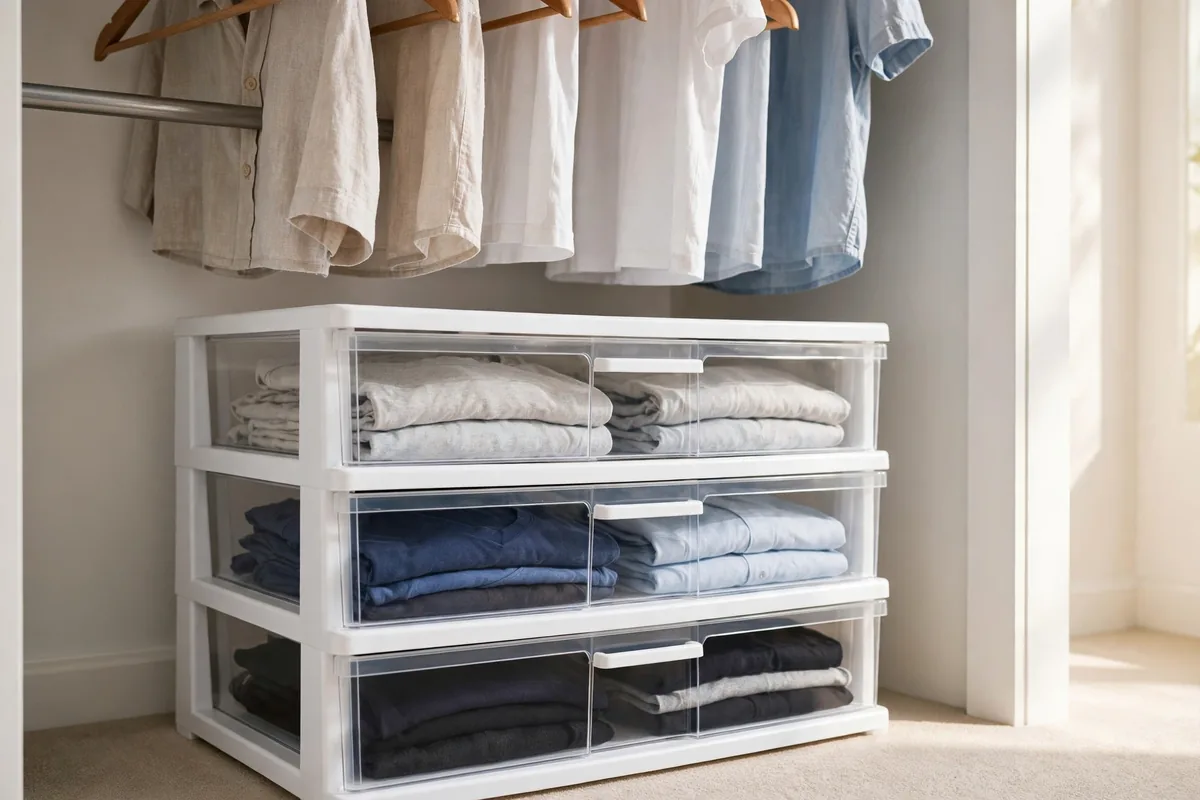
| IRIS USA 14.5 qt drawers (3-pack) | Stackable drawers | 14.1″D x 11.88″W x 8.13″H each | Light loads (socks, tees) | ~$28 | Closet organizer with drawers |
| mDesign Ligne bins (4-pack) | Stackable bins | 11.25″L x 8″W x 6″H each | Light loads; stack 3 high | ~$32 | Shelf and floor bins |
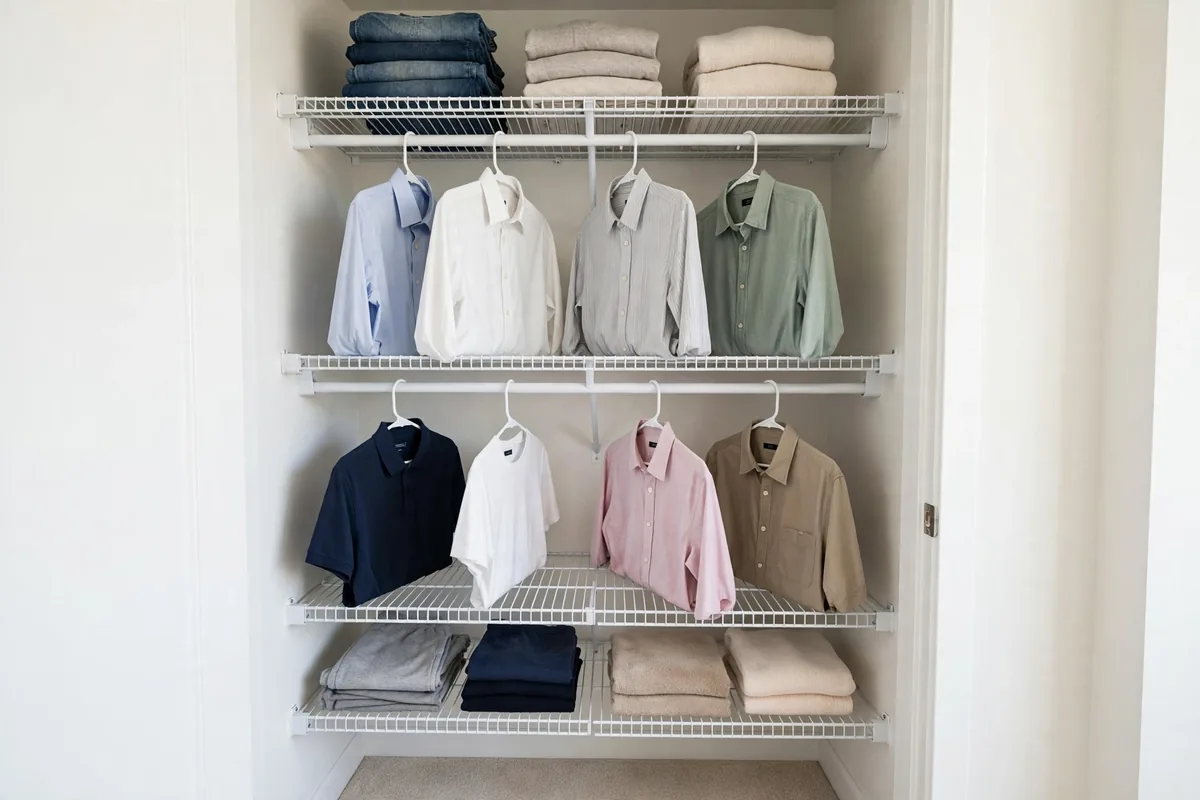
| ClosetMaid ShelfTrack 4-6 ft kit | Wire system (semi-permanent) | Fits 4-6 ft wide; 12″D shelves | 50 lbs per shelf (installed per instructions) | ~$100 | One-weekend overhaul |
| Rubbermaid Configurations deluxe 4-8 ft | Wire system (semi-permanent) | Fits 4-8 ft walls; 20 ft shelf + 12 ft hang | Heavy-duty epoxy steel | ~$140 | Premium full rebuild |
How we picked the 8 best closet organizers on this list
Every pick had to clear four tests. It had to be a real brand still sold at a real US retailer in October 2026, with published dimensions we could check. It had to fit a small reach-in closet, not a walk-in. It had to solve one specific small-closet problem, not claim to solve all of them. And we rejected anything whose specs we could not verify, no matter how popular it looked.
We also refused the usual roundup trick of padding the list with lookalike brands that vanish by Christmas. Every brand here has been around for years: SONGMICS, Simple Houseware, Whitmor (in business since 1946), IRIS USA (made in the USA), mDesign, ClosetMaid, and Rubbermaid. That matters because a closet organizer is a buy-once item; you want replacement parts and an honest warranty to exist next year.
We treated “best closet organizer” as a fit question, not a features contest. Opinion: a roundup that will not name a loser is a catalog, not advice. You will find “who should skip it” under every pick below, because the wrong organizer in a small closet is worse than no organizer at all.
SONGMICS 6-tier hanging closet organizer (best overall)
Who it is for: anyone with a standard reach-in closet, one rod, and empty air below it. This is the single highest-impact small closet organizer you can buy.
Specs: 11.8 inches deep, 15.7 inches wide, 47.2 inches tall overall. Six tiers with two bamboo inserts per shelf for stiffness, two long hooks that fit standard rods, front nylon guards that stop folded clothes sliding out, and clear mesh side pockets. It unzips into two separate 3-tier units. Source: the SONGMICS Amazon listing.
Pros:
- The bamboo inserts are the difference between this and the floppy fabric columns that sag by month two.
- The split-into-two trick lets you hang one half in a short closet or give one to a partner.
- The 15.7-inch width holds folded jeans without the stack tipping.
Cons:
- At 47.2 inches tall it needs real rod-to-floor clearance, so it crowds closets with low rods.
- The gray fabric shows lint.
Who should skip it: if your rod hangs lower than about 52 inches from the floor, buy the shorter Simple Houseware pick below instead of cramming this one in.
My take: this is the best closet organizer for most small closets because it is the only budget pick that publishes exact dimensions and reinforces every shelf. Buy it when your closet’s dead space is vertical and empty. For more ways to arrange a small closet, see our small closet organization ideas.
Simple Houseware 6-shelf hanging organizer (best budget)
Who it is for: renters and first apartments where fifteen dollars needs to do the whole job.
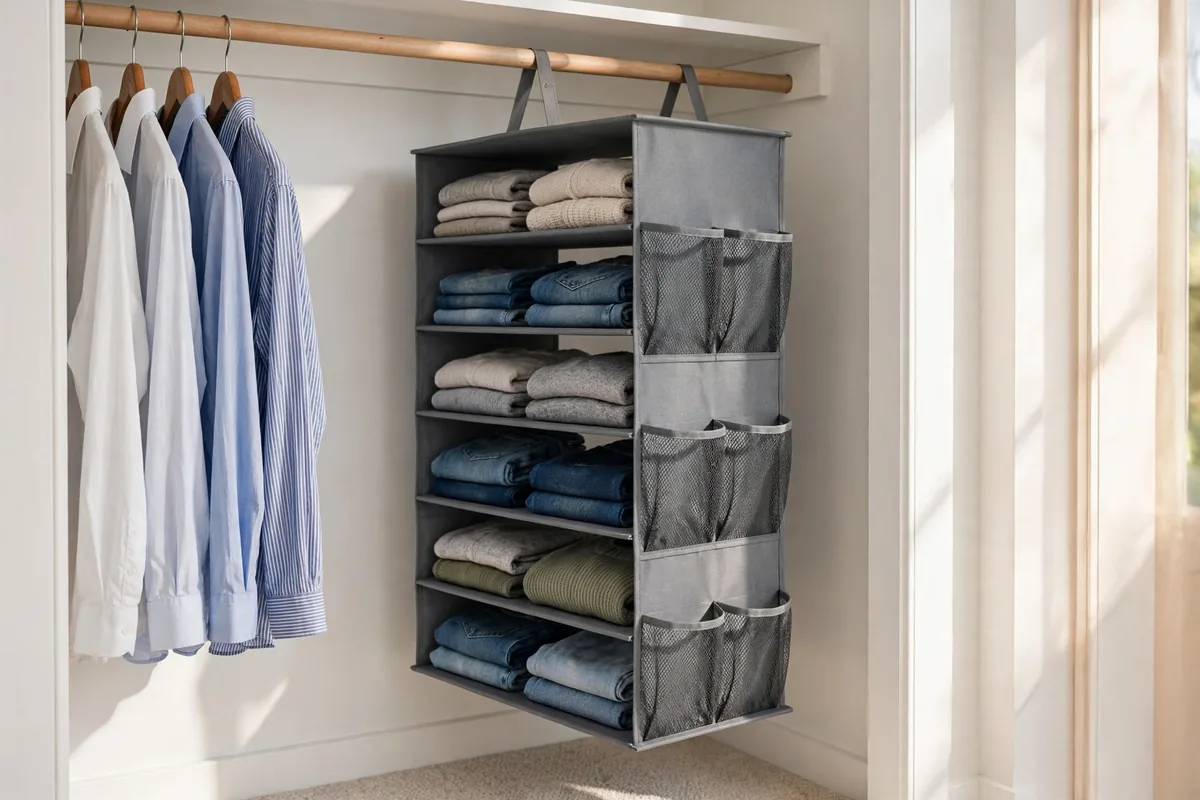
Specs: 12 inches wide, 12 inches deep, 54 inches tall. Six fabric shelves with a 2-hook hang system that works on a standard rod or a wire shelf. Six side mesh pockets, three per side. Sold on Amazon.
Pros:
- The 12-inch square footprint slides into the narrowest reach-in closets.
- It weighs almost nothing, so a weak rod does not care.
- The price leaves room in the budget for the second rod below.
Cons:
- No rigid inserts, so heavy stacks of jeans will bow the shelves over time.
- The all-fabric build looks cheaper than it is.
Who should skip it: if you store heavy items like sweaters and denim, spend the extra five dollars on the SONGMICS above. This one is for light loads.
My take: the best budget small closet organizer is the one you will actually buy today instead of researching for three weeks. For renters watching every dollar, this is the best closet organizer under twenty dollars that still fits a real reach-in closet. Keep it to tees, accessories, and folded delicates and it will last years.
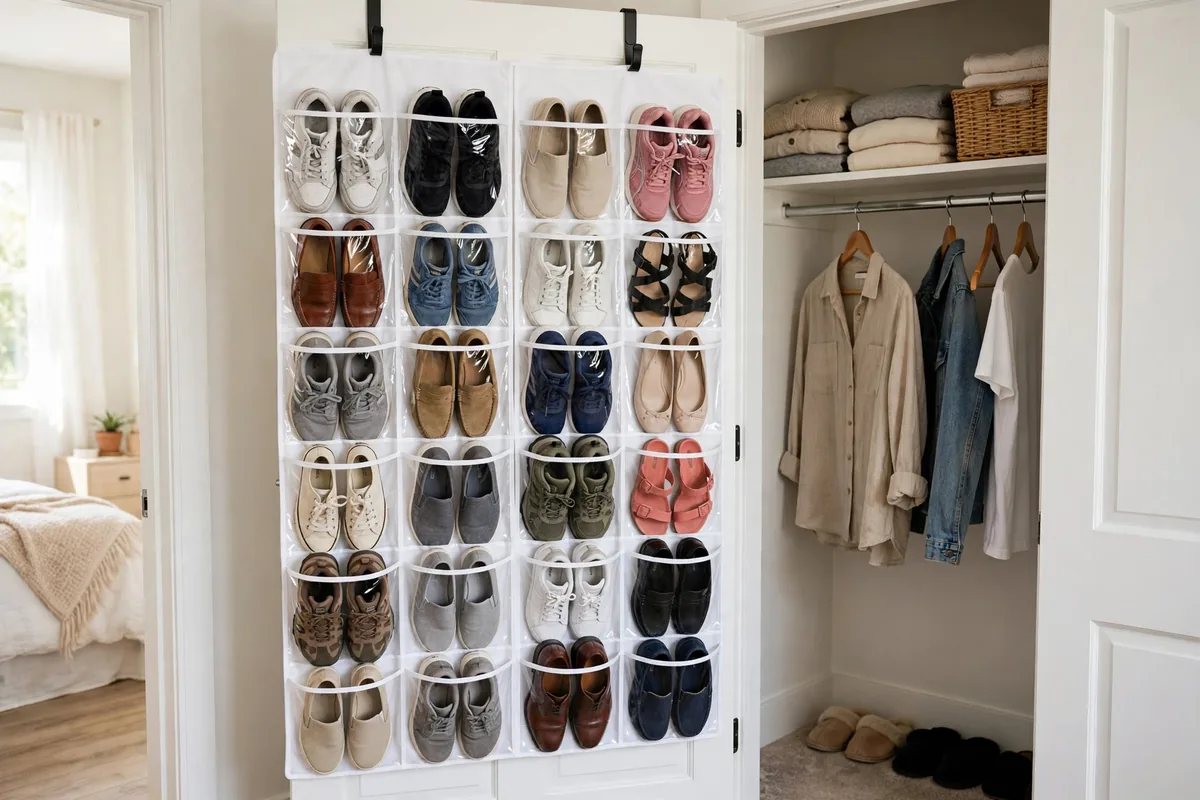
Whitmor 24-pocket over-the-door shoe organizer (best over the door closet organizer)
Who it is for: anyone whose closet floor is currently a shoe pile. This is the best over the door closet organizer for small closets because it uses space that is already dead: the back of the door.
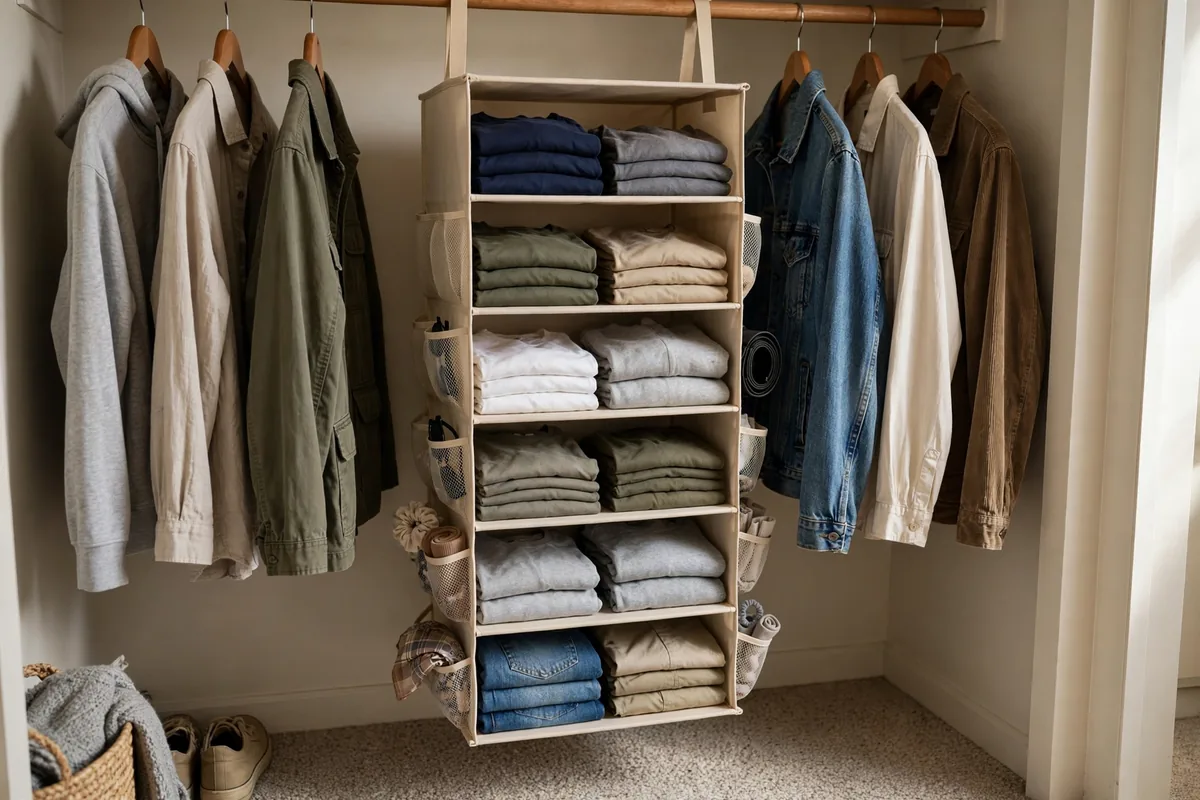
Specs: 19 inches wide, 64 inches tall, model 6046-13. Twenty-four clear vinyl pockets hold up to 12 pairs of shoes. Metal hooks fit standard interior doors, no screws. Maximum weight 15 pounds per the Amazon listing. Source: the Whitmor Amazon listing.
Pros:
- Twelve pairs off the floor in five minutes with zero tools.
- The clear pockets mean you stop buying duplicates of shoes you forgot you owned.
- It also swallows scarves, belts, and chargers.
Cons:
- A loaded organizer adds real swing weight to the door, so cheap hollow doors may creak.
- You need several inches of clearance behind the open door or it scrapes the wall.
Who should skip it: if your closet door opens against a wall with no clearance, measure the swing first. No clearance means this pick fights you daily.
My take: shoes are the single biggest floor-space thief in a small closet, and this twelve-dollar fix beats every fancy shoe rack for a reach-in. If shoes are your whole problem, this is the best closet organizer for the money: twelve pairs off the floor for about twelve dollars. Hooks over drilling is the whole point of renter-friendly storage.
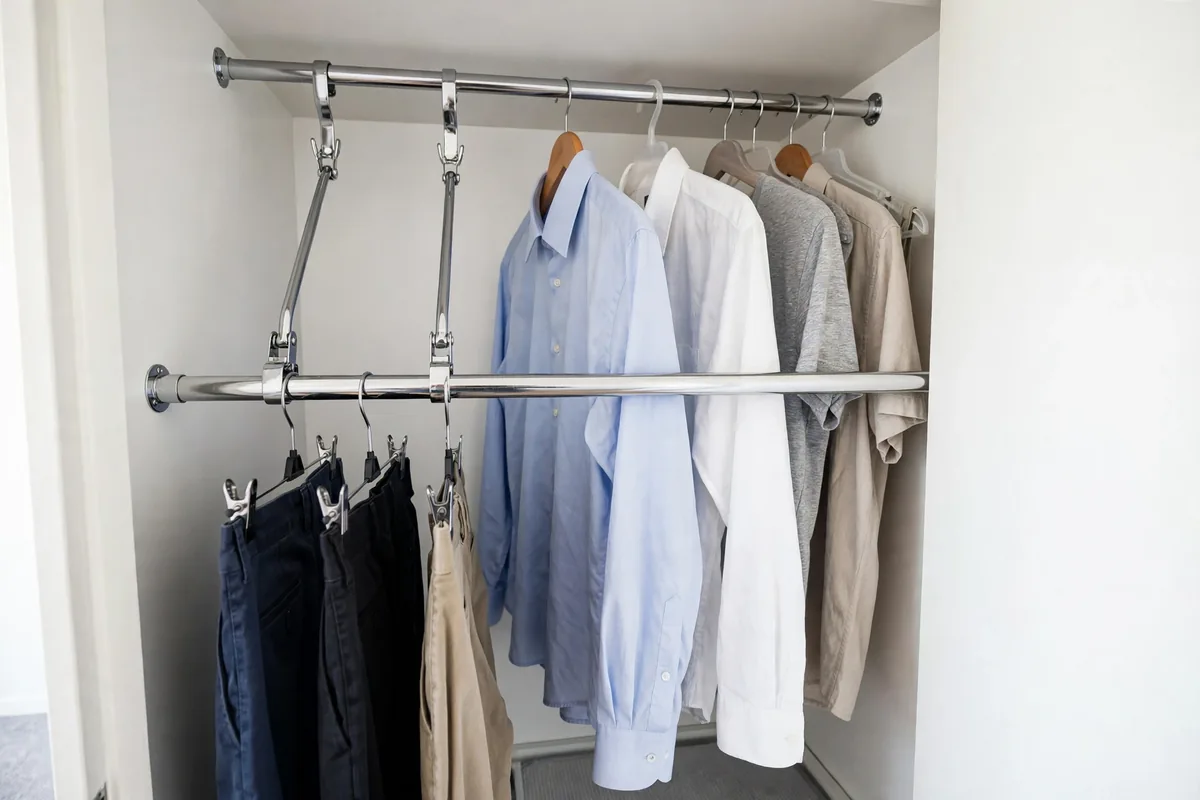
Simple Houseware adjustable hanging rod (best second hanging row)
Who it is for: closets where the rod holds long dresses and coats at one end and nothing at the other. A second rod turns that dead air into a full second row of shirts and pants.
Specs: the horizontal bar expands from 18.75 to 30.5 inches wide in seven spring positions; max dimensions 30.5 inches wide by 35.5 inches tall. Vertical rods adjust in 1-inch increments. Hooks over the existing closet rod, no tools. Sold on Amazon.
Pros:
- Tool-free install in about two minutes.
- The width adjustment actually fits the narrow closets other double rods skip.
- It creates a kid-height row in a children’s closet without permanent changes.
Cons:
- It hangs from your existing rod, so a flimsy original rod now carries double the load.
- Tall items like dresses still need the full-length section, so plan the split before you buy.
Who should skip it: if your closet is already packed rail to rail, a second rod just doubles the crush. Declutter first, then double the rod.
My take: this is the cheapest real capacity upgrade in closet organizing, and as a pure capacity play it is the best closet organizer sixteen dollars can buy. Shirts need about 42 inches of vertical room for two rows, and most closets waste the lower half. For more on replacing bulky furniture with in-closet storage, see our dresser organization ideas.
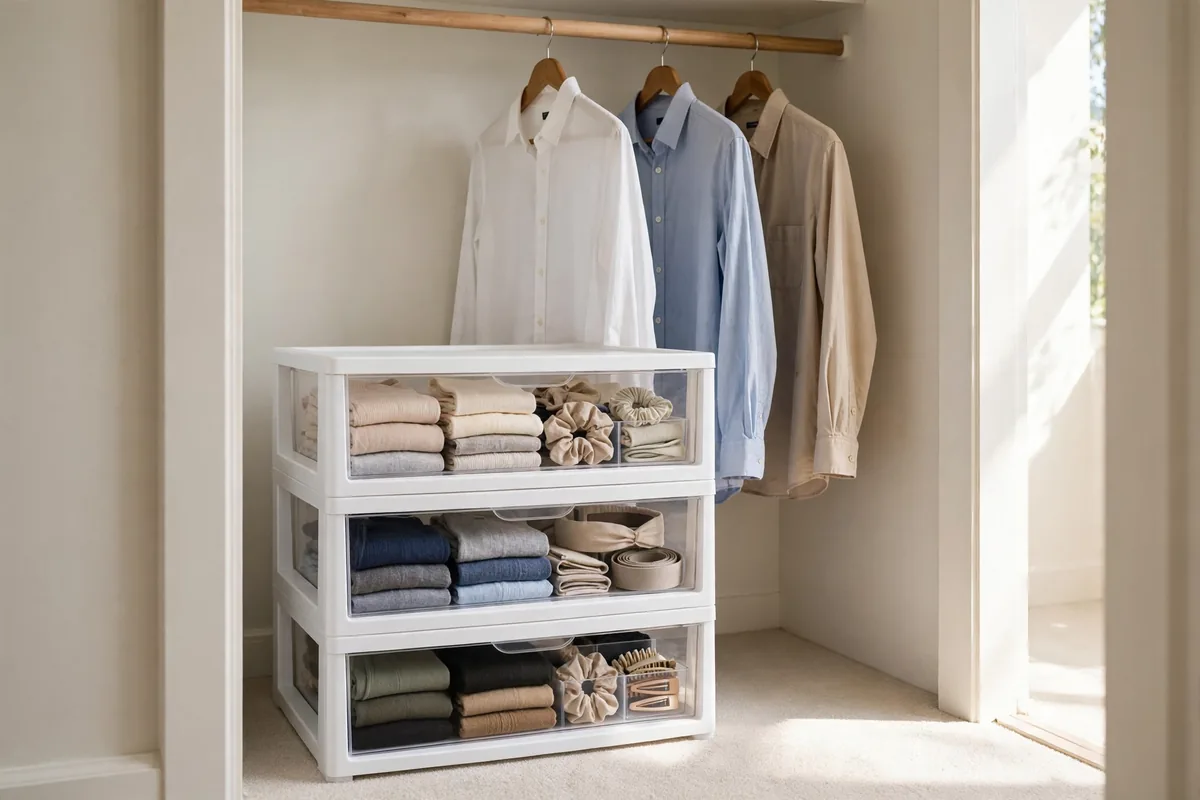
IRIS USA 14.5 qt stacking drawers, 3-pack (best closet organizer with drawers)
Who it is for: anyone who wants dresser function without buying a dresser. This is the best closet organizer with drawers for a small closet floor.
Specs: each drawer is 14.1 inches deep, 11.88 inches wide, and 8.13 inches tall; three stack to about 24 inches tall. Clear drawer fronts, smooth-glide action, locking stack grooves, made in the USA. Source: the IRIS USA Amazon listing.
Pros:
- The clear fronts end the dig-through-every-drawer morning.
- The 24-inch stacked height slides under most shirt-height rods.
- Three separate drawers beat one deep bin because you can pull a single category out.
Cons:
- 14.5 quarts is a small drawer, so bulky sweaters need two drawers each.
- The plastic frame looks utilitarian next to wood furniture.
Who should skip it: if your closet floor is narrower than 12 inches of clear width, these will not fit. Measure the floor zone before you buy.
My take: drawers beat bins for the small stuff that never hangs well: socks, underwear, belts, accessories. This 3-pack is the cheapest way to add a dresser to a closet that has no room for furniture. Our dresser organization ideas cover the folding systems that make small drawers work harder.
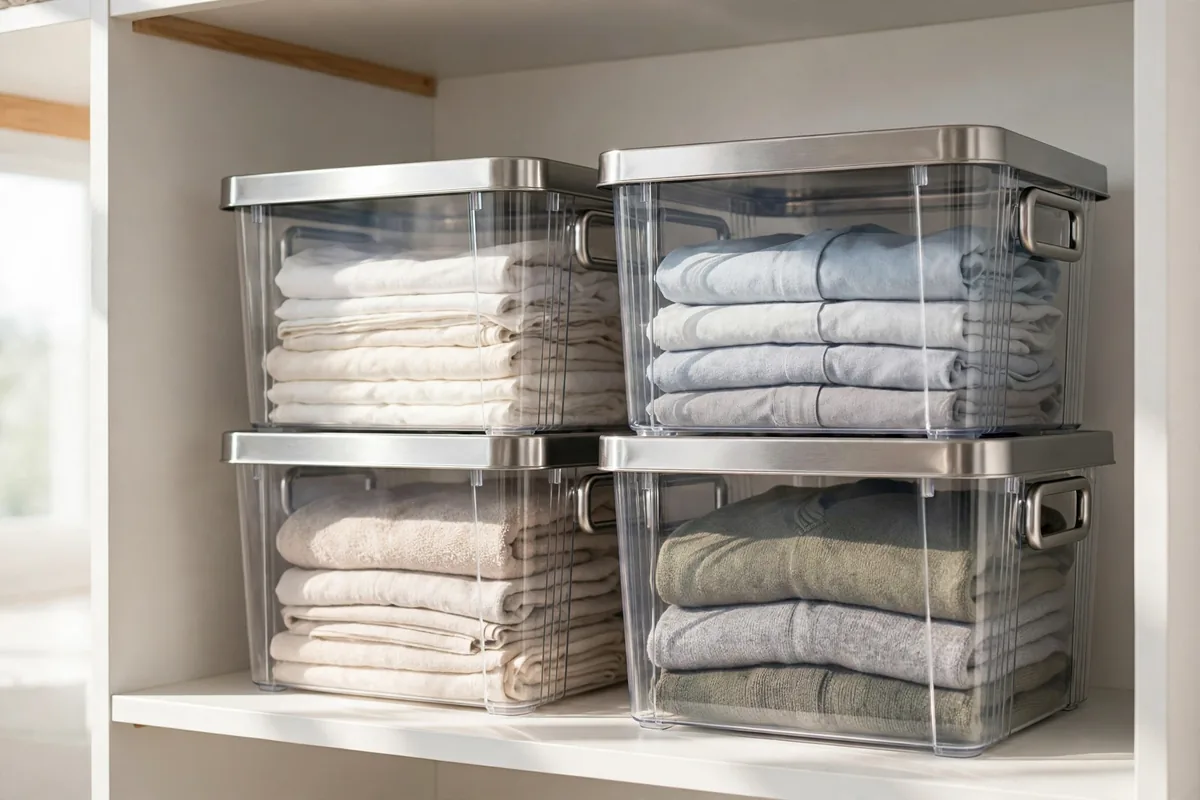
mDesign Ligne stackable bins, 4-pack (best stackable bins)
Who it is for: top shelves and closet floors where you need lidded, good-looking boxes that stack.
Specs: each bin is 11.25 inches long, 8 inches wide, and 6 inches high. Clear shatter-resistant plastic, built-in handles, removable steel lids, non-skid feet for stacking. Sold on Amazon.
Pros:
- The steel lids keep dust off and make the stack look finished instead of improvised.
- The handles make top-shelf retrieval a one-hand job.
- Four bins cover a whole closet’s worth of categories at once.
Cons:
- The lids add height, so a 3-high stack needs real vertical room.
- Clear plastic shows every wrinkle in folded clothes, so fold neatly or embrace it.
Who should skip it: if you need deep bins for blankets, these are too shallow. They are accessory and folded-clothes bins, not blanket bins.
My take: I rate these above open baskets for small closets because the lids mean you can stack them on a high shelf and forget them. For lidded shelf and floor bins, this is the best closet organizer set that still looks like furniture instead of a storage unit. Pair them with the shelf systems in our closet shelf organization ideas.
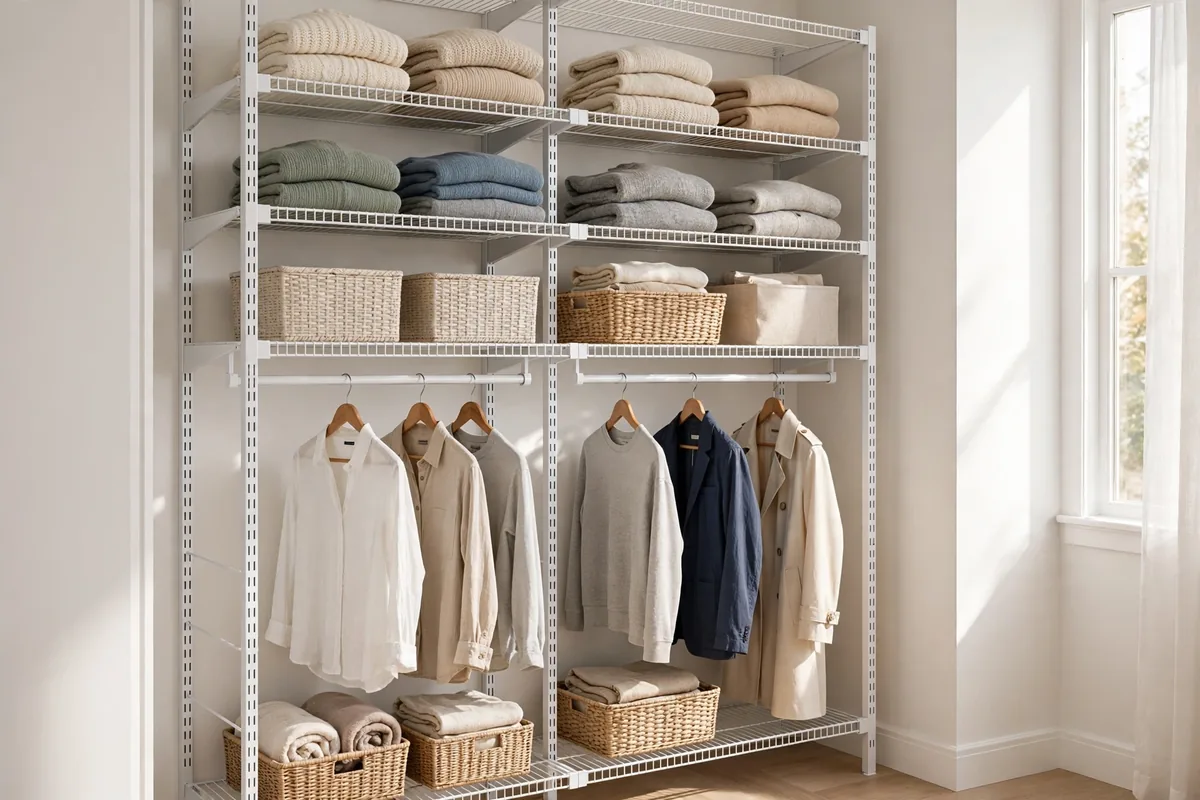
ClosetMaid ShelfTrack 4 to 6 ft kit (best semi-permanent wire system)
Who it is for: homeowners and long-term renters ready for a one-weekend overhaul of a 4 to 6 foot wide closet. This is the step up from hanging fabric: real wire shelving you can reconfigure.
Specs: fits closets 4 to 6 feet wide. The kit creates up to 96 inches of hanging space and 144 inches of shelf space with 12-inch-deep vinyl-coated steel shelves, SuperSlide hang rods that let hangers glide without snagging, and a hang-track mounting system. Shelves support up to 50 pounds each when installed per the manufacturer’s instructions. Source: the ClosetMaid ShelfTrack kit at Home Depot.
Pros:
- The shelves move up and down on the standards, so the closet evolves with your wardrobe instead of fighting it.
- 50 pounds per shelf is real furniture territory.
- The SuperSlide rod genuinely ends hanger snags.
Cons:
- This is a drill-into-studs project, so strict no-hole leases are out.
- Wire shelves need shelf liners for small items or everything tips through the gaps.
Who should skip it: if you move within a year, the install effort is not worth it. Renters on short leases should stick with the no-drill picks above.
Renters facing a completely bare closet should also read how to organize a closet with no shelves, which pairs these organizers into a full no-drill system.
My take: this is the best closet organizer for anyone who owns their walls. It costs about what a cheap dresser costs and it replaces the dresser, the shoe rack, and the shelf tower in one project. Buy shelf liners in the same trip or you will be back.
Rubbermaid Configurations deluxe 4 to 8 ft kit (best premium full rebuild)
Who it is for: the person rebuilding one closet properly, once, with a system that reconfigures without new holes.
Specs: fits any wall 4 to 8 feet wide. Telescoping rods and expanding shelves add up to 20 feet of shelving space and 12 feet of hanging space with no cutting. White epoxy-coated steel, all hardware included. The 4.7-star average across more than 8,000 Amazon ratings is the strongest social proof on this list. Source: the Rubbermaid Amazon listing.
Pros:
- The no-cut install is genuinely weekend-simple for a system this capable.
- Everything reconfigures later without new holes, which wire systems twice the price cannot always claim.
- The epoxy finish resists the rust that kills basement closets.
Cons:
- At around $140 it costs more than every other pick on this list combined except the ShelfTrack.
- 4 feet is the minimum wall, so truly tiny closets cannot use it.
Who should skip it: if your closet wall is under 4 feet wide, this kit physically does not fit. Measure the wall, not just the opening.
My take: premium only earns its price when it outlives the cheap version by a decade, and for a one-time rebuild this is the best closet organizer you can install in a weekend. If you are staying put for five-plus years, it is the last closet organizer you buy. If not, the $100 ShelfTrack gets you 80 percent of it. Off-season overflow that does not fit even here belongs in our under-bed storage ideas.
How to measure your small closet before you buy anything
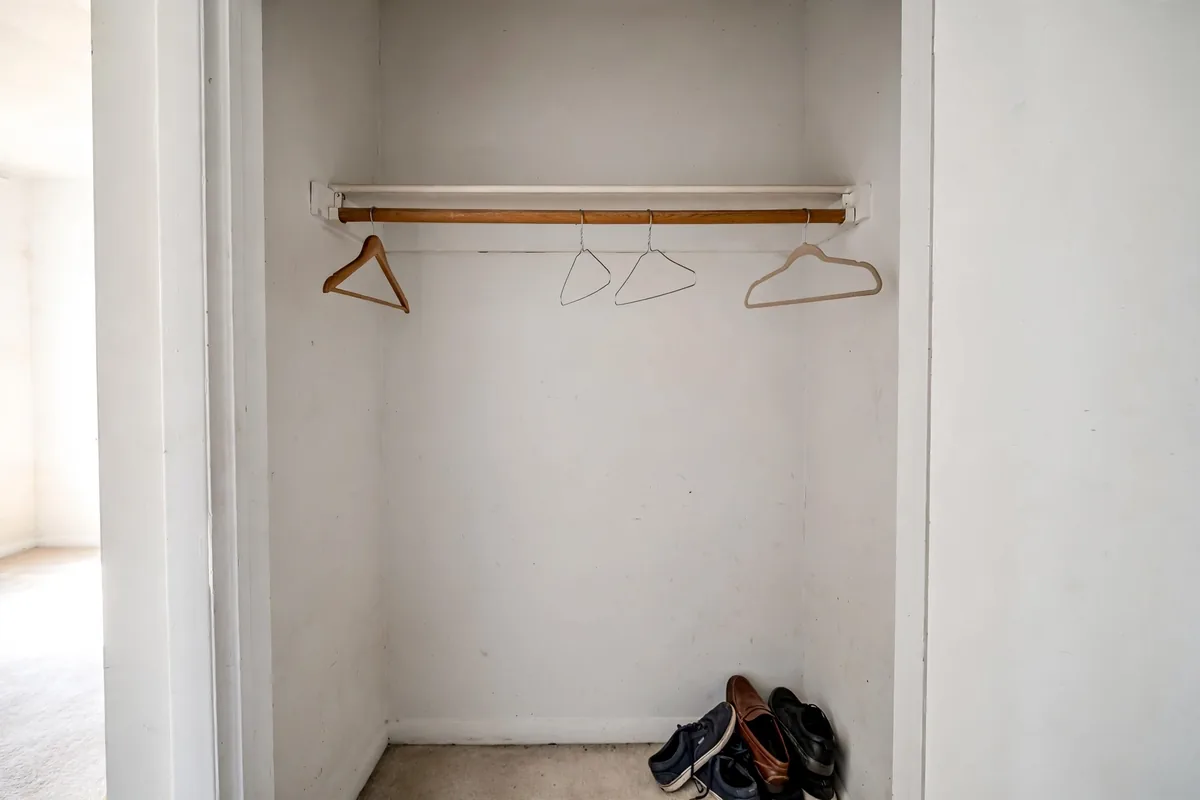
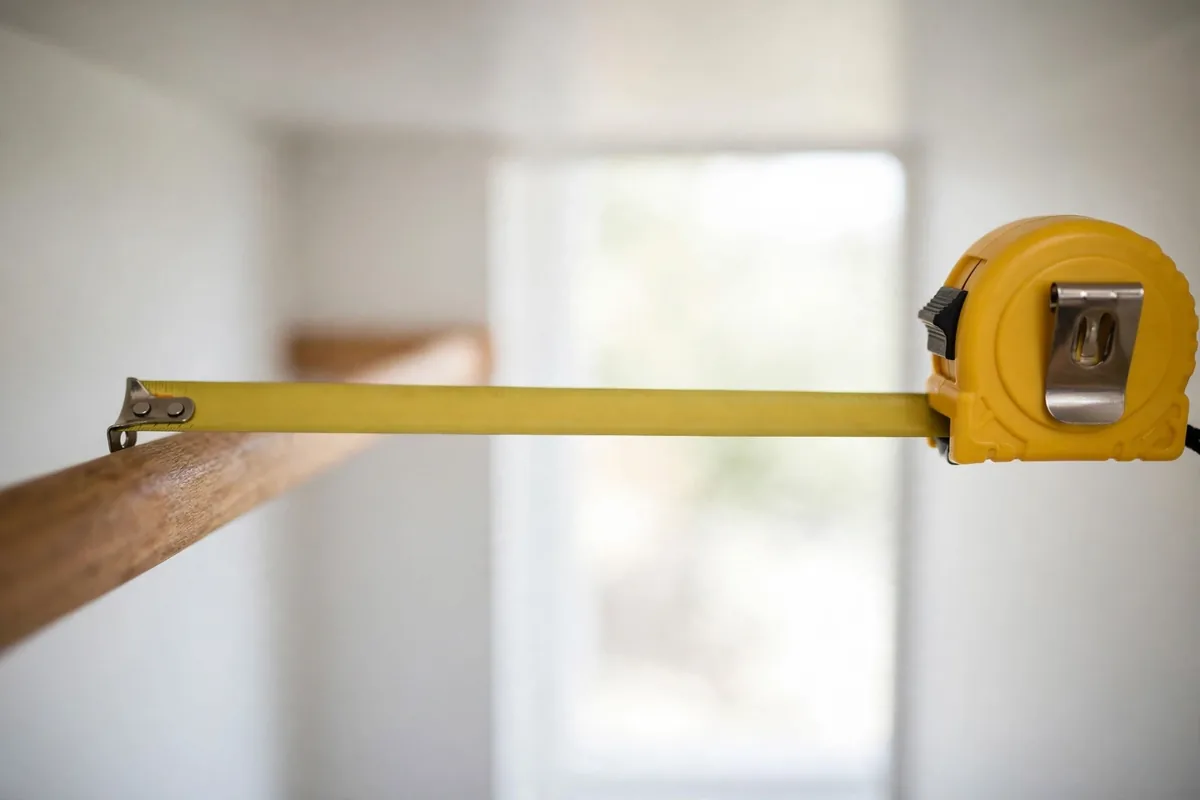
Three numbers decide every pick on this list. Width at the rod: hook your tape on one side wall and read it at the other, at rod height, because closets taper. Depth from the back wall to the closed door: this is the number that kills hanging organizers that are too deep to let the door shut. Rod-to-floor drop: the clear vertical inches under the rod, which decides whether a 47-inch column or a 24-inch drawer stack fits.
Measure twice because closets lie. Walls bow, rods sag, and the 24-inch “standard” depth is often 22 or 23 once the baseboard and door trim are in. Write the three numbers on your phone before you open any product page, then check each pick’s dimensions against the smallest of the three.
Over-the-door picks need a fourth check: swing clearance. Open the door fully and measure from the door’s back face to the nearest wall or furniture. A loaded organizer needs several inches there or it scrapes every time.
| Measurement | How to take it | Why it matters | Rules out |
|---|---|---|---|
| Width at rod height | Tape wall to wall at the rod | Hanging columns and second rods must clear it | Rods wider than your closet |
| Depth, back wall to closed door | Tape from back wall to the door face | Deep organizers block the door | Columns deeper than ~22 in |
| Rod-to-floor drop | Tape from rod down to the floor | Decides column height vs drawer stack | 47-in columns in low-rod closets |
| Door swing clearance | Open door, measure to nearest wall | Loaded door organizers need room | Over-door picks in tight swings |
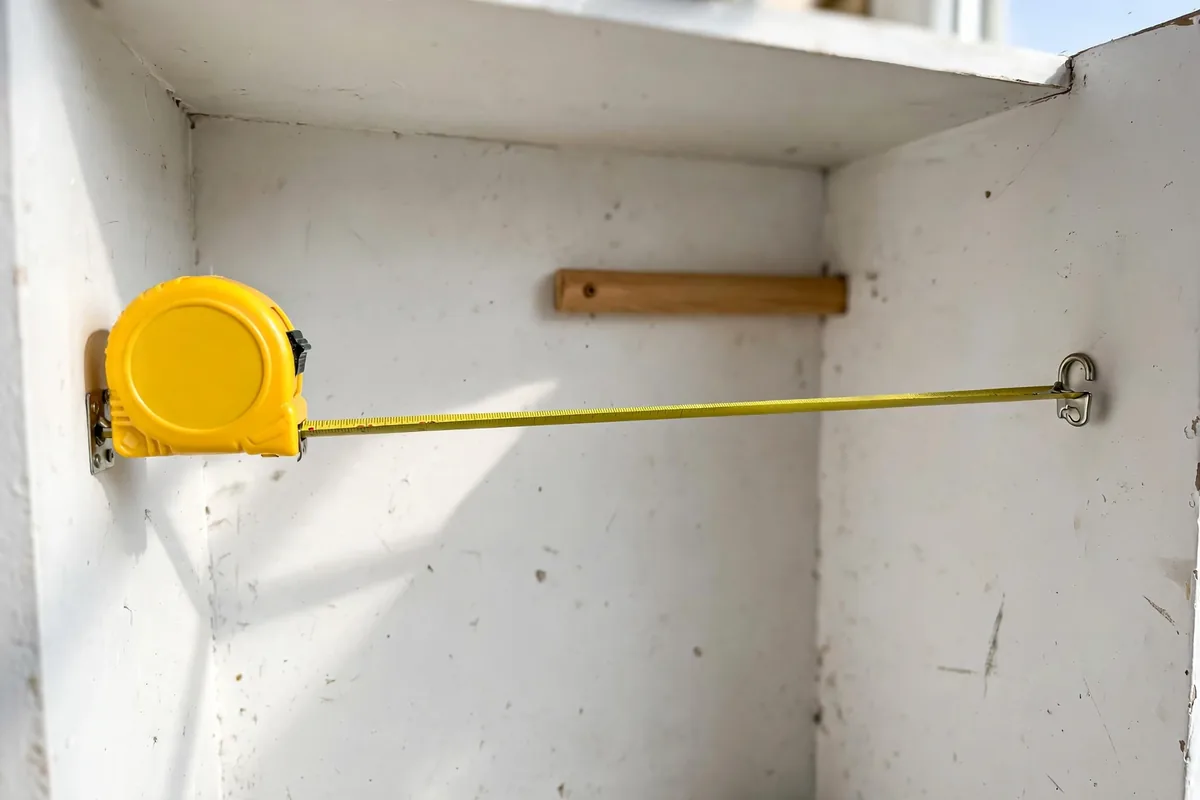
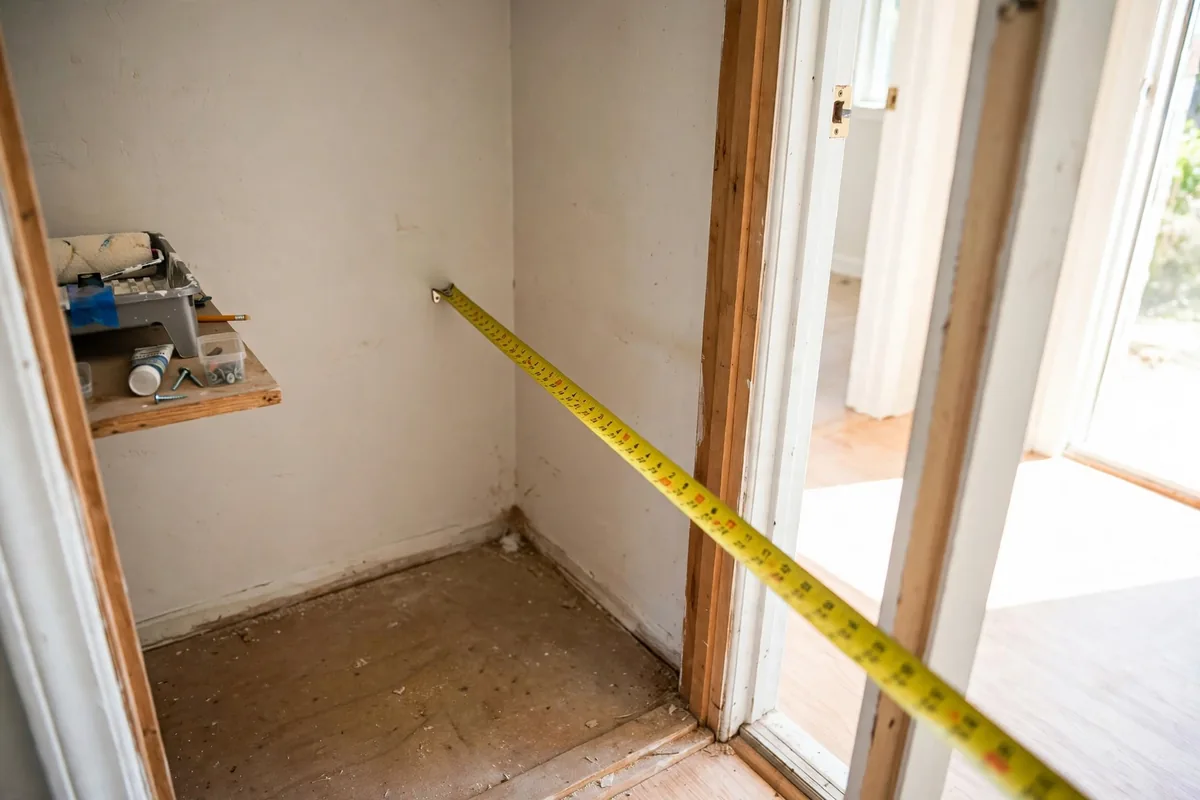
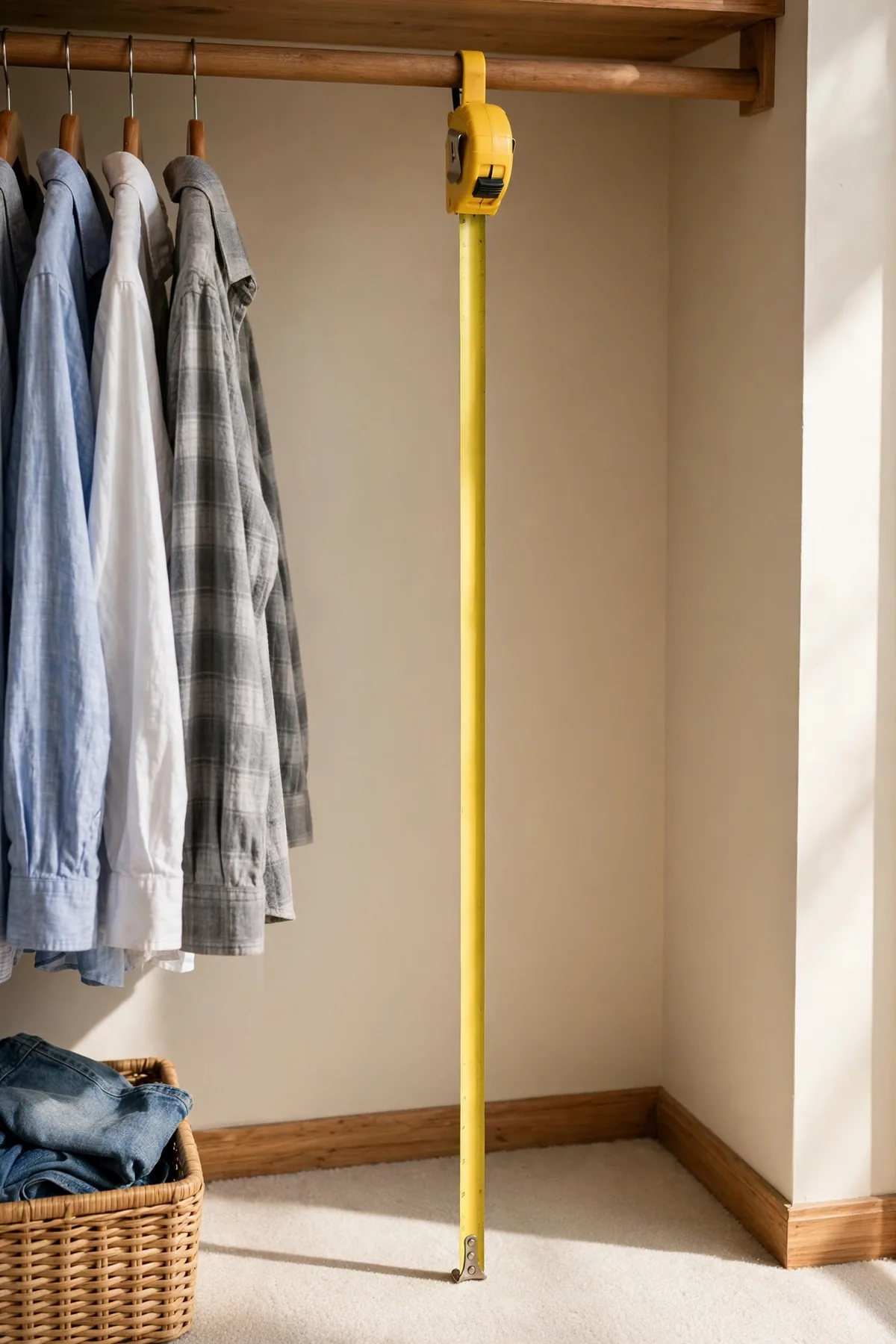
Opinion: measuring is the least fun step and the most skipped, which is exactly why returns departments exist. The best closet organizer for your closet is the one that clears all three numbers; a pick that fails any one of them is a return waiting to happen.
Which type of organizer do you actually need?
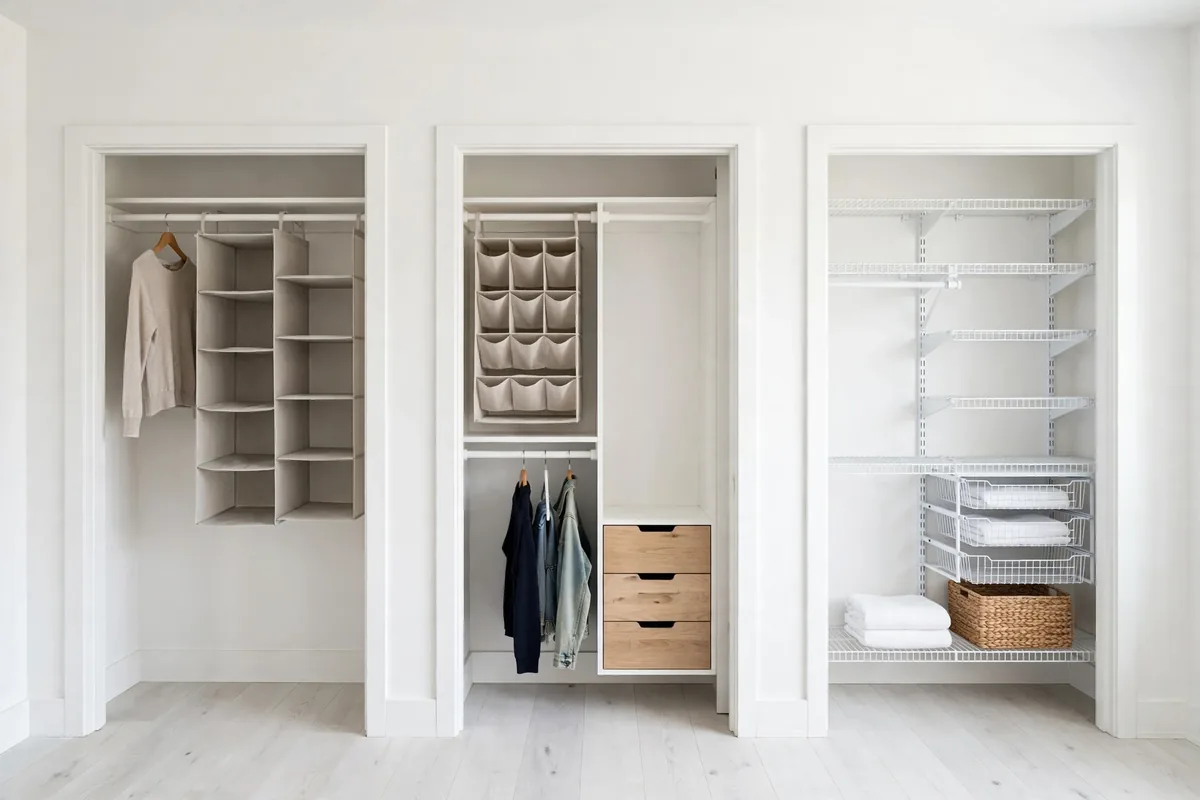
Start from your closet’s problem, not the product’s promise. If the dead space is the air under the rod, you need a hanging column (SONGMICS or Simple Houseware). If the dead space is the door, you need an over-the-door organizer (Whitmor). If the rod is half empty because everything hangs full-length, you need a second rod to split it. If the floor is a pile, you need drawers or bins (IRIS or mDesign). If the whole closet is a gut job and you own the walls, you need a wire system (ClosetMaid or Rubbermaid).
Hanging columns are the default answer for a reason: they install in seconds, move with you, and need no tools. Their weakness is sway. A column loaded with heavy denim swings when you yank a shelf, which is why the bamboo inserts on the SONGMICS pick matter more than they sound.
Second rods are the specialist’s pick. They double hanging capacity for sixteen dollars, but they only work when your clothes are short. Coats and dresses need the full drop, so map your wardrobe before you split the rod.
Wire systems are the forever answer. They cost ten times a hanging column and last twenty times longer. The honest trade is install effort and lease permission against a closet that never needs rethinking.
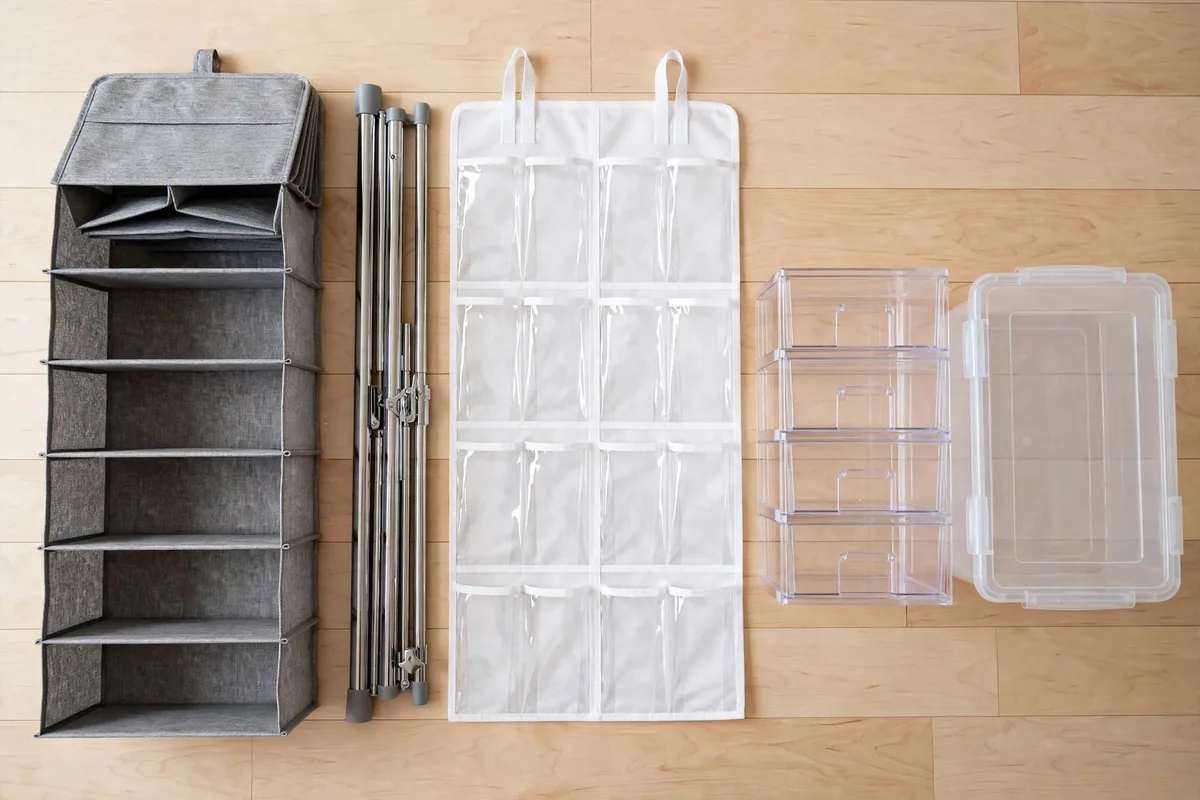
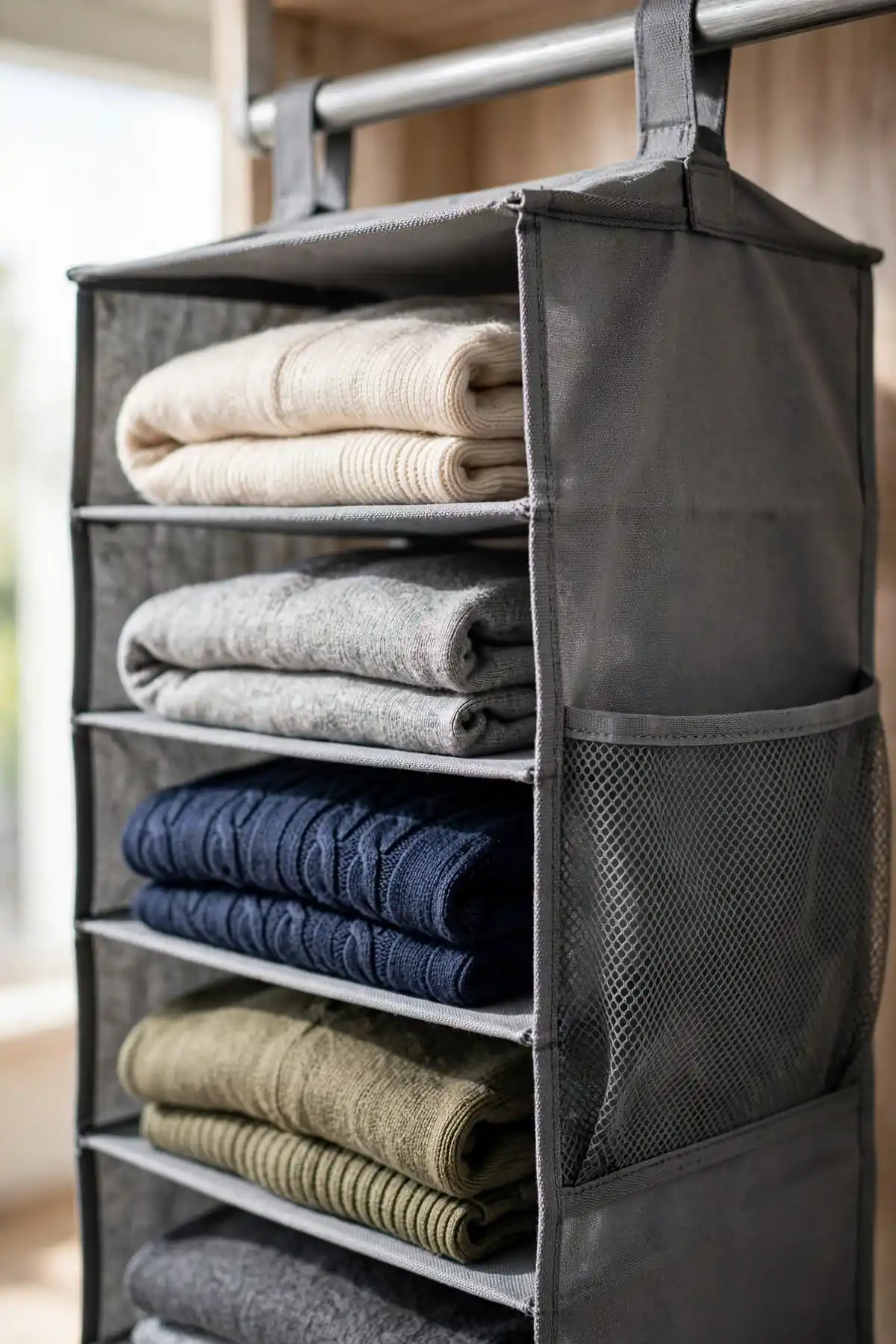
Opinion: most people buy the wrong type because they shop by product photo instead of by dead space. Name your dead space first and the best closet organizer type picks itself. If you cannot name it, start with a hanging column; it is the only type that helps almost every small closet.
What do $15, $35, and $100-plus actually get you?
Fifteen dollars gets you a hanging fabric column and the discipline to use it. That is a real upgrade: six shelves of folded storage where there was air. What it does not get you is rigidity, weight capacity, or looks. Budget fabric sags under denim and shows lint.
Thirty-five dollars gets you a system instead of a product. A hanging column plus a second rod, or drawers plus an over-door organizer, covers two dead zones at once. This is the sweet spot for renters: everything installs without tools and moves to the next apartment.
One hundred dollars and up gets you permanence. The ClosetMaid and Rubbermaid kits replace furniture: the dresser, the shoe rack, and the shelf tower collapse into one wall-mounted system. The trade is a drill, a weekend, and landlord permission.
| Tier | What you get | Honest trade-off |
|---|---|---|
| ~$15 | One hanging fabric column | Works, but sags under heavy loads |
| ~$35 | Two no-drill picks covering two dead zones | Renter-perfect; not permanent |
| ~$100-plus | Wire system overhaul | Permanent and reconfigurable; needs a drill |
Opinion: the $35 tier beats the $15 tier on value every time, because one organizer in a small closet just moves the pile. At every tier, the best closet organizer is the one that covers your actual dead zones, not the one with the most features. For overflow categories that live outside the closet, see our linen closet organization ideas.
5 mistakes that waste small-closet space
Every mistake below can turn a good best closet organizer into a bad purchase.
Buying before measuring. The number one return reason for closet organizers is fit, not quality. A 47-inch column in a 44-inch drop is a donation, not storage. The checklist above exists because this mistake is that common.
Ignoring weight limits. Fabric shelves have opinions about denim. Put the heavy stuff low, where the structure is strongest, and keep the top tiers for tees and accessories. The Whitmor door organizer’s 15-pound limit is real: exceed it and the hooks bend.
Blocking the door swing. An over-door organizer on a door that opens against a wall scrapes paint and patience. Measure the swing clearance before you buy, not after you hear the scrape.
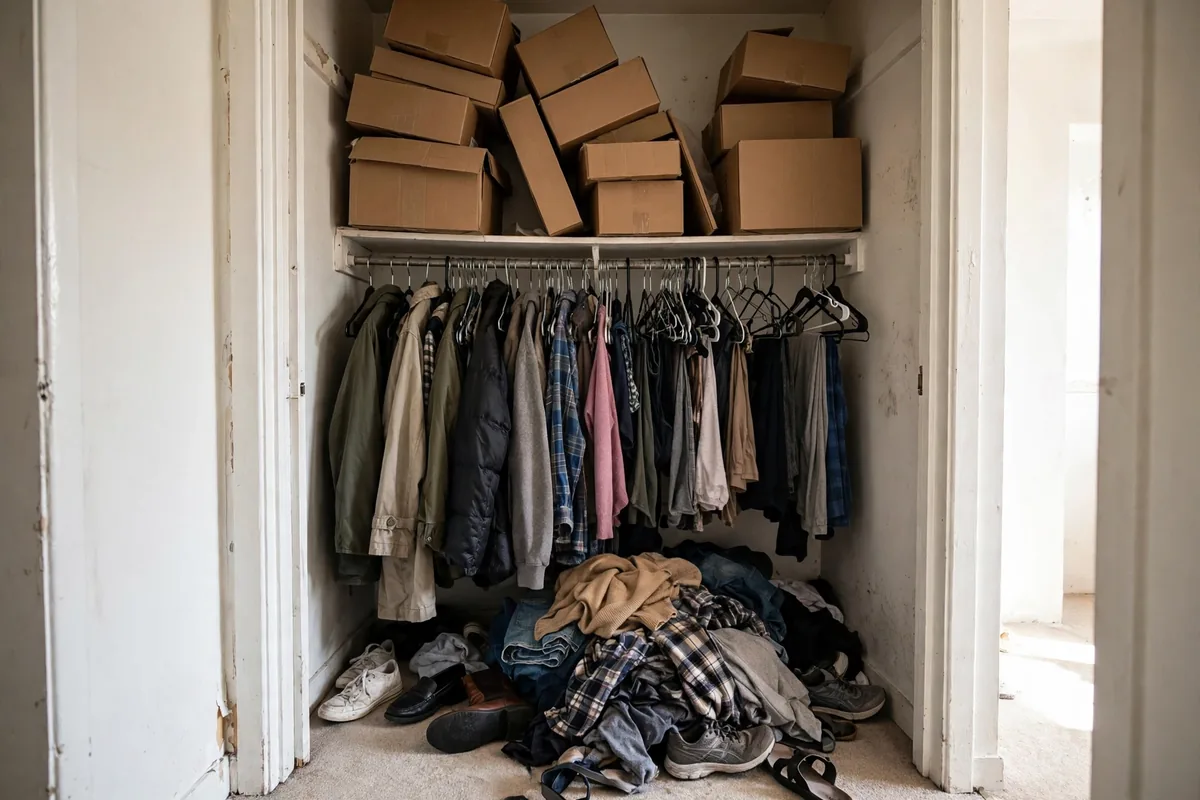
Filling before decluttering. No organizer fixes an overstuffed closet. If every hanger touches its neighbors, you do not have a storage problem, you have a volume problem. Pull everything out, keep what you wear, then organize what is left.
Choosing looks over access. A beautiful lidded bin you cannot reach is a beautiful box of forgotten things. In a small closet, the most-used items live between knee and eye height. Put the pretty storage up high and the daily stuff where your hands are.
Two people, one small closet
Sharing a small closet works when you stop sharing the rod fairly and start splitting it by garment length. Give one person the full-length section for dresses and coats, and split the rest into two short rows with a second rod. Each person gets one hanging column for folded clothes and one drawer stack for the small stuff.
Duplicate the cheap picks instead of fighting over the good one. Two $15 hanging columns beat one $30 column that both people raid. Label one drawer stack per person, even if the labels feel silly for a couple. The labels end the “where is my” conversations.
Vertical zoning keeps the peace: daily clothes at eye level, work clothes together, off-season up high in lidded bins. In a shared closet, the best closet organizer strategy is duplication: two cheap columns and one drawer stack per person. When the zones are visible, both people maintain them without a meeting about it. Our small closet organization ideas cover the zoning system in detail.
The verdict: which organizer should you actually buy
Buy the SONGMICS 6-tier hanging organizer first. It is the best closet organizer for a small closet because it attacks the biggest dead zone with the least commitment: no tools, no holes, real dimensions you can verify, and shelves stiff enough to hold their shape. Pair it with the Simple Houseware second rod when your clothes are short, and add the Whitmor door organizer when shoes own your floor.
If you own your walls and you are staying, skip the fabric phase and install the ClosetMaid ShelfTrack. It is the last closet project you will do for a decade.
Your next step is ten minutes with a tape measure. Width at the rod, depth to the door, rod-to-floor drop: write them down, then buy the pick that clears all three. Once the hardware is in, our small closet organization ideas show how to arrange everything inside it.
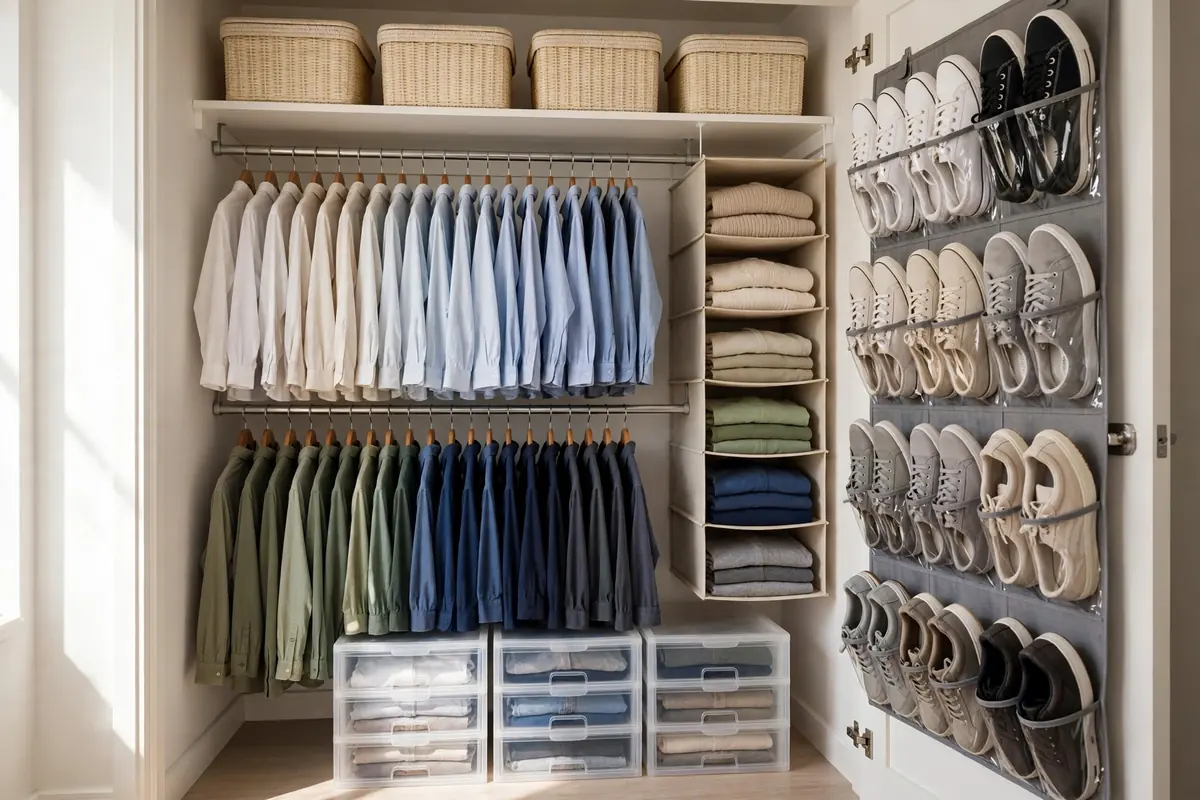
What is the best closet organizer for a small closet?
For a standard reach-in closet with one rod and one shelf, a 6-tier hanging closet organizer with reinforced shelves is the best general answer. It turns the empty air under the rod into usable shelves, installs with no tools, and folds flat when you move. Pick the reinforced version if you store jeans or hoodies.
How do I organize a small closet with no shelves?
Start with a hanging fabric organizer on the rod for folded clothes, add a second hanging rod below the first for shirts and pants, and put stackable drawers or bins on the floor for socks and accessories. Use the back of the door for shoes. Measure rod-to-floor clearance before buying anything tall.
Are hanging closet organizers worth it?
In a small closet, usually yes, and a hanging column is the best closet organizer value per dollar. The space under the rod is already there and currently empty, so a hanging organizer converts dead air into storage for less than $25. Choose one with board or bamboo shelf inserts so it holds its shape. Skip it if something is already stored below the rod.
How can I fit the most in a small closet?
Close the gaps in order. Add a hanging shelf column or a second rod for the dead vertical space. Replace mismatched hangers with slim uniform ones to pack more garments per inch. Move shoes onto the door or clip hangers. Declutter first, because no organizer fixes an overstuffed closet.
How do I organize a small closet without drilling?
Use rod-hung organizers, over-the-door hooks and shoe organizers, tension or hook-on second rods, and freestanding stackable drawers. Every pick in this guide installs without a drill. The only tools you need are a tape measure and a pencil, so your deposit stays safe.
How do you double hanging space in a small closet?
Hang an adjustable second rod below your existing rod. Shirts and pants only need about 42 inches of vertical room combined, so one rod wastes the lower half of the closet. A hook-on rod like the Simple Houseware adjustable rod expands from 18.75 to 30.5 inches and needs no tools.
Do over-the-door organizers damage closet doors?
No, if you buy one with padded or coated metal hooks sized for standard interior doors. The organizer hangs from the top of the door with no screws. Check the clearance behind the door when it is open, since a loaded organizer needs several inches of swing room to avoid scraping the wall.
What size hanging organizer fits a standard reach-in closet?
Most hanging organizers are about 12 inches square and 45 to 54 inches tall, which fits a standard reach-in closet with 24 inches of depth. Measure three things first: width at the rod, depth from the back wall to the closed door, and the clear drop from rod to floor. Buy the organizer that clears all three.
Can you put drawers in a small closet?
Yes, and drawers are one of the best upgrades for a small closet. A stackable set is the best closet organizer with drawers for renters because it needs no tools and moves with you. Stackable plastic drawers fit under short hanging clothes and hold socks, underwear, and accessories that never hang well. A 3-pack of IRIS USA 14.5-quart drawers stacks to about 24 inches tall, so it fits under most shirt-height rods.
Where should shoes go in a tiny closet?
Off the floor. Shoes on the closet floor eat the one zone that could hold bins or drawers. An over-the-door organizer holds 12 pairs using dead door space, and clip hangers on the rod work for flats and sandals. Store off-season shoes under the bed or on the top shelf instead of in the closet.
