
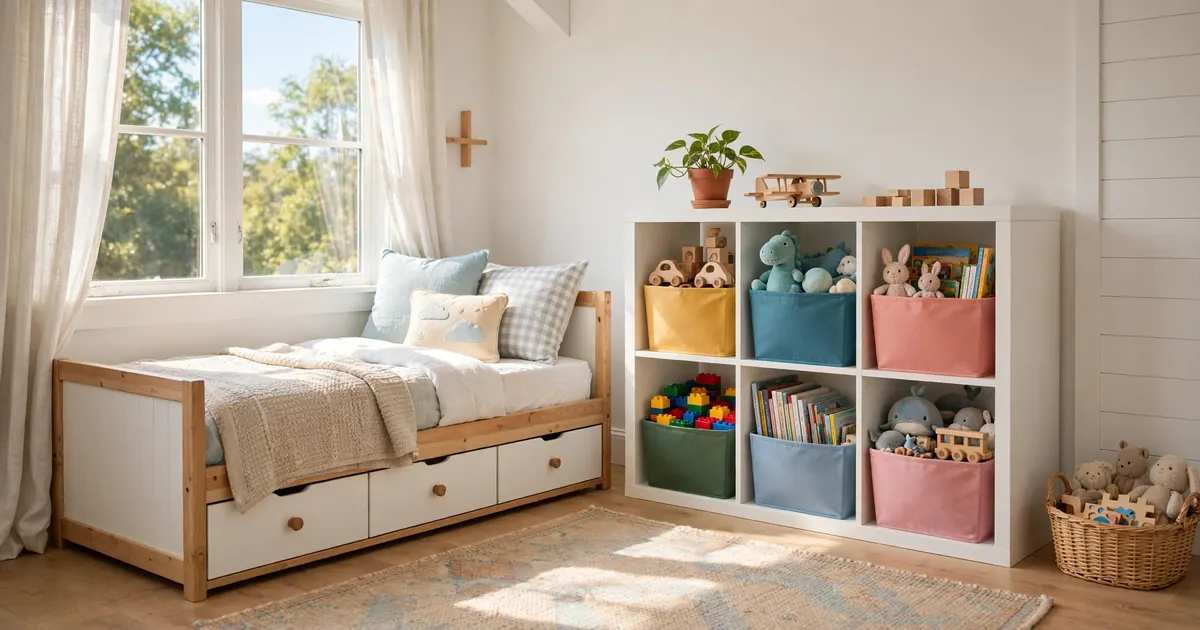

The average American child owns 87 to 90 toys, according to research by Dauch and colleagues published in Infant Behavior and Development. And here’s the part that stings: kids play with only 7 to 14 percent of what they own, per a parenting research roundup by sonnetschool.com. So the mess on your child’s floor is not a storage problem first. It’s a too-much-stuff problem with a storage problem stacked on top, which is why effective kids room storage ideas always start with decluttering.
The kids room storage ideas that actually work come in three moves: declutter before you buy a single bin, give every toy category one shallow home at kid height, and rotate toys so only a fraction is out at a time. Do those three and the room starts cleaning itself.
The short version
- Sort everything into keep, donate, trash, and relocate piles before buying storage. Storage bought before decluttering always fails.
- One category per bin, bins shallow and open, picture labels for kids who can’t read yet.
- Keep 25 to 30 percent of toys out and rotate the rest every 2 to 4 weeks. Toddlers in the Dauch study played twice as long and more imaginatively with 4 toys than with 16.
- A 10-minute daily reset beats a 3-hour weekend cleanup every time.
- Anchor every tall shelf and dresser to the wall before a climbing toddler tests it.
| Solution | Best for | Typical cost | Kid can maintain it alone? |
|---|---|---|---|
| Cube organizer with fabric bins (IKEA Kallax style) | Mixed toys, books, clothes | $70 to $150 | Yes, with picture labels |
| Shallow-bin frame (IKEA Trofast style) | Small toys in many categories | $80 to $180 | Yes, best for ages 2 to 6 |
| Under-bed drawers or bins | Out-of-season clothes, rotation stock | $25 to $60 | With help |
| Over-door clear organizer | Craft supplies, small toys, accessories | $12 to $25 | Yes |
| Floating shelves + book slings | Books and display toys | $20 to $50 | Partly (display, not daily toys) |
| Rolling cart (3-tier) | Art supplies, Lego, collections | $30 to $50 | Yes |
Where do I even start with a messy kids room?
Start by taking everything out of its hiding place, not by buying bins. Pull every toy, book, and stray sock into the middle of the floor so you can see the true size of the pile. Then do your toy declutter sort into four piles: keep, donate, trash, and relocate. Broken toys and dried-out markers go straight in the trash. Anything your child hasn’t touched in 6 months goes in donate. Grandparents buy 86 percent of grandkids gifts averaging $805 a year, per an AARP survey cited by sonnetschool.com, which is why the pile keeps growing.
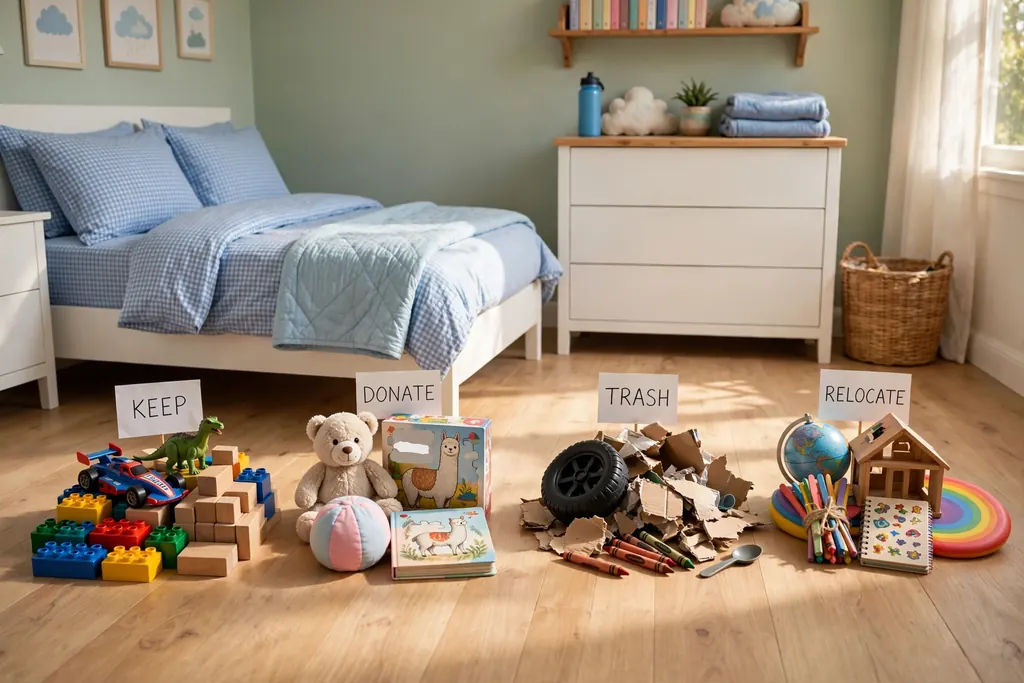
Involve your child in the sort. This isn’t optional politeness, it’s strategy. Kids who help decide what leaves don’t dig through the donate bag at midnight, and they accept these kids room storage ideas because they helped build them. One rule from experienced parents: never declutter behind a child’s back. It teaches them to hoard.
Here’s my opinion, plainly: if you skip this step and go straight to the Container Store, you’ll own beautiful bins full of toys nobody plays with. The bins are the last step, not the first. Budget one full afternoon for the sort, put on music, and power through. It’s boring work, but it’s the only work that makes everything after it easy.
How does toy rotation work, and is it worth the effort?
Toy rotation means keeping 25 to 30 percent of your child’s toys out and storing the rest in labeled bins in a closet, then swapping sets every 2 to 4 weeks. That’s the whole system, and it’s one of the simplest kids room storage ideas.
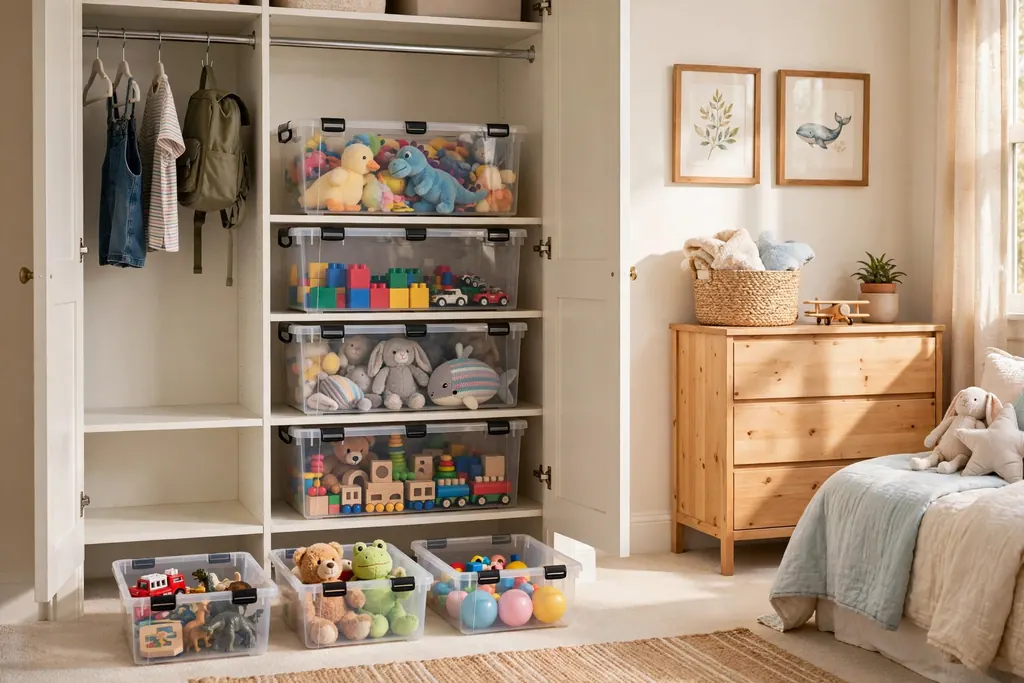
Set it up like this. After your declutter sort, divide the keep pile into 3 or 4 rotation groups, mixing toy types in each group. A group might be building toys, one vehicle set, art supplies, and two stuffed animals. Store waiting groups in clear labeled bins in a closet or under your bed, and set a phone reminder for every third Sunday. When rotation day comes, swap the whole group at once. Kids treat returning toys like new presents. Parents say the same thing every time: old toys feel brand new after a few weeks away.
Rotation is not for every family. If your child is older than 10 and has strong opinions about their collections, forced rotation will start fights you don’t need. For ages 2 to 8, though, it’s the single highest-impact move among these kids room storage ideas.
What kids room storage furniture actually earns its floor space?
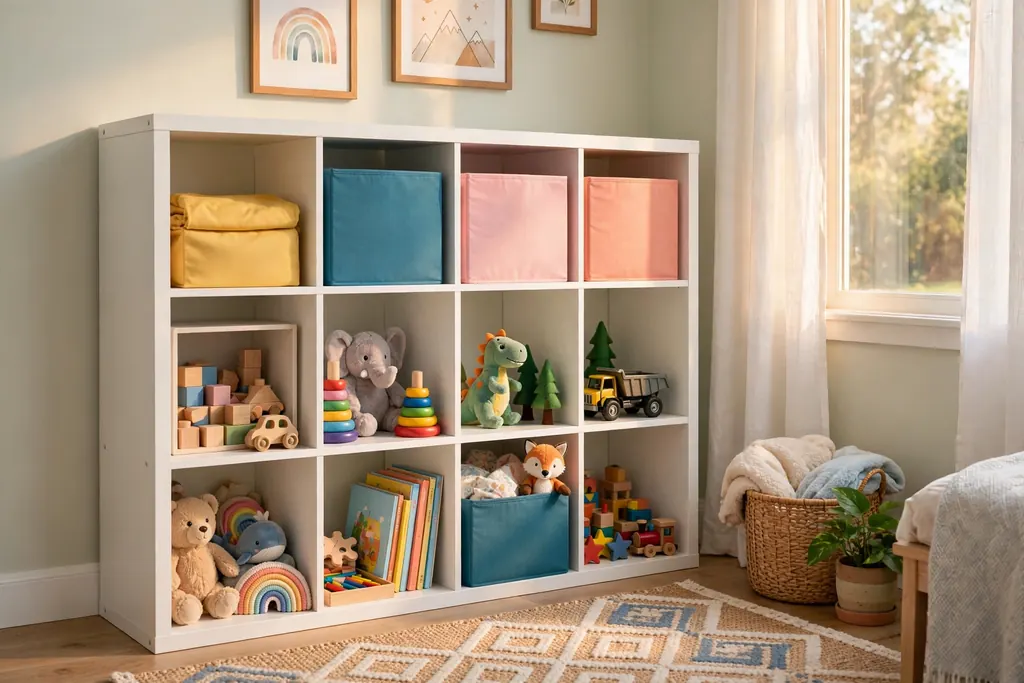
In a kids room, every piece of furniture has to justify the square footage it eats. The winners are pieces that store things and do a second job. A bed with drawers underneath holds out-of-season clothes and rotation stock. A cube organizer (the IKEA Kallax style) holds toys, books, and clothes in one footprint with simple fabric cubes and works horizontally so small kids can reach everything. A shallow-bin frame (the IKEA Trofast style) is the best toy system for ages 2 to 6: one category per bin, and bins slide out to the floor for play.
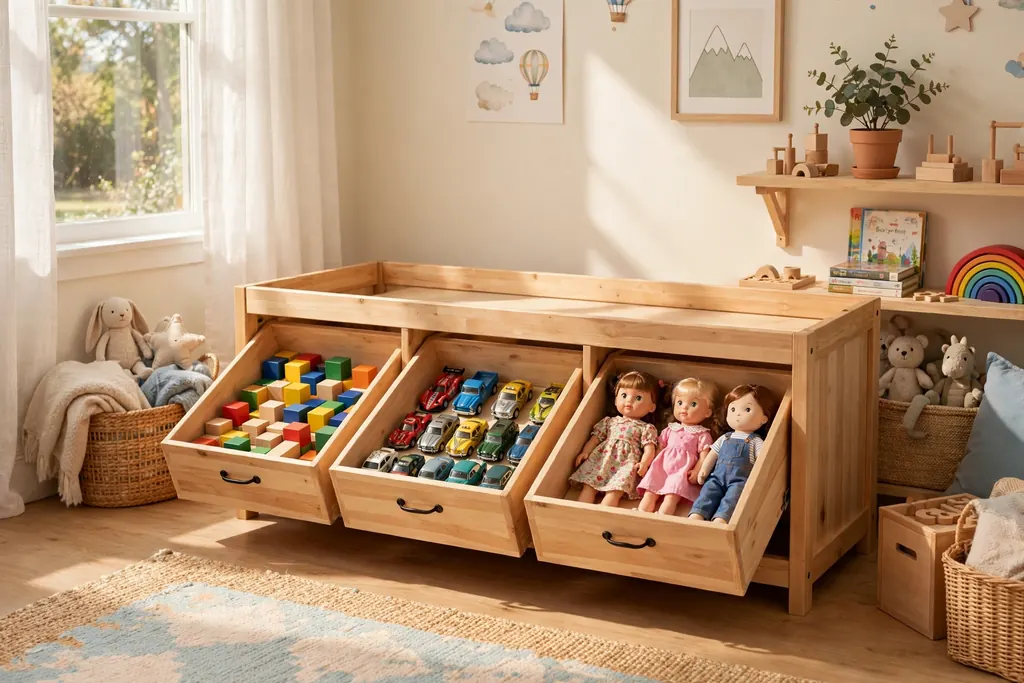
Here’s where I’d spend your money on kids room storage ideas: buy the cube organizer first. It’s the most flexible piece, it looks like grown-up furniture and survives the toddler years, and fabric bins are cheap to replace. Skip the cute themed furniture sets shaped like race cars or castles. They cost twice as much, store half as much, and the theme lasts 18 months while the bed lasts 8 years.
More important than any organizing tip: anchor every tall shelf and dresser to the wall. The U.S. Consumer Product Safety Commission lists furniture tip-over as a serious injury risk for young children, and a climbing toddler can pull one down. Anchor kits cost a few dollars and take 10 minutes.
How do I organize toys so kids can find them again?
Give every toy category exactly one home: shallow, open, and at your child’s eye level. Deep bins are where toys go to die. Kids can’t see the bottom, so they dump the whole bin on the floor to find one car. Shallow bins fix this because everything is visible at a glance. One bin for cars. One bin for blocks. One bin for dolls. That’s the core of these kids room storage ideas. When a category outgrows its bin, that’s your signal to declutter that category, not to buy a bigger bin. Sterilite 3-drawer rolling carts are another parent favorite for Lego: kids wheel the cart out to play, then roll it back.
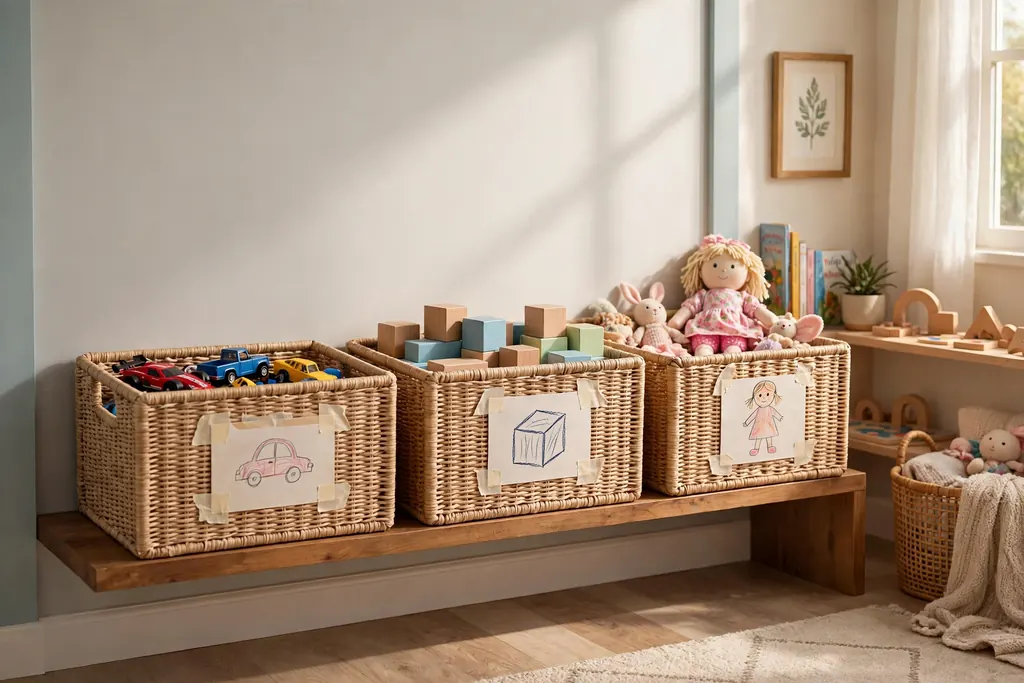
For pre-readers who can’t read yet, use picture labels. Tape a photo or a simple drawing of the category on the front of each bin: a car on the car bin, a block on the block bin. It takes 20 minutes
with a phone camera and a printer, and it’s the simplest of these kids room storage ideas: the difference between a system your 3-year-old maintains and one only you maintain. Let older kids
make their own word labels (tracing, stickers, drawings). Kids follow systems they helped build.
If your stairs hide an unused void, our under-stairs guide shows how to fit slide-out toy bins and a kids art station under the slope.
The age-by-age table below is my cheat sheet for which kids room storage ideas actually work at each stage. A toddler and a 10-year-old need completely different systems, and most guides pretend one setup fits all.
| Age | What works | What to skip |
|---|---|---|
| 1 to 2 | 3 to 4 open bins, big soft toys, board books on low shelf | Small-piece storage, lidded containers they cannot open |
| 3 to 5 | Picture labels, one-category bins, toy rotation, dress-up hooks | Deep toy chests, anything requiring reading |
| 6 to 8 | Word labels, Lego sorting by color or set, desk caddy | Babyish bins they will reject |
| 9 to 12 | Closet zones, under-bed drawers, display shelves for collections | Forced rotation, picture labels |
How do I store stuffed animals without them taking over?
Stuffed animals multiply faster than any other toy category, and they are the hardest to declutter because each one has a name and a backstory. Start with the one-basket rule, the simplest of these kids room storage ideas: your child picks their absolute favorites, and those live in one designated basket or on the bed. Everything beyond that gets stored, donated, or rotated.
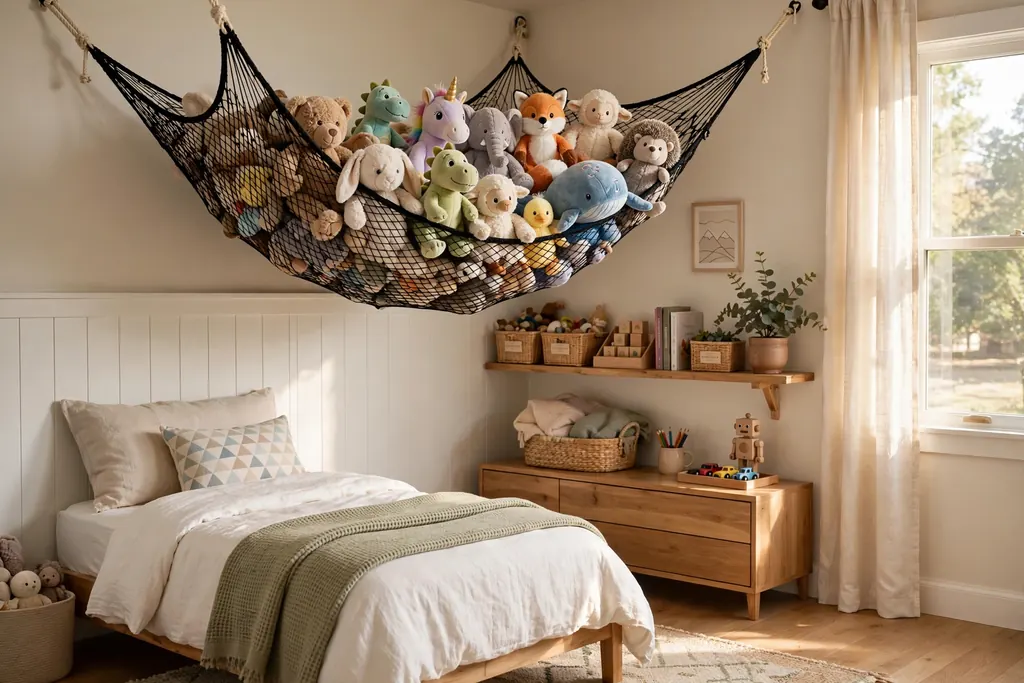
For the keepers, a corner hammock hung high on the wall is the classic fix because it uses dead vertical space and turns the collection into decor. A tall lidded hamper works for overflow and doubles as a laundry basket in a pinch. An over-the-door clear organizer with big pockets holds small plush toys where kids can see and grab them.
And here’s the admission: if the collection keeps growing past every container you own, the problem is incoming gifts, not storage. It’s completely fine to tell relatives “no more stuffed animals, please” and mean it. Most grandparents are relieved to get a clear wishlist. Ask for experience gifts, books, or contributions to a savings account instead, and watch the stuffed-animal avalanche slow to a trickle.
What is the best way to organize kids clothes in a small room?
Kids clothes are small, which means a standard dresser wastes most of its depth. File-fold shirts and pants upright in rows so every item is visible from above, and use simple drawer dividers or small boxes to keep the rows from collapsing. Rolling works too, but file folding lets a child see all their options without unfolding a stack. Label the drawers with pictures for young kids and words for older ones, the same system these kids room storage ideas use for toy bins.
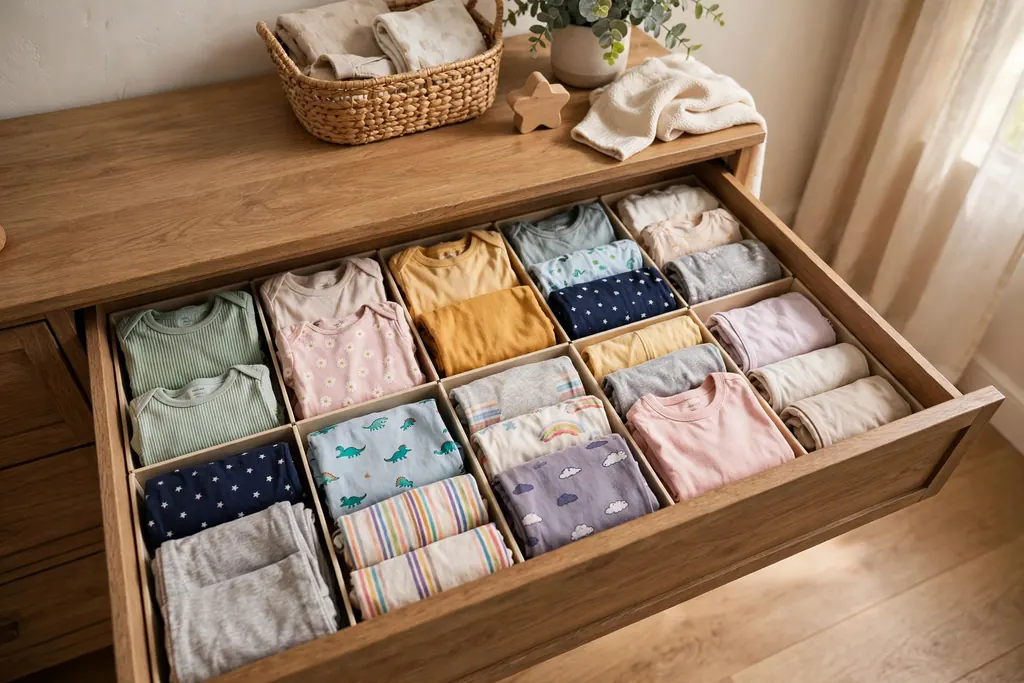
Now the move that frees the most floor space: put the dresser in the closet. A small dresser fits inside most reach-in closets, which hands the whole wall it used to occupy back to the room for play or a desk. Hang clothes on a double closet rod above it (one rod high, one rod low) to double the hanging space. Out-of-season clothes go in labeled under-bed bins, not in prime dresser real estate. Our guide to small closet organization ideas walks through the double-rod setup in detail, and the dresser organization guide covers file folding step by step.
This system isn’t for families who love a big walk-in closet aesthetic for kids. It’s practical, a little plain, and it works in rooms under 120 square feet, which is where most kids actually live.
How can I use the walls and doors for more storage?
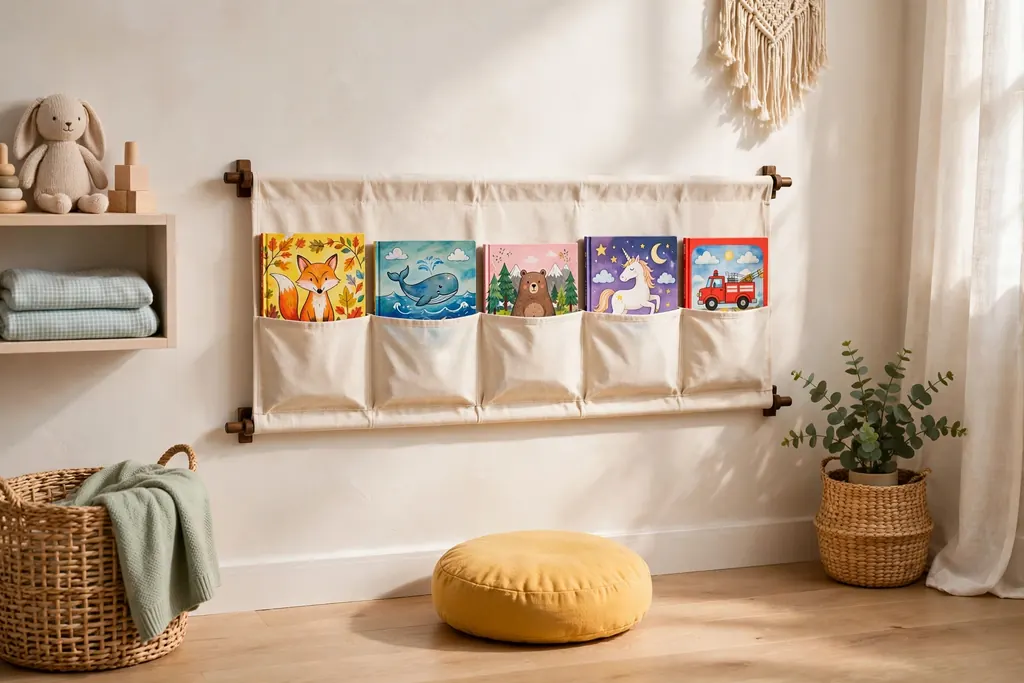
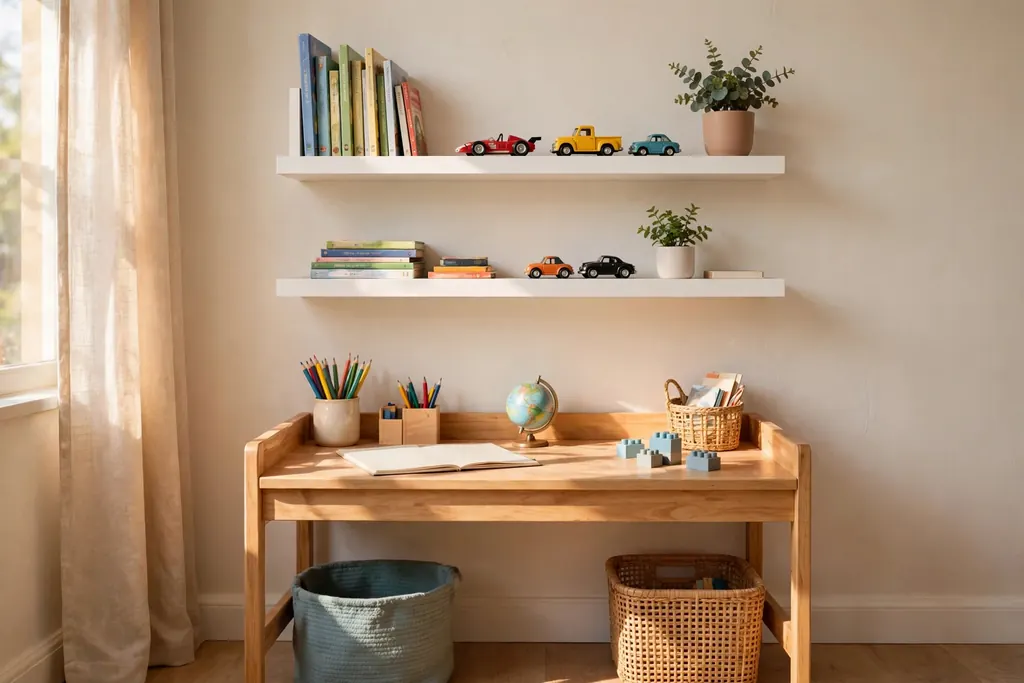
The cheapest kids room storage ideas use walls and doors, free square footage most kids rooms waste. Floating shelves above the desk or dresser hold books, trophies, and the special toys that are for display, not daily play. Keep daily-use toys at kid height and put the look-but-don’t-touch items up high. A pegboard on the wall (hung with Command strips or screws for renters) swallows the odd-shaped stuff that defeats bins: backpacks, dress-up capes, binoculars, headphones. Hooks at kid height by the door catch the backpack and jacket that would otherwise live on the floor.
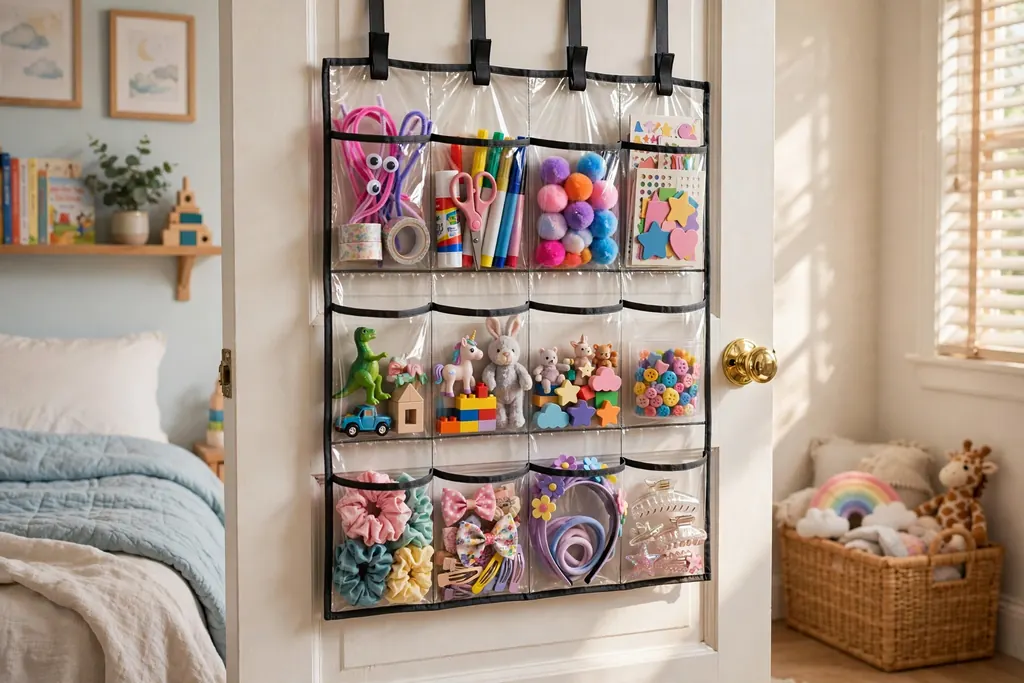
The back of the bedroom door is prime real estate. A clear over-the-door pocket organizer holds craft supplies, small toys, hair accessories, or action figures, all visible and grabbable. It costs $12 to $25, installs in seconds with no tools, and renters can take it down without a trace.
Inside the closet door, the same organizer corrals shoes or art supplies. Just keep the door organizer light. A door weighed down with heavy toys won’t close right and will annoy everyone within a week. One more wall trick: a picture ledge shelf displays Lego builds and art projects. Kids get a mini gallery for their creations, which keeps finished projects off the floor and gives them a reason to feel proud of a tidy room.
How do I set up zones in a kids room?
Divide the room into small zones by activity: a sleep zone (bed), a play zone (open floor with the toy shelf), an art zone (small table with supplies), and a reading zone (beanbag or cushion with books). Each zone gets its own storage, and toys stay in their zone. Of all the kids room storage ideas in this guide, zoning is the one professional organizers recommend most because it gives every item a logical address. When cleanup time comes, “take it back to its zone” is a clearer instruction than “clean your room.”
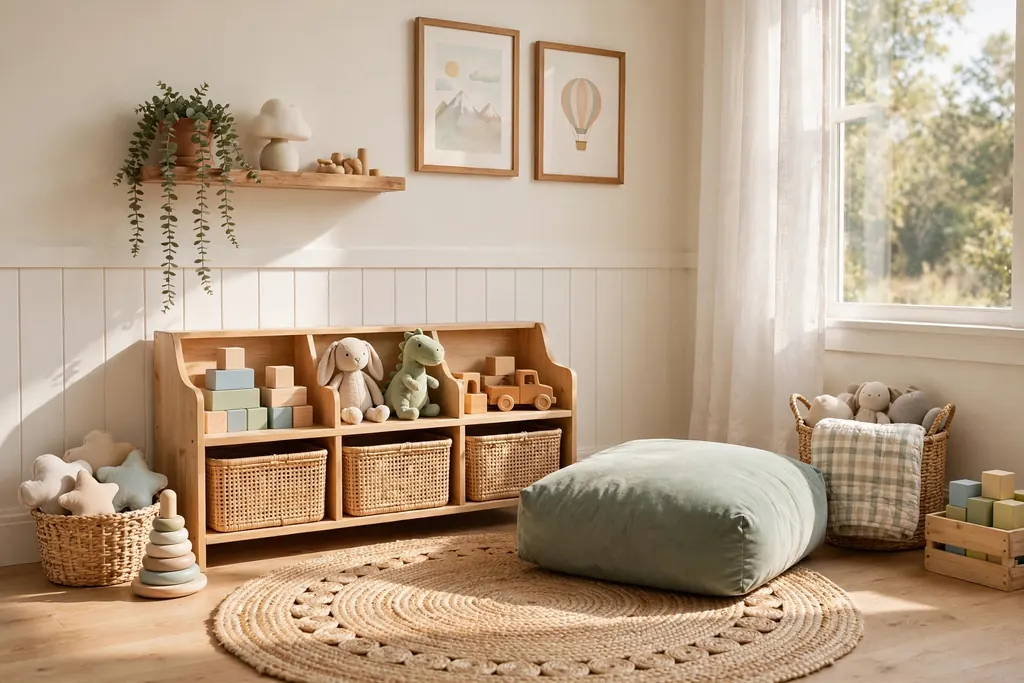
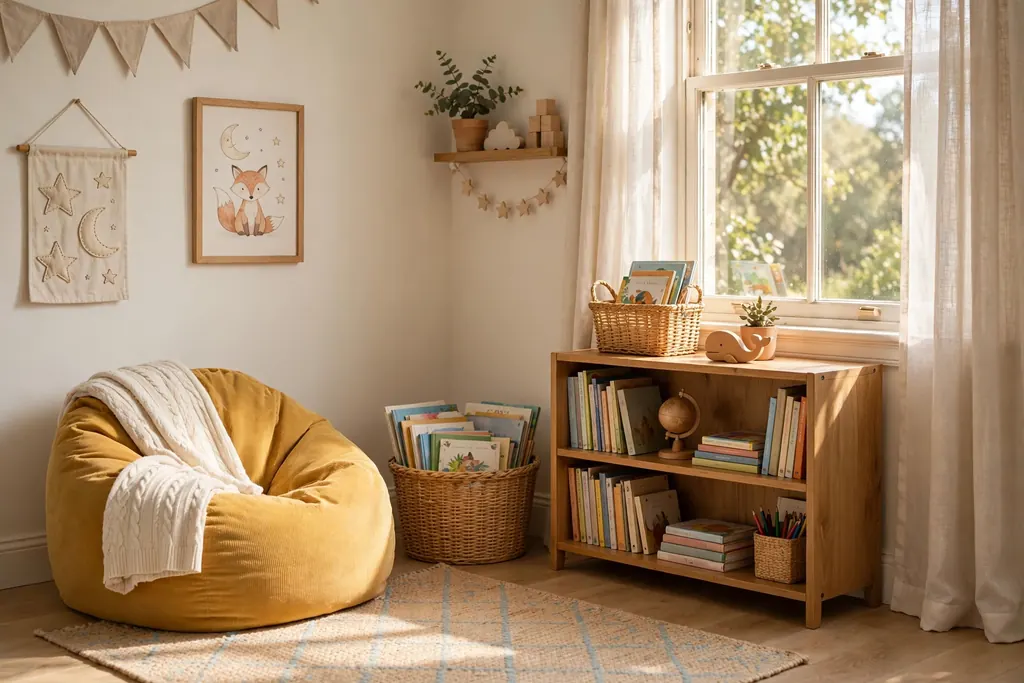
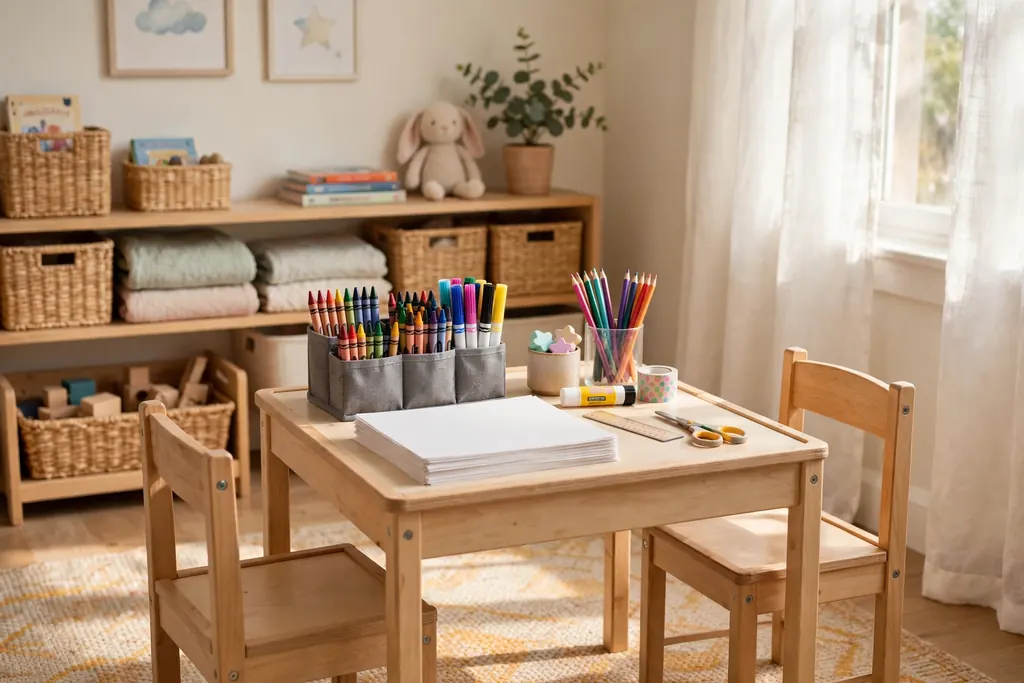
You don’t need walls or dividers. A round rug defines the play zone. A small bookshelf turned sideways marks the reading corner. The art zone can be as simple as a rolling cart parked next to a small table. In a tiny room, two zones (sleep and everything-else) are plenty. The point is not the number of zones. The point is that the Lego has a zone and the crayons have a zone, so nothing drifts.
What about a shared kids bedroom?
Shared rooms need two of everything organizational: two color-coded bin sets, two laundry hampers, two zones. Assign each child a color and buy their bins, labels, and hampers in that color. It ends 90 percent of “that’s mine” fights because ownership is visible at a glance. Split the closet down the middle with a tension rod or a curtain, and give each child their own side with their own rod height.
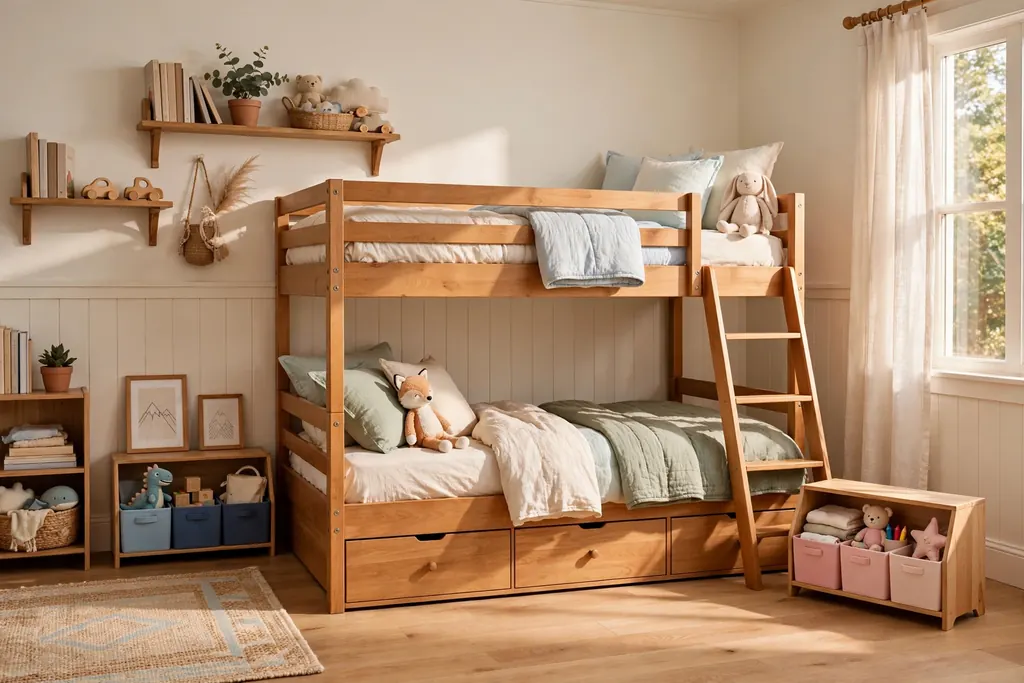
Bunk beds are the obvious space saver, and the space underneath a loft bed fits a desk or a dresser. If the room is truly tiny, a trundle bed beats a bunk for younger kids who aren’t ready to climb. Under-bed drawers on a regular bunk hold each child’s out-of-season clothes separately. Keep one shared category (board games, art supplies) and let everything else be individually owned and stored.
A small curtain or a bookshelf turned sideways can split one room into two semi-private halves for under $30, which matters more than you’d think once kids hit school age and start wanting their own corner. And set the rule early: shared floor space means shared cleanup. The daily reset (next section) matters twice as much with two kids generating the mess.
How do I get my kids to actually put things back?
This is the question parents ask most, and the honest answer is that no container teaches a child to clean up. Kids room storage ideas only work as systems. First, shrink the job: a child facing 200 scattered toys freezes, but a child asked to “put all the cars in the car bin” can start. Give one specific instruction at a time. Second, make cleanup a timed game, not a lecture. Set a 10-minute timer before dinner and race it. Third, run a daily reset: every evening, everything goes back to its zone. Ten minutes a night beats a three-hour Saturday disaster cleanup, and kids accept a short routine far more easily than a marathon.
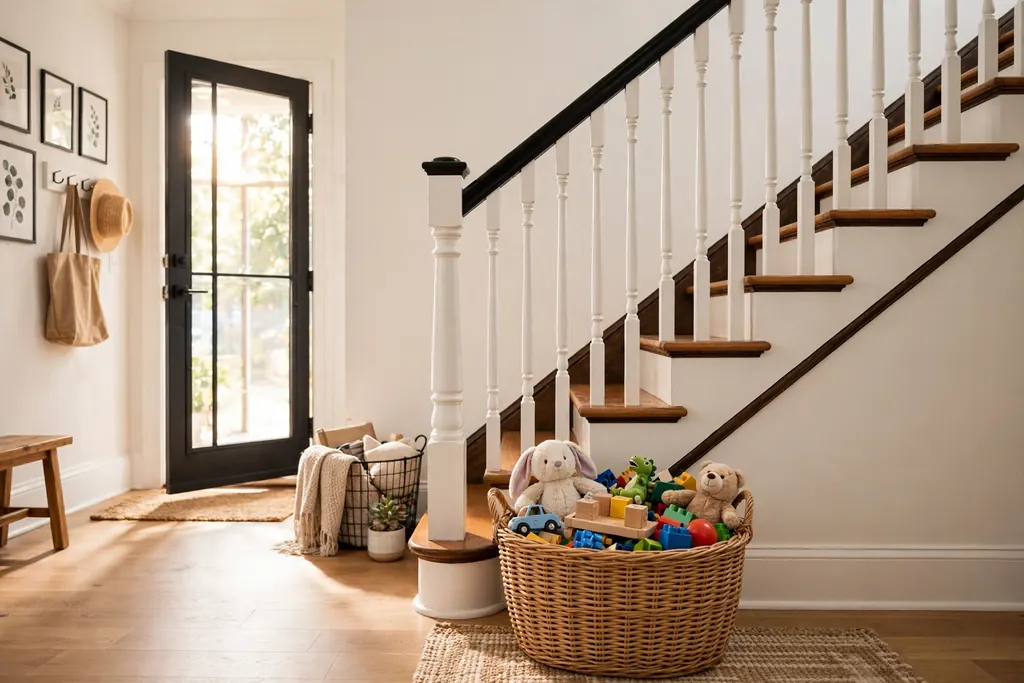
The one-in-one-out rule keeps these kids room storage ideas from slowly drowning in new toys. When a new toy comes in, an old one leaves (donate, hand down, or store). Birthdays and holidays are the danger zones, so do a pre-birthday purge walk-through with your child a week before. It also helps to keep a catch-all basket at the bottom of the stairs or in the hallway. Stray toys land in this drop zone during the day, and one trip carries them all back to their zones at reset time. Parents call this the “toy jail” basket, and it works.
Kids room storage ideas for organizing on a budget
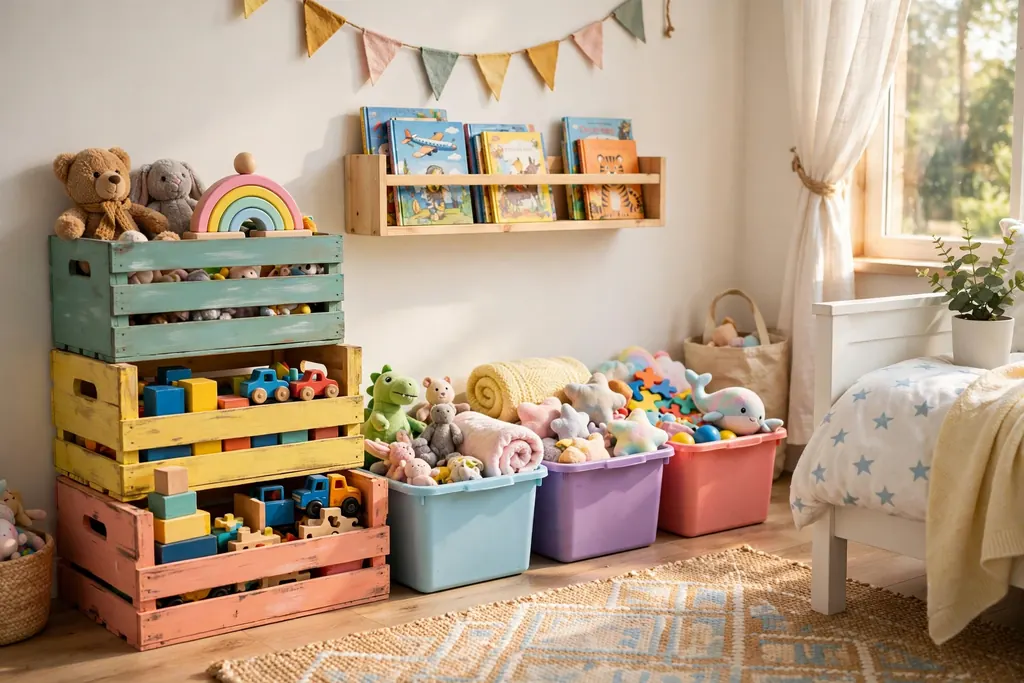
You don’t need to spend much. The most effective kids room storage ideas in this guide cost under $75 total. Start with what you own: shoeboxes become drawer dividers, tote bags become laundry hampers, and a tension rod plus a curtain splits a shared closet for a few dollars. Thrift stores are full of wooden crates, baskets, and small shelves that paint up beautifully. Dollar stores carry the small bins, labels, and over-door hooks that make the whole system work.
| Budget | What to buy | Covers |
|---|---|---|
| $0 to $25 | Picture labels (DIY), over-door organizer, thrifted baskets | Labeling + small-toy control |
| $25 to $75 | 3-tier rolling cart, 4 to 6 fabric bins, under-bed bins | One full toy system |
| $75 to $200 | Cube organizer shelf, shallow-bin frame, book slings | Whole-room overhaul |
Spend in this order: labels first, bins second, furniture last. Labels cost almost nothing and change behavior immediately, which is why they top these kids room storage ideas. Bins without labels become mystery boxes within a month. Furniture without a decluttered inventory just gives clutter a nicer place to live. If money is truly tight, do the declutter sort and the picture labels this weekend for under $10 and you’ll already be ahead of most households. Check Facebook Marketplace and local buy-nothing groups before buying anything new. Barely-used Trofast frames, cube shelves, and bins show up there constantly because other families are running the same upgrade cycle you’re starting.
What should I do when the room gets messy again?
It will get messy again. That’s not failure, that’s a kids room doing its job. What matters is the recovery system behind your kids room storage ideas. Keep the 10-minute daily reset non-negotiable, like brushing teeth. Once a month, do a 20-minute purge walk-through with your child: broken things out, outgrown things to donate, rotation bins swapped. Before birthdays and holidays, do the bigger sort so new gifts have somewhere to land.
Here is my closing judgment. The parents with the tidiest kids rooms aren’t the ones who bought the best storage. They are the ones who own the least stuff, rotate what they keep, and reset for 10 minutes every night. This system isn’t for families chasing a magazine-perfect room. It’s for families who want the floor visible by bedtime. Start with the declutter pile this weekend. You’ll be surprised how fast the rest falls into place once the sheer volume drops. Everything else in this guide gets easier the moment the pile shrinks. And if you want the closet side of this system, our under bed storage ideas guide pairs perfectly with what you just built here.
How often should I declutter my child’s toys?
Do a full declutter sort every 3 to 4 months, plus a quick 20-minute purge walk-through once a month. Always declutter a week before birthdays and holidays so new gifts have somewhere to land. If the bins start overflowing between sorts, that is your signal the schedule is slipping, not that you need bigger bins.
Do I need to buy new furniture to organize a kids room?
No. Start with the declutter sort and picture labels, which cost under $10 total. Only buy furniture after you know exactly what survived the sort. Most families find they need far less storage than they expected once the excess is gone.
What containers work best for toy storage?
Shallow, open bins at your child’s eye level, with one toy category per bin. Deep bins become black holes that kids dump on the floor to search. For pre-readers, add picture labels so they can put things back without reading.
How do I store big toys like ride-ons and play kitchens?
Give big toys one designated parking spot, such as a room corner, under the stairs, or the garage. When the spot is full, something has to leave before anything new comes in. This one rule prevents big toys from colonizing the whole house.
How can I maximize space in a small kids room without spending a lot?
Use the walls and doors first: floating shelves, a pegboard, and a $12 to $25 over-door organizer add storage without touching floor space. Then use under-bed bins and move the dresser into the closet. These four moves are free or nearly free.
Where should I put the dresser to free up floor space?
Inside the closet. A small dresser fits in most reach-in closets, and the wall it used to occupy becomes play or desk space. Add a double closet rod above it to double hanging space for clothes.
How do I organize a kids room with too many toys?
Declutter first with the four-pile sort (keep, donate, trash, relocate), then give every surviving category one shallow bin with a picture label, and rotate 70 percent of toys into closet storage. Research shows toddlers play twice as long with 4 toys available than with 16 (Dauch et al., 2018, Infant Behavior and Development).
What is the best toy storage for a small bedroom?
A cube organizer with fabric bins or a shallow-bin frame (IKEA Kallax or Trofast style), paired with under-bed bins for rotation stock and an over-door organizer for small items. This combination covers toys, clothes, and supplies in one small footprint.
How do I get my kids to independently pick up their toys?
Give one specific instruction at a time (“put all the cars in the car bin”) instead of “clean your room,” run a 10-minute timed reset each evening, and use picture labels so young kids know where everything goes. Small, specific jobs beat big vague ones every time.
Is toy rotation really necessary?
It is not mandatory, but it is the highest-impact move for ages 2 to 8. Keeping 25 to 30 percent of toys out and swapping groups every 2 to 4 weeks makes old toys feel new, cuts cleanup time dramatically, and the research backs it: fewer available toys means longer, more imaginative play.
