
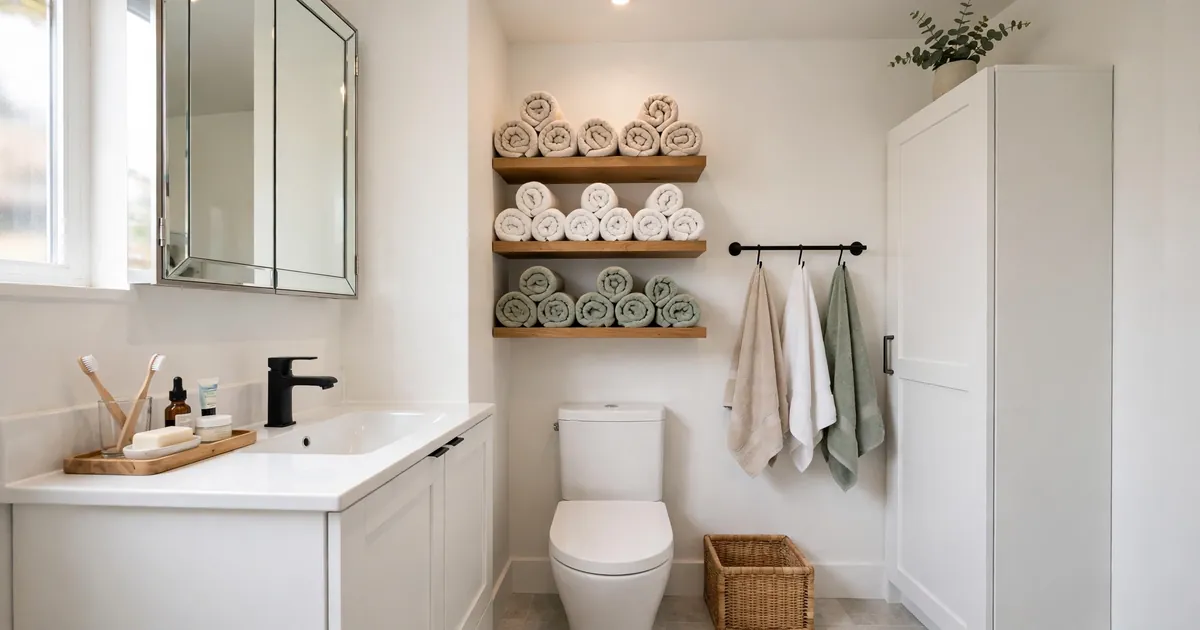

Most bathroom storage fails before you buy a single organizer. It fails because the stuff lives in the wrong place: daily creams in a high cabinet, towels a room away, backup shampoo crowding the shower ledge. When you learn how to design bathroom storage around what you actually do in your morning and evening routine, a small room starts to work. Put daily items within one step of where you use them, weekly items on a shelf you can reach without a stool, and backups behind a closed door. That one rule fixes more bathrooms than any new cabinet will.
TL;DR: Map your bathroom into zones first, then buy storage to fit each zone. Daily items stay within one step of the sink or shower, items in the weekly zone sit at eye to hand height, and backups live in a closed cabinet or closet. Measure the toilet clearances, the vanity width, and the door swing before you spend anything, and start with one zone, not a whole room makeover.
| Zone | What lives there | Storage that fits | Height rule |
|---|---|---|---|
| Sink zone | Toothbrush, face wash, daily skincare | Tray, drawer divider, mirror cabinet | Within one step of the sink |
| Shower zone | Shampoo, conditioner, razor | Niche, shelf, hanging caddy | Shoulder height, inside the spray |
| Toilet zone | Toilet paper, backups, towels | Over toilet cabinet, shelf, basket | 8 to 12 inches above the tank |
| Wall zone | Towels, hair tools, extras | Shelves, hooks, tall cabinet | Hooks at 60 to 66 inches |
| Backup zone | Refills, cleaning supplies, extras | Closed cabinet, closet shelf | Out of the daily path |
Where do you start when your bathroom storage feels wrong?
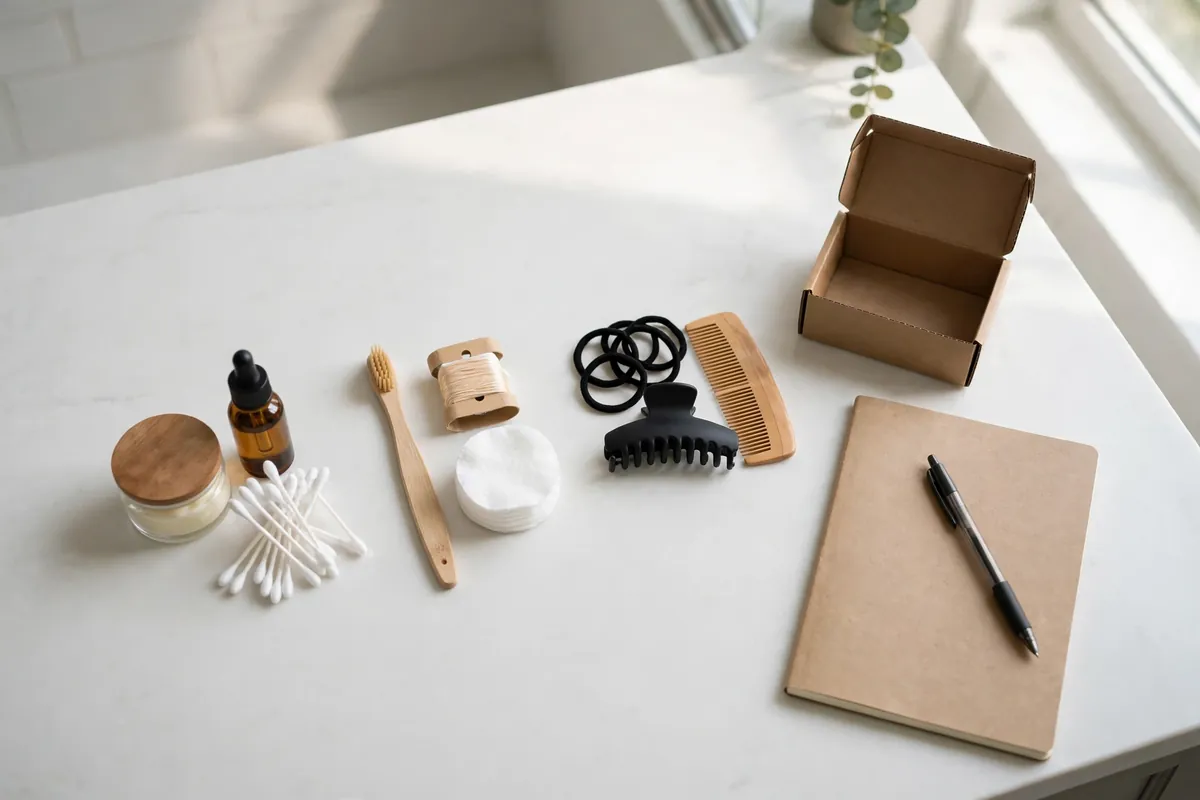
Start with a 20 minute audit, not a shopping trip. Take everything out of one area, the vanity drawer or the top of the toilet tank, and sort it into three piles: used daily, used weekly, and not used in the last month. Most people find the daily pile is small and the not used pile is large. That gap is why the room feels crowded. If a product has sat untouched for a month, move it to a backup box outside the bathroom or throw it out if it is expired.
I would not buy storage until this audit is done, because new bins just hide the same clutter in prettier boxes. Count the daily items too. A bathroom with 8 daily items needs a tray and a drawer divider, not a tall cabinet. Write the count down, because it sets the size of every storage choice that follows. If you are unsure about an item, put it in a small box outside the bathroom for two weeks instead of deciding on the spot.
If you never open the box, the item was not a daily item at all, and you can let it go without regret. That two week test beats a second guessing session, and it keeps the audit honest.
How do you design bathroom storage in zones that match your routine?
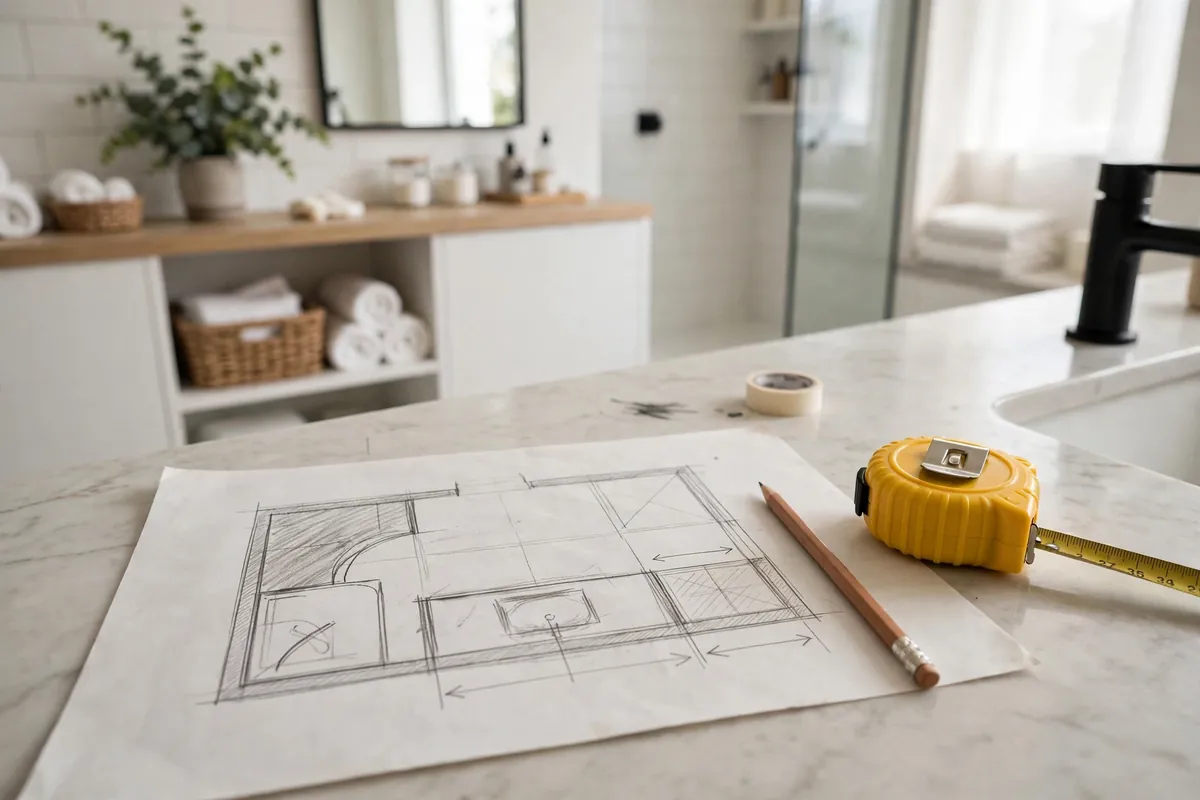
Draw the room on one sheet of paper and mark five zones: sink, shower, toilet, walls, and backup. The sink zone covers the counter and the cabinet or drawers right under it. The shower zone covers the niche, the ledge, and the wall inside the spray. The toilet zone covers the wall above the tank and the floor on either side. The wall zone covers every bare wall and the back of the door. The backup zone is a closed cabinet, a hall closet, or one shelf you do not open daily.
Assign each item from your audit to exactly one zone, by where you use it, not by where it fits today. This bathroom storage layout, drawn on paper before you shop, is what stops impulse buys from piling up in the wrong spot. This map is the whole design. Without it, people buy a pretty basket and then wonder why the counter is still covered. Keep the map on the mirror for the first week, and move anything that keeps landing in the wrong zone.
What should live within one step of the sink?
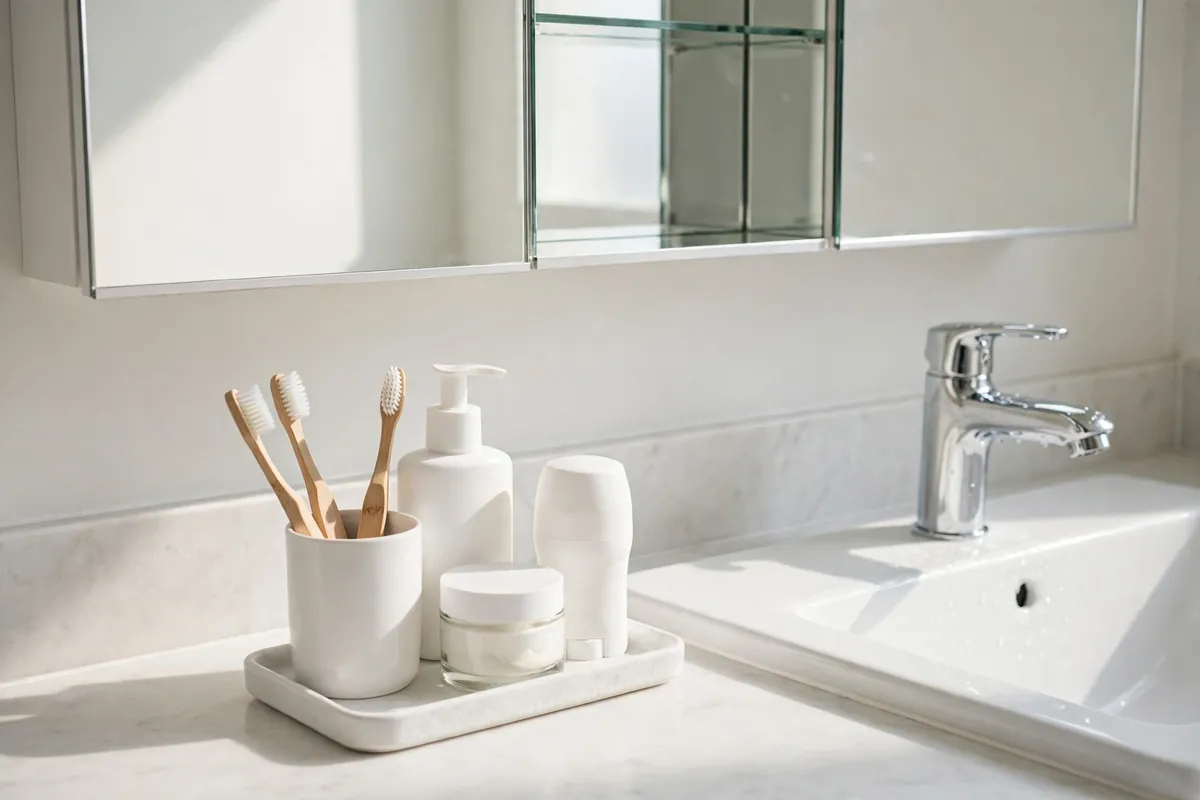
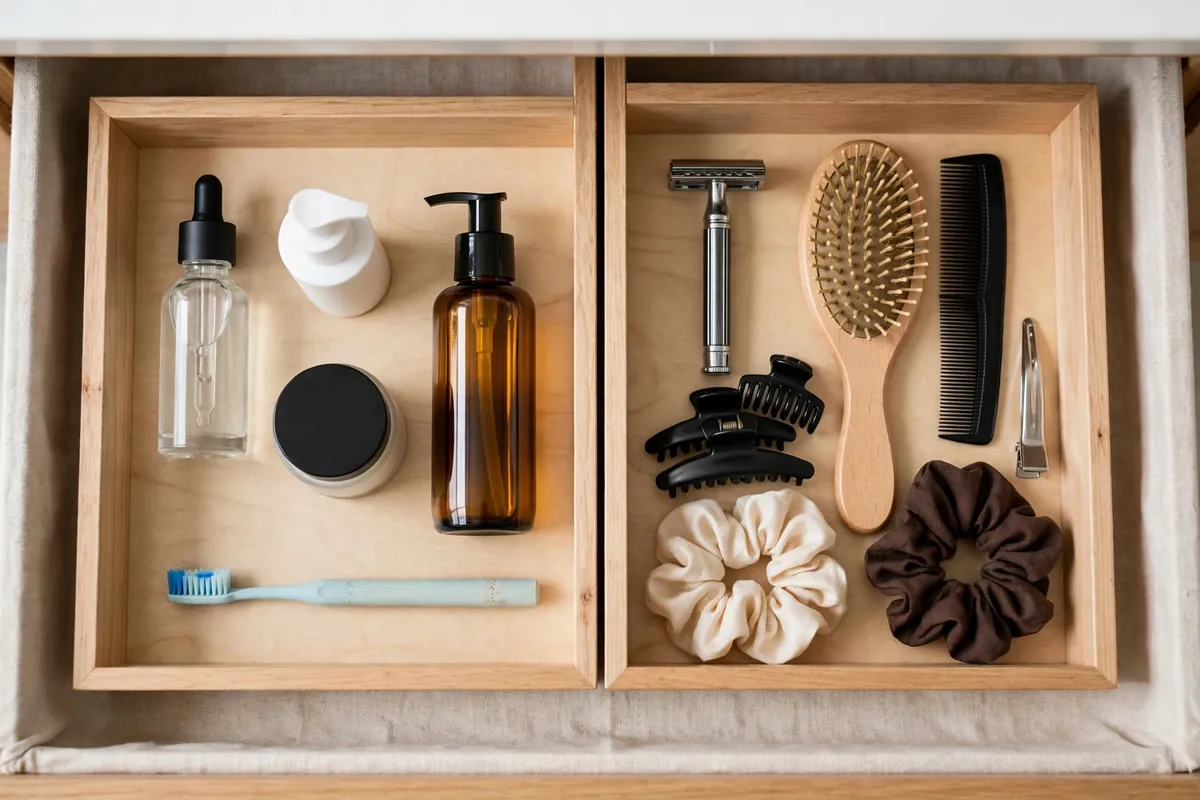
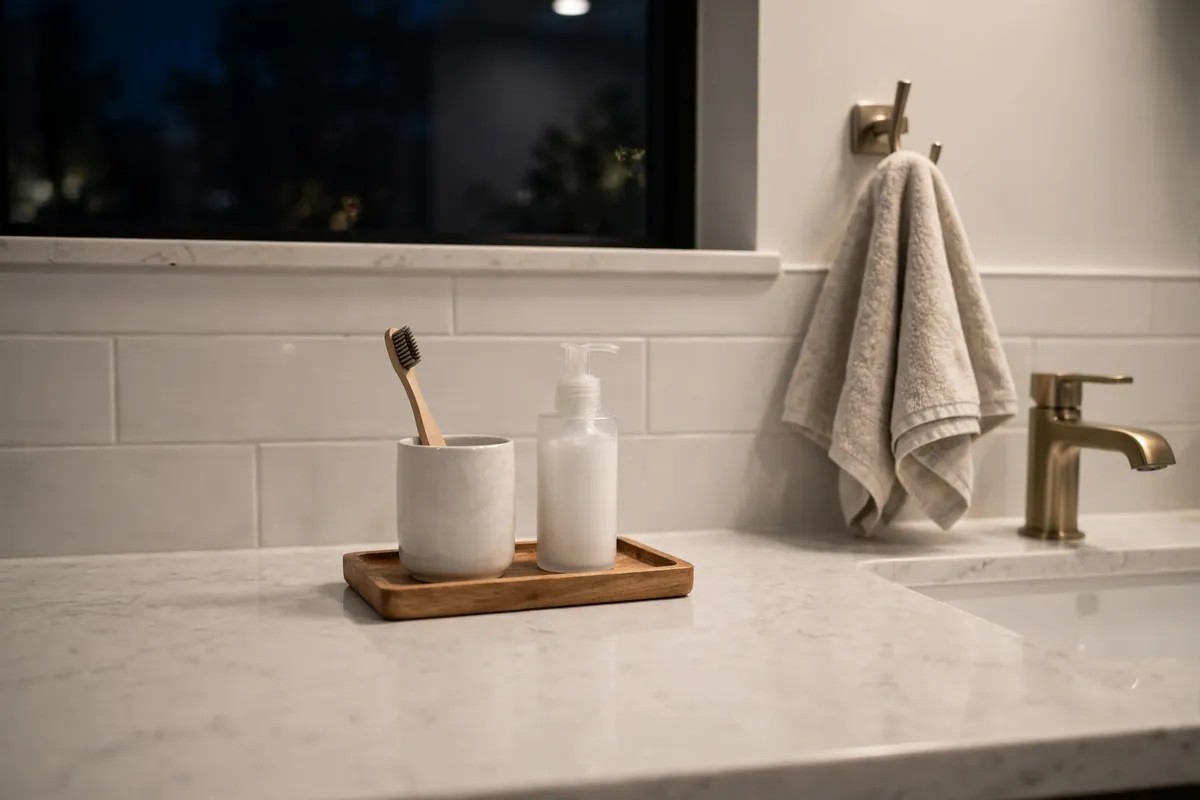
Only the items you touch every morning and evening belong within one step of the sink: toothbrush and toothpaste, face wash, moisturizer, deodorant, and the one or two hair products you reach for daily. Everything else is a weekly or backup item, even if you like seeing it out. A small tray holds the daily set and stops bottles from sliding across the counter, and a drawer divider does the same job inside a vanity.
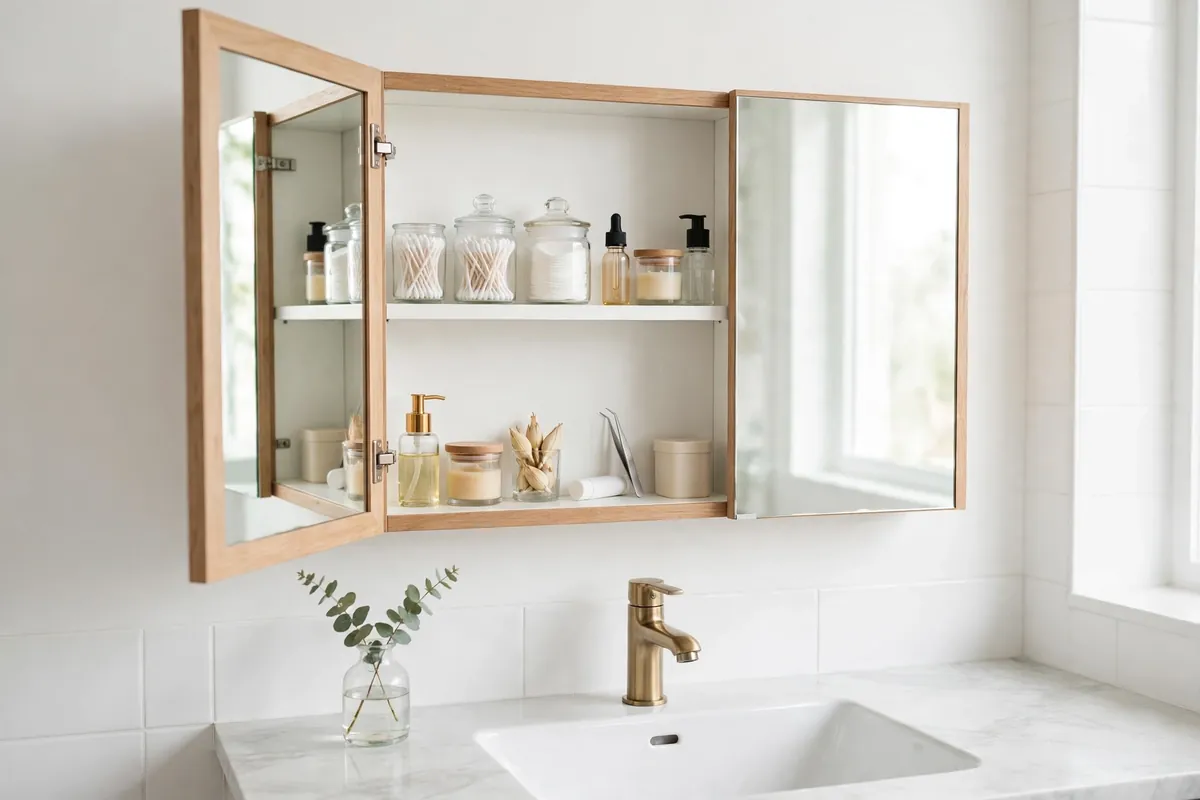
If you have no drawer, a medicine cabinet takes the same items off the counter and keeps them at eye height. This is where the bathroom toiletries counter storage guide helps, because it sorts the same daily set by how often each item is used. I would not put backup bottles in the sink zone, even when the tray has room. Empty space there is not wasted. It is what keeps the morning routine fast, because you grab without hunting through spares.
Pick a tray you can wipe in ten seconds, because toothpaste and water spots land on it daily, and a fabric liner will look tired within a month. Keep medicines out of the sink zone if you can. Steam and heat from the shower sit right there, and a bedroom drawer or a high cabinet keeps them in better shape.
How do you design storage for the shower without a remodel?
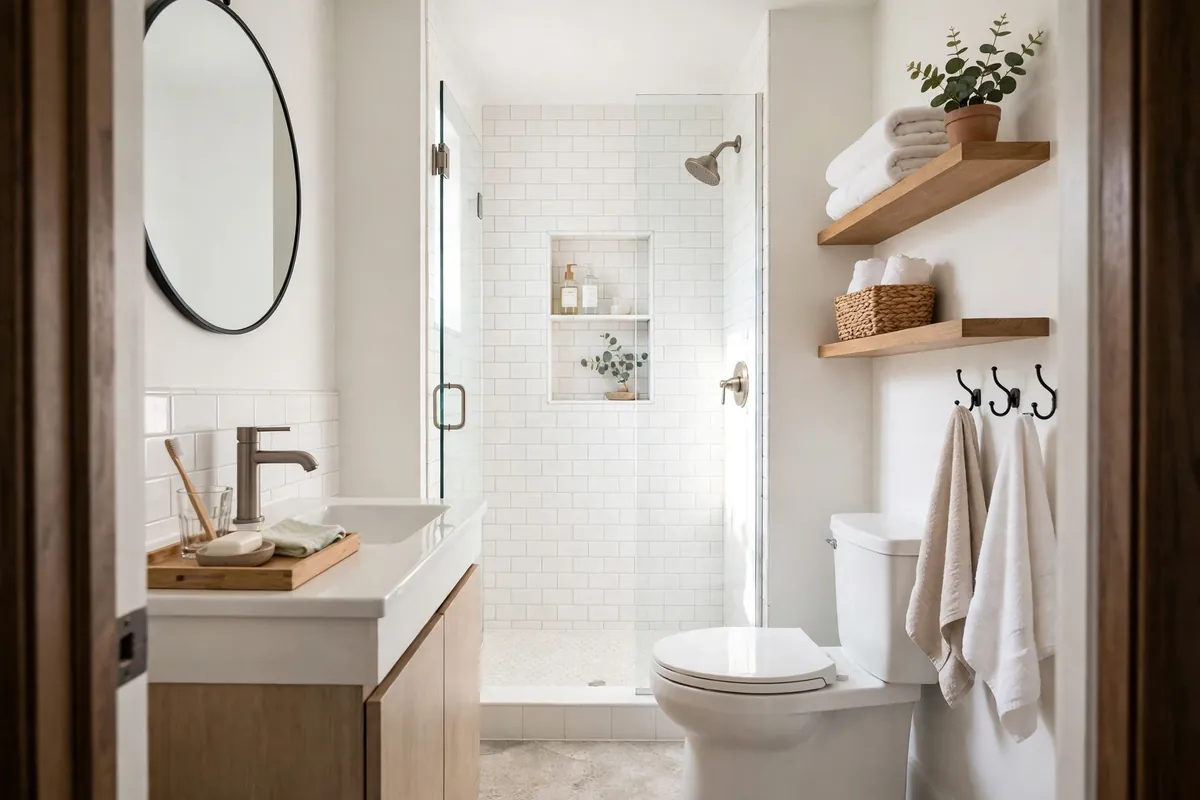
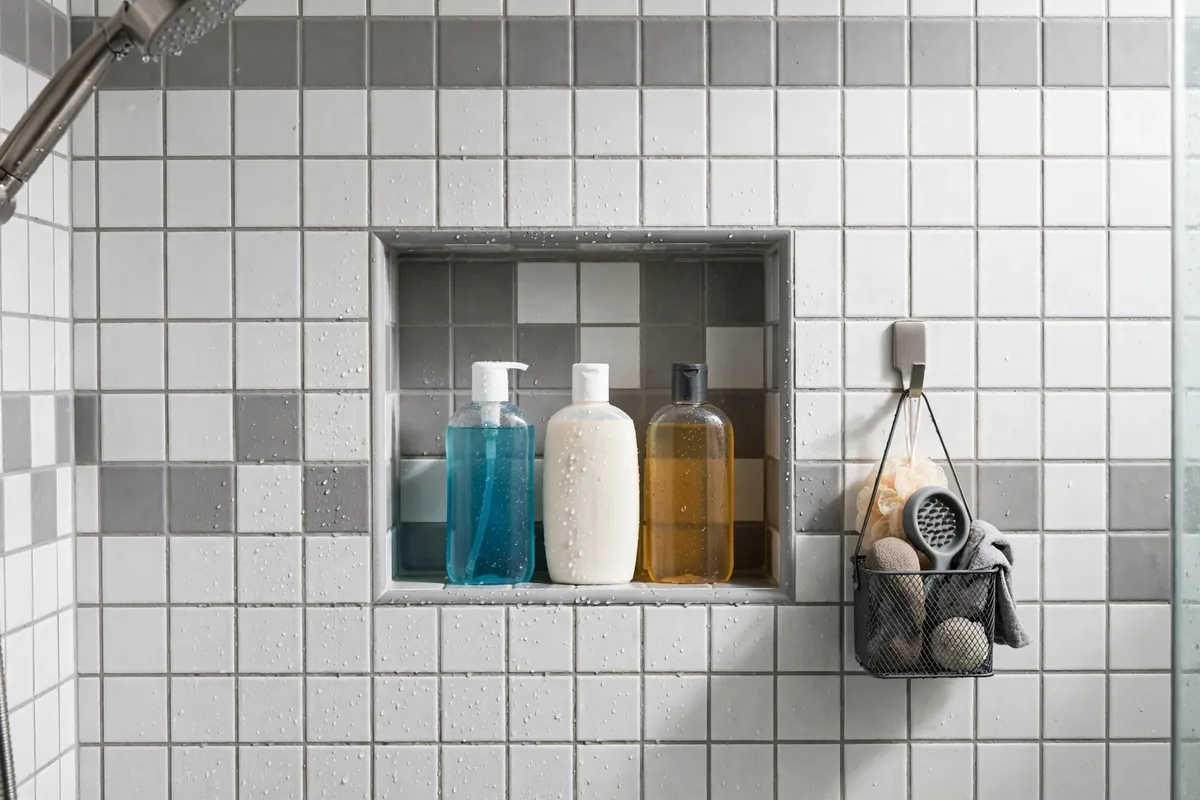
Shower storage works when it matches the wall and the spray, not when it looks good in a photo. A tiled shower niche is the best option in a remodel, but most renters and owners who skip the remodel do fine with a shelf or caddy that fits their wall type. Smooth tile takes suction and adhesive shelves well, textured tile kills suction fast, and a tub and shower combo needs a pole or hanging caddy that clears the curtain.
Keep only the products you use in the shower on the shelf: shampoo, conditioner, body wash, and a razor. Store treatments, masks, and backups outside the spray, because steam and standing water shorten their life and clutter the shelf. Hang the shelf at shoulder height so you do not bend with wet hands, and leave one hook free for a washcloth or loofah. If a bottle has not moved in two weeks, it does not live in the shower.
Run the fan during the shower and for a while after, because the EPA advises keeping indoor humidity below 60 percent, ideally between 30 and 50 percent, and damp shelves are what turn storage musty.
What belongs above and around the toilet?
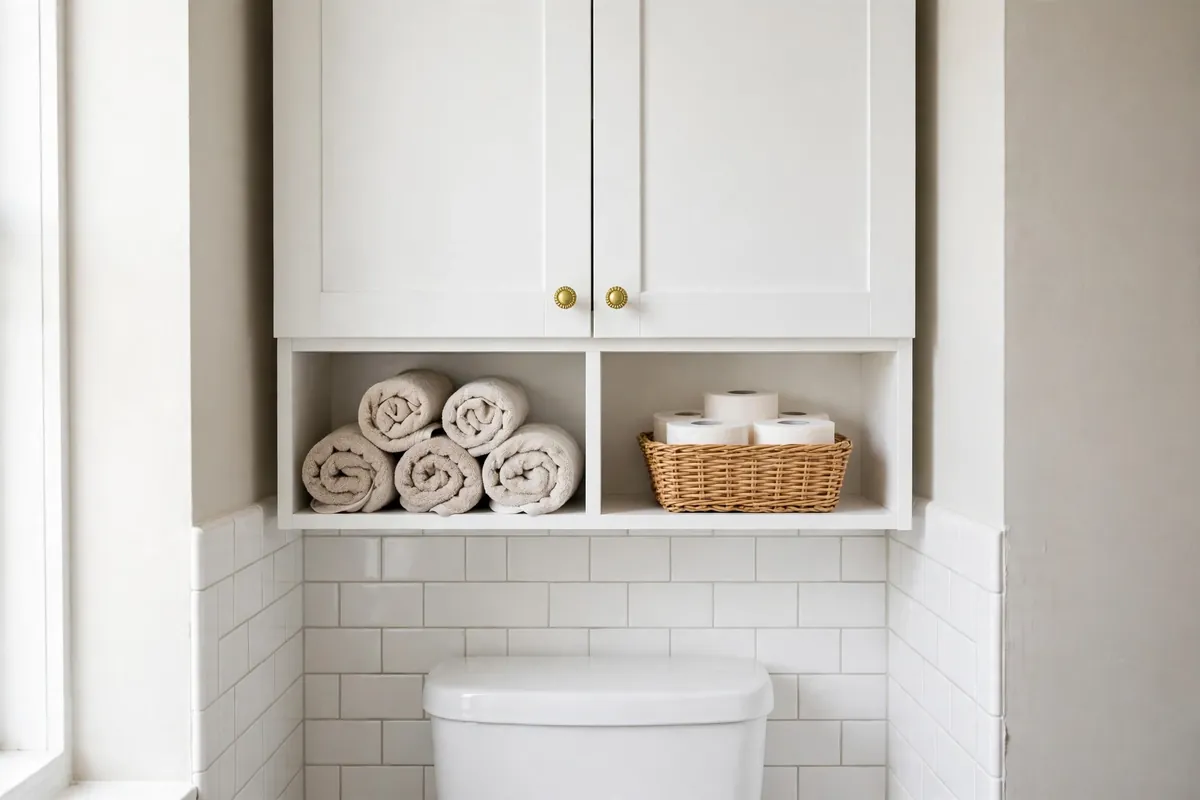
The wall above the toilet is the most useful dead space in a small bathroom, because it uses no floor at all. Toilet paper, a few rolled towels, and backup toiletries belong here, in a cabinet with doors if you want the room to look calm, or on open shelves if you reach for towels daily. Leave 8 to 12 inches between the top of the tank and the bottom of the cabinet or shelf, so the lid opens fully and you can clean behind it.
For small bathroom storage design, the toilet wall is often the first zone to fix, because it adds storage without touching the door swing clearance or the walkway. Planner 5D puts a standard full bath at about 5 feet by 8 feet, roughly 40 square feet, and in a room that size the toilet wall may be the only wall with free height.
The Planner 5D bathroom size guide notes the code clearances that shape the whole layout: at least 15 inches from the center of the toilet to a side wall or fixture, and at least 21 inches of clear space in front of the toilet. Measure both before you pick a unit, because a cabinet that blocks the side clearance makes the toilet harder to use, not the room tidier.
How do you use the wall space you keep ignoring?
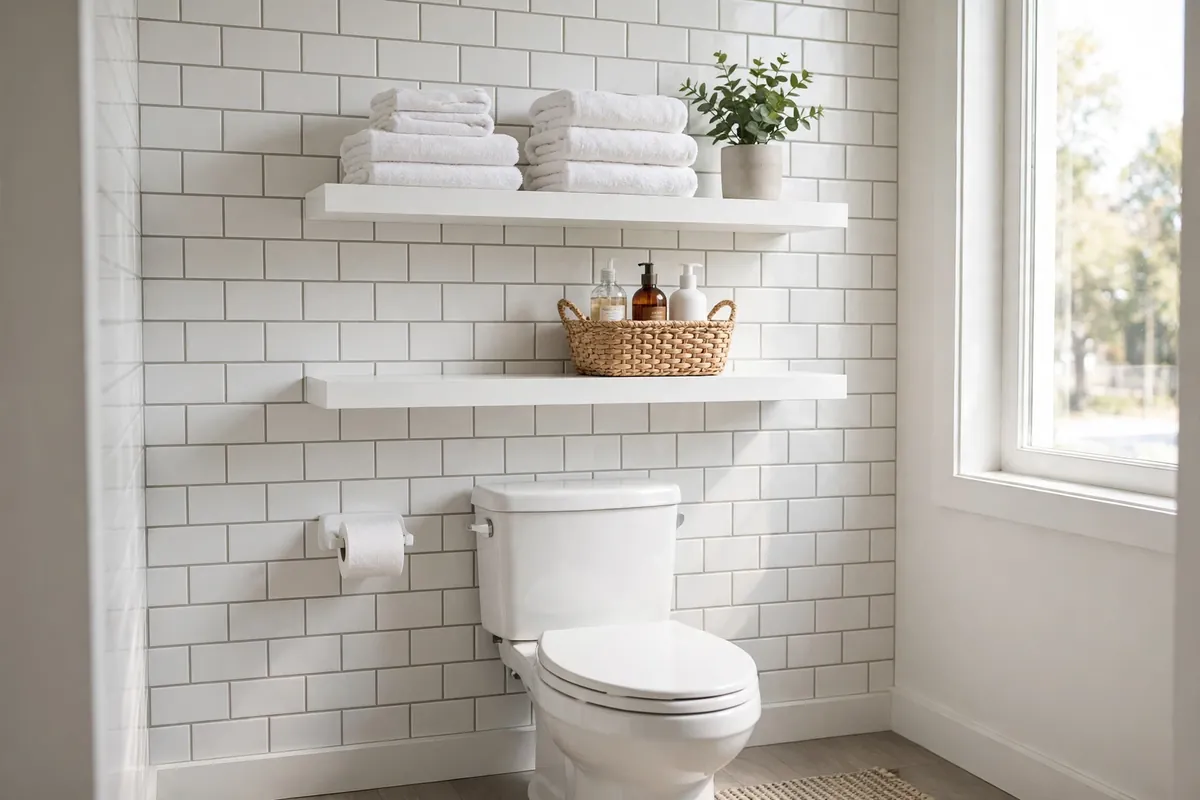
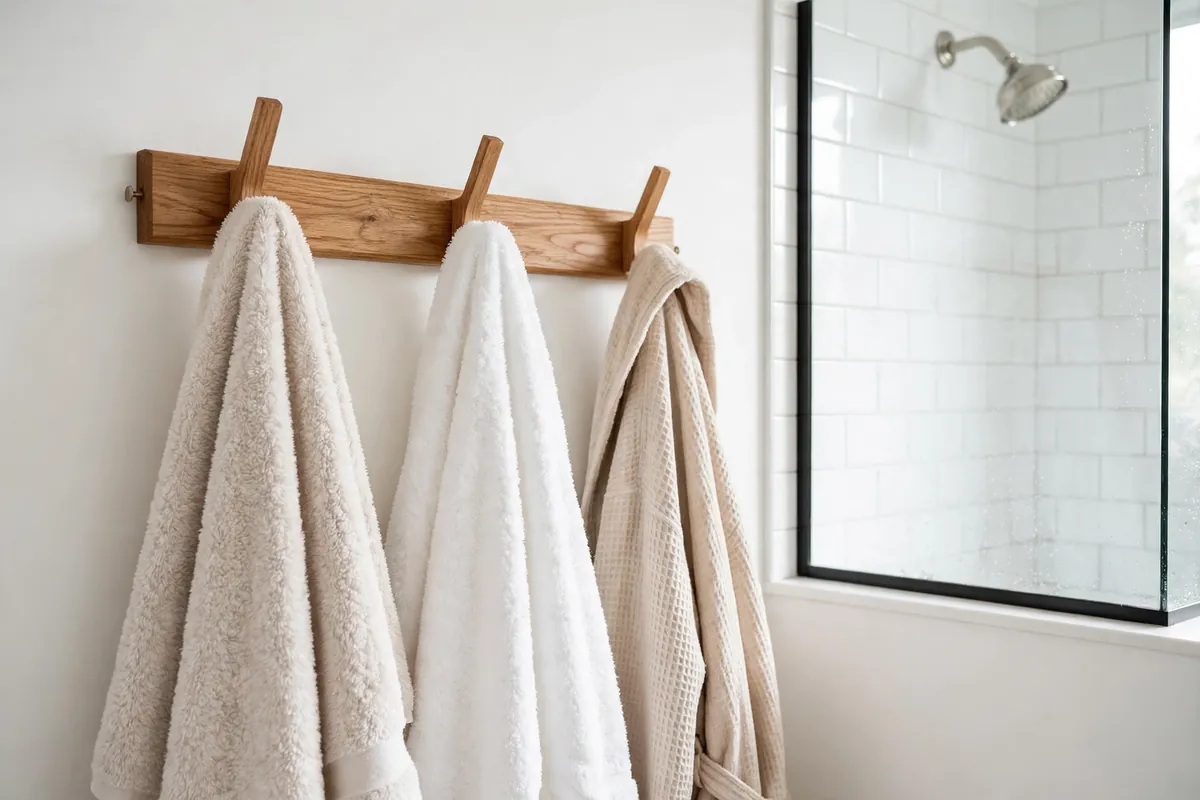
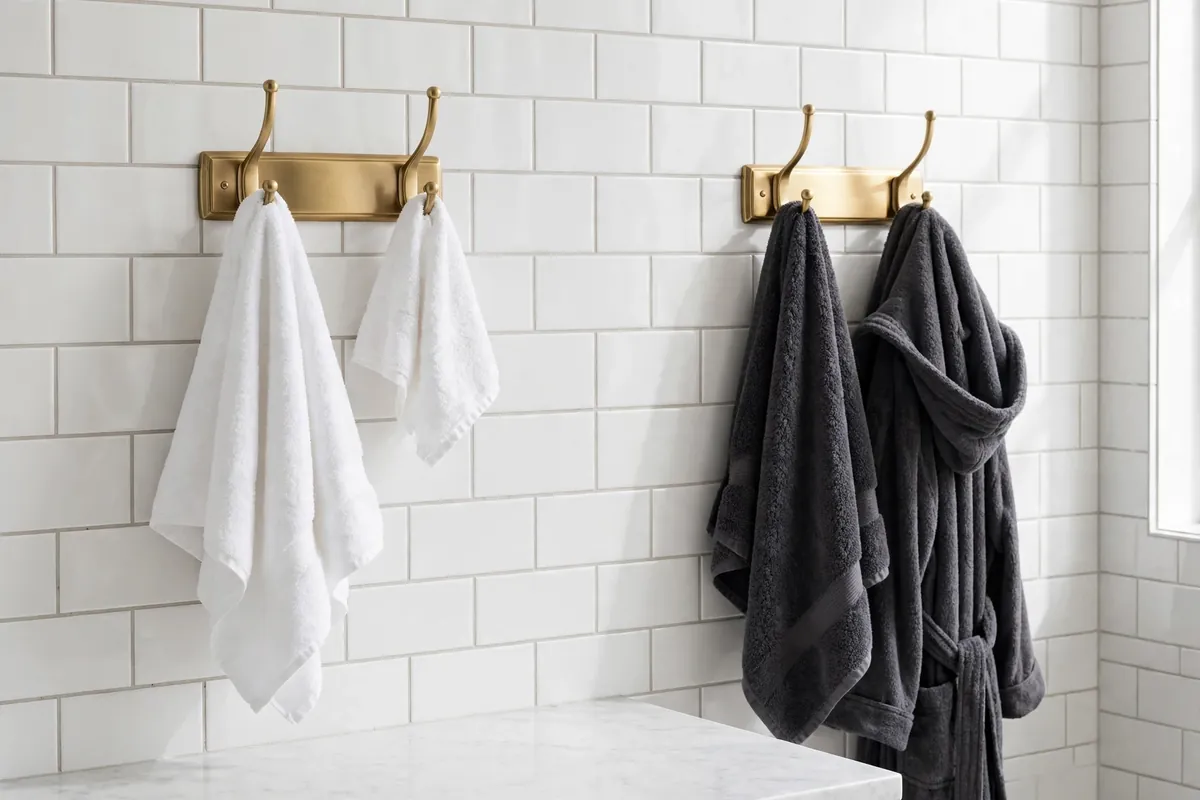
Walls hold more storage than floors in a small bathroom, and they cost nothing in walkway space. A pair of floating shelves above the toilet or beside the mirror takes towels and daily items off the counter, a towel hook rail by the shower holds towels and a robe at hand height, and a tall narrow cabinet turns a dead corner into closed storage.
Hang hooks at 60 to 66 inches so a towel hangs clear of the floor and dries without bunching, and keep shelves shallow, about 8 to 10 inches deep, so bottles do not hide behind each other. The bathroom shelf ideas guide shows how shelf height changes what actually gets used, because a shelf you cannot reach becomes a dust shelf in a month. I would not cover every wall with shelves. One good wall, fitted well, beats three walls of crowded boards, and the empty wall keeps the room feeling open.
Pick the wall closest to where the item is used, then stop. Treat walls as their own bathroom storage zones, with one job each, so a towel wall never turns into a second counter.
What is the right size for a bathroom cabinet or vanity?
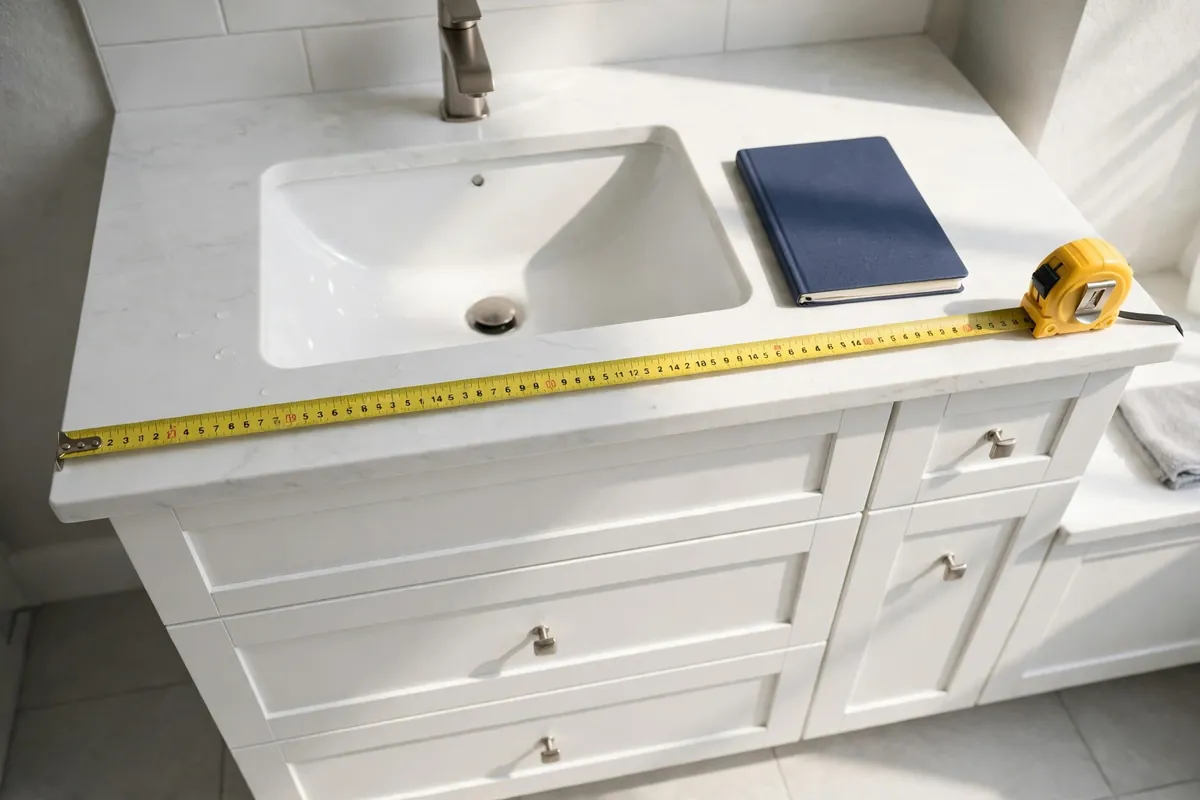
Size the cabinet to the room and the daily count, not to the biggest unit that fits through the door. A small bathroom vanity usually runs 24 to 36 inches wide, according to ABC Home guidance on vanity widths, and a standard vanity is 21 inches deep, with slim models at 18 inches for tight walkways. That 3 inch difference matters when the door swing or the toilet clearance is tight.
A base cabinet is commonly 21 inches deep and 34.5 inches tall including the countertop, per Sinclair Cabinets standard measurements, so check the height against the people who use the sink daily. Tall users who bend over a low vanity every morning will hate a cabinet that looks right in the store. Use the table below to match the room to a starting size, then adjust by your daily count.
A single person with 8 daily items does not need a 48 inch double vanity, and a couple sharing one sink needs drawer dividers more than extra width. Budget in tiers for the same zone: under $50 buys a tray, dividers, and hooks; $50 to $150 buys a shelf set or a wall cabinet; $150 plus buys a vanity swap or a tall cabinet, which only makes sense after the measurements check out.
| Bathroom type | Starting vanity width | Depth to try first |
|---|---|---|
| Powder room | 18 to 24 inches | 18 inches |
| Small full bath | 24 to 36 inches | 18 to 21 inches |
| Shared full bath | 36 to 48 inches | 21 inches |
| Primary bath | 48 to 60 inches | 21 inches |
How do you store towels when the linen closet is full or missing?
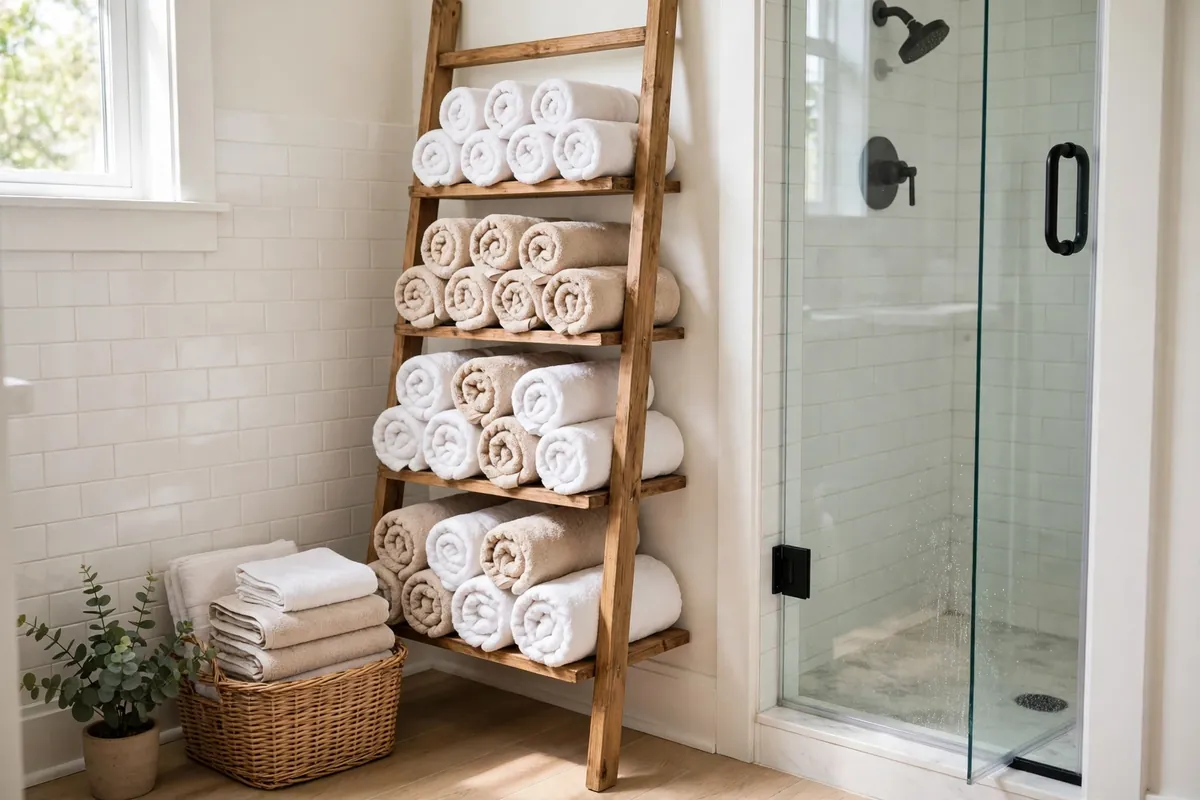
Towels need air and a spot near the shower, not a deep pile in a closed cabinet. Roll towels instead of folding them flat, because a roll shows you at a glance how many clean towels are left and pulls out without disturbing the rest. A ladder shelf, a wall mounted ring, or a basket by the shower each work, but pick only one home for bath towels and one for hand towels, so nobody has to guess.
If the linen closet is missing, the toilet wall or the back of the door takes the overflow, with daily towels on a hook and spares rolled on a shelf above. The bathroom towel storage ideas for a missing linen closet cover this split well, because they separate the towel you use today from the towels you keep for guests. I would not store damp towels in a closed bin. They stay wet, they smell, and the bin becomes the thing you avoid opening. Dry the towel on a hook first, then put it away.
How do you design one bathroom for two people?
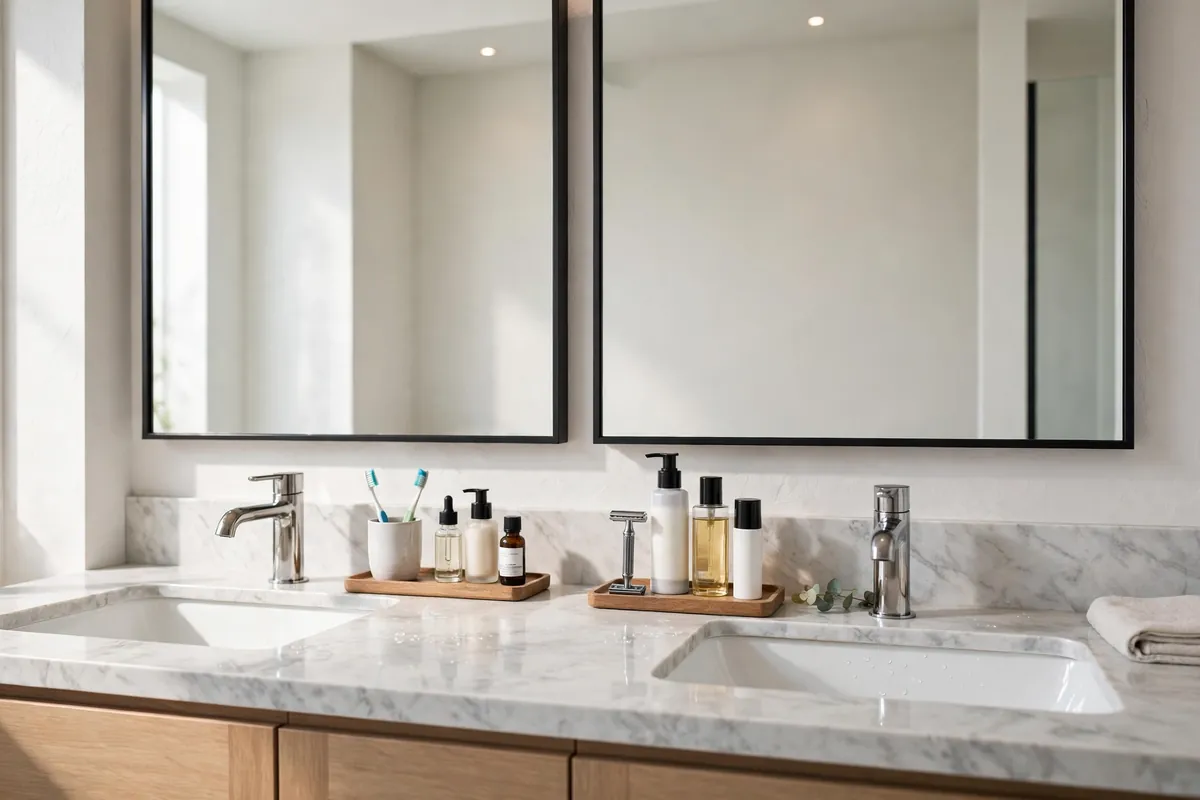
Give each person a zone, not half of every shelf. One drawer or one tray per person, labeled by habit rather than by name, stops the daily mix up where one person's creams sit on top of the other's toothbrush. Put the early riser's items closest to the door side of the vanity and the later riser's items on the far side, so the first person out does not wake the second by digging.
Shared items, hand soap, a hair dryer, cleaning spray, get one shared spot in the middle, and nothing else shares a spot. If the vanity has one sink, add a second mirror cabinet or a wall shelf on each side, so each person has eye level storage without a remodel. This split is not for every couple. If one partner uses three items and the other uses fifteen, split by item count, not by half the space, or the light user gets a drawer full of air while the heavy user overflows.
What changes when kids or guests share the bathroom?
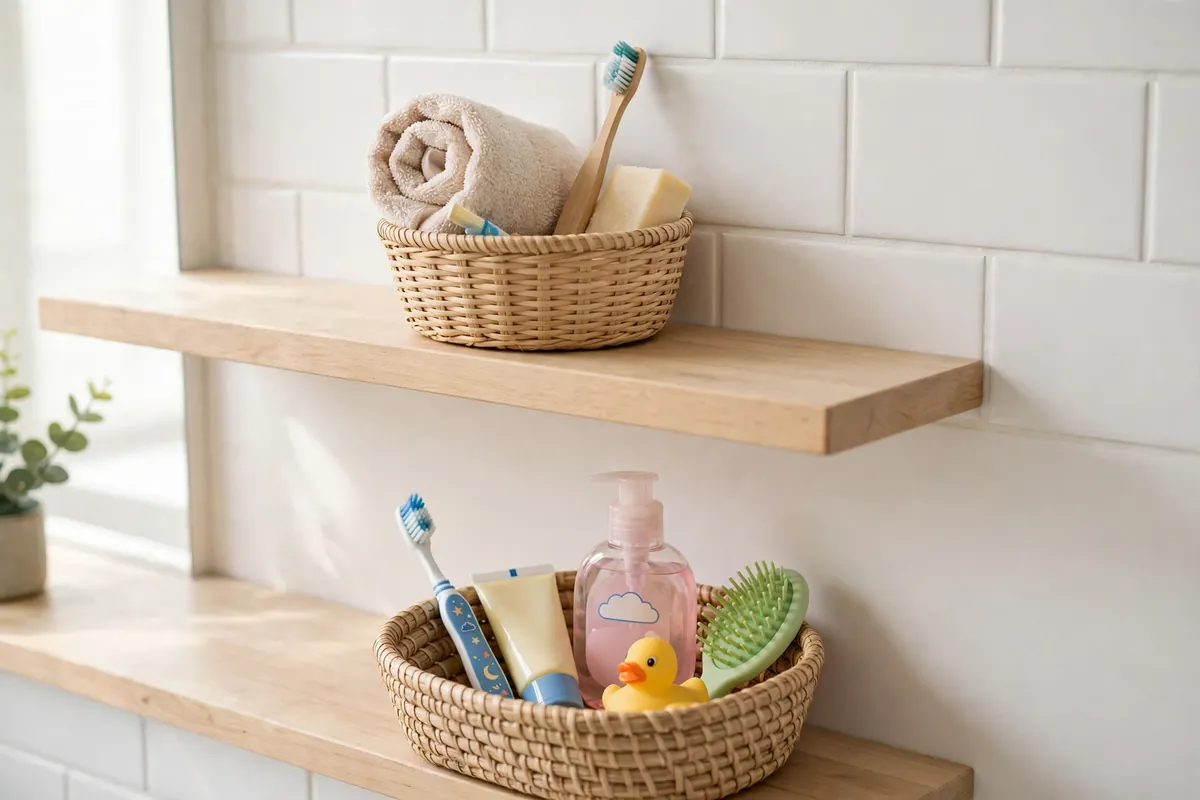
Kids and guests need lower, simpler storage than adults, and they need it labeled by job, not by product name. Put a low basket or a bottom drawer at kid height with their toothbrush, toothpaste, and hairbrush, and keep adult products and medicines on a high shelf or in a latched cabinet. A guest basket with a towel, a spare toothbrush, and a small soap bar, placed on the toilet wall or a shelf, saves the guest from opening every cabinet to find the basics.
When guests leave, the basket goes back to the backup zone, so the bathroom returns to its daily layout without a full reset. I would not give kids open access to the whole cabinet. A child who can reach everything will use everything, and the morning routine turns into a cleanup job. One low basket they own, plus one rule that it gets reset each night, keeps a shared bathroom calm. A small step stool helps a younger child reach the sink, but the stool needs a home beside the vanity or behind the door.
For guests, a different colored towel from the family set avoids the awkward question of which towel is clean.
How do renters design storage without drilling a single hole?
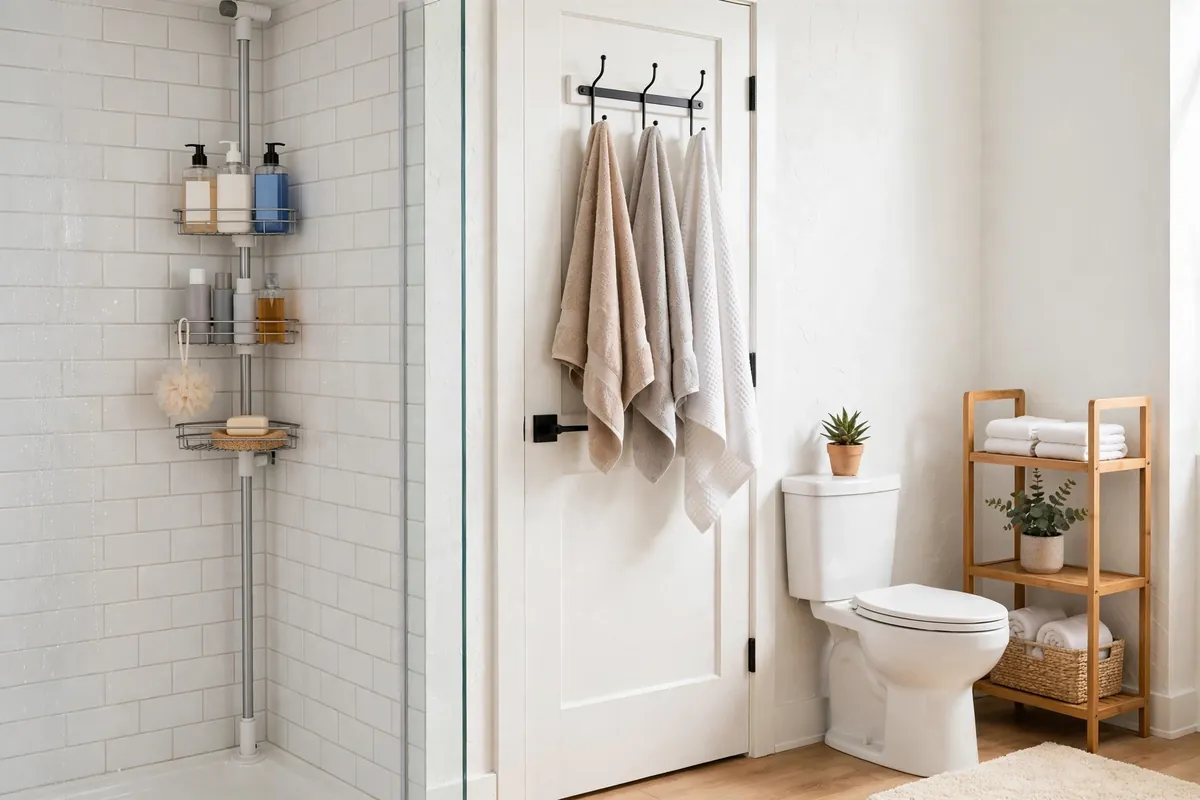
Renters design with weight limits and removal in mind, not with anchors. Tension poles in the shower, over door hooks, adhesive shelves on smooth tile, and freestanding units over the toilet add real storage without a hole in the wall. Test the wall first: suction fails on textured tile, adhesive fails on dusty or damp grout, and a tension pole fails when the ceiling is sloped.
The no drill shower storage guide for renters walks through that wall test, because the same shelf holds for years on smooth tile and falls in a week on rough tile. Check the lease for adhesive rules before you stick anything to painted drywall, because some adhesives pull paint at move out. This matters for a lot of readers: Point2Homes, reporting 2024 US Census data, puts renter households at just under 35 percent of US households, more than 46.1 million renter occupied homes.
That is renter friendly bathroom storage designed for real leases, not for a house you own. I would not buy a full set of organizers on day one. Start with one tension pole or one over door unit, live with it for two weeks, and add only the piece that fixes a real annoyance. Renters who buy everything at once end up returning half of it.
How do you keep the counter clear after week three?
A clear counter lasts when the reset takes less than two minutes and has a fixed home for every item. Each night, return the daily tray to the same spot, hang the towel on the same hook, and drop the dirty washcloth in the hamper, not on the counter edge. The counter stays clear because nothing without a home is allowed to stay on it overnight.
If an item keeps landing on the counter, its home is wrong: move the home closer to where you use the item, or move the item to the backup zone. An under sink organizer helps here, because the cabinet under the sink is the natural home for weekly items that keep creeping onto the counter.
Fit that cabinet around the P-trap with a pull out drawer or a turntable, not a deep bin you have to empty to reach the back, and keep a slim rolling cart beside it only if the door swing allows it. I would not buy a bigger tray to fix a counter that keeps filling up. A bigger tray just holds more clutter, and the morning routine slows down again. Fix the home, not the container, and the counter stays clear with no new purchase.
How do you plan backup storage so it never spills into daily zones?
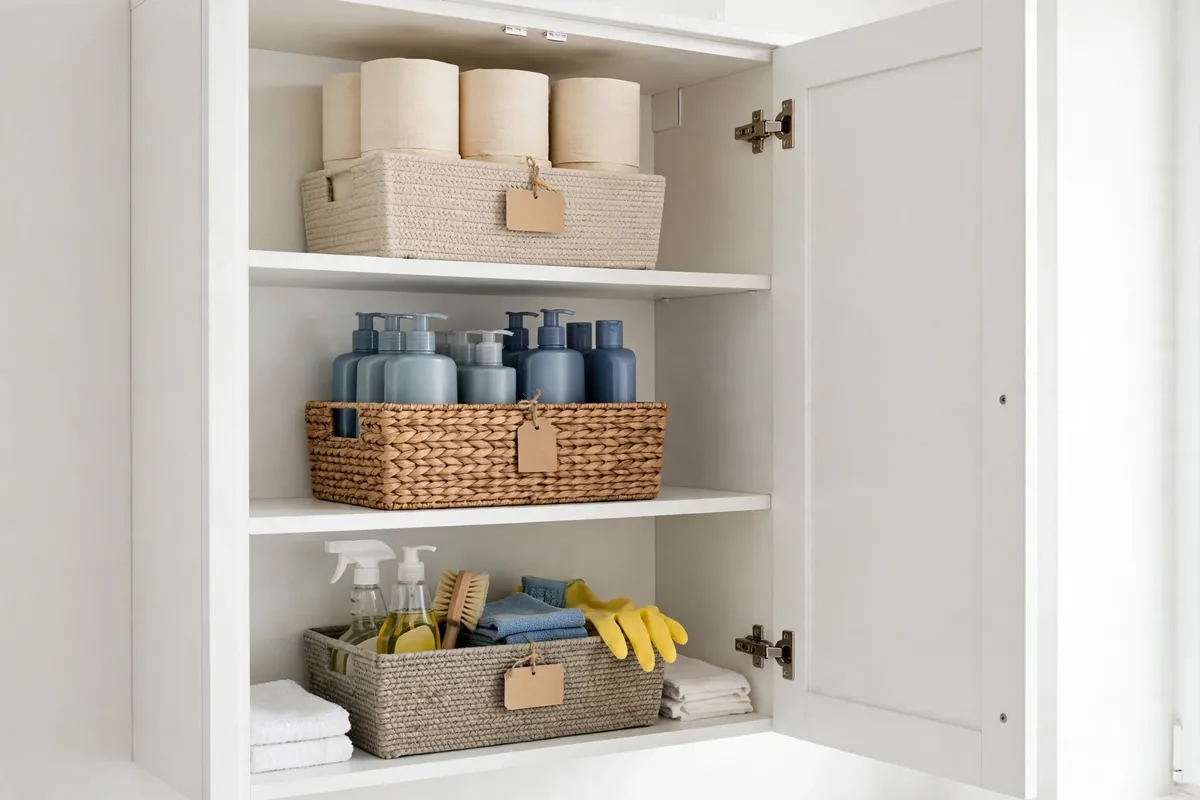
Backup storage works when it is closed, counted, and checked on a schedule. Keep refills, extra toilet paper, and cleaning supplies in one closed cabinet or one closet shelf, away from the sink and shower, and cap the stock at what fits in that space. When the backup space is full, you do not buy more, because the overflow is what ends up on the counter and the toilet tank. Check the stock once a month, on the same day you clean the bathroom, and write the short list of what ran out.
That list becomes the shopping list, and it stops the habit of buying a spare of everything on sale. The pedestal sink storage guide shows this split in a room with no vanity at all, where backups must live outside the bathroom or they take over the only shelf. I would not keep cleaning sprays in the daily zone. They belong in the backup cabinet, out of reach of kids, and they only come out on cleaning day.
Decant a refill into the daily bottle as soon as it runs low, instead of storing a half used refill next to it. Label the backup bin by zone, sink, shower, or toilet, so restocking takes one trip to the cabinet.
What would I change first if I designed this bathroom again?
I would start with the zone map and the audit, and I would buy nothing until both were done. That is how to design bathroom storage that lasts: map first, measure second, buy last. Most bathrooms I see fail on placement, not on product choice: daily items too high, backups too close, towels too far from the shower. Fix the map first, then measure the toilet clearances and the vanity width, then buy one piece for the worst zone and live with it for two weeks.
Angi puts a typical bathroom remodel at $6,700 to $30,000, with an average near $12,200, and a zone plan costs nothing, which is why it comes before any remodel talk. If you do one thing today, do the audit: pull one drawer, sort it into daily, weekly, and unused, and move the unused pile out. Then map the five zones on paper and assign each daily item to the zone where you use it.
That single afternoon changes how the room feels every morning after, and it tells you exactly what, if anything, is still worth buying.
How high should a shelf be above the toilet?
Leave 8 to 12 inches between the top of the tank and the bottom of the shelf or cabinet. That gap lets the lid open fully, leaves room to clean behind the tank, and keeps the shelf low enough to reach without a stool.
How do I add bathroom storage without drilling holes?
Match the fix to the wall. Tension poles and over the showerhead caddies work in tub and shower combos, over door hooks use the door, and adhesive shelves hold on smooth tile. Test suction and adhesive on your own wall first, because textured tile kills suction fast.
How do I organize a small bathroom with no counter space?
Move the daily set to the wall and the door. A medicine cabinet takes toothbrushes and skincare off the counter, a small tray holds only what you use daily, and an over door organizer takes backups and cleaning items. If the counter still fills up, the daily set is too big, not the counter too small.
How do I organize under the bathroom sink around the pipes?
Build around the P-trap instead of fighting it. A pull out drawer or a turntable on either side of the pipes keeps weekly items reachable, a rack on the cabinet door holds cleaning spray, and a small bin keeps backups from sliding to the back. Measure the pipe position before you buy any organizer.
What should I store in a medicine cabinet versus under the sink?
The medicine cabinet holds small daily items at eye height: toothbrush, toothpaste, face wash, moisturizer, and medicines you take daily. Under the sink holds weekly and backup items: cleaning supplies, refill bottles, extra toilet paper, and hair tools. Daily items in a low cabinet get buried, and backups at eye height crowd the morning routine.
How do I share one small bathroom vanity between two people?
Give each person one tray or one drawer, and keep shared items in one middle spot. Put the early riser's items on the door side so they leave without digging through the other person's things. Split by item count, not by half the space, when one person uses far more products than the other.
Where should towels go in a bathroom with no linen closet?
Put the towel you use today on a hook near the shower, where it dries in the air, and roll spare towels on a shelf above the toilet or on a ladder shelf. Keep guest towels separate, in a different color if you can, so you always know which towels are clean.
How do I stop bathroom storage from getting damp and musty?
Run the fan during the shower and for a while after, and keep indoor humidity below 60 percent, ideally between 30 and 50 percent. Use wipeable trays, sealed bins near the shower, and open shelves for towels so air moves around them. Dry a towel on a hook before you put it away in a closed bin.
How do I keep a small bathroom organized after the first month?
Keep a two minute nightly reset: tray back in place, towel on its hook, washcloth in the hamper. Check the backup stock once a month, on cleaning day, and buy only what ran out. When a new product comes in, one old product leaves, so the daily zone never grows back to its old size.
