

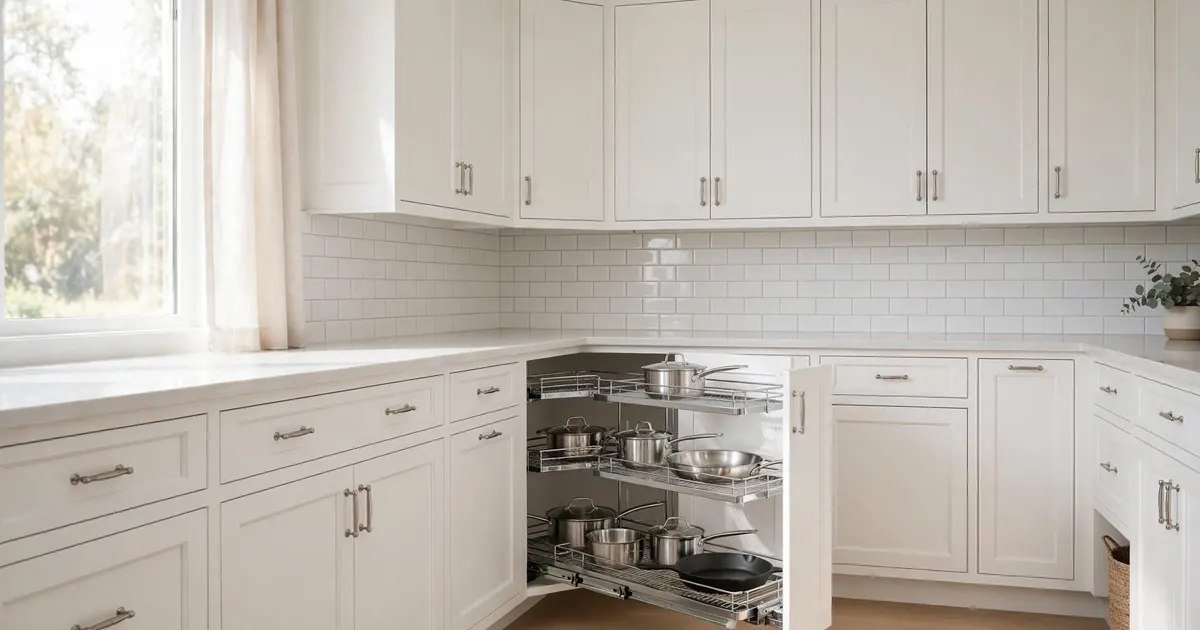
If you have a blind corner kitchen cabinet, you have an L-shaped pocket of dead space where two cabinet runs meet, and the fix that actually works depends on your door opening: a magic corner pull-out for full access, a half-moon lazy Susan for the budget route, or simple sliding trays if you rent. Every one of these blind corner kitchen cabinet ideas starts with a tape measure, because your opening width decides which system you can buy.
TL;DR
- A blind corner is the dead space behind the face frame where two cabinet runs meet. Roughly half of a standard 48-inch base cabinet (osmoz.com, Oct 2026) sits out of easy reach.
- The three fixes that work: a magic corner pull-out for full access, a half-moon pivot or swing-out shelves for narrow openings, and a sub-$50 turntable route for renters.
- Measure your door opening before you buy anything. A 15-inch minimum opening decides whether a magic corner fits at all.
- Prices run from under $50 for a simple lazy Susan to about $533 and up for name-brand pull-out hardware observed at Home Depot (osmoz.com, Oct 2026). Blogger estimates are labeled as such in the comparison table below.
What is a blind corner kitchen cabinet, exactly?
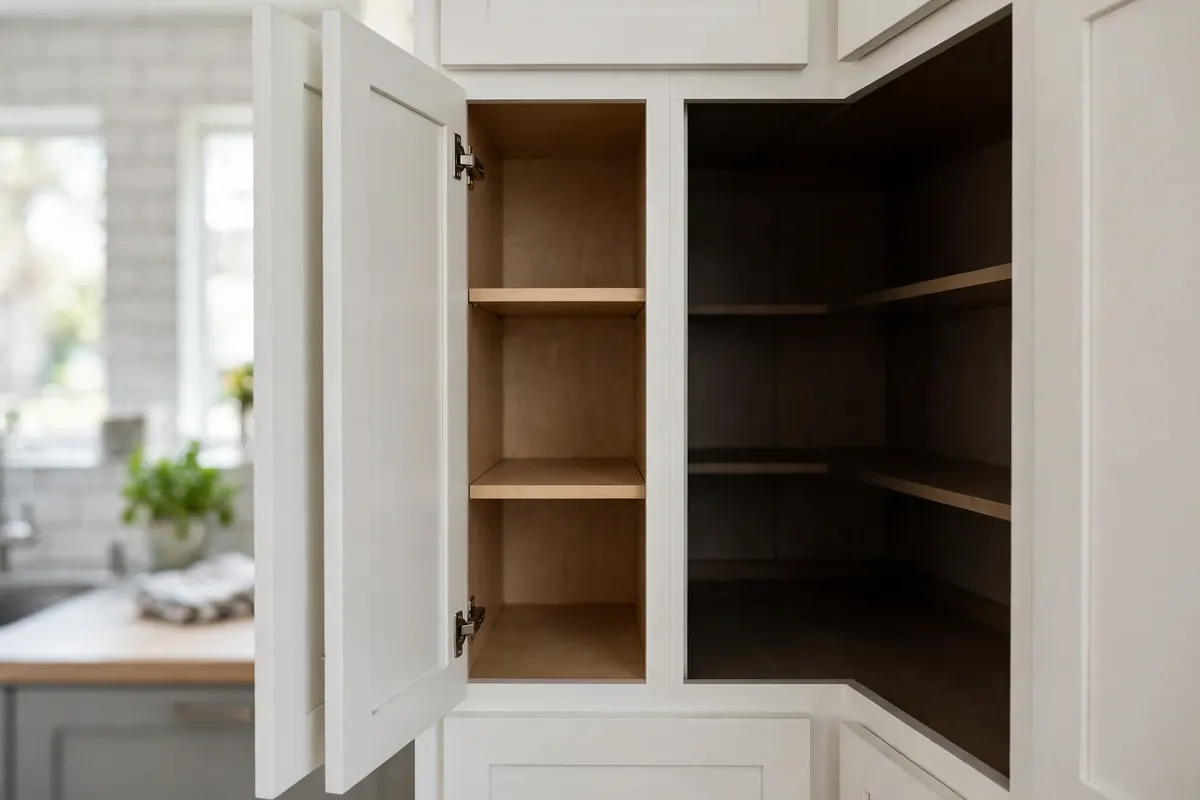
A blind corner kitchen cabinet is a base cabinet tucked into the L of your kitchen layout, where one cabinet run meets the other and the corner section hides behind the neighboring cabinet. “Blind” means you cannot see or reach most of it through its own door. The cabinet face frame in front creates the dead space.
A standard base cabinet gives you a full-width door. A blind corner gives you a partial door and a void: the neighboring cabinet’s side covers the front of the corner section, so you reach in sideways and hit a wall of darkness. That is why shelves in an L-shaped cabinet’s blind corner hold dust more than dishes.
Here is my judgment call: if you are mid-remodel, skip the blind corner entirely and spec a 45-degree corner cabinet (sometimes sold as a diagonal corner cabinet) instead. The diagonal door costs more up front and erases every workaround in this article. For everyone else, keep reading, because the fixes below work in the cabinets you already have. If your kitchen has an odd corner, Lily Ann Cabinets’ guide to corner cabinets includes a table for telling corner types apart.
How much storage does a blind corner actually waste?
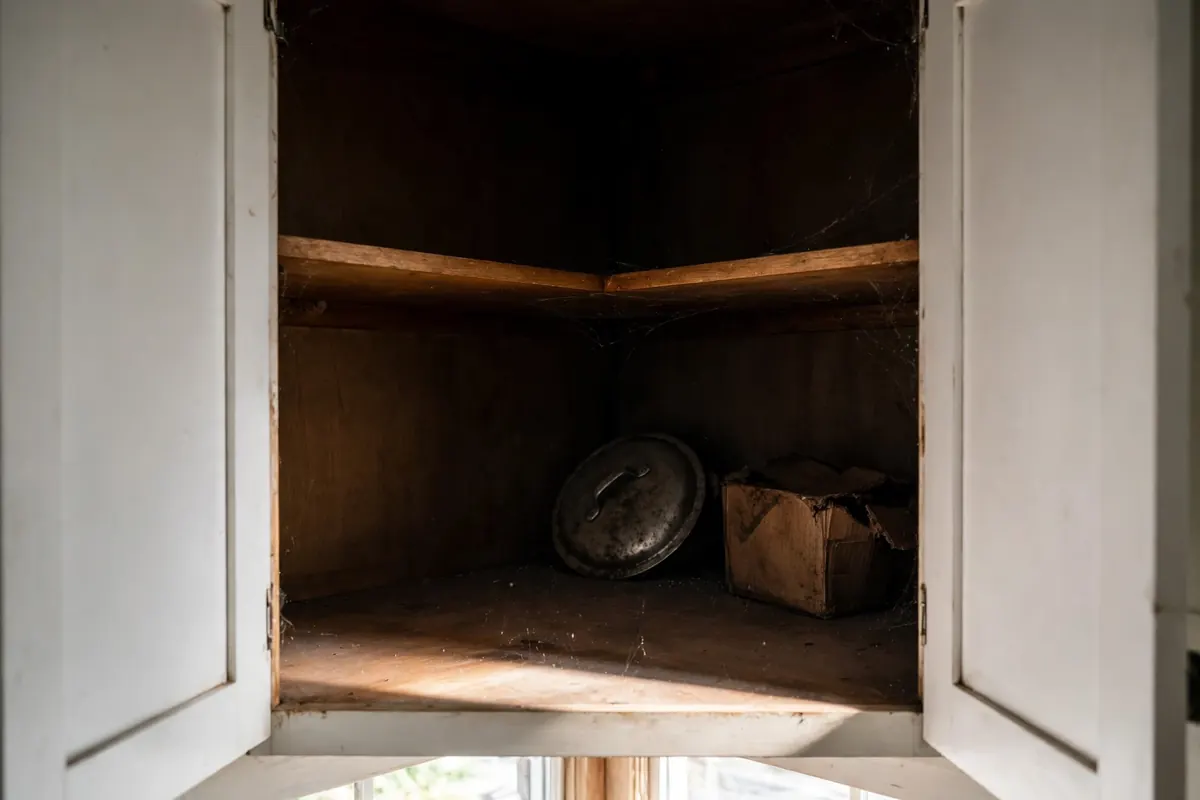
A typical blind-corner base cabinet is about 48 inches wide (osmoz.com, Oct 2026), and roughly half of that sits out of easy reach without hardware. That leaves one to two feet of reach-in depth sitting dark behind the face frame, where most households park small appliances and forget them. It is close to a full lower cabinet shelf, wasted.
Picture the geometry. The door opening on a blind corner is narrower than the cabinet behind it, because the cabinet face frame eats an inch or two on each side. Past the frame, the interior runs back well over a foot into darkness. Your arm only reaches so far, so everything past that comfortable reach is a dead zone without hardware.
My take: spending $100 to $200 on an organizer (a blogger estimate from meinenfood.com, so verify it at a retailer) is easy money when it recovers close to a full lower-cabinet shelf. You already paid for that space in the price of the kitchen. One caveat, and this is the “not for” part: if you store exactly two stockpots and nothing else back there, skip the hardware and buy a turntable. Of all the blind corner kitchen cabinet ideas in this guide, a magic corner deserves a cabinet that works hard.
What are the best blind corner cabinet organizers, compared?
The best blind corner kitchen cabinet ideas come down to five systems: the magic corner pull-out for full access, the half-moon lazy Susan for simple retrofits, swing-out shelves for door-mounted convenience, and full-extension pull-out drawers for the deepest reach. The table below compares the five on price, opening size, and install difficulty, so you can match one to your cabinet.
Prices below mix two kinds of numbers. Dollar figures credited to osmoz.com were observed at Home Depot or on direct pricing pages in October 2026. Blogger estimates are labeled as guesses, not quotes. Check current retailer prices before you buy.
| System | How it works | Best for | Typical price (USD) | Opening needed | Install difficulty |
|---|---|---|---|---|---|
| Magic corner pull-out (LeMans style) | Trays on articulated arms swing out and bring the rear baskets forward | Blind corners with a wide opening, full access | $100 to $200 kits (blogger estimate, verify at retailer); Rev-A-Shelf 5PSP-15-CR about $533, 5PSP-18-CR about $676, 53PSPE Elite $1,173 to $1,463 (osmoz.com, Oct 2026) | 15 in minimum (5PSP) | Moderate to hard |
| Lazy Susan (full round) | Round tray spins on a pole or bearing; a super Susan rides on a bearing ring instead | Small openings and tight budgets | Under $50 (blogger estimate, verify at retailer); trays usually 24 to 28 in diameter | Any | Easy |
| Swing-out shelves | Shelves mount on the door and ride out with it | Frameless cabinets, lighter items | Pricing varies, check current retailer prices | Varies by door width | Easy to moderate |
| Pull-out drawers / retrofit trays | Full-extension slides carry trays straight out of the cabinet | Cooks who want straight, deep access | Pricing varies, check current retailer prices | Door width minus slide clearance | Moderate |
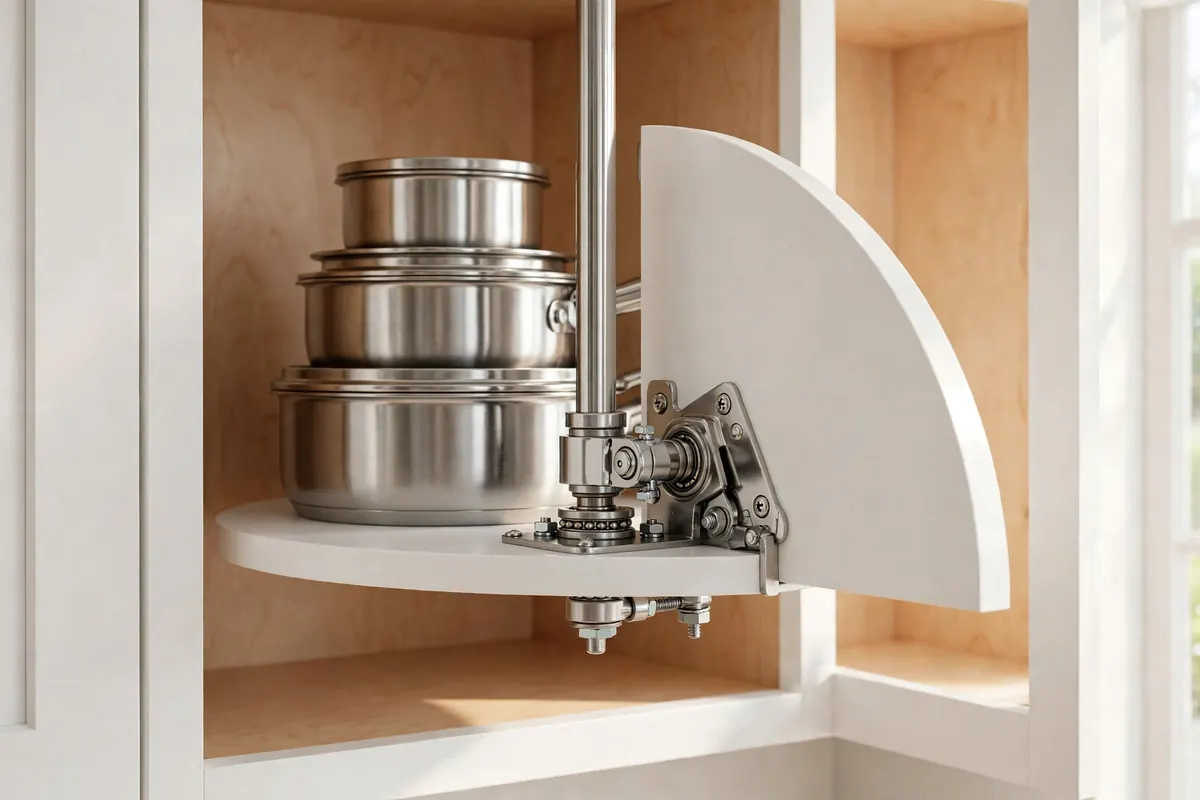
| Half-moon pivot | D-shaped or kidney-shaped trays pivot out of the corner | Narrow openings where a full circle will not fit | $188 to $679 (osmoz.com, Oct 2026); Cloud-style budget lines $75 to $955 | Narrow, varies by model | Moderate |
Measured your opening yet? That number decides which of these blind corner kitchen cabinet ideas you can actually buy. Grab the tape measure before you click anything, because the best-reviewed organizer in the world is useless if it cannot swing inside your cabinet.
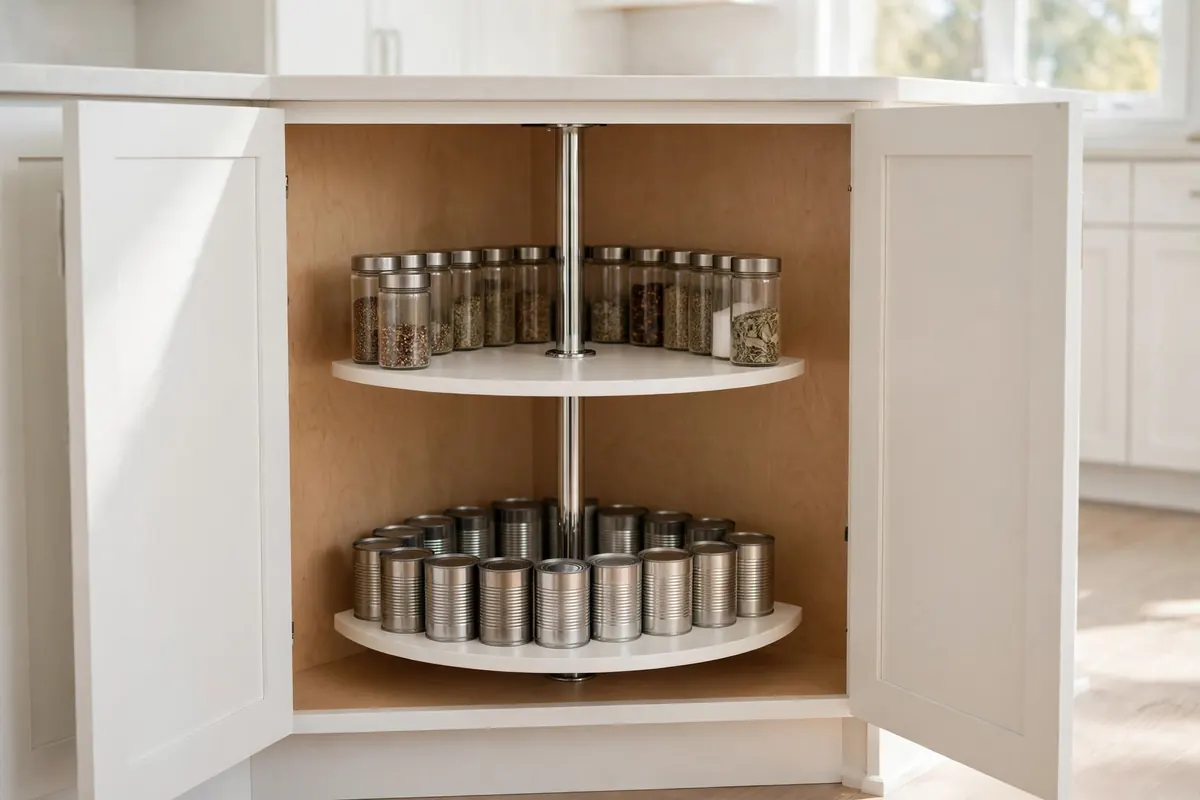
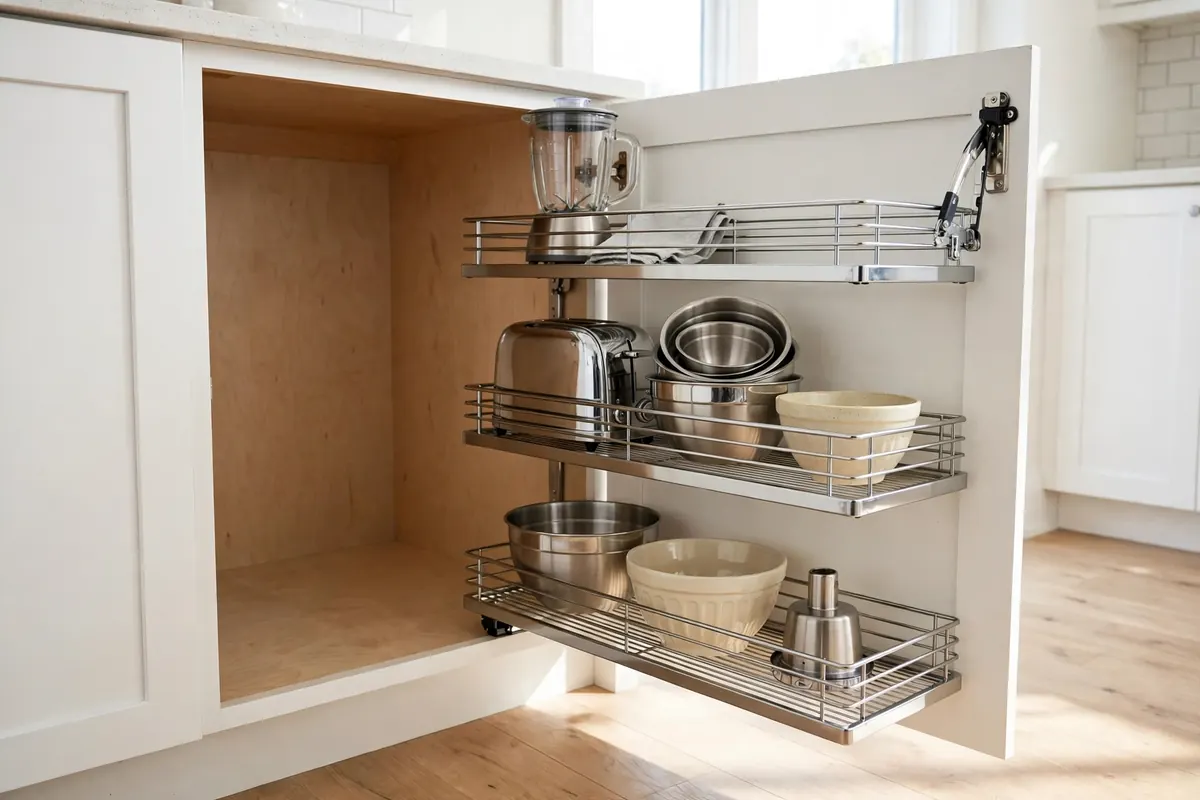
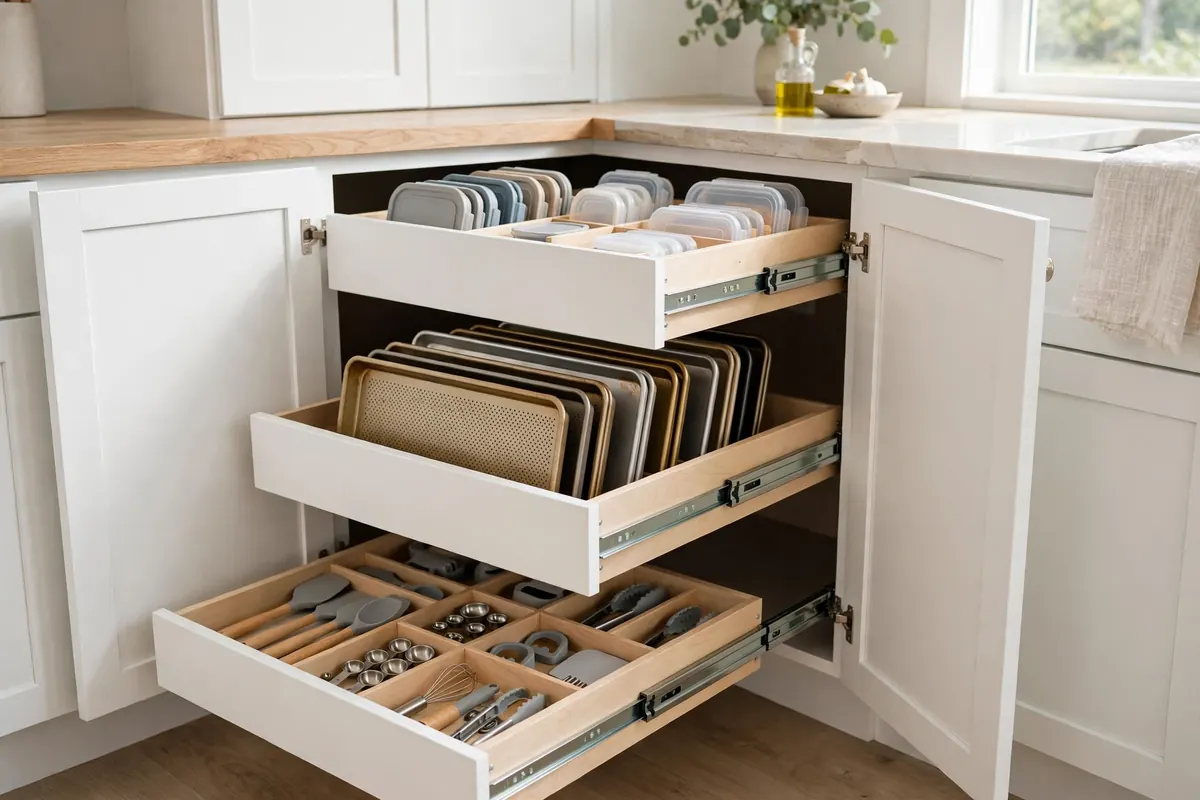
My judgment: pick the magic corner when your opening allows it, and the lazy Susan when the budget or the cabinet says no. That sentence is the whole article in disguise. Rev-A-Shelf, Knape and Vogt, and Hafele all make these systems, and IKEA’s UTRUSTA covers the simpler end. I name them so you can search. For the rest of the kitchen, our kitchen cabinet organization ideas guide carries the same logic everywhere.
Magic corner vs lazy susan: which one actually works better?
A magic corner beats a lazy Susan in a blind corner when your door opening is wide enough, since articulated arms carry every tray out while a Susan spins items sitting deep inside. The Susan wins on price. Of these blind corner kitchen cabinet ideas, pick the magic corner when the opening allows, and the Susan when the budget or cabinet says no.
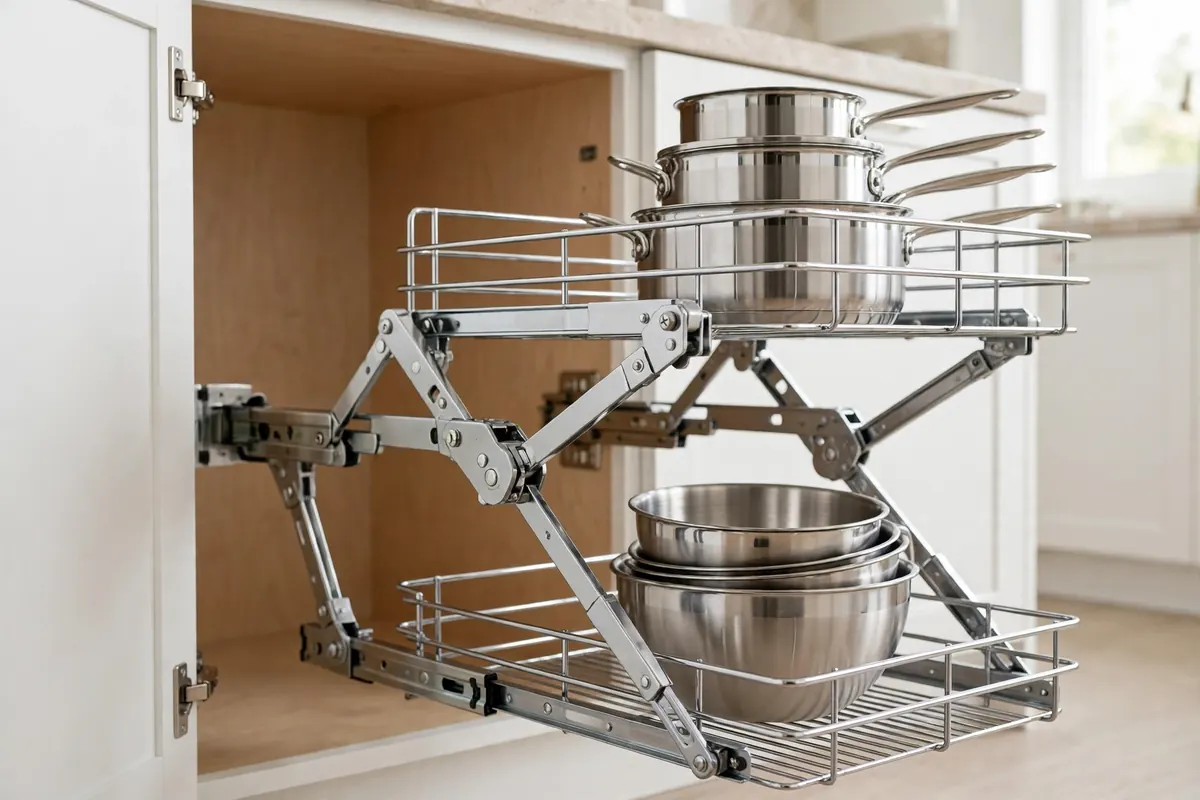
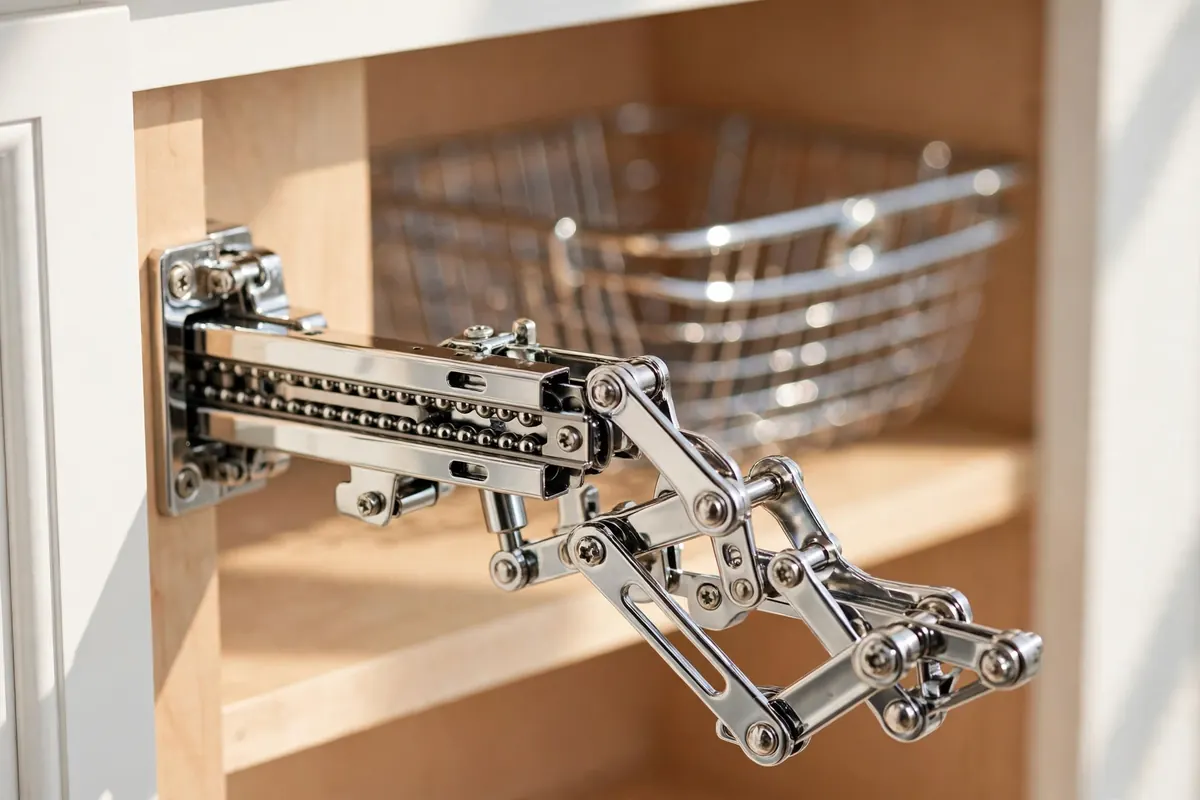
Rev-A-Shelf’s 5PSP line shows the spread: the 5PSP-15-CR runs about $533 and the 5PSP-18-CR about $676, while the 53PSPE Elite lands between $1,173 and $1,463 (all via osmoz.com, Oct 2026). Among blind corner kitchen cabinet ideas, the magic corner is the premium answer: LeMans-style shelves, the curved kidney trays behind the name, swing the dead zone’s contents out past the face frame on articulated arms.
The Susan answers with simplicity. A super Susan rides on a bearing ring instead of a center pole, holding heavier loads and wasting less center space. A remodeler at shdesignwoodcraft.com puts it plainly: Susans cost less, break less, and hold heavy items comfortably. Most organizers rate 20 to 100 pounds per tier, and Susans sit at the friendly end of that range.
The “not for” on magic corners: not for openings under 15 inches, not for renters, and not for anyone who flinches at drilling holes. Buy the mechanism your cabinet fits, not the one the photo flatters.
Are half-moon and swing-out shelves worth it?
Half-moon and swing-out shelves are worth it when a full magic corner will not fit your opening or budget, because a D-shaped or kidney-shaped tray pivots out and puts the deep corner within reach. They hold less than a magic corner, so respect the weight limit. They are the quiet middle child of corner cabinet hardware.
A half-moon lazy Susan is a D-shaped lazy Susan, sometimes sold as a pie-cut tray, that pivots on the door side, so it needs less clearance than a full circle. Swing-out shelves mount on the door itself and ride out with it. Both of these blind corner kitchen cabinet ideas dodge the two things that kill other systems: tight openings and high prices. Observed pricing for half-moon pivot systems runs $188 to $679 (osmoz.com, Oct 2026), and Cloud-style budget lines dip as low as $75.
I would spec a half-moon whenever the opening is oddly shaped or a full circle will not clear the frame. It is the workhorse nobody Instagrams. The trade-off: half-moons are not for heavy cast-iron stacks. Respect the weight rating on the box, or the pivot sags and the door stops closing right.
How do you measure a blind corner cabinet before you buy anything?
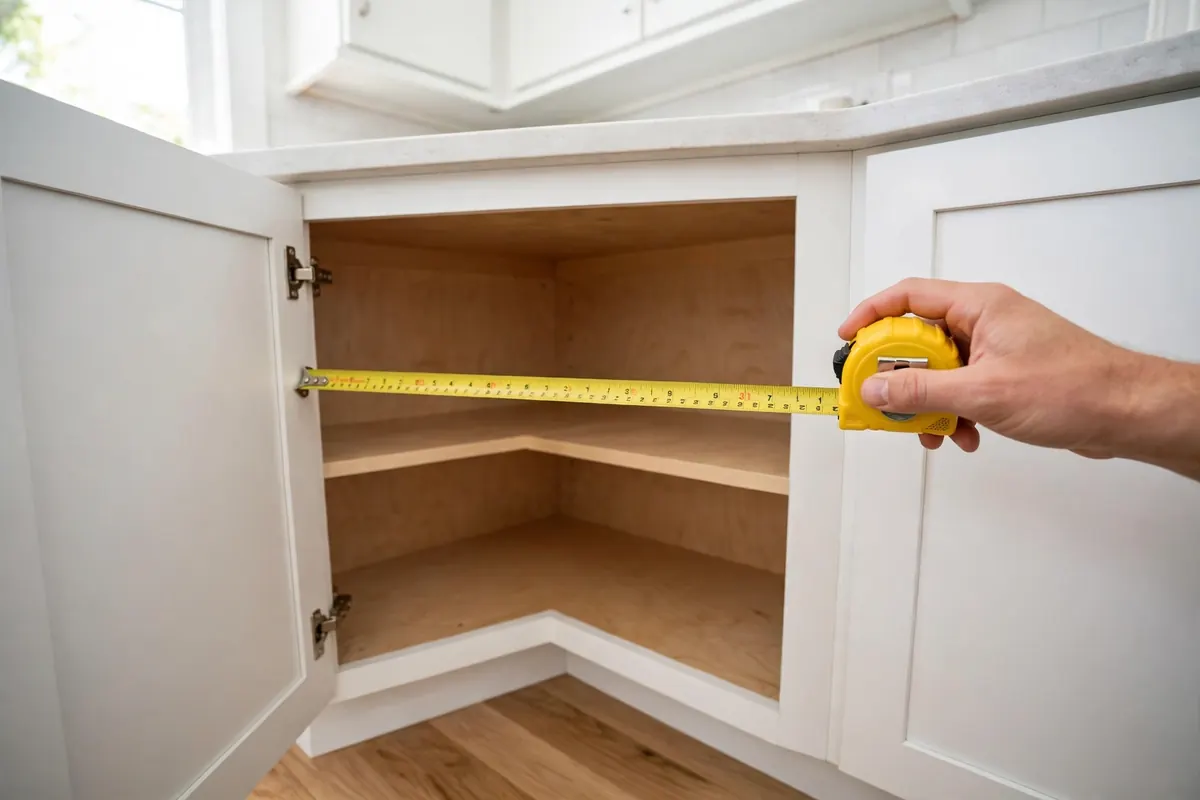
Measure the door opening, then interior depth, height, and whether the blind side sits left or right. Every blind corner cabinet organizer lists a minimum opening and a handing. Buying before measuring is how people end up with a magic corner that cannot swing. The face frame makes the opening smaller than it looks. Write every number before you shop.
| Measurement | Where to take it | Why it matters |
|---|---|---|
| Door opening width | Inside edge to inside edge of the face-frame opening | Most organizers list a minimum (15 in for the 5PSP). Narrower means a Susan or trays only. |
| Interior depth | Back wall to the inside of the face frame | Confirms how far back your trays must reach. |
| Interior height | Cabinet floor to the underside of the counter | Tall items and tiered systems need clearance. |
| Blind-left vs blind-right handing | Stand in front: note which side hides the dead space | Magic corners and swing-outs are sold handed. The wrong side will not install. |
| Face-frame vs frameless | Look for a wooden frame around the opening | Frameless cabinets suit door-mounted swing-outs. Frames shrink the usable opening. |
| Hinge and handle clearance | Swing the door and watch the full arc | Hardware trays swing through this arc and can collide with the hinge. |
A Grateful Kitchen’s measuring guide walks the same steps with photos, and it is worth a look if you have never measured cabinet interiors before. The step everyone skips is the handing check, and this is where most blind corner kitchen cabinet ideas fall apart in practice. Stand in front of the cabinet and note whether the dead space hides to the left (a blind left corner) or the right (a blind right corner). Magic corners and swing-outs are sold handed, and the wrong side will not install at all.
My opinion: spend ten minutes with the tape now and you will never join the club of people who own a $500 organizer that does not fit. Rulers are cheaper than return labels.
What is the best budget fix under $50?
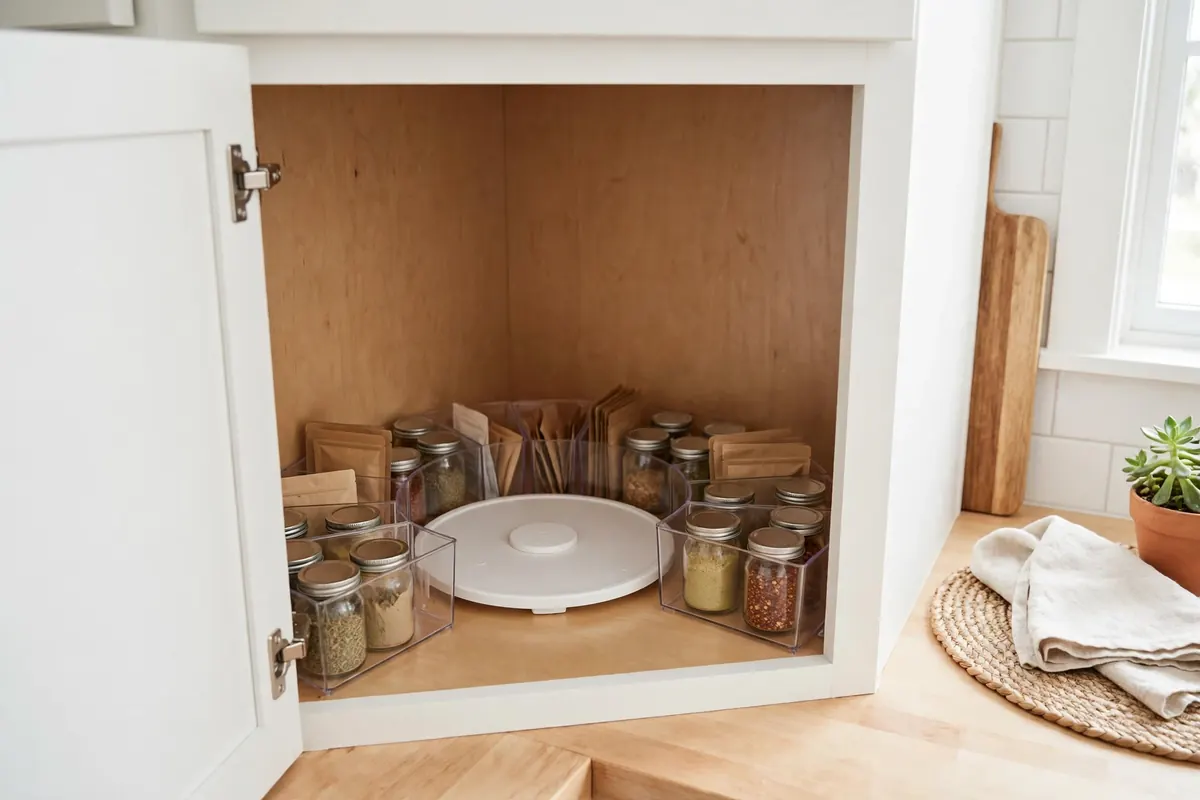
The best budget fix among these blind corner kitchen cabinet ideas is a large turntable with wedge-shaped bins: a lazy Susan tray under $50 (blogger estimate, verify at retailer) spins the deep corner into reach, and the bins keep loose items from falling behind it. Add a sliding mat underneath and it glides instead of dragging. It is the honest starting point for renters.
The pro-organizer playbook for blind corner kitchen cabinet ideas pairs a big turntable in back with bins in front to catch the loose stuff. One mom blogger documented a $15 version with a lid rack and a pan organizer, which proves the floor of this tier is genuinely low. The bins matter more than the tray: without them, spatulas migrate behind the Susan and you end up fishing.
My honest opinion: try this tier first even if you can afford hardware. If the turntable solves most of your frustration, keep the money. The “not for” here is real, though. This route is not for cooks who want one-hand access to heavy pots, and not for anyone annoyed by bins that need occasional straightening. It is a system, not a gadget, and it asks a little upkeep.
What should you store in a blind corner cabinet?
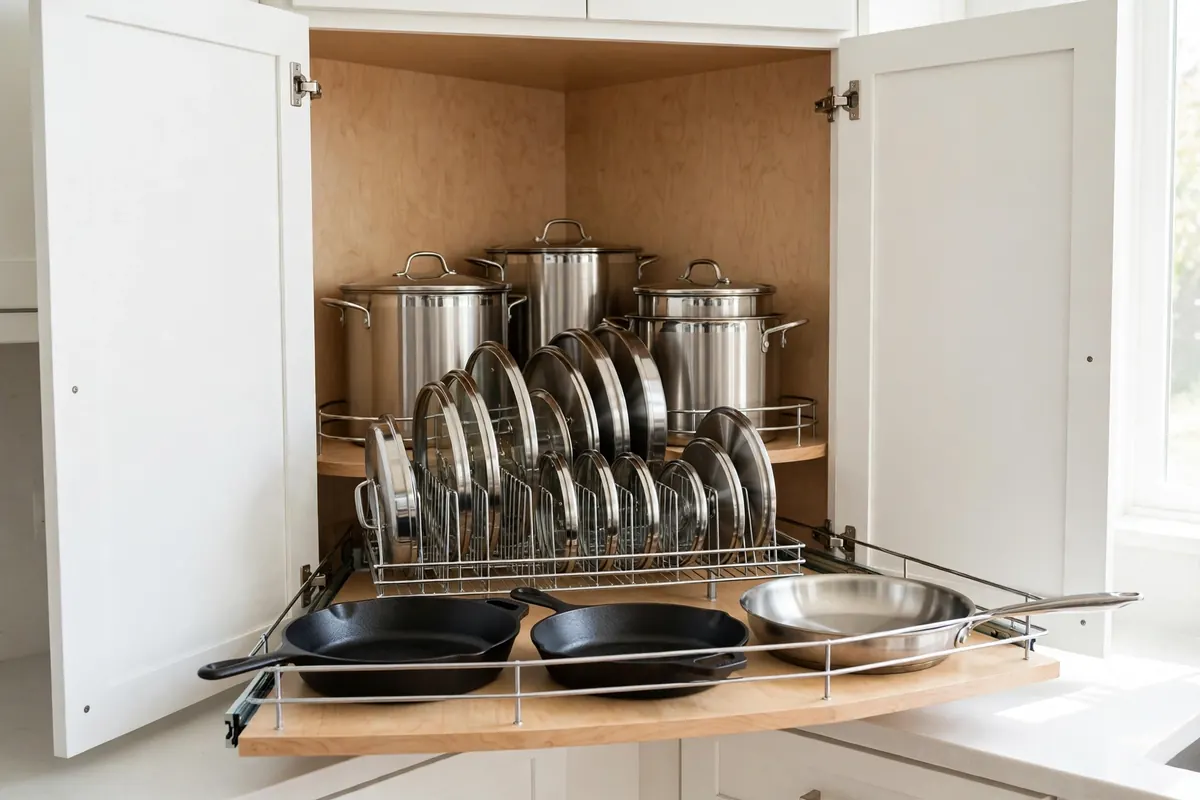
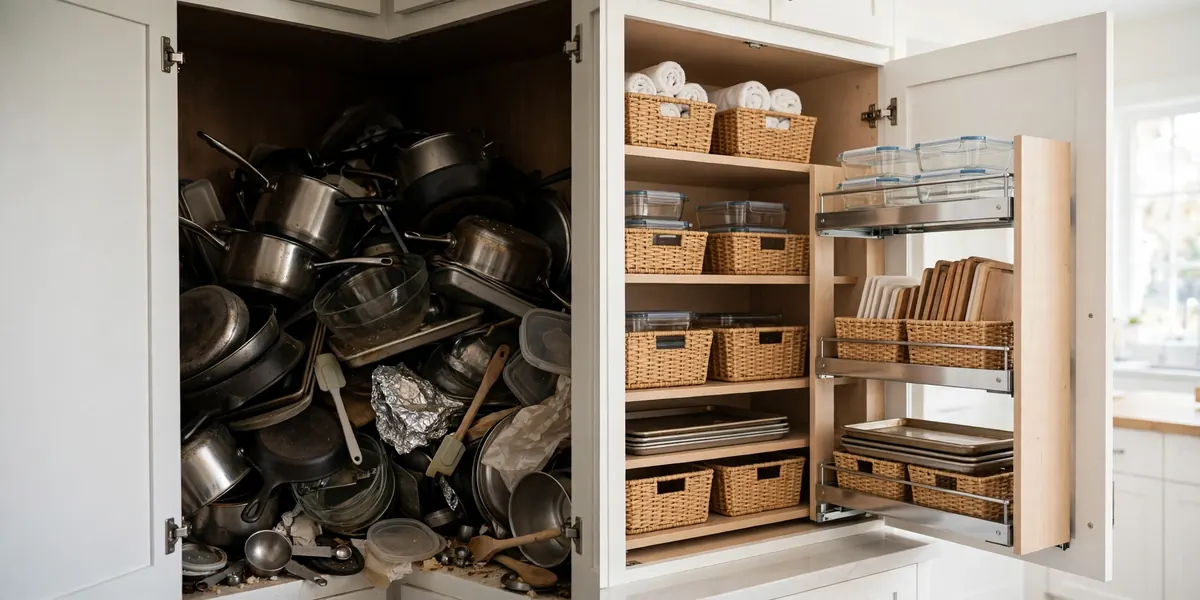
Store the bulky, rarely used items in a blind corner: stockpots, small appliances you pull out weekly, pantry overflow like canned goods and backup oils, and seasonal cookware. These are things you reach for on purpose, not mid-recipe, so extra motion of a pull-out or a spin costs you nothing. Keep daily spices and cooking tools near the stove instead.
The zone method is one of the oldest blind corner kitchen cabinet ideas, and it still works. The deep blind section holds the things you fetch on purpose: seasonal cookware, the turkey roaster, backup pantry goods. The middle zone, reachable with a pull-out or a spin, holds weekly items: the stockpot, the slow cooker, the big salad bowl. The front, by the door, holds the occasional: the blender base, the food processor bowl. Pull-out drawers with full-extension slides make these zones literal, since each tray comes all the way out.
Match the container to the zone and you will stop losing things. Our pots and pans storage ideas guide has the full system for the heavy stuff, and if your spices keep migrating into the corner, our spice storage ideas guide will relocate them somewhere sane.
What should you never store in a blind corner?
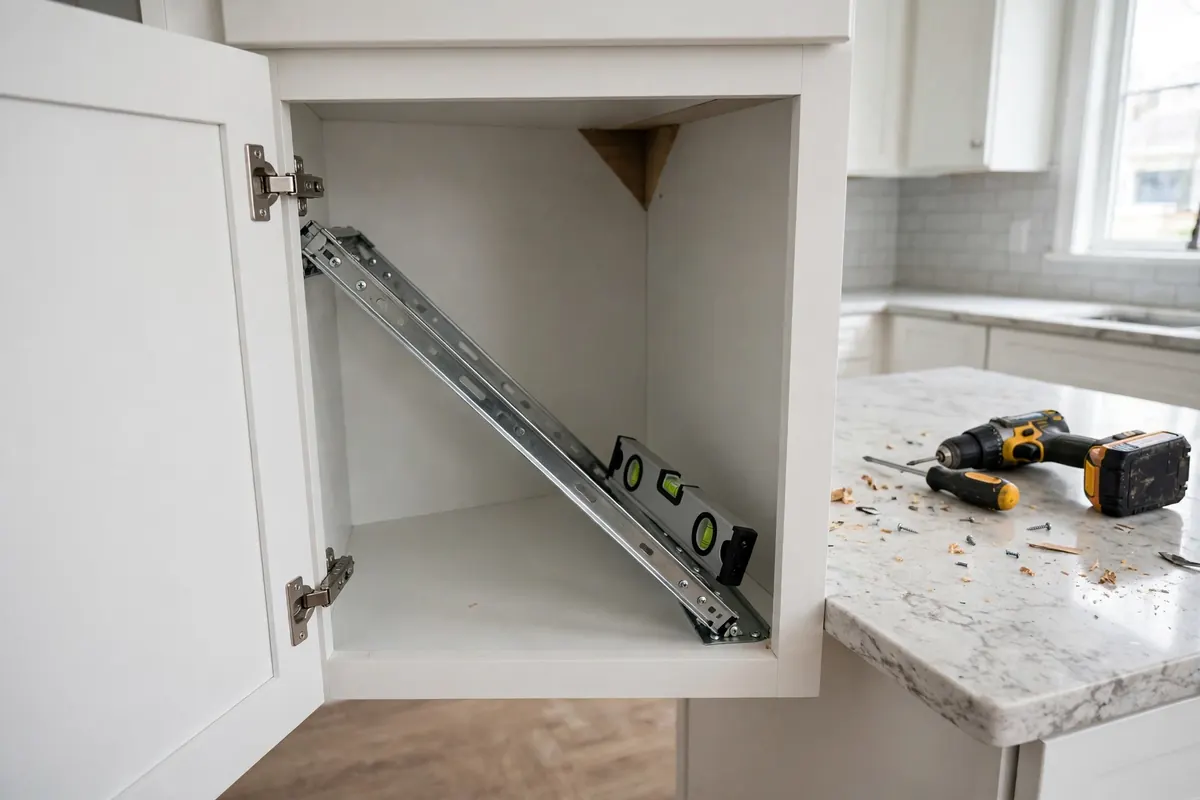
Never store fragile everyday items, anything you need mid-recipe, or loads heavier than the organizer’s weight capacity in a blind corner. Glassware chips when trays swing, spices get lost behind the mechanism, and a cast-iron stack above the weight limit warps tracks. If you use it daily, it deserves a cabinet you can open with one hand.
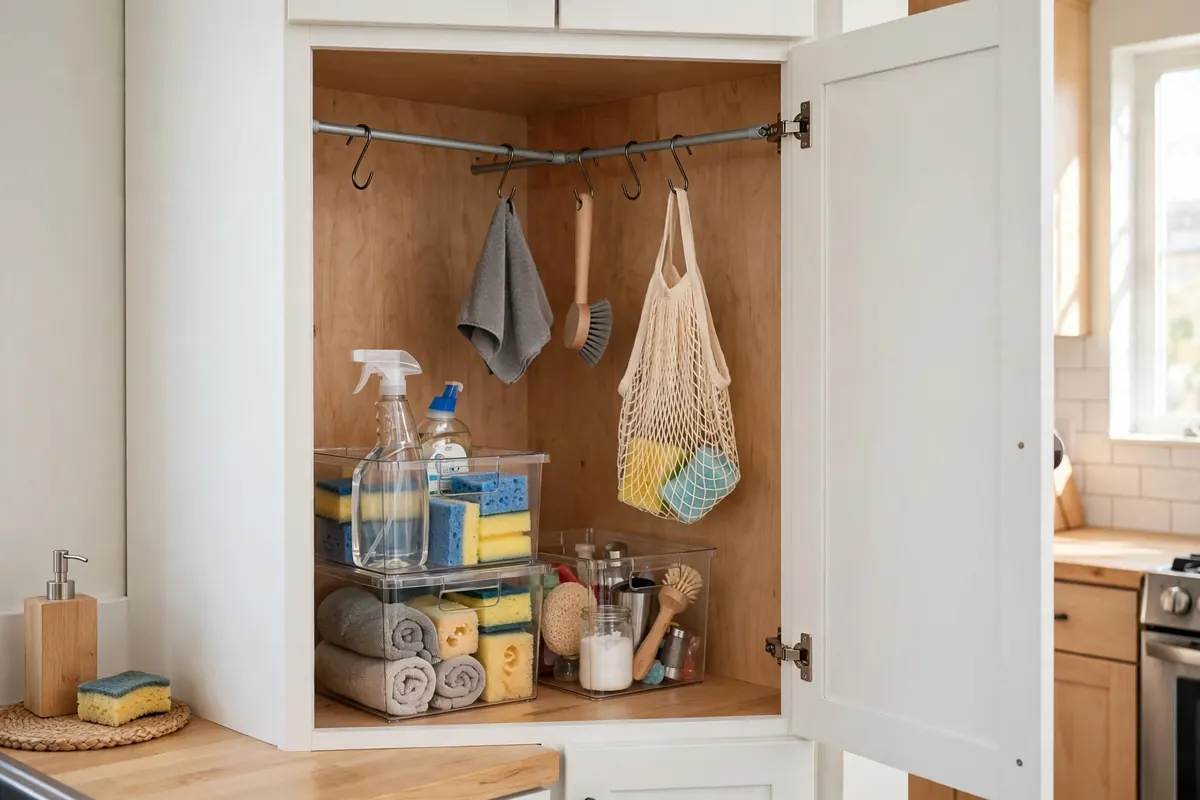
The back of a blind corner is where good intentions go to expire, so do not send anything there that needs rescuing daily. Daily cooking tools belong in drawers anyway (see our kitchen drawer organization ideas guide). Heavy stacks belong on the bottom tier of a rated system, never piled past the 20 to 100 pound per-tier ratings most organizers carry. Cleaning products live under the sink, not next to the food, no matter how tempting the empty corner looks.
| Item | Keep it out? | Why |
|---|---|---|
| Everyday spices | Yes | They get lost behind the mechanism. |
| Glassware and ceramics | Yes | They chip when trays swing. |
| Cast iron above the weight rating | Yes | It warps tracks and wears slides early. |
| Anything needed mid-recipe | Yes | The extra motion breaks your cooking flow. |
| Cleaning chemicals | Yes | Keep food storage food-only. |
| Bulky seasonal items | No | This is exactly what the corner is for. |
| Small appliances used weekly | No | Purposeful reaches are fine. |
| Pantry overflow | No | Canned goods do not care about a spin. |
Are blind corner organizers renter-friendly?
Most blind corner organizers are not renter-friendly, but the under-$50 route is: turntables, wedge bins, and sliding mats install with zero screws and leave no marks. Anything that bolts to the cabinet floor or mounts on the door needs your landlord’s written approval first. When in doubt, ask before you drill, because patched cabinet bottoms still show.
The most renter-safe blind corner kitchen cabinet ideas need no permission at all: turntables, bins, and mats lift out when you move, which is the whole point. I would never bolt hardware into a cabinet I do not own. If you remove any shelf boards to make room, keep them; the next tenant’s deposit is not your problem to create. Renters in tight kitchens get more mileage from our small kitchen storage ideas guide than from any single organizer.
A quick word on upper blind corners: the same dead space exists up top, but most people never bother with hardware there. A small turntable for vitamins or spice backups is plenty. Save the hardware budget for the base cabinet, where the weight lives.
What are the most common blind corner installation mistakes?
The most common blind corner installation mistakes are buying before measuring, wrong handing (blind-left vs blind-right), and loading past the weight rating. Tracks mounted out of level make magic corner arms bind, and ignoring the door’s swing arc means trays collide with the hinge. Every one of these is cheaper to prevent than to fix after the holes are drilled.
Buying before measuring is mistake one and the most expensive: an organizer that cannot swing is a return shipping label. Mistake two is the handing mix-up, ordering a blind-left unit for a blind-right cabinet. Mistake three is skipping the level; tracks mounted out of level make the arms bind halfway through their travel. Mistake four is ignoring the door swing: trays need the full arc, including the handle’s sweep, and a handle that clips the tray will drive you mad.
Weight is mistake five. Blogger installs often quote 30 to 60 minutes (a meinenfood.com estimate, and I would call that optimistic for a first-timer), but no timer accounts for unloading the cast iron first. Load past the rating and the slides wear early. My judgment: of all the blind corner kitchen cabinet ideas that go wrong, the handing check is the mistake I would bet most people make, because left and right look identical in a product photo.
Can you install a blind corner pull-out yourself?
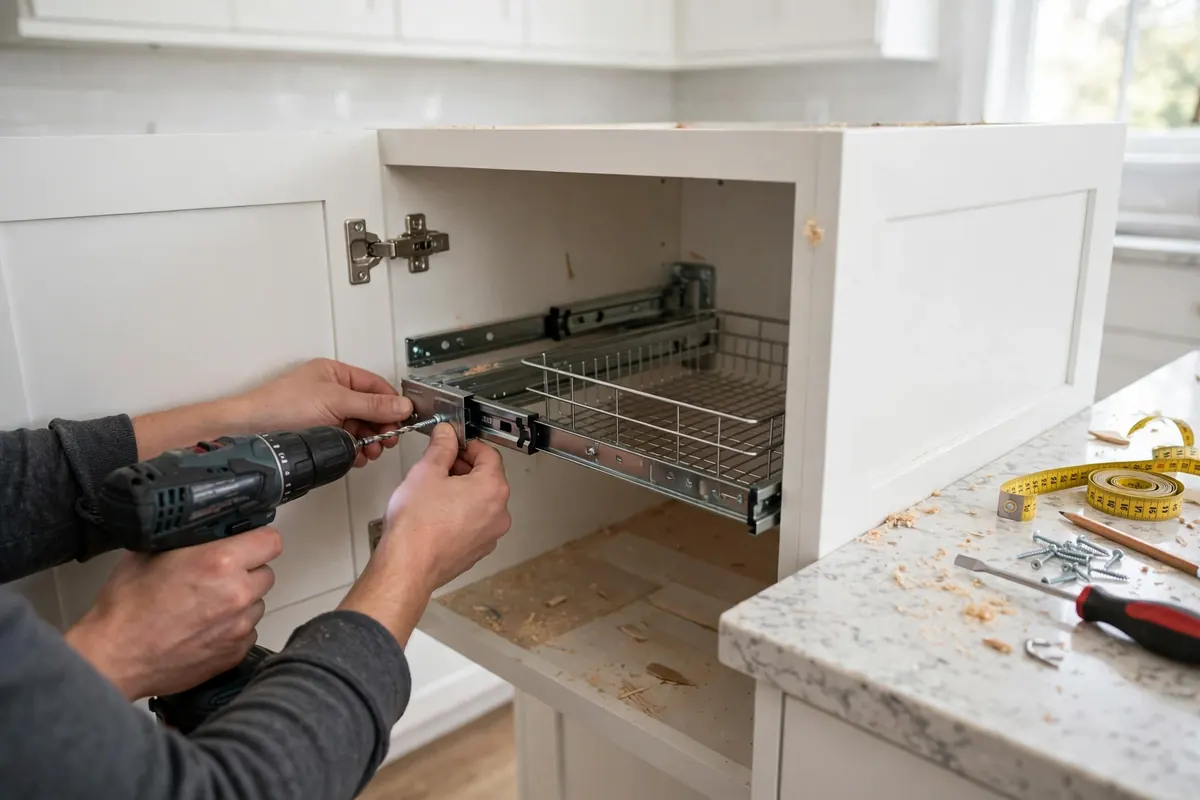
You can install blind corner pull-outs yourself if you own a drill, level, and patience, since kits ship with templates: mark, drill, mount, adjust. A lazy Susan or turntable takes minutes with no tools. Budget an afternoon for a magic corner, and call a handyman if your opening is tight or the cabinet is out of square.
Start by emptying the cabinet, then follow the kit’s template: mark, drill pilot holes, mount the frame, and adjust the arms until every tray clears the face frame. A level matters more than speed. Test the full swing empty first, then add weight gradually. If the kit includes soft-close dampers, test them before loading the trays. Corner drawers are the exception: retrofitting true drawers needs cabinet surgery, so treat that as a remodel project.
The pricier blind corner kitchen cabinet ideas earn their keep here: hire help when the opening is tight, the cabinet is out of square, or pipes crowd the interior (if yours do, our under sink kitchen organization guide shows how to work around plumbing). Also hire out if the cabinet floor is soft or damaged; hardware bolted to a weak floor fails early. My rule: I DIY the Susan and hire the magic corner in a framed cabinet, since a pro has already made every handing mistake once.
Which blind corner fix should you pick for your kitchen?
Pick the magic corner if your opening is 15 inches and you want full access, the half-moon pivot if the opening is narrow, and the budget turntable route if you rent or want to test one of these blind corner kitchen cabinet ideas first. Match the system to the opening, not the catalog photo. That gets you a corner you use, not one you avoid.
If you own and your opening clears 15 inches, buy the magic corner and forget the corner exists. If the opening is narrow or the budget is tight, take the half-moon pivot or a lazy Susan. On remodel threads covered by meinenfood.com, homeowners report a simple Susan turning a “useless corner” into prime real estate for spices and canned goods. If you rent, run the turntable-and-bins tier and spend the savings on something you can take with you.
The numbers to carry with you: a standard blind-corner base runs about 48 inches wide, a magic corner needs a 15-inch opening, and real hardware pricing stretches from under $50 to about $1,463 (osmoz.com, Oct 2026). These blind corner kitchen cabinet ideas share one first step: measure the opening this weekend, pick your row in the table, and order once. Then carry the same thinking through the rest of the kitchen with our kitchen cabinet organization ideas guide.
What is a blind corner cabinet?
A blind corner cabinet is a base cabinet tucked into the L of a kitchen layout, where one cabinet run meets the other and the corner section hides behind the neighboring cabinet. “Blind” means you cannot see or reach most of it through its own door, because the cabinet face frame in front blocks access and creates dead space.
How do I measure a blind corner cabinet for a pull-out organizer?
Measure the door opening first, inside edge to inside edge of the face frame, then the interior depth and height. Note whether the dead space hides to the left (blind left) or right (blind right), since organizers are sold handed. Most pull-outs list a minimum opening, often 15 inches, so the opening width decides what fits.
Can I put a lazy Susan in a blind corner cabinet?
Yes. A lazy Susan is the simplest blind corner fix and fits almost any opening, since the tray just sits on the cabinet floor or a shelf. Full-round trays usually run 24 to 28 inches in diameter. A super Susan, which rides on a bearing ring instead of a center pole, holds heavier loads and wastes less center space.
Magic corner vs lazy Susan: which is better?
A magic corner works better when your door opening is at least 15 inches wide, because articulated arms carry every tray out into the open. A lazy Susan wins on price and simplicity and fits any opening. Pick the magic corner when the opening allows it, and the Susan when the budget or the cabinet says no.
How do I know if I have a blind left or blind right corner?
Stand in front of the cabinet and look at which side hides the dead space. If the unreachable section sits to your left, it is a blind left corner; to your right, blind right. This matters because magic corners and swing-out shelves are sold handed, and the wrong side will not install.
What should I store in a blind corner cabinet?
Store bulky, rarely used items: stockpots, weekly-use small appliances, pantry overflow like canned goods and backup oils, and seasonal cookware. Keep fragile everyday items, daily spices, and anything you need mid-recipe out of the corner, since the extra motion of a pull-out or spin is wasted on daily reaches.
Can blind corner organizers be retrofitted into existing cabinets?
Most can. Lazy Susans, turntables, half-moon pivots, and many magic corner kits install into existing cabinets with a drill and the included template. True pull-out drawers are the exception: retrofitting real drawers into a blind corner needs cabinet surgery and is better treated as a remodel project.
Are blind corner cabinet organizers worth the money?
They are worth it if the corner currently holds nothing useful. A standard blind-corner base is about 48 inches wide, so hardware that recovers half of it reclaims close to a full lower-cabinet shelf. Budget turntables under $50 solve most of the frustration; magic corner kits run from $100 to $200 in blogger estimates up to about $1,463 for premium lines.
Can I install a blind corner organizer myself?
Yes for most systems. A lazy Susan or turntable takes minutes with no tools. A magic corner takes an afternoon with a drill, a level, and the kit’s template: mark, drill, mount, and adjust. Hire a handyman if the opening is tight, the cabinet is out of square, or the cabinet floor is damaged.
What is the best blind corner solution for a small door opening?
For a narrow opening, use a half-moon pivot tray or a full-round lazy Susan, since both fit where a magic corner cannot swing. A large turntable with wedge-shaped bins is the cheapest route and works in any opening. Measure the face-frame opening first, because that number rules out systems before you spend anything.
