
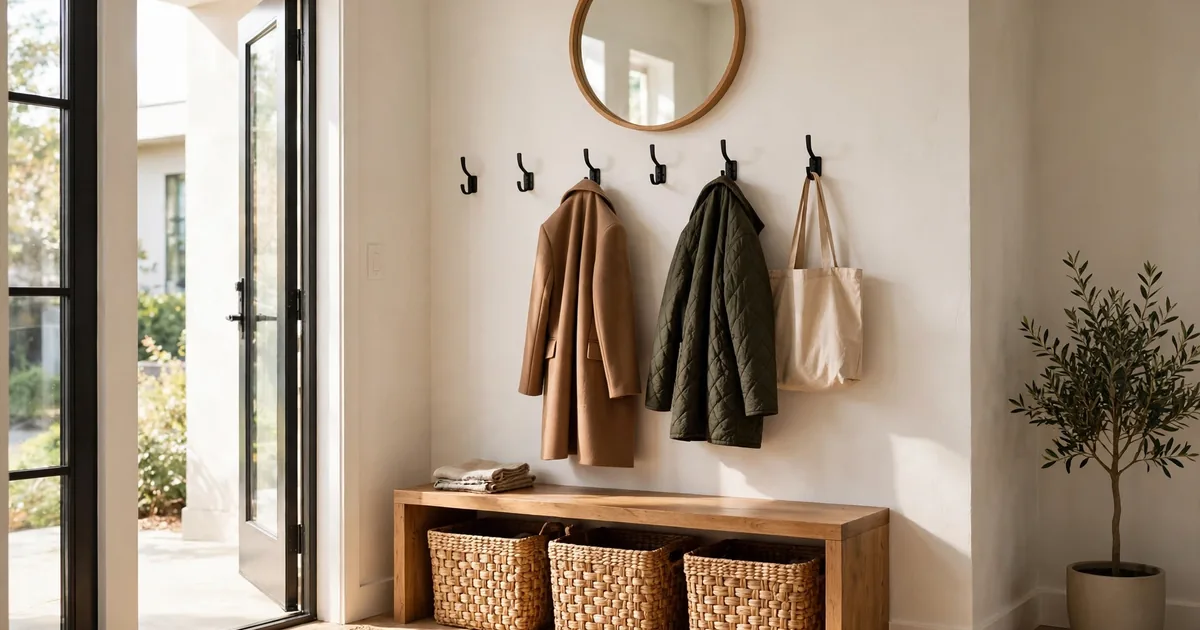

A small entryway needs four things: a slim place to sit or set things down, hooks at the right heights, contained shoe storage, and one landing spot for keys and mail. Get those four right and even a 3-foot-wide hallway stays clear. This guide walks through 21 entryway storage ideas for small spaces, matched to your exact footprint, with honest budgets and renter-safe options throughout. Every one of these entryway storage ideas for small spaces was chosen for real footprints, real budgets, and real rentals.
TL;DR: the whole system in 30 seconds
- Measure first: note your width, depth, and door swing. Keep 30 to 36 inches of walkway clear at all times.
- The winning formula: a slim bench (14 to 16 inches deep) or a wall rail, hooks at 60 to 66 inches for adults and 42 to 48 inches for kids, shoe storage with a “rule of two” per person, and one landing pad for keys and mail.
- Renters: freestanding pieces, over-door racks, and adhesive hooks rated for the real weight beat drilling every time. A complete no-drill setup usually lands under $150.
- Start this weekend with the landing pad. It is the cheapest fix with the biggest payoff.
How do you organize an entryway when you have almost no space?
You build a system with four parts: something to sit on or set things on, hooks for coats and bags, contained shoe storage, and a landing pad for keys and mail. Everything else is decoration.
Walking through your front door after a long day, your energy is low and your hands are full. If putting away your coat takes more than two steps, you will not do it. You will drop the coat on the nearest chair and kick off your shoes wherever they land. Organizers call that gap friction.
The numbers explain why this small zone matters. Storable and SpareFoot’s April 2025 survey of 1,000 Americans found that 54 percent dedicate 100 to 500 square feet purely to storage, and households giving up 500 square feet are effectively paying about $113,500 in real estate value to house their belongings. In the same survey, nearly 75 percent said cluttered areas of their homes cause them stress or anxiety.
My opinion: hooks beat closets for daily gear. A closet is great for the coats you wear twice a winter. The coat you wear today belongs on a hook by the door, one step from your hand. Design for the laziest version of yourself.
What belongs in a small entryway (and what should live somewhere else)?
A small entryway should hold exactly five categories: the coats and jackets in current rotation, two pairs of shoes per person at most, your daily bag, keys/wallet/sunglasses, and today’s mail. Everything else belongs in a closet, bedroom, or storage bin.
This is the part most guides skip, and it is why entryways refill with clutter within a month. If all four family members keep every pair of shoes by the door, no rack on earth will save you. A 2024 OnePoll survey for The Container Store found the average homeowner has 25 things out of place at any given time, and clothes and shoes make up 29 percent of household clutter. The entryway collects a big share of that.
Apply the guest test: if a friend drops by unannounced, could they hang one coat and set down their shoes without moving your stuff? If not, your entryway is storing things, not serving people.
What should live somewhere else: off-season coats, shoes you wear weekly or less, sports gear (unless someone uses it daily), the donation bag, and anything you have not touched in two weeks. Move those out before you buy a single hook.
Do the 5-minute friction audit before you buy anything
This five-minute audit saves you from buying the wrong furniture. Grab your phone and a tape measure.
First, measure three things: the width of your entry area, the depth from the door to the nearest wall or turn, and the swing of every door (front door, closet door, bathroom door). A bench that fits the width but blocks the bathroom door is a $120 mistake.
Second, count your daily carry. For each person in the house, list what actually comes through the door every day: coats, bags, shoes, keys, mail, dog leash, kids’ school stuff. Most households land at 6 to 10 items per person. That count tells you how many hooks, cubbies, and shoe slots you need.
Third, walk in with your hands full and notice where things land. That is your friction map. Keys land on the nearest flat surface, so the landing pad goes there. Coats land on the nearest chair, so hooks go on the wall beside it.
| Audit step | What to record | Why it matters |
|---|---|---|
| Width and depth | Inches, wall to wall | Furniture must leave 30 to 36 inches of walkway |
| Door swings | Arc of each door | Nothing you buy can sit inside a swing |
| Daily carry count | Items per person | Sets your hook, cubby, and shoe slot numbers |
| Landing spots | Where things drop now | Tells you exactly where the landing pad goes |
Opinion: skip this audit and you will buy twice. I would rather spend five minutes with a tape measure than return a bench that does not fit through the hallway.
Which entryway storage ideas for small spaces fit your footprint?
Match your footprint to one of these four entryway storage ideas for small spaces. Pick the one that fits your measurements, not the one that looks best in photos.
System 1: Wall-only. For hallways under 36 inches wide. A full-length peg rail at eye height, a floating shelf above for baskets, an over-door organizer on the front door, and a key hook strip at elbow height. Zero floor footprint.
System 2: Bench plus wall. The workhorse for most small entryways. A slim bench (14 to 16 inches deep) with under-seat shoe storage, hooks above at 60 to 66 inches, and a tray on the bench for keys and mail.
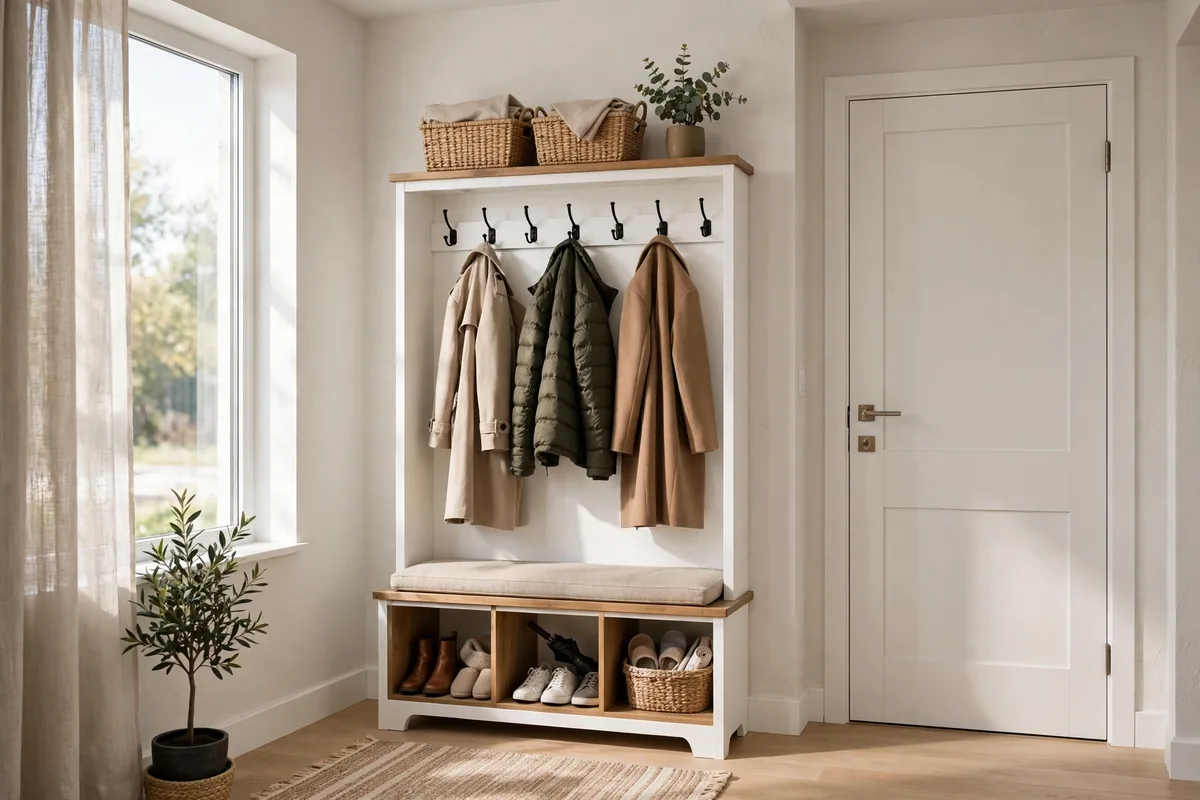
System 3: All-in-one hall tree. For no-closet entries where you cannot mount anything. One freestanding unit with hooks, bench, and shoe storage; keep it under 18 inches deep. Best for renters.
System 4: Modular family system. For kids or heavy daily gear. A pegboard with repositionable parts, one labeled cubby per person, lower hooks for kids, and a boot tray at ground level.
| Your space | Best system | Budget | Walkway kept clear |
|---|---|---|---|
| Hallway under 36 in wide | Wall-only | $25 to $75 | Full width |
| Small entry, some floor room | Bench + wall | $75 to $150 | 30 to 36 in |
| No closet, cannot drill | Hall tree | $100 to $200 | 30 to 36 in |
| Kids + heavy daily gear | Modular family | $100 to $175 | 30 to 36 in |
If your coats are already overflowing into the bedroom, read our small closet organization ideas guide next. The seasonal swap section there pairs perfectly with system 4.
How do you use walls when there is no floor space?
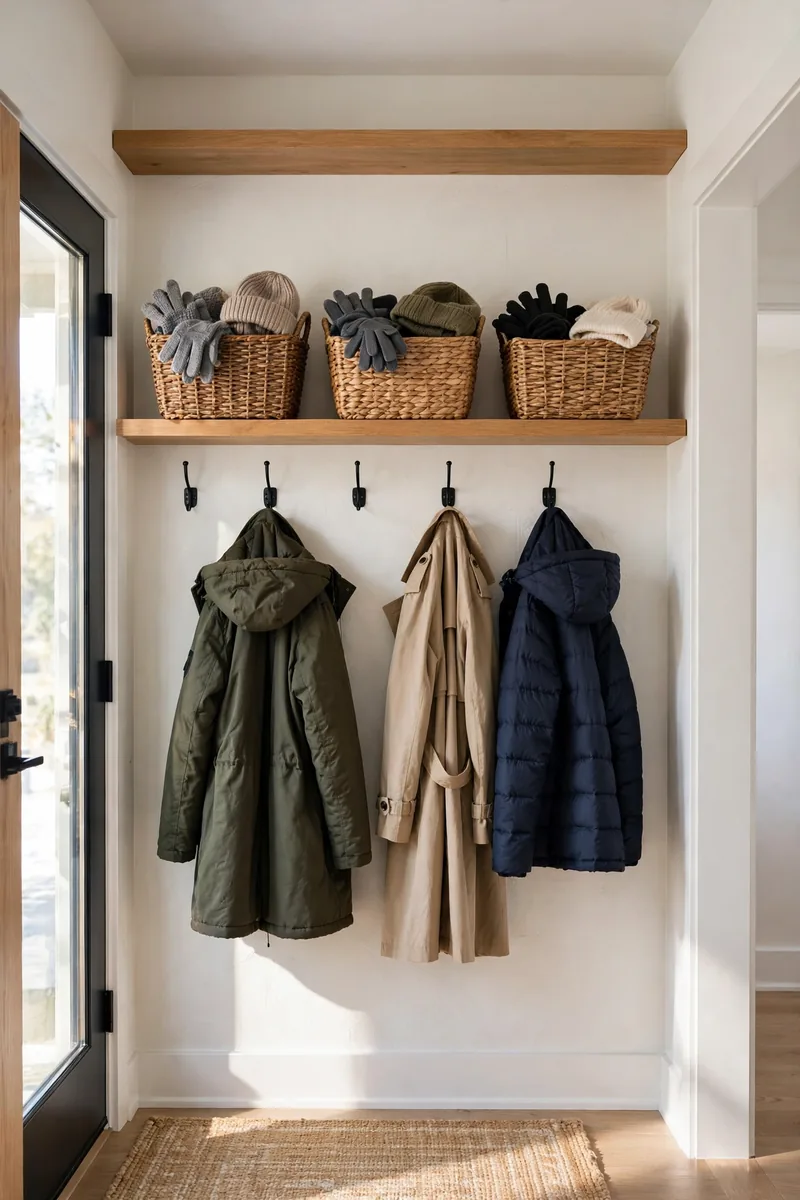
When floor space is gone, entryway storage ideas for small spaces move to the walls. Think of your wall in three zones. The high zone, above 6 feet, holds baskets for out-of-season gear you touch a few times a year. The active zone, 3 to 6 feet, holds hooks, the mail sorter, and key drops: everything you grab daily. The low zone, below 3 feet, holds shoes and heavy bags. This keeps weight low and sight lines clean.
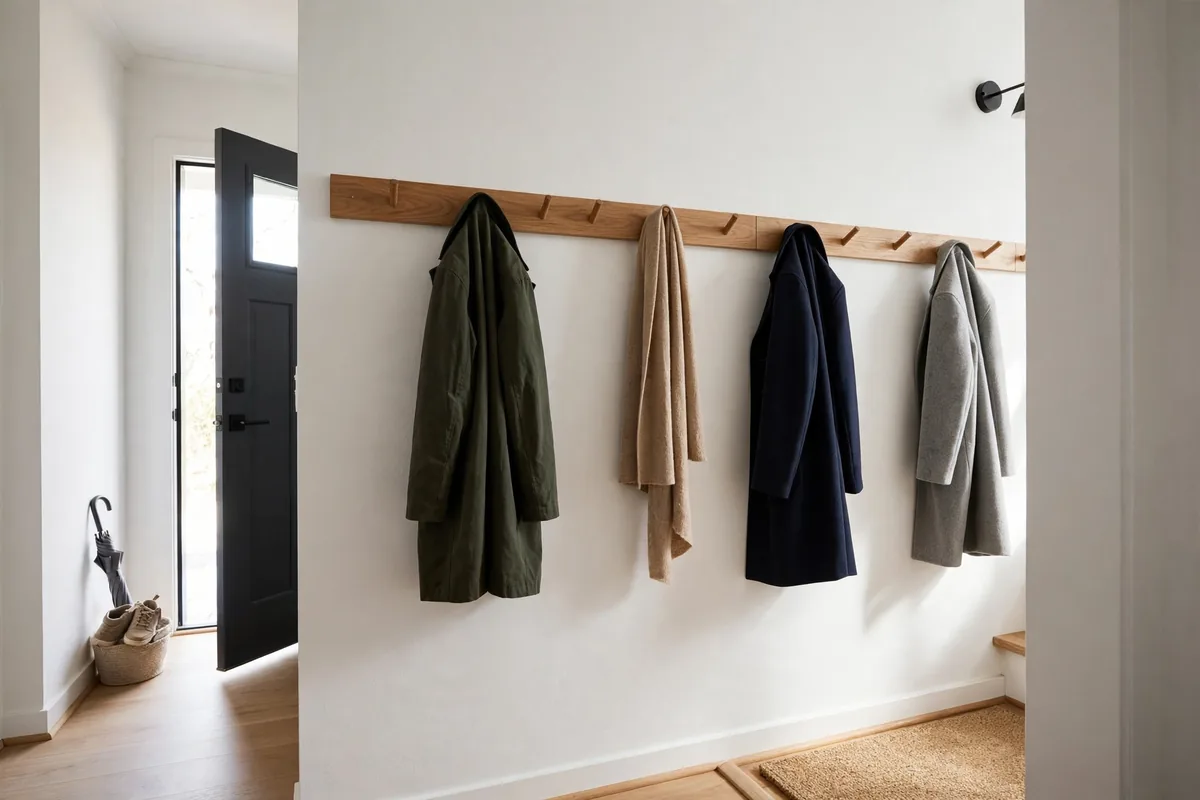
One long rail beats six scattered hooks. A shaker peg rail running the length of your entry wall gives you a clean line that makes a narrow hall feel longer, and you can slide items along it as seasons change. Scattered single hooks look busy and waste the space between them.
Mount your main coat hooks at alternating heights instead of one straight row. Coats hang slimmer when they are not stacked on top of each other, and the zigzag keeps everything an inch or two closer to the wall. In a 36-inch hallway, every inch of clearance matters.
Opinion: pegboard is underrated for entryways. A wooden pegboard with movable pegs, small shelves, and hanging baskets adapts when your life changes, and it looks intentional instead of improvised. It is the closest thing to custom built-ins without the price.
What is the best bench for a small entryway?
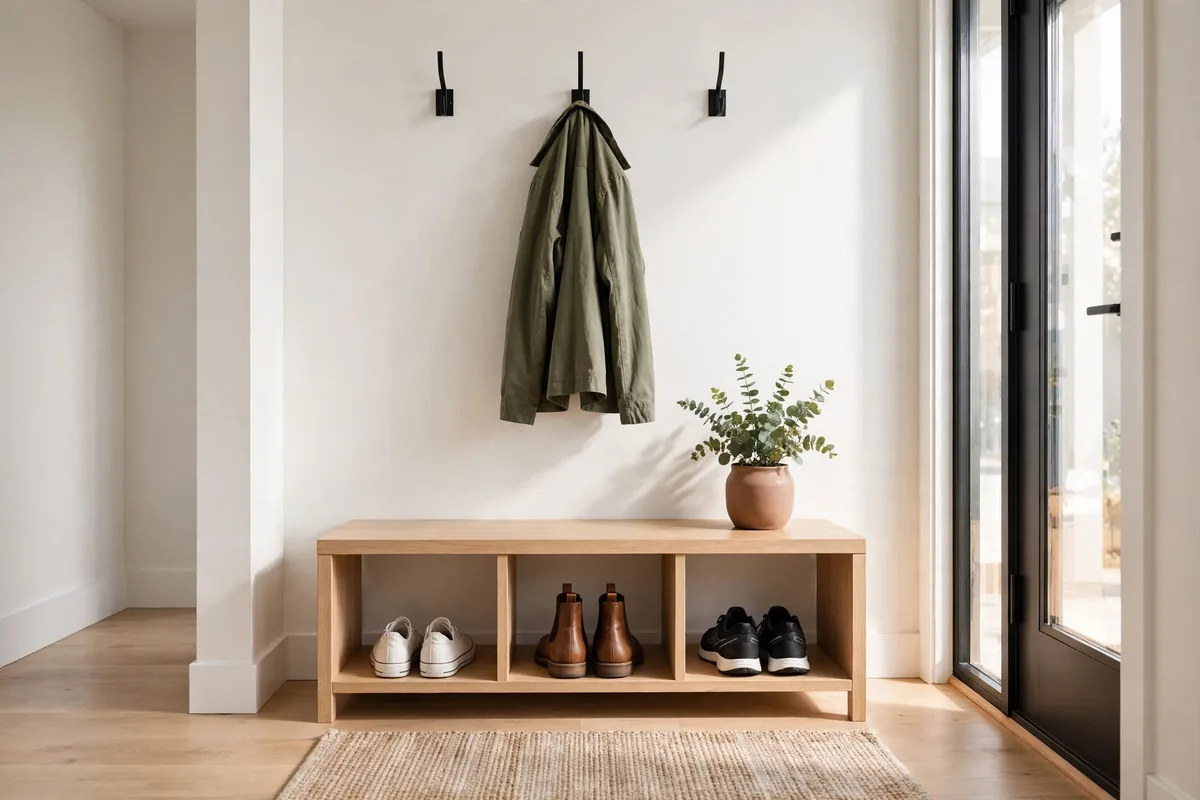
The best bench is 14 to 16 inches deep, 17 to 19 inches tall at the seat, and has open cubbies underneath for shoes. That depth lets you sit comfortably without eating the walkway, and the seat height works for most adults tying shoes.
Pick open cubbies over drawers in narrow halls. Drawers need clearance to pull out, which blocks the walkway every morning. Open cubbies fitted with slide-out canvas baskets hide the mess just as well and cost less. If you need hidden storage, a lift-up seat beats drawers too.
Look for a bench that does at least two jobs. Seat plus shoe storage is the minimum. A bench with a lower shelf for boots and a tray on top for keys covers three jobs in one 15-inch-deep footprint. That is how small spaces win: every piece earns its place twice.
Not for everyone: skip the upholstered storage bench if you have muddy boots or a dog. Fabric seats stain fast by the front door. A wipeable wood or metal bench with baskets underneath survives real life much better.
How do you stop shoes from taking over the floor?
Give each person a “rule of two”: two pairs of shoes live in the entryway, and everything else lives in bedroom closets. Shoes multiply faster than any other entryway clutter, and a 2024 OnePoll survey for The Container Store named clothes and shoes as 29 percent of household clutter. The rule of two is the only system I have seen actually hold.
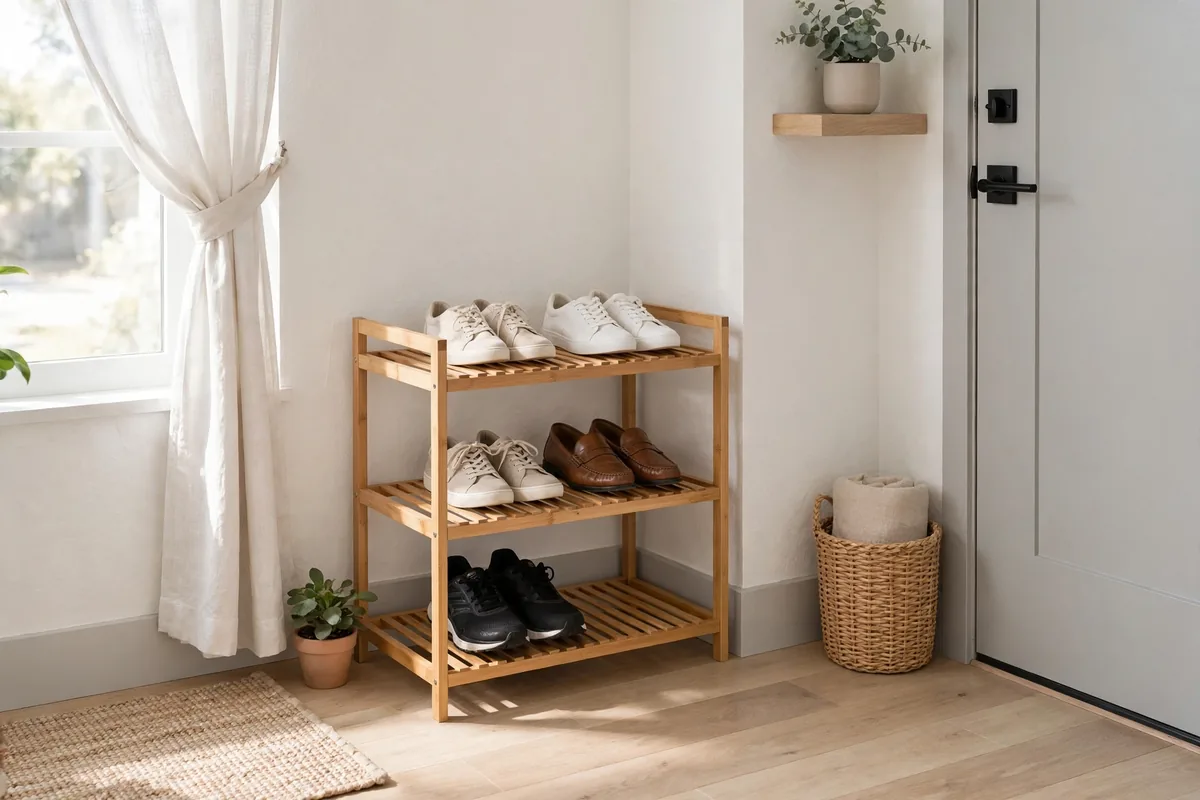
Then choose open or closed storage honestly. Open racks are lowest friction: you kick shoes off and they land in their slot, no doors to open. Closed cabinets, like slim tipping-drawer shoe cabinets about 6 to 7 inches deep, hide everything and keep dust off, but they add one step to putting shoes away.
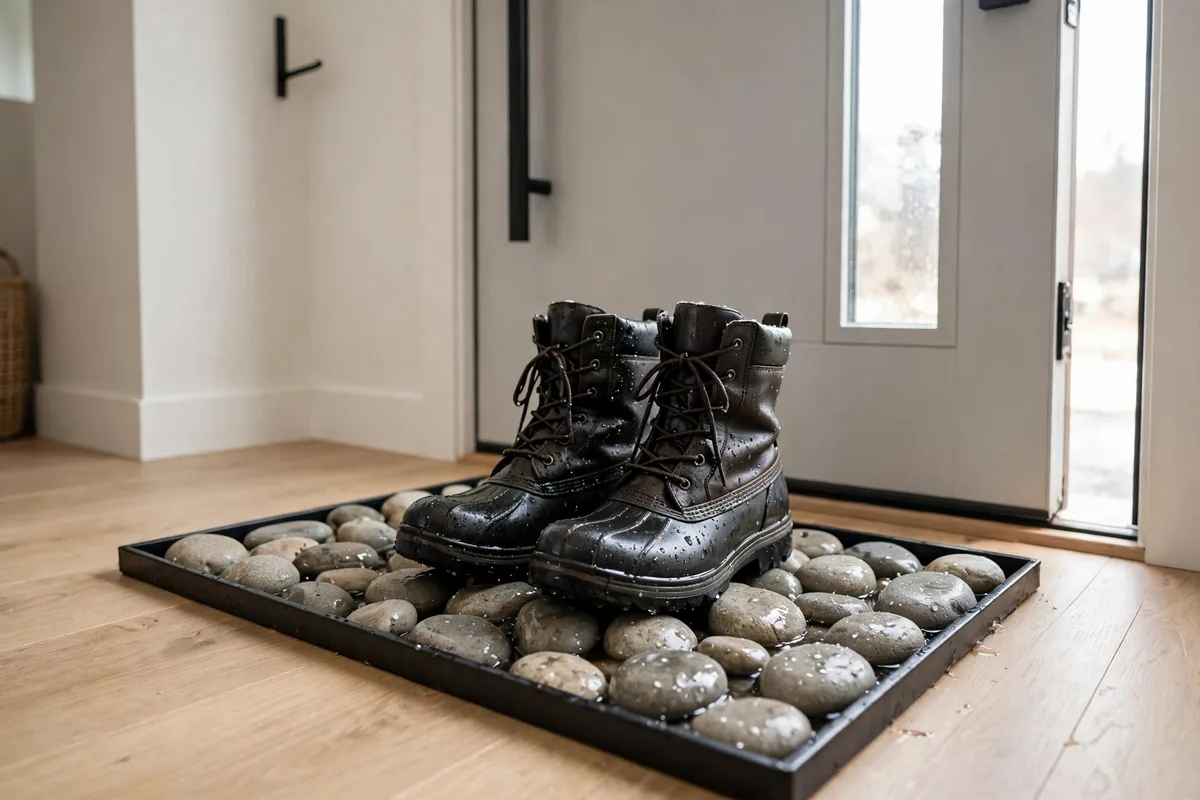
For damp shoes, pick slatted or open designs. Airflow dries soles and cuts odor. A simple slatted bamboo rack works and costs little. Keep one washable boot tray by the door for rainy days so wet shoes never touch the floor.
Opinion: open storage wins for families with kids, closed wins for adults who hate visual clutter. Match the storage to the people, not to the photos.
How do you handle coats with no closet?
Three options, and the right one depends on your walls. Wall hooks are cheapest and slimmest: a rail of five sturdy hooks holds a family’s daily coats in about 4 inches of wall depth. A freestanding coat rack works when you cannot mount anything, but it needs floor space and tips easily, so skip it in tight halls with kids. A hall tree combines hooks, bench, and shoe storage and is the best single purchase for a no-closet entry.
One trick multiplies any of these: swap bulky hangers for slim felt hangers on the coats you do hang. Organizer Allison Flanders notes slim felt hangers can gain you up to 30 percent more hanging space.
Keep only current-season coats by the door. When October turns cold, the heavy coats come out and the light jackets move to a bedroom closet or a high shelf basket. If your coats are already spilling into the bedroom, our small closet organization ideas guide shows how to carve out overflow space without a remodel.
A hall tree is overkill for a single person with two coats. A simple five-hook rail and a shoe tray will serve you better and cost a fifth as much.
If your stairs sit by the front door, the void underneath makes a natural mudroom: see our under stairs storage ideas for lockers, benches, and shoe cubbies that fit the slope.
What is a landing pad, and why does every entryway need one?
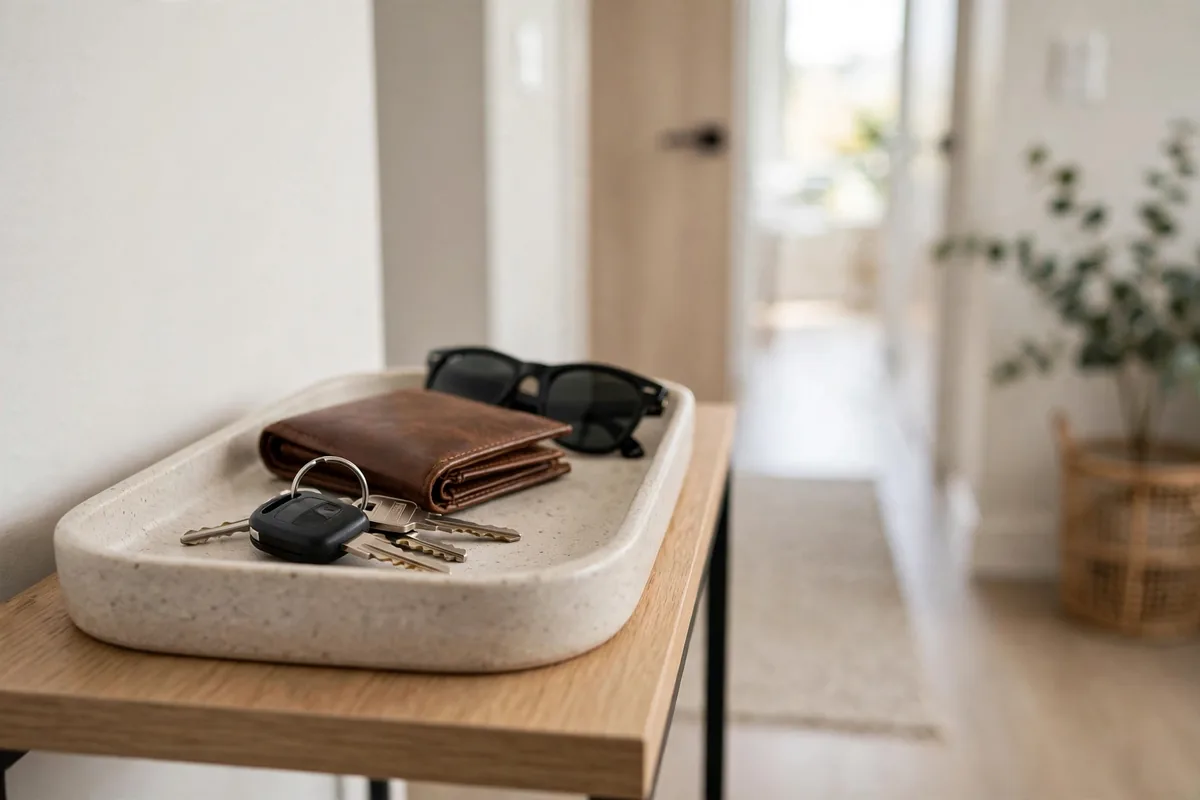
A landing pad is one dedicated spot where your keys, wallet, sunglasses, and work badge live. It can be a ceramic bowl, a leather valet tray, or a small wall shelf. The container does not matter. The location does: elbow height, within arm’s reach of the door, and used every single time you walk in.
This tiny habit kills the most stressful part of mornings. A 2026 Swiffer survey of 2,000 Americans found the average person missed two fun events and had two household arguments in three months because of a messy home, and lost keys are the classic trigger. A landing pad turns “where are my keys” from a daily crisis into a non-event.
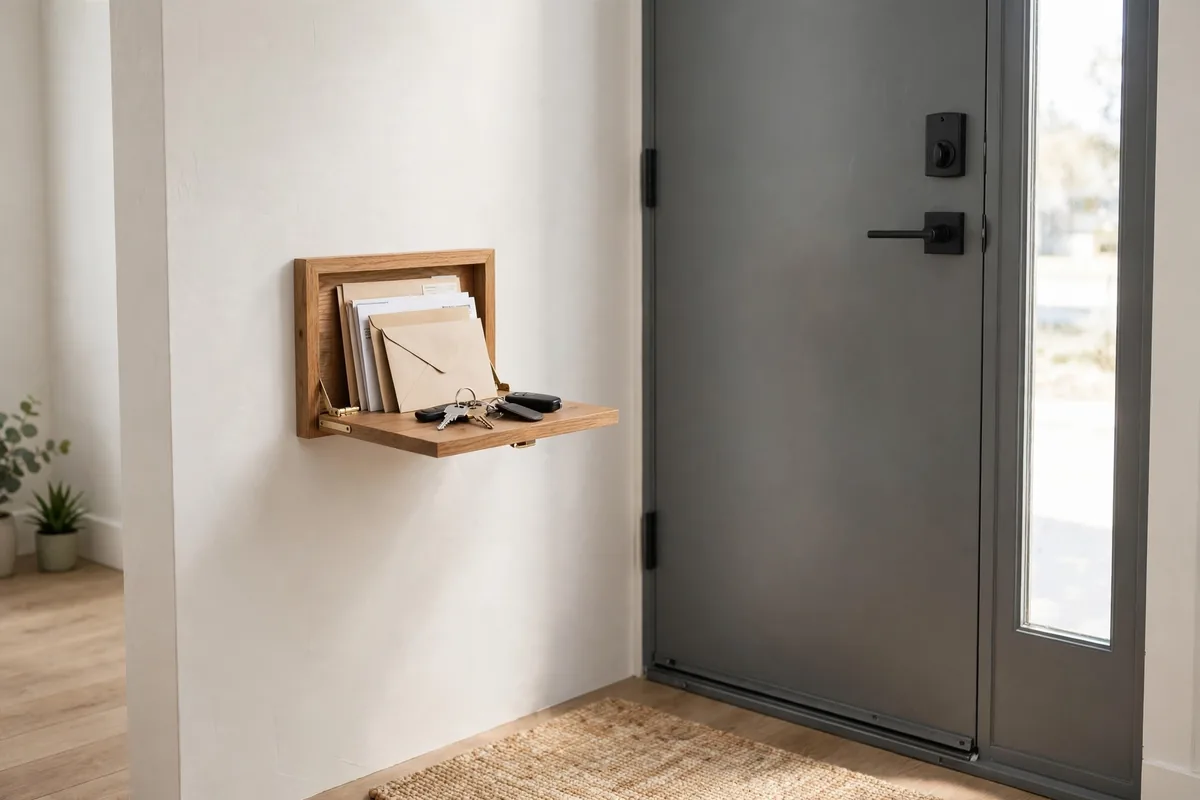
No room for a table? Mount a flip-down wall shelf that folds flat when you do not need it, or screw a small lipped shelf beside the door. In the tightest entries, a magnetic key strip or a row of small hooks at elbow height does that job in zero floor space.
Opinion: the landing pad is the highest-return $15 you will spend on your entryway. Buy it before the bench, before the hooks, before anything. If you only do one thing this weekend, do this.
If your front door is the garage door, run the same landing-pad system just inside it: our small garage storage ideas guide shows the bench-and-hooks setup that catches the daily drift before it reaches the house.
How do you stop mail from piling up?
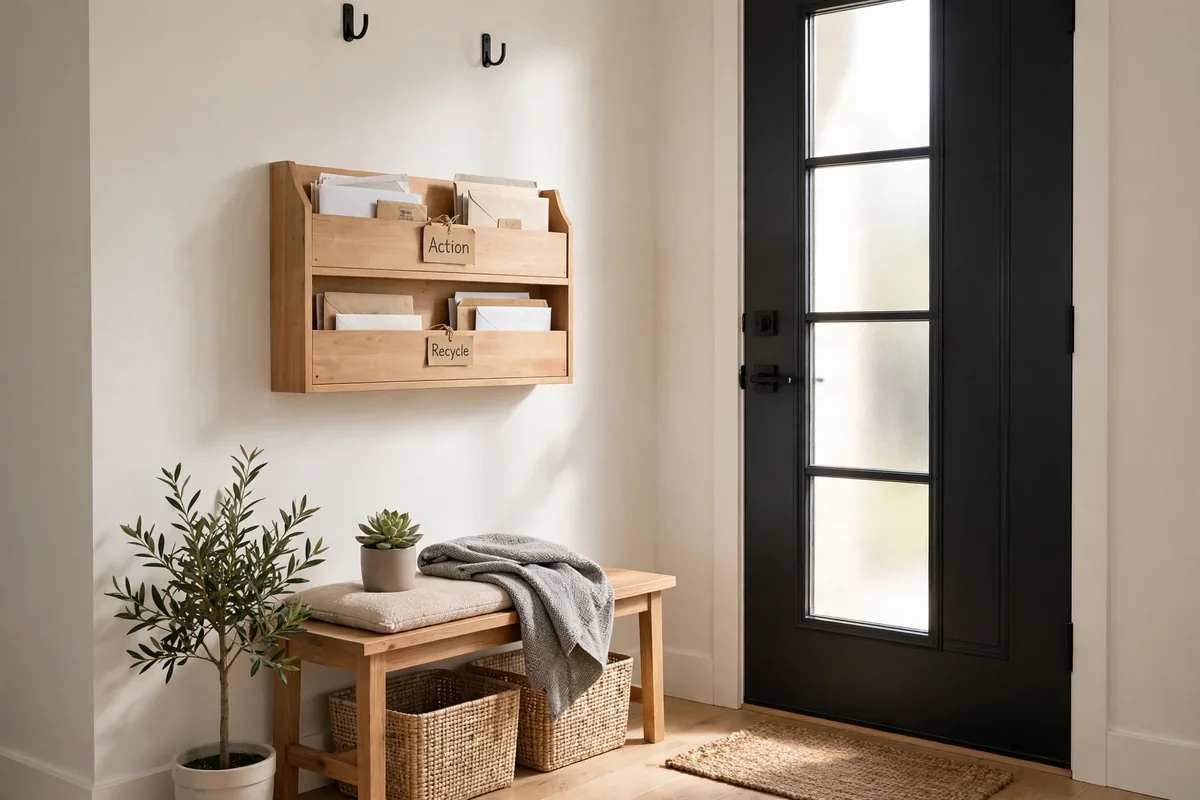
Mount a two-slot wall sorter by the door and label the slots “Action” and “Recycle.” Sort every piece the second you walk in: junk goes straight to recycling, bills and letters go in the Action slot. Never let unsorted mail touch a flat surface, because flat surfaces are where mail goes to die.
Review the Action slot once a week, ideally on the weekend. Pay the bill, file the letter, RSVP to the invite, then empty the slot completely. A sorter that never gets emptied is just a vertical junk drawer.
Go paperless where you can to shrink the inflow. Most banks, utilities, and insurers let you switch to electronic statements in a few minutes, which cuts the daily pile in half. What is left is mostly worth keeping.
The same wall-first thinking works in other tight rooms. We used it in our small bathroom storage ideas guide, where a wall-mounted cabinet replaced a whole vanity’s worth of clutter.
What works if you rent and cannot drill?
Freestanding furniture first, over-door hardware second, adhesive hooks third. That order protects your deposit.
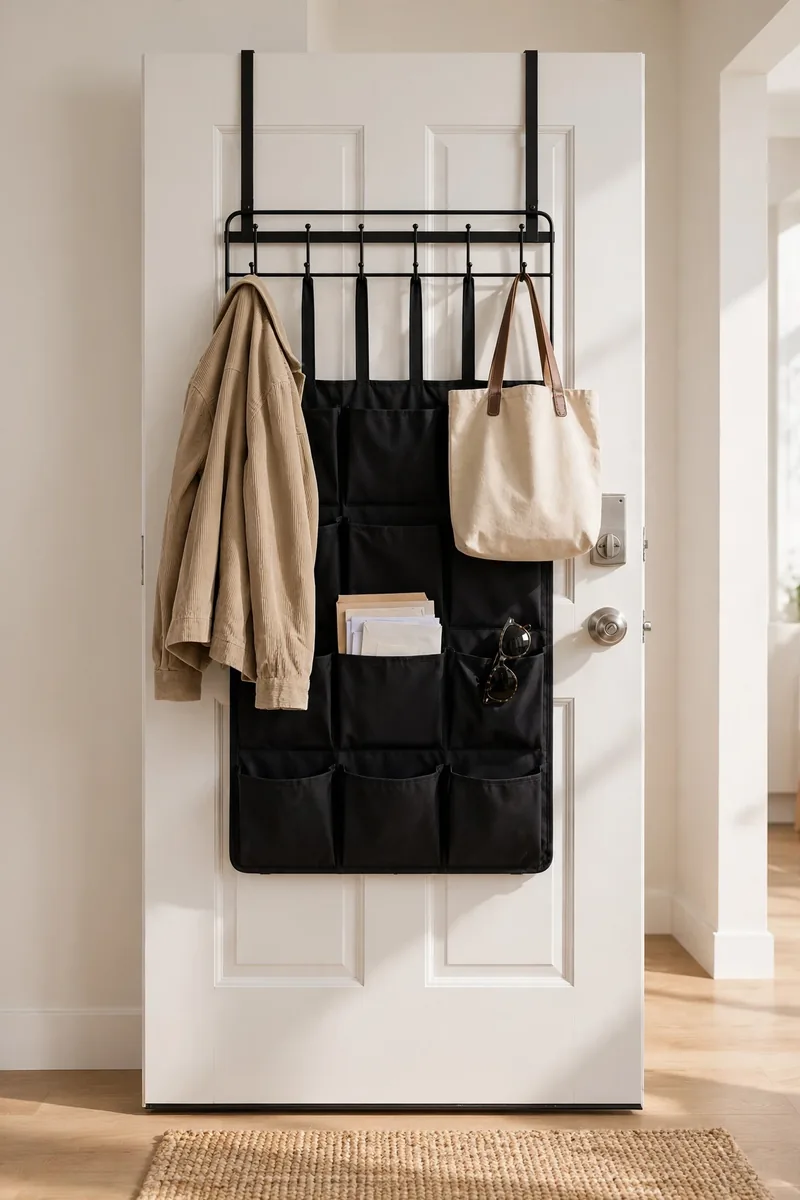
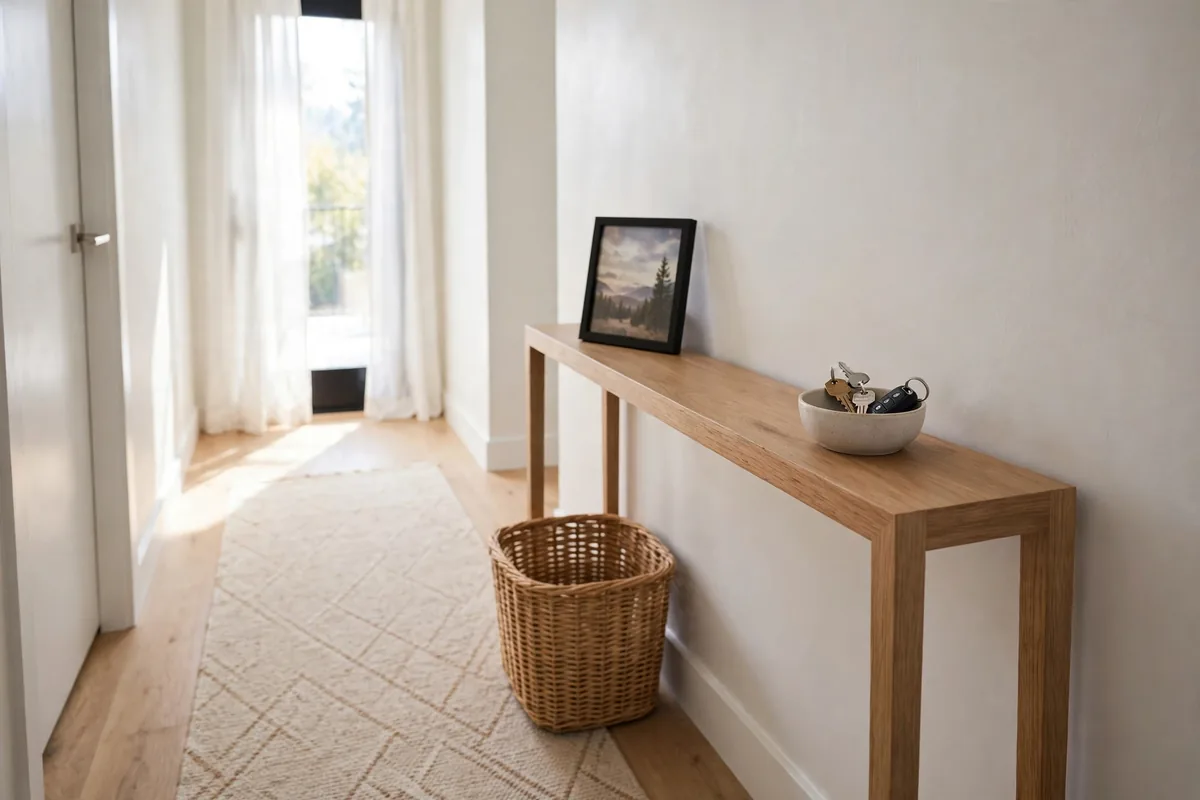
Freestanding pieces need no permission and move with you: a slim shoe rack, a narrow console, a hall tree, or a leaning shelf. An over-the-door rack turns the back of your front door into coat storage; a $20 over-door organizer can replace a $200 hall tree.
Adhesive hooks work when you respect their limits. Command medium utility hooks hold up to 3 pounds and large ones up to 5 pounds on a proper surface, per 3M’s published ratings (covered by Hunker: https://www.hunker.com/2091727/use-command-hooks-risks-damage/). That covers keys, dog leashes, and light bags. It is not enough for a heavy winter coat plus a backpack. Clean the spot with rubbing alcohol and wait the full cure time first.
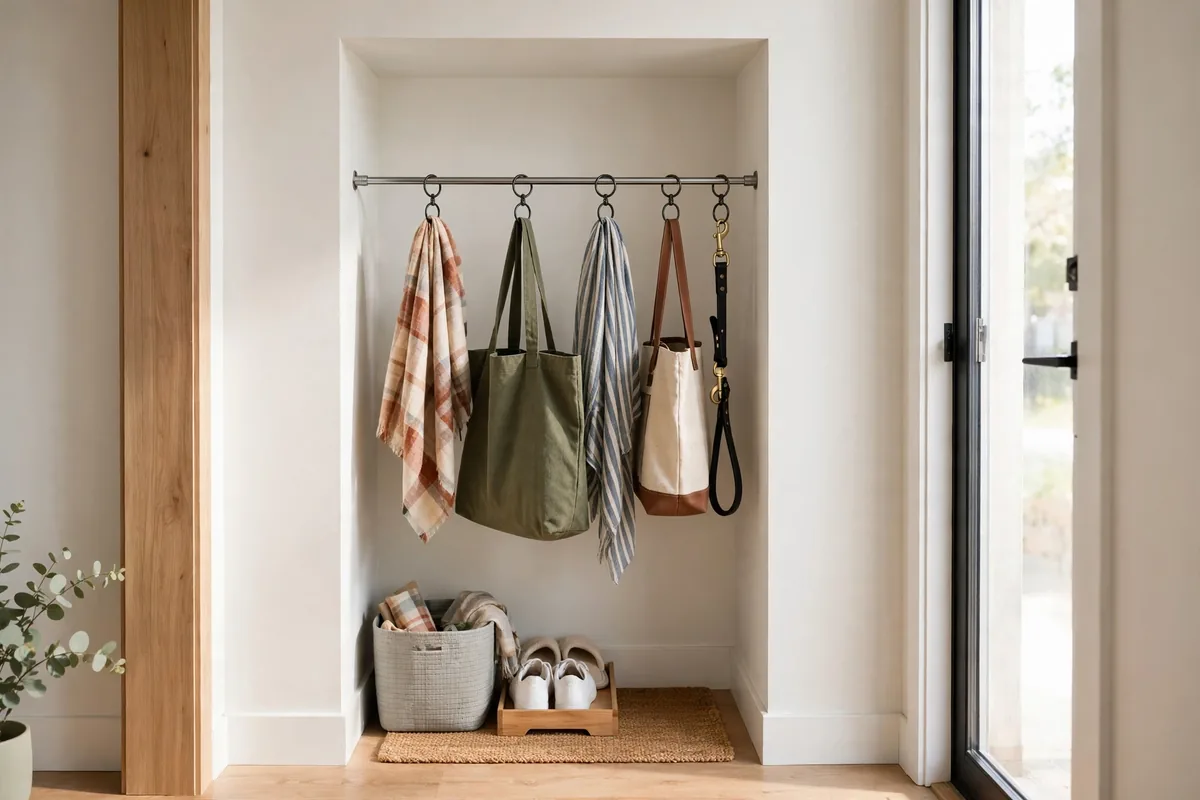
A tension rod is the renter’s secret weapon: wedge one in a shallow nook and hang scarves or tote bags from it with ring clips. Zero holes.
Opinion: freestanding beats adhesive for coats. A coat that crashes down at 2 a.m. costs more in drywall repair than a $60 freestanding rack would have. A full no-drill setup usually lands under $150, cheaper than losing a deposit.
How do you make a small entryway work with kids?
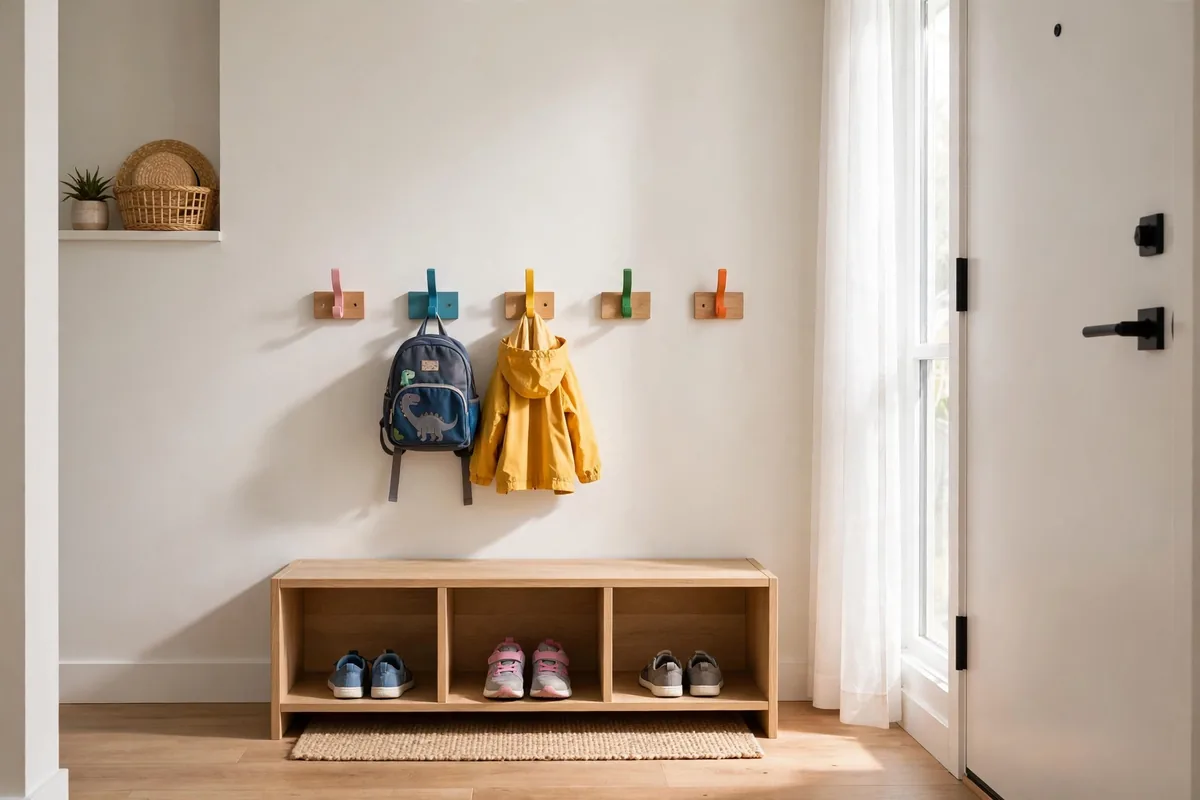
Give each kid their own low hook, their own cubby, and a picture label. Kids maintain systems they can reach and recognize. Mount hooks at 42 to 48 inches so small arms can hang a backpack without help, and put one open cubby per child at floor level for shoes.
Picture labels beat word labels for young kids. A photo of their own backpack on their cubby works better than a name tag they cannot read yet. For school-age kids, a small whiteboard or chalk label lets them claim their spot.
Keep the kid zone ruthlessly simple: one hook, one cubby, one tray for the week’s school papers. If their system needs more than that, the problem is too much stuff, not too little storage.
Not for everyone: skip the adorable mini-locker sets if your kids are teenagers. Teens need the same adult-height hooks and a bigger shoe footprint, or they will abandon the cute system in a week. Buy for the kid you have, not the kid in the catalog photo.
How do you make a tiny entryway look bigger?
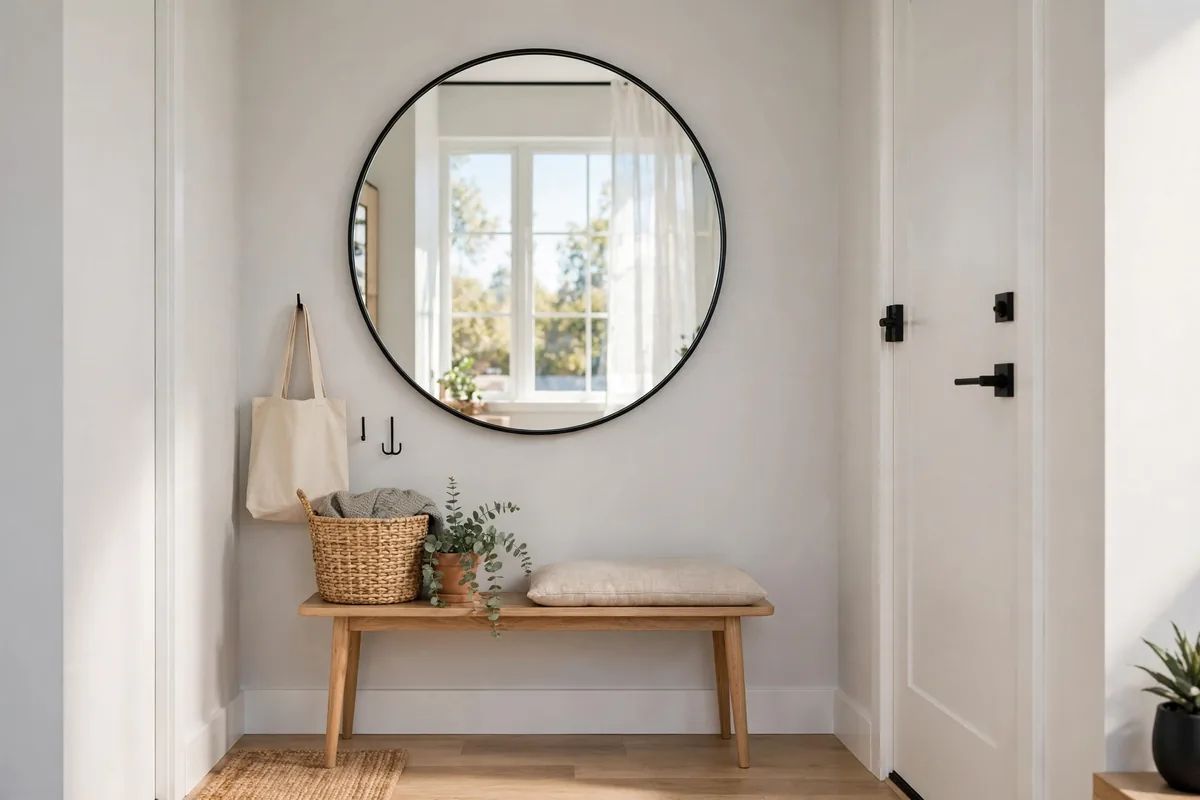
Hang one large mirror. A big round or arched mirror above your bench bounces light around and doubles the sense of space, and it gives you a last look before you leave. One large mirror beats three small decor items every time. This is the cheapest visual square footage you can buy.
Light it in layers. Most entryways have one harsh overhead light or none at all. Add a plug-in wall sconce beside the mirror or a battery motion-sensor LED strip under a shelf. Warm light at face height flatters the space; a dark corner shrinks it.
Keep one wall color and repeat two materials. A narrow hall painted one soft color, with wood and black metal repeated in the hooks, bench, and mirror frame, reads as calm and larger. Five competing finishes read as clutter even when everything is put away. Research published in the Journal of Environmental Psychology in 2025 found that people who saw their homes as more beautiful reported higher wellbeing, and beauty, not spotlessness, was the key link.
Opinion: stop buying small decor for small spaces. One confident piece, a real mirror or real art, makes a tiny entry look designed. Five tiny trinkets make it look like a gift shop.
The 10-minute weekly reset that keeps it working
No system survives without maintenance, so here is the upkeep routine. Once a week, spend ten minutes: return strays to their spots, empty the mail Action slot, wipe the landing pad, and pull out any shoes beyond the rule of two. Ten minutes beats a three-hour overhaul.
Twice a year, do the seasonal swap. In October: heavy coats and boots come in, light jackets and sandals move to bedroom closets or high baskets. A 2026 Swiffer survey found 69 percent of Americans feel overwhelmed by the never-ending task of cleaning, and most of that overwhelm comes from deferred decisions.
Run the one-in-one-out rule from now on. A new pair of shoes means an old pair leaves the entryway. Entryways fail one extra item at a time, and this rule stops the creep.
My judgment: of all the entryway storage ideas for small spaces in this guide, start with the landing pad this weekend, add hooks next, then think about furniture. The order matters more than the budget.
If coats are already spilling past your entryway, our small closet organization ideas guide shows how to build overflow space, and the small kitchen storage ideas guide uses the same landing-pad habit to tame counter clutter. For bedroom overflow, see our under bed storage ideas.
Entryway storage budget tiers: what each level buys
| Budget | What you get | Best for |
|---|---|---|
| Under $25 | Adhesive hook rail ($5 to $15), thrifted tray for keys, cardboard mail sorter | Testing the system before spending more |
| Under $75 | Wall-mounted hook rail, over-door organizer (~$20), slatted shoe rack, two-slot mail sorter | Most renters and small households |
| Under $150 | Slim bench with cubbies, quality hooks, boot tray, landing pad tray, mirror | A complete entryway that looks intentional |
Prices are typical US retail ranges at stores like IKEA, Target, and The Container Store. A complete no-drill setup usually lands under $150, which leaves your deposit intact.
What is the best entryway storage idea for small spaces?
A slim bench (14 to 16 inches deep) with under-seat shoe storage, wall hooks above at 60 to 66 inches, and a catch-all tray for keys and mail. This combination covers sitting, coats, shoes, and small items in one compact footprint.
How do I organize my entryway on a budget?
Start with a $5 to $15 adhesive hook rail, a thrifted tray for keys, and an over-door organizer (around $20). A working no-drill setup usually costs under $75, and a complete one lands under $150.
How deep should an entryway storage bench be?
14 to 16 inches deep for comfortable seating without blocking the walkway, with a seat height of 17 to 19 inches. Keep at least 30 to 36 inches of clear walkway in front of it.
How do I organize an entryway with no closet?
Use a wall-mounted hook rail or a freestanding hall tree for coats, a slim shoe cabinet or rack for shoes, and an over-door organizer for bags and accessories. Keep only current-season items by the door and store the rest in bedroom closets.
What should I not store in my entryway?
Off-season coats, shoes you wear less than weekly, sports gear nobody uses daily, donation bags, and anything untouched for two weeks. The entryway serves daily arrivals and departures; it is not a storage unit.
How do I keep shoes from piling up by the front door?
Apply the rule of two: each person keeps two pairs in the entryway and stores the rest in bedroom closets. Pair the rule with a rack or cabinet that has exactly enough slots, so overflow is visible immediately.
How do I organize mail in a small entryway?
Mount a two-slot wall sorter labeled “Action” and “Recycle.” Sort mail on arrival, never let it touch a flat surface, and empty the Action slot completely once a week.
How do I organize a small entryway as a renter?
Use freestanding furniture, over-door racks, and tension rods, plus adhesive hooks rated for the real weight (3 pounds for medium, 5 for large, per 3M). A full no-drill setup usually costs under $150 and moves with you.
How high should entryway hooks be?
60 to 66 inches for adults and 42 to 48 inches for kids’ bags and jackets. Mounting hooks at alternating heights keeps coats slimmer against the wall.
How do I make my entryway look bigger?
Hang one large mirror to bounce light, add warm lighting at face height, and keep one wall color with two repeated materials. Research links perceived home beauty, not spotlessness, to higher wellbeing.
If winter gear takes over this entry, our guide to organizing your entryway for winter adds the seasonal layer: one hook, one boot tray, and one basket per person, plus the November swap.
