
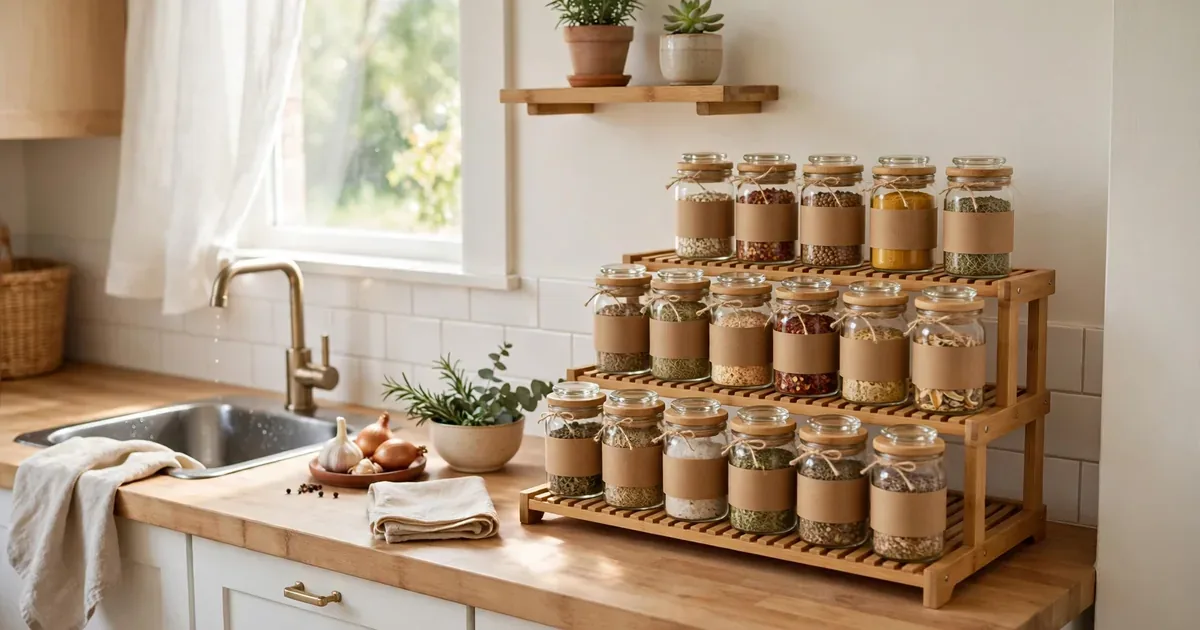

Pick one home for your spices and commit to it. In a small kitchen, a single drawer fitted with a tiered insert beats jars scattered across three cabinets, because every label faces up and nothing hides in the back row. Decant the jars you reach for weekly into matching containers, label the lids, and park bulk refills somewhere else entirely. That is the whole system. For the drawer around those jars, our kitchen drawer organization guide covers measuring, tiered inserts, and dividers that keep the system neat. The 17 spice storage ideas below just fit the system into the inches you actually have.
Spice storage gets more search attention than most people guess. Ahrefs data shows about 700 Americans search “spice storage ideas” every month, and the parent topic “spice rack” pulls roughly 33,000, with interest spiking each June and July when grilling season hits. The four niche blogs currently ranking for the query average around 850 words each, and not one of them gives measurements, a comparison table, or a single FAQ. This guide does all three, because in a small kitchen the difference between a system that works and a cabinet of chaos is about two inches and one good label maker.
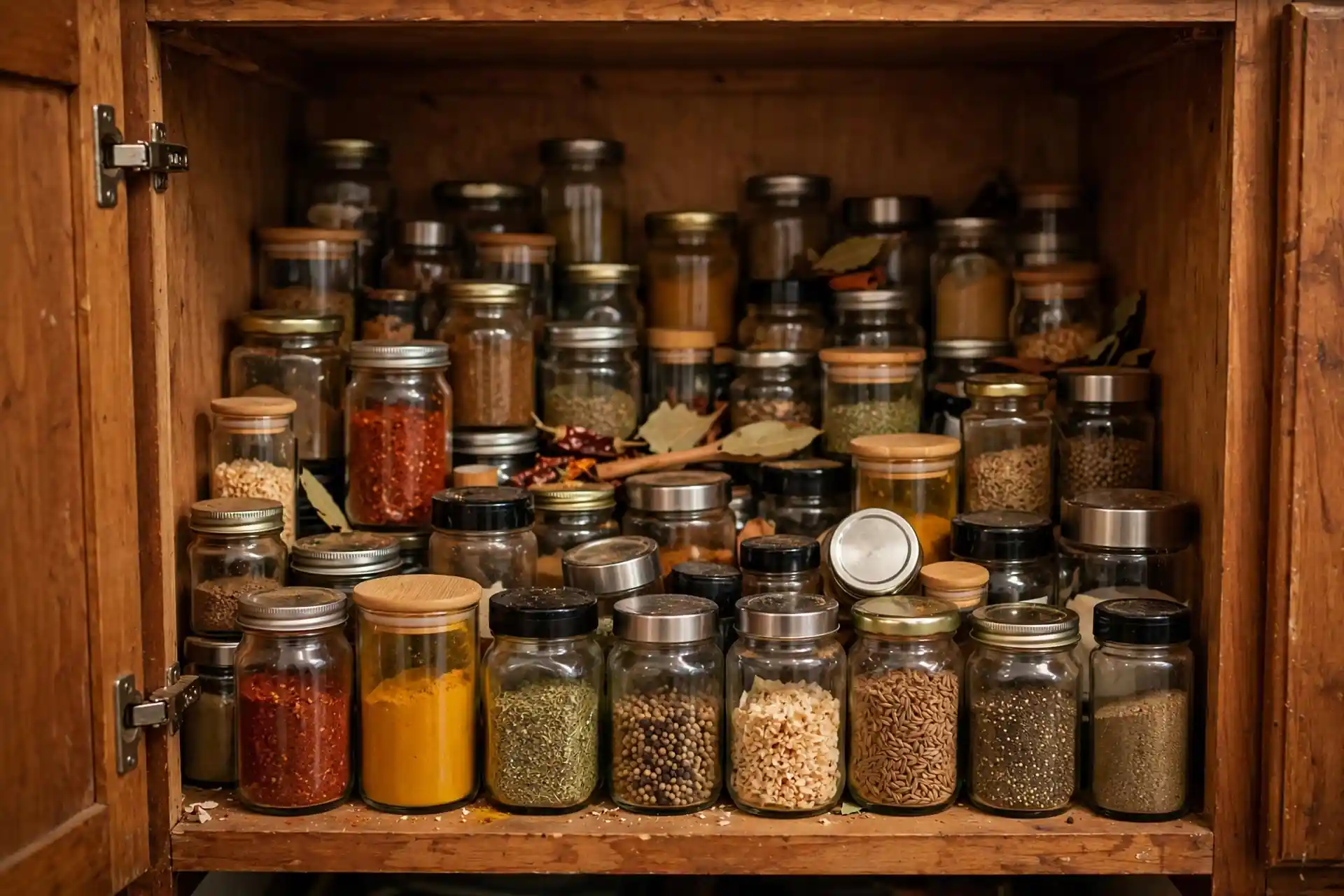
TL;DR: the whole system in 60 seconds
- Choose ONE zone: a drawer, a cupboard shelf, a wall strip, or a door. Jars spread across four spots are jars you will never find.
- Measure before you buy. Jar height beats every pretty product photo, and most returns happen because a jar is half an inch too tall.
- Decant into matching jars only if you own 15 or more. Below that, uniform labels on the jars you already own do the job.
- Keep spices cool, dark, and dry. McCormick’s own guidance gives ground spices 2 to 4 years and whole spices 3 to 4 years, but heat above the stove shortens both fast.
- Write the purchase date on every jar. Your future self will thank you during the yearly purge.
Compare these spice storage ideas at a glance
| Method | Space it needs | Cost tier | Best for | Drilling |
|---|---|---|---|---|
| Tiered drawer insert | One drawer | $15 to $40 | 15 or more jars, fast cooks | No |
| Shelf risers | Half a cupboard shelf | Under $15 | Small collections, renters | No |
| Magnetic wall tins | A strip of wall | $15 to $40 | Renters, visual cooks | No |
| Cabinet-door rack | Inside of one door | $10 to $25 | Narrow jars | Usually screws |
| Lazy susan | One deep cabinet | $10 to $20 | Corner cabinets | No |
| Pull-down rack | One high cabinet | $40 and up | Hard-to-reach shelves | Yes |
Where should you store spices in a small kitchen?
Store spices in the single spot closest to where you cook, chosen by light and heat first, space second. A drawer near the stove beats a pretty wall rack above it, because heat and light fade flavor fast. Rank your options: drawer, cupboard, door, wall, then pantry.
Run the 10-second test on your current setup. Can you lay hands on the cumin in under 10 seconds? If you opened two cabinets and moved three jars, you failed, and no organizer will fix a split system. Consolidate first, buy second. That order matters because most spice clutter is not a storage problem. It is a “jars live in four places” problem, and the fix is free. Time yourself once; the result usually settles the drawer-versus-cupboard debate in under a minute.
Drawers win for most small kitchens: labels face up, jars lie still, and the drawer you already open becomes the spice drawer with one insert. Cupboards come second. Wall storage works only on a cool wall out of direct sun. Under 10 jars? Skip the system entirely; a small tray on the shelf you already open is done. For the rest of the kitchen, the small kitchen storage ideas guide walks the same zone logic through every cabinet.
How do you organize spices in a drawer?
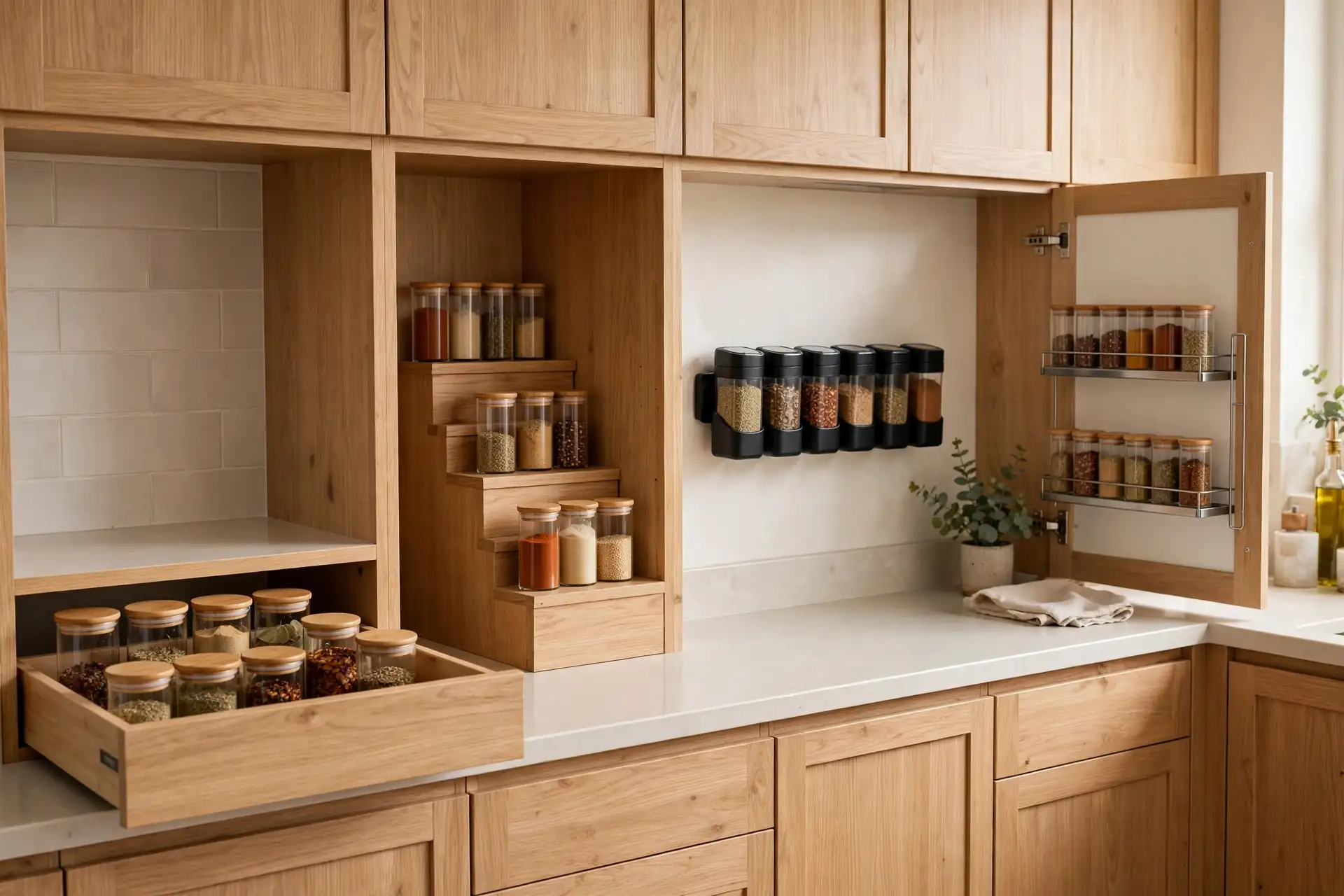
Lay jars on a tiered insert so every label tilts up, sort alphabetically, and label the lids, since lids are what you see from above. Measure your drawer’s inside height before ordering: jar plus tier must clear whatever sits above it. Skipped most often, regretted most often.
Alphabetical sounds boring and beats every clever grouping. Mid-recipe, you do not want to remember whether oregano lives under Italian, herbs, or “green stuff.” Google’s AI Overview for this exact query points to the SpaceAid Spice Drawer Organizer as the reference product. Fine choice, but any sturdy tiered insert with a lip on each step does the job. The lip matters more than the brand. Measure twice and order once. A tape measure now beats a return label later.
Two honest limits. Deep drawers fight you: jars sink and the back half becomes a graveyard, so use bins or a two-level insert, not a flat tray. And tiny jars rattle on inserts built for standard ones, so check tier width against your smallest jar. More spice storage ideas follow in the cupboard section below.
What is the best way to store spices in a cupboard?
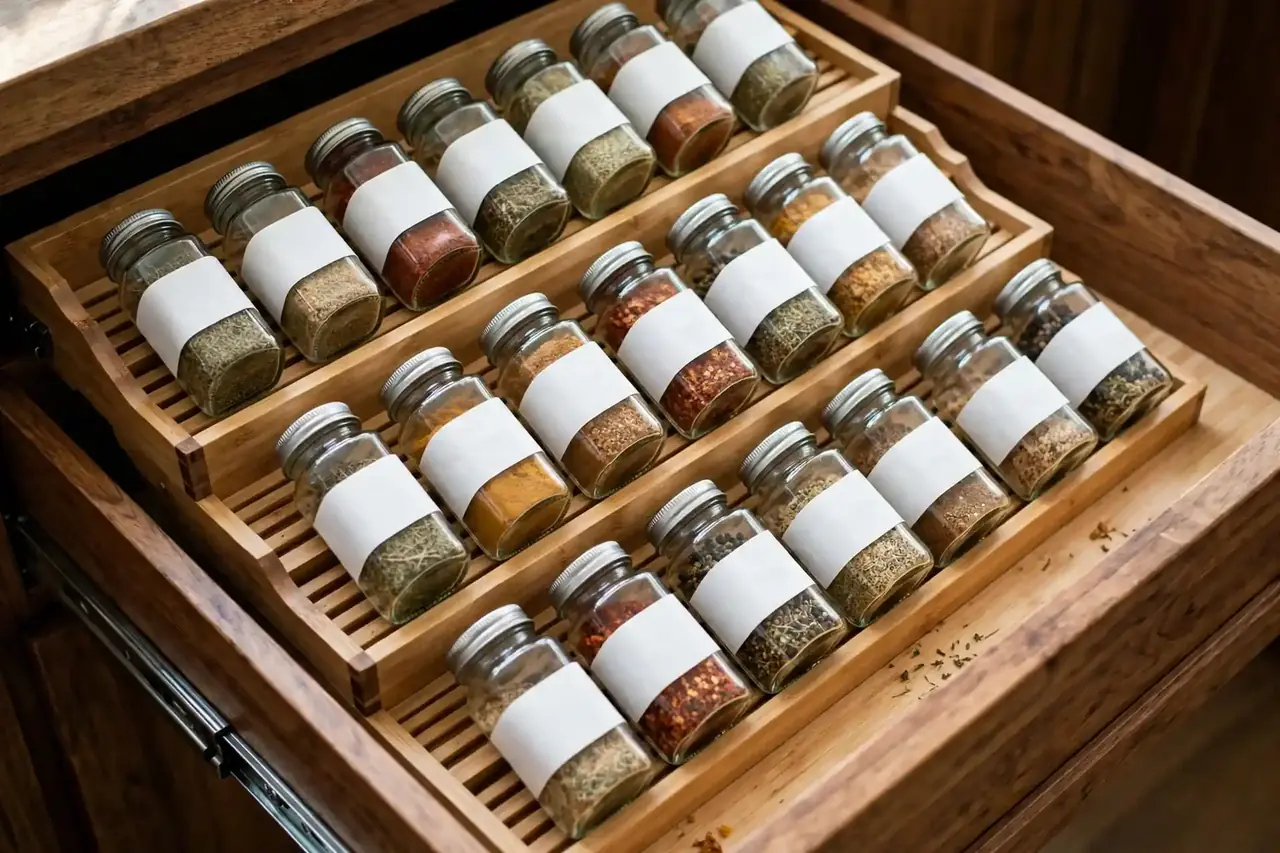
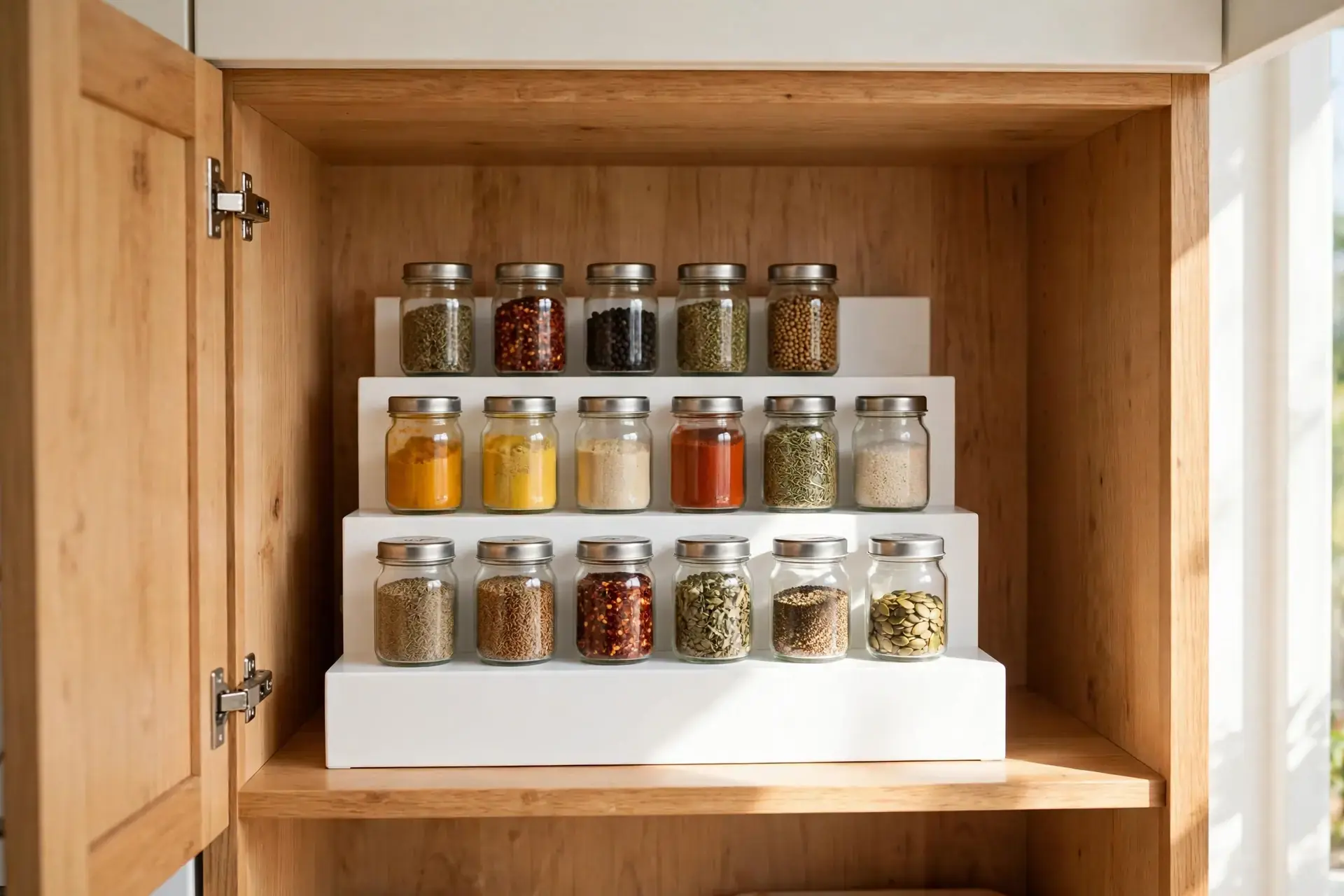
Put a stepped shelf riser in the cupboard so the back row sits higher than the front, keep daily jars at eye level, and move bulk refills higher. A basic riser costs around ten dollars and doubles the visible jars on one shelf. Nothing else under $15 changes a cabinet this much.
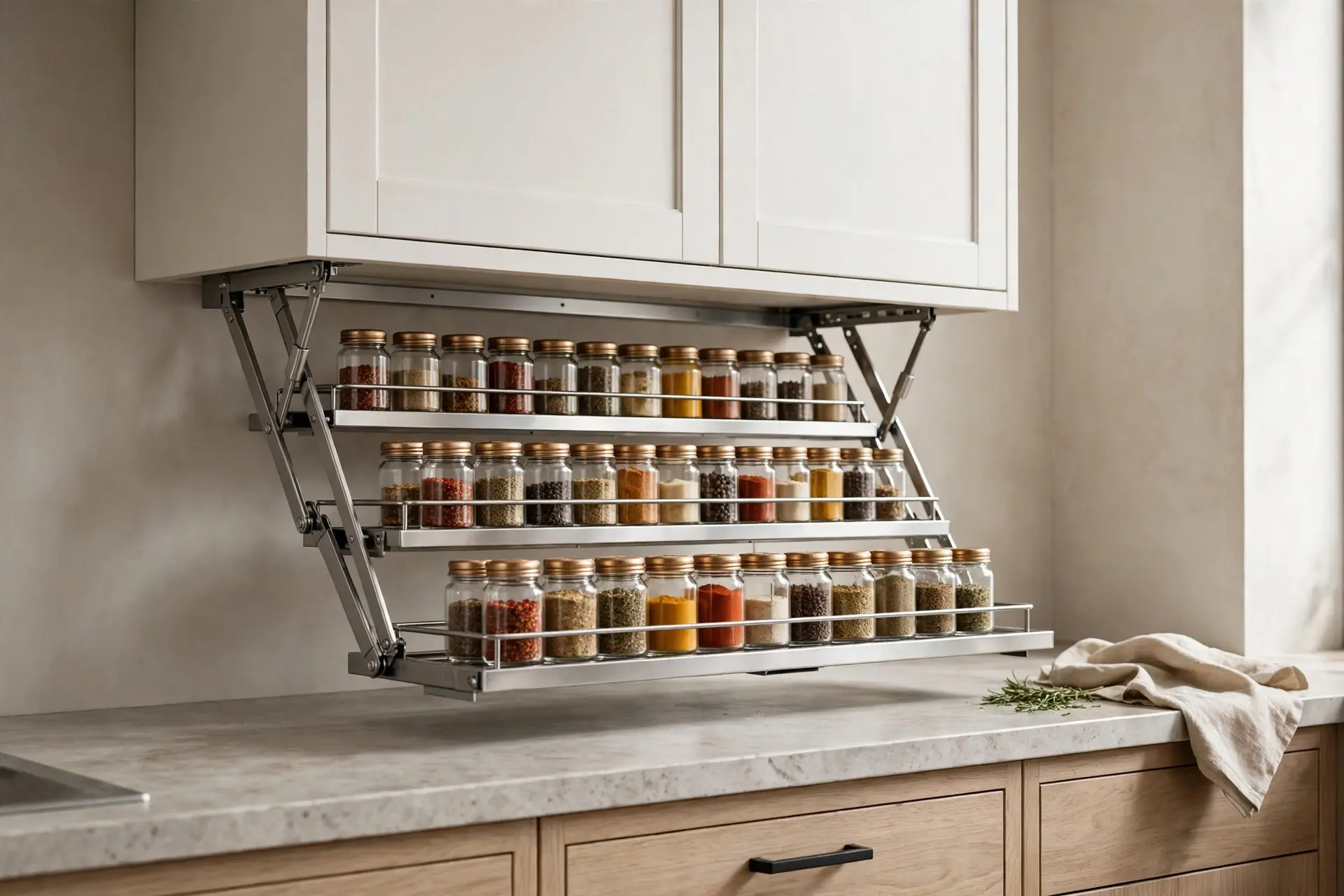
Risers fix the classic cupboard problem: single-file rows where back jars are invisible hostages. With two steps, every label shows. Add one narrow bin for packets so they stop avalanching when you grab the paprika. For high cabinets, a pull-down rack earns its keep; Google’s AI Overview names the Container Store Pull-Down Spice Rack as the reference. IKEA’s NÅLBLECKA was listed at $19.99 in Google’s shopping results, which sets the anchor: cupboard solutions live in the $10 to $25 band. Spices are just one zone in our kitchen cabinet organization ideas guide.
Skip the pull-down rack if you rent, since it screws into the cabinet, and skip it for low cabinets where you can already reach everything. A riser you can lift out beats hardware you have to uninstall. One more small thing: keep the everyday six, salt, pepper, garlic powder, cumin, oregano, chili flakes, on the lowest step. Your hand should find them without your eyes. Put salt and pepper at the very front edge; they earn the easiest reach.
Can you store spices on the wall without drilling?
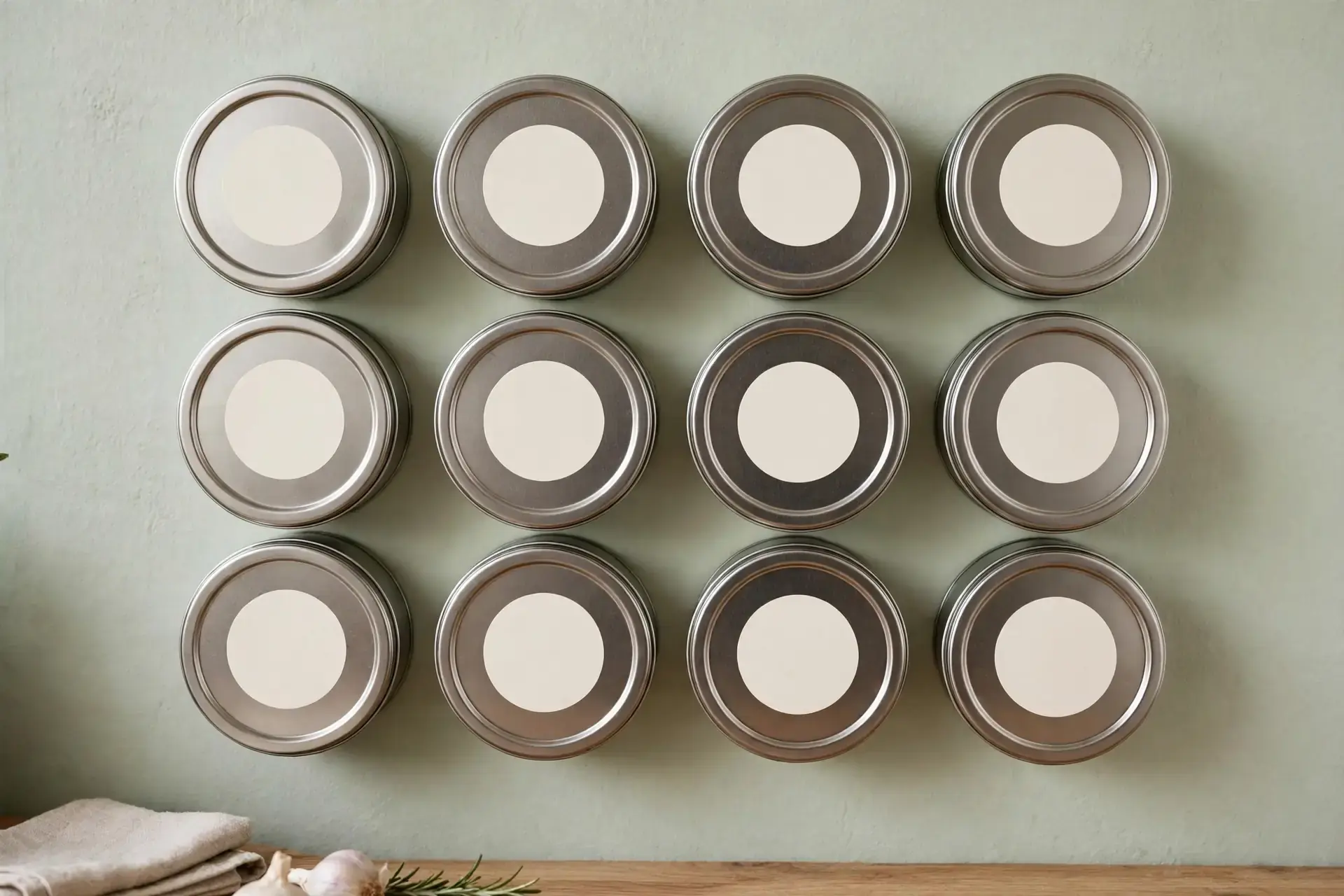
Yes. Magnetic tins on a metal strip, adhesive-mounted rails, and over-the-door racks all hold spices with zero holes and come off clean when you move. The one rule: keep wall spices away from the stove. Rising heat fades flavor, and tins next to a burner are decoration, not storage.
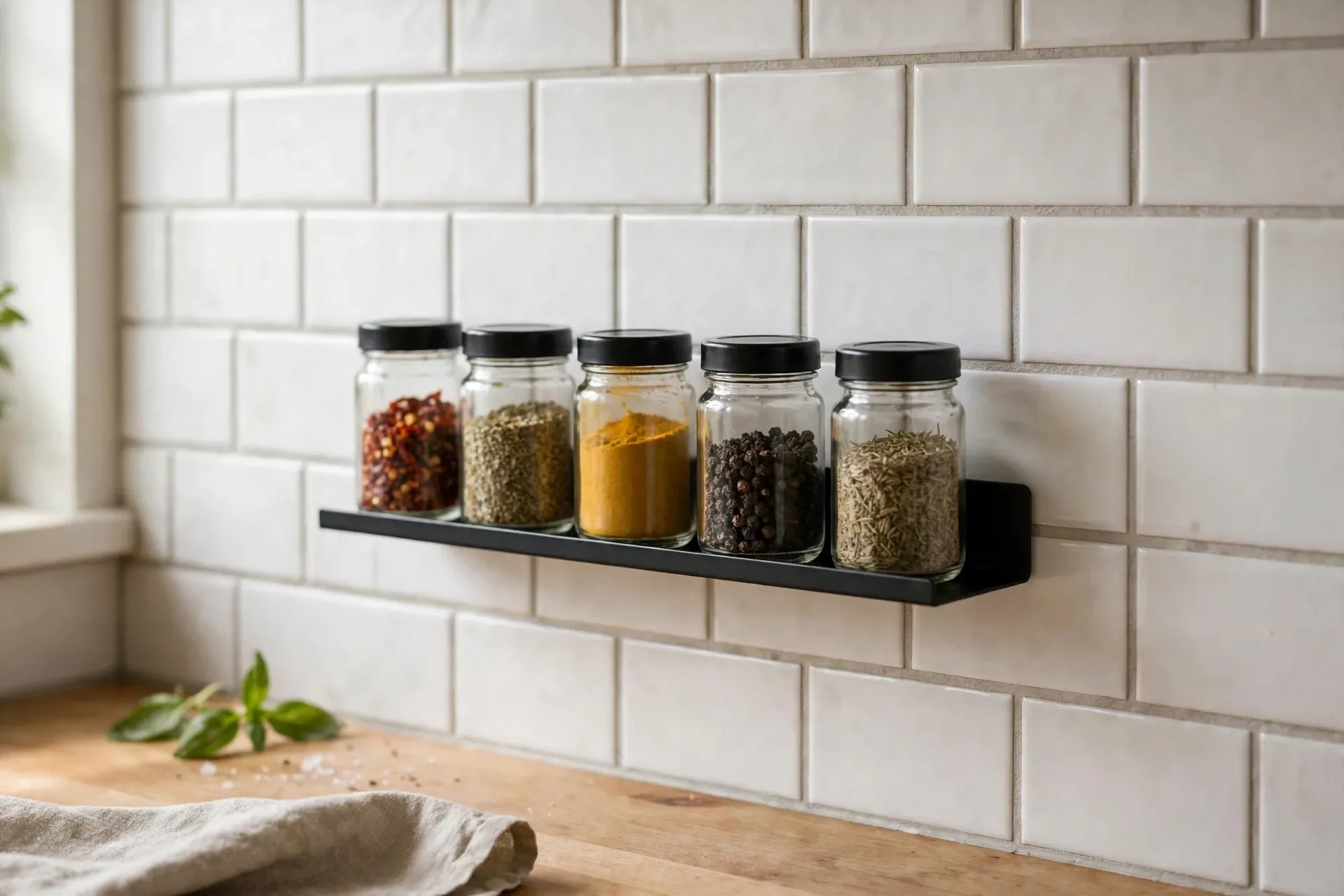
Magnetic tins are the best renter move. A metal strip with strong magnets holds small tins through daily grabbing, labels face out, and the whole thing costs less than takeout. Adhesive rails come second: they hold standard jars and peel off with hair-dryer heat, but respect the weight rating and let the adhesive cure a full day. Over-the-door racks swing, so they suit packets and light jars over heavy glass. Whichever you pick, it keeps jars off the counter, which pairs well with clearing kitchen counter clutter.
Wall storage is not for sunny walls: direct afternoon sun turns tins into little ovens. It is also not for the 30-jar collector, because 30 tins stops being storage and starts being a mural. For wall-mounted spice storage ideas, twelve to fifteen is the sweet spot. Start with six; add a second strip once the first earns its keep.
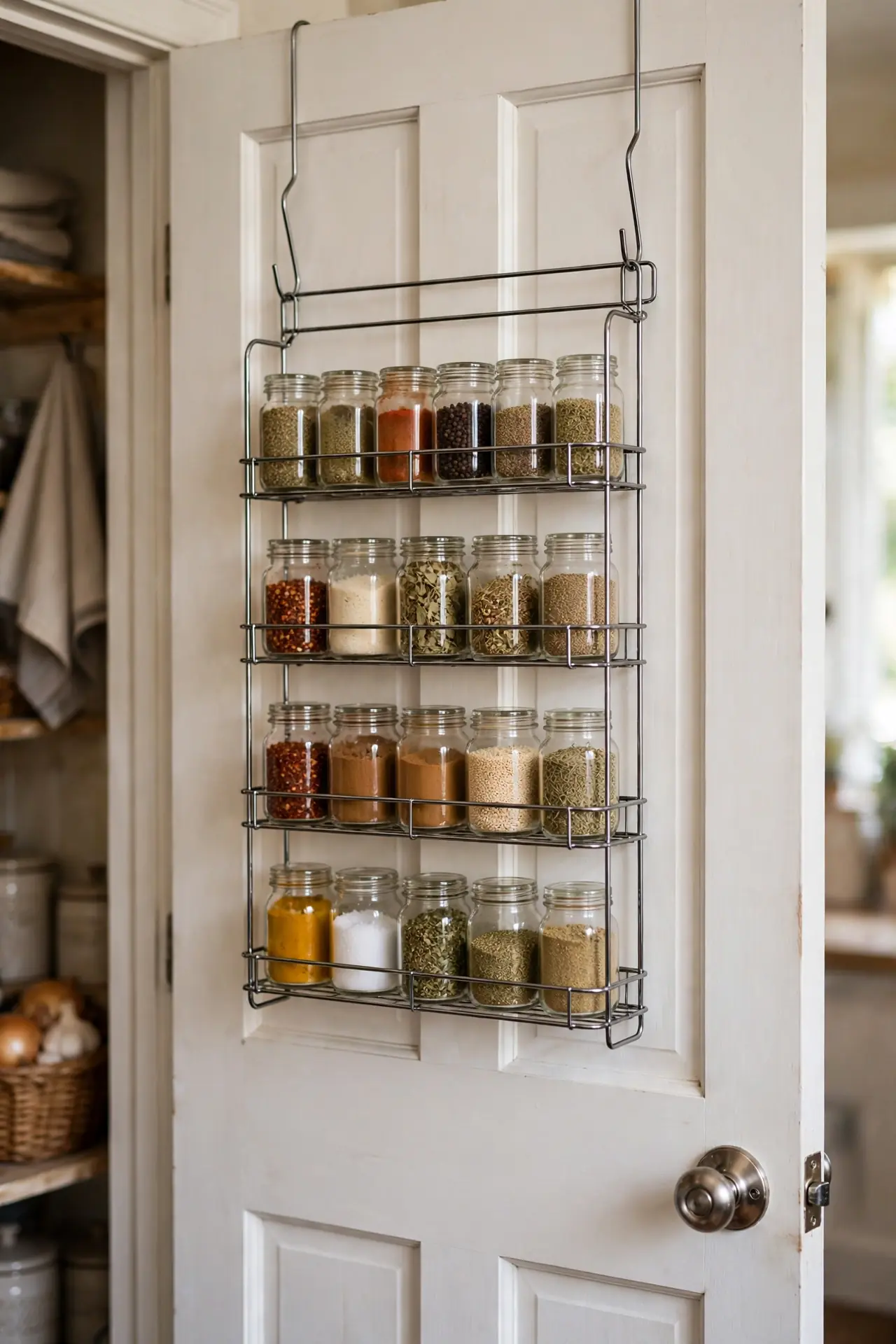
How do you use the inside of a cabinet door for spices?
Mount a slim rack inside a cabinet door for small jars, checking one measurement first: door thickness plus jar depth must clear the shelf behind it when the door shuts. Close it slowly the first time and listen. The best dead space in a small kitchen, and most people never use it.
Wire racks are cheap and forgiving, acrylic ones look cleaner and cost more. Screws hold best, but heavy-duty adhesive strips work for light jars if you respect the weight limit and let them cure. The door inside a base cabinet, the one under the counter near the stove, is prime territory: eye-level when you bend, inches from the action. Packets, small jars, and the spice blends you grab daily belong here. Tall bottles do not. Neither do heavy glass jars on adhesive mounts, which is how doors end up with a spice avalanche at midnight. Label the door jars on their lids too; you read a door rack top-down.
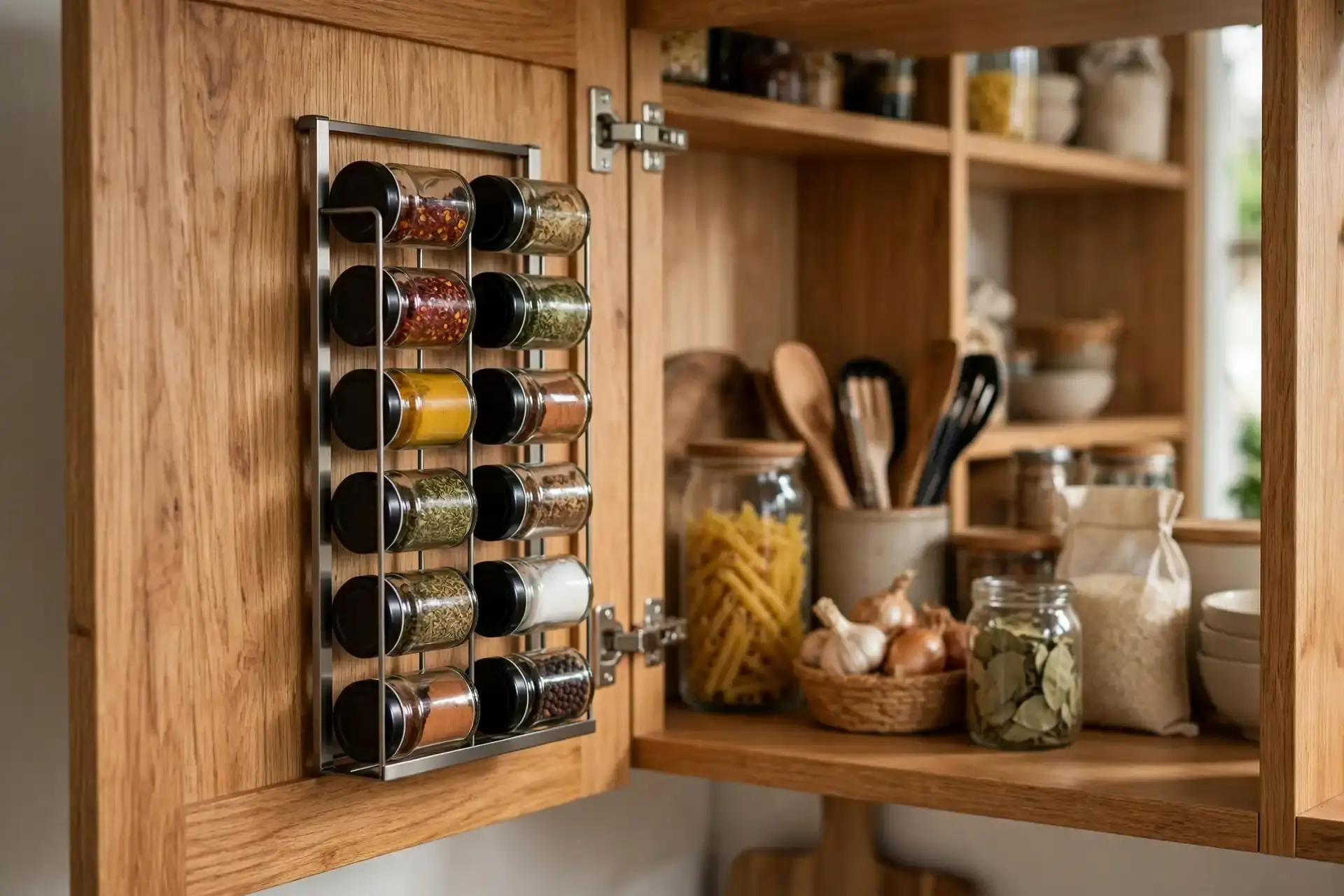
Is a lazy susan worth it for spices?
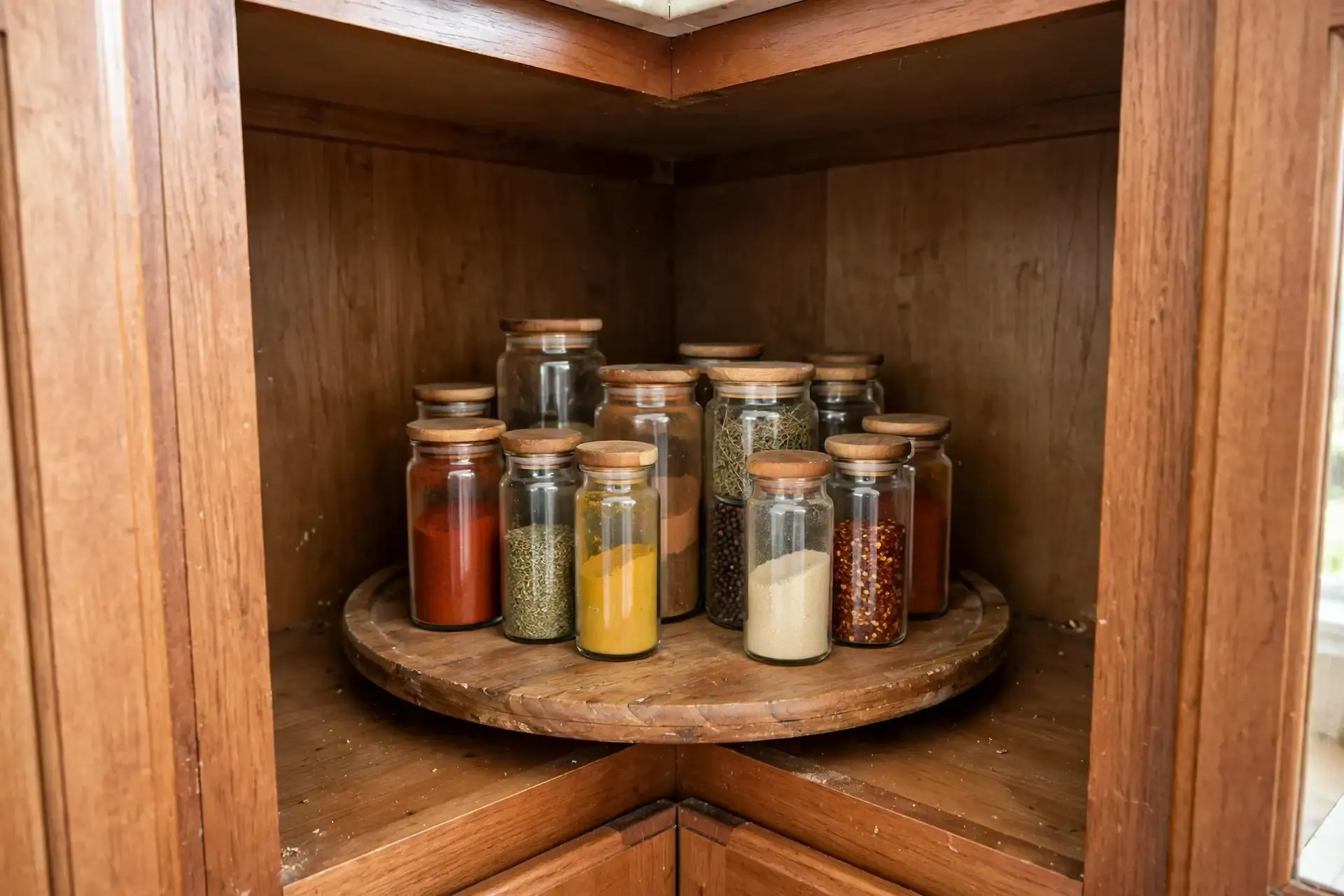
In a deep corner cabinet, yes. On a normal shelf, no. A turntable solves the one problem corner cabinets create, jars lost in the dark back half, and it wastes the circle’s corners everywhere else. Buy one only for a cabinet you cannot otherwise reach into, and measure the cabinet’s depth first so the turntable actually spins without scraping.
Two-tier turntables double the count but hide the bottom tier behind the top, which recreates the exact problem you bought it to solve. One tier, small jars, corner cabinet: that is the whole use case. Everywhere else, a riser shows more jars for less money. The lazy susan is probably the most overbought organizer in the kitchen aisle, and spice jars are where the overbuying shows. If the cabinet already has a riser that works, leave it. Do not fix what is not broken.
How do you organize spices in a pantry?
These pantry spice storage ideas treat the door as prime real estate: a door rack holds daily jars at eye level while stepped shelves keep the rest visible. Decant matching jars only for the front cooking zone. The deep pantry can hold bulk refills in original bags, dated, because nobody needs pretty where nobody looks.
Give the pantry the same zone treatment as the kitchen: daily jars on the door or the lowest shelf, weeklies one shelf up, bulk and backups high or low where reaching is rare. A small pantry rewards this discipline more than a big one, since every shelf is within arm’s reach anyway. A strip of painter’s tape on the pantry door tracks what needs restocking. If your pantry is doing the heavy lifting for the whole kitchen, the pantry organization guide for small pantries builds the full shelf-by-shelf system.
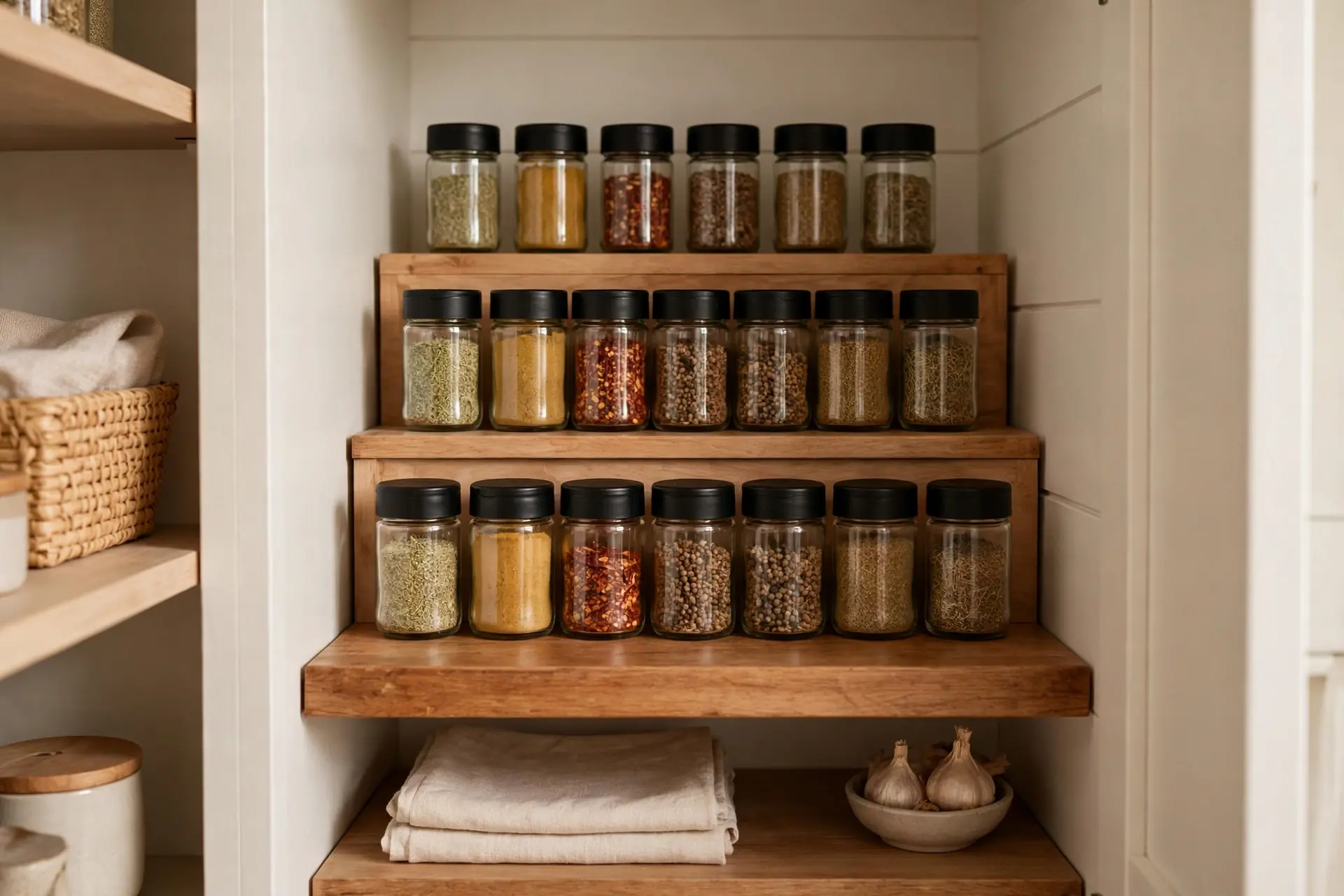
What are some cheap DIY spice storage ideas?
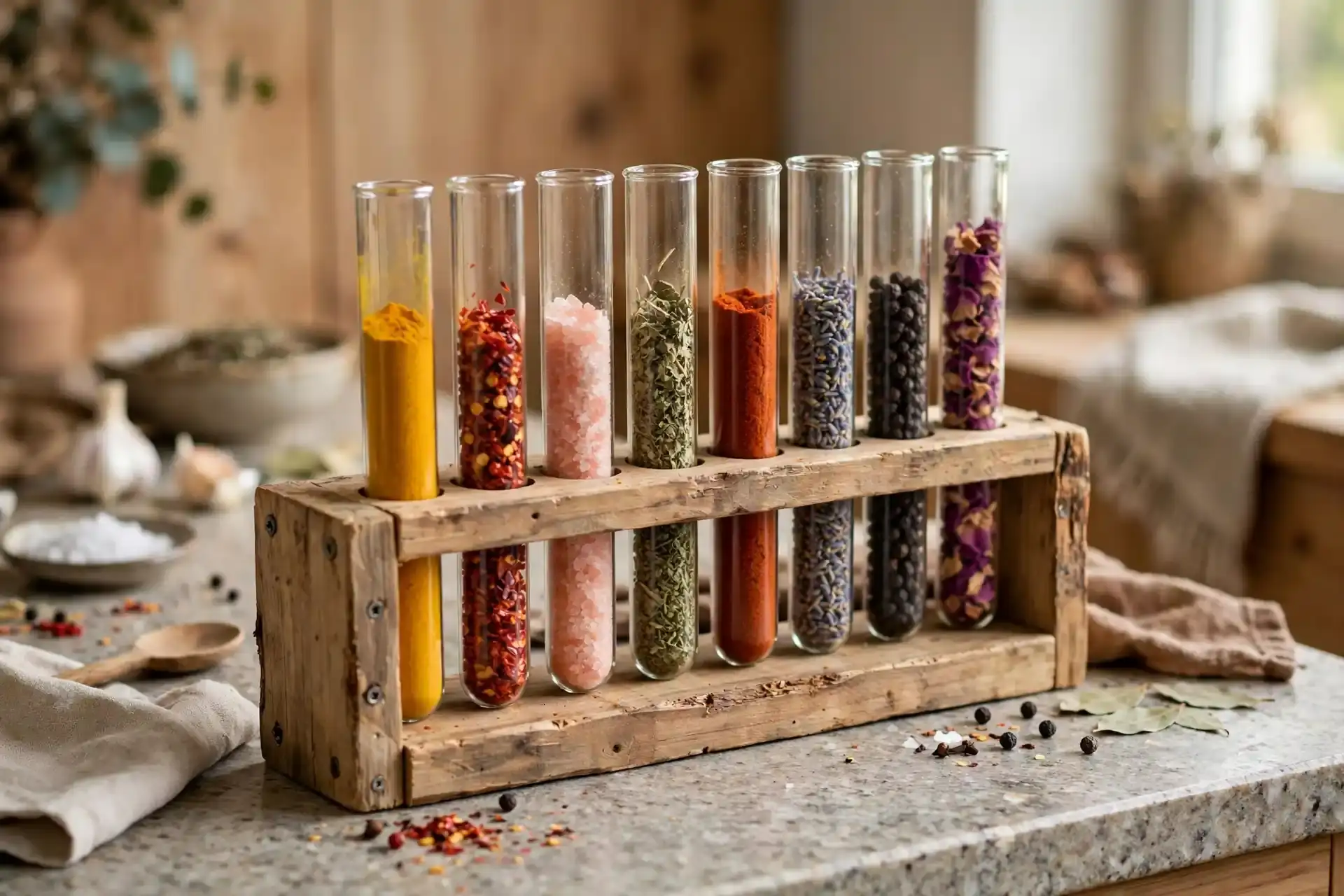
Among DIY spice storage ideas, a 1-by-6 board cut to your cabinet’s width, two screws, and sandpaper make a wall shelf for under $10. A drilled wood block becomes a test-tube rack for pennies per jar. DIY wins on price and exact fit but loses on time, so only build what stores do not sell in your size.
The scrap-wood shelf is the classic for a reason: you cut it to the exact inch your space needs, which no mass-market rack will do. Sand it smooth and seal it against kitchen grease; raw wood above a stove gets grimy fast. Mount it with proper anchors, not hope. The test-tube rack looks like a science project and works like one, perfect for the cook with 20 spices and a drill. Honest opinion: build for odd spaces, buy for standard ones. If your cabinet is a normal rectangle, a $12 riser beats a Saturday of sawing every time.
If this guide helped, the pantry post linked above walks the same build-or-buy logic shelf by shelf, and it is the natural next read.
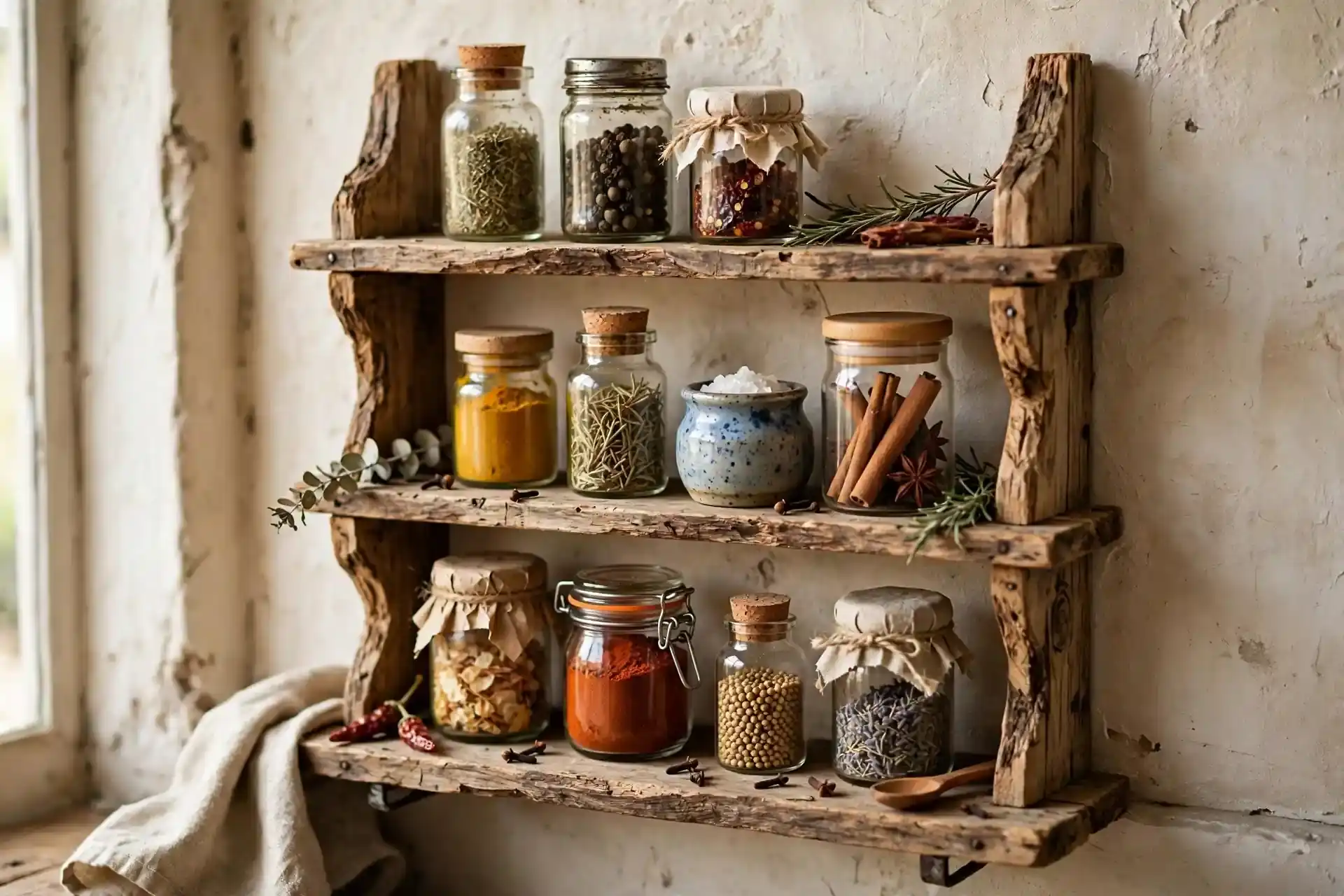
Should you decant spices into matching jars?
If you own 15 jars or more, yes. Matching jars with uniform labels turn a crowd into a scannable grid, and that speed is the whole point. Below 15, decanting is theater: buy a riser and label the jars you own. Either way, label the lids, not just the fronts.
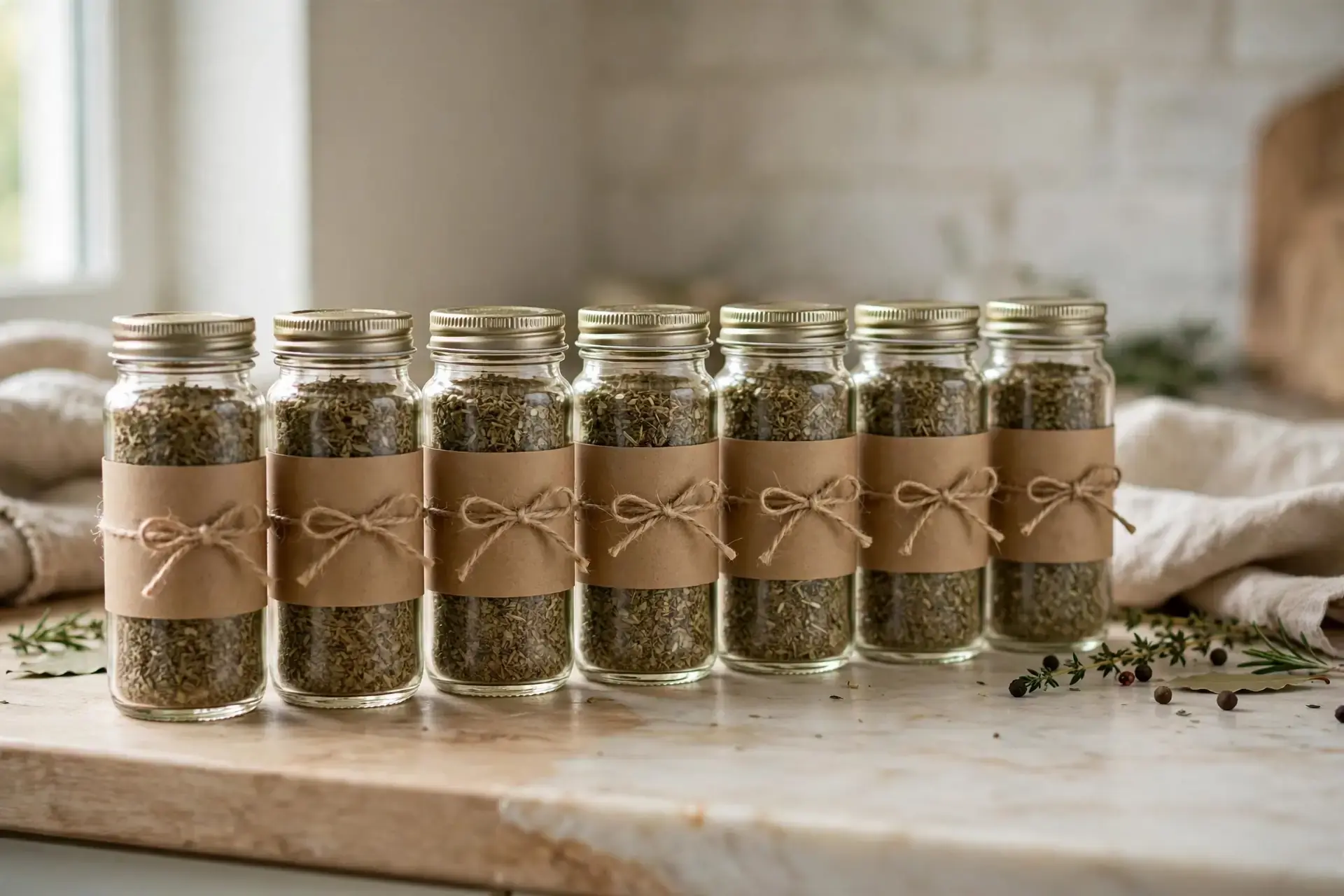
Pick one jar size and commit. Small jars suit most households; bigger ones suit the five spices you burn through. A cheap funnel saves each session from becoming a turmeric dusting, and turmeric stains everything, so decant over the sink. Printed labels look sharpest, chalk forgives changes, kraft with a marker is cheapest. Date every jar. A jar without a date is a mystery, and mysteries get tossed or kept forever. Keep the funnel with the jars, not in a random drawer; you will decant more often when the tool is visible.
Decanting is not for the cook who buys a new spice every month on impulse. Matching sets punish growth: every new jar means ordering more of the same. If your collection is still expanding, keep the original jars, label them well, and decant later when the lineup settles. The jars do not care. Your shelves might.
How do you store bulk spices when space is tight?
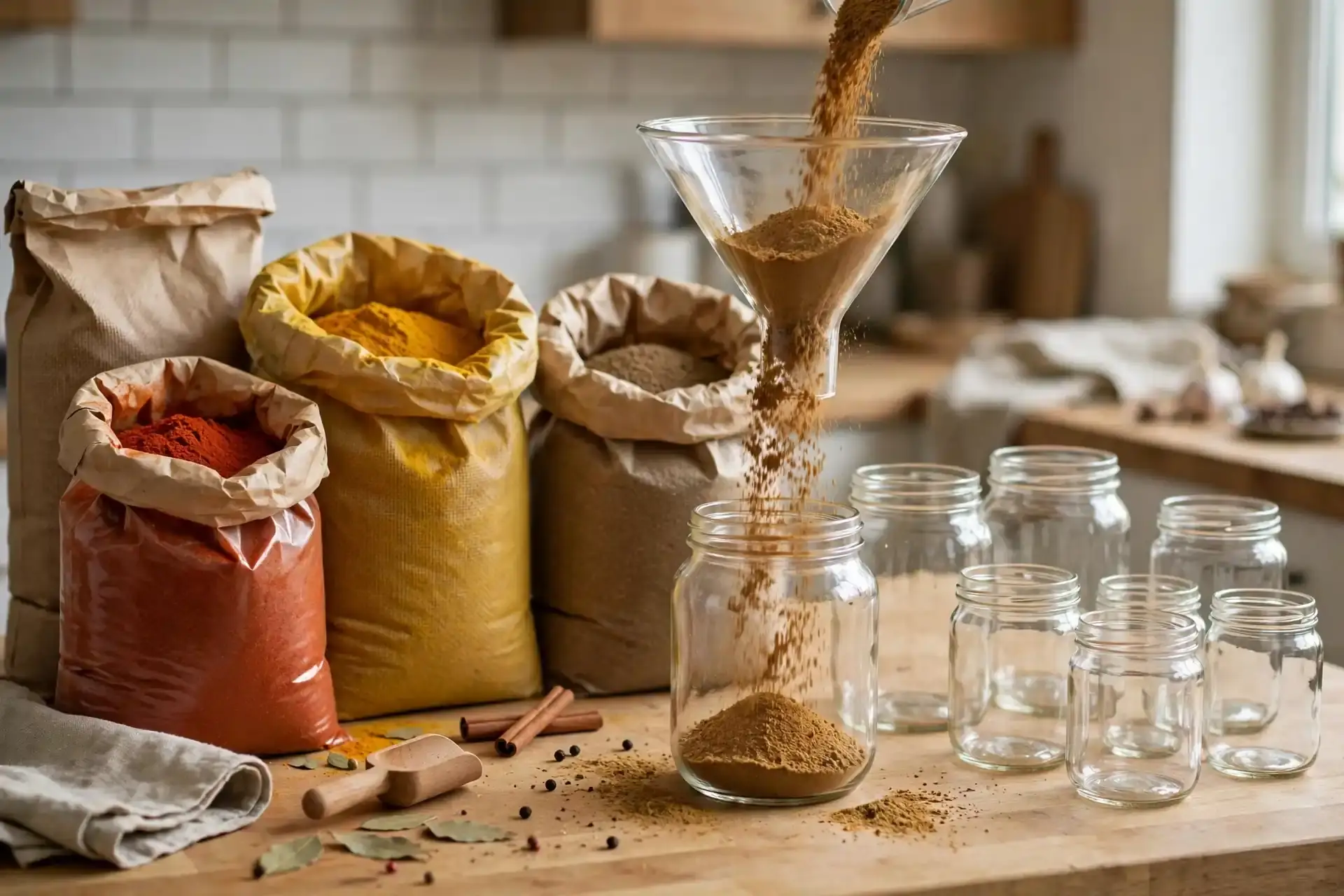
Keep one working jar in your cooking zone and the bulk bag somewhere boring: a high shelf, the pantry floor, out of the daily path. Refill with a small funnel and date the bag. Bulk saves money only if the refill system exists. Without it, the bag is clutter with a good price tag.
Buy bulk only for the five spices you finish fastest. Cumin, chili powder, garlic powder, oregano, black pepper: whatever your five are, those earn the big bags. Everything else, buy small. A pound of smoked paprika you use twice a year is not a bargain; it is a storage problem that expires. Bag clips beat rubber bands for resealing, and a twice-yearly check of the backup stash keeps the system honest. The working jar stays small on purpose. Small jars get used up, and used-up jars get refilled with fresh stock instead of sitting for three years. Freeze nothing; freezers add moisture, and moisture clumps ground spices fast.
Which spices expire, and how can you tell?
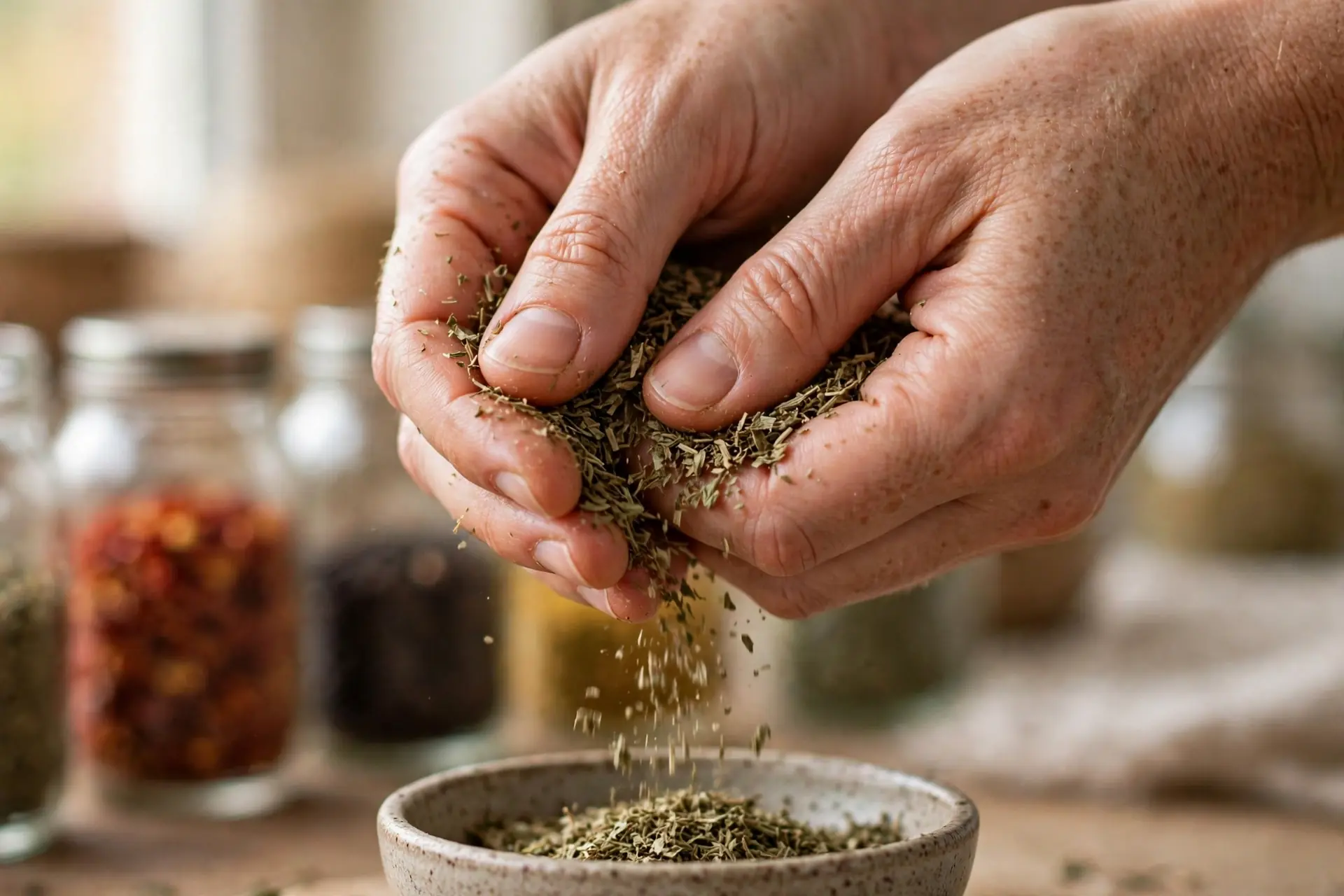
Ground spices hold 2 to 4 years, whole spices 3 to 4, dried herbs 1 to 3, per McCormick’s published guidance. They do not go bad like milk; they go quiet. Rub a pinch, smell it. Faint aroma and tired color means done, whatever the date says.
Heat, light, air, and moisture are the four thieves, which is why the cabinet above the stove is the worst address in the kitchen. McCormick’s storage page (how long do spices last) has the full breakdown: more surface area means faster fading, so whole peppercorns outlast ground pepper by years.
| Type | Fresh for (McCormick guidance) | The tell |
|---|---|---|
| Ground spices (cumin, paprika, chili powder) | 2 to 4 years | Smell is faint; color looks dusty |
| Whole spices (peppercorns, cloves, allspice) | 3 to 4 years | No crack when bitten; weak aroma crushed |
| Dried leafy herbs (basil, oregano, rosemary) | 1 to 3 years | Crumbles to dust with no scent |
| Seasoning blends | 1 to 3 years | Flat taste; salt separates out |
Old spices will not hurt you, but they will not help dinner. When a jar fails the test, toss the contents, wash the jar, and refill with fresh stock and a new date. Purge once a year when the jars are already out. Ten minutes, and the mid-recipe guessing stops.
What is the cheapest way to store a lot of spices?
A $10 shelf riser plus labels you already own organizes 20 jars for less than takeout, and it beats most $40 systems because it fixes the actual problem: visibility. Spend more only for a specific obstacle, like a cabinet too high to reach or a rental that forbids screws.
| Tier | What it buys | When it is enough |
|---|---|---|
| Under $15 | Shelf riser, labels, one bin for packets | Up to 20 jars in a cupboard you can reach |
| $15 to $40 | Tiered drawer insert, magnetic tins, door rack | Dedicated zone with 15 to 30 jars |
| $40 and up | Pull-down rack, full matching jar set | High cabinets or a big collection worth showing |
These budget spice storage ideas are honest about what money does. Under $15 buys visibility, which is 90 percent of the job. The middle tier buys a dedicated zone for 15 to 30 jars. The top tier buys reach and looks. A Target detachable drawer organizer was listed at $37.99 in Google’s shopping results, squarely mid-tier. My take: spend the $10, live with it a month, then decide. Riser-first has never been the wrong first move. If cash is tight, start with the riser and add the rest over two months; staged spending beats one big order.
Start with the drawer, then stop buying jars
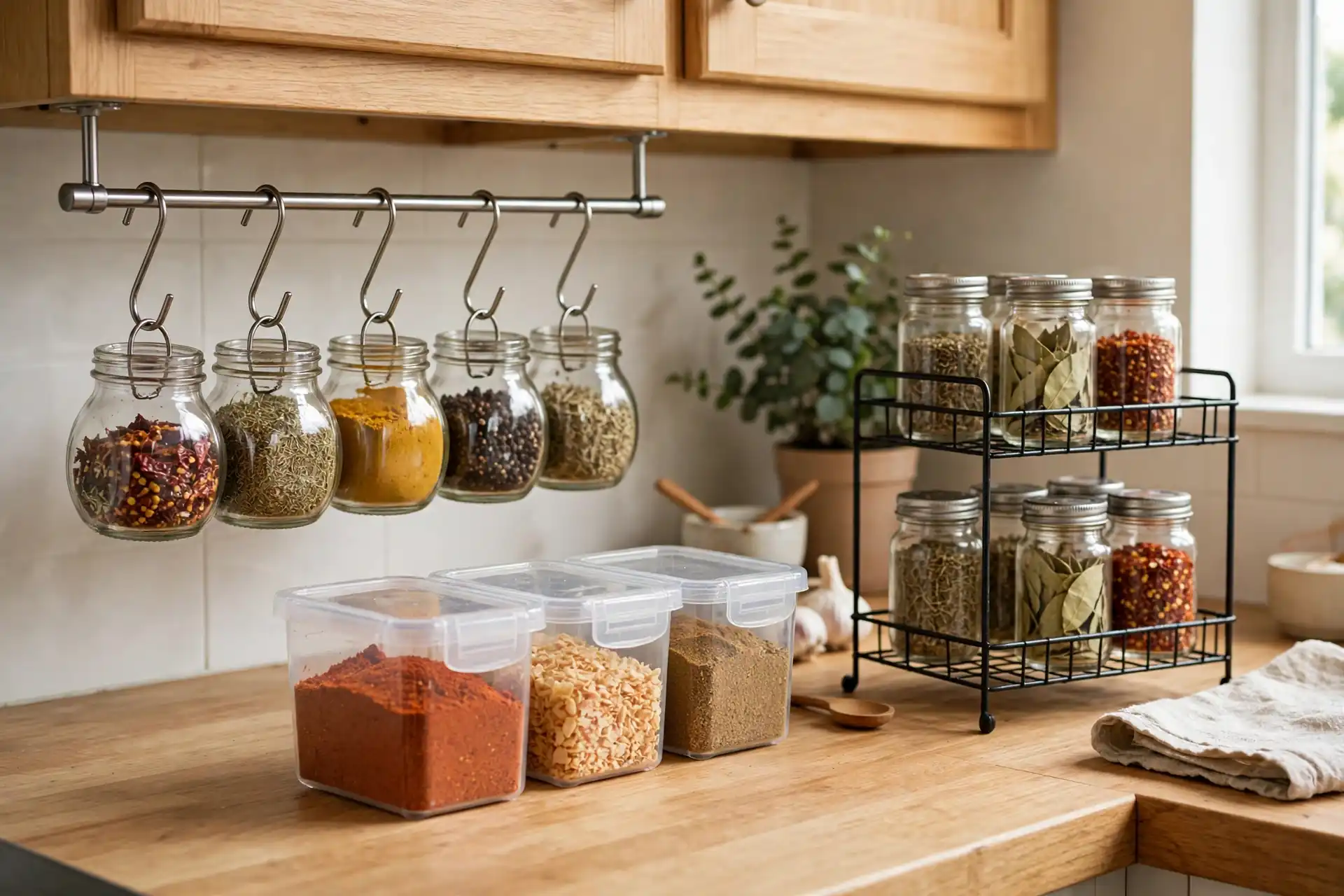
Of all these spice storage ideas, if you do one thing this weekend, empty the spice cabinet, toss every jar that fails the sniff test, and give the survivors one home. A drawer with a tiered insert handles most small kitchens; a $10 riser handles the rest. Then stop reorganizing and start cooking.
The trap is not disorganization. It is the slow creep of jar number 31, 32, 33, each bought for one recipe and kept for four years. Before any new jar earns shelf space, one old jar has to fail the sniff test and leave. One in, one out. That rule does more for a small kitchen than any rack ever will. When the spices are settled, the small kitchen storage guide walks the same system through the other four zones, drawer by drawer.
What is the best way to store spices to keep them fresh?
Keep them cool, dark, and dry in airtight containers, away from heat and light. Do not store them above the stove. Whole spices keep their flavor longer than ground ones, so buy whole when you can and grind small amounts.
How do professional chefs store spices?
Chefs keep small working quantities at the station and bulk stock in a cool, dry spot in original packaging. Everything is labeled and dated, jars are decanted for speed, and old stock gets tossed on a schedule, not when someone notices.
Is it better to store spices in glass or metal?
Both work if the container is airtight and kept in the dark. Glass lets you see how much is left, which helps with refills. Metal tins block light completely, which helps flavor last. Pick whichever fits your storage zone.
Should spices be stored in glass or plastic?
Glass jars with tight lids are the safer default: they do not absorb odors and they seal well. Plastic works short-term, but strong spices like curry can leave their smell behind in plastic, so glass wins for the jars you refill for years.
Are 10 year old spices still good?
They will not make you sick, but they will barely flavor your food. McCormick’s guidance tops out at 3 to 4 years even for whole spices. A 10-year-old jar is decoration. Replace it.
What is the best container to store spices to keep them fresh?
A small airtight jar, filled as full as practical, since less trapped air means slower flavor loss. Store it somewhere cool, dark, and dry, and write the fill date on the lid so you know when its time is up.
What should every spice rack have?
Only the jars you actually cook with, labels facing out, nothing expired. A rack is a tool for finding things fast, not a display shelf. If a jar has not been touched in a year, it does not belong on the rack.
What is the best spice organizer for a small kitchen?
Among spice storage ideas for a small kitchen, a tiered drawer insert wins if you can spare a drawer, since every label faces up and nothing hides. If your drawers are full, a stepped shelf riser in a cupboard does the same job for about ten dollars. Match the organizer to your one zone.
What are some creative ways to store spices in a cupboard?
The best cupboard spice storage ideas: stepped risers for visibility, a slim rack on the inside of the door, a pull-down shelf for high cabinets, and a narrow bin to corral seasoning packets. Combine two: riser plus door rack covers most small cupboards completely.
Can I eat 20 year old spices?
Yes, safely, but there is no point. The flavor is long gone, so the dish tastes the same as if you added nothing. Old spices make fine compost or simmer-pot scent, but for cooking, buy fresh.
