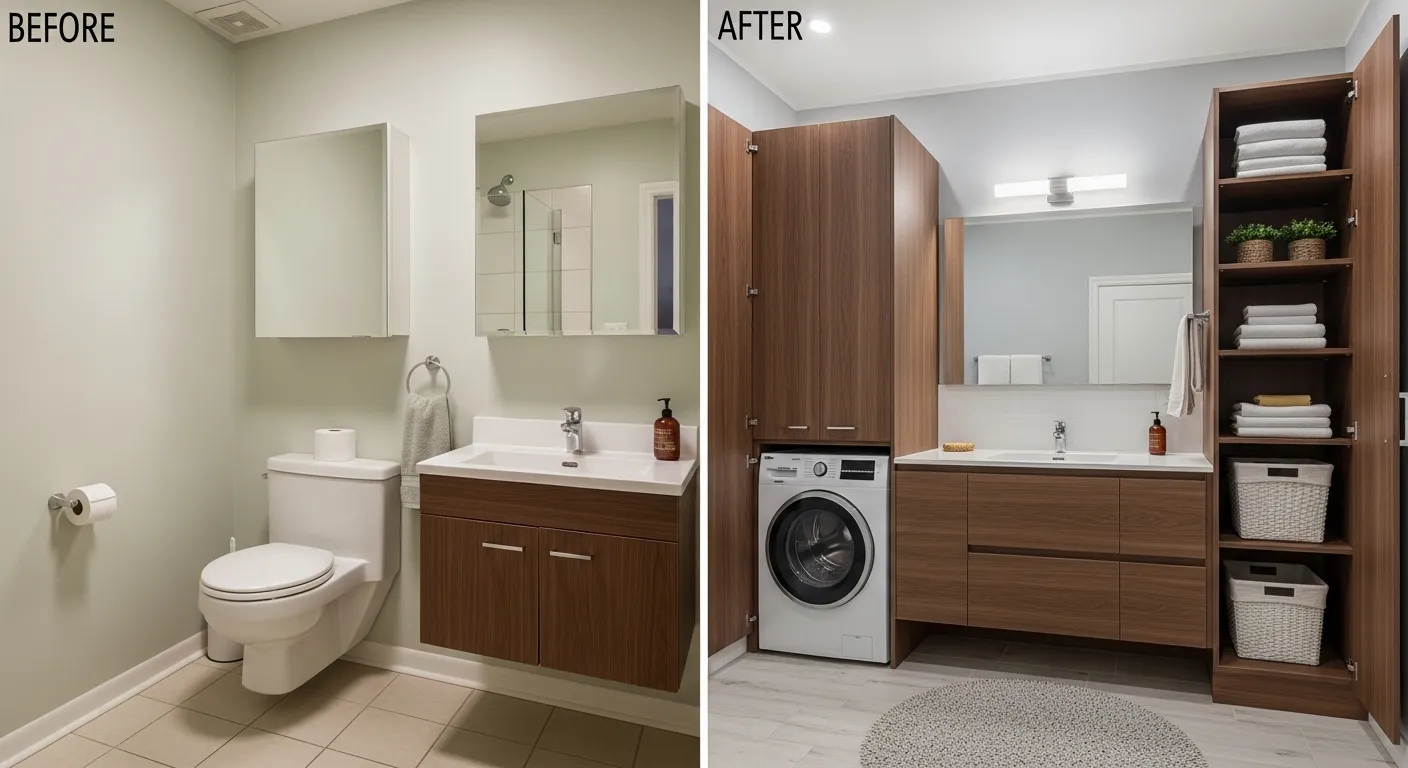

Creating a functional small bathroom with washing machine doesn’t have to mean sacrificing style or comfort. Whether you live in a compact apartment, a tiny home, or simply want to maximize every square inch of your space, combining laundry facilities with your bathroom offers a practical solution that millions of homeowners are embracing in 2026.
The laundry bathroom combo concept has evolved dramatically, with innovative design solutions that hide appliances seamlessly, utilize vertical space efficiently, and maintain the aesthetic appeal of your bathroom. This comprehensive guide presents over 25 creative bathroom laundry room ideas that transform cramped quarters into organized, multifunctional spaces you’ll actually enjoy using.
From stacking your small bathroom washer dryer in a custom cabinet to positioning a compact washer under your vanity, these space optimization strategies work for bathrooms as small as 27 square feet. You’ll discover how to choose the right appliances, plan your layout effectively, address ventilation concerns, and create a cohesive design that feels intentional rather than cramped.
Planning Your Small Bathroom With Washing Machine: Essential Considerations
Before diving into specific design ideas, understanding the foundational requirements for installing a washer in bathroom spaces ensures your project succeeds. Proper planning prevents costly mistakes and helps you create a utility bathroom that functions flawlessly for years to come.
Space Requirements and Measurements
Standard washing machines measure approximately 27 inches wide, 30-34 inches deep, and 38-43 inches tall. Compact models designed for small spaces typically measure 24 inches wide with similar depth. When planning your layout, account for these critical clearances:
- Leave 5-6 inches behind the machine for hoses and connections
- Allow 1-2 inches on each side for vibration clearance
- Maintain 36 inches of clearance in front for loading and unloading
- Consider door swing direction for front-loading machines
A successful bathroom laundry room combo can work in spaces as compact as 42 square feet, though 50-60 square feet provides more comfortable functionality.
Plumbing and Electrical Requirements
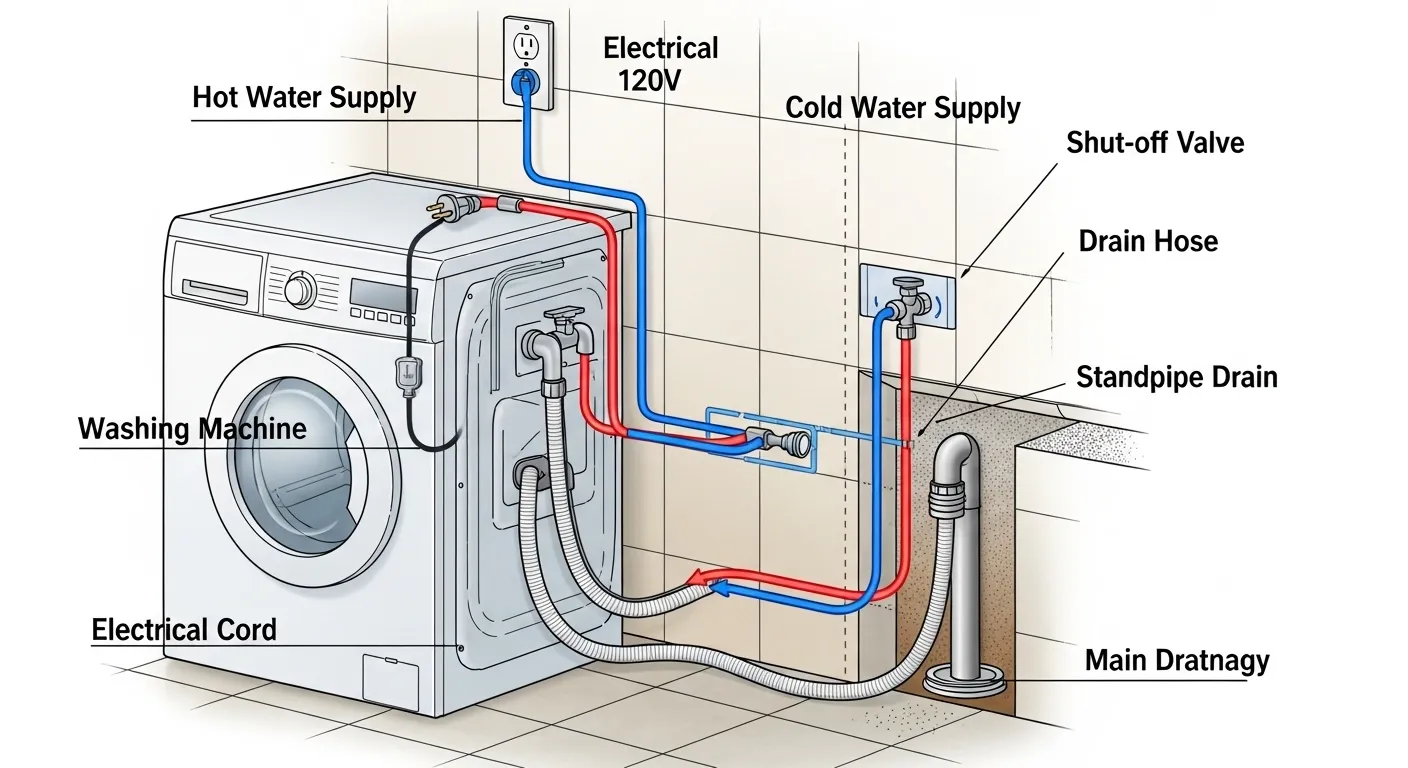
Bathrooms already contain the essential plumbing infrastructure that makes washer installation more straightforward than other locations. According to standard building codes, your installation requires:
- Hot and cold water supply lines within 4 feet of the water fill valves
- A dedicated drain connection or standpipe (2-inch minimum diameter)
- A grounded 120V, 20-amp dedicated electrical outlet for the washer
- A 240V, 30-amp outlet if using an electric dryer
- GFCI protection for all bathroom electrical outlets
Many homeowners connect their washer drain to the existing bathroom sink drain using a Y-connector, though this approach requires proper venting to prevent sewer gases from entering the space.
Stackable Washer and Dryer Solutions for Maximum Efficiency
Vertical stacking remains the most popular approach for incorporating laundry facilities into small bathrooms. A stackable washer and dryer configuration essentially doubles your usable floor space while providing full laundry capabilities.
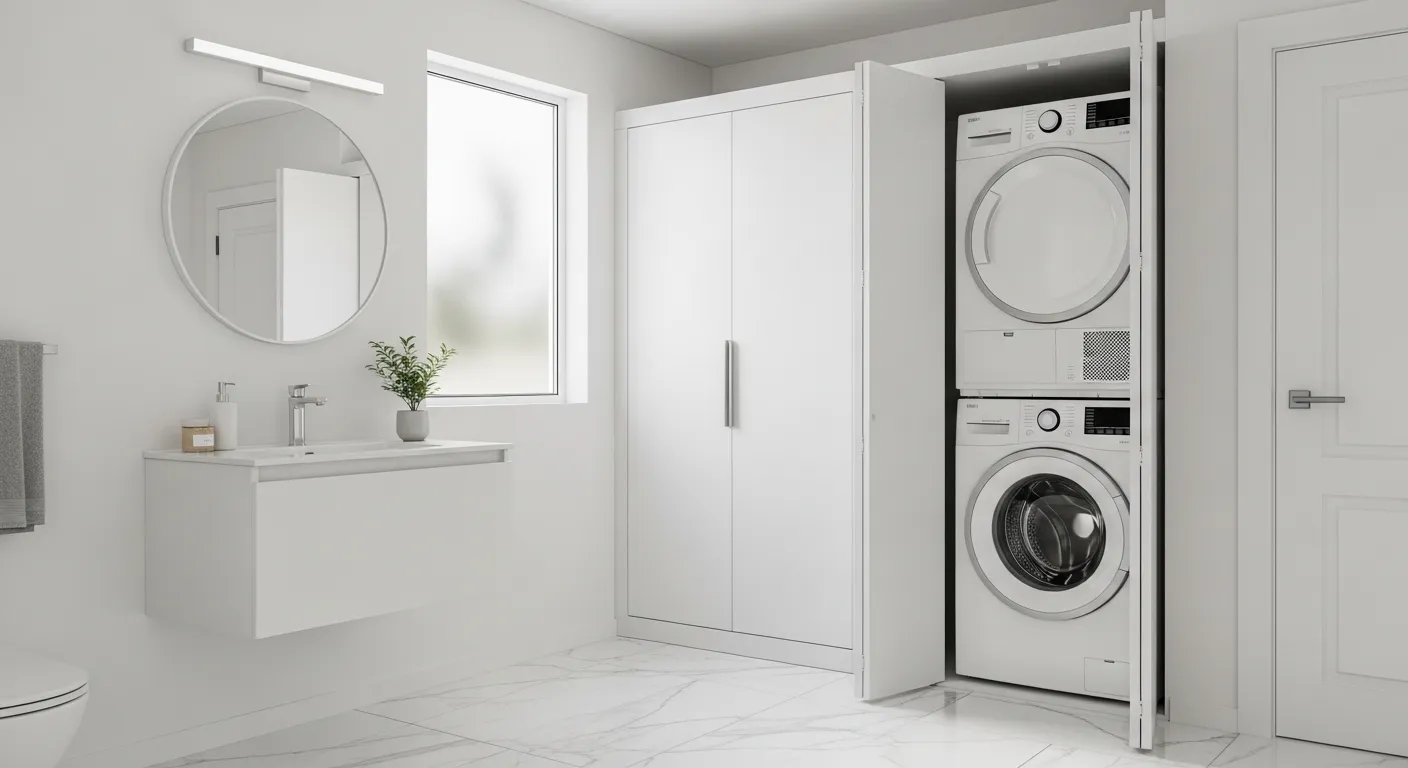
The Built-In Closet Nook
Creating a dedicated laundry closet within your bathroom provides the cleanest aesthetic solution. This approach involves building out a floor-to-ceiling enclosure with bifold or sliding doors that completely conceal your appliances when not in use. For bathrooms measuring 50 square feet or more, dedicate approximately 6-8 square feet for the closet nook.
Consider installing open shelving above the stacked units for detergent, fabric softener, and other laundry essentials. This keeps everything you need within arm’s reach while maintaining an organized appearance.
The Corner Stack Configuration
Corners often represent wasted space in small bathrooms. Position your stacked washer dryer in a corner location with a custom cabinet frame that extends to the ceiling. Add pull-out baskets on one side for sorting laundry and fold-down shelving for a compact folding station.
This configuration works particularly well in rectangular bathrooms where one end can be dedicated entirely to laundry functions while the remaining space serves traditional bathroom purposes.
The Sliding Barn Door Reveal
Barn-style sliding doors add character while serving a practical purpose. Install your compact laundry setup behind a rustic or modern sliding door that becomes a design feature rather than something to hide. This approach eliminates the clearance issues associated with traditional swinging cabinet doors.
Creative Hidden Washer Solutions for Seamless Aesthetics
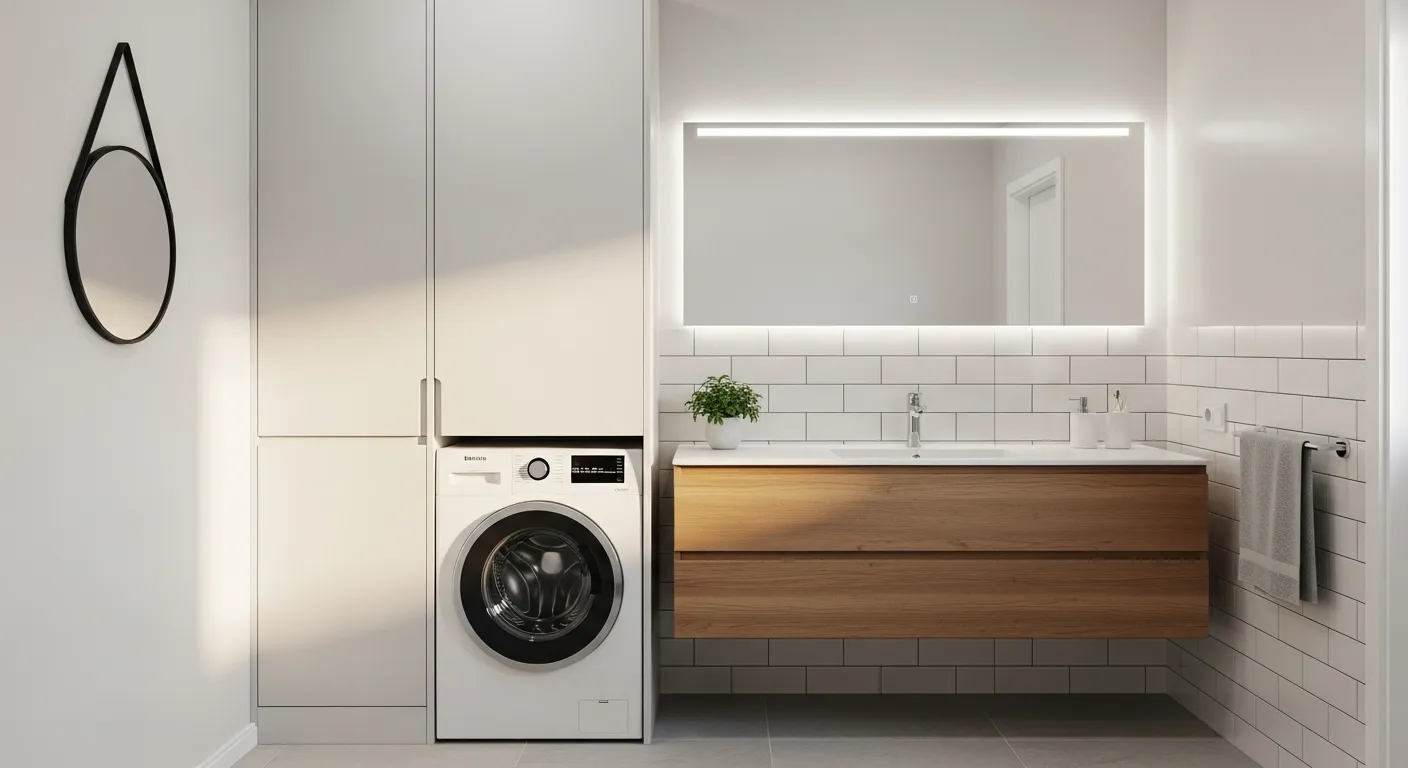
The most sophisticated Small Bathroom With Washing Machine designs make appliances virtually invisible. These hidden washer solutions maintain your bathroom’s aesthetic integrity while providing complete laundry functionality.
Under-Vanity Integration
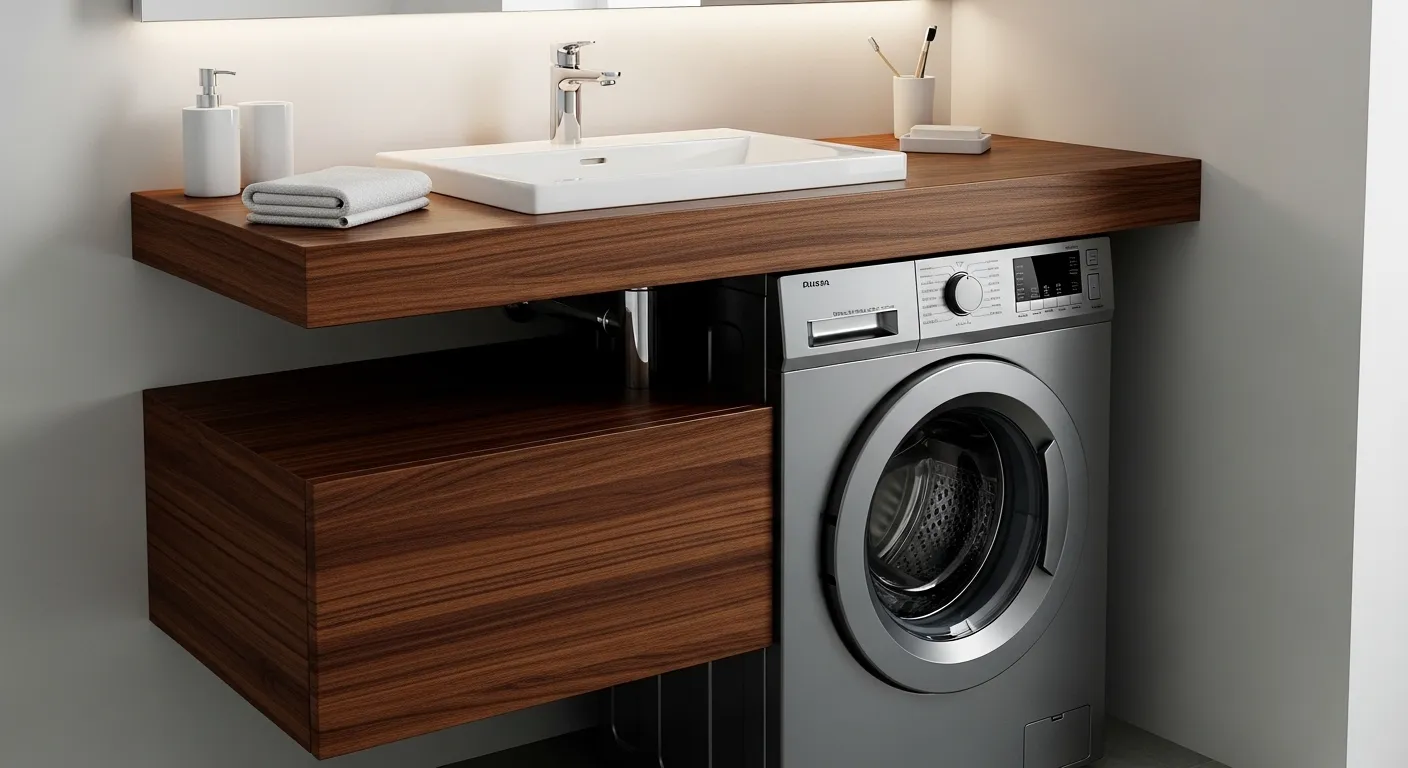
Compact front-loading washers measuring 24 inches wide can fit beneath a bathroom vanity with proper planning. This approach requires a raised vanity height of approximately 36-40 inches to accommodate the machine while still providing comfortable sink access. European-style flat sinks specifically designed for this purpose sit directly above the washer, creating a seamless integrated look.
Companies like IKEA and specialty bathroom retailers offer vanity solutions specifically designed to house washing machines. The SEKTION cabinet system, for example, provides a 30-inch wide enclosure perfect for standard compact washers.
Floor-to-Ceiling Mirror Concealment
For the ultimate in disguise, install your stacked washer and dryer behind a floor-to-ceiling mirror that functions as a sliding or hinged door. When closed, the mirror expands the visual space of your bathroom while hiding the laundry area. When opened, full laundry access becomes available.
This technique works exceptionally well in master bathrooms where you want to maintain a spa-like atmosphere without sacrificing laundry convenience.
Custom Cabinet Enclosure
Work with a cabinetmaker to create a storage unit that matches your existing bathroom cabinetry exactly. The custom enclosure should include proper ventilation (leave the back open or add ventilation panels), adjustable shelving above the appliances, and soft-close doors that open fully for easy access.
Paint or finish the cabinet in the same color as your vanity and other bathroom furniture for a cohesive look. Consider adding interior lighting that activates when doors open.
The Simple Curtain Solution
For renters or those on a budget, a tension rod and curtain provides an inexpensive way to hide your washing machine. Choose a fabric that coordinates with your bathroom decor, shower curtain, or towels. This approach allows easy access while creating a softer, more inviting aesthetic than exposed appliances.
All-in-One Washer Dryer Combos and Compact Appliance Options
When floor space is extremely limited, all-in-one washer dryer combos and ultra-compact machines provide essential laundry capabilities in the smallest possible footprint.
Combination Washer Dryer Units
A single combination unit eliminates the need for stacking and reduces your space requirements by nearly half. Modern ventless washer-dryer combos measure approximately 24 inches wide and don’t require external venting, making them ideal for bathroom installation. Look for models with heat pump technology for improved energy efficiency and faster drying times.
Keep in mind that combination units typically have smaller capacities (2.0-2.5 cubic feet) and longer cycle times compared to separate machines. Plan for more frequent, smaller loads when using this option.
Portable Washing Machines
Portable washers connect directly to your bathroom sink faucet, eliminating the need for permanent plumbing connections. These units typically measure under 20 inches wide and can be stored in a closet or corner when not in use. While capacity is limited (usually under 1 cubic foot), they provide a perfect solution for studio apartments or rental situations where permanent installation isn’t possible.
Consumer Reports testing has shown that portable washing machines from brands like BLACK+DECKER, Magic Chef, and Panda perform well on smaller loads, though they require more hands-on attention than standard machines.
Compact Washer Comparison Table
| Appliance Type | Width | Capacity | Best For | Price Range |
| Compact Front-Load | 24″ | 2.2-2.4 cu ft | Permanent install | $800-$1,500 |
| All-in-One Combo | 24″ | 2.0-2.5 cu ft | No dryer space | $1,200-$2,000 |
| Portable Top-Load | 18-21″ | 0.9-1.6 cu ft | Renters, small loads | $300-$600 |
| Stacked Set | 24-27″ | 2.2-4.0 cu ft | Maximum capacity | $1,500-$3,000 |
Ventilation and Moisture Control Strategies
Combining a washing machine with your bathroom creates a humidity-rich environment that requires careful moisture management. Without proper ventilation, you risk mold growth, material damage, and unpleasant odors.
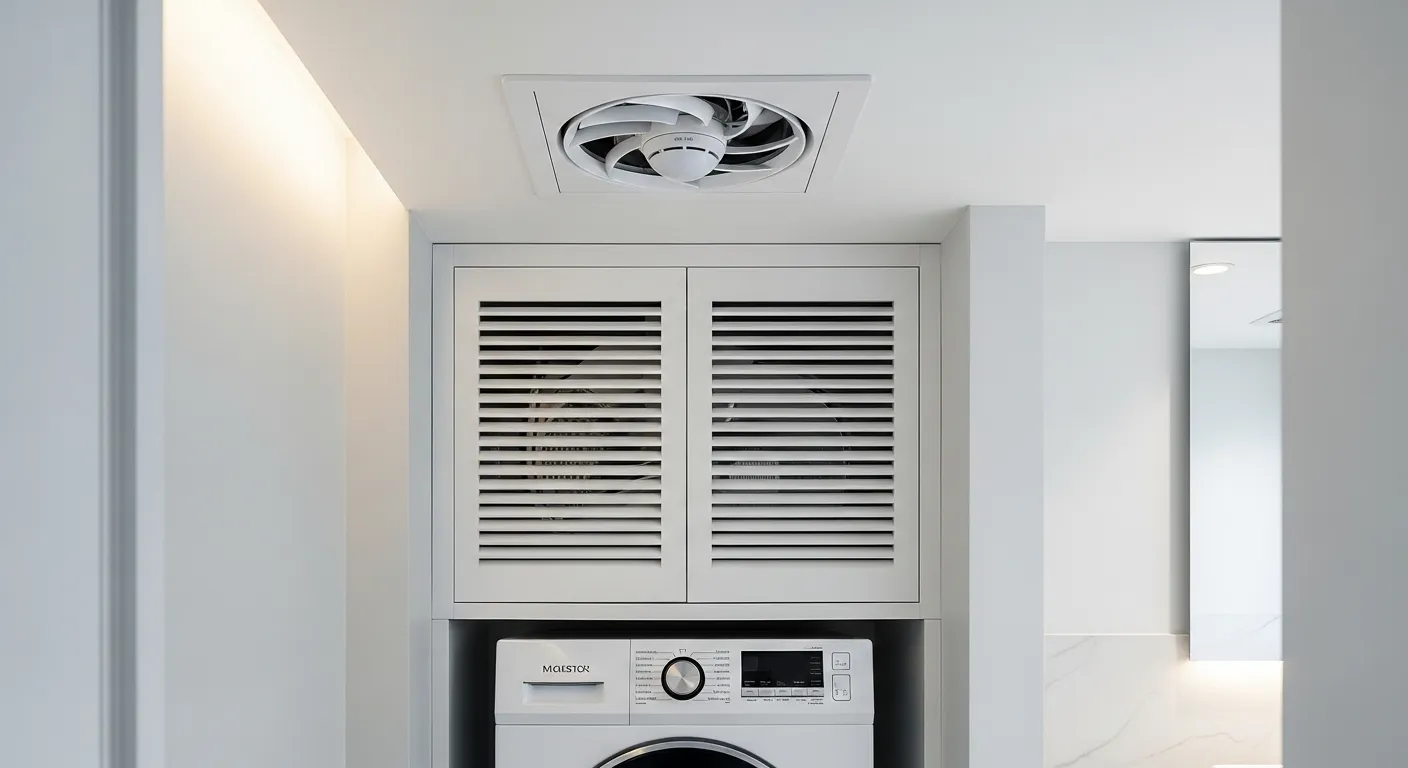
Exhaust Fan Requirements
The Environmental Protection Agency recommends maintaining indoor humidity levels between 30-50% to prevent mold growth. Your bathroom exhaust fan should have sufficient CFM (cubic feet per minute) rating to handle the combined moisture from showering and laundry. Calculate your needs by multiplying your bathroom’s square footage by 1.1 for standard bathrooms, or by 1.5 for bathrooms with a washing machine.
Modern exhaust fans with humidity sensors automatically activate when moisture levels rise, ensuring consistent air quality without manual operation. Models like the Panasonic Whisper Suite offer 110 CFM capacity with near-silent operation, making them ideal for bathroom-laundry combos.
Ventless Dryer Options
Heat pump dryers and condensation dryers eliminate the need for external venting, making them perfect for bathroom installations where running duct work to an exterior wall isn’t feasible. These ventless options capture moisture during the drying cycle and either condense it into a tank (which you empty) or drain it directly through your existing plumbing.
While ventless dryers typically cost more upfront and have longer cycle times, they use significantly less energy than traditional vented dryers and offer installation flexibility that vented models can’t match.
Daily Moisture Prevention Practices
- Run the exhaust fan during and for 30 minutes after laundry cycles
- Leave cabinet doors open after running the washer to allow air circulation
- Use a squeegee on walls and surfaces after showers
- Consider adding a compact dehumidifier for particularly humid climates
- Clean the washing machine door gasket weekly to prevent mold buildup
15+ Layout Ideas for Different Small Bathroom Configurations
Every Small Bathroom With Washing Machine presents unique challenges and opportunities. These layout concepts address specific configurations you might encounter.
Alcove and Niche Layouts
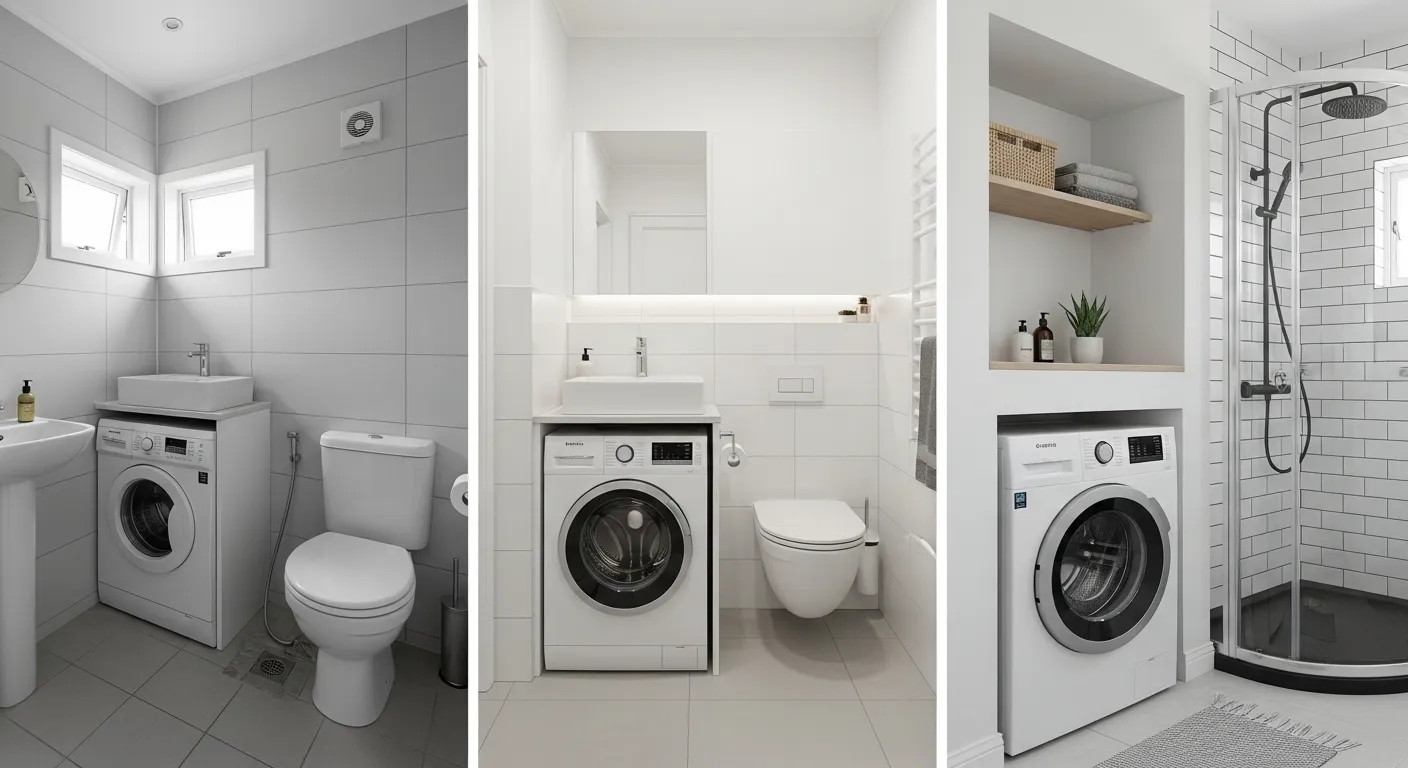
The Shower Adjacent Alcove: Position your stacked washer dryer in a niche directly beside the shower area. Use matching tile on the surrounding walls to create visual continuity. Glass doors on the washer cabinet maintain the open feeling of the space while hiding the appliances.
The Behind-the-Door Nook: The space behind a bathroom door often goes unused. Install a slim washer or all-in-one unit in this dead zone with a curtain or pocket door for concealment.
The Recessed Wall Unit: If your bathroom shares a wall with a closet or unused space, consider recessing your laundry equipment into the wall. This approach requires construction but creates a truly flush installation that doesn’t intrude on floor space.
Linear and Galley Layouts
The End-of-Room Station: In long, narrow bathrooms, dedicate the far end entirely to laundry functions. Install the washer and dryer side by side with a counter above for folding. Add floating shelves for storage and a small drying rack that folds against the wall.
The Single-Wall Solution: Align your vanity, toilet, and stacked laundry units along a single wall. This creates an efficient workflow and leaves the opposite wall free for the shower or tub.
The Pass-Through Design: For bathrooms that connect two rooms, position the laundry setup between entry points with access from either side. This works particularly well for jack-and-jill bathroom configurations.
Corner and L-Shaped Solutions
The L-Shaped Counter: Create an L-shaped counter that wraps around a corner, with the washer tucked beneath one arm and the sink positioned on the other. This maximizes counter space while efficiently using corner real estate.
The Diagonal Installation: Install your washer at a 45-degree angle in a corner. While this approach requires a custom cabinet, it can make better use of deep corners while maintaining easy access to controls and loading.
The Corner Tower: Build a corner cabinet that extends floor to ceiling, housing stacked laundry equipment on the bottom and storage above. Angled doors provide full access while maintaining a streamlined appearance.
Wet Zone Integration
The Shower-Laundry Partition: Use a half-wall that separates the shower from the washing area while allowing both to share the same drain zone. This approach simplifies plumbing and creates a logical division between bathing and laundry functions.
The Glass-Enclosed Laundry: Install frosted glass panels around your laundry area similar to a shower enclosure. This contains splashes and humidity while allowing light to pass through, maintaining an open feeling.
Pro Tips for a Successful Bathroom Laundry Installation
These expert recommendations come from interior designers and contractors who specialize in small-space solutions:
- Prioritize front-loading washers: They allow stacking, under-counter installation, and use less water than top-loaders.
- Invest in vibration pads: Anti-vibration pads reduce noise transmission and protect your flooring from potential damage during spin cycles.
- Install a floor drain if possible: A floor drain provides protection against overflow incidents and simplifies cleaning.
- Choose moisture-resistant materials: Use water-resistant paint, porcelain tile, and marine-grade hardware in your laundry area.
- Add task lighting: Install under-cabinet LED strips inside your washer enclosure for better visibility when treating stains or loading dark clothes.
- Include a fold-down ironing surface: Wall-mounted fold-down ironing boards take up zero floor space when not in use.
- Consider your dryer connection: Verify whether you need a 240V electrical connection or gas line before finalizing your appliance selection.
Common Mistakes to Avoid
Learn from others’ missteps to ensure your project succeeds:
- Forgetting about service access: Appliances need maintenance and occasional repairs. Ensure your installation allows the machine to be pulled out for servicing.
- Neglecting building codes: Many jurisdictions have specific requirements for bathroom electrical outlets and laundry installations. Check with your local building department before starting.
- Underestimating clearance needs: A washer that fits perfectly on paper may feel claustrophobic in practice. Mock up your layout with cardboard boxes before committing to construction.
- Ignoring door swing conflicts: Ensure your bathroom door, cabinet doors, and washer door can all open without collision.
- Overlooking ventilation: Insufficient airflow leads to mold, mildew, and musty odors. Size your exhaust fan appropriately for the combined space.
- Choosing the wrong flooring: Carpet or laminate can’t withstand potential leaks. Use ceramic tile, vinyl, or concrete with proper drainage slopes.
- Skipping shut-off valves: Install individual shut-off valves for your washer’s water supply to quickly address any leak emergencies.
Frequently Asked Questions About Small Bathroom With Washing Machine Installations
Can you put a washing machine in a small bathroom?
Yes, you can successfully install a washing machine in bathrooms as small as 27-30 square feet with proper planning. Compact and all-in-one machines designed for small spaces require approximately 24 inches of width and can be hidden in cabinets, placed under counters, or stacked with dryers to maximize vertical space. The key requirements are adequate electrical capacity, proper plumbing connections, and sufficient ventilation.
Is it safe to have a washing machine in a bathroom?
Bathroom washing machine installations are safe when done correctly. Essential safety measures include GFCI-protected electrical outlets, proper grounding, adequate ventilation to prevent moisture buildup, and correct drain connections to prevent sewer gas exposure. Many building codes already require these features in bathrooms, making them ideal locations for laundry equipment.
What size washing machine fits in a small bathroom?
For tight spaces, look for compact washing machines measuring 24 inches wide with capacities between 2.0-2.5 cubic feet. Portable washers measuring under 20 inches wide offer even smaller footprints for extremely limited spaces. All-in-one washer dryer combinations provide full functionality in a single 24-inch wide unit, eliminating the need for a separate dryer.
How much does it cost to install a washing machine in a bathroom?
Installation costs vary significantly based on existing infrastructure. If plumbing and electrical connections already exist, professional installation typically costs $150-$300. Creating new connections can cost $500-$2,000 depending on complexity. Custom cabinetry or concealment solutions add $500-$3,000 to the total project cost. Budget $3,000-$15,000 total including appliances for a complete bathroom laundry renovation.
Do I need special permits to install a washer in my bathroom?
Permit requirements vary by location. Many jurisdictions require permits when adding new electrical circuits or modifying plumbing. In apartment buildings, your landlord or building management typically needs to approve the installation, and you may need to verify that your unit is within an approved “wet zone.” Always check local building codes before beginning any installation work.
Can you put a washer and dryer in a bathroom without a vent?
Yes, ventless dryer options make bathroom installations feasible without exterior venting. Heat pump dryers and condensation dryers capture moisture during the drying cycle instead of venting it outside. These units either collect water in a tank for manual emptying or drain through your existing plumbing. While they cost more and dry clothes slower than vented dryers, they offer installation flexibility that traditional dryers cannot match.
How do you hide a washing machine in a bathroom?
Popular concealment options include custom cabinetry with doors, sliding barn doors, floor-to-ceiling mirrors, under-vanity installations, curtains on tension rods, and built-in closet enclosures. The best approach depends on your bathroom layout, budget, and design preferences. Cabinet enclosures offer the most polished appearance, while curtains provide the most budget-friendly solution.
What are the most reliable compact washing machines for bathrooms?
According to appliance reliability data from 2026, LG and Bosch lead the compact washer market with service rates under 6%. Miele offers premium features and excellent fabric care but with slightly higher service rates due to increased complexity. GE and Samsung also produce reliable compact models with good smart features. Look for Energy Star certification and models specifically designed for ventless operation if you’re installing in a bathroom.
Creating Your Perfect Small Bathroom With Washing Machine
Transforming a small bathroom with washing machine functionality requires thoughtful planning, but the results deliver daily convenience that makes the effort worthwhile. Whether you choose a hidden cabinet installation, an under-vanity compact machine, or a space-saving stacked configuration, the key lies in matching your approach to your specific space constraints and lifestyle needs.
Start by measuring your bathroom accurately and identifying potential locations for your laundry equipment. Consider which concealment approach appeals to your aesthetic preferences, then verify that your space meets electrical and plumbing requirements. With the right planning and these proven design strategies, even the smallest bathroom can become a fully functional laundry bathroom combo that enhances your daily routine.
Take action today by sketching out your ideal layout and researching compact appliance options that fit your budget. Your small bathroom with washing machine dream is absolutely achievable with the right space-saving approach.