
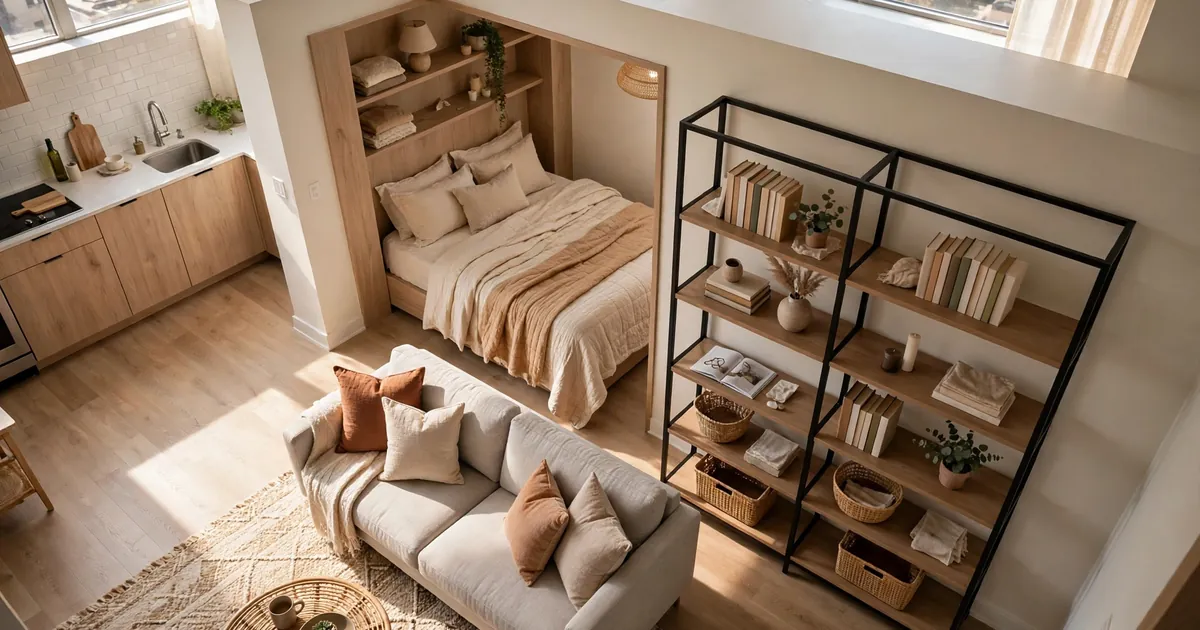

A studio apartment runs into storage trouble the moment nothing has a fixed address. One room has to work as bedroom, living room, office, kitchen, and hallway, and without assigned spots every category drifts into every other one. The zone system fixes that. You split your studio apartment storage ideas into six zones (sleep, live, work, kitchen, entry, utility), give each zone one anchor piece of furniture, and keep the zones apart with a 10-minute nightly reset. Below is the full system, zone by zone, with real measurements and a buy-first order so you spend money once, on the right pieces.
The short version
- Six zones: sleep, live, work, kitchen, entry, utility.
- Rule one: every category owns an address. Clothes, shoes, cleaning gear, and pantry snacks each live in exactly one zone.
- Rule two: anchor pieces earn their floor space. Every large item either stores something or divides two zones. The best ones do both.
- Rule three: a 10-minute nightly reset keeps the zones apart. Skip it for a week and the room slides back to chaos.
Your studio is not small. Your stuff just has no address.
| Zone | Anchor piece | Storage job | First buy |
|---|---|---|---|
| Sleep | Storage bed or dresser | Clothes plus under-bed seasonal items | Under-bed bins |
| Live | Open bookcase divider or storage ottoman | Books, media, blankets | Lift-top storage ottoman |
| Work | Drop-leaf or wall-mounted desk | Laptop, papers, supplies | Folding desk |
| Kitchen | Slim rolling cart | Pantry overflow and tools | Rolling cart |
| Entry | Wall hooks plus slim cabinet | Shoes, coats, keys, mail | Catch-all tray |
| Utility | Tall narrow cabinet | Vacuum, cleaning, laundry | Stackable caddies |
What is the zone system, and why does it beat room-by-room organizing?
The zone system gives every category in your studio a fixed address instead of letting one room swallow everything. You split one room into six zones: sleep, live, work, kitchen, entry, utility. Each zone gets one anchor piece of furniture that stores only that zone's stuff. Room-by-room organizing can't work here, because a studio has no rooms.
Fixed addresses beat new products, and the math shows why. The average US studio measures 460 square feet, according to RentCafe's May 2026 analysis of Yardi Matrix data. Studios built in 2006 averaged 614 square feet; by 2016 that had fallen to 504. Studios plus one-bedrooms now make up 52.9% of new apartments built.
Flat tip lists fail that math. Search for studio apartment storage ideas and you get listicles of 30 tricks with no address attached. The baskets pile up, the hooks hold whatever is closest, and the room looks the same. Zones fix the addressing problem first. Products come second.
My honest take: the system pays off hardest for people who work from home. The work zone is where most studios fall apart. If your place is mostly a crash pad and you eat out nightly, skip the full build. Nail the sleep zone and the entry zone, and let the rest stay loose.
How do you map the zones in your own studio?
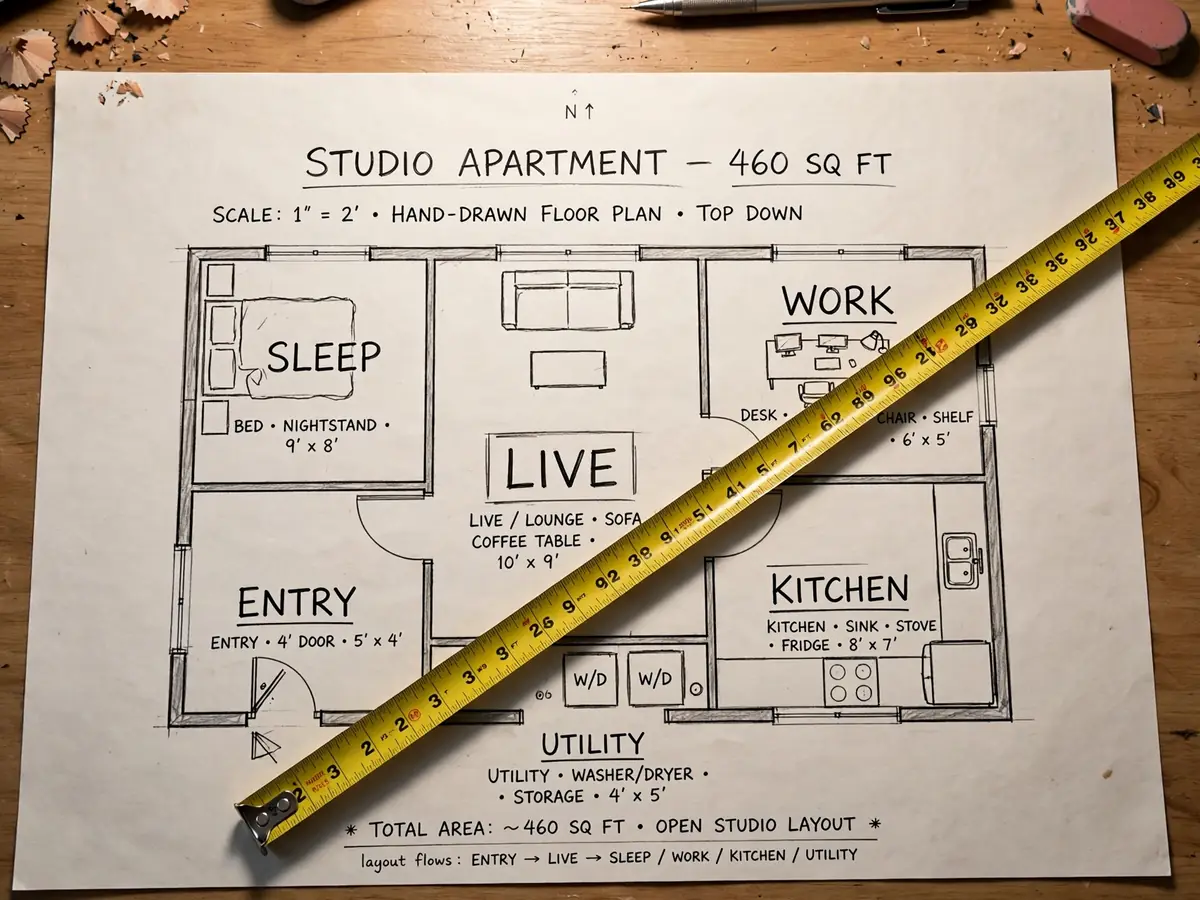
Sketch your floor on paper and draw the six zones where they naturally fall: bed corner, couch wall, desk spot, kitchen strip, door area, and the awkward corner. Mark the walking path first. In a long narrow studio, keep it at least 30 inches wide from entry to window, per Futonland's studio layout guide.
Start with what the apartment gives you for free, before you spend on studio apartment storage ideas. The kitchen strip, bathroom corner, door swing, and windows are fixed. Outlets decide the work zone more than your wishes do, so find them before you fall in love with a desk spot. Put the bed in the darkest corner; sleep beats a sightline.
Walkway clearance is the part people skip. Measure the path from your front door to the kitchen and the window, and keep it clear at 30 inches or better. A cart or shoe pile that narrows it to a shuffle will annoy you daily. No trick survives daily annoyance.
Outline each zone on the floor with painter's tape and live with it for a weekend. That is how to create zones in a studio apartment: the desk spot that looked fine on paper sits in window glare. Tape is cheaper than furniture. Skip symmetry. Pick the layout you never step around.
What belongs in the sleep zone?
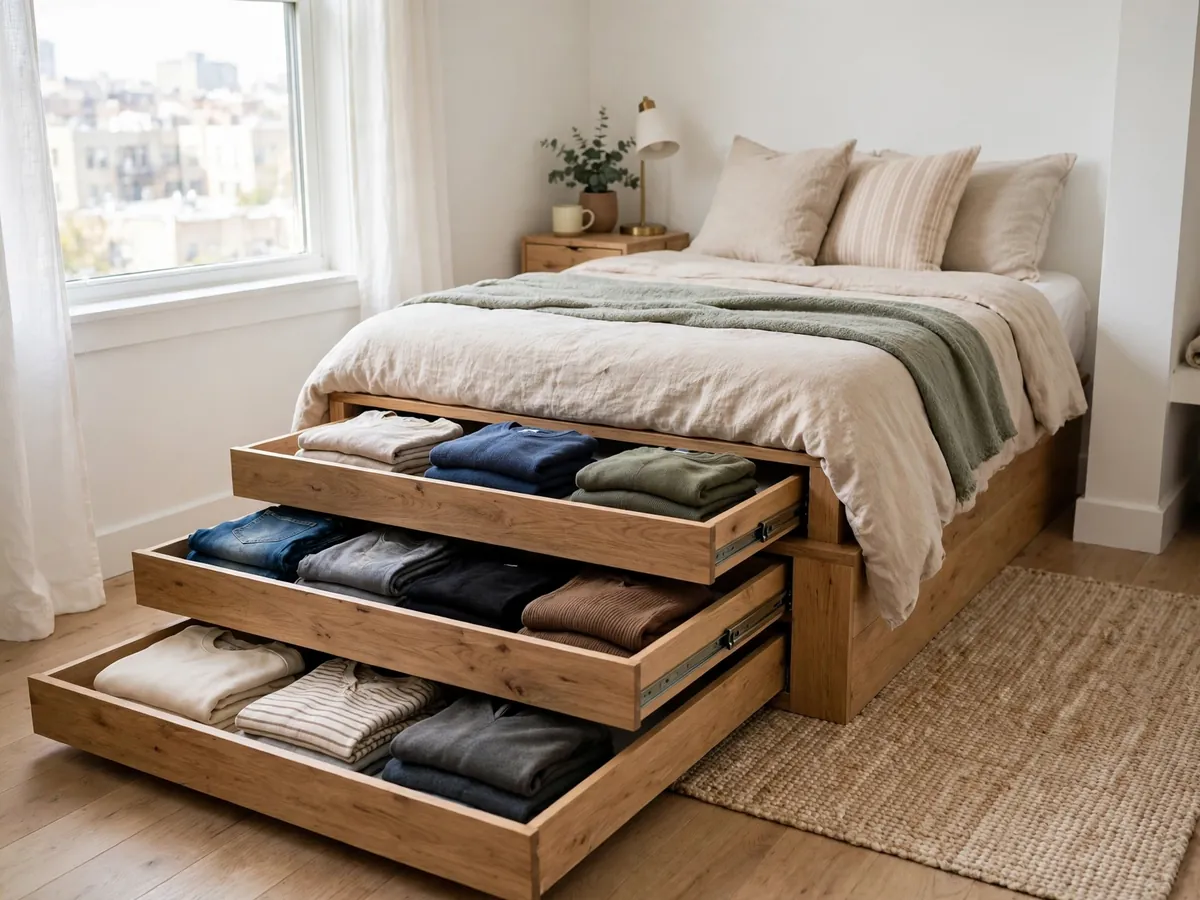
The sleep zone holds your bed, your clothes, and nothing else. Its storage job is to swallow a full wardrobe without a dresser eating floor space, which is why the storage bed tops most studio apartment storage ideas lists. A storage bed with deep drawers does the heavy lifting, and the space under the bed takes the rest: seasonal clothes, extra bedding, and luggage in low bins that slide out on casters.
Bed risers are the cheapest way to create under-bed space if your frame sits low. Pick bins with sturdy lids and wheels; lidless bins collect dust, and wheel-less bins never get pulled out. Our under-bed storage ideas guide breaks down bin types and what belongs in each one.
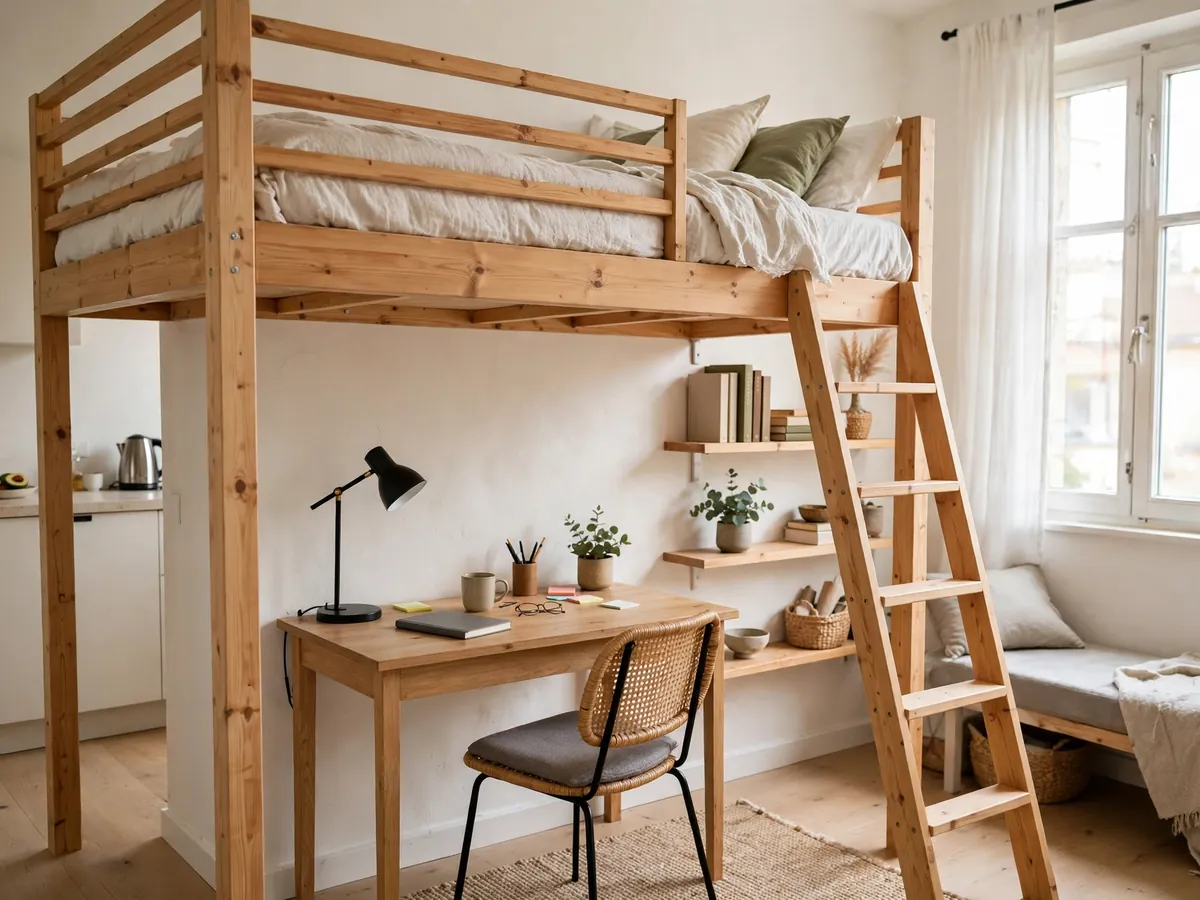
A loft bed is the big space play: bed up top, desk or dresser underneath. It works when you truly need the square footage back. But it merges sleep and work into one footprint, fighting the whole zone idea. I'd only go there if the alternative is no work zone at all.
Skip the Murphy bed unless you own the place. Wall beds need serious anchoring into studs, a landlord's written okay, and usually a pro to install safely. Most renters clear none of them. A storage bed gives you most of the benefit with zero holes in the wall.
How do you carve out a living zone that feels like a real living room?
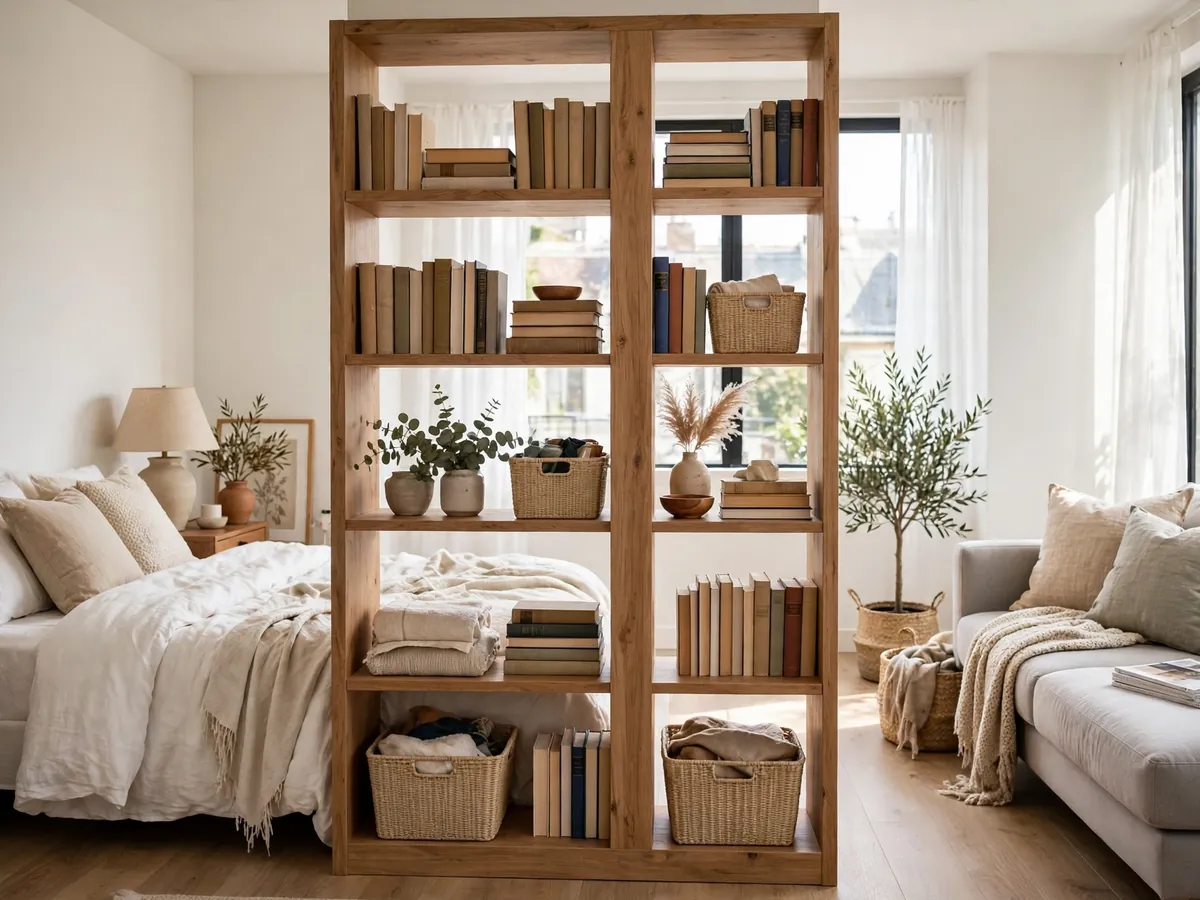
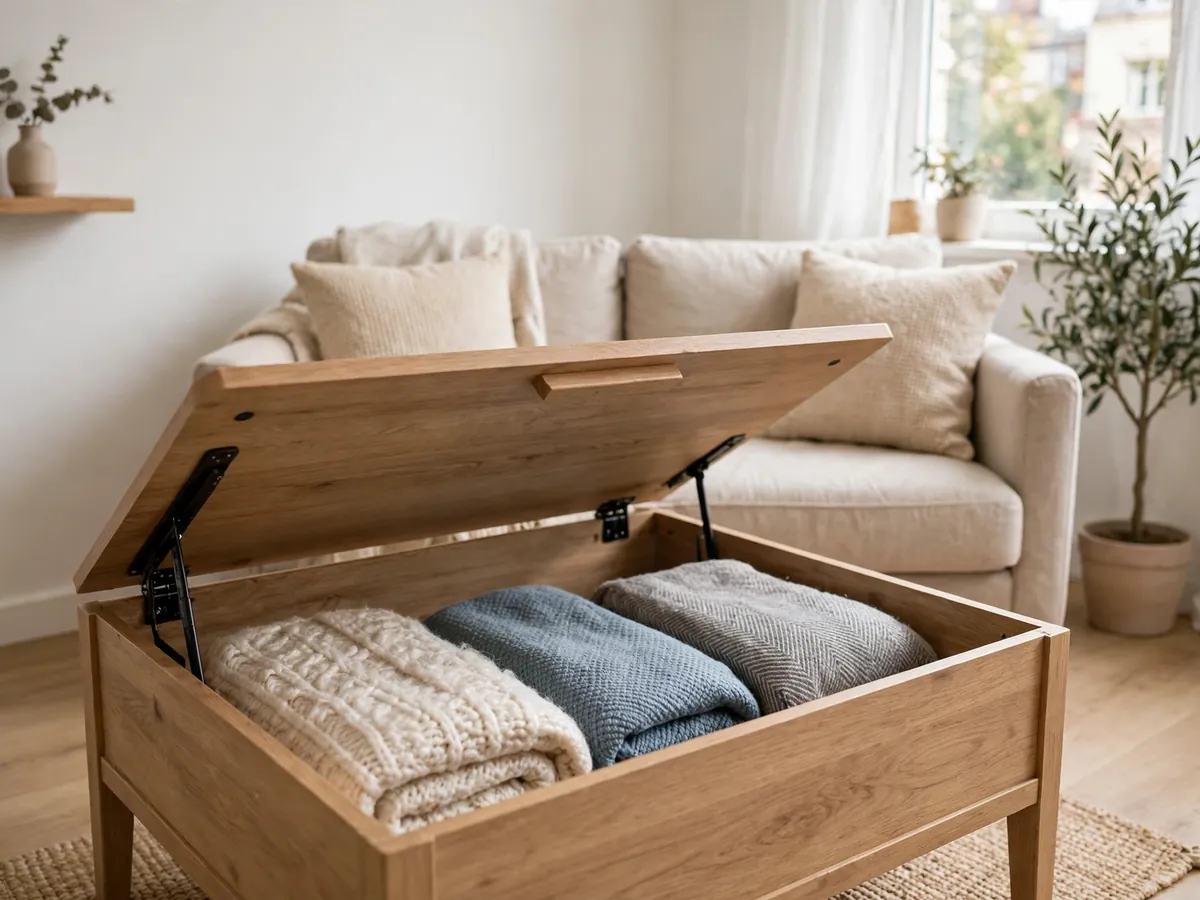
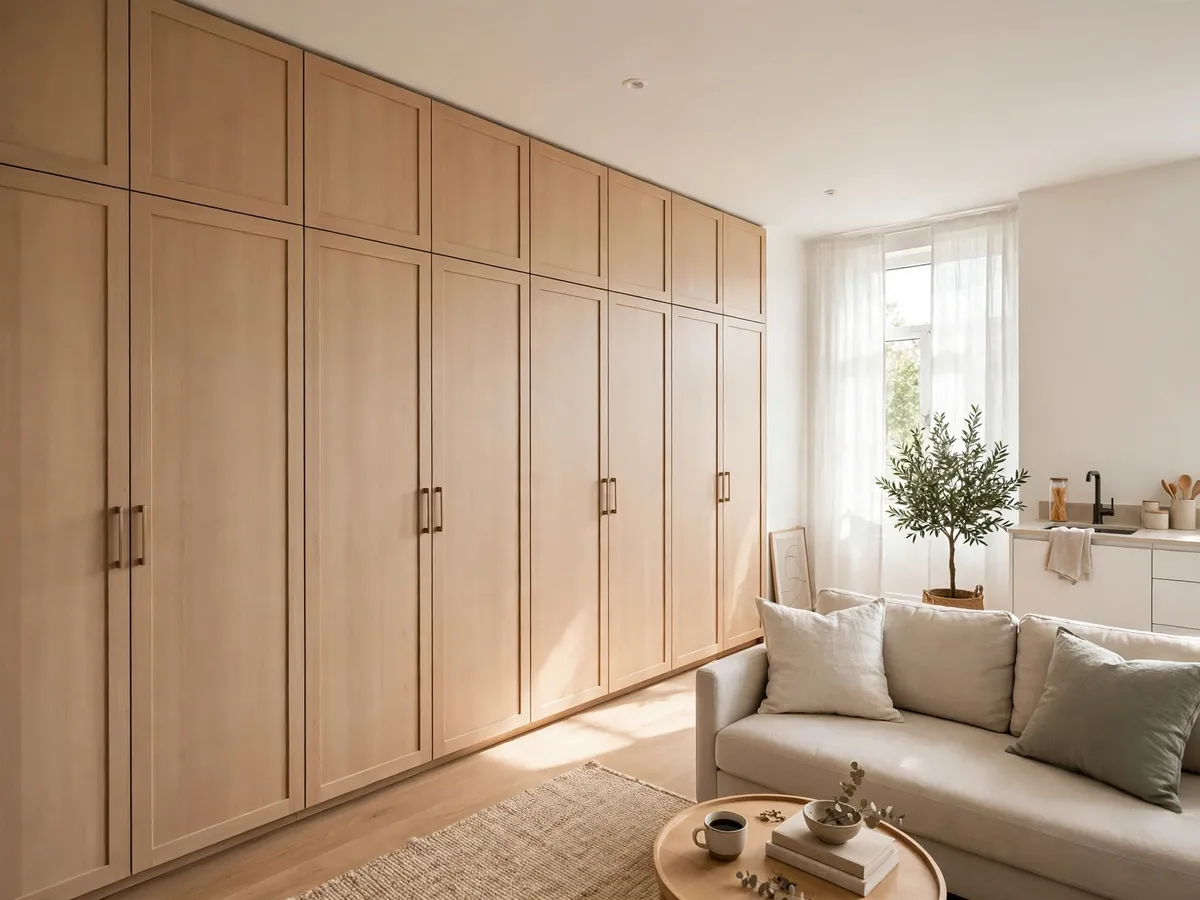
A living zone needs a border and a seat with storage inside it. A bookcase, the IKEA KALLAX works, splits the bed from the couch while letting light pass through, and a rug edge marks where the living room starts. Add a storage ottoman or lift-top coffee table for blankets, and the corner reads as a room.
The bookcase divider earns its spot as a room divider because it works both sides: books and baskets face the living zone, folded clothes face the sleep side. A folding screen or ceiling curtain track can split the room too, but screens only hide things while a bookcase stores them. In 460 square feet, every divider should carry its own weight.
The average US apartment reached 910 square feet in 2025, according to RentCafe. Your studio gets half of that for everything. A couch that seats three and stores nothing is a luxury no studio apartment storage ideas list can afford. Pick the loveseat with the storage chaise, or the ottoman that opens.
The area rug does quiet work. Its edge is a border your brain reads as a wall, and it keeps the living zone's clutter from migrating toward the bed. When the throw blanket lands on the rug's edge every night, that's the zone telling you where it lives.
Where should the work zone go in a studio?
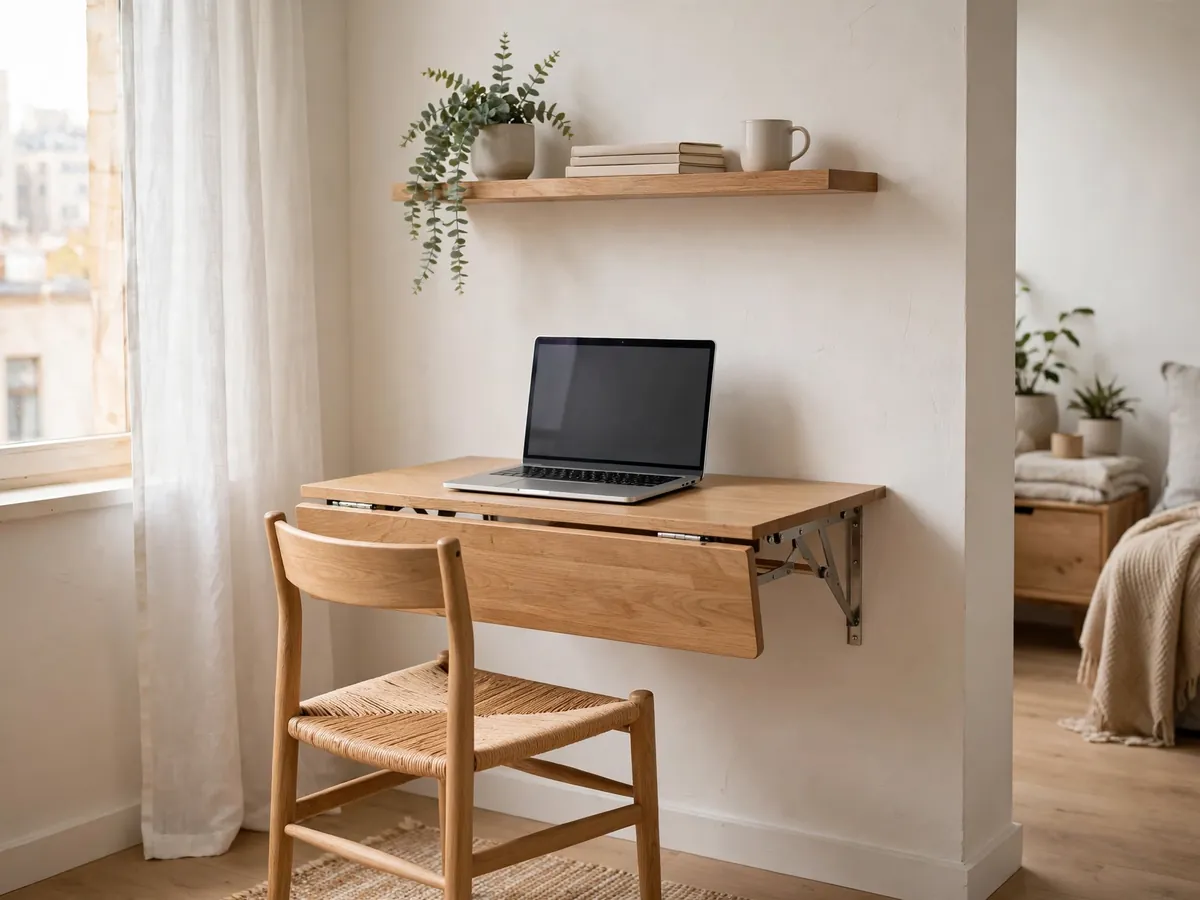
Put the work zone where daylight lands and the bed doesn't pull at your eyes: the wall beside the window, or a corner near the entry. A wall-mounted drop-leaf desk folds flat at 5 p.m., which beats size. In a studio, a desk that disappears beats a desk that's big.
Daylight is the free upgrade most people ignore. A desk in a dark corner needs a lamp, the lamp needs an outlet, and the corner starts collecting cables. The window wall gives you light and a view for tired eyes. Check screen glare before you commit.
For the desk itself, a wall-mounted drop-leaf table works as a full desk and folds to inches deep when you're done. Pair it with a chair that tucks completely underneath, a floating shelf above for notebooks, and a small pegboard for headphones and cables. Everything goes vertical. Nothing lives on the floor. That vertical-first habit runs through the best studio apartment storage ideas for work zones.
If you take video calls, face the room, not the wall. Your background becomes the living zone instead of a blank wall two feet from your face. And don't cheap out on the chair if you work from home full-time. A bad chair poisons the whole room, because you feel it all day, then resent the space.
How do you store clothes when the closet is tiny or missing?
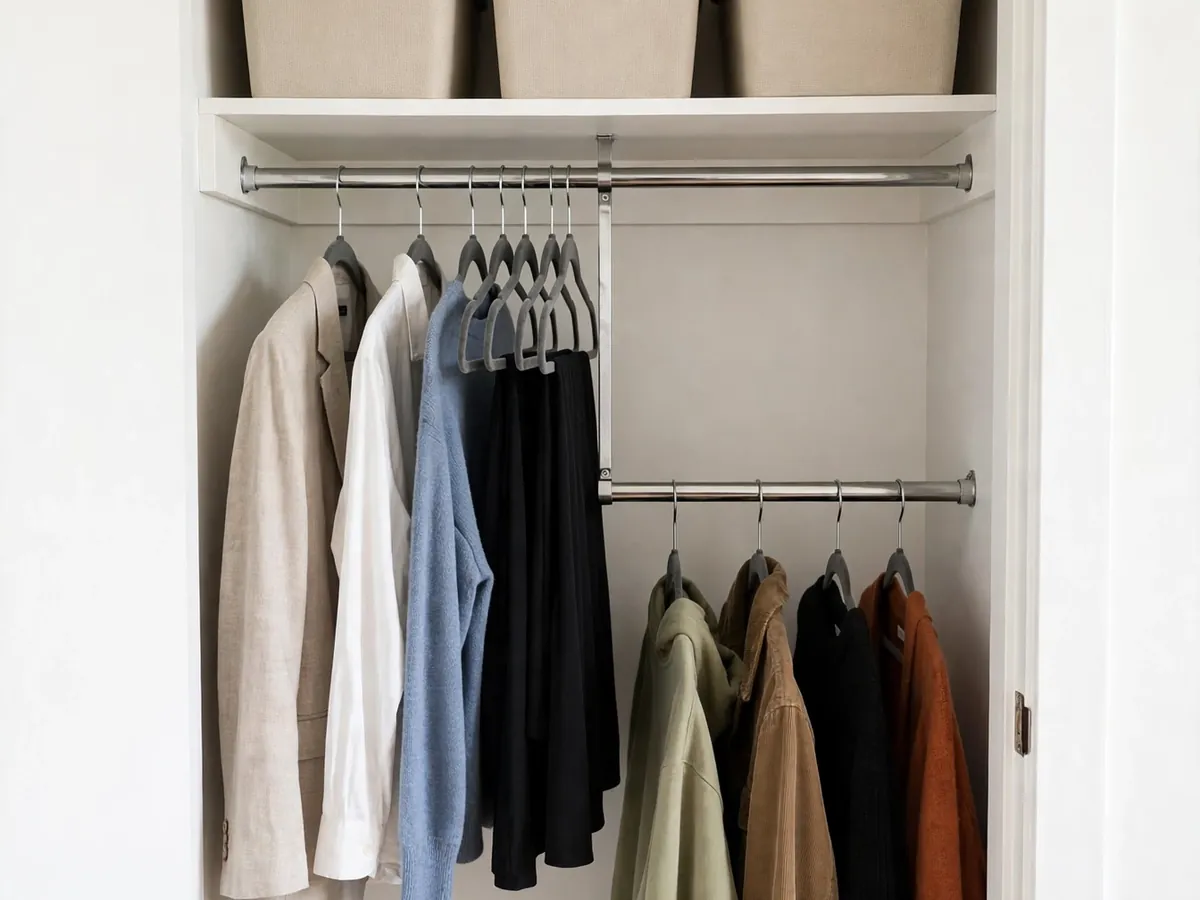
When the closet is tiny, double what it holds and spill over on purpose. A double closet rod doubles hanging space, slim velvet hangers buy back wasted inches, and a tension rod inside the closet holds scarves and belts. With no closet, a garment rack plus a tall dresser or IKEA PAX becomes the closet zone.
Studio apartment closet organization starts with rod math, and most studio apartment storage ideas miss this: most closets waste the bottom two feet below a single rod. A second rod at shirt height doubles shirts and pants without touching the shelf. Above, stackable bins hold jeans, sweaters, and workout clothes. An over-door organizer takes shoes and accessories that would otherwise eat shelf space.
No closet is common, and it's fixable. A garment rack gives you the hanging half; keep it to one tidy row, because a stuffed rack reads as clutter. The IKEA PAX covers the closed half. Hate seeing your clothes? Skip the rack and go straight to the PAX. Like the boutique look? The rack is cheaper and faster.
Seasonal rotation is the habit that makes small closets work year-round. Twice a year, the off-season half moves to under-bed bins, and the current season takes the prime spots. A closet that holds only what you're actually wearing feels twice its size.
What about the kitchen zone in a studio?
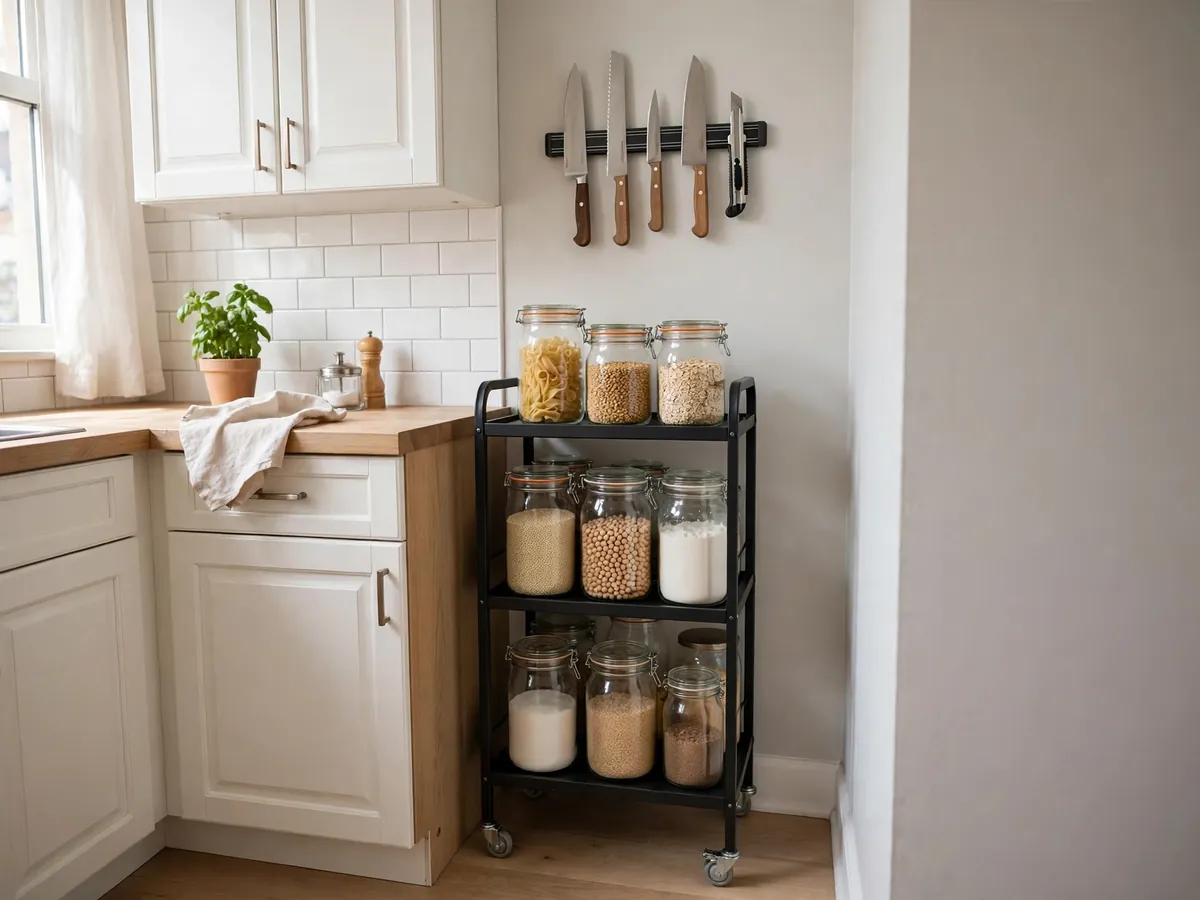
The kitchen zone in a studio is one wall, so storage goes up and into the gaps. A slim rolling cart slides between the counter and the wall for pantry jars and oils, a magnetic strip holds knives off the counter, and floating shelves take daily dishes. Hold that boundary.
Studio apartment kitchen storage lives or dies on the vertical foot above the counter. Floating shelves go there, plus a rail with hooks for the utensils that used to fill a counter crock. Under the sink, a tension rod across the cabinet creates a spray-bottle shelf out of dead air. Slim racks inside cabinet doors hold lids and wraps.
Renters can do all of these studio apartment storage ideas without drilling. Command strips hold the magnetic strip and small shelves if you check the weight rating on the package first and stay under it. Over-cabinet-door baskets add a shelf where there wasn't one. When you move, everything peels off and the walls stay clean.
One warning about open shelving: it photographs beautifully and collects cooking grease for real. If you fry food most nights, closed storage will save you monthly degreasing. Open shelves are not for every cook. For your drawers, our kitchen drawer organization ideas fit twice the tools in the same drawer with cheap inserts.
How do you build an entry zone when there is no entryway?
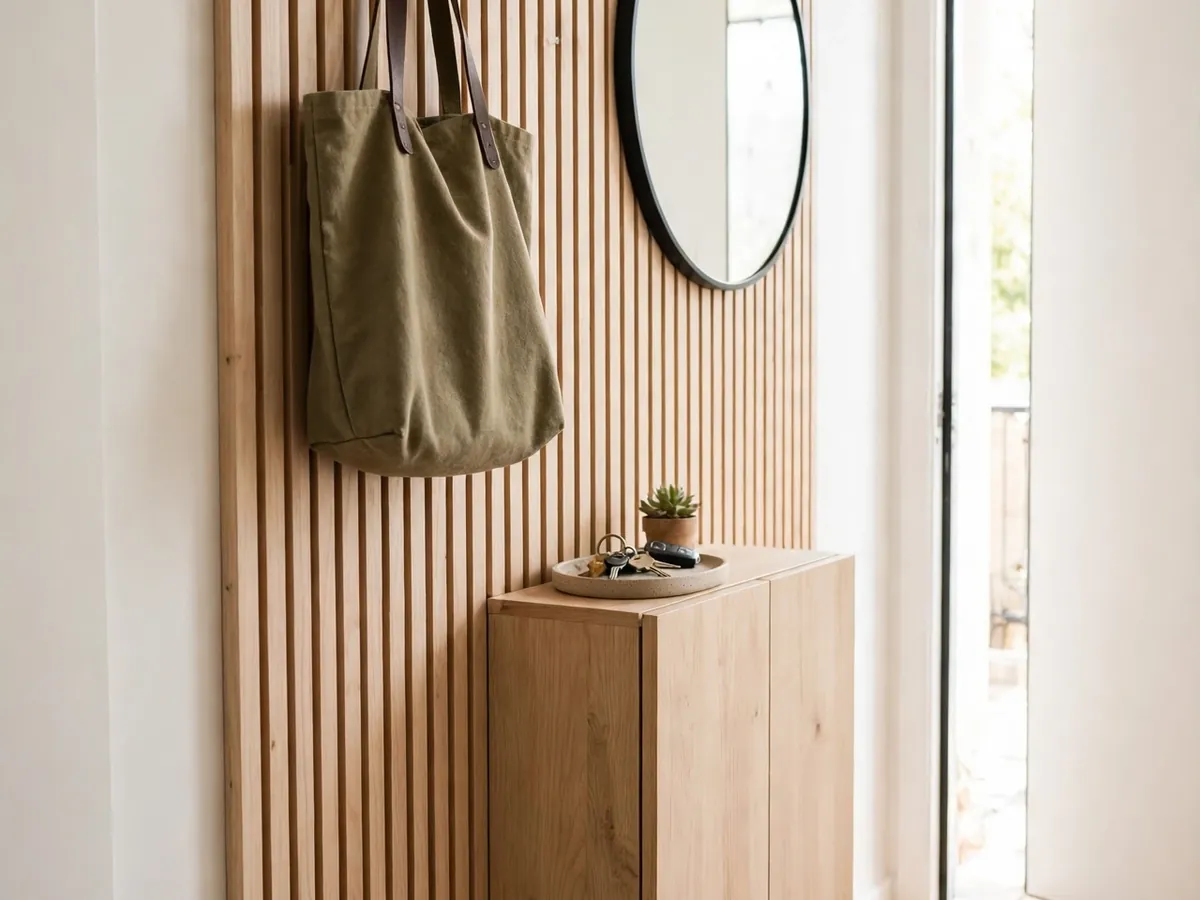
An entry zone is three feet of wall, not a room. You need wall hooks for the coat you're wearing, a slim shoe cabinet that hugs the wall, a catch-all tray for keys and mail, and a mirror. In a rental, Command strips and over-door organizers build the whole zone without a single hole in the wall.
Most studio apartment storage ideas skip the entry, yet it matters more than its size suggests. The entry is where the day's mess enters: mail, keys, the bag, the shoes. Without an address for those things, they land on the nearest flat surface, usually the kitchen counter or the bed. A three-foot zone with a tray stops that migration at the door.
The catch-all tray is the cheapest piece with the most payoff. Keys, wallet, sunglasses, and mail all land in one tray, and the tray empties into its homes once a week. Give mail two slots: action and file. Anything else becomes a pile, and piles are just clutter with seniority.
A slim storage bench does double duty: sit to tie shoes, stash off-season pairs inside. A mirror above the hooks bounces window light deeper into the room. And most renters build all of this without drilling: 44.6 million US households rent, 35.0% of all households, per iPropertyManagement's 2026 renting statistics.
Where do shoes, coats, and bags actually live?
Shoes, coats, and bags live in the entry zone, but only the ones in season. The current coat and two pairs of daily shoes stay by the door; everything else rotates out. Winter boots and heavy coats move to under-bed bins or the top of the closet in spring. That rotation keeps a four-foot entry wall from drowning.
A slim shoe cabinet with tilt-out drawers holds plenty of pairs in six inches of depth, and it looks like furniture instead of a shoe pile. Bags hang on the inside of the closet door or on a single strong hook. A row of bags on the entry wall reads as clutter however nice the bags.
Here's the rule that keeps these studio apartment storage ideas working: one in, one out. A new pair of shoes means an old pair leaves the apartment, donated or tossed. In a studio there's no spare closet to absorb overflow, so the rule stays strict. If shoes are your avalanche, these small-closet shoe storage setups are built for this exact footprint.
If your entry zone keeps overflowing into the bedroom corner, the real problem is usually the closet behind it. Our small closet organization ideas walk through doubling a tiny closet's capacity with rods, bins, and door storage, which takes the pressure off the entry wall.
Where do cleaning supplies and the vacuum go?
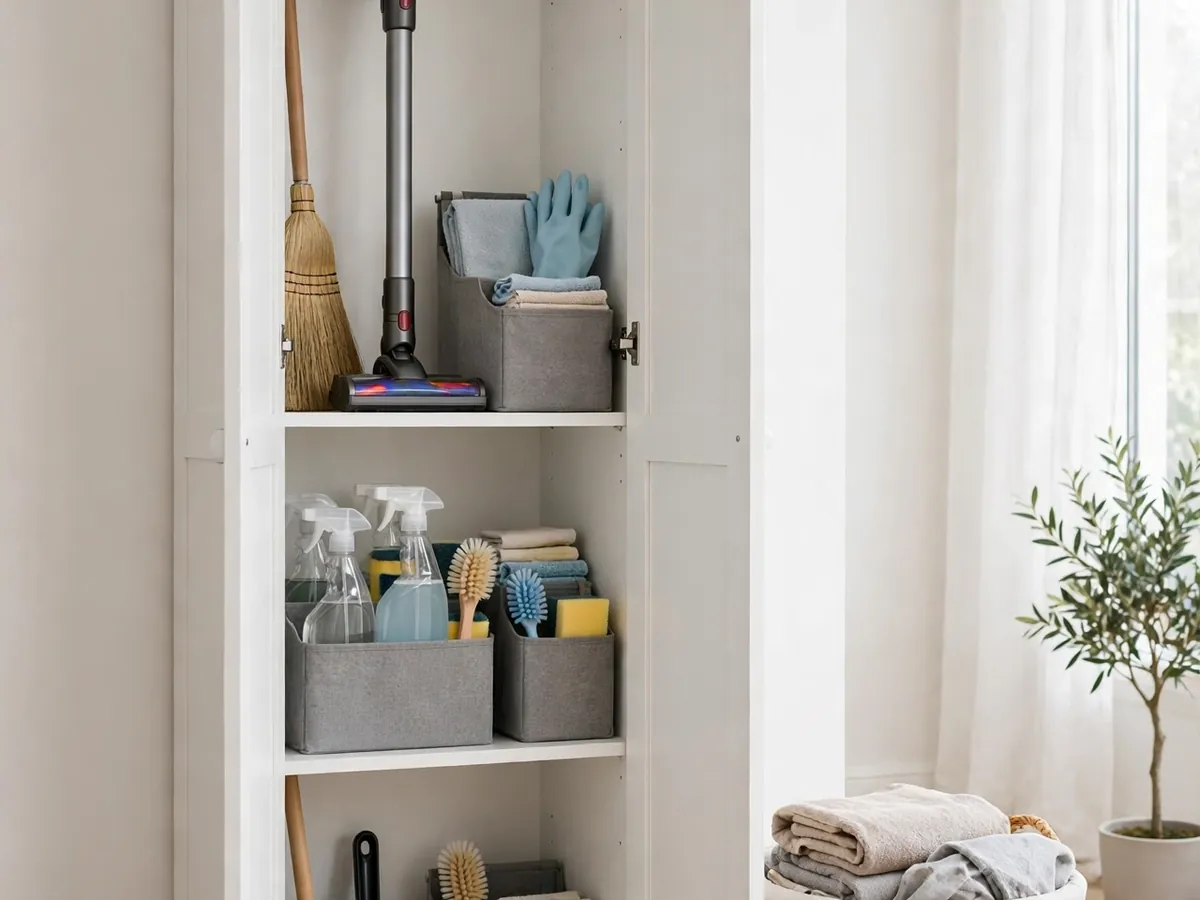
Cleaning gear gets the narrowest, tallest cabinet you can fit, because a vacuum is tall and everything else is small. One tall narrow cabinet holds the vacuum, the broom, and a caddy of sprays, with the laundry hamper beside it. That is the entire utility zone: one vertical slice, usually by the bathroom.
The mistake is scattering supplies across three spots: some under the sink, some in the bathroom, the vacuum wherever it fits. Then cleaning never happens, because gathering the gear takes longer than the cleaning. One cabinet, one caddy. The caddy carries from zone to zone. It is the least glamorous of these studio apartment storage ideas, and the one that saves the most time.
For the vacuum, a stick vacuum beats an upright in a studio. It hangs on a wall hook inside the cabinet door, charges there, and the whole utility zone shrinks to a hook and a caddy. The trade-off is real: with a shedding pet, an upright's suction may win despite the footprint. Pick the vacuum for your actual floors.
Laundry belongs in this zone too. A tall slim hamper with a lid keeps dirty clothes out of sight and out of the sleep zone. The hamper is the one utility item guests always notice, so the lid earns its keep.
What do you do with bulky stuff like luggage, seasonal gear, and a bike?
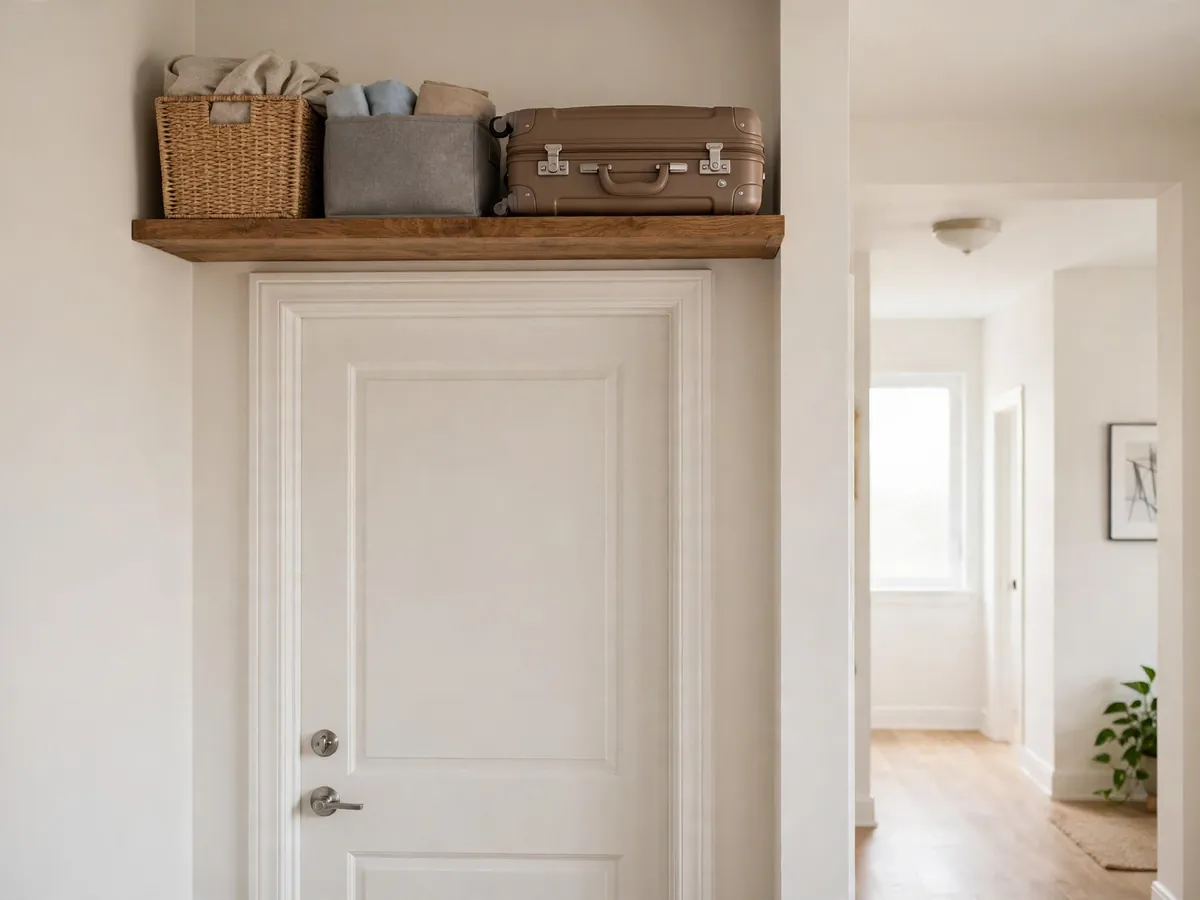
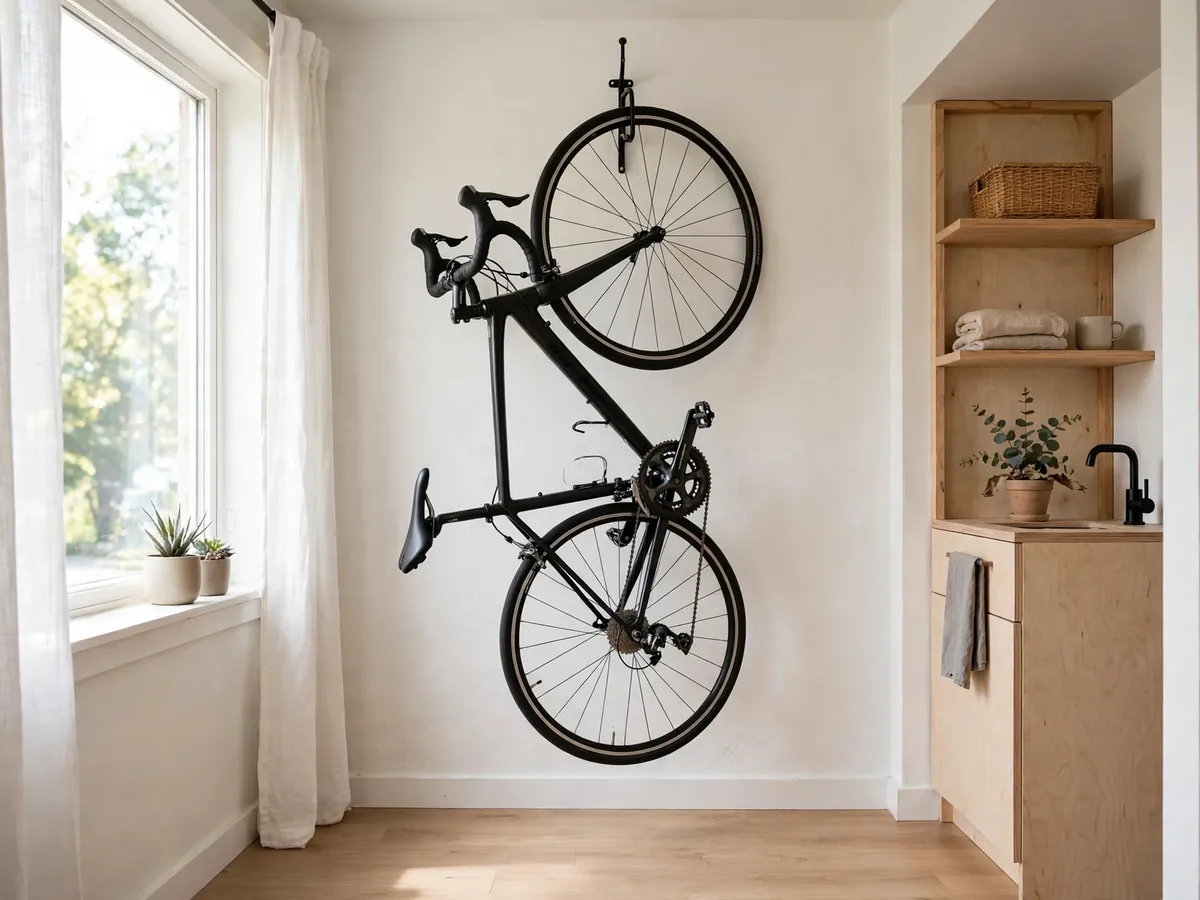
Bulky stuff goes where you never walk: above doors, under the bed, and on walls. A shelf above an interior door holds bins and a carry-on, vacuum bags shrink winter bedding flat, and a bike hangs vertically on a wall mount. The floor stays clear underneath. Things that move twice a year live up high or under the bed.
Above-door dead space is the most underused of all studio apartment storage ideas. A shallow shelf above every interior door holds luggage, holiday decorations, and camping gear in labeled stackable bins. Label the bins on the visible side. Future you, standing on a chair in December, will be grateful.
Nest your luggage: the carry-on fits inside the checked bag, and the duffel fits inside that. Three bags become one. Seasonal clothes go in vacuum storage bags, which compress a winter coat collection flat enough to slide under the bed. Out of season means out of the prime zones, every time.
For the bike, a vertical wall mount is the classic small studio apartment bike storage move: the bike hangs by its front wheel and looks fine on the wall. But if you ride daily, hoisting it on and off a hook twice a day gets old fast. Daily riders should use a compact floor stand by the door instead.
How do you keep zones from bleeding into each other?
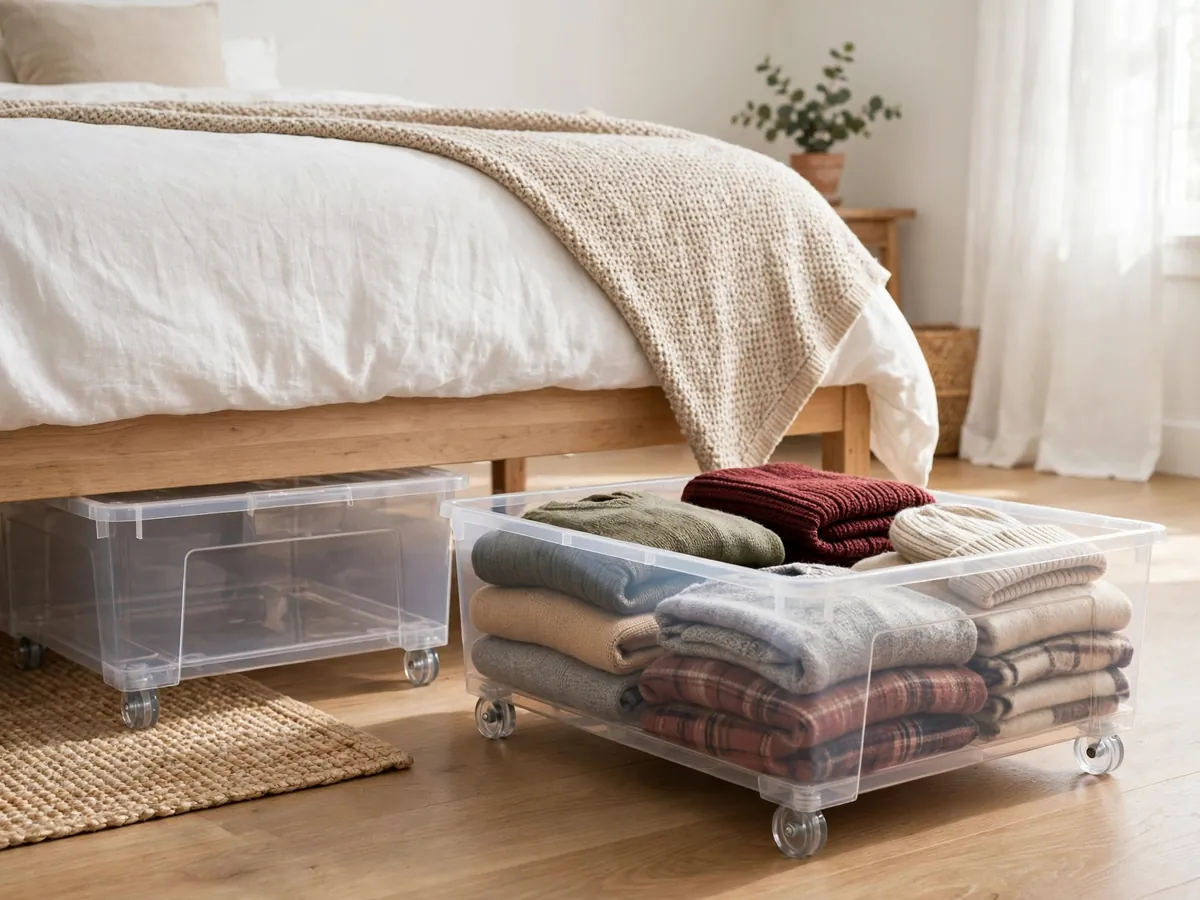
Zones bleed because the reset never happens, not because the system is wrong. Run a 10-minute nightly reset: everything returns to its zone's address, the drop-leaf desk folds flat, the throw blanket goes back on the ottoman. Physical edges help too: rug edges, a folding screen between sleep and live, and under-bed bins on casters.
Make the reset stupidly easy or it won't survive a tired Tuesday. Keep a small basket in each zone for strays, and the reset is just carrying baskets home. Ten minutes, timer on, some music on. No list of studio apartment storage ideas survives a tired Tuesday without it. When every category has an address, the reset is fast. When it isn't, the reset shows you which zone is missing an address.
The weekly layer is a 20-minute Sunday pass: fridge check, laundry started, surfaces wiped, mail tray emptied. The seasonal layer is the rotation: twice a year, off-season clothes, gear, and shoes move to archive spots and the current season takes over. Three rhythms, three time scales, none of them heroic.
Skip the fancy labeling systems. Addresses beat labels. When the scissors live in the work zone's drawer, you don't need a label that says scissors. You need the habit of putting them back, and the nightly reset builds that habit.
What should you buy first, and what can wait?
Buy address-giving pieces first; the good-looking furniture comes later. That order is what makes these studio apartment storage ideas work on a real budget. Under-bed bins, a catch-all tray, a tension rod, and an over-door organizer cost little and fix chaos this weekend. The storage bed, wardrobe wall, and loft bed can wait until you've lived with the zones for a month and know what you need.
| Tier | Buy first | Let it wait |
|---|---|---|
| Under $50 | Under-bed bins, catch-all tray, tension rod, over-door organizer, velvet hangers | Matching sets |
| $50 to $200 | Rolling cart, storage ottoman, drop-leaf table, narrow utility cabinet, bike wall mount | Full wardrobe wall, loft bed, folding screen |
| $200 and up | Storage bed frame, IKEA PAX wardrobe, full-height wardrobe wall | Murphy bed (needs landlord approval) |
Prices move by store and season, so treat these as bands, not price tags. Target, Walmart, IKEA, The Container Store, and Amazon all carry the first two tiers.
On a lease under six months, stop at the under-$50 tier plus the rolling cart. Skip the IKEA PAX on a short sublet. Short leases want things that move: bins, carts, hooks, and the ottoman. Everything on that list packs into a car trunk in one trip, which is the real test.
Which zone should you fix first this weekend?
Fix the sleep zone first. It holds your bed and your clothes, the two categories that create the most visual chaos, and under-bed bins plus a double rod cost little and take an afternoon. With the average US studio at 460 square feet and floor plans still shrinking, the bed corner is where each square foot pays off fastest.
Work the weekend in this order: Saturday, the sleep zone. Bins under the bed, double rod in the closet, off-season clothes into vacuum bags. Sunday morning, the entry zone: hooks, tray, shoe cabinet. Sunday night, run your first 10-minute reset with the zone map taped inside a cabinet door.
Then guard the 30-inch walking path like it pays rent, because in a long narrow studio it basically does. When the path stays clear, the whole room feels bigger than its 460 square feet. Studios have been shrinking for a decade, from 614 square feet in 2006 to 504 in 2016, per RentCafe. Every clear inch counts double now.
These studio apartment storage ideas scale down, too. If a friend is moving into a dorm with even less room, our dorm room storage organization ideas apply the same zone thinking to a shared room. Start with the sleep zone this weekend, and the rest of these studio apartment storage ideas follows.
How do you organize a studio apartment with no closet?
Build the closet from furniture: a garment rack for hanging, a tall dresser or IKEA PAX wardrobe with doors for folded clothes, and under-bed bins for the off-season half. Keep the rack to one tidy row. Twice a year, rotate seasons so the "closet" only holds what you're wearing now.
How do you divide a studio apartment into zones?
Sketch the floor, then assign six zones where they naturally fall: sleep in the darkest corner, living on the longest wall, work by the window, kitchen where the counters are, entry at the door, utility in the awkward corner. Keep a 30-inch walking path clear first, then give each zone one anchor piece of furniture.
Where should you put a desk in a studio apartment?
Beside the window, where daylight lands and the bed stays out of your sightline. A wall-mounted drop-leaf desk folds flat when work ends, which matters more than size in a small room. If you take video calls, face the room so your background is the living zone.
What is the best way to store clothes in a small studio?
Double the closet rod, switch to slim velvet hangers, and put stackable bins on the shelf for folded items. Move off-season clothes to under-bed bins or vacuum bags. The closet should hold only the current season; everything else lives in archive spots.
What furniture works best for studio apartment storage?
Pieces that store and divide at the same time top every studio apartment storage ideas list: a storage bed with drawers, an open-back bookcase used as a room divider, a storage ottoman or lift-top coffee table, a slim rolling cart for the kitchen, and a tall narrow cabinet for cleaning gear. Every large piece should earn its floor space twice.
How do you make a studio apartment look less cluttered?
Give every category a fixed address and close the storage: doors, drawers, and lids beat open piles every time. Then run a 10-minute nightly reset so things return to their addresses. Most "cluttered" studios aren't overstuffed; they're just missing addresses.
Where do you store a bike in a small studio apartment?
On the wall, vertically, hung by the front wheel on a wall mount, with the floor clear underneath. It works in the entry or utility zone. It is the studio apartment storage idea cyclists argue about most. If you ride every day, use a compact floor stand by the door instead; hoisting the bike twice daily gets old.
Is a Murphy bed or a loft bed better for a studio?
A loft bed is cheaper and needs no wall anchoring, but it merges sleep and work into one footprint. A Murphy bed frees the floor completely but needs stud anchoring, landlord approval, and usually professional installation. Renters should default to the loft or a storage bed; owners with approval can consider the wall bed.
Where do guests sleep in a studio apartment?
In the living zone, on an air mattress or a folding guest bed. The best studio apartment storage ideas for guests keep one set of guest bedding in a labeled bin so hosting doesn't require reorganizing the apartment. A loveseat with a pull-out bed works if you host often.
How often should you declutter a studio apartment?
Daily, in the form of the 10-minute nightly reset, which prevents clutter from building. Seasonally, rotate clothes, gear, and shoes twice a year. And keep a one-in-one-out rule for shoes, bags, and gadgets so nothing accumulates without something leaving.
For the cold months, our guide to organizing your entryway for winter turns the same zone idea into a wet-boot and coat routine that fits a one-room home.
