
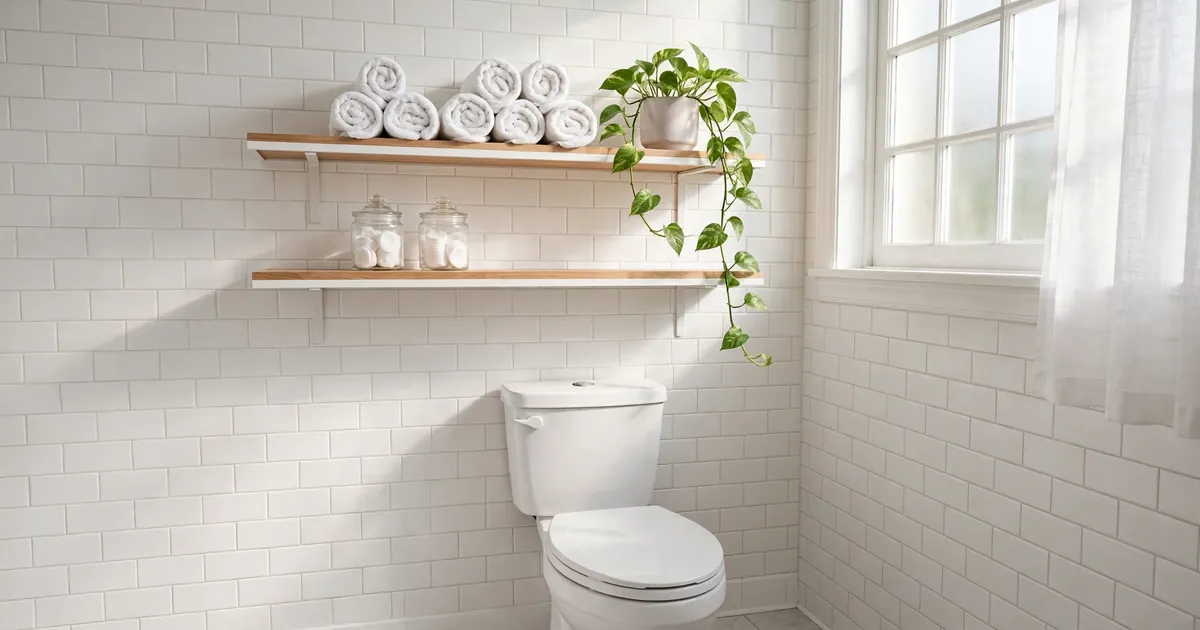

A bathroom shelf is the cheapest square footage you will ever buy. The average full bathroom measures just 36 to 40 square feet, about 5 feet by 8 feet, per HelpWithDIY’s sizing guide, so floor space is not an option. The fix is vertical: this guide covers 15 bathroom shelf ideas, humidity-proof materials, mounting (including on tile), and styling that stays useful.
TL;DR
- The best bathroom shelf ideas for small bathrooms are floating shelves above the toilet, corner shelves in dead angles, slim shelves beside the mirror, tension-pole units for renters, and adhesive shelves for zero-damage mounting.
- Material matters more than style: the U.S. EPA says indoor humidity should stay below 60% (ideally 30 to 50%), so sealed wood, powder-coated metal, tempered glass, and bamboo beat raw pine and MDF in a steamy bathroom.
- Mounting decides everything. A screw into a stud holds the most; where that is not possible, toggle bolts beat plastic plugs, and bathroom-rated adhesive strips work for light loads only.
- Keep it useful with the 70/30 rule: 70% everyday items, 30% pretty things, and matching containers for the small stuff.
Shelf types compared
| Shelf type | Best for | Typical size | Mounting | Humidity score | Watch out for |
|---|---|---|---|---|---|
| Floating shelf | Above toilet, beside mirror | 6 to 8 in deep, 24 to 30 in wide | Studs or anchors | Good if sealed | Weak on drywall anchors alone |
| Corner triangle shelf | Shower-adjacent dead corners | 8 to 10 in per side | Silicone, tile adhesive, or screws | Excellent (ceramic/glass) | Chrome-plated zinc rusts in a year or two |
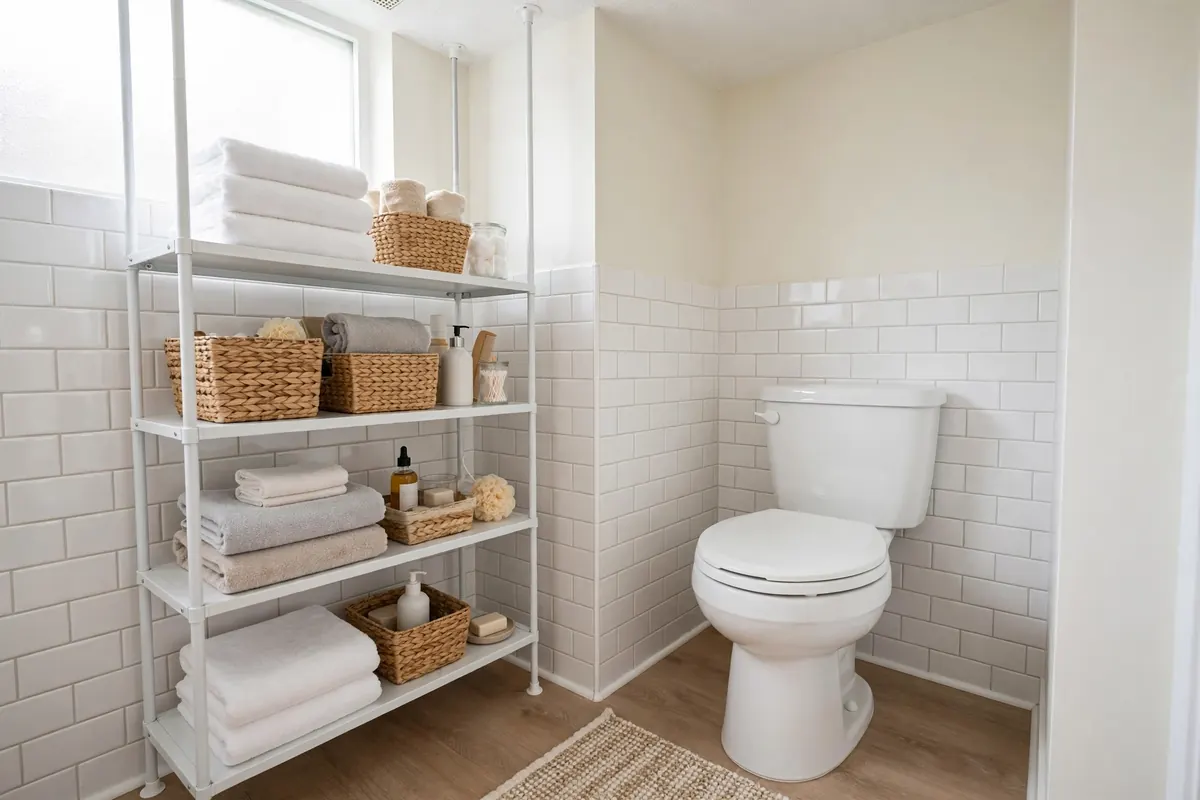
| Tension-pole unit | Renters, zero damage | 3 to 4 tiers, floor to ceiling | Spring pressure | Good (powder-coated) | Wobbly on textured ceilings |
| Over-toilet freestanding unit | Maximum storage, no drilling | ~24 in wide, ~5.5 ft tall | None (stands on floor) | Good (bamboo/metal) | Needs 9 to 10 in of tank clearance |
| Adhesive shelf | Renters, light items | Small, one or two tiers | Water-resistant strips | Fine on smooth tile | 3 to 7.5 lb limit per shelf |
| Recessed niche | Showers, remodels | 12 in wide by 24 in tall | Built into wall | Excellent | Not for renters; needs waterproofing |
| Glass shelf | Tiny baths that need to feel open | 8 in deep, 18 to 24 in wide | Brackets into studs | Excellent | Shows every water spot |
What are the best bathroom shelf ideas for small bathrooms?
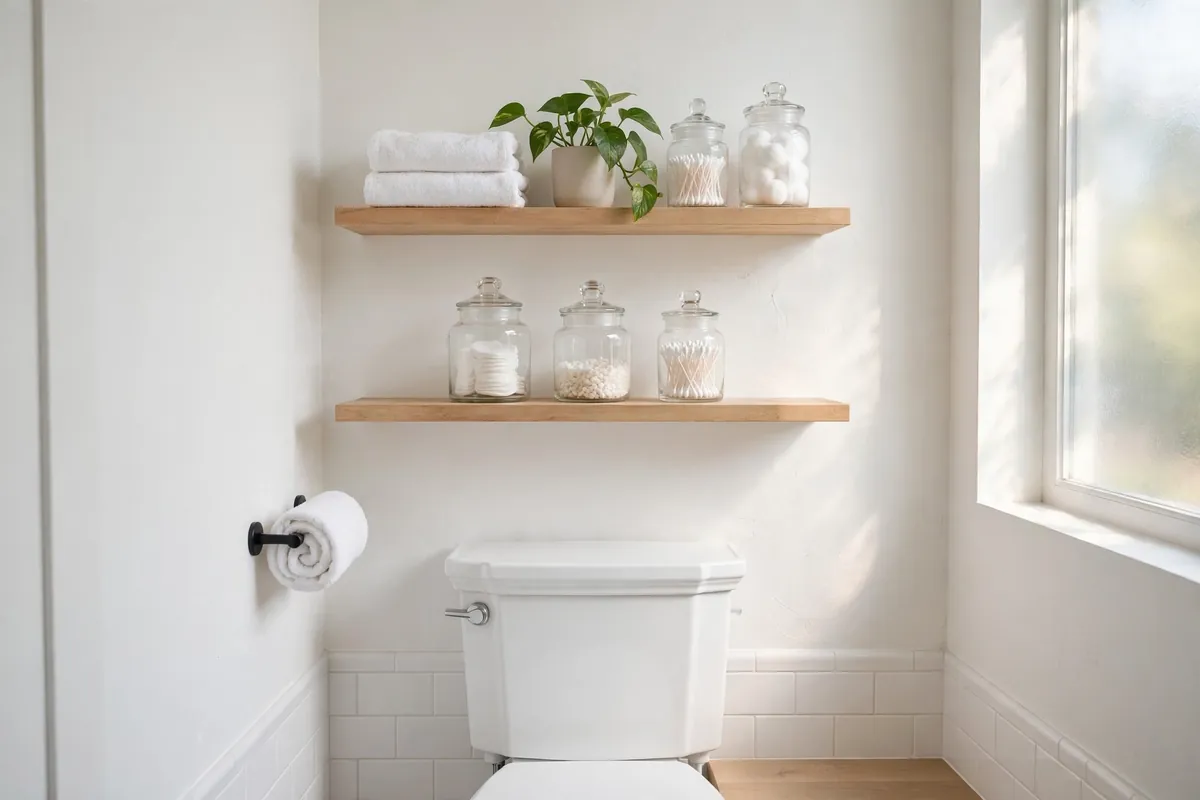
The best bathroom shelf ideas for small bathrooms are floating shelves above the toilet, corner shelves in unused angles, a slim shelf beside the mirror, tension-pole units that need no drilling, and adhesive shelves for renters. All of them use wall or vertical space instead of floor space, which a small bathroom cannot spare.
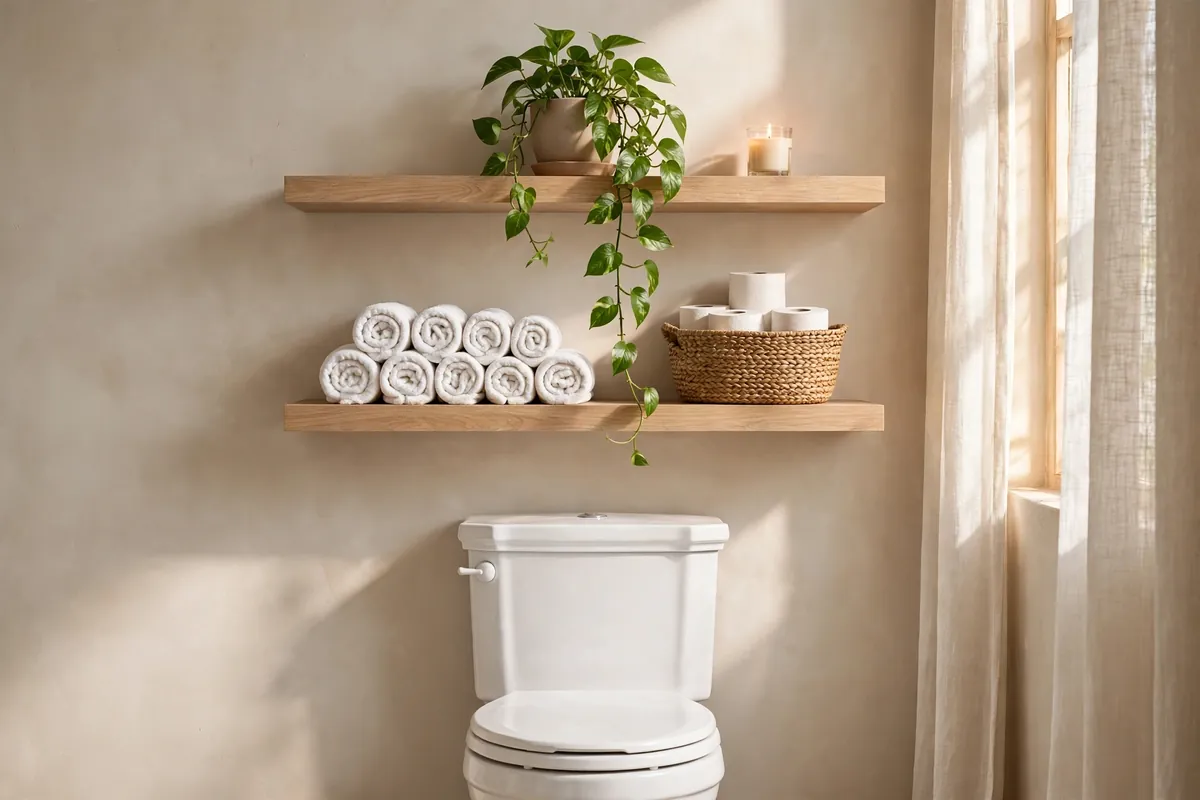
If I had to pick one move, it would be two floating shelves above the toilet. That wall is dead space in almost every bathroom, and two shelves at 8 inches deep and 24 to 30 inches wide hold towels, backup toilet paper, and a basket of daily items. The shelf-maker blog Shelf Expression calls this placement the most popular by a wide margin. Start there, live with it a week, then decide what else you need.
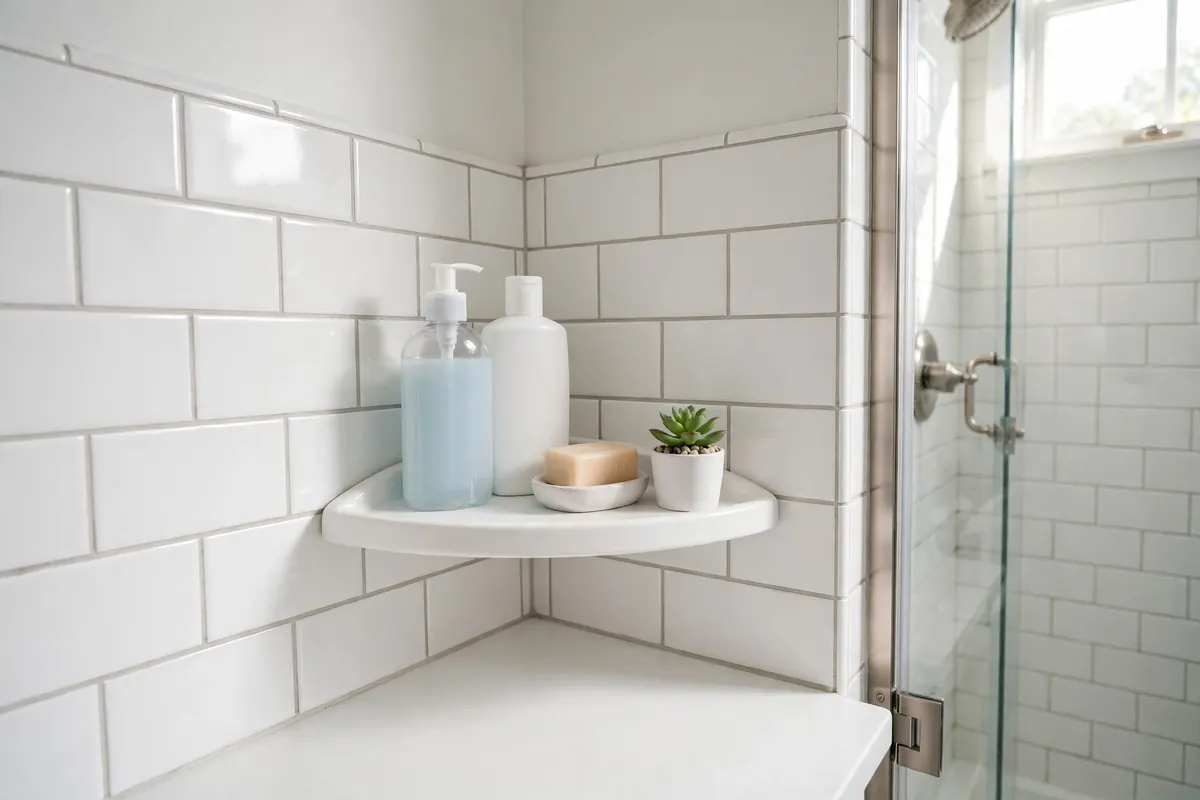
The other high-return idea is the corner. Bathrooms almost always have one dead corner, and a triangle shelf turns it into storage for four to six bottles without sticking out into the walkway. Dizzy Journal’s shelf guide notes ceramic corner shelves are naturally waterproof, do not rust, and wipe clean in seconds, the lowest-maintenance pick for anywhere near water.
Which shelf materials actually survive bathroom humidity?
Sealed hardwood, powder-coated metal, tempered glass, bamboo, and teak survive bathroom humidity best. The U.S. EPA advises keeping indoor humidity below 60 percent, ideally 30 to 50 percent, and a bathroom hits the top of that range every shower. Raw pine, untreated MDF, and particleboard are the ones to avoid: they soak up moisture, swell, and crumble around the screws.
My ranking: powder-coated metal first, sealed bamboo or teak second, tempered glass third. Powder-coated metal does not rust or swell and wipes clean, which is why it owns shower-adjacent spots. Bamboo beats MDF equivalents in daily steam, per Dizzy Journal’s guide. White oak and maple work too with a full polyurethane finish.
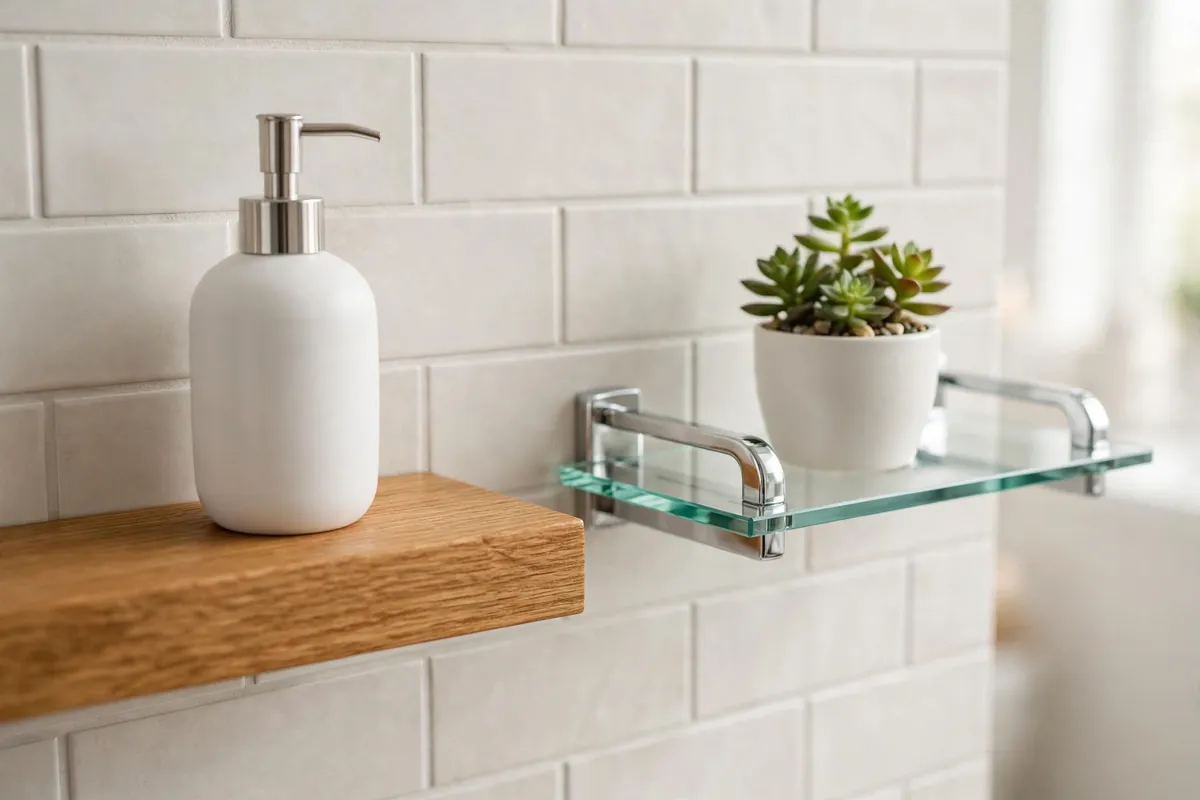
Glass looks weightless and makes a tiny bathroom feel bigger, but it is not for you if you will not wipe it down: water spots show, and mineral haze builds fast in hard-water homes. Acrylic gives the same look for less but scratches easily, per Dizzy Journal. For the invisible look with less fuss, tempered glass wins.
The EPA also says to dry wet areas and items within 24 to 48 hours to prevent mold and mildew. Apply that to shelves: keep wicker baskets up high away from spray, and retire any that smell musty.
How do floating, corner, and over-toilet shelves compare?
Floating shelves win on looks, corner shelves win on efficiency per inch, and over-toilet units win on total storage. Floating shelves carry less weight than bracketed shelves unless anchored into studs. Corner shelves fit where nothing else can, and ceramic or glass versions are nearly maintenance-free near water.
Pick floating shelves when the wall is visible and style matters, like the wall you face from the sink, and keep them 8 inches deep. It is the most popular of all bathroom shelf ideas for a reason: it looks built in without a remodel. Pick corner shelves for awkward angles near the shower, in ceramic or tempered glass with stainless hardware, since Dizzy Journal reports chrome-plated zinc brackets rust within a year or two of steam. Pick an over-toilet unit when you need volume: bamboo versions from Zenna Home and Songmics run $40 to $70. Concealed floating brackets look cleanest but demand precise leveling; visible L-brackets and French cleats forgive small mistakes and adjust easily.
Tension-pole and adhesive shelves are the renter’s answer, covered in the no-drill section below. Recessed niches are the homeowner’s luxury: a 12-by-24-inch niche between two studs, sealed with a waterproofing membrane, lasts decades. Not for renters and not a weekend project, but the only shelf with zero footprint.
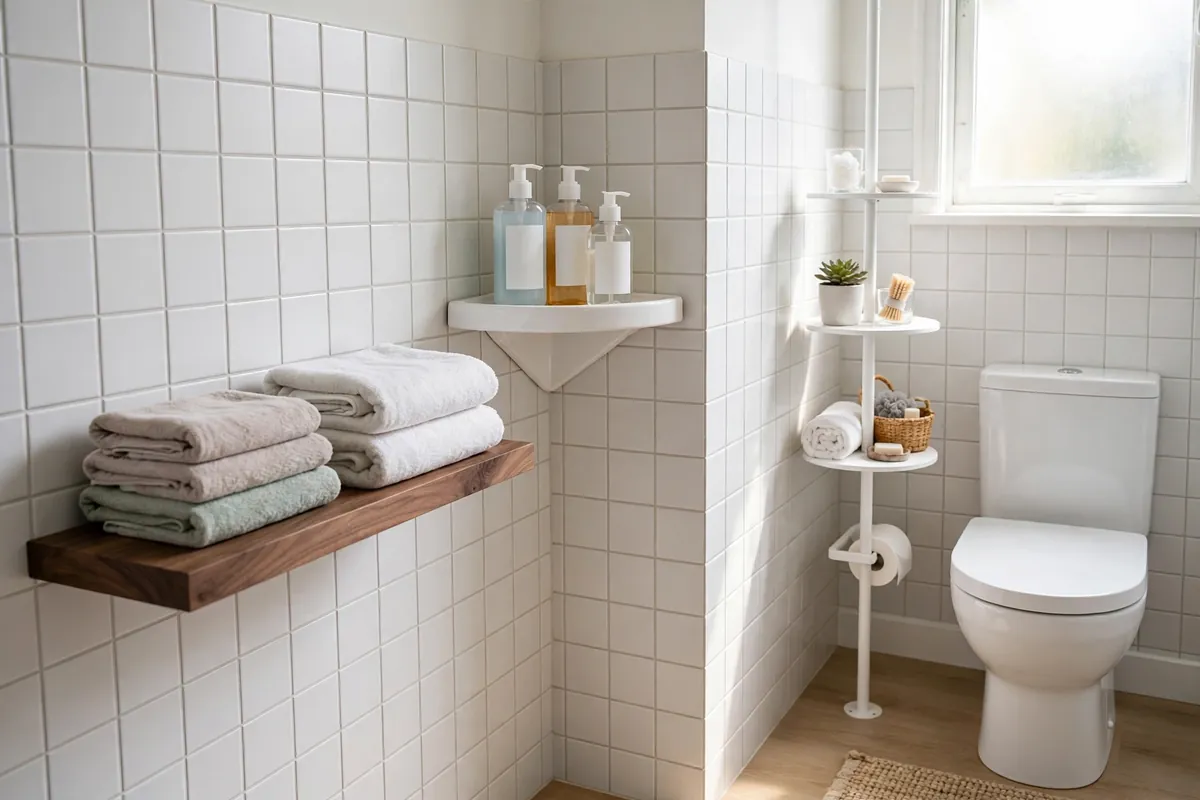
Where should you put shelves in a tiny bathroom?
Put daily-use shelves at eye level within arm’s reach, backup stock and decor up high, and nothing in the walkway. The five zones that work: above the toilet, beside the mirror, inside or next to the shower, over the door, and under an open sink. Assign items by how often you grab them.
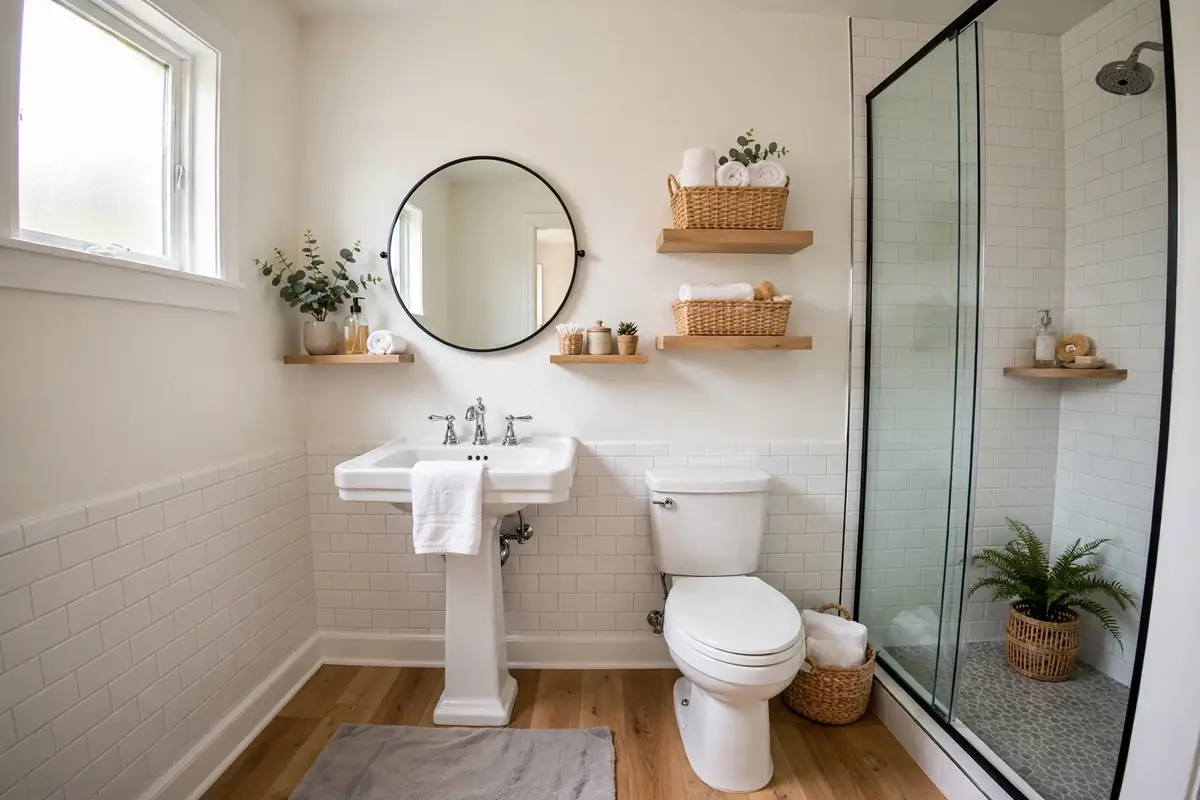
The strip beside the mirror is the most underused spot I see. A vertical stack of two or three narrow shelves (12 to 18 inches wide, 6 to 8 inches deep) holds toothpaste and soap where your hands already are. Shelf Expression recommends exactly this setup for daily items.
Above the toilet is the second tier: backup toilet paper, extra towels, a small plant, heavier items low. The shower wall gets a corner shelf for wet bottles. Over the door, a slim rack handles robes. Under a pedestal sink, a shelf with baskets hides plumbing. A shelf above the door is the bonus zone: out of sight, perfect for backup supplies you grab once a month.
If your bathroom has a pedestal sink with no vanity, these same shelf rules apply double, since the wall is doing all the storage work.
One rule saves the most regret: keep shelves 8 inches deep or less in any walkway. Measure the narrowest point of your traffic path before you buy; if the number feels tight, it is.
How do you hang a shelf on a tile wall without cracking it?
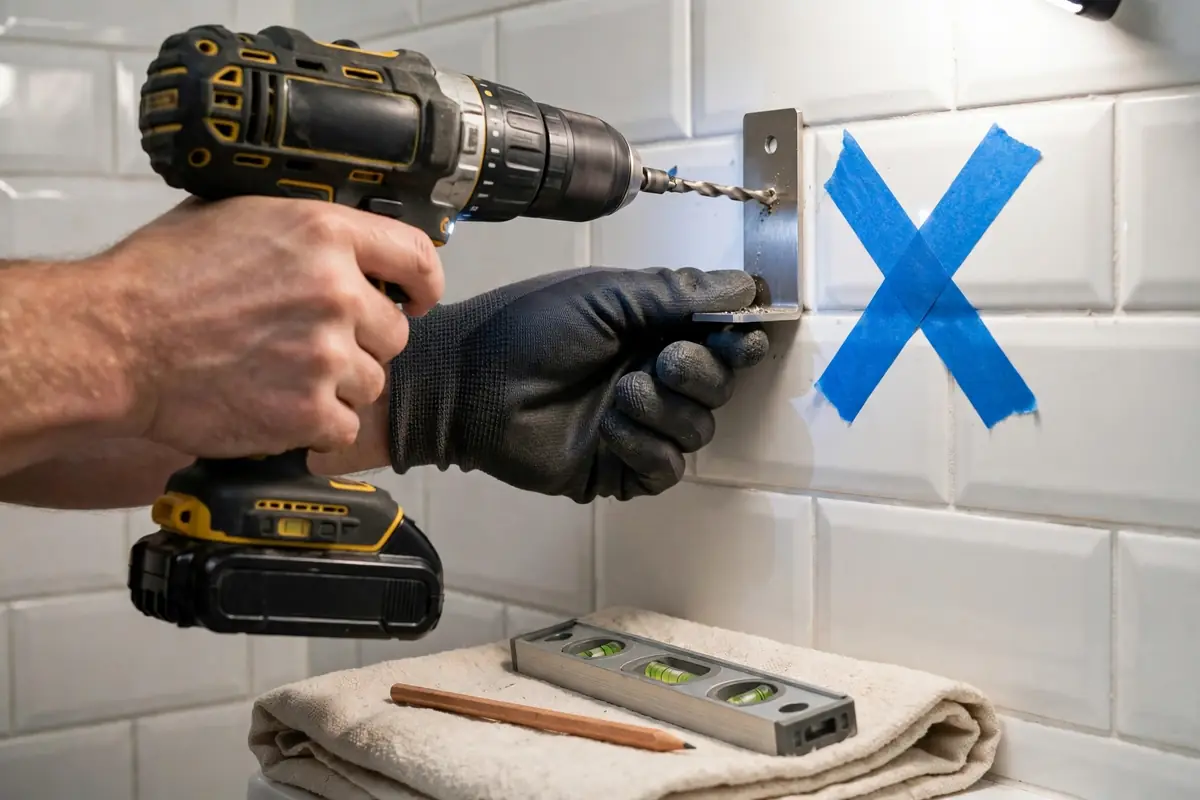
Use a diamond or carbide tile drill bit, go slow with no hammer action, and start with a small pilot hole. Mark the spot with painter’s tape so the bit does not wander, drill at low speed with light pressure, and let the bit do the cutting. Porcelain is harder and slower than ceramic, so budget extra time.
My honest take: avoid drilling tile if you can. Dizzy Journal’s guide makes a point I agree with, mount on the painted drywall section instead whenever the layout allows. Bathroom Wiki’s guide notes the same escape hatch: freestanding over-toilet units and adhesive shelves skip the tile question entirely.
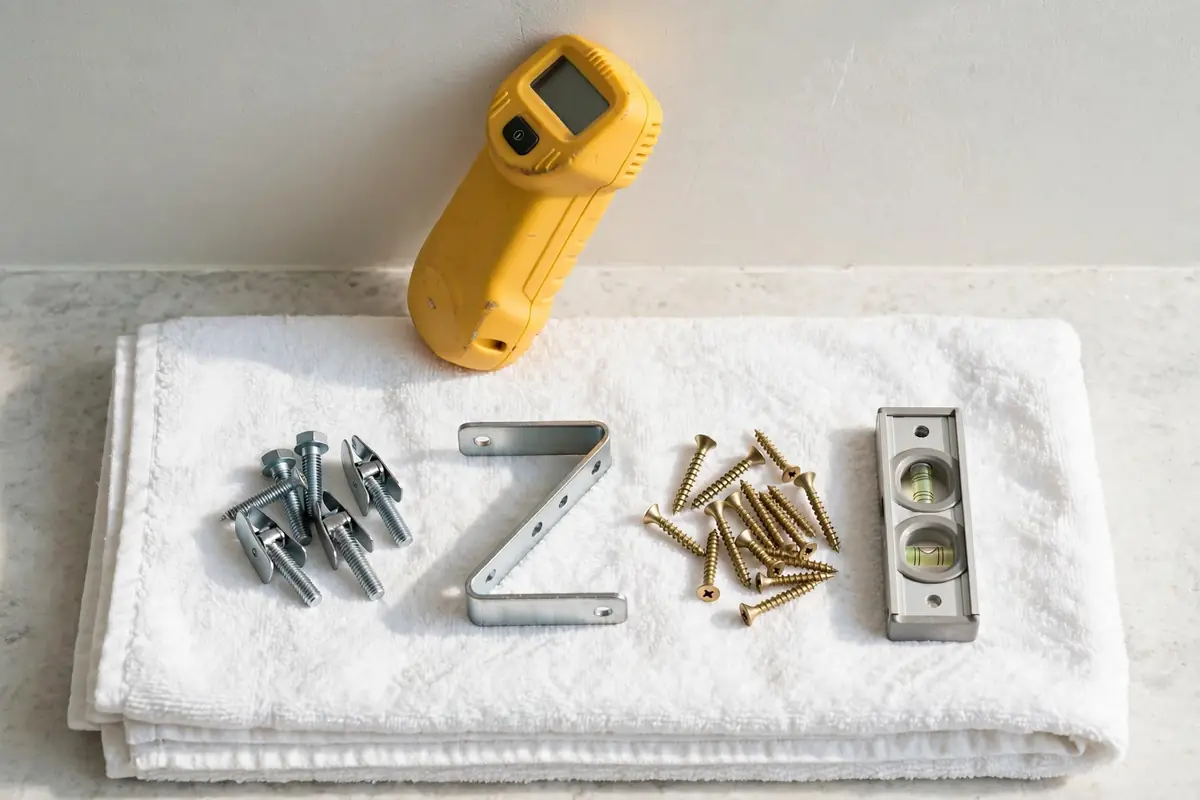
When drilling is unavoidable, two details decide success. First, find the stud: a screw into wood holds far more than any anchor in tile over drywall, and studs sit 16 inches on center in most US homes. Second, match the anchor to what is behind the tile, toggle bolts for hollow drywall, sleeve anchors for tile over backer board. Plastic plugs are the weakest option and the usual reason shelves tilt forward over time. For the whole-room plan, see our small bathroom storage ideas hub.
Can renters really add shelves without drilling?
Yes, with three options that work: tension-pole shelf units, freestanding over-toilet units, and bathroom-rated adhesive shelves. About 35 percent of occupied US housing units are renter households right now, 46.4 million of them per the Census Bureau’s Q2 2025 survey.
Tension-pole units are the strongest no-drill option. A spring-loaded pole wedges between floor and ceiling and carries three or four adjustable shelves, typically 10 to 20 pounds per shelf when properly tensioned, per Dizzy Journal’s guide. Test stability with a sideways push before loading, since textured ceilings reduce grip.
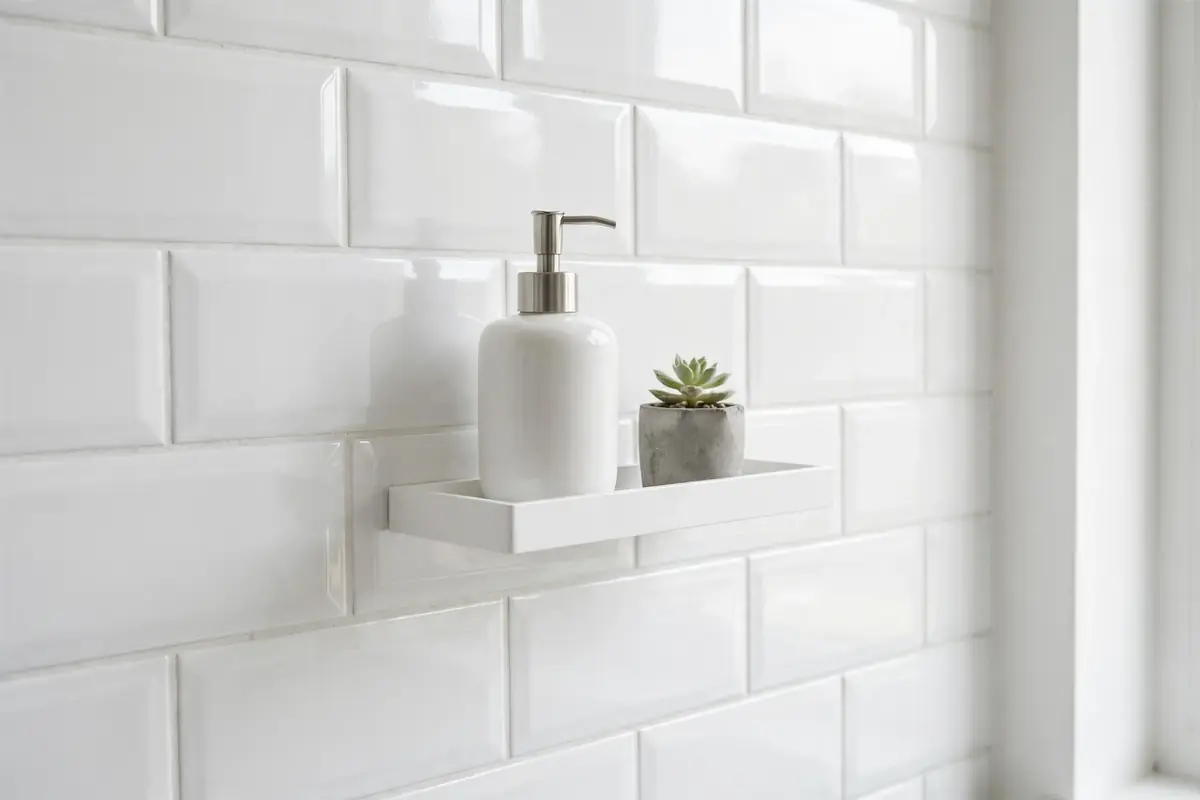
Adhesive shelves are the lightest option and the most misused. A 3M Command Medium Bath Hook is rated for 3 pounds on water-resistant strips, per the manufacturer’s specs, and one guide reports shelves on Command strips holding up to 7.5 pounds per shelf after a 72-hour cure. Enough for a soap dispenser and a plant, not for full shampoo bottles.
My take: a tension pole or over-toilet unit for the heavy stuff, plus one or two adhesive shelves for light daily items. Zero holes, zero deposit drama. Our small bathroom storage ideas for renters guide covers the rest of the no-drill playbook.
How much weight can a bathroom shelf hold?
A shelf screwed into a wall stud holds the most; toggle bolts in drywall come next; bathroom adhesive strips top out at 3 to 7.5 pounds per shelf, so check the weight rating on the package. The board matters less than the mounting: a shelf on cheap plastic plugs will creep forward and fail, while a basic pine board on proper brackets into studs will outlive the paint.
Studs first: wood framing grabs screws fully, and studs sit 16 inches on center in most US homes, so a stud finder pays for itself fast. Toggle bolts second: they spread the load across the back of the drywall when the stud is not where you need the shelf. Plastic anchors last, for light loads only. Per Dizzy Journal’s guide, acrylic floating shelves support 10 to 15 pounds per shelf when anchored into studs.
Do not fully load a shelf on day one: adhesive bonds keep strengthening for 72 hours. Keep the heaviest items closest to the wall, since weight far from the wall pulls shelves forward, and recheck the mounting after a month of steam.
If the above-toilet wall is your starting point, compare shelf setups with full over-toilet units in our over-toilet storage ideas guide before you buy.
How do you keep open shelves useful instead of cluttered?
Use the 70/30 rule: 70 percent everyday items, 30 percent pretty things, and a container for every small item. Open shelves fail when they become a parking lot for half-empty bottles, so assign every spot: daily items beside the mirror, backup stock above the toilet, everything else behind a closed door. No assigned home, no shelf space.
A cabinet hides your mess; a shelf advertises it. So be honest about your habits: if you will not decant into matching dispensers, put the ugly bottles in a basket, not on display. Matching baskets turn six random bottles into one tidy block, and Dizzy Journal’s guide makes the same point about baskets pulling double duty as storage and decor. One basket per shelf zone keeps the system running.
The honest admission: open shelves are not for you if you hate dusting or your bathroom has no exhaust fan. Dust plus steam films every surface within a month, and the EPA’s 24-to-48-hour drying rule is a reminder that still, damp air is the enemy. In that case choose a narrow cabinet with doors, or keep open shelves on the driest wall. Our bathroom drawer organization guide covers closed storage instead.
How do you style bathroom shelves so they look calm?
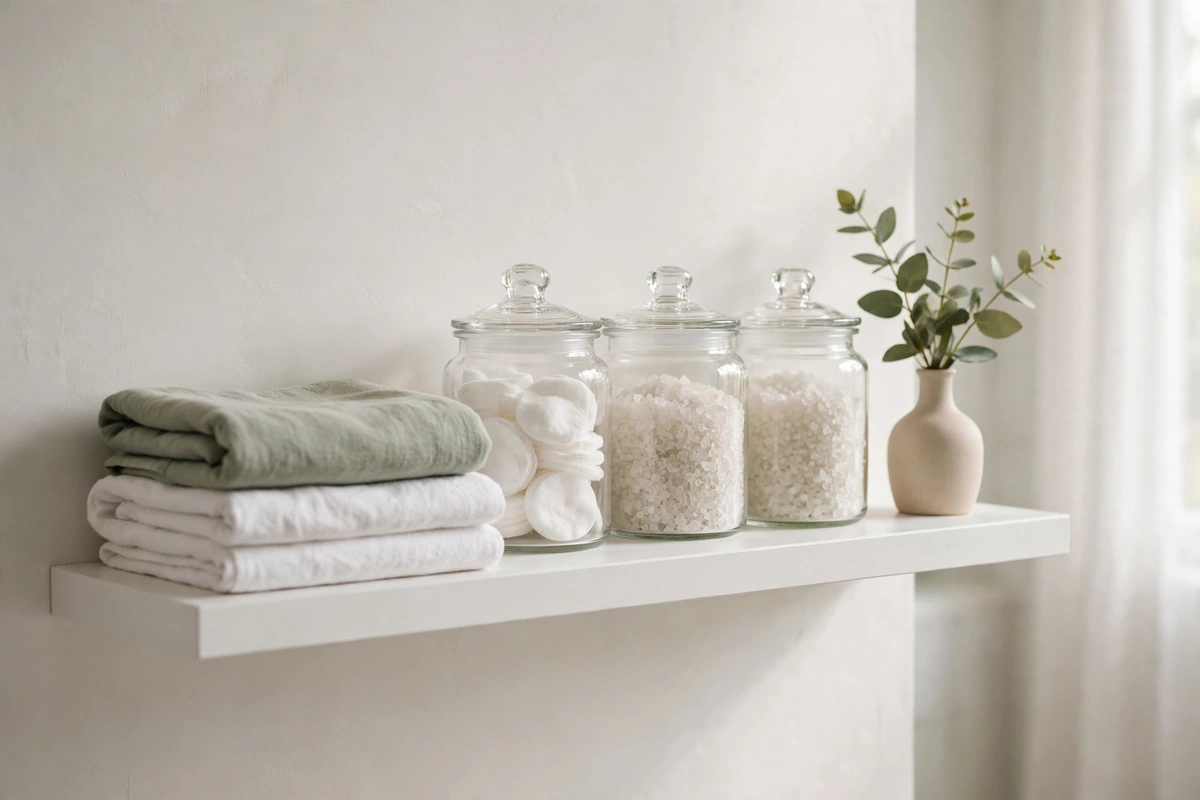
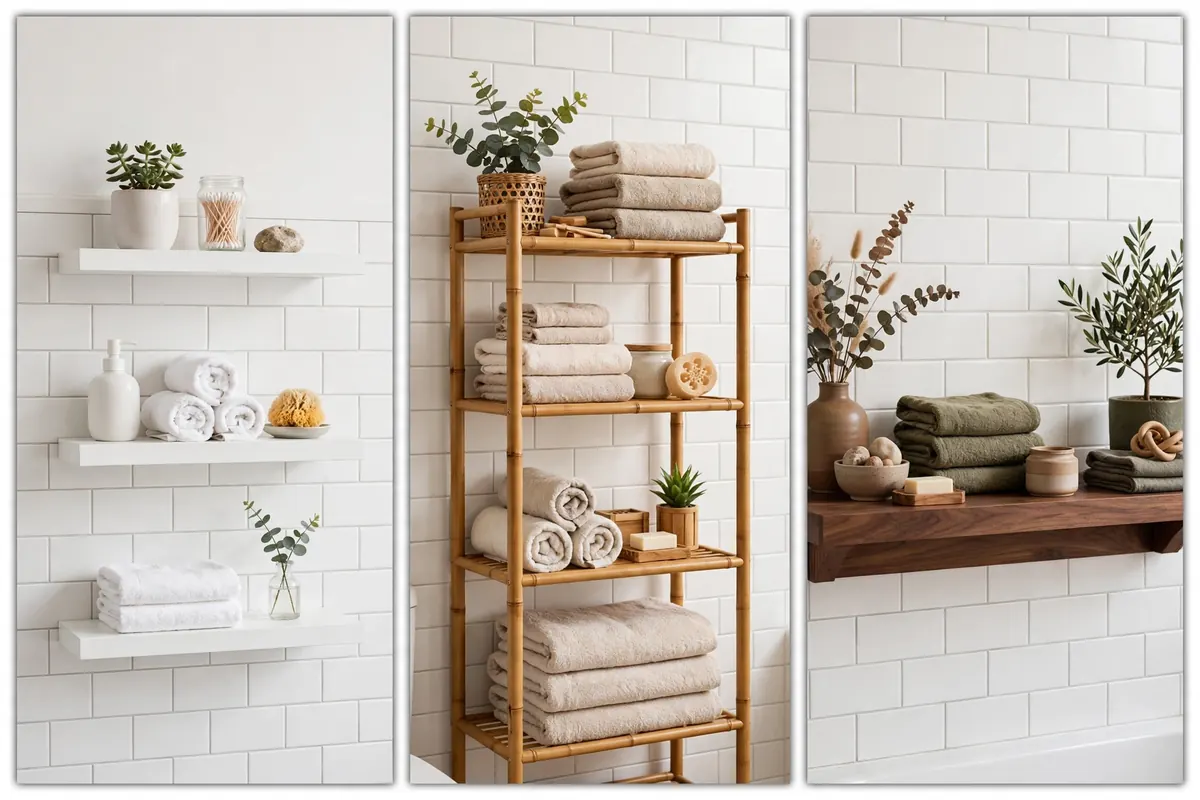
Repeat one material and one color, group items in odd numbers, and leave empty space. A calm shelf is about editing: three matching jars instead of seven random bottles, towels folded the same way, one small plant, and a stretch of bare shelf. Decanting into the same jar style reads as intentional instead of accidental.
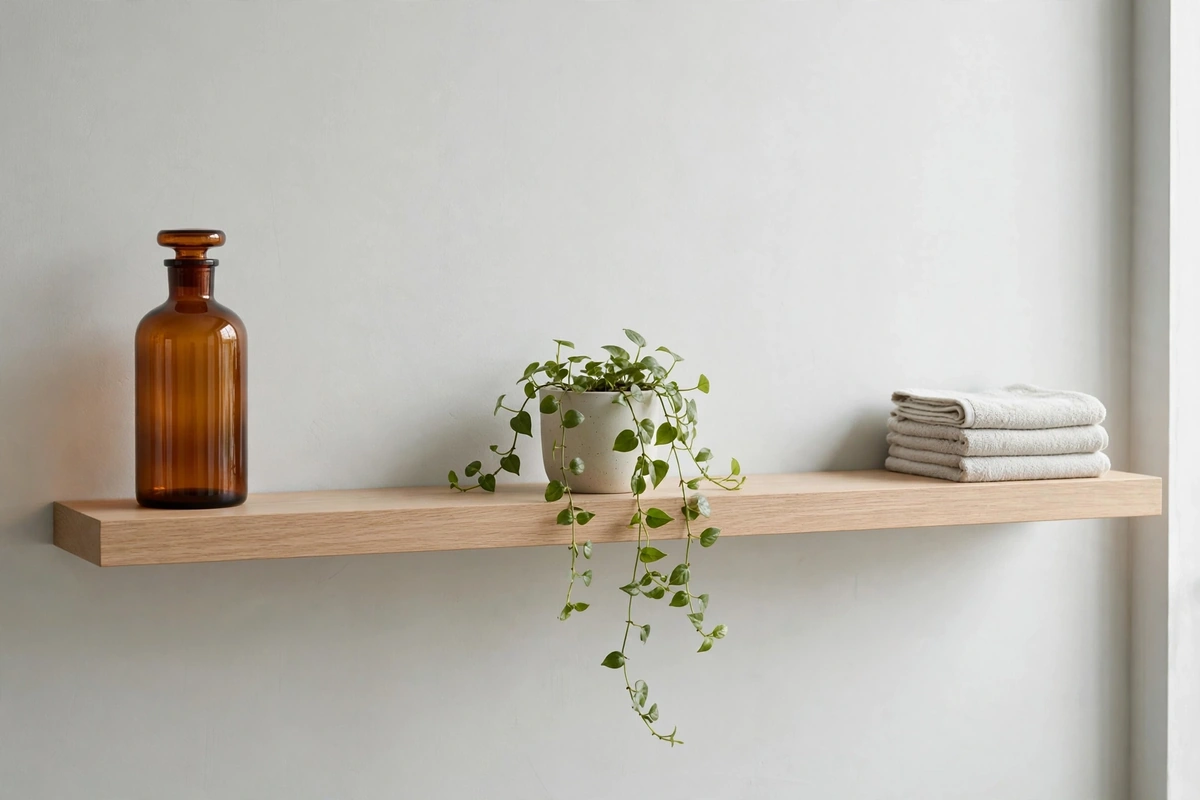
Vary the heights so the shelf does not look like a lineup: tall bottle on one end, folded washcloths on the other, trailing plant in the middle. The Coolist’s styling roundup shows shelves that work treat each one as a small composition. Keep the palette tight, white towels, one wood tone, one metal finish, and you can store twice as much without looking busy. Step back to the doorway when you finish: if one shelf looks crowded from there, remove two items and try again.
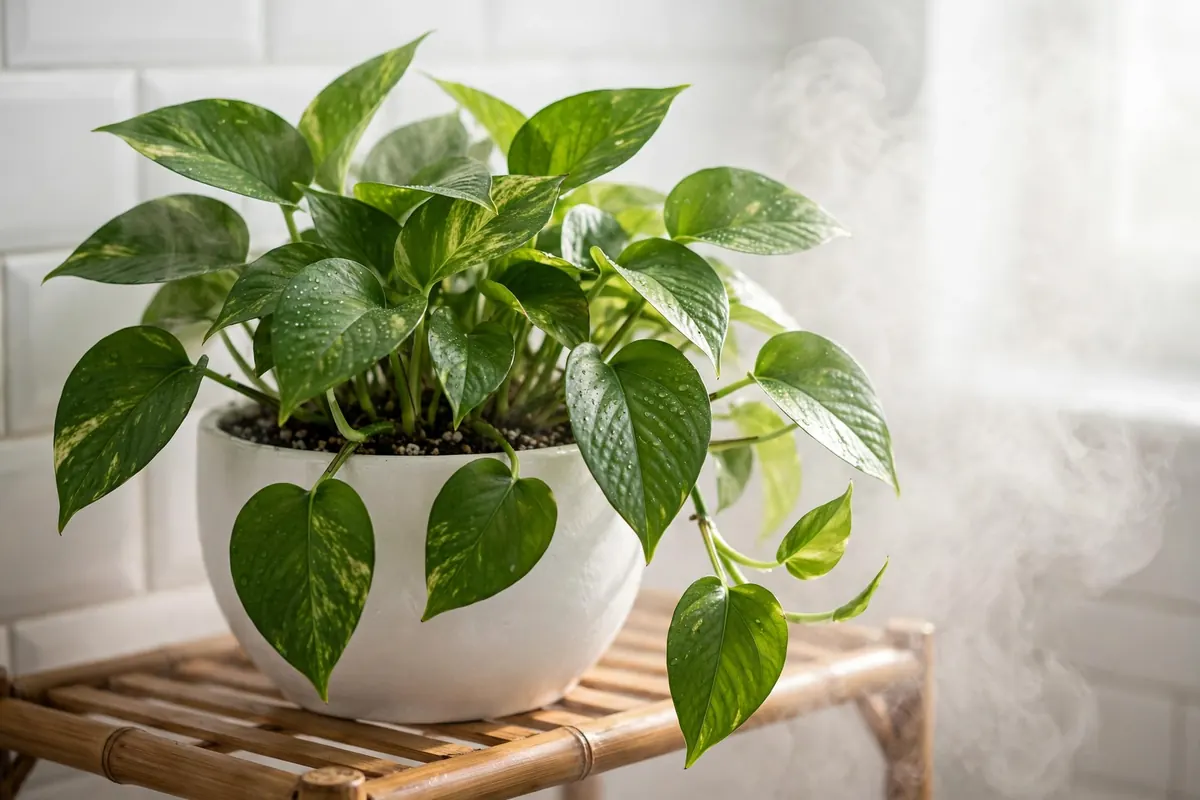
My money-saving opinion: you do not need store-bought shelf decor. A small pothos or ZZ plant (both tolerate humidity and low light), a candle you actually burn, and a print you already own beat a cart of matching accessories. Keep natural-fiber baskets and dried arrangements on the upper, drier shelves, away from direct spray.
What should go on the shelf above the toilet?
Backup stock on the lower shelf, daily items in one basket, one decorative touch up top. Treat the above-toilet shelf like the top of a pantry: extra toilet paper, spare towels, refill bottles. Daily items earn exactly one basket, so you are not reaching over the toilet every morning for twelve things.
My strong opinion: the above-toilet shelf is overflow, not primary storage. Things you touch twice a day belong beside the mirror, within arm’s reach, not on a shelf you strain to see. Load it with your whole routine and it becomes clutter within a week. And measure your tank first: standard tanks run 7 to 8 inches deep, and freestanding over-the-toilet units need 9 to 10 inches of clearance, per Dizzy Journal’s guide.
Style it with restraint. Rolled towels hide uneven folding, a small trailing plant softens hard lines, and matching baskets keep backup stock from looking like a warehouse. Keep the heaviest items on the lowest shelf: visual weight and actual weight both sit better low. A small lidded bin or a spare hand towel on that shelf means the setup handles overnight guests too.
Which shelf mistakes make a small bathroom feel smaller?
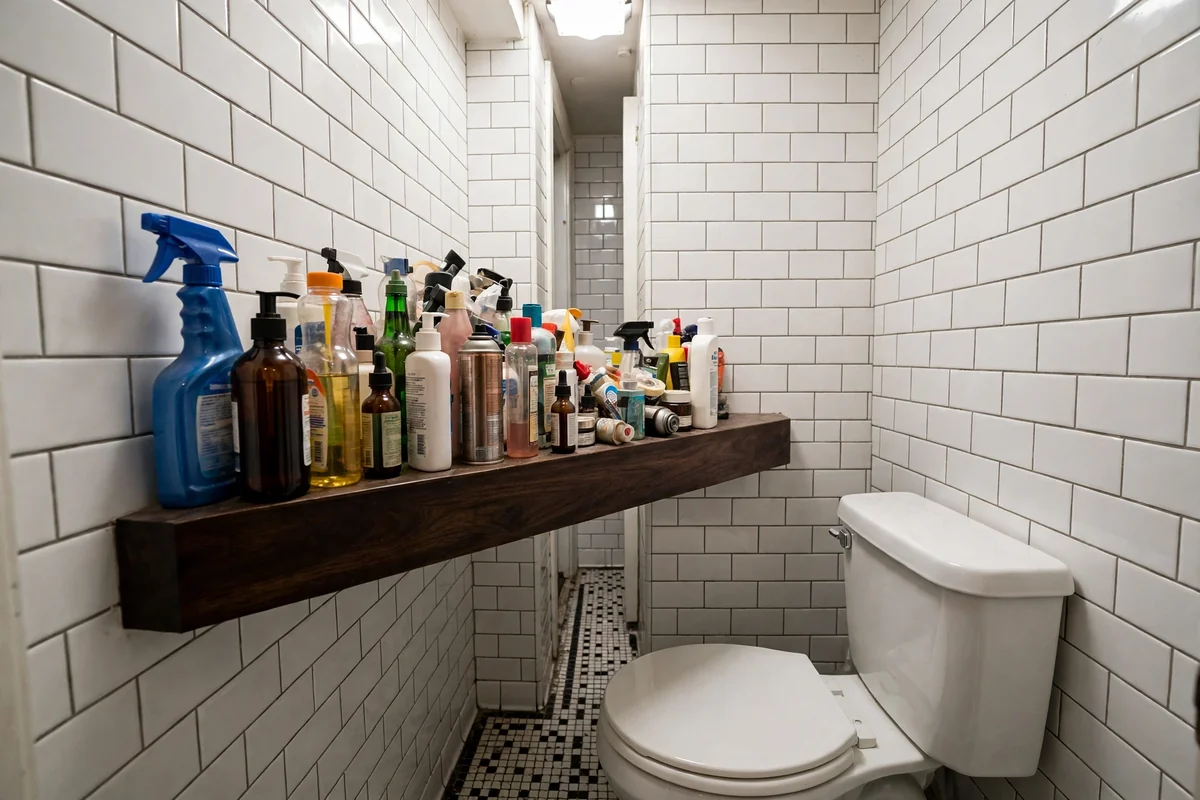
Shelves deeper than 8 inches in a walkway, too many shelves on one wall, and dark heavy boards in a windowless bath. Depth is the biggest offender: a 10 or 12 inch shelf across from the door makes the room feel half its size. Shelf Expression’s guide lands on 8 inches for most bathroom shelves.
The second mistake is shelf sprawl: four small shelves scattered on four walls reads as clutter, while two grouped with intention reads as design. Pick one or two walls and commit. The third is visual weight: a chunky dark board in a small white bathroom shrinks the room, while the same shelf painted to match the wall nearly disappears.
Do not mount a shelf where the door swings into it, measure the door arc first. And do not put open shelves beside the showerhead unless the material is ceramic, glass, or powder-coated metal: raw wood in the splash zone swells within a year. If shelves still look messy, the problem is usually too many products. Edit first, style second.
How much do bathroom shelves cost?
A useful bathroom shelf setup costs $25 to $150. A pair of basic floating shelves with hardware runs $25 to $50; a bamboo over-toilet unit or tension-pole tower lands at $40 to $70; one wide hardwood shelf with hidden brackets can reach $100 to $150. DIY installation is free and takes under an hour.
My honest take on the tiers: $75 is the sweet spot for a homeowner, it buys a sealed hardwood or powder-coated shelf with real brackets into studs, which is the setup that lasts a decade. For renters, $25 to $40 spent on a tension-pole unit or a pair of bathroom-rated adhesive shelves is the smarter buy, because you take zero risk with the deposit and the storage is genuinely useful. Skip the cheapest raw-pine boards unless you plan to seal them yourself; an unsealed $12 shelf that swells and warps in a year is the most expensive shelf you can buy.
Here is what each budget tier actually buys, from a $25 renter setup to a $150 hardwood wall.
| Budget | What it buys | Best pick for |
|---|---|---|
| $25 | Pair of basic floating shelves with brackets and hardware; or 2 to 3 bathroom-rated adhesive shelves for light items | Renters and first apartments; light daily items under 7.5 lbs per shelf |
| $75 | One sealed hardwood floating shelf with hidden brackets, or a bamboo over-toilet freestanding unit, or a tension-pole tower with 3 to 4 tiers | Homeowners who want the setup to last; the best value per dollar |
| $150 | Two wide hardwood floating shelves with concealed steel brackets, or a hardwood shelf plus a ceramic corner shelf set with stainless hardware | Visible walls where style matters; shower-adjacent spots that need rust-proof hardware |
Which shelf setup should you start with?
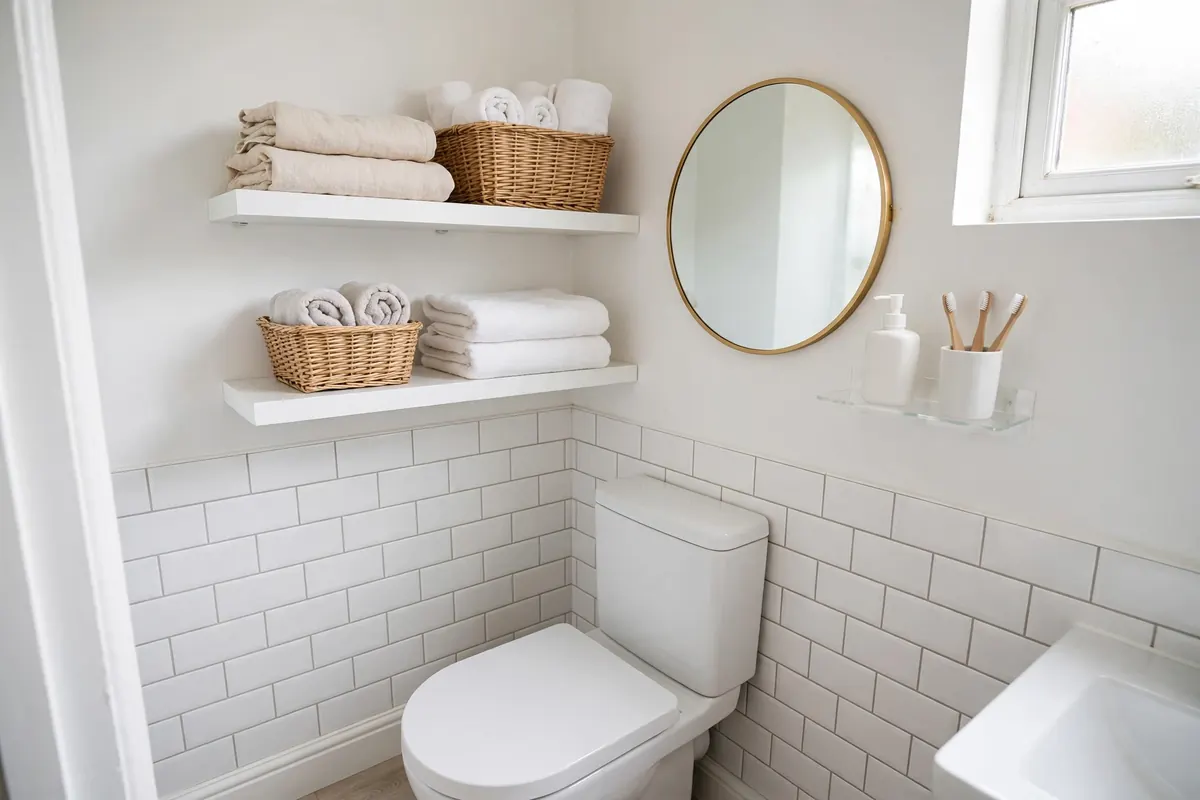
Start with two floating shelves above the toilet and one no-drill shelf where your hands work. That pairing covers most small bathrooms: the above-toilet pair handles backup stock and towels, while a slim adhesive or suction shelf beside the mirror holds the daily items. Cost lands between $40 and $90, and renters can do all of these bathroom shelf ideas with zero holes.
Choose sealed materials from the start, powder-coated metal or sealed bamboo, and mount into studs wherever a drill is allowed. Renters: a tension-pole unit replaces the above-toilet shelves with equal storage. Apply the 70/30 rule, containerize the small stuff, and leave some bare shelf. Snap a phone photo of the wall before ordering, so bracket placement lines up with the studs you found.
Of all the bathroom shelf ideas in this guide, the above-toilet pair delivers the most storage per dollar. Next step: measure the wall above your toilet tonight, width and height to the ceiling, and check one wall for studs. With those two numbers you can order the right shelves tomorrow. If the bathroom still needs more, our bathroom storage ideas pillar guide covers cabinets, carts, and the rest.
What are the best bathroom shelf ideas for a small bathroom?
Floating shelves above the toilet, corner triangle shelves in dead angles, and tension-pole units for renters are the best picks for small bathrooms. Keep shelves 8 inches deep or less so they do not crowd the walkway, and mount daily-use shelves at eye level beside the mirror. Ceramic and powder-coated metal handle steam with the least maintenance.
How high should you mount bathroom shelves?
Mount functional shelves 48 to 52 inches from the floor for easy reach, which is the common range cited in bathroom design guides, and reserve lower positions (30 to 36 inches) for towel shelves or items kids need. Above the toilet, keep the lowest shelf high enough that nobody bumps it standing up. Always measure your own reach before drilling.
Can you put floating shelves in a bathroom with no ventilation?
You can, but choose the material carefully. The U.S. EPA recommends keeping indoor relative humidity between 30 and 50 percent, and a fanless bathroom stays damp long after every shower. In that case pick tempered glass or powder-coated metal shelves, skip raw wood and wicker baskets, and wipe shelves dry weekly. A small dehumidifying product or cracked door helps too.
How do you hang shelves on tile without drilling?
Use bathroom-rated adhesive shelves, a tension-pole unit, or a freestanding over-toilet shelf. Adhesive options like 3M Command bath products hold 3 to 7.5 pounds per shelf on smooth tile when the surface is cleaned with rubbing alcohol and the bond cures 72 hours before loading. Tension poles need no wall contact at all and carry far more weight.
What is the best material for bathroom shelves?
Powder-coated metal is the toughest all-around choice: it does not rust, swell, or need sealing. Sealed bamboo and teak are the best wood options because they resist moisture naturally. Tempered glass looks weightless and handles heat and knocks. Avoid raw pine, MDF, and particleboard in steamy bathrooms unless every surface is sealed with polyurethane.
How much weight can adhesive bathroom shelves hold?
Most bathroom-rated adhesive shelves hold 3 to 7.5 pounds per shelf, so they suit a soap dispenser, a small plant, and a jar of cotton rounds, not a row of full shampoo bottles. The bond keeps strengthening for up to 72 hours after mounting, so wait before loading. Steam weakens cheap generic strips, so buy ones labeled for bathrooms and humid conditions.
Do open bathroom shelves get moldy?
They can if moisture sits on them. The U.S. EPA advises drying water-damaged areas and items within 24 to 48 hours to prevent mold growth, and the same logic applies to shelf contents. Wipe shelves dry after steamy showers, keep natural-fiber baskets on upper drier shelves, and run the exhaust fan during and after every shower. Sealed, non-porous shelf materials resist mold best.
Are glass shelves good for small bathrooms?
Yes for the look, with one trade-off. Glass shelves are nearly invisible, so they make a tiny bathroom feel bigger and brighter, and tempered glass resists heat and accidental knocks. The catch is maintenance: glass shows every water spot and fingerprint, so it suits people who will wipe it down regularly. In hard-water homes, expect mineral haze without weekly cleaning.
How deep should bathroom shelves be?
Eight inches deep is the standard for most bathroom shelves: deep enough for rolled towels and baskets, shallow enough to stay out of the way. Go 6 inches beside the mirror where you lean in close, and 10 inches only when the shelf does real storage work like stacked towels above the toilet. Anything deeper in a narrow walkway becomes a shoulder hazard.
Shelves solve the storage side, but the counter still needs its own system. See our Bathroom Storage Ideas for Toiletries That End Counter Clutter for the frequency-zone method that keeps daily toiletries corralled and the counter clear.
If shelves are your towel plan, our bathroom towel storage without a linen closet guide shows how to pair them with a bar for drying and a basket outside for spares.
Related: if the shower itself is the tight spot, see our no-drill shower storage ideas for renters for suction, tension pole, and adhesive systems that come down clean at move-out.
Related reading: how to design bathroom storage that fits how you actually live maps the whole bathroom into zones by routine before you buy anything.
