

You do not need a bigger pantry. You need a pantry that stops eating your food and your money. That is the promise behind these small pantry storage ideas. A small pantry with a real system holds more than a big pantry with no system, and it costs you less at the grocery store every single week.
The average American throws away roughly $800 worth of food per person every year, according to ReFED’s 2026 U.S. Food Waste Report, which tracks how much of the nation’s food supply goes unsold or uneaten. A good chunk of that waste is born in the pantry: cans bought twice because the first ones were invisible, bags gone stale because they were never sealed, snacks that expired behind taller boxes. ReFED’s report puts the total at 70 million tons of surplus food in 2024, about 29 percent of the U.S. food supply. Your pantry is a small player in that number, but it’s the part you control, and small pantry storage ideas start there.
This guide gives you 14 small pantry storage ideas that work in real kitchens: reach-in closet pantries, cabinet pantries, deep shelves, rental-friendly setups, and pantries with no shelves at all. Every idea is sized for tight spaces, most cost under $20, and none of them require a drill, a handyman, or a renovation.
TL;DR: These small pantry storage ideas prove a small pantry holds plenty when it runs on a system: pull everything out and toss the expired, give every category a zone at the right height, fix deep shelves with a turntable or pull-out bins, use the door for light items, and decant your five everyday staples into square airtight containers. Most pantries are fixed with a $25 tool and a weekend reset, no remodel needed.
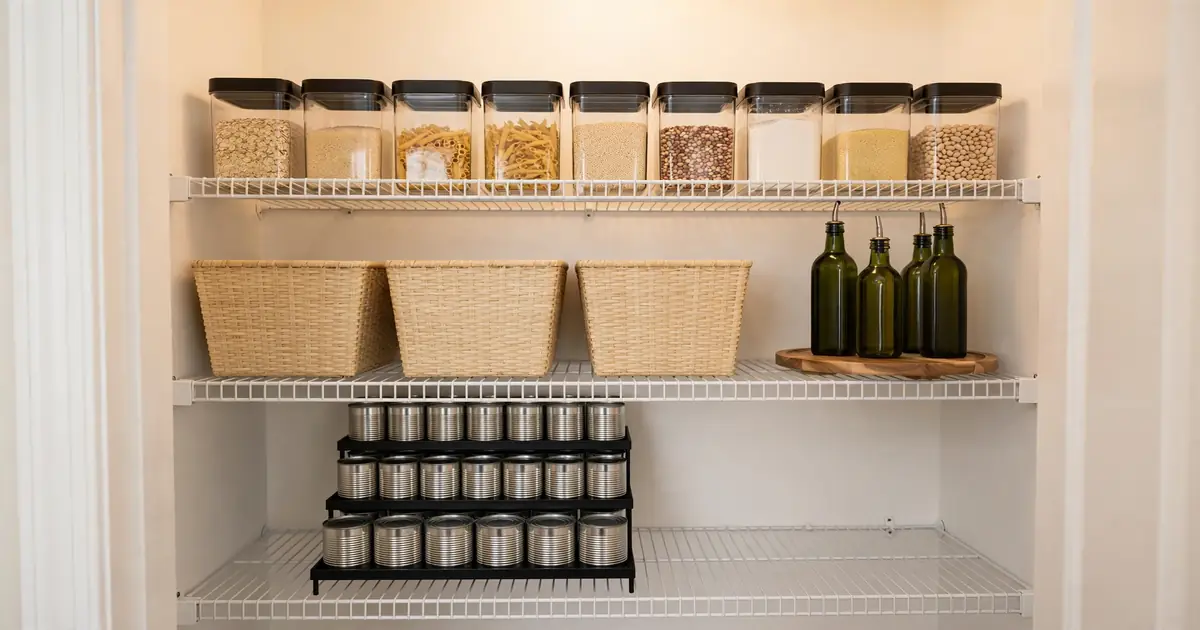
What should you do before buying a single organizer?
Pull everything out. All of it. Put it on the counter, the table, the floor, wherever it fits, and look at what you actually own. This is the step everyone skips, and it’s the reason most pantry makeovers fail: you can’t organize inventory you haven’t seen.
Here’s the honest truth. Half the battle in a small pantry isn’t storage, it’s stuff you forgot you had, which is why small pantry storage ideas always start with a purge. Expired soup from 2022. Three half-used bags of flour. Four kinds of rice because you kept buying rice without checking. Toss what’s expired, donate what you’ll never eat, and group the rest by category. You’ll probably find duplicates you can stop re-buying immediately, which is the cheapest storage upgrade there is.
Now measure. Write down each shelf’s width, depth, and the height between shelves. Organizers that don’t fit your measurements are expensive decorations. Every one of these small pantry storage ideas assumes you measured first. Two minutes with a tape measure saves you two returns to the store.
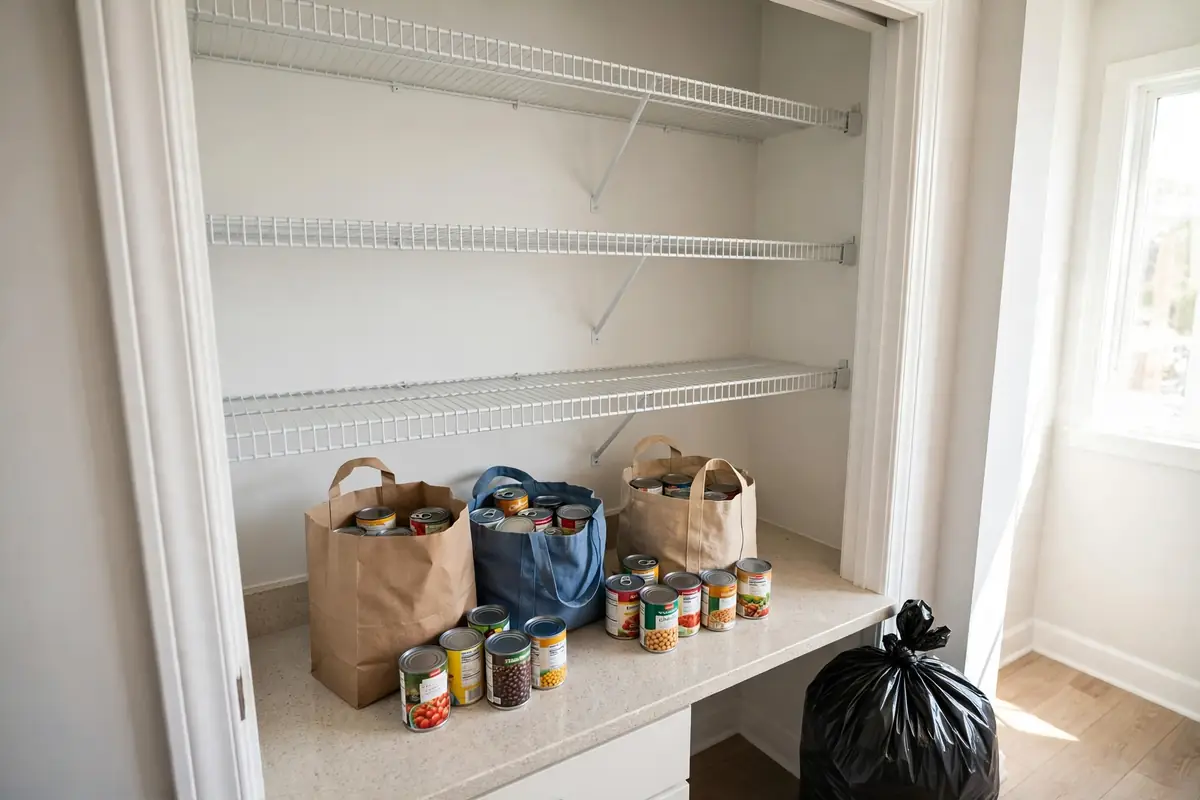
Why do small pantries turn into black holes so fast?
It’s not your fault. Small pantries fail for predictable, physical reasons, and knowing them changes which tools actually help.
Deep shelves are the biggest culprit, and the best small pantry storage ideas treat them as the main enemy. A shelf that’s 16 or 20 inches deep sounds generous until you realize the back 8 inches are a visibility dead zone. Food goes in, food disappears, and you buy it again. Tall gaps between shelves waste vertical space. Dark corners hide expiration dates. And every item without a home migrates to the front of the wrong shelf.
There’s a number behind the frustration. ReFED found that American consumers waste close to 35 million tons of food a year, costing them $261 billion. A disorganized pantry doesn’t just annoy you, it quietly taxes your grocery budget. That is the cost small pantry storage ideas prevent. The good news: household food waste fell by nearly 950,000 tons in 2024, the first post-pandemic decline, driven by people paying attention to what they buy and waste, per ReFED’s household analysis. A pantry you can see is a pantry you waste less from.
My take: stop blaming yourself and start blaming the geometry. Good small pantry storage ideas fix geometry, not people. Deep shelf? You need a way to bring the back forward. Tall gap? Split it. Dark corner? Add light. Every fix in these small pantry storage ideas maps to a physical problem. Every fix in this guide maps to one of these physical problems, which is why they stick.
How do you zone a pantry that's barely two feet wide?
Zones sound like something for walk-in pantries, but they matter more in small ones. Zoning sits at the center of small pantry storage ideas that actually last. In a small pantry, every item needs a neighborhood, or the whole system slides back to a pile within a week.
Pick three to five zones that match how you cook. These small pantry storage ideas work with any cooking style: daily staples, breakfast, snacks, baking, canned goods. Put daily zones at chest height, roughly 20 to 60 inches off the floor, the comfortable everyday reach zone per the National Kitchen & Bath Association. Kids’ snacks go low. Backup stock goes up top.
| Zone | Where it lives | Why |
|---|---|---|
| Daily staples | Chest height, front of shelf | You touch these most, never dig for them |
| Breakfast | One shelf or one bin | Mornings are rushed, one grab |
| Snacks | Low shelf or low bin | Reachable without climbing |
| Baking | One bin, higher up | Used less often |
| Canned goods | Deep shelf with can riser | Heavy, stackable, needs tiered visibility |
In a tiny pantry, a zone can be a single bin, not a whole shelf. I would not run more than five zones. Past five, you’re managing zones instead of food.
One admission: zones fail if your household doesn’t agree on them. Pick them together, label them, and accept that a zone everyone uses beats a perfect zone nobody respects.
What's the best way to use deep pantry shelves?
Deep shelves are the number-one small-pantry complaint. The fix is mechanical: move the back of the shelf to the front.
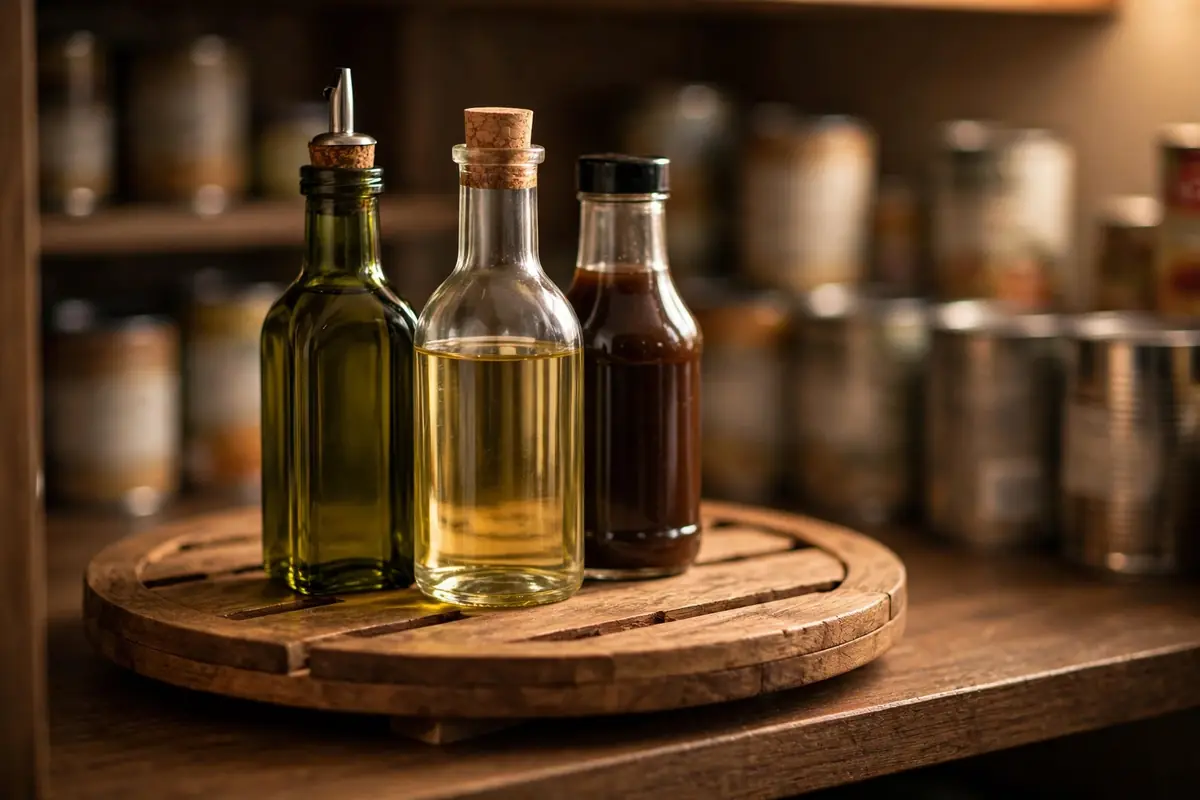
A lazy Susan does this for round items: oils, vinegars, sauces, jars. Turntables come in 10, 12, and 15 inch diameters, so measure first and leave an inch of clearance per side.
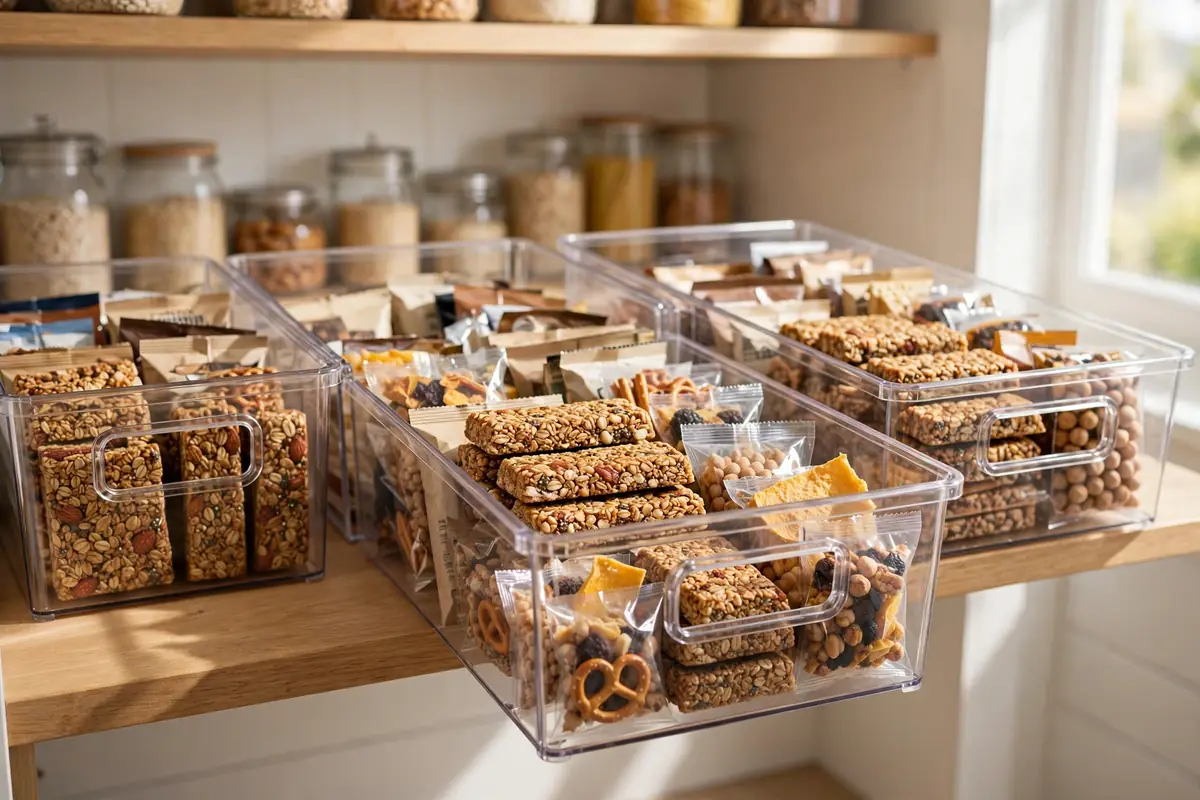
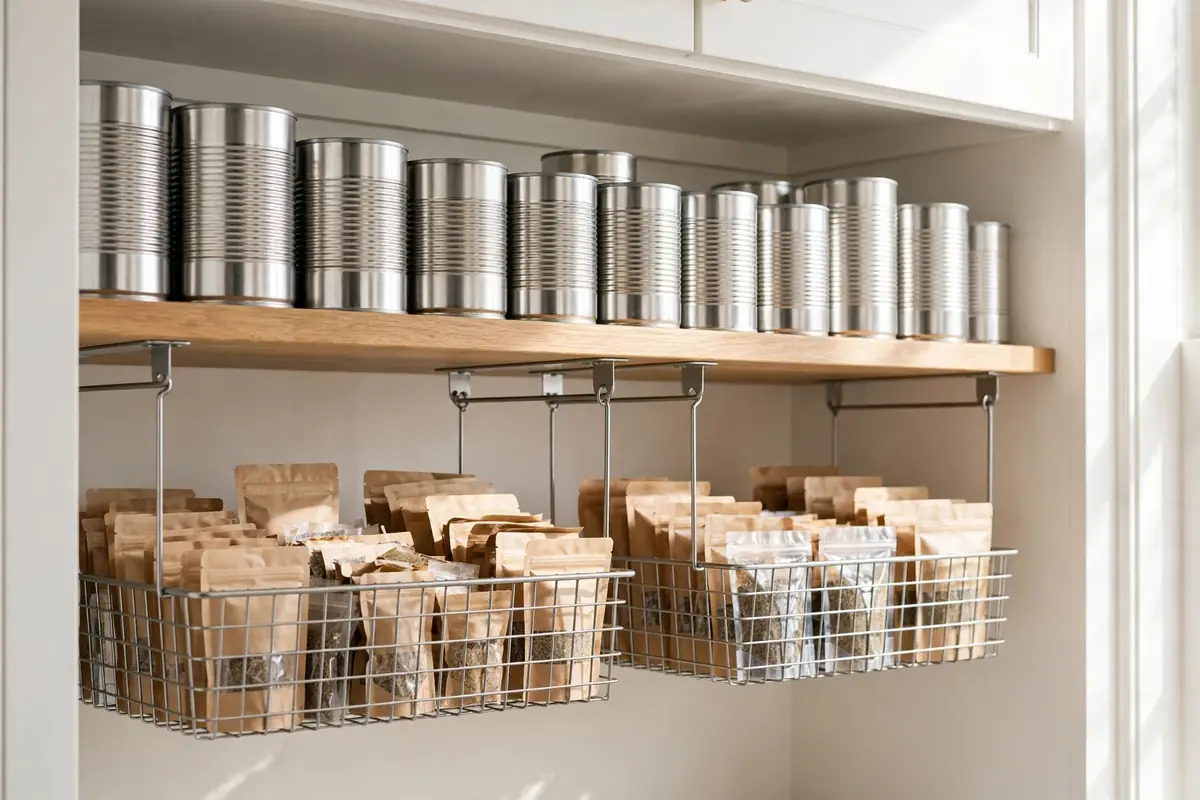
For square items, use pull-out bins with handles. They work like drawers: pull forward, see everything.
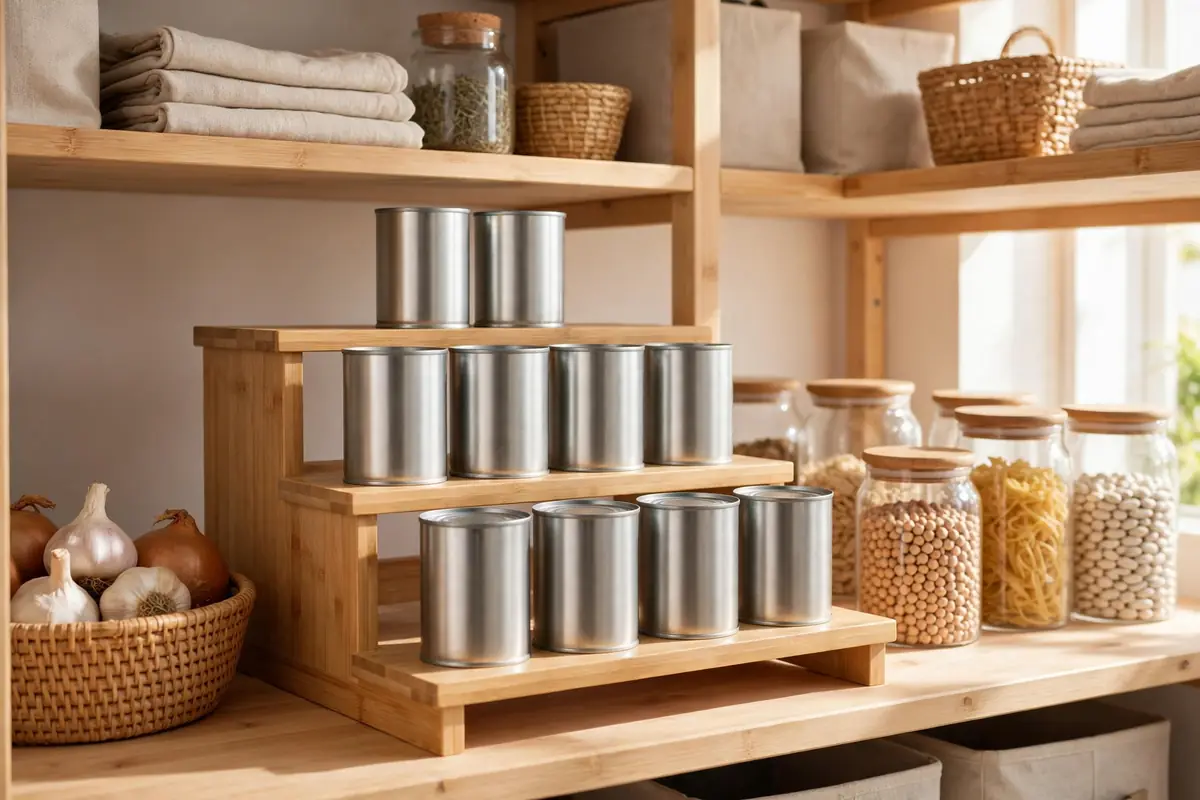
Tiered shelf risers are the third tool: stadium seating so every can label is readable.
| Deep-shelf problem | Best tool | Typical cost |
|---|---|---|
| Bottles hide in back corners | Lazy Susan turntable | $10 to $20 |
| Packets vanish in the dark | Pull-out bin with handles | $8 to $15 each |
| Cans stack three deep | Tiered shelf riser | $12 to $25 |
| Dark shelf, can't see anything | Motion-sensor LED strip | $10 to $18 |
One honest admission: a lazy Susan is not for everything. I don’t put cans on turntables, they slide. Right-size the tool to the shelf.
How do you put the back of the pantry door to work?
The inside of your pantry door is free square footage you’re already paying for. In a small pantry, door storage can free up an entire shelf, which is a bigger deal than it sounds.
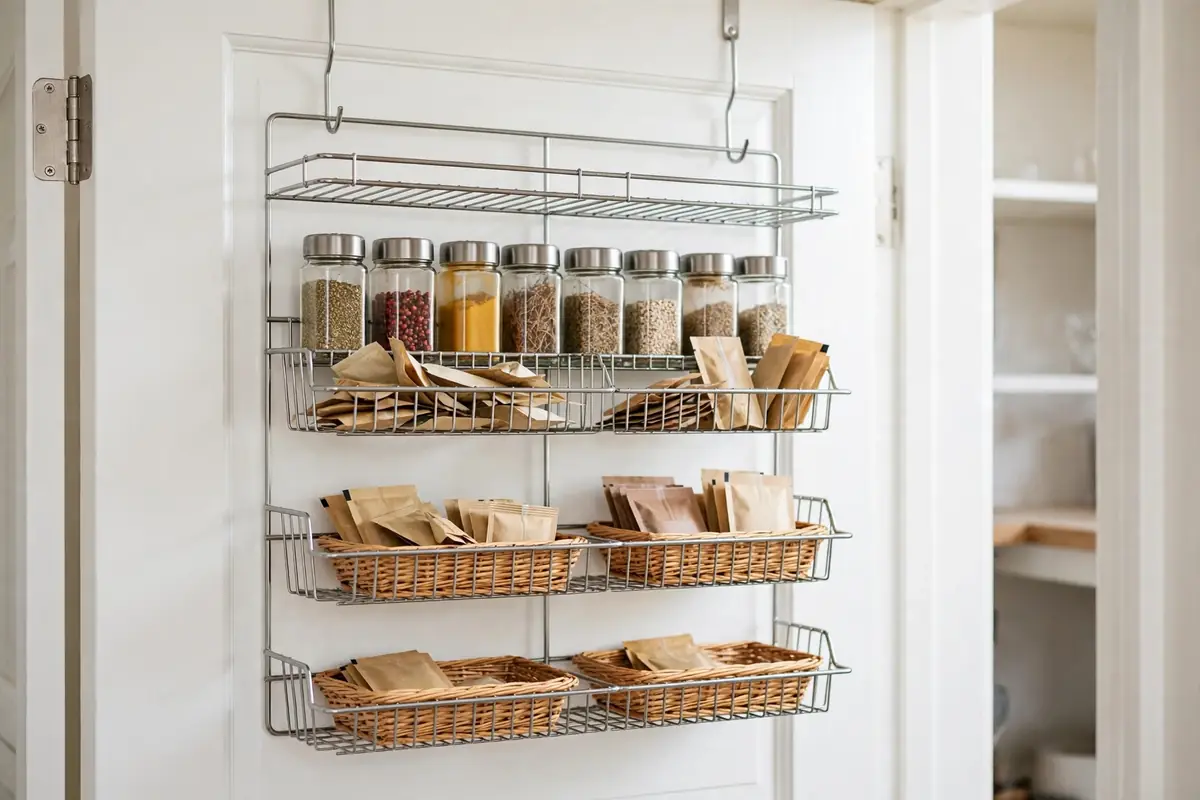
Over-the-door racks are the obvious move in small pantry storage ideas, and they’re genuinely good for small, light items: spice jars, seasoning packets, foil and wrap boxes, snack packs. Most hang over the door with no screws, which makes them renter-friendly. Measure the door’s thickness and the clearance between the door and the shelves, racks that swing into the shelving are a classic mistake.
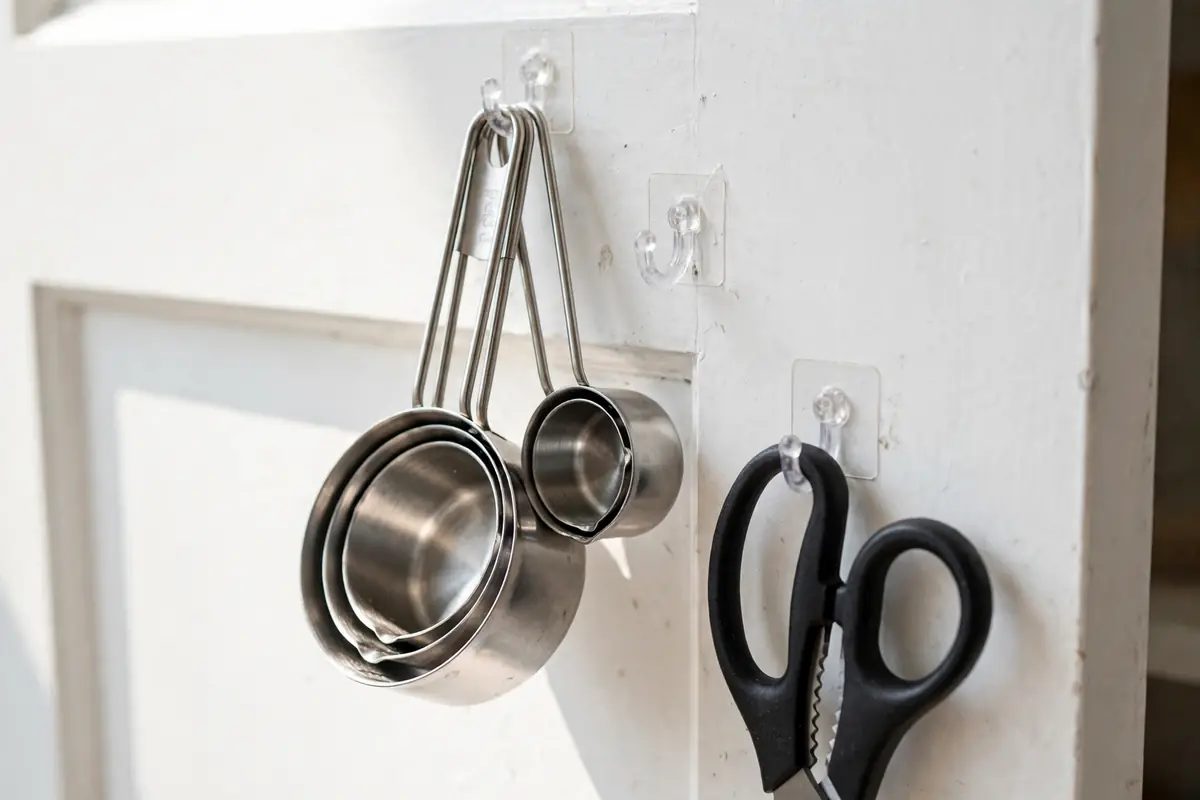
Hooks are the underrated second option. A few adhesive hooks on the door hold measuring cups, scissors, or a reusable shopping list. They cost almost nothing and take zero shelf space. Magnetic strips work on metal doors for small spice tins.
What NOT to put on the door: anything heavy. Door racks are rated for light loads, and a rack full of cans will sag or pop off at 2 a.m. Heavy items belong on shelves, full stop. Small pantry storage ideas put weight on shelves, never on doors. Keep the door for light, frequent, small things.
Which containers actually save space in a small pantry?
Containers are where pantry budgets go to die, so let’s be strategic. The goal is fitting more food in less space while being able to see what you have, not a matching Instagram pantry.
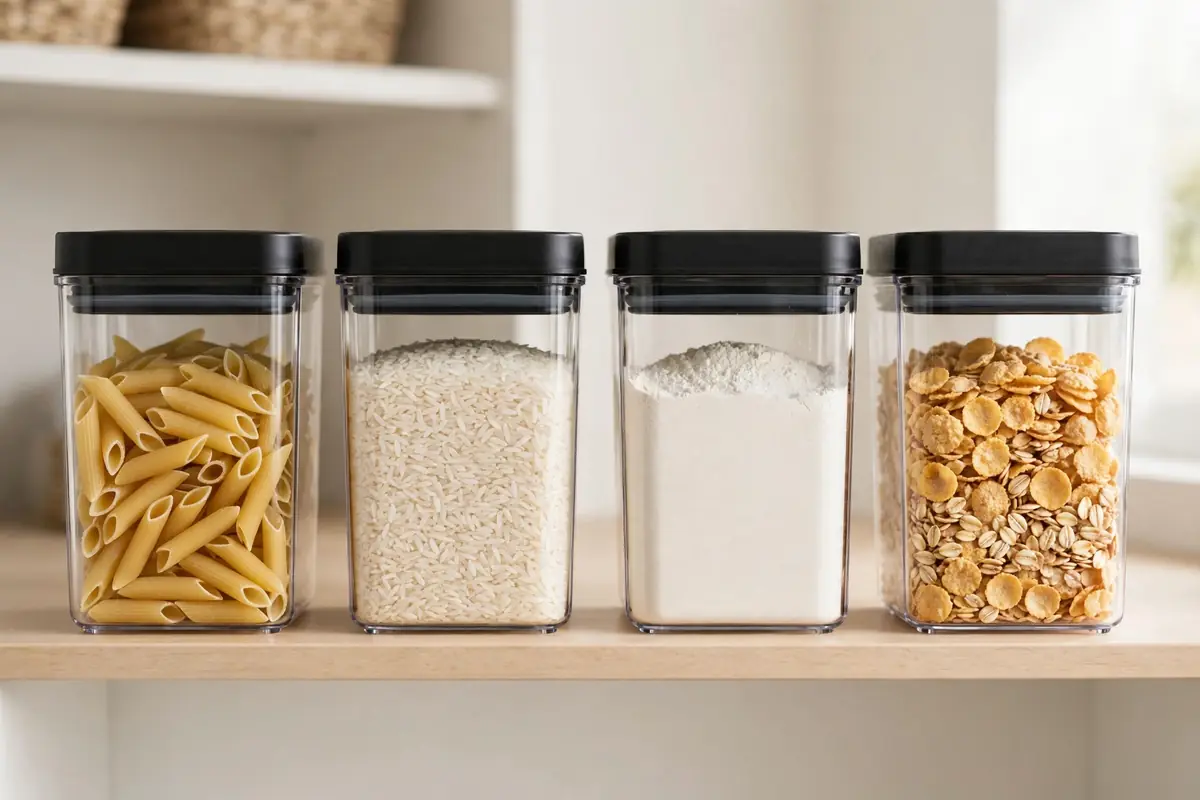
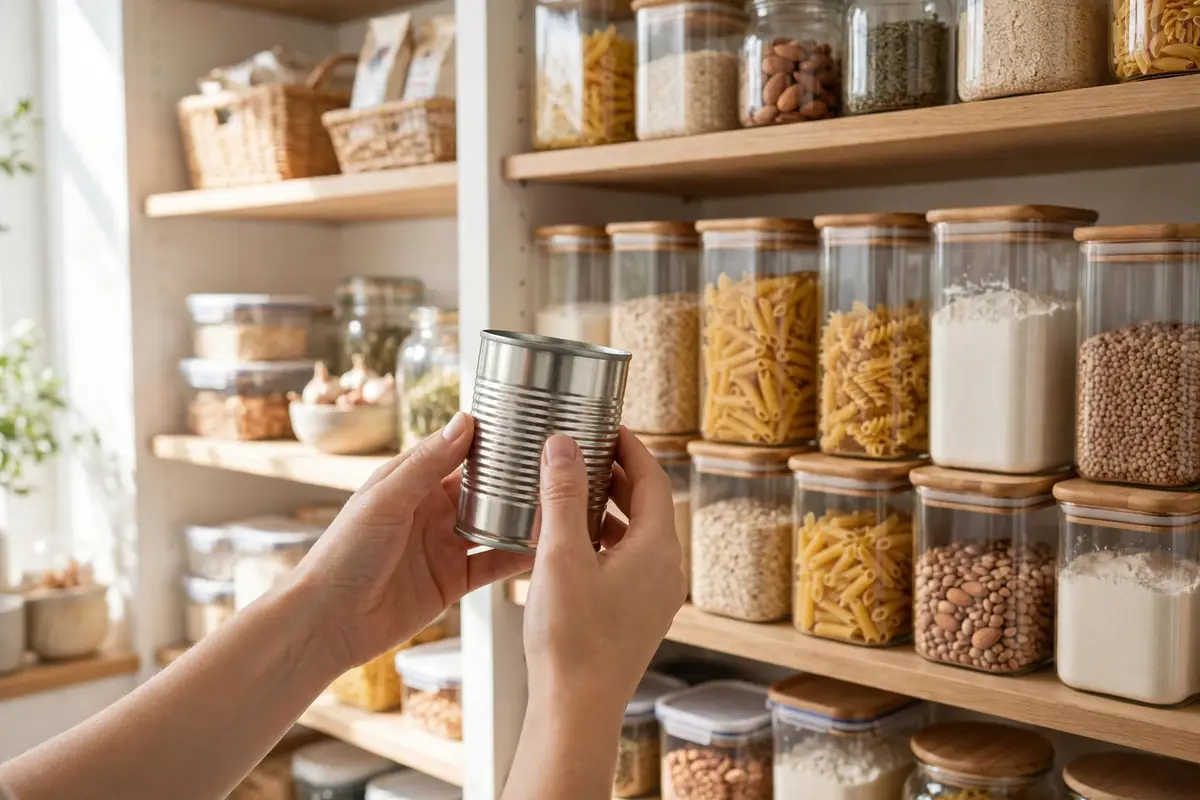
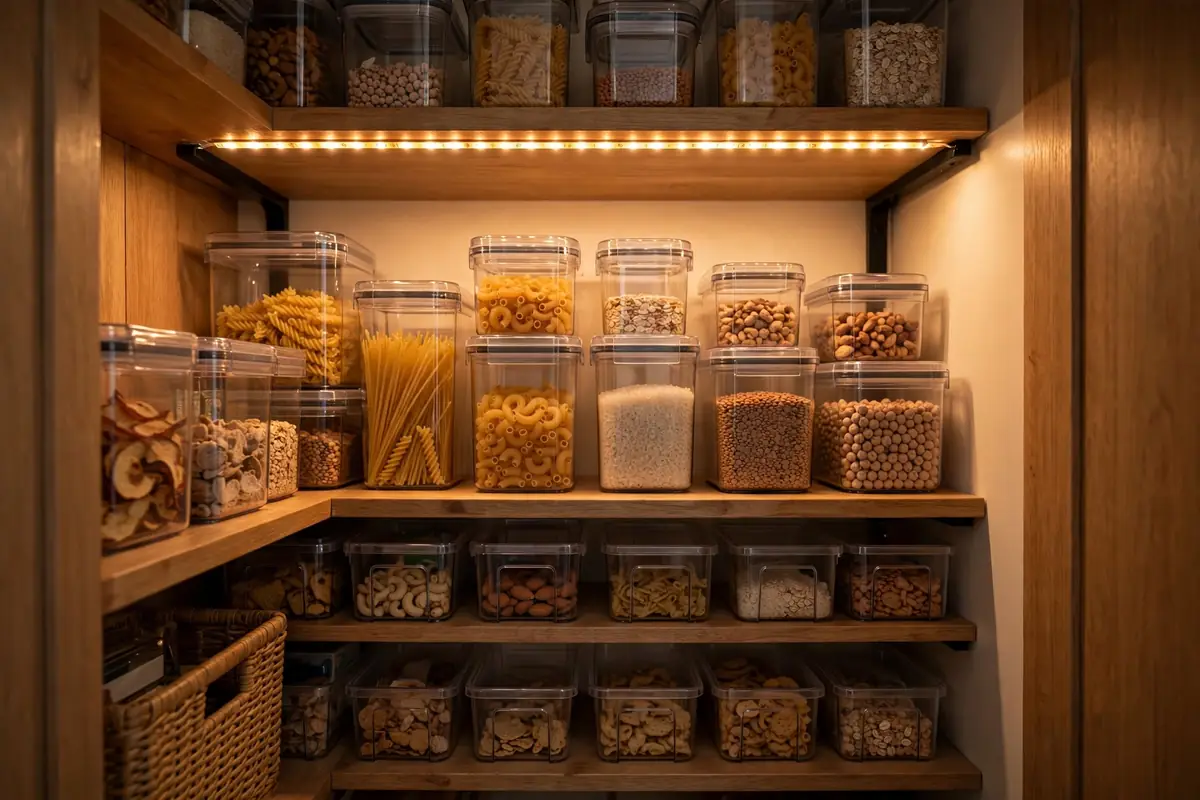
Square containers beat round ones, every time. Round containers waste the corners, and in a small pantry the corners are the whole game, which is why small pantry storage ideas favor square containers. Square containers tile together with no dead space and stack cleanly. If you’re buying one thing, buy square airtight canisters for flour, sugar, rice, pasta, and cereal.
Airtight matters more than pretty. An airtight seal keeps flour from going stale and cereal from going soft. A $6 canister that saves one bag of specialty flour has paid for itself.
My honest take: decant the staples you buy repeatedly. Among small pantry storage ideas, selective decanting beats all-or-nothing. and leave everything else in its packaging. Decanting all 40 items is a weekend project you’ll abandon halfway. The five-item version gives you 80 percent of the benefit for 20 percent of the effort.
If you want a deeper look at which bins are worth buying, our roundup of the best pantry organization bins compares real options by size and price.
Where should the heavy stuff go?
Low. Always low. This is part safety, part physics, part common sense that people ignore until a 10-pound bag of flour falls on their head.
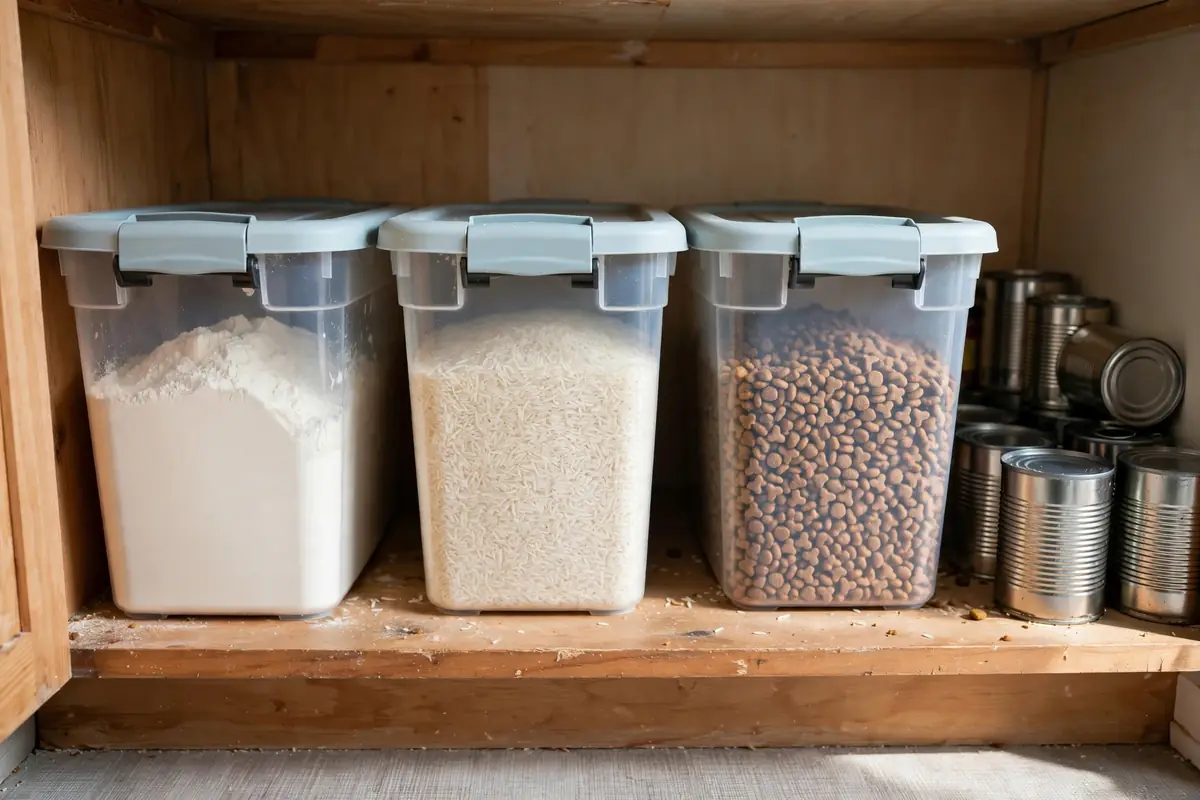
Bulk flour, sugar, rice, pet food, and big cans belong on the bottom shelf or the pantry floor. Small pantry storage ideas always put the heavy stuff low. Heavy items up high are a safety risk and a daily annoyance, because lifting a 20-pound bag over your head is how pantries stay messy. Nobody puts things back carefully when putting them back is a workout.
Use lidded bins on the floor for the truly bulky stuff. A rolling bin for pet food or bulk rice slides out for scooping and slides back, and the lid keeps it fresh.
The flip side: the top shelf is for the light and the rarely used. In small pantry storage ideas, high shelves hold the rarely touched. Backup paper towels, the fondue pot, holiday baking supplies. If you need a step stool to reach it, it should be something you touch monthly, not daily. This is the one placement rule I’d never break, because gravity doesn’t negotiate.
How do you fit spices in a pantry that barely fits cans?
Spices are the number-one space thief in small pantries. The jars are tiny, they multiply, and they vanish into every gap. Don’t give them a whole shelf while cans pile up elsewhere.
The best small-pantry spice setups, in order of space used:
First, the door rack. A shallow over-the-door rack holds 20-plus spice jars in space that was doing nothing. My top pick for renters.
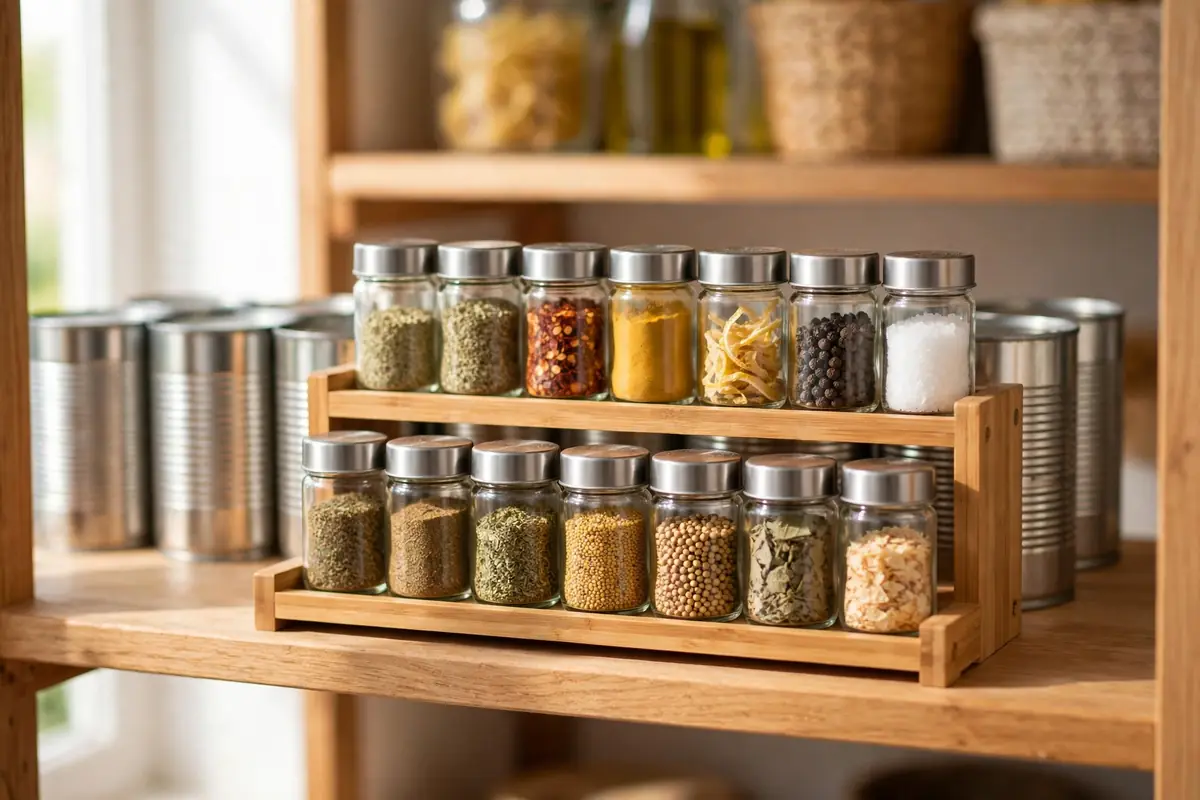
Second, a small tiered spice riser at the front of a shelf. It takes about 6 inches of depth and holds two rows of jars where one fit before.
Third, a spice drawer, if you have one to spare. It is one of the simplest small pantry storage ideas. Jars lying flat with a simple insert beat jars crammed on a shelf. This pairs well with our full guide to spice storage ideas for small kitchens.
What I would not do: buy a giant 30-jar carousel unless you cook with 30 spices. Most households use the same 8 to 12 spices for 90 percent of meals. Organize those 12 well and relegate the rest to a backup bin up top. Restraint with gadgets is an underrated part of small pantry storage ideas.
What if your pantry has no shelves at all?
Some small kitchens don’t have a pantry closet, just a cabinet, a corner, or literally nothing. The answer is to build a pantry out of furniture.
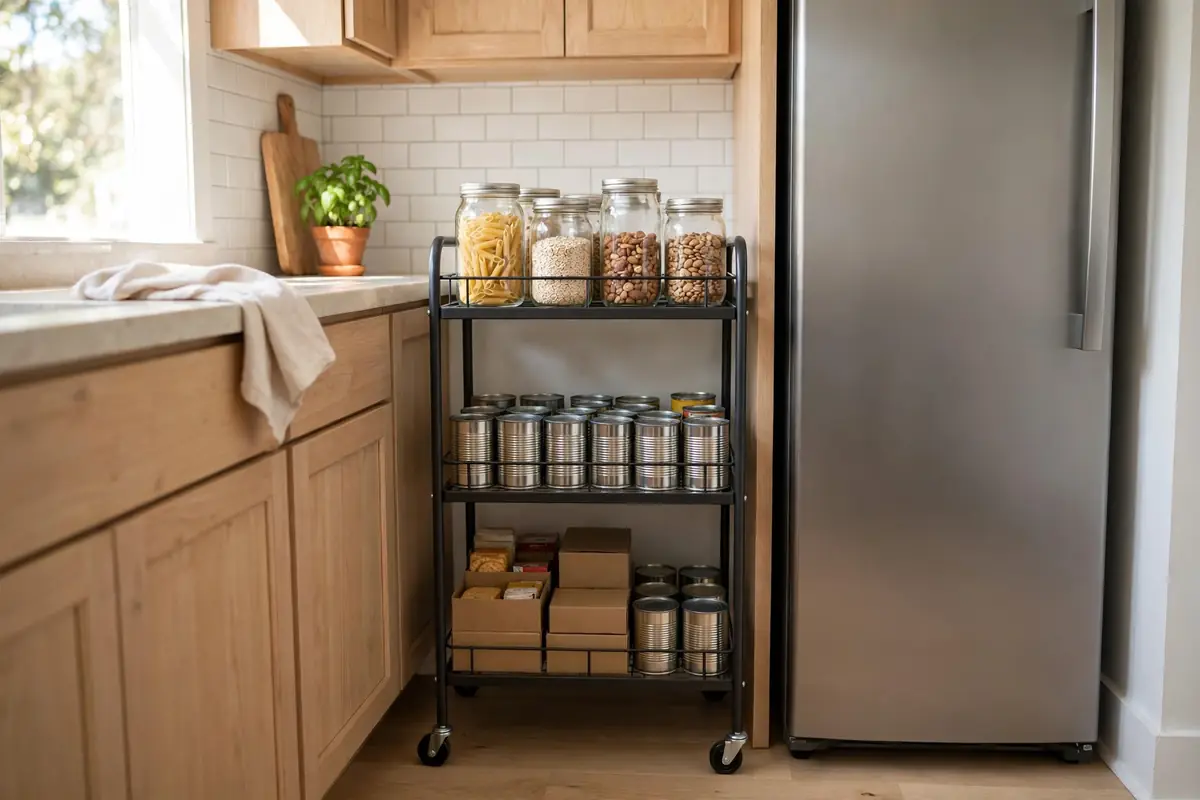
A slim rolling cart is the best no-pantry pantry for renters, and a favorite among small pantry storage ideas for apartments. The narrow ones fit in the gap between the fridge and the wall. Three tiers hold a surprising amount: cans below, daily items in the middle, snacks up top. When you move, the pantry moves with you.
A small freestanding cabinet or bookshelf works if you have a corner to spare. Add bins and a tension rod inside, and it’s a pantry, no drilling, no damage.
Open shelving is the third option, and its advantage is visibility. The trade-off is dust and the need to keep it tidy. Keep it to one or two shelves of daily items.
Here’s my honest admission: a furniture pantry will never hold as much as a real closet pantry, and pretending otherwise leads to overbuying. If your pantry is a rolling cart, shop like someone with a rolling cart. Small pantry storage ideas for renters assume smaller hauls. Smaller hauls, more often, less waste.
Where do snacks and grab-and-go food live?
Snacks have special requirements: reachable fast, visible at a glance, and contained, or they spread across every shelf like glitter. Give them a dedicated home and defend it.
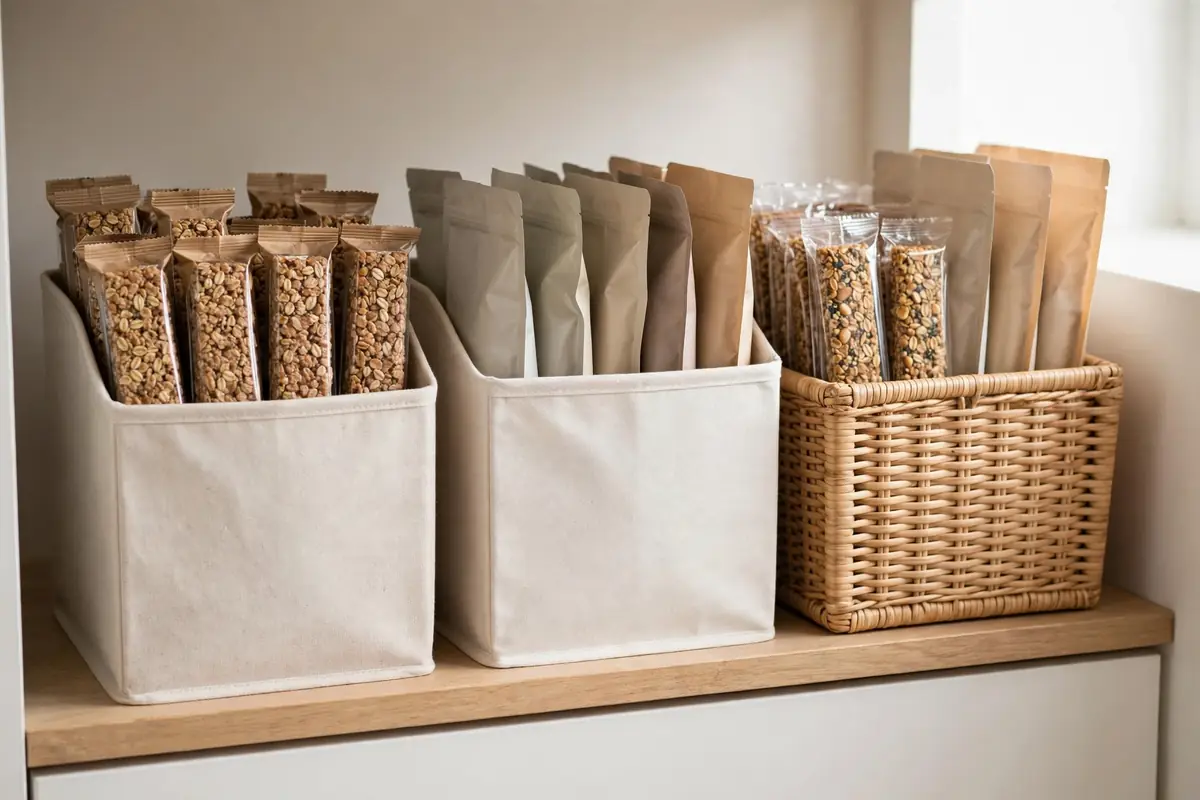
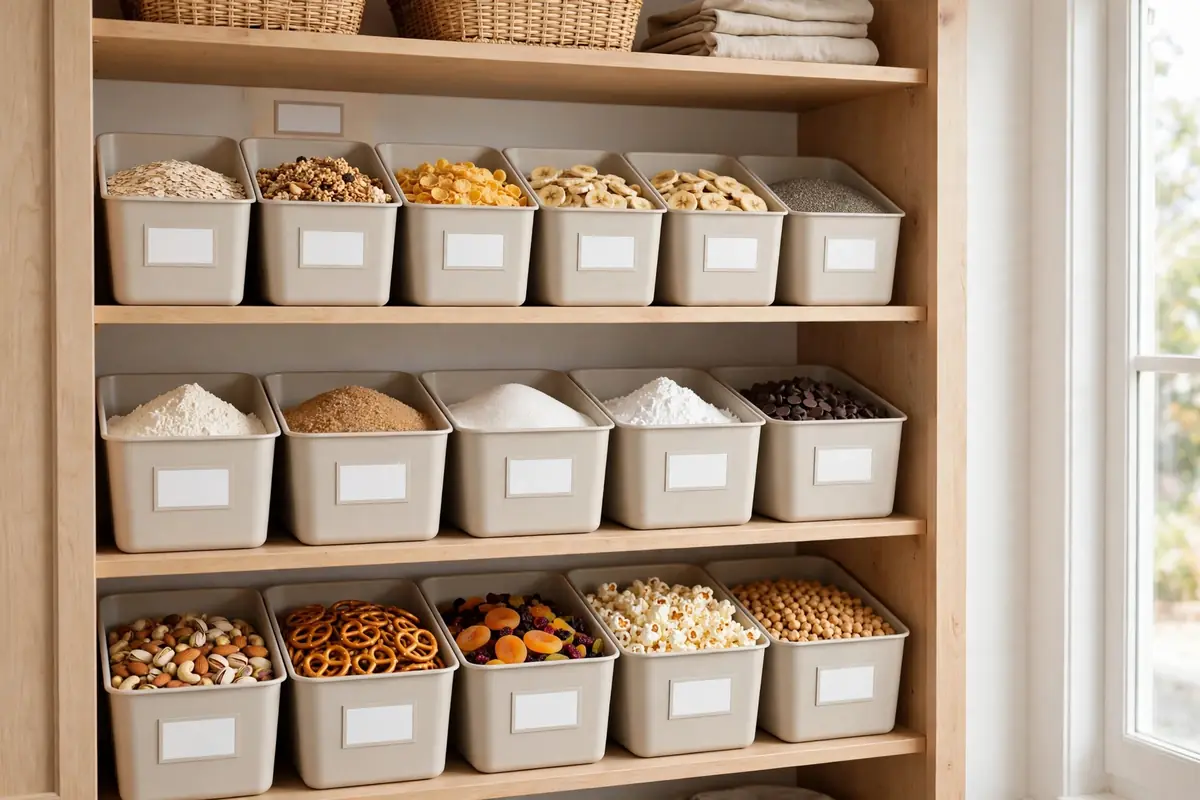
One bin per category is the system that survives real families, and the most repeated of all small pantry storage ideas: kids’ snacks, adult grab-and-go, lunch-packing supplies. Put them on a low or middle shelf where nobody has to move other food to reach them. When the bin is the boundary, you can see at a glance what’s running low.
For households with kids, the low shelf is non-negotiable. Put allowed snacks at their eye level and they’ll stop asking you to fetch things.
Decant the floppy stuff. Snack bags arrive in packaging designed to fall over. Standing them upright in a bin, like files in a filing cabinet, lets you flip through and see every option. This one trick does more for snack chaos than any organizer you can buy.
I won’t pretend snacks stay organized by themselves. They’re the highest-traffic zone, so they’re the first to decay. That’s fine. Reset the bin when you unload groceries. Ten seconds, once a week.
Do labels actually matter, or are they just for looks?
They matter, but not for the reason Instagram thinks. Labels aren’t decoration. They’re a contract with everyone else in your household.
An unlabeled bin is a suggestion. A labeled bin is an instruction. Labeling is the cheapest of these small pantry storage ideas. When the bin says “pasta,” the pasta goes back in the pasta bin instead of on whatever shelf is closest. When the flour canister says “flour,” nobody pours pancake mix into it by mistake. The system survives because the labels do the remembering for you.
You don’t need a label maker. Painter’s tape and a marker work. Chalkboard labels work. The clip-on kind that slide onto bin handles are nice because you can change them when the bin’s job changes, which happens more than you’d think. What matters is that the label is readable from the shelf, not that it’s pretty.
One thing I’d push back on: labeling every single item is overkill and you’ll quit. Label the categories, not the contents. That is the labeling rule in every small pantry storage ideas guide. “Baking” beats labeling the flour, sugar, and cocoa separately. “Snacks” beats labeling every snack type. In a small pantry, you can see what’s in the bin once you’re standing in front of it. The label just gets you to the right bin.
How do small pantry storage ideas stay organized after the first month?
The makeover is the easy part. The system surviving real life is the actual project. Here’s what keeps a small pantry working.
First, adopt one-in, one-out for the categories that overflow. One-in-one-out keeps small pantry storage ideas working long term. New box of cereal comes in, the almost-empty one gets finished or combined. Small pantry storage ideas treat inflow as the real enemy. Small pantries have no slack, so inflow has to match outflow or the system drowns.
Second, do a two-minute expiration audit when you unload groceries. Check dates as you go and pull anything expired to the front.
Third, keep a running grocery list where you can see it. Half of duplicate buying happens because nobody remembers what’s already home.
And give the whole pantry a 15-minute reset once a month. A monthly reset separates working small pantry storage ideas from one-time makeovers. Pull the bins forward, wipe the shelves, toss the expired, put the drifters back in their zones. Fifteen minutes a month beats a three-hour overhaul twice a year.
The economics back this up. Food prices were roughly 18 percent higher in late 2025 than in early 2022, per ReFED’s analysis. Every item that expires in your pantry is money you already spent.
What are the most common mistakes with small pantry storage ideas?
After looking at dozens of small pantries, the same mistakes show up everywhere. Run through this list and fix the ones you’re guilty of. No judgment, I’ve made all of them.
Buying organizers before measuring. That perfect bin is useless if it’s an inch too wide for your shelf. Measure first, shop second, always.
Skipping the decant on your five staples. Manufacturer boxes are bulky. Flour, sugar, rice, pasta, and cereal deserve real containers.
Putting everyday items anywhere but the front. If you use it daily and it’s behind something else, you’ll stop putting it back properly within a week.
Ignoring the vertical gap. Most shelves have 12 to 18 inches of clearance with food stacked 6 inches high. Risers, stackable bins, and under-shelf baskets exist for this gap.
No lighting. You can’t organize what you can’t see. A $12 motion-sensor LED strip is one of the highest-impact upgrades per dollar here.
Treating the pantry as overflow for the whole kitchen. Small appliances and cleaning supplies creep in and eat food space. Be ruthless. The pantry stores food.
Your pantry is already big enough, it just needs a system
Here’s my honest summary after these 14 small pantry storage ideas: nobody with a small pantry has a space problem. They have a visibility problem, which is exactly what small pantry storage ideas solve. They have a visibility problem, a geometry problem, and an inflow problem. Fix visibility with clear containers and light. Fix geometry with turntables, risers, and door racks matched to your measurements. Fix inflow with a grocery list and one-in, one-out.
Start with the free stuff this weekend. The best small pantry storage ideas cost nothing to begin: pull everything out, toss the expired, group by category, put daily items at chest height. Then spend $25 on the one tool that matches your worst problem. You need the three ideas that match your pantry’s geometry, not all 14.
Wasted food is wasted money, and a pantry you can see is a pantry you waste less from, which is the visibility dividend small pantry storage ideas pay. Households are already wasting nearly a million tons less, per ReFED’s 2026 report. Your pantry is the easiest place to join that trend.
If this helped, the next step is our full pantry organization guide for small pantries, which goes deeper on the weekend reset process, and our roundup of the best pantry organization bins if you’re ready to buy containers that actually fit. And if the pantry is only part of the problem, our small kitchen storage ideas guide tackles the rest of the room.
What does a small pantry makeover cost?
| Budget | What you get | Best for |
|---|---|---|
| $25 | One turntable OR a set of 4 pull-out bins OR a door rack | Fixing your single worst problem |
| $75 | Turntable + door rack + tiered riser + labels | A full small-pantry reset |
| $150 | Above + 6 square airtight canisters + LED strip + under-shelf baskets | The complete system, done once |
How do I organize a small pantry with no shelves?
Use freestanding options: a slim rolling cart that fits beside the fridge or counter, a small cabinet or bookshelf with bins inside, or wall-mounted open shelving for daily items. Tension rods wedged inside a cabinet create extra levels without drilling, which makes the whole setup renter-friendly. Shop in smaller hauls to match the smaller capacity.
What’s the best way to organize a small pantry with deep shelves?
Use a lazy Susan for round bottles, pull-out bins with handles for packets and snacks, and tiered shelf risers for cans. The goal is to bring the back of the shelf forward: a turntable spins items to you, a bin pulls out like a drawer, and a riser lifts back-row cans into view. Measure shelf depth before buying anything.
What containers work best for small pantry storage?
Square or rectangular airtight containers. Square containers tile together with no wasted corner space, unlike round ones, and airtight seals keep staples fresh longer. Decant the five staples you always stock, flour, sugar, rice, pasta, and coffee, and leave the rest in original packaging.
How do I organize a pantry on a budget?
Start free: pull everything out, toss expired food, group by category, and move daily items to chest height. Then spend $25 on the single tool that fixes your worst problem. Budget tiers that work: $25 covers a turntable or a set of bins; $75 adds a door rack and risers; $150 outfits the whole pantry with containers, lighting, and labels.
Should I decant everything into matching containers?
No. Decant the staples you buy repeatedly and leave everything else in its packaging. Decanting all 40 items is a project you’ll abandon halfway. The five-item version gives you most of the benefit for a fraction of the effort.
How do I keep my pantry organized long term?
Three habits: one-in, one-out for categories that overflow; a two-minute expiration check when unloading groceries; and a 15-minute monthly reset to wipe shelves and return drifters to their zones. Keep a visible grocery list to stop duplicate buying.
What goes on the top shelf of a small pantry?
Light, rarely used items: backup supplies, holiday baking gear, seasonal items, and bulk backups. If you need a step stool to reach it, it should be something you touch monthly at most. Heavy items always go low for safety.
How do I organize spices in a tiny pantry?
Use the back of the pantry door with a shallow over-the-door rack, which holds 20 or more jars in unused space. Alternatives: a small tiered riser at the front of a shelf, or a kitchen drawer with jars lying flat. Organize the 8 to 12 spices you actually use and relegate the rest to a backup bin.
Can an over-the-door organizer damage a rental door?
Most over-the-door racks hang without screws and come off cleanly, making them renter-friendly. Check the rack’s depth against your door clearance so it doesn’t scrape the frame, and keep loads light: spices, packets, and wraps, never heavy cans. Adhesive hooks with removable strips are the safest option for extra hanging storage.
