
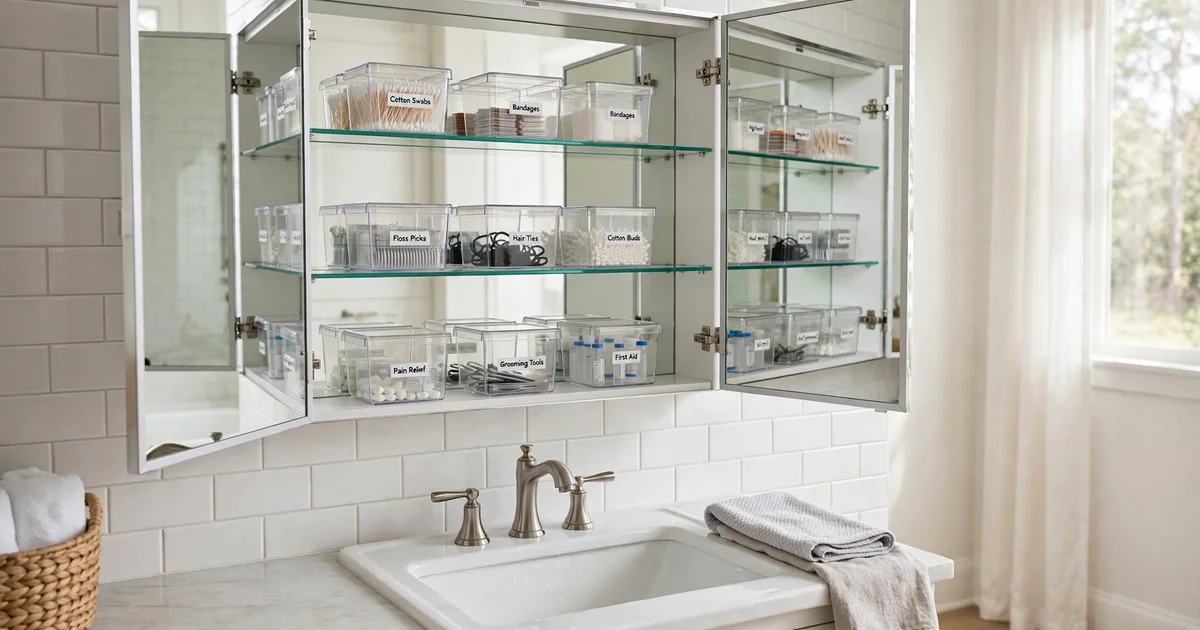

Open your medicine cabinet right now and count how many things you actually use. If you are like most people, most of what is in there is expired, doubled up, or forgotten. Good medicine cabinet organization fixes that in one sitting: empty everything, toss what is dead or duplicated, group the rest by how often you reach for it, and give daily items the eye-level shelf. The whole job takes under an hour, and it saves you the 1 a.m. scramble through bottles the next time someone needs the pain reliever.
The short version:
- Keep only daily-use items in the cabinet. Good medicine cabinet organization starts with a short keep list, so move backstock, duplicates, and long-term prescriptions somewhere cool and dry.
- Check every expiration date. About 80% of what sits in the average cabinet never gets used, professional organizers estimate (LiveScience).
- Group by frequency: daily items at eye level, weekly items one shelf up or down, rare items at the very top or bottom.
- Use shallow bins and labels so small things stop falling out every time you open the door.
- Run a quick expiration check once a month. Full re-sort once a year.
| Organizer type | Fits which cabinet | Best for | Price tier |
|---|---|---|---|
| Clear narrow bins | Any depth | Small items that fall over (bandages, cotton swabs) | $ |
| Stair-step riser | Deeper cabinets | Seeing every bottle without moving the front row | $$ |
| Mini turntable | Cabinets with square shelves | Reaching items at the back | $ |
| Stacked acrylic drawers | Tall cabinets | Doubling vertical space for small tubes | $$ |
| Adhesive door bins | Any cabinet with a door | Daily items you grab first (toothbrush, razor) | $ |
| Magnetic pods/strip | Metal interiors only | Tweezers, nail clippers, bobby pins | $ |
What should you actually keep in a medicine cabinet?
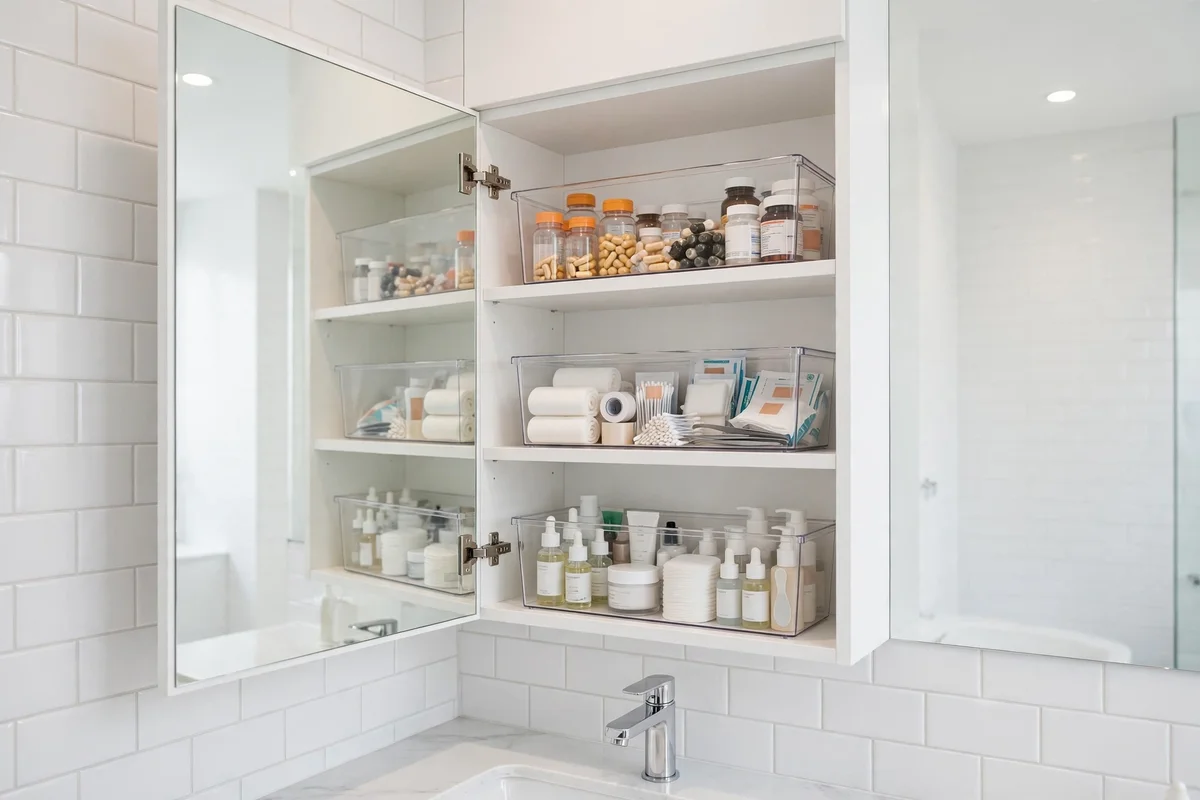
Less than you think. The daily list is short: toothbrush and toothpaste, your daily medications, first aid basics like bandages and antiseptic, and the handful of grooming products you use every morning. Everything beyond that list is a candidate for a different home.
Professional organizer Elsa Elbert told Apartment Therapy in 2024 that medicine cabinets are tricky because they are so shallow, which sharply limits what fits, and her fix is simple: daily necessities stay, everything else moves out. I agree with her completely. Backstock, the third box of bandages, the cough syrup from two winters ago, none of it earns cabinet space. Related guides like our bathroom drawer organization post cover overflow storage for those extras.
Here is the rule that keeps the cabinet working long term. If you have not reached for it in a year, it doesn’t belong here. A medicine cabinet is not for bulk backstock or “just in case” supplies. It is for the short list you use every day. The keep list stays short on purpose: toothbrush and toothpaste, first aid supplies, daily prescriptions, and your daily grooming products. What leaves: backstock, duplicates, seasonal items out of season, and anything expired. A cabinet that holds 20 things you use beats one that holds 60 things you dig through.
Why is the bathroom one of the worst places to store medication?
Heat and humidity break pills down. Every hot shower fills the bathroom with steam, and that moisture seeps into bottles and blister packs over time, which can make medications less effective well before their printed expiration date. Professional organizers say this is the single most common medicine-cabinet mistake: people store the drugs they depend on in the room that treats them worst.
That doesn’t mean every bottle must leave the bathroom. Daily vitamins and the things you replace every month or two are fine where they are. But long-term prescriptions and anything you keep for months belong somewhere cool and dry: a kitchen cabinet away from the stove, a bedroom drawer, or the linen closet. If you are reorganizing anyway, this is the moment to move the important stuff somewhere safer. Our linen closet organization guide shows how to carve out a cool, dry shelf for exactly this.
The research backs the worry. A National Institutes of Health study, cited by Frenz Hub, found that poor home medicine storage is linked to errors and unsafe practices, with expired medications common in many households. You don’t need a perfect climate-controlled setup. Just stop storing a year’s worth of prescriptions above a steamy shower.
How do you empty and sort a medicine cabinet in under an hour?
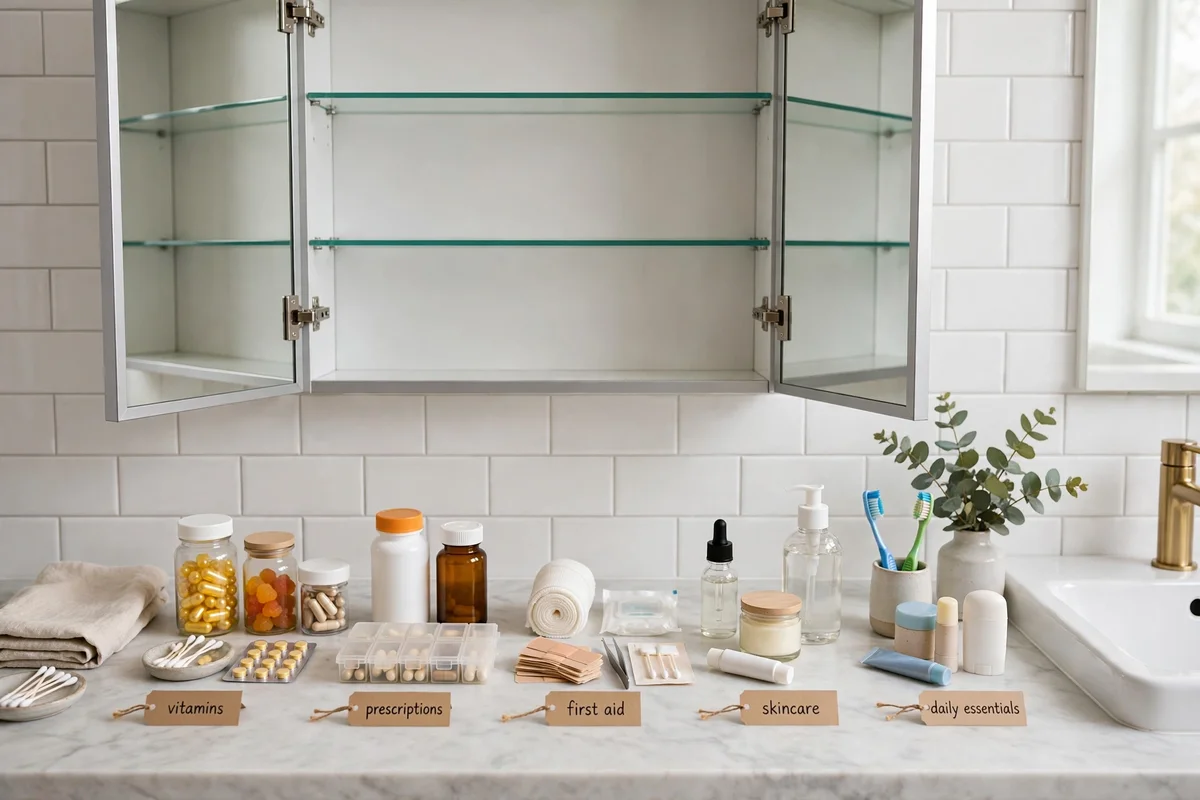
Take everything out. All of it, every bottle and tube and stray cotton ball, and wipe the shelves down while they are bare. You can’t see what you have until it is all on the counter in front of you, and you will be surprised how much less there is once the duplicates are obvious. A damp cloth plus your usual all-purpose cleaner is enough for the shelves.
Then sort into five piles. Daily medications go together. As-needed items (pain relievers, allergy pills, antacids) form a second pile. First aid supplies get their own group. Seasonal stuff, allergy meds, cold remedies, goes in a fourth pile. Supplements and vitamins round out the list. Keep kids’ medications physically separate from adults’ in their own pile too, because mixing them up is exactly the kind of error the NIH study warned about.
Toss as you sort. Check every expiration date before anything goes back in. This is where the hour pays off: one pass through every date, and you will likely fill a bag with dead products. Only clean, in-date items in the five piles move on. The rest of this guide assumes a smaller, honest set of things, not a re-packed pharmacy.
How do you decide what to throw away?
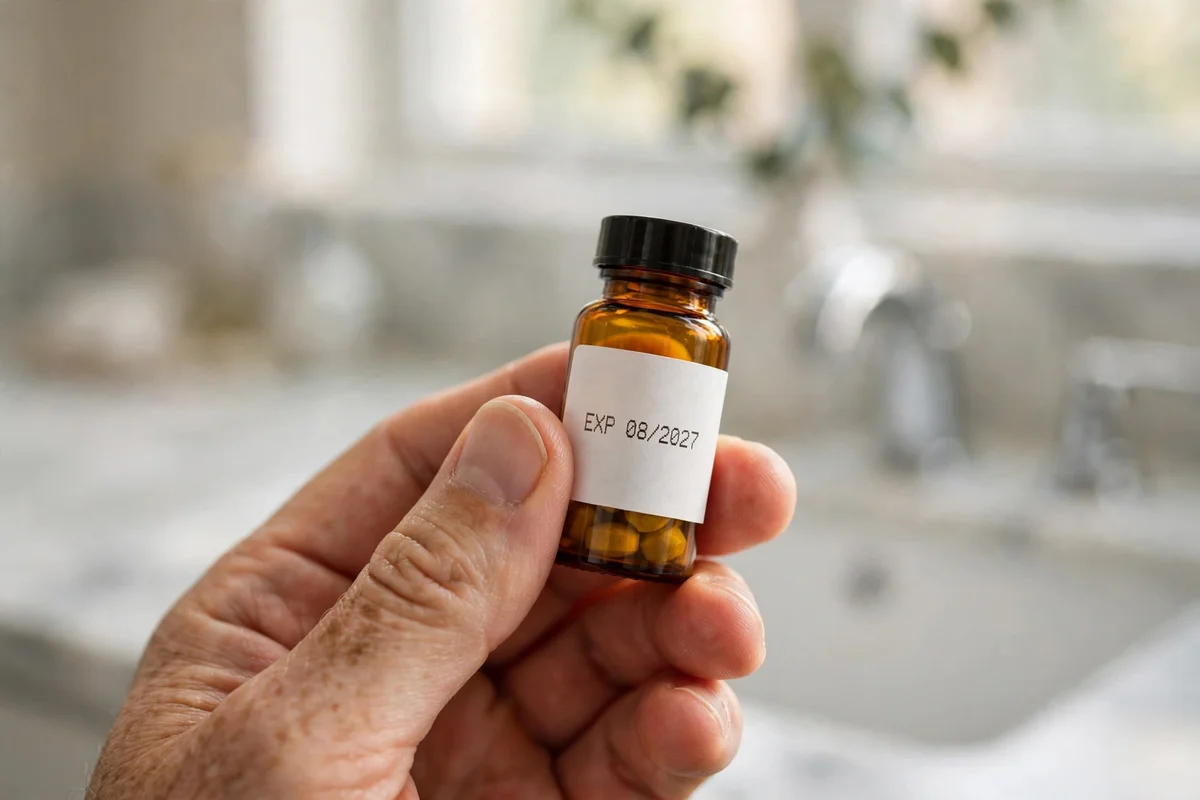
Ask three questions about everything in the sort piles. When did you last use it? If the answer is more than a year ago, out it goes, because it will hit its expiration date before you ever reach for it again. Is it expired? Don’t hesitate on this one, expired goes straight to the disposal pile. Is it still usable? Cracked cases, dried-out creams, and mystery bottles with no label are not worth keeping.
The usual suspects fill the trash bag fast. Old cough syrup from three winters ago. Half-used antibiotic courses you never finished. Sunscreen older than two years. Vitamins that expired while you meant to take them daily. Professional organizers at LiveScience estimate that roughly 80% of what sits in the average medicine cabinet never gets used, and your bag will probably prove them right.
Duplicates deserve their own purge. Three open bottles of pain reliever, two half-used tubes of the same ointment, four lip balms: pick the freshest one and toss the rest. Keep a simple note on your phone of what you actually own so you stop buying a fourth bottle of the same thing. This one habit frees more shelf space than any organizer you can buy.
How do you dispose of expired medications safely?
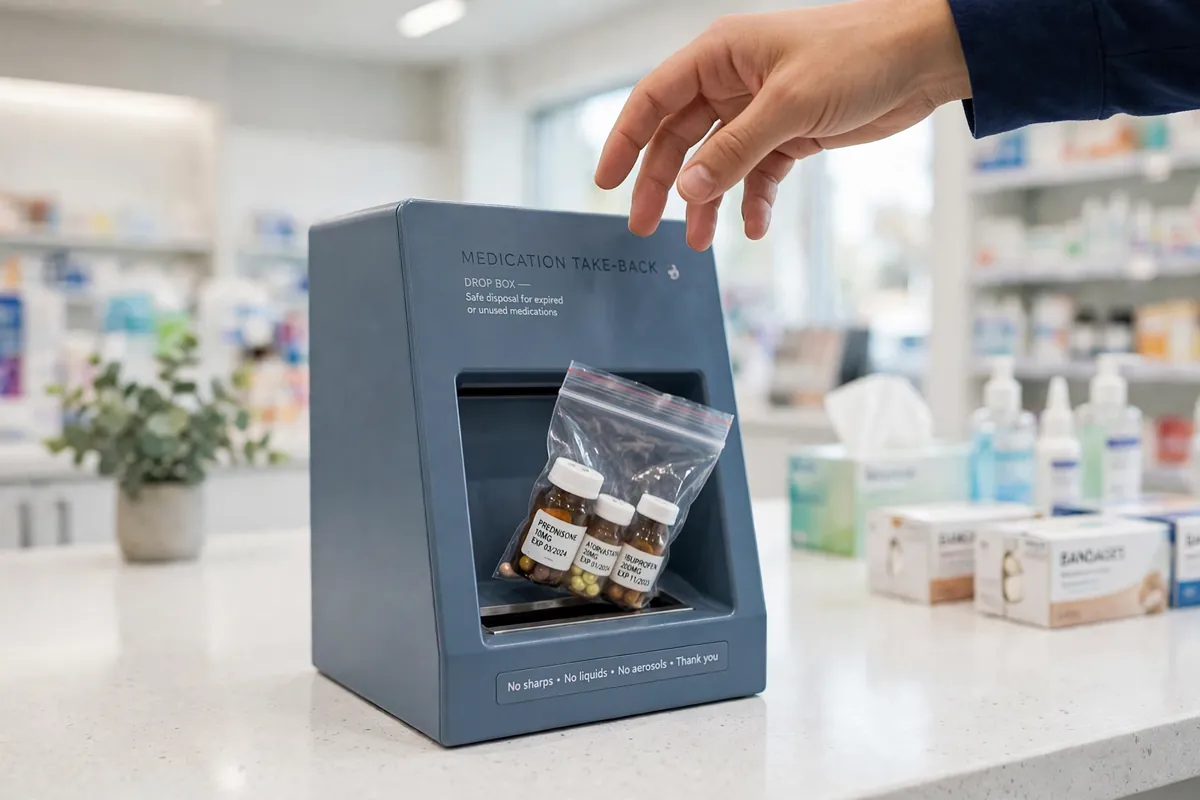
Do not just toss pills in the trash or flush them down the toilet. The FDA’s guidance is clear: for medications that pose a misuse risk, like certain painkillers and narcotics, follow the FDA flush list, because keeping them around is more dangerous than flushing them. For everything else, mix the pills with something unappealing like used coffee grounds or cat litter, seal the mix in a plastic bag, and put it in the household trash. Don’t crush the pills first.
The best option is a drug take-back program. Most US communities run drop-off sites at pharmacies or police stations where you can hand over expired and unused medications, no questions asked. The DEA’s next National Prescription Drug Take Back Day is October 24, and its collection-site locator finds a drop box near you year-round. Put a small bag in the cabinet for “expired, to drop off” and empty it the next time you pass a pharmacy.
One more detail people skip: peel or black out the labels on empty prescription bottles before recycling them. Those labels carry your name, your doctor’s name, and the drug, which is exactly the kind of information you don’t want riding along in a recycling bin.
Which organizer types actually fit shallow medicine-cabinet shelves?
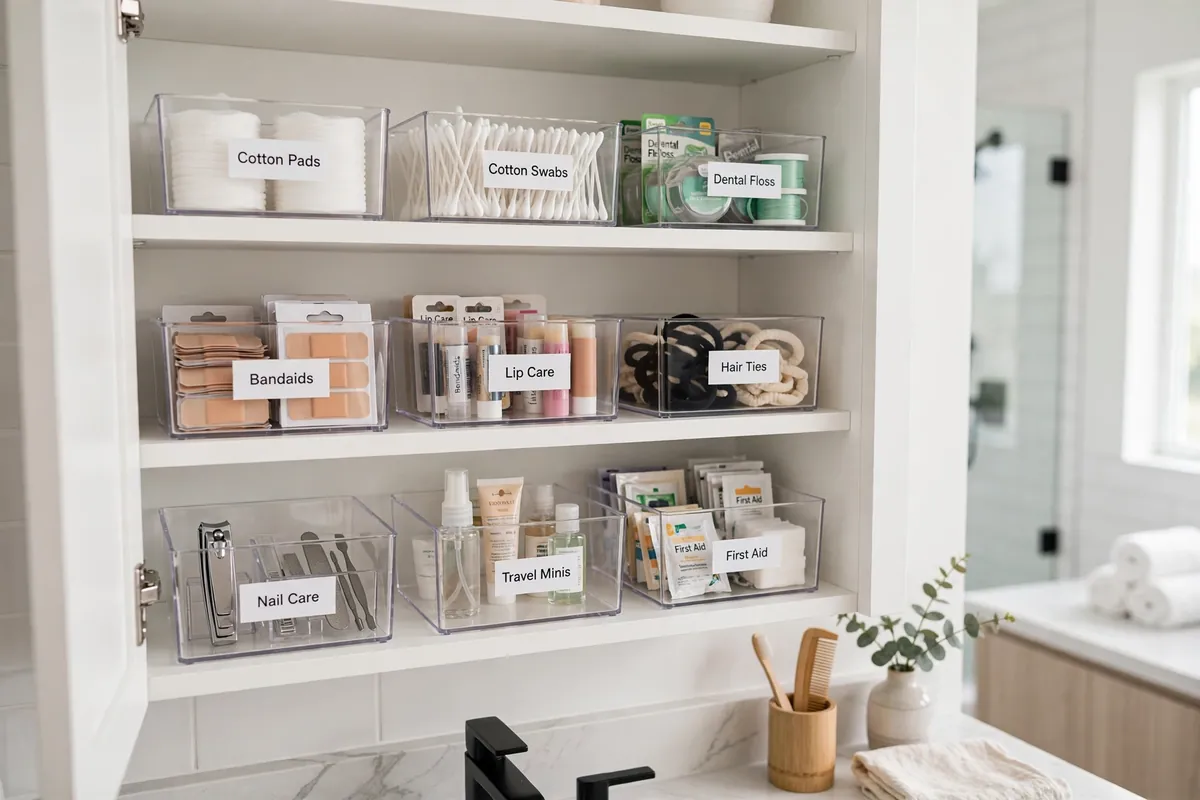
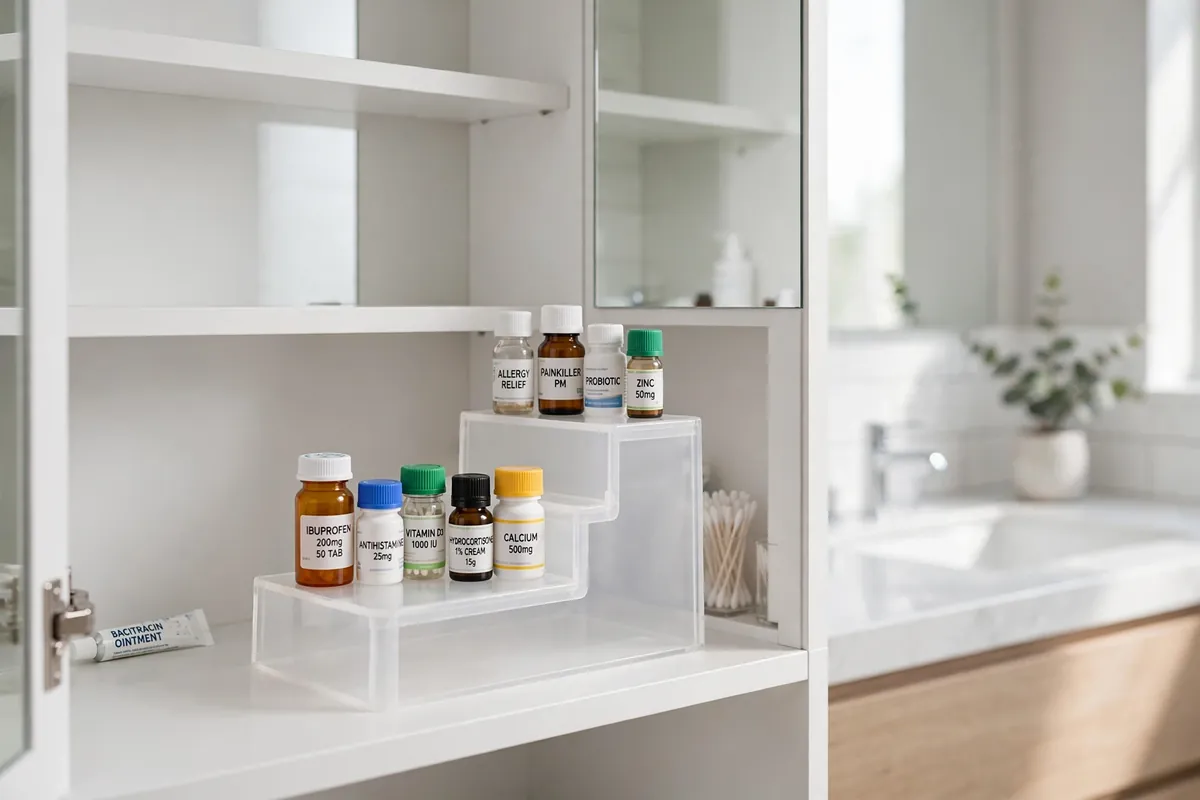
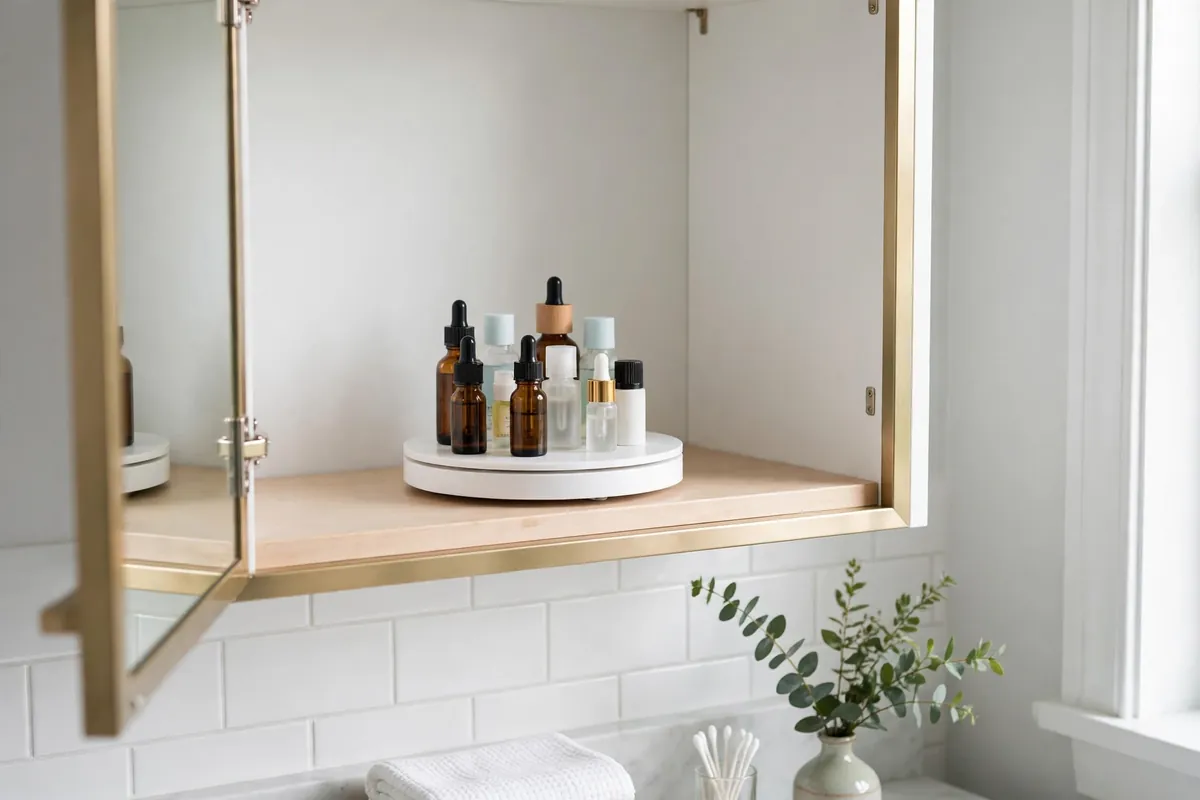
Most medicine cabinets are only a few inches deep, so measure your shelves before buying anything. The winners for shallow space are narrow clear bins that line up in a row, stair-step risers that let you see the back row over the front row, and mini turntables that spin the back items forward. Stacked acrylic drawer units work when the cabinet is tall but shallow. Adhesive bins stuck to the inside of the door use space that is otherwise wasted completely.
Here is my honest take on what is worth the money. Clear bins are the best first purchase because they are cheap, they fit anywhere, and you can see what is inside. Turntables are great for deep cabinets and not for shallow ones, so skip them if your shelf barely clears a pill bottle. Buy the riser for the cabinet you have, not the cabinet you wish you had.
For metal-interior cabinets, magnetic pods and magnetic strips are the secret weapon. A fridge magnet test tells you in one second if yours qualifies: if it sticks, the whole magnetic system is open to you. Wood interiors are not for magnets, so adhesive hooks are your move instead.
Quick favor: if this guide is helping, save it now so it is here on purge day.
| Shelf position | What goes there | Why |
|---|---|---|
| Eye level (middle) | Daily meds, toothbrush and toothpaste | You reach here without thinking, so the daily items live here |
| One shelf up | Weekly items, vitamins, first aid | Close enough to grab, out of the daily visual noise |
| Top shelf | Seasonal meds, backstock minis, rare items | Out of the way on purpose; check dates twice a year |
| Bottom shelf | Tall bottles, cleaning wipes, spare supplies | Tall items fit where headroom is biggest |
| Inside of door | Toothbrush, razor, tweezers | Adhesive hooks or magnetic pods, the grab-and-go zone |
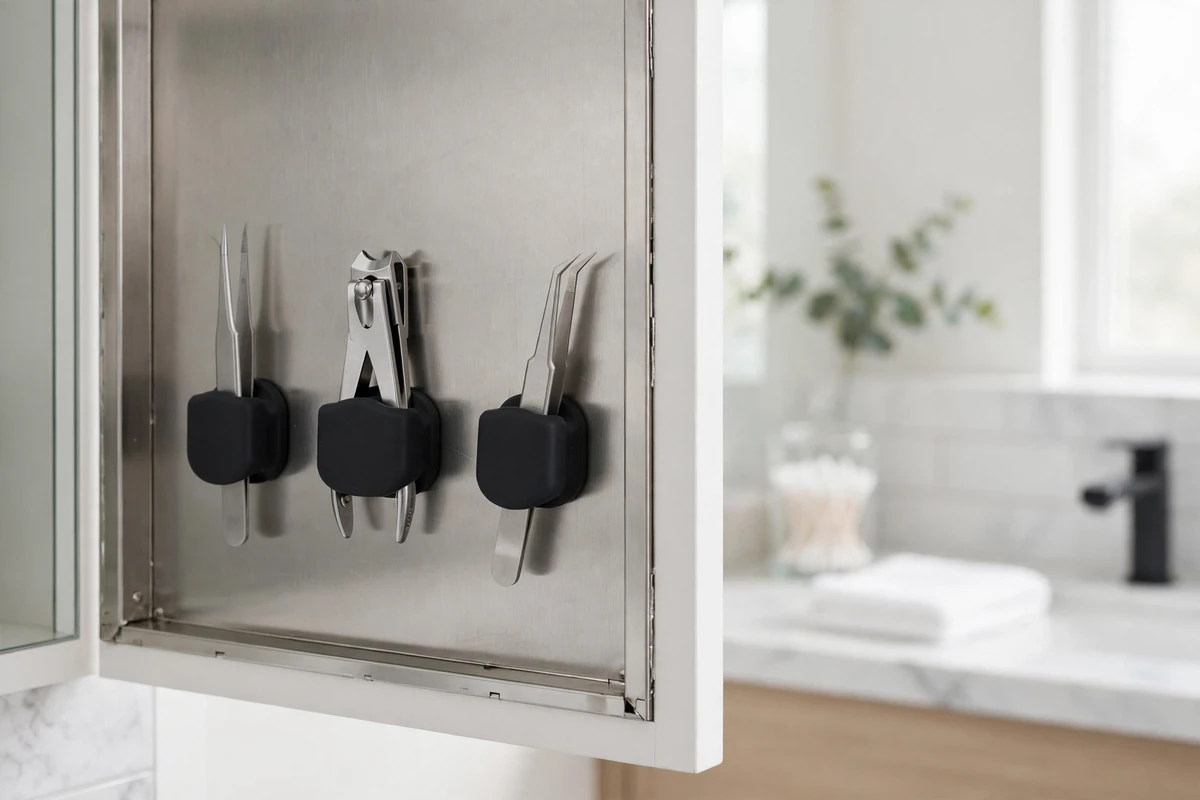
How do you use the inside of the cabinet doors?
The door interior is free storage that most people ignore. Adhesive hooks hold a toothbrush, a razor, or a pair of tweezers right where you see them the moment the door opens. Small adhesive baskets do the same job for tubes and travel-size bottles. On metal doors and metal cabinet walls, magnetic pods stick without any hardware at all.
This is also the best spot for the things you grab first every morning. Put the toothbrush hook at door height, the razor beside it, and suddenly the middle shelf has room for the bins that actually need shelf space. One caution: keep the door storage light. Overloading the door makes it swing open on its own or strains the hinges, and heavy items are not for the door, they fall when you swing it. A toothbrush and a razor, not a full-size shampoo bottle.
Renters, this is your section. Nothing here requires drilling or screws. Adhesive hooks peel off cleanly, magnetic pods lift right off, and none of it marks the cabinet. If your lease is strict about even adhesive residue, magnetic options on a metal interior are the safest bet of all.
How do you stop small items from falling out every time you open the door?
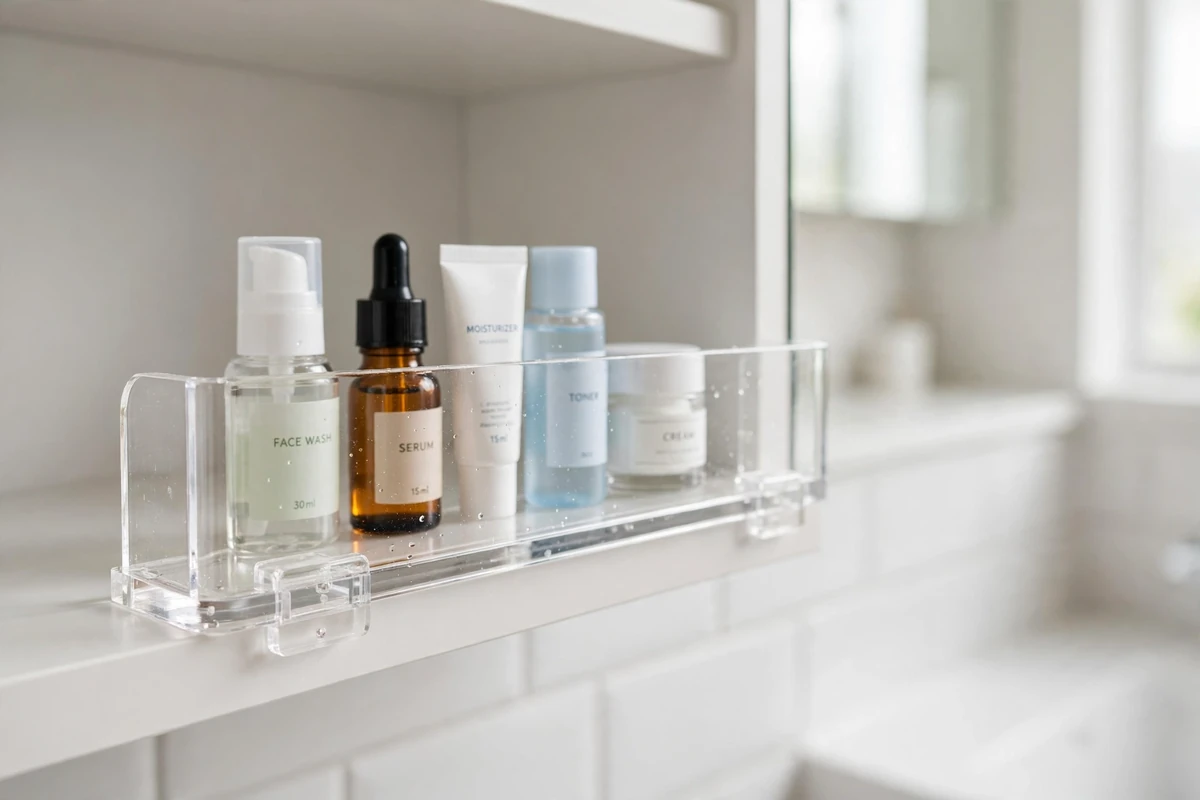
The avalanche happens because small loose items lean on the door and the door swings them forward. The fix is embarrassingly simple: put small things in bins, not loose on the shelf. Bandages, cotton swabs, bobby pins, nail clippers, and single-serve packets each get their own small container, and the containers are what sit on the shelf. Nothing loose means nothing to fall.
A second trick from real users: add a low lip to the front edge of the shelf. Clear plastic corner guards, the kind sold at any hardware store, make a 1 to 2 inch railing that keeps bins and bottles from sliding forward when the door swings. Organizing forums are full of people who solved their falling-bottle problem with exactly this, and it costs a few dollars.
Face every label outward and leave a little breathing room between items. When bottles are packed shoulder to shoulder, grabbing one knocks three others over. A half inch of space between things sounds wasteful, but it’s what keeps the whole system from collapsing the first time you are in a hurry.
How do you organize a medicine cabinet when you have kids?
Separate kids’ medications from adults’ medications completely. Different bin, different shelf, ideally a different area. The NIH-linked research cited earlier flags exactly this risk: mix-ups between children’s and adult doses are one of the most common home medication errors. A labeled bin that says “kids” and nothing else removes the guesswork at 1 a.m.
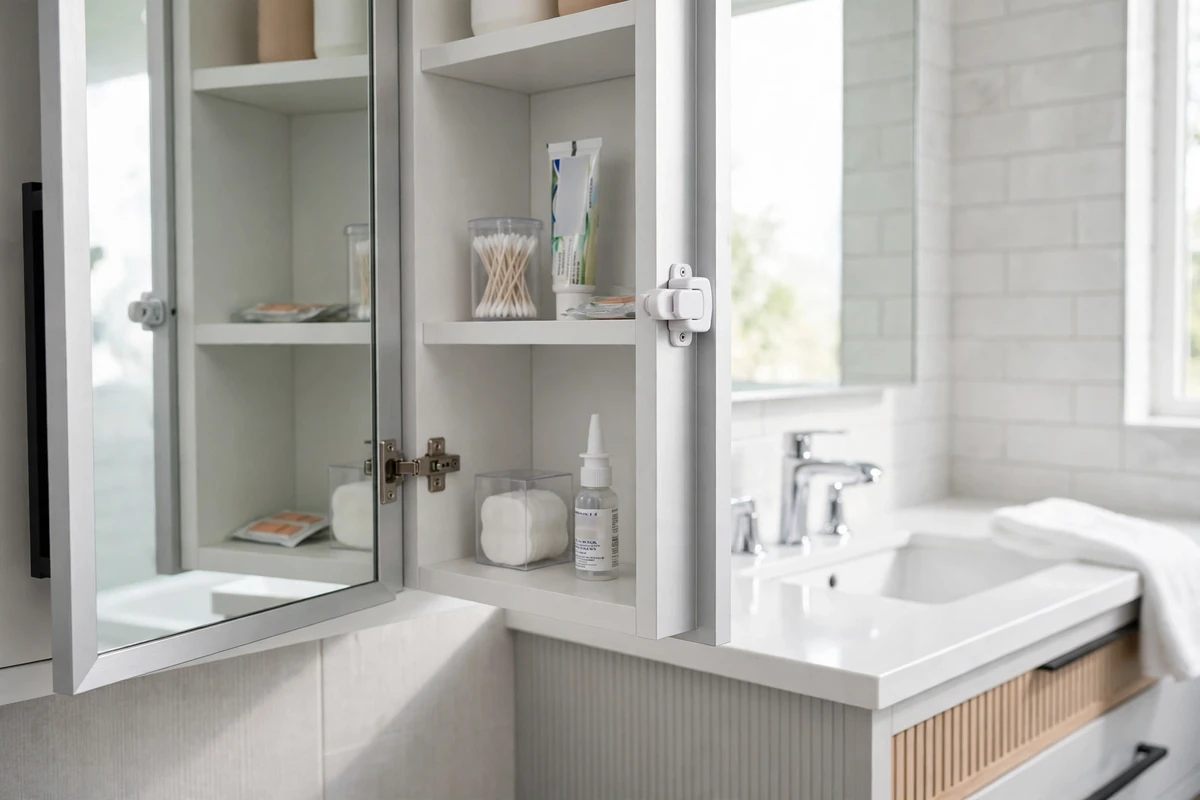
Add a child-proof lock or latch to the cabinet door. Magnetic cabinet locks, the kind that open with a small magnetic key you keep on top of the cabinet, work on most medicine cabinets and cost very little. Keep the magnetic key somewhere an adult can reach in two seconds and a toddler cannot reach at all. This is non-negotiable if you store any prescription medication in the bathroom.
Save this number in your phone now: 1-800-222-1222, the national Poison Control hotline. It’s free, staffed around the clock, and the people there would rather talk you through a scare than have you guess. Put a small sticker with the number inside the cabinet door where every adult in the house can see it.
What does a first-aid-ready medicine cabinet look like?
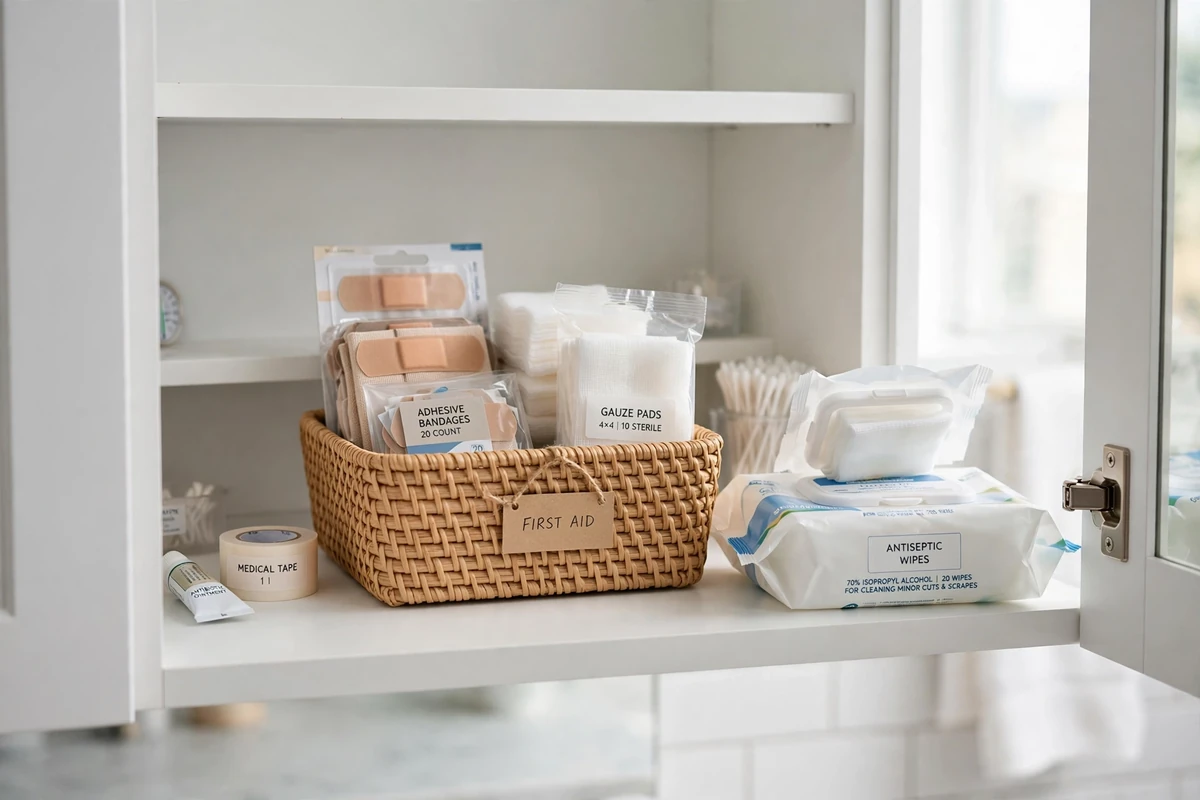
One clearly marked bin on an easy-to-reach shelf. Inside it: adhesive bandages in a few sizes, gauze pads, antiseptic wipes, antibiotic ointment, tweezers, small scissors, a digital thermometer, and burn cream. That kit covers the cuts, scrapes, splinters, and minor burns that send you to the cabinet in the first place. LiveScience’s rundown of organizer-recommended staples lists almost exactly this set, plus extras like hydrocortisone cream for bites and saline eye wash.
Keep the first aid bin at the front of its shelf, not buried behind the vitamins. In an emergency you should be able to grab it without looking. Check it twice a year: adhesive bandages lose their stick over time, antiseptic wipes dry out, and ointments expire. A first aid kit you cannot trust is just clutter with a label.
If your household has specific needs, build the bin around them. Allergy-prone family, antihistamines go in. Kids who play sports, add elastic wrap and instant cold packs. The ready-made kits at the drugstore are fine as a starting point, but a bin you assembled yourself always matches your life better.
How do you handle tall bottles in a short cabinet?
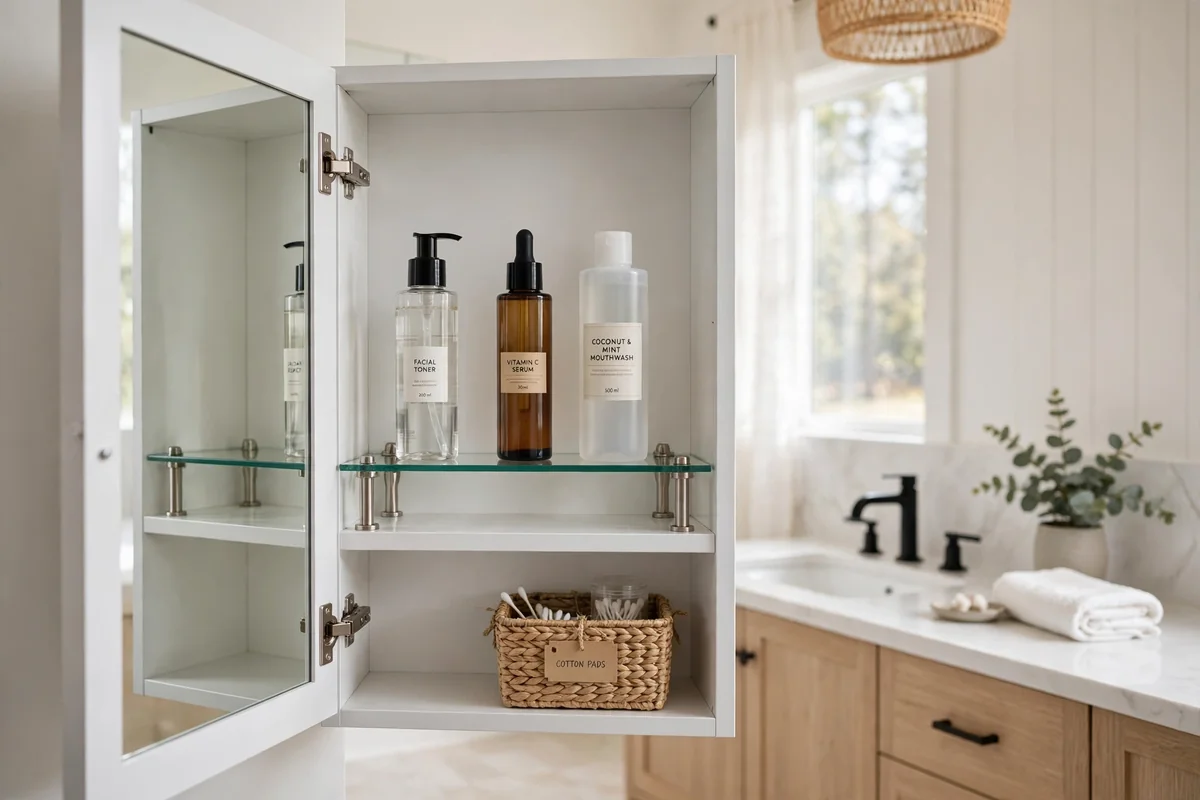
Put tall bottles on the bottom shelf, where the cabinet usually has the most headroom, or on whichever shelf has an adjustable position. Many medicine cabinets have glass shelves that lift out and move to different slots; moving one shelf down an inch is often all it takes to fit a tall bottle upright.
For the short items living behind tall ones, a stair-step riser is the answer. The riser lifts the back row so you can read every label without pulling the front row out. If buying a riser feels like overkill, a small sturdy box or a flipped-over plastic container does the same job for free. The goal is simple: no bottle should ever be hidden behind another bottle.
Decant with care. Moving tall items into shorter containers only works for non-medication items like cotton balls or bath salts. Never repackage actual medications into unmarked containers, because an unmarked bottle of pills is a mix-up waiting to happen. Keep every drug in its original labeled packaging, always.
What do you do if you do not have a medicine cabinet at all?
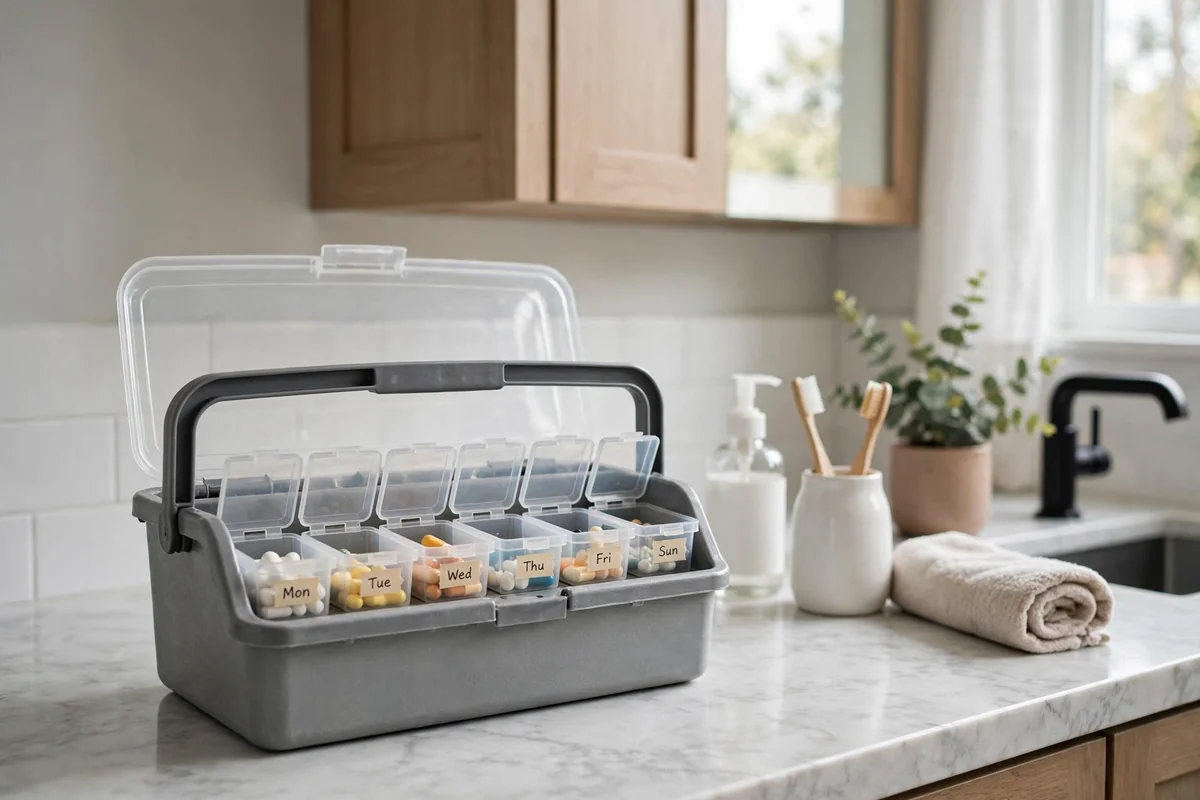
Build the same system in a portable caddy. A lidded plastic tub with a handle holds the five category piles just as well as a cabinet, and it moves from bedroom to bathroom to wherever you need it. Label the outside so nobody treats it as a junk box. Our over toilet storage guide shows freestanding furniture options that create the same daily-grab zone above the toilet when wall space is tight.
A small wall shelf plus a magnetic strip covers the daily items. Mount a narrow shelf near the sink for the toothbrush and toothpaste, stick a magnetic strip underneath it for tweezers and nail clippers, and keep the caddy with medications somewhere cool and dry. Under-sink space works for the overflow too; the pull-out organizers in our under sink kitchen organization post translate directly to bathroom sinks.
The no-cabinet setup actually has one advantage: you are forced to keep the system small. Nobody overstuffs a caddy the way they overstuff a cabinet, because the caddy visibly runs out of room. If your caddy is overflowing, that’s the signal to purge, not to buy a bigger caddy.
How often should you re-organize to keep it from sliding back into chaos?
Once a month, spend five minutes checking expiration dates and putting strays back in their bins. That is the whole monthly job. Once per season, rotate: allergy meds move to the front in spring, cold remedies move up in fall, sunscreen goes in before summer. Once a year, do the full empty-and-sort again from scratch. The yearly reset catches everything the monthly checks missed.
The one-in-one-out rule keeps the system honest between resets. Every new product that enters the cabinet must replace something that leaves it. New moisturizer in, old half-used one out. It sounds strict, but it’s the only rule that stops the slow creep back to 60 bottles. Wellfor’s cabinet guide recommends the same schedule, monthly checks, seasonal rotation, annual audit, because the intervals match how fast bathroom clutter builds up.
| When | What to do | Time needed |
|---|---|---|
| Monthly | Check expiration dates, return strays to their bins | 5 minutes |
| Seasonally | Rotate seasonal items to the front, move off-season back | 15 minutes |
| Annually | Empty everything, purge, re-sort into the five piles | Under an hour |
Link the monthly check to something you already do, like the first of the month or the day you change your toothbrush. A maintenance task with no trigger is a maintenance task that never happens.
What is the simplest medicine cabinet organization system that actually survives a busy household?
Give every shelf one job, and give every person their own bin. That’s the whole medicine cabinet organization system in one sentence.
Stop aiming for a cabinet that looks like a magazine photo. Aim for a cabinet where you can find the pain reliever in the dark. Clear bins, labels facing out, daily items at eye level, expired stuff gone: that’s 90% of the result, and it survives real life because it asks almost nothing of you.
Start today with the purge. Set a timer for one hour, empty the cabinet, and be ruthless with the expiration dates. Sort what is left into the five piles, put the daily items at eye level, and add one bin for first aid. Then set a monthly reminder to check dates. A small cabinet that works beats a big cabinet that does not, every single time.
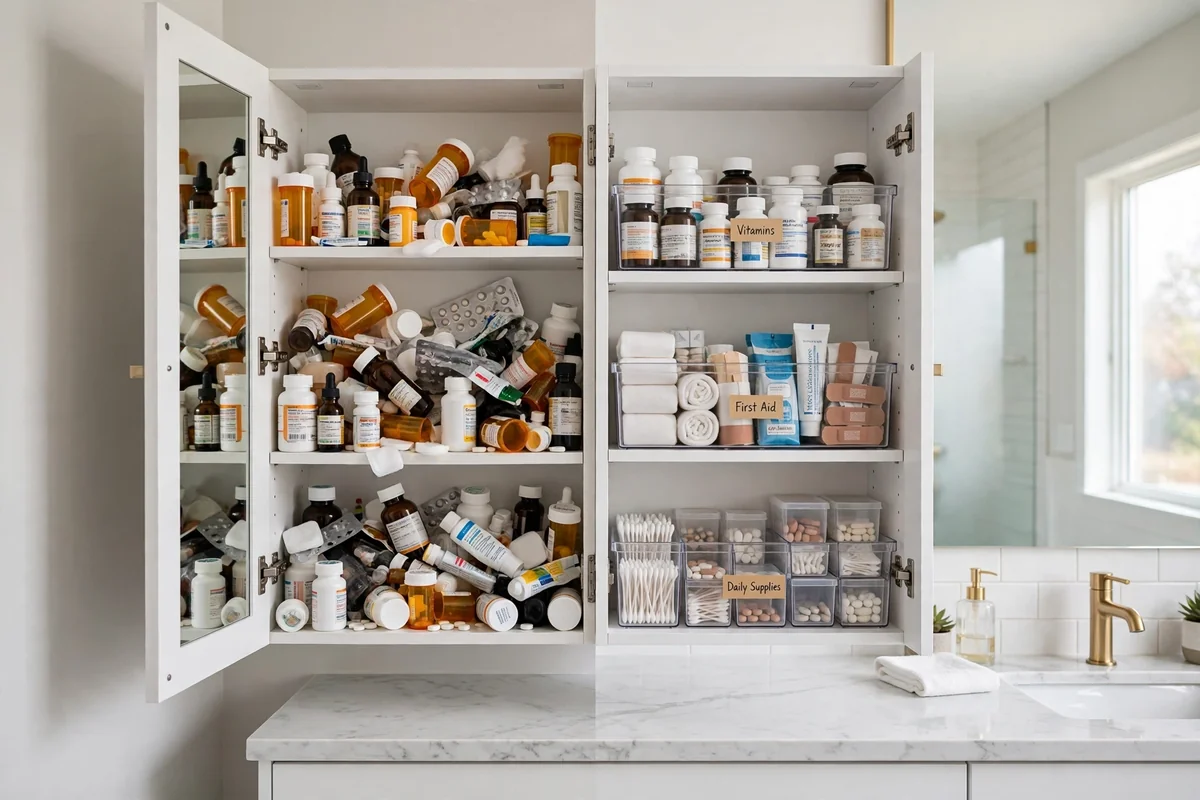
Once the cabinet is sorted, the counter is the next battleground. Our guide to Bathroom Storage Ideas for Toiletries That End Counter Clutter lays out a three-zone system for daily, weekly, and backup toiletries so the bottles stop migrating back out of the cabinet.
How often should you clean out your medicine cabinet?
Do a quick expiration check once a month, it takes about five minutes. Do a full empty-and-sort once a year to catch everything the monthly checks missed.
Do over-the-counter medications expire?
Yes. Both prescription and over-the-counter medications expire, and after the date they lose potency. Check every date during your yearly purge, including vitamins, sunscreen, and skin creams.
Where should you store medications instead of the bathroom?
Somewhere cool and dry, away from sunlight and steam. Good options are a kitchen cabinet away from the stove and sink, a bedroom drawer, or a linen closet. Keep only fast-turnover daily items in the bathroom.
How do you dispose of expired medications safely?
The best option is a drug take-back program at a pharmacy or police station. For certain high-risk medications the FDA advises flushing. For others, mix them with used coffee grounds or cat litter, seal in a bag, and trash them. Never flush a medication unless it is on the FDA flush list.
What should you not keep in a medicine cabinet?
Bulk backstock, duplicate bottles, long-term prescriptions (heat and humidity degrade them), and medications repackaged into unmarked containers. Keep the cabinet to daily-use items.
How do you keep small items from falling out of a medicine cabinet?
Store small items in bins instead of loose on the shelf, add a low clear-plastic lip to the front edge of each shelf, face every label outward, and leave a little space between items.
How do you childproof a medicine cabinet?
Keep kids’ medications in a separate labeled bin away from adults’ medications, add a child-proof lock or latch to the door, and save the Poison Control number 1-800-222-1222 in your phone.
What is the best way to organize a small medicine cabinet?
Keep only daily necessities in it and move backstock elsewhere. Put daily items at eye level, use the inside of the door for grab-and-go items, and use magnetic pods if the interior is metal. That is small-space medicine cabinet organization in one rule: daily items in, everything else out.
Can you store medications in a hot, steamy bathroom?
It is not ideal for anything you keep long-term. Heat and humidity can degrade many medications before their expiration date. Store long-term prescriptions somewhere cool and dry, and keep only items you replace often in the bathroom.
What should a basic first-aid kit contain?
Adhesive bandages in a few sizes, gauze pads, antiseptic wipes, antibiotic ointment, tweezers, small scissors, a digital thermometer, and burn cream. Keep it in one labeled bin at the front of an easy-to-reach shelf.
